Kake Udon
The dish in context
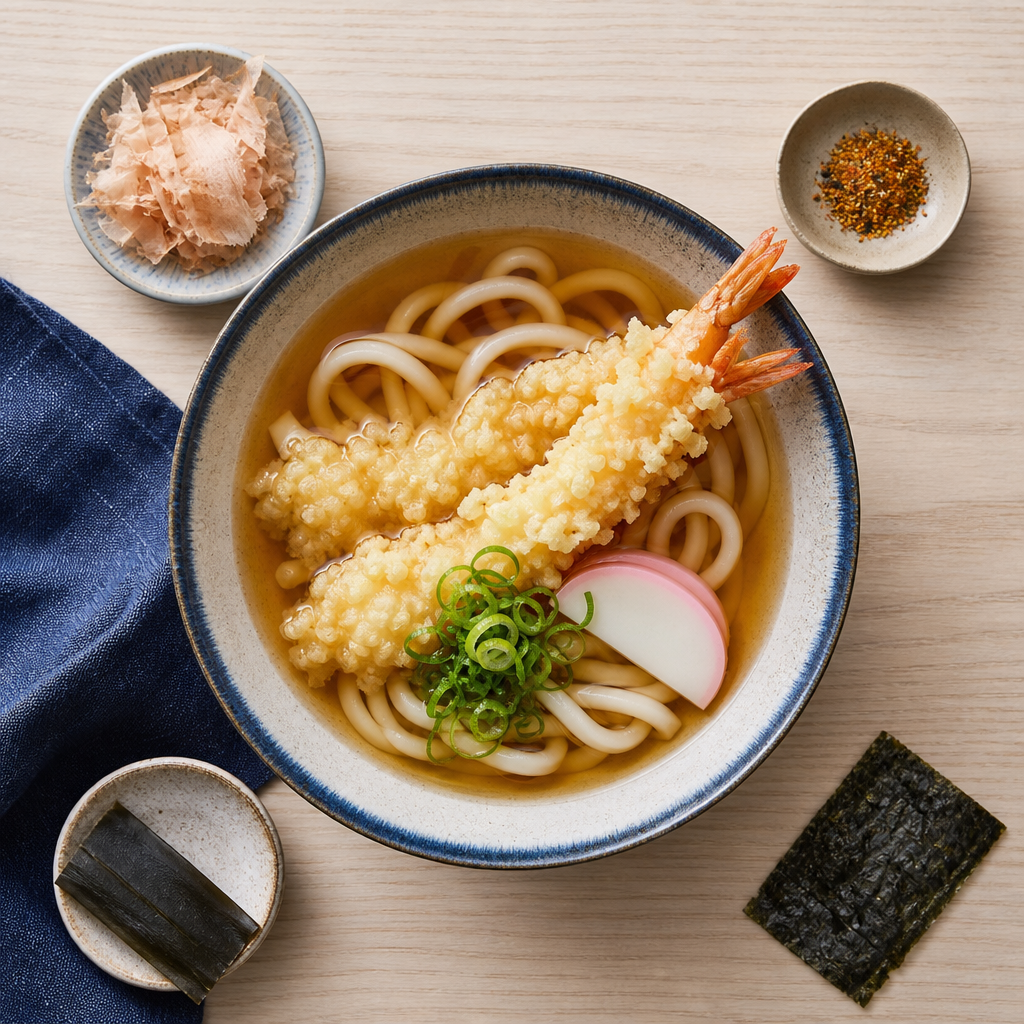
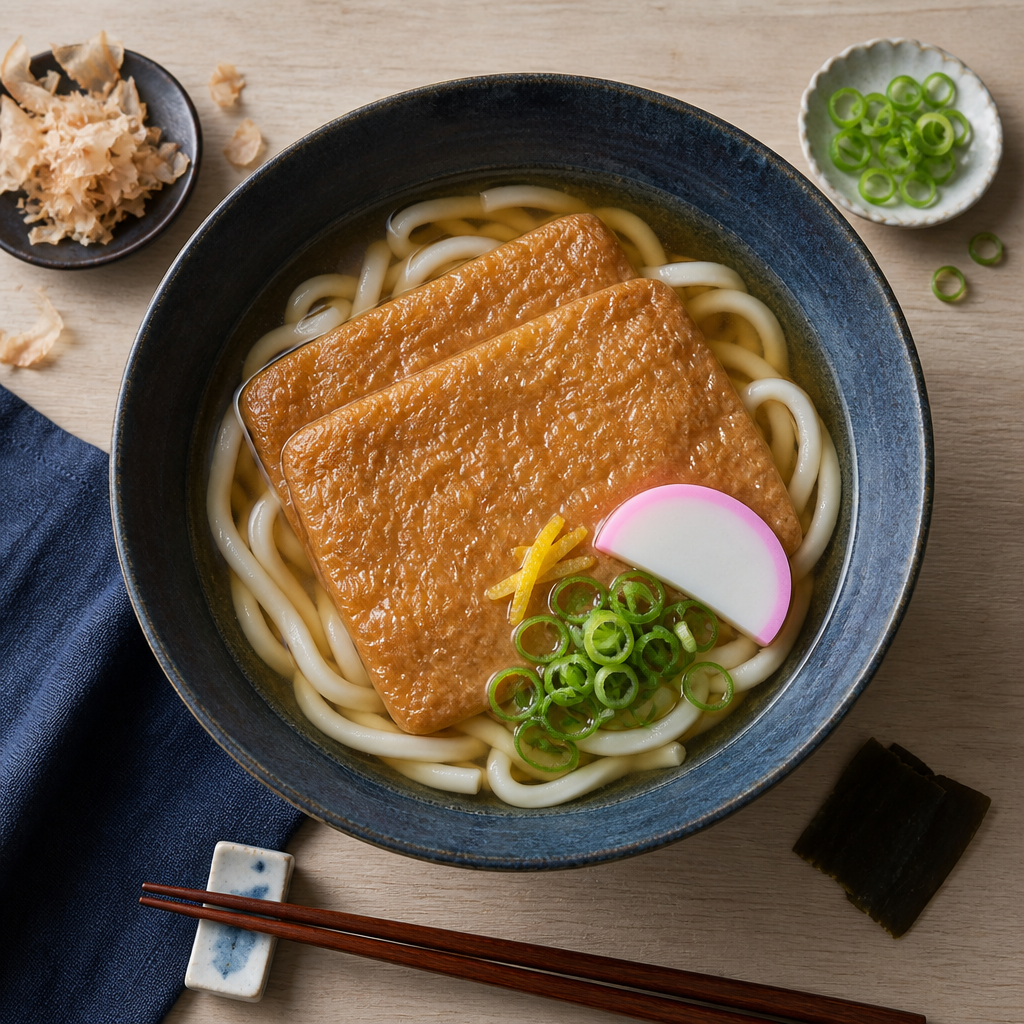
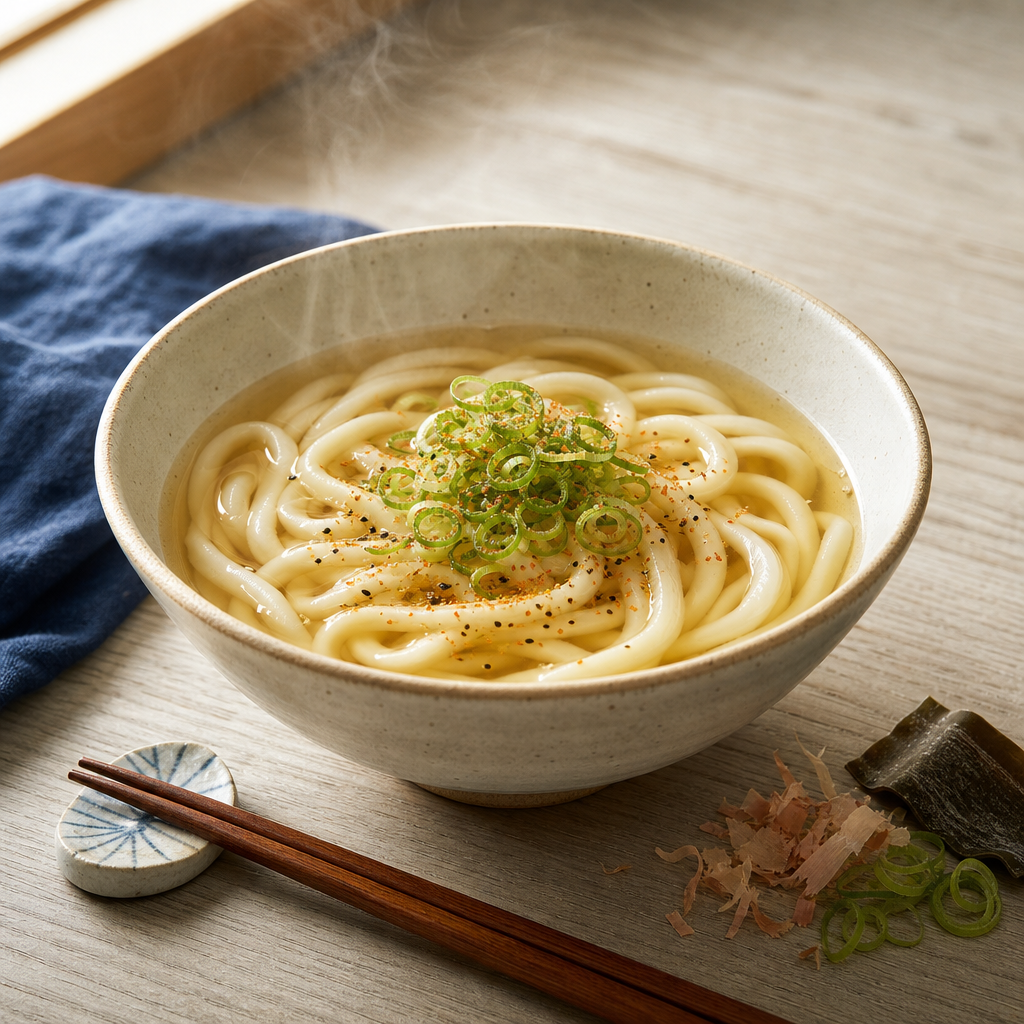
Kake udon is the basic hot udon format: boiled udon served in kake dashi, the pouring broth used for noodle bowls rather than the stronger dipping broth used for zaru or kamaage styles. In Kansai, the broth is typically lighter in color than Tokyo-style noodle soup because usukuchi shoyu and salt do more of the seasoning work while dashi remains visible. Udon culture varies sharply by region; Sanuki udon in Kagawa often leans on iriko, while Kansai bowls commonly emphasize kombu and katsuobushi. Kake udon is also the reference point for many topped bowls: add aburaage and it becomes kitsune udon, add tempura and it becomes tempura udon. This recipe keeps the base form bare so the noodle texture and broth balance have nowhere to hide.
Method 5 steps · 30 min
Start the kombu dashi cold
Place the water and kombu in a saucepan and soak 20 minutes. Set the pan over medium-low heat and bring it slowly to 80-85°C, when small bubbles cling to the pot but the surface is not boiling. Remove the kombu.
Steep the bonito
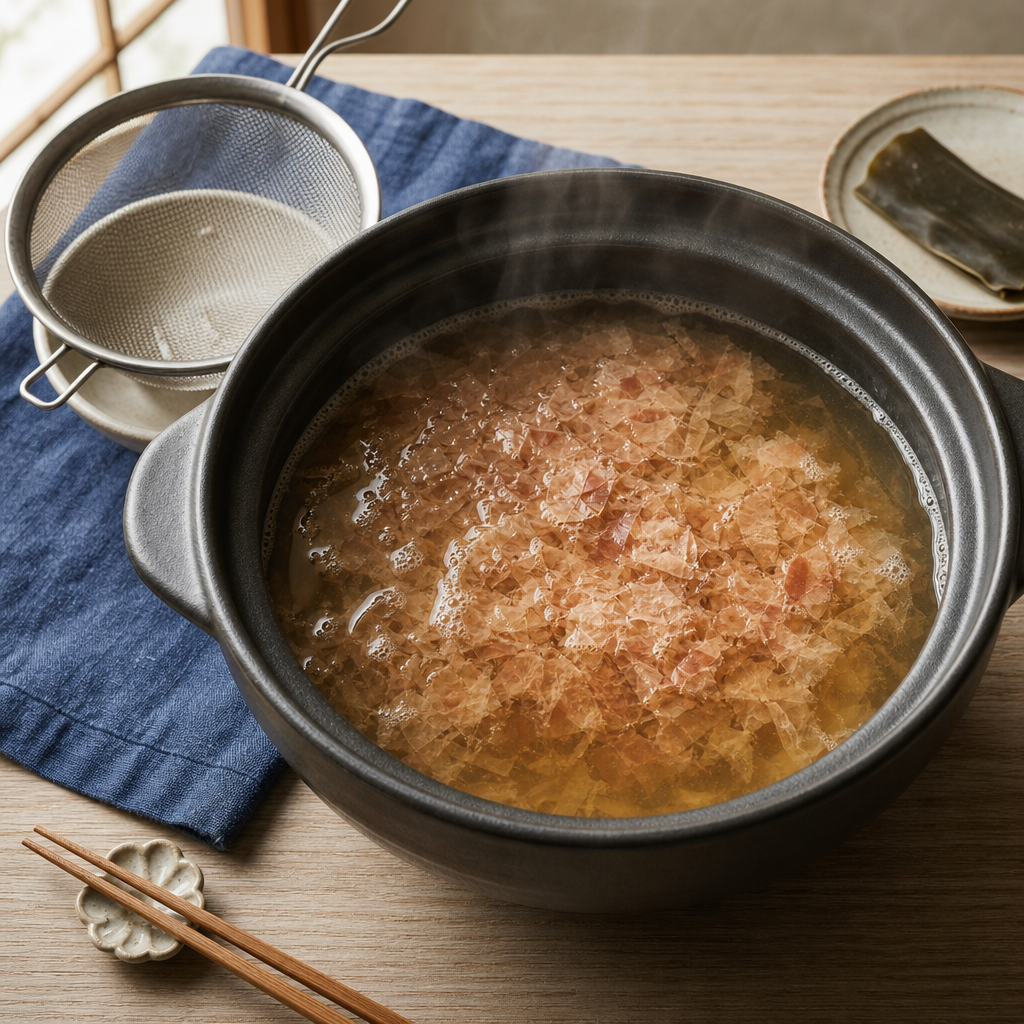
Raise the dashi to a near-boil, turn off the heat, and add the katsuobushi. Let it sink and steep for 60 seconds, then strain through a fine sieve without pressing hard on the flakes.
Season the kake broth
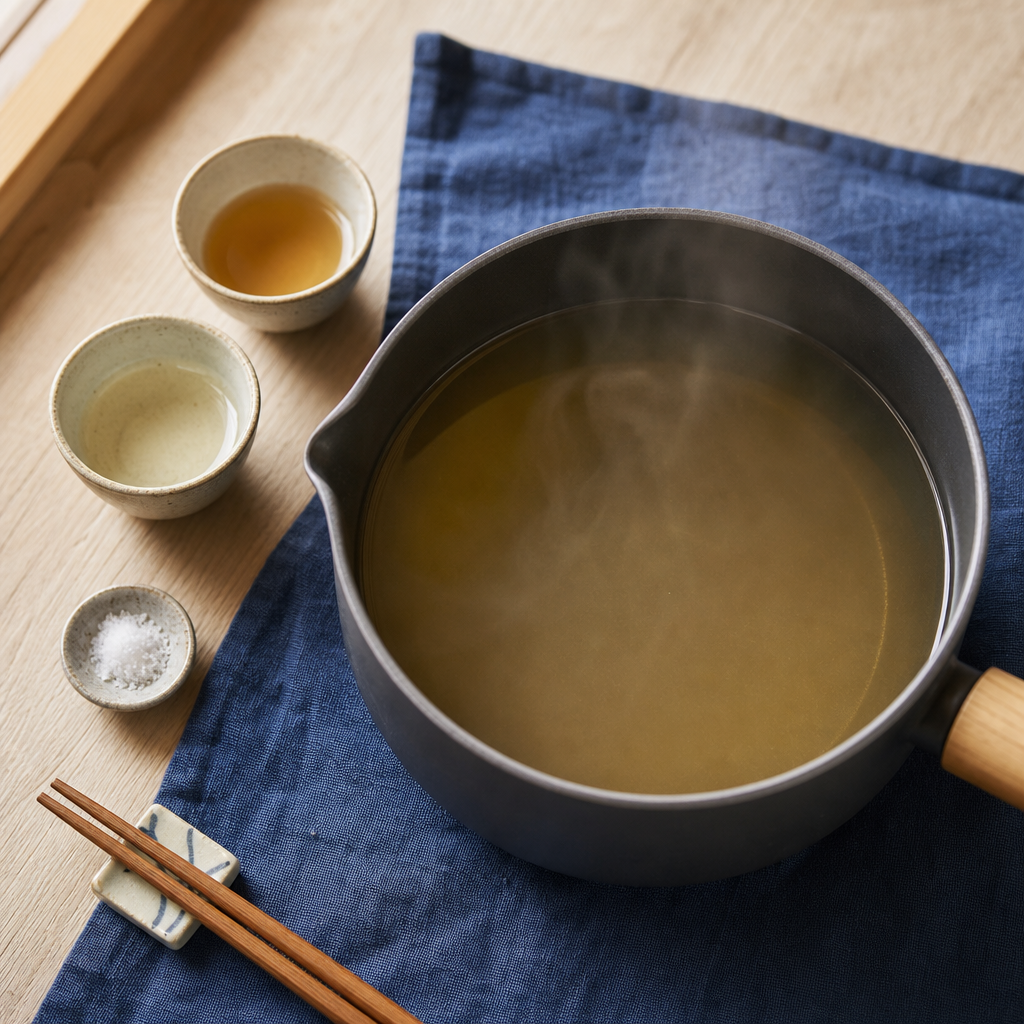
Return the strained dashi to the pan. Add usukuchi shoyu and mirin, then simmer 1 minute to round off the alcohol. Taste and correct with salt until the broth reads savory and clear, not soy-heavy.
Cook or reheat the udon separately
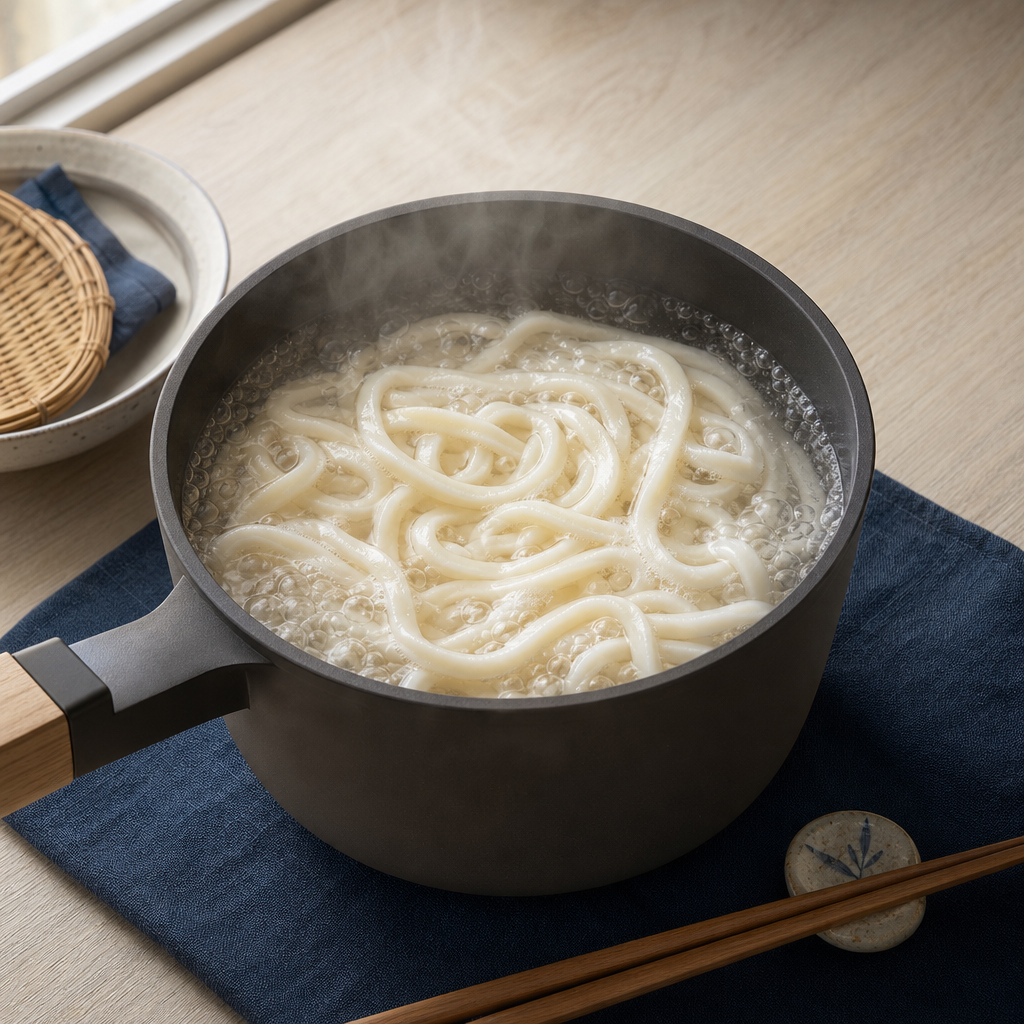
Bring a separate pot of water to a full boil. For frozen udon, boil 60-90 seconds until the brick loosens and the noodles are hot through; for dried udon, cook according to the package, then rinse under cold water until the surface starch is gone. Reheat rinsed noodles for 10 seconds in boiling water before serving.
Assemble immediately
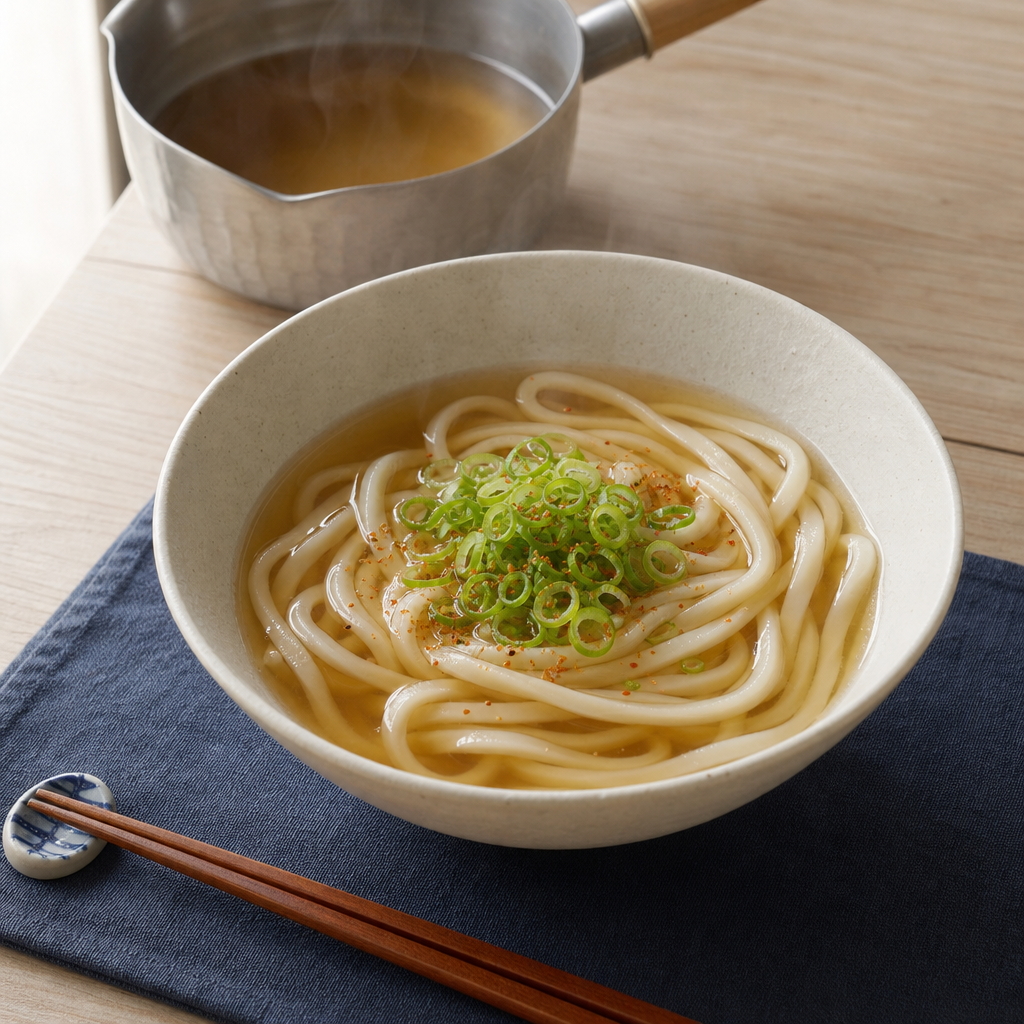
Divide the hot udon between warmed bowls. Pour over hot kake broth until the noodles are mostly submerged. Top with green onion and a pinch of shichimi if using.
Common mistakes
- Boiling kombu. The broth turns slick and bitter; remove it before the water reaches a rolling boil.
- Cooking udon in the serving broth. The starch clouds the soup and flattens the dashi.
- Using dark soy sauce as the main seasoning. The bowl becomes Tokyo-dark and soy-dominant, not Kansai-style pale kake dashi.
- Overloading the bowl with toppings. Kake udon is the base form; toppings change the dish into another udon preparation.
- Letting cooked udon sit in broth. The noodles absorb salt and lose their elastic bite within minutes.
What does not belong
- Chicken stock does not belong in kake udon broth. This is a dashi-based noodle soup.
- Sesame oil does not belong. It coats the broth and buries the kombu-bonito aroma.
- Garlic does not belong. It pushes the bowl toward ramen logic, not udon.
- Cream, milk, or butter does not belong. Kake dashi should be clear.
- Sugar syrup or honey does not belong. Mirin supplies the slight roundness; the broth should not taste sweet.
- Teriyaki sauce does not belong. It is too thick, too sweet, and wrong for this application.
Adaptations
Replace katsuobushi with dried shiitake and extra kombu. Cold-soak 10 g kombu and 2 dried shiitake in 800 ml water for 4-8 hours, warm gently, remove before boiling, then season as written. The result is mushroom-darker but structurally valid.
Use alcohol-free mirin-style seasoning or omit mirin and add a very small pinch of sugar only if needed to soften the salt edge. Confirm the soy sauce and dashi products are halal-certified if required.
Standard udon is wheat. Gluten-free udon-style noodles can make a similar bowl, but it is no longer true udon. Use gluten-free tamari in place of usukuchi and expect a darker broth.
The dish is naturally dairy-free. Dairy does not belong in the broth.
This version uses kombu and katsuobushi, not shellfish. Avoid iriko blends or commercial dashi powders that may contain shrimp, scallop, or mixed seafood extracts.