Tempura Udon
The dish in context
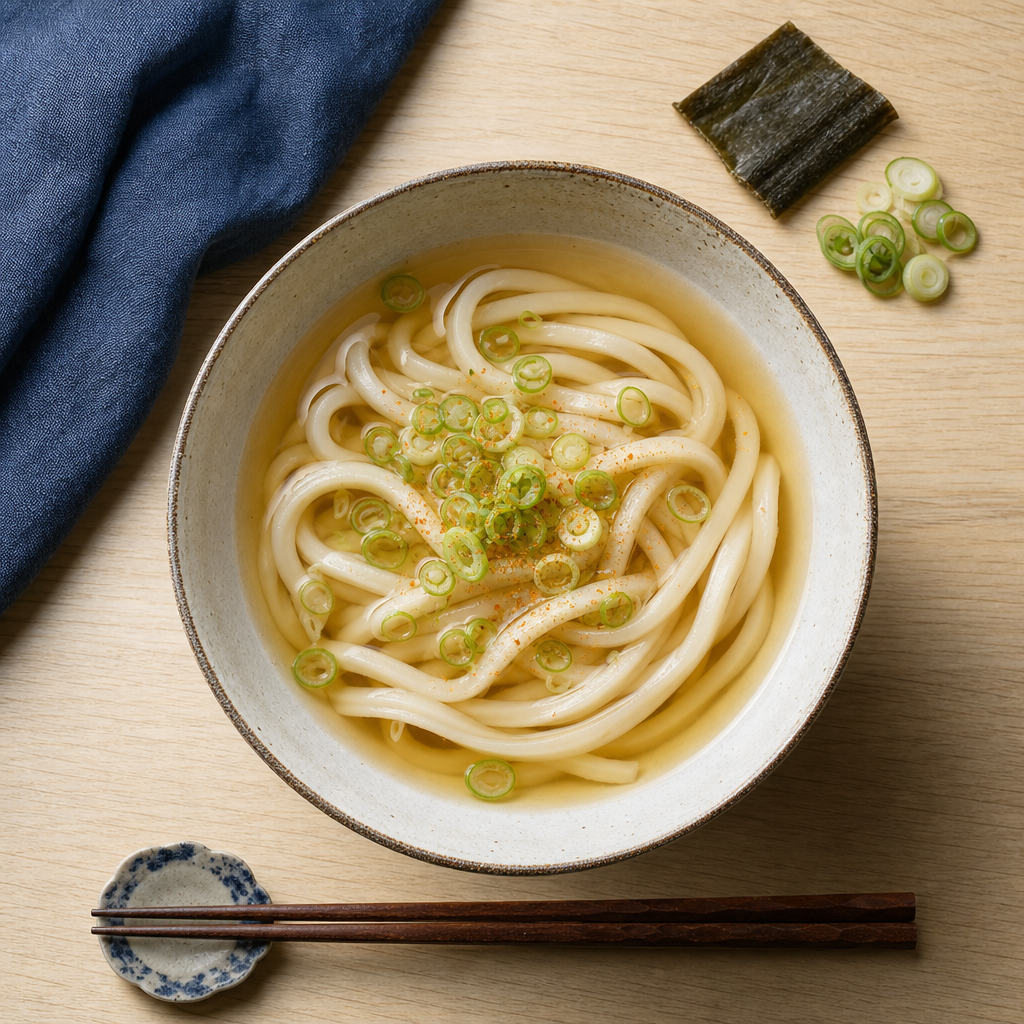
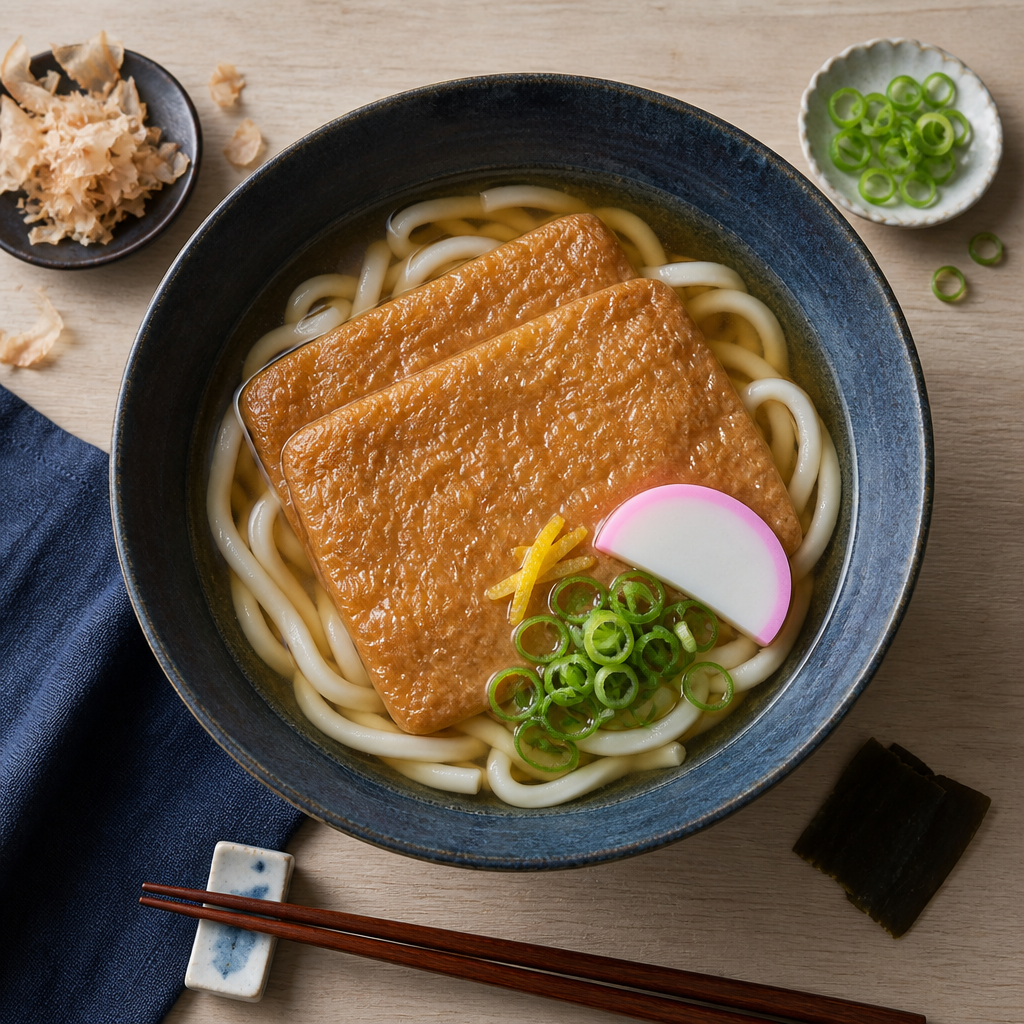
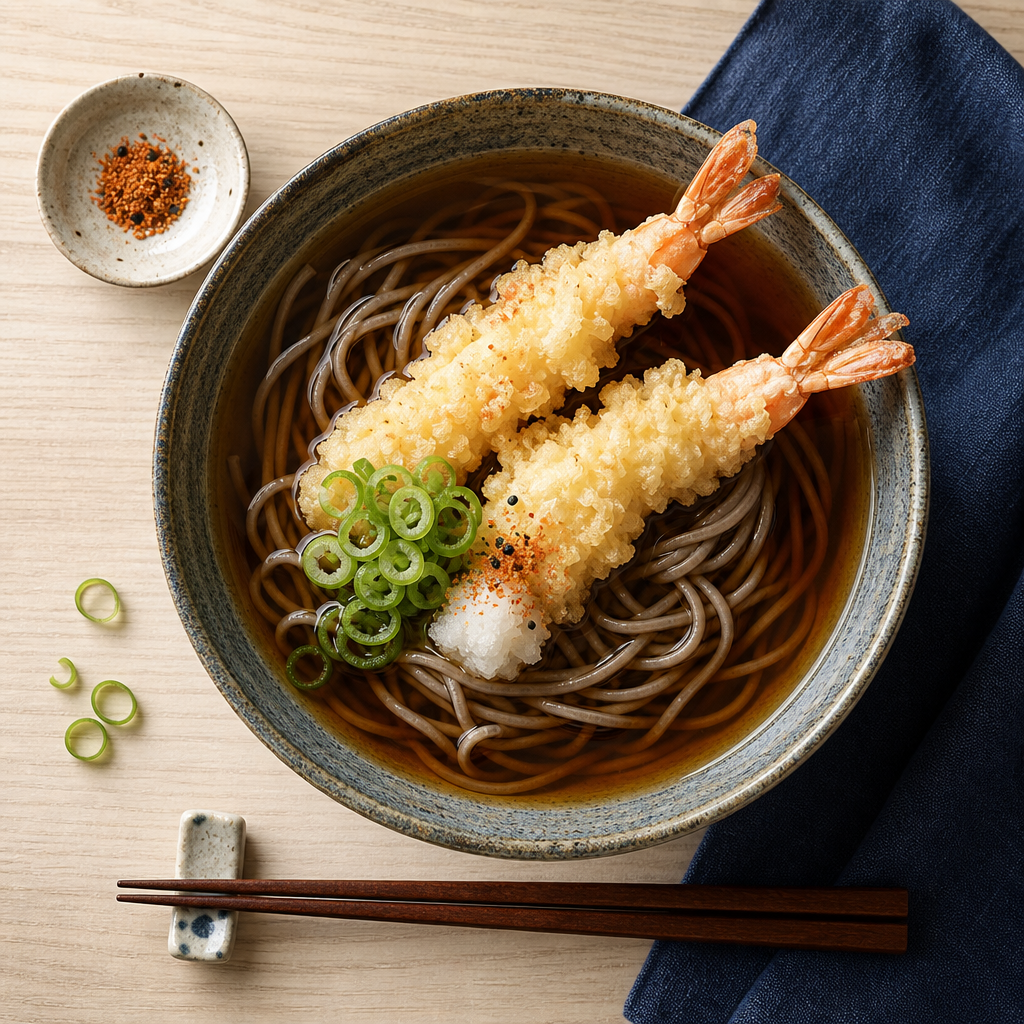
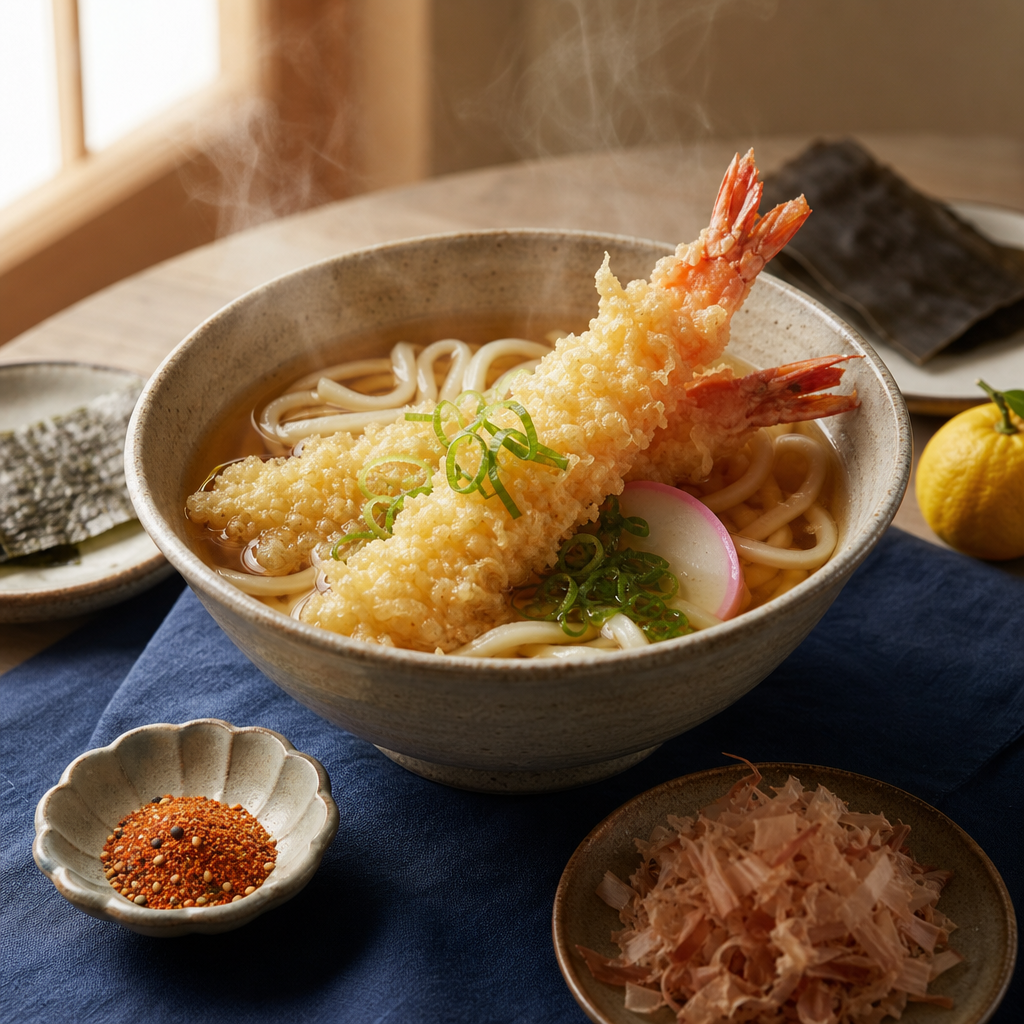
Tempura udon is a standard item at udon shops, train-station counters, university cafeterias, and home kitchens across Japan. The structure is kake udon — hot udon in seasoned dashi — with tempura added at service, most often shrimp tempura or kakiage depending on region and price point. Tempura itself entered Japanese cooking through Portuguese contact in the 16th century, then became fully absorbed into Edo-period urban food culture. Udon has strong regional identities, especially Sanuki-style udon in Kagawa and softer Kansai styles, but tempura udon is not tied to one single prefecture. The dish works because the broth stays clean while the tempura contributes oil, crunch, and batter crumbs only at the end.
Method 9 steps · 55 min
Extract the kombu
Combine the water and kombu in a saucepan and soak 20 minutes. Warm over medium heat until small bubbles gather at the edge, about 60-70°C, then remove the kombu before the water boils.
Steep the bonito
Bring the kombu water almost to a boil, turn off the heat, add the katsuobushi, and let it sink for 60 seconds. Strain through a fine sieve without pressing the flakes.
Season the udon broth
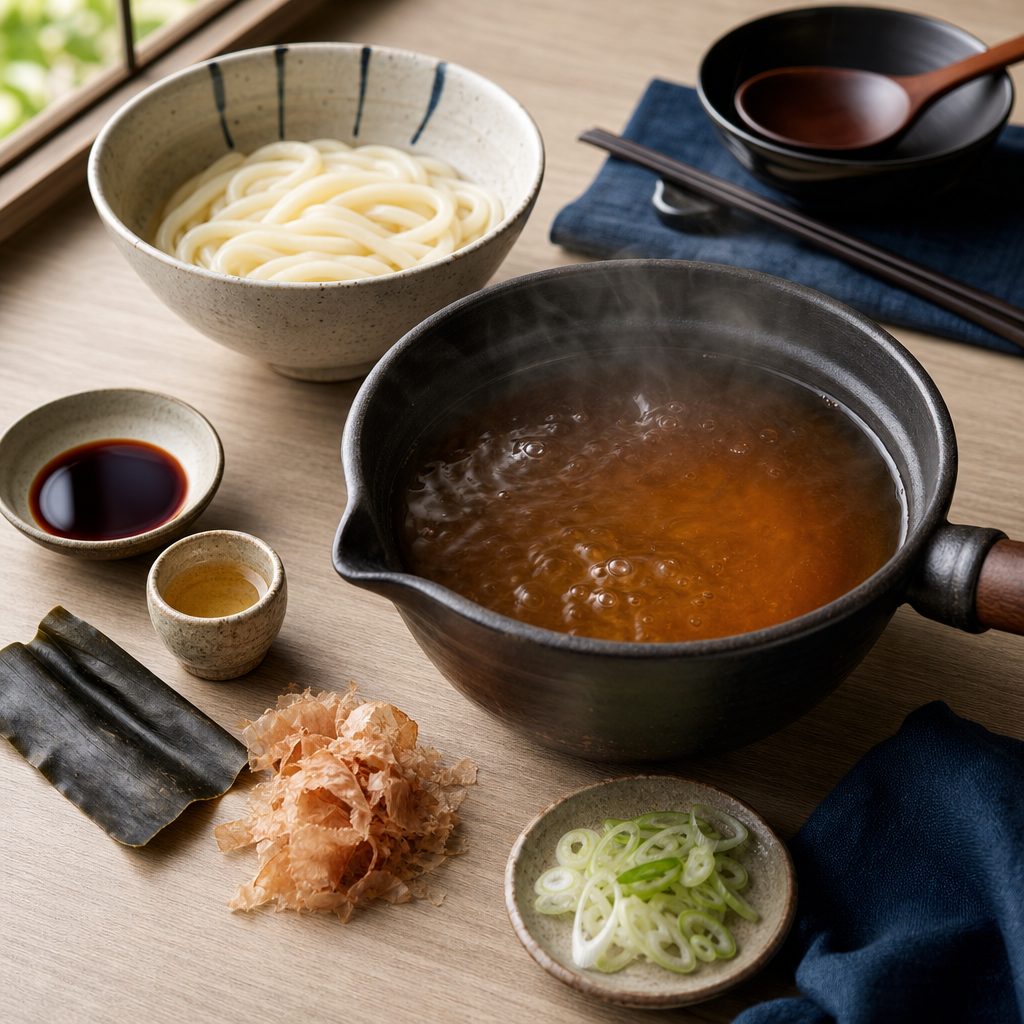
Return 800 ml dashi to the pan. Add shoyu, mirin, and sake, then simmer 2 minutes to cook off the raw alcohol edge. Taste and correct with a pinch of salt only if the broth tastes thin after the soy has registered.
Prepare the shrimp for tempura
Pat the shrimp dry. Make 3 shallow crosswise cuts on the belly side of each shrimp, then press gently along the back to straighten. Dust lightly with flour and shake off the excess.
Heat the frying oil
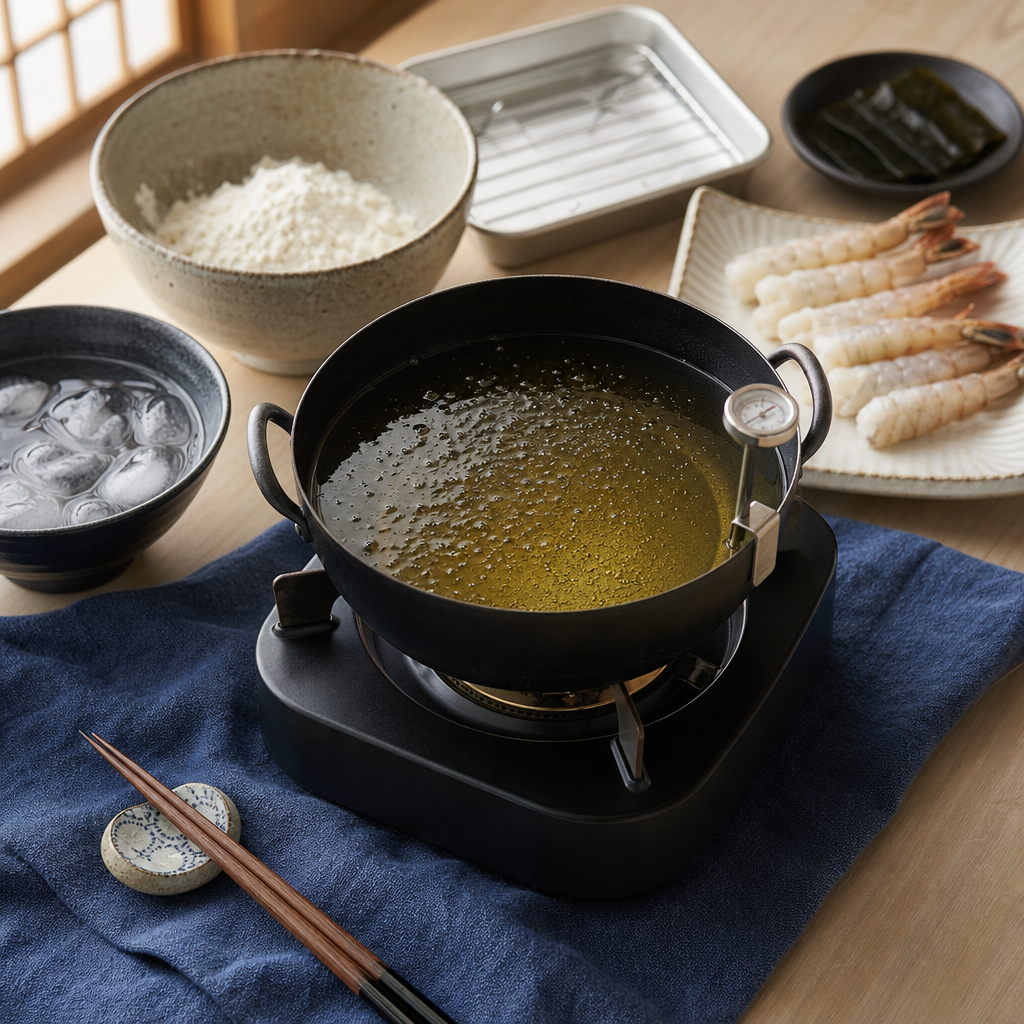
Heat 5 cm oil to 180-185°C. Hold that range; below 170°C the batter absorbs oil, above 190°C the edges brown before the shrimp cooks.
Mix the batter at the last moment
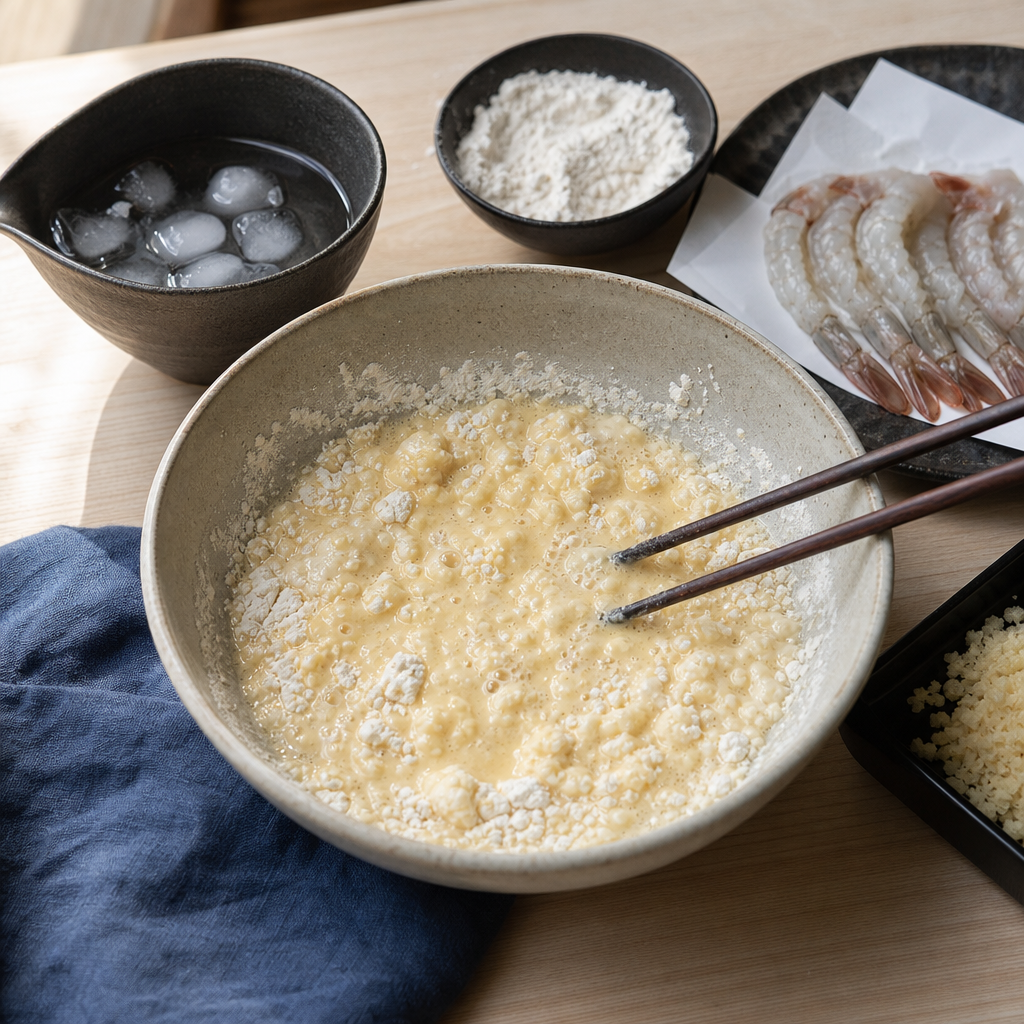
Whisk the cold egg yolk into the ice water. Add the flour and stir with chopsticks 8-10 strokes, leaving visible lumps and dry streaks. Do not make a smooth batter.
Fry the shrimp tempura
Dip the shrimp in batter and lower into the oil one at a time. Fry 90-120 seconds, turning once, until the crust is set, pale gold, and the shrimp is opaque. Drain on a rack, not paper towels.
Cook and rinse the udon
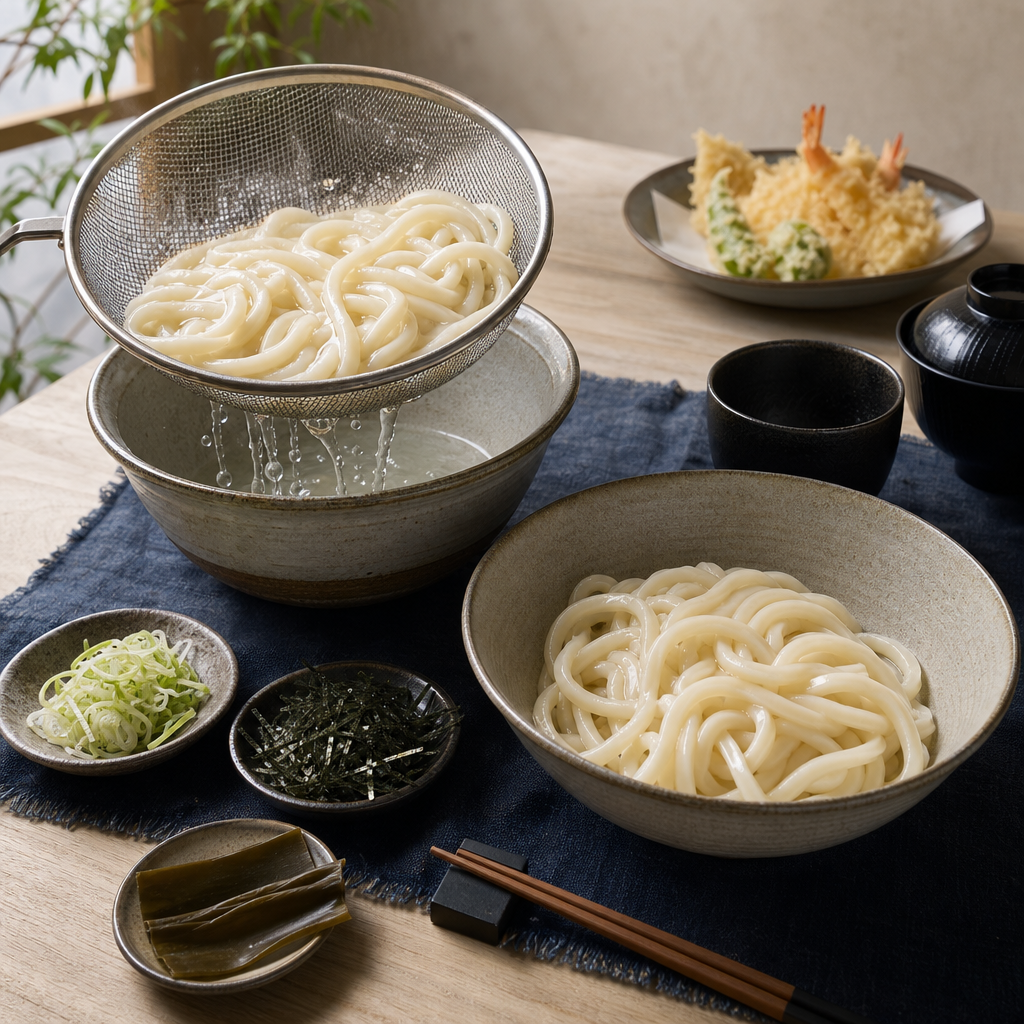
Boil the udon according to its type: frozen blocks usually need 1-2 minutes, fresh noodles 2-3 minutes, dried noodles longer. Drain and rinse under hot running water to remove surface starch, then dip briefly back into boiling water to reheat.
Assemble the bowls
Divide hot udon between warmed bowls. Pour over the hot broth, add scallions and kamaboko if using, then place the shrimp tempura on top at the last second. Serve shichimi separately.
Common mistakes
- {'mistake': 'Boiling the kombu.', 'fix': 'Remove kombu before the water reaches a full boil. Slimy, bitter dashi cannot be repaired with more soy.'}
- {'mistake': 'Mixing tempura batter until smooth.', 'fix': 'Stop while lumps remain. Lumpy batter fries lighter because less gluten has formed.'}
- {'mistake': 'Simmering udon directly in the finished broth.', 'fix': 'Cook noodles separately, rinse off starch, then reheat. The broth should stay clear.'}
- {'mistake': 'Frying at low temperature.', 'fix': 'Keep oil around 180-185°C for shrimp. Greasy tempura usually means the oil was too cool or the pan was crowded.'}
- {'mistake': 'Adding tempura too early.', 'fix': 'Set tempura on the bowl at service. Holding it in broth turns the crust into a sponge before anyone eats.'}
What does not belong
- {'item': 'Chicken stock', 'reason': 'Chicken stock does not belong in standard tempura udon broth. The backbone is dashi, not poultry.'}
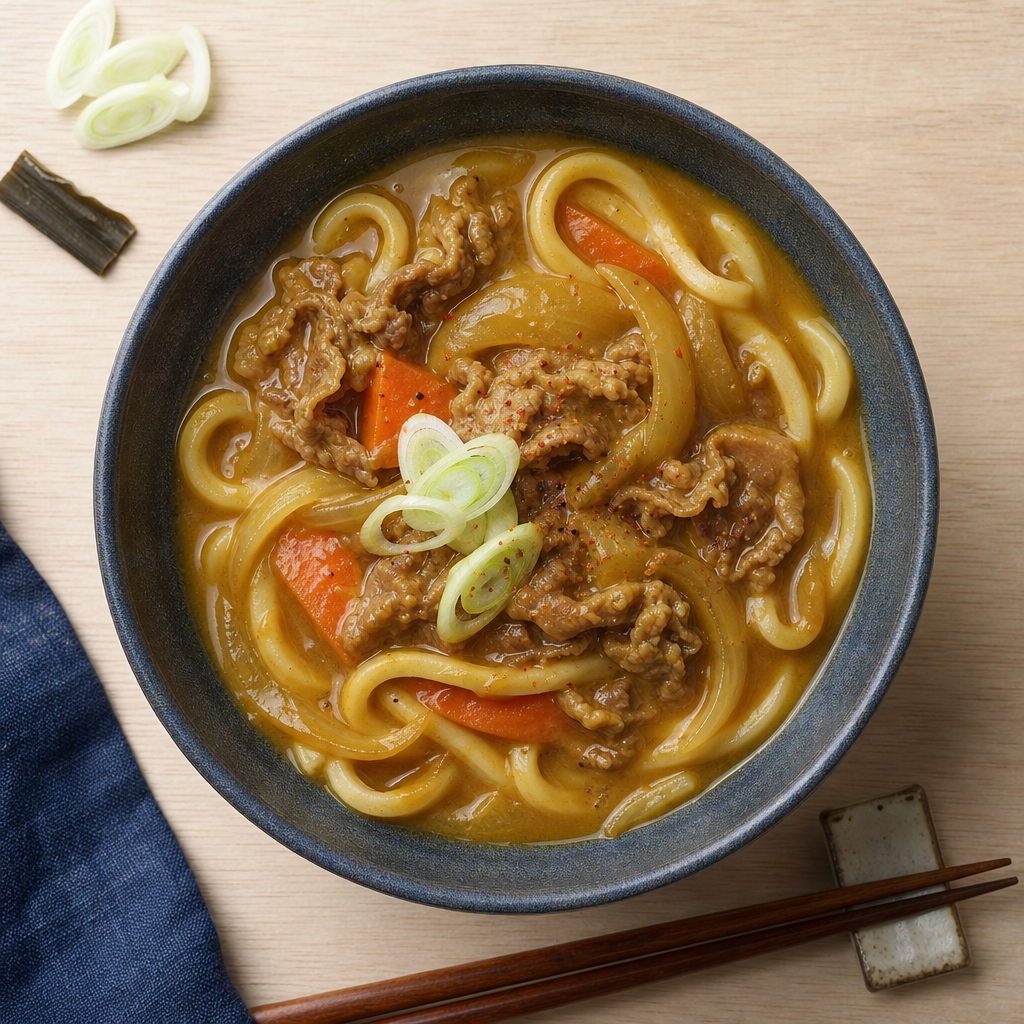
- {'item': 'Garlic or ginger in the broth', 'reason': 'Garlic and ginger pull the bowl toward ramen or Chinese noodle soup. Kake udon broth should stay dashi-soy-mirin clean.'}
- {'item': 'Teriyaki sauce', 'reason': 'Commercial teriyaki sauce is too sweet and thick. Tempura udon needs a seasoned dashi broth, not a glaze.'}
- {'item': 'Breadcrumb coating', 'reason': 'Breadcrumb-coated fried shrimp is ebi fry, not tempura. Tempura uses a thin flour batter.'}
- {'item': 'Cream or butter', 'reason': 'Dairy does not belong in this bowl. It blurs the dashi and turns a clear noodle broth heavy.'}