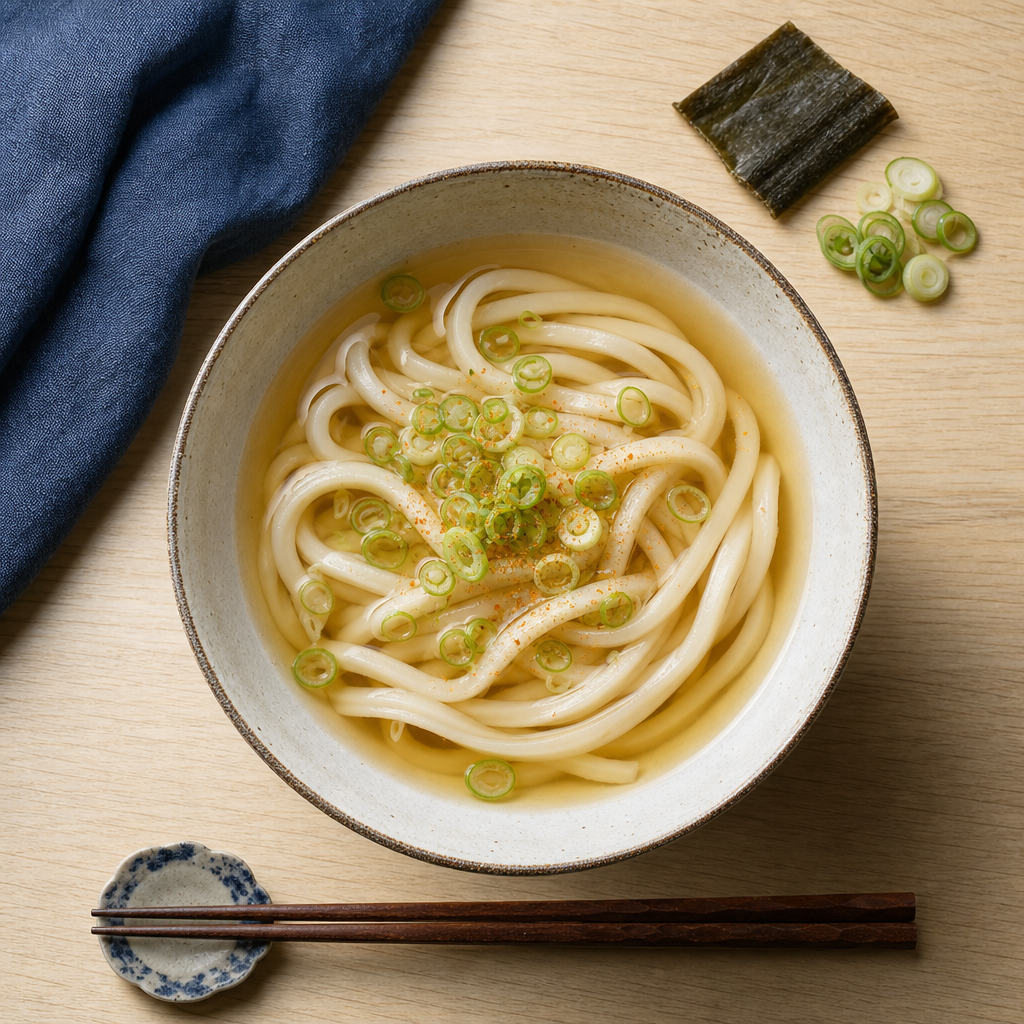
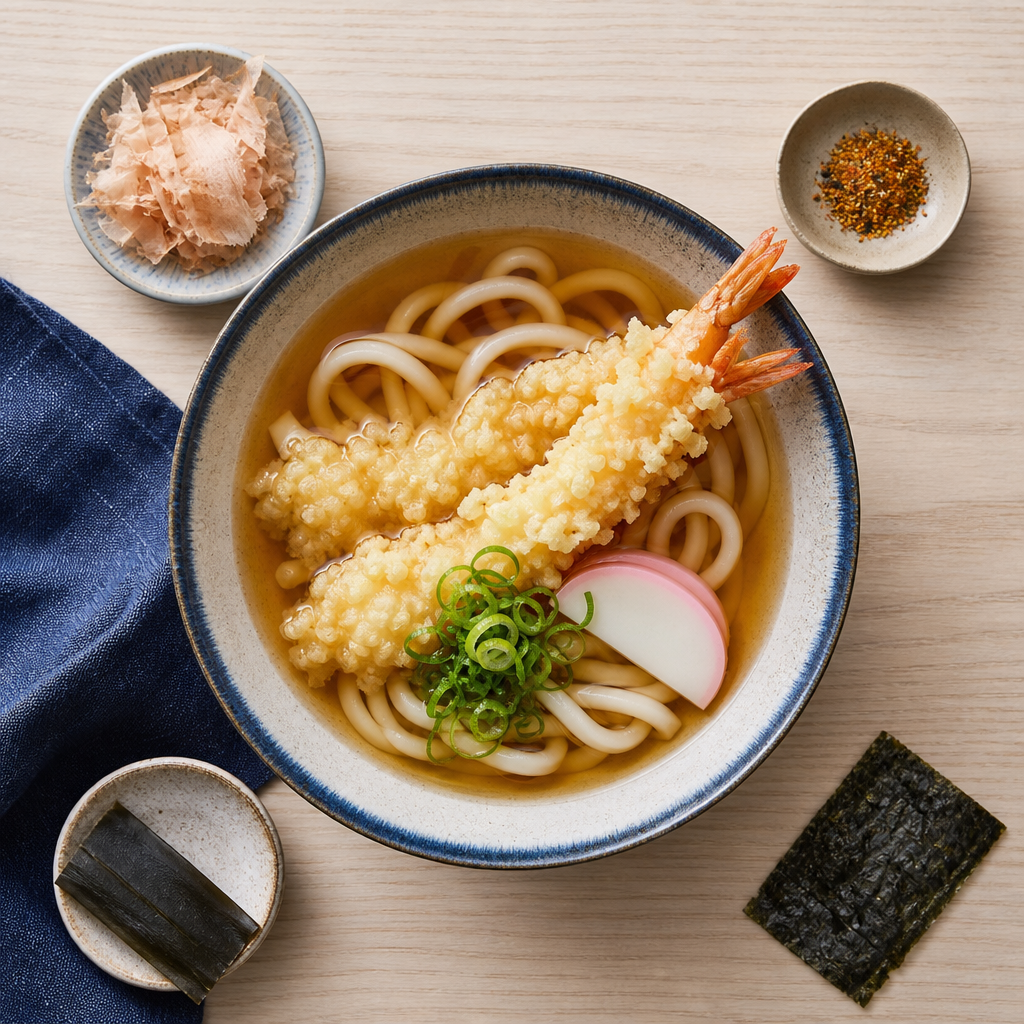
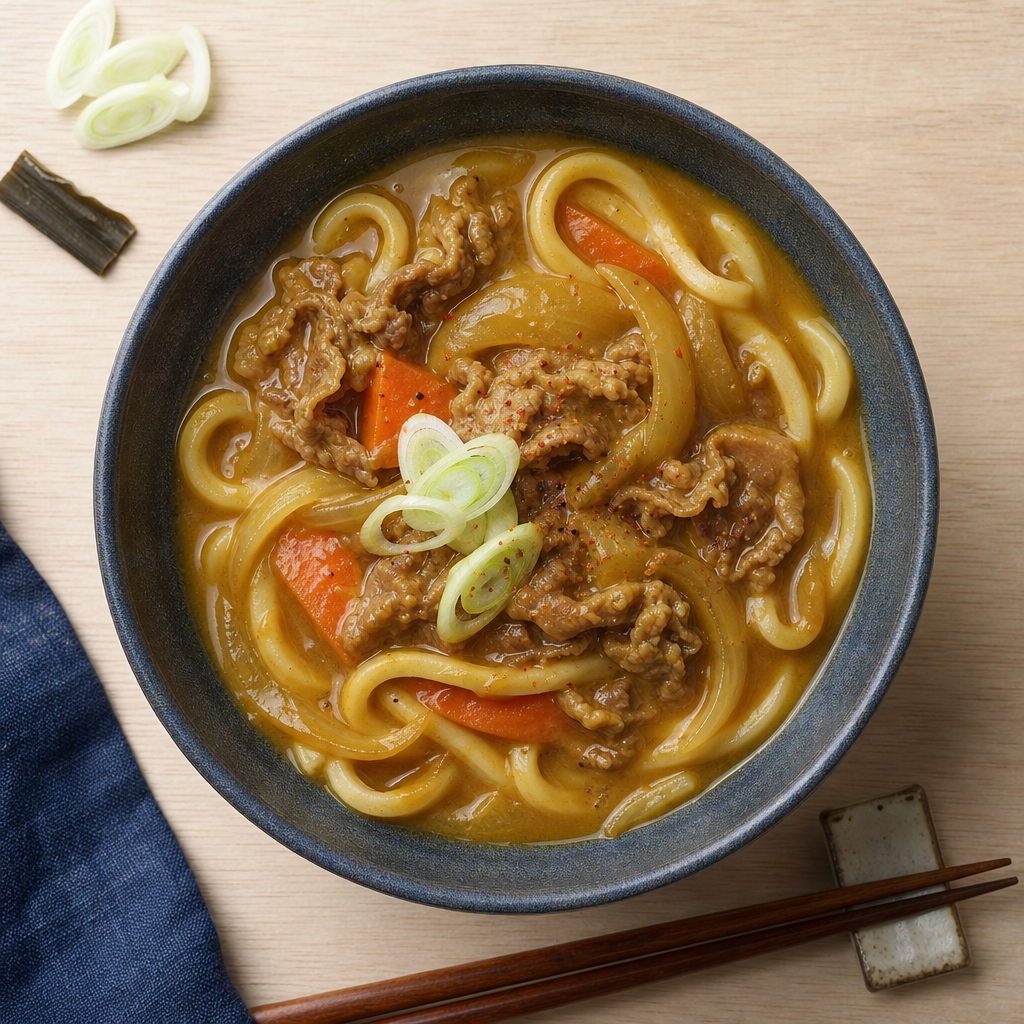
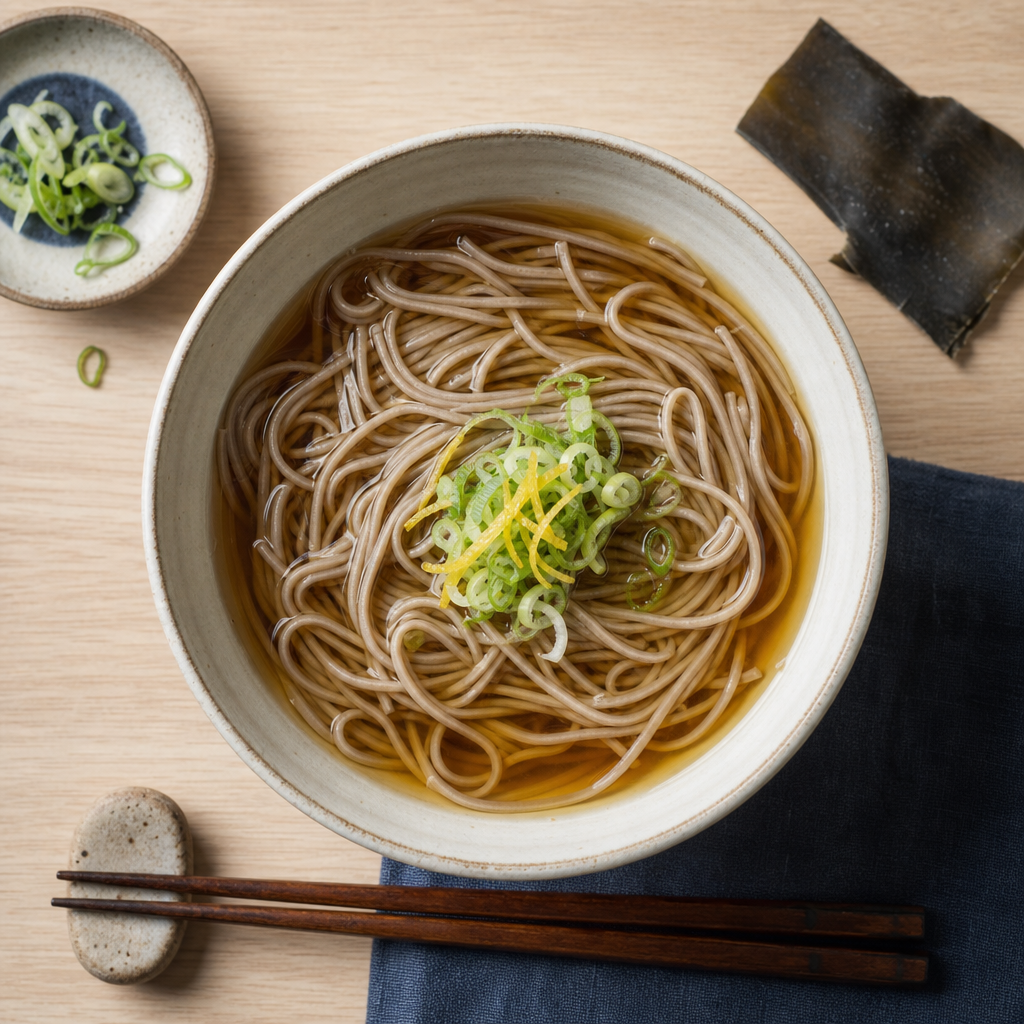
Kitsune Udon
The dish in context
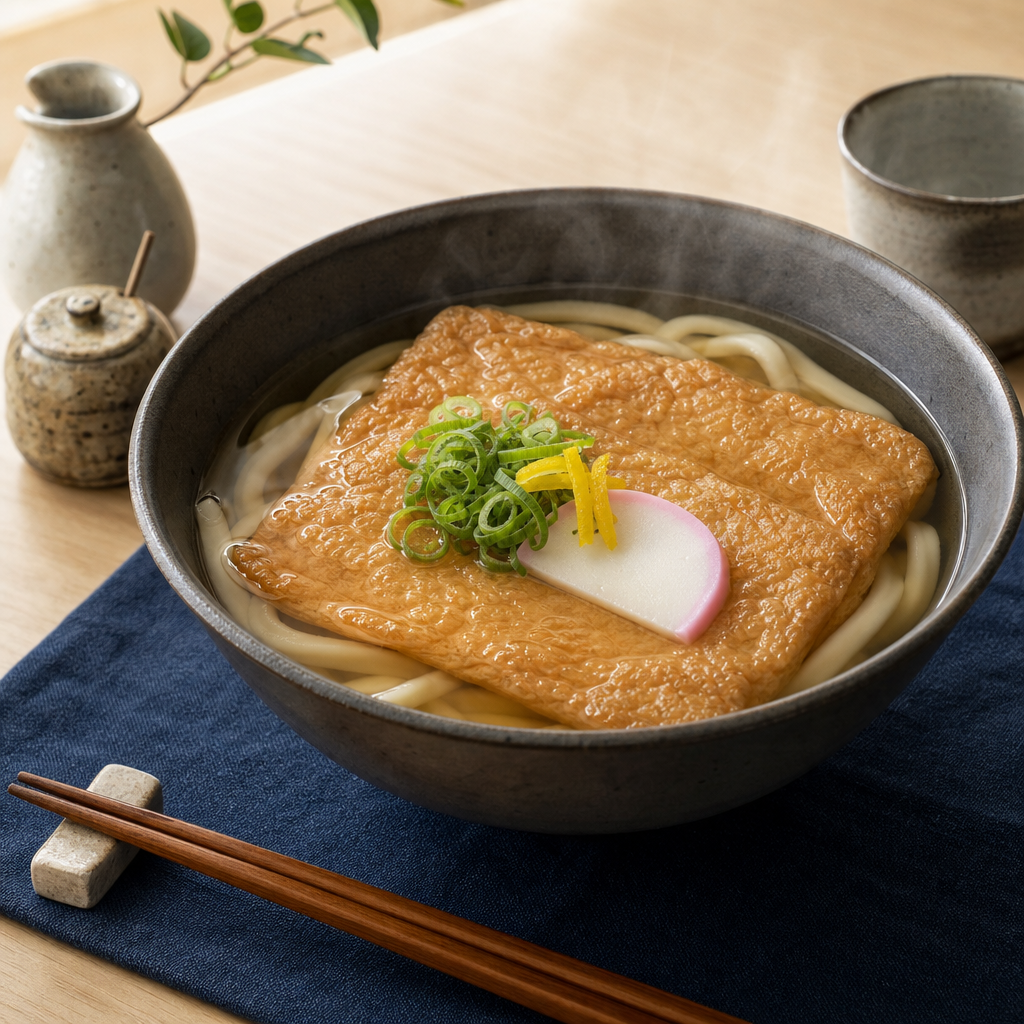
Kitsune udon is strongly associated with Osaka, where high-tier Japanese food-culture sources trace its popular origin to the Meiji-period udon shop Matsubaya in Senba. The defining topping is 油揚げ (aburaage), deep-fried tofu pouch simmered in a sweet-salty seasoning, a direct echo of inarizushi. Kansai versions use a pale, dashi-forward broth, typically seasoned with usukuchi shoyu so the soup stays light in color. Regional naming matters: in Osaka, oil-simmered aburaage on udon is kitsune; oil-simmered aburaage on soba is often called tanuki. Tempura scraps in this context are haikara, not kitsune.
Method 7 steps · 40 min
Cold-soak the kombu
Put 800 ml water and the kombu in a saucepan and soak for 20 minutes. Heat over medium-low until small bubbles gather at the pot edge, then remove the kombu before the water boils.
Extract the fish dashi
Bring the kombu water almost to a boil, turn off the heat, add the mixed fish flakes, and steep for 2 minutes. Strain through a fine sieve without pressing hard.
Season the udon broth
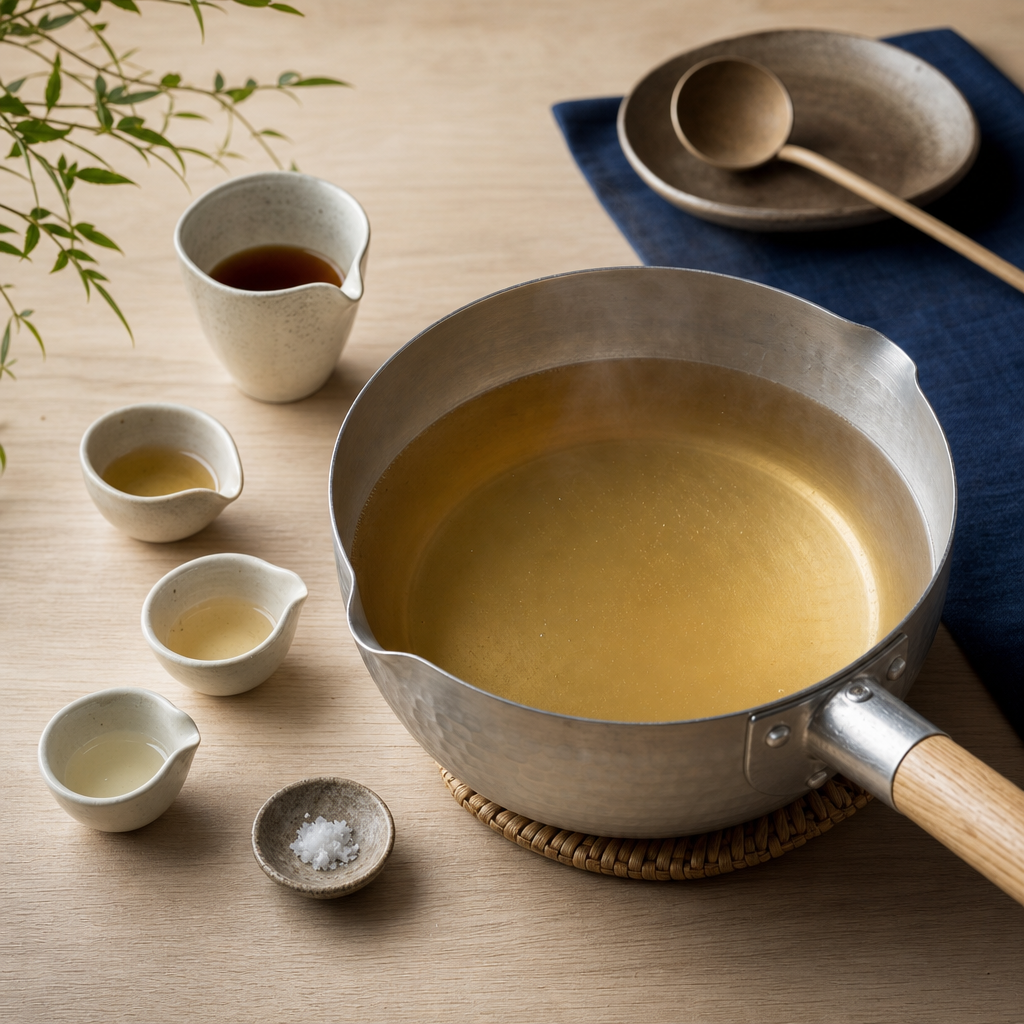
Measure 600 ml dashi into a saucepan. Add 27 ml usukuchi shoyu, 10 ml mirin, 10 ml sake, and a small pinch of salt, then bring to a quiet simmer. Hold hot without hard boiling.
Blanch the aburaage
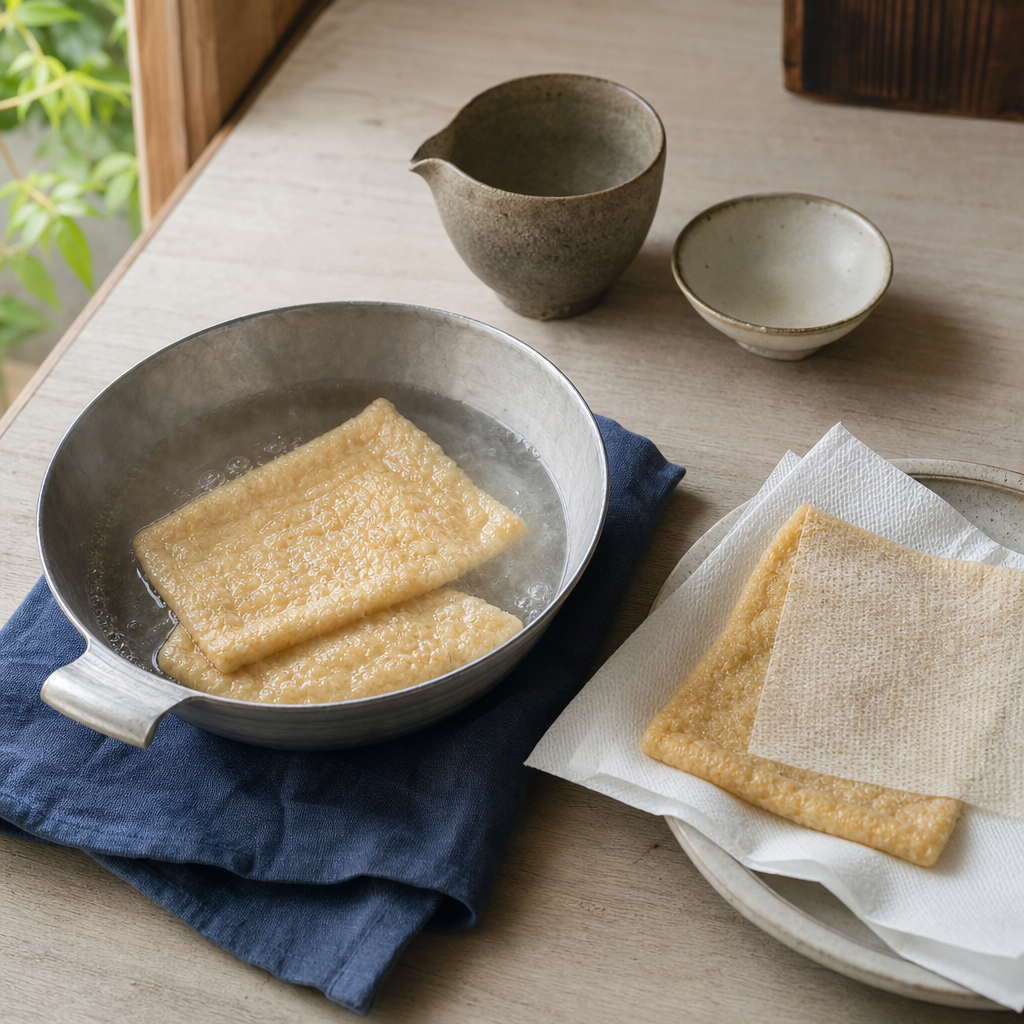
Pour boiling water over the aburaage or simmer it for 30 seconds, then drain and press gently between paper towels. Do not wring it until dry.
Simmer the aburaage separately
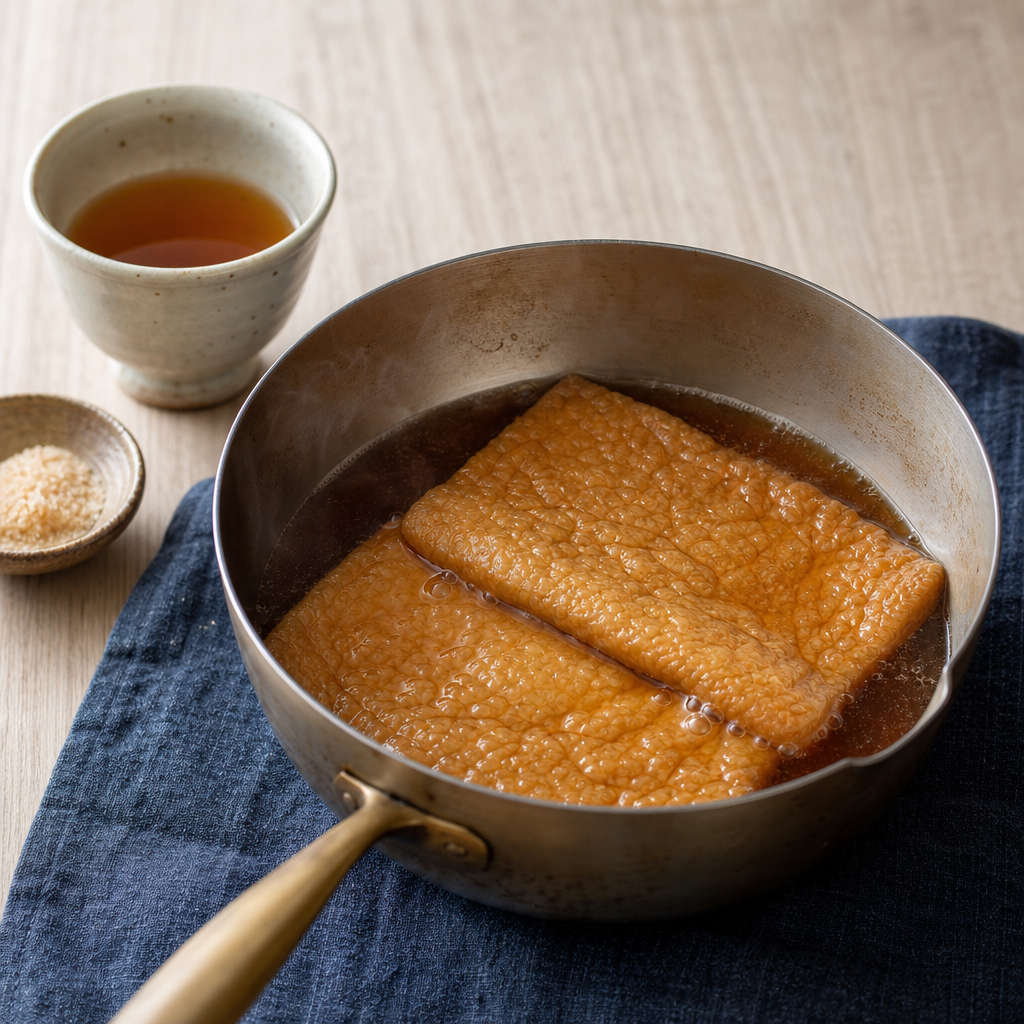
In a small pan, combine 250 ml dashi, 12 g sugar, 18 ml usukuchi shoyu, and 15 ml mirin. Add the aburaage and simmer gently for 10 minutes, turning once, until the sheets look glossy and amber. Let them sit in the liquid while the noodles cook.
Cook the udon
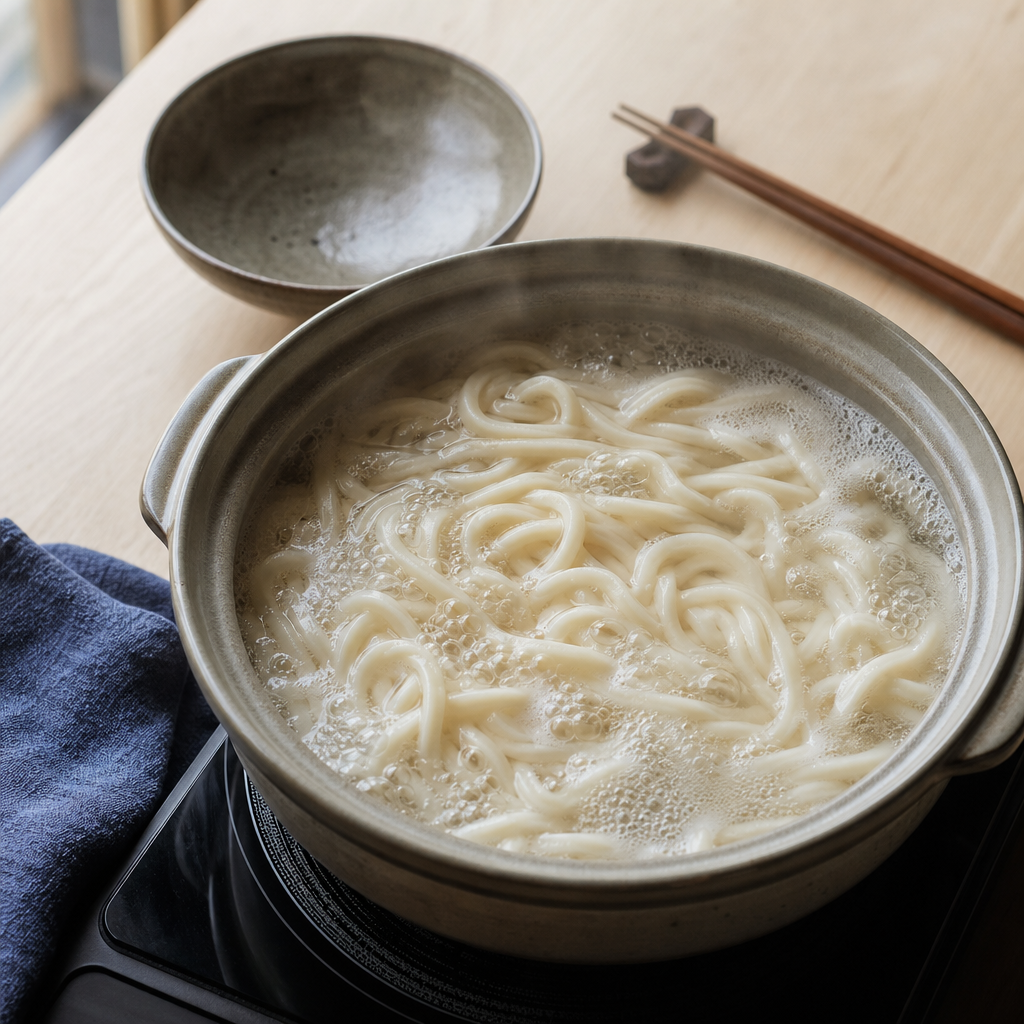
Cook the udon in unsalted boiling water according to the package. For frozen udon, heat only until the strands loosen and the center is hot, usually 1 to 2 minutes. Drain well.
Assemble the bowls
Divide the drained udon between two warmed bowls. Pour in the hot broth, lay one sheet of aburaage on each bowl, then add green onion, kamaboko, and yuzu peel if using. Serve shichimi at the table.
Common mistakes
- {'mistake': 'Boiling kombu', 'fix': 'Remove kombu before the water reaches a full boil. Slimy texture and bitter kelp notes are not part of udon dashi.'}
- {'mistake': 'Simmering the aburaage in the bowl broth', 'fix': 'Season the tofu separately. The broth should stay pale and dashi-forward while the tofu carries sweetness.'}
- {'mistake': 'Using dark soy sauce as the main seasoning without adjustment', 'fix': 'Use usukuchi shoyu for Kansai color and salt profile. If koikuchi is the only option, use less and accept a darker bowl.'}
- {'mistake': 'Overcooking frozen udon', 'fix': 'Stop when the block loosens and the center is hot. Frozen udon is already cooked; prolonged boiling makes it swollen.'}
- {'mistake': 'Adding too much sugar to the soup', 'fix': 'Keep sweetness concentrated in the aburaage. The broth should taste of dashi, salt, and a small mirin roundness.'}
What does not belong
- {'item': 'Tempura scraps', 'reason': 'Tempura scraps make haikara udon in Kansai naming. They do not belong in kitsune udon.'}
- {'item': 'Miso', 'reason': 'Miso turns the dish into a different noodle soup and hides the pale Kansai dashi.'}
- {'item': 'Chicken stock', 'reason': 'Chicken stock does not belong in this broth. Kitsune udon is built on kombu and fish dashi, or kombu-shiitake for a vegan version.'}
- {'item': 'Sesame oil', 'reason': 'Sesame oil covers the dashi aroma and pushes the bowl toward a different cuisine.'}
- {'item': 'Cream or butter', 'reason': 'Dairy does not belong in kitsune udon. The body comes from udon starch and aburaage, not fat enrichment.'}
- {'item': 'American bottled teriyaki sauce', 'reason': 'It is too thick and sweet for aburaage. Use dashi, shoyu, mirin, and sugar.'}
Adaptations
Use kombu-shiitake dashi and confirm the aburaage is not fried in animal fat. Omit kamaboko. This is a valid Japanese vegetarian direction, but it will taste mushroom-deeper than fish-dashi kitsune udon.
Use halal-certified soy sauce and omit sake and mirin if alcohol is not acceptable. Replace mirin with a small amount of sugar dissolved in dashi; do not use wine or vinegar.
Standard udon and shoyu contain wheat. Gluten-free udon-style noodles and tamari can produce a workable bowl, but the texture and aroma shift. Confirm dashi powders and aburaage labels.
Traditional kitsune udon contains no dairy. Dairy additions do not belong.
Use kombu and bonito or mixed fish flakes without shellfish additives, and omit kamaboko unless the label is shellfish-free.