Tsukemen
The dish in context
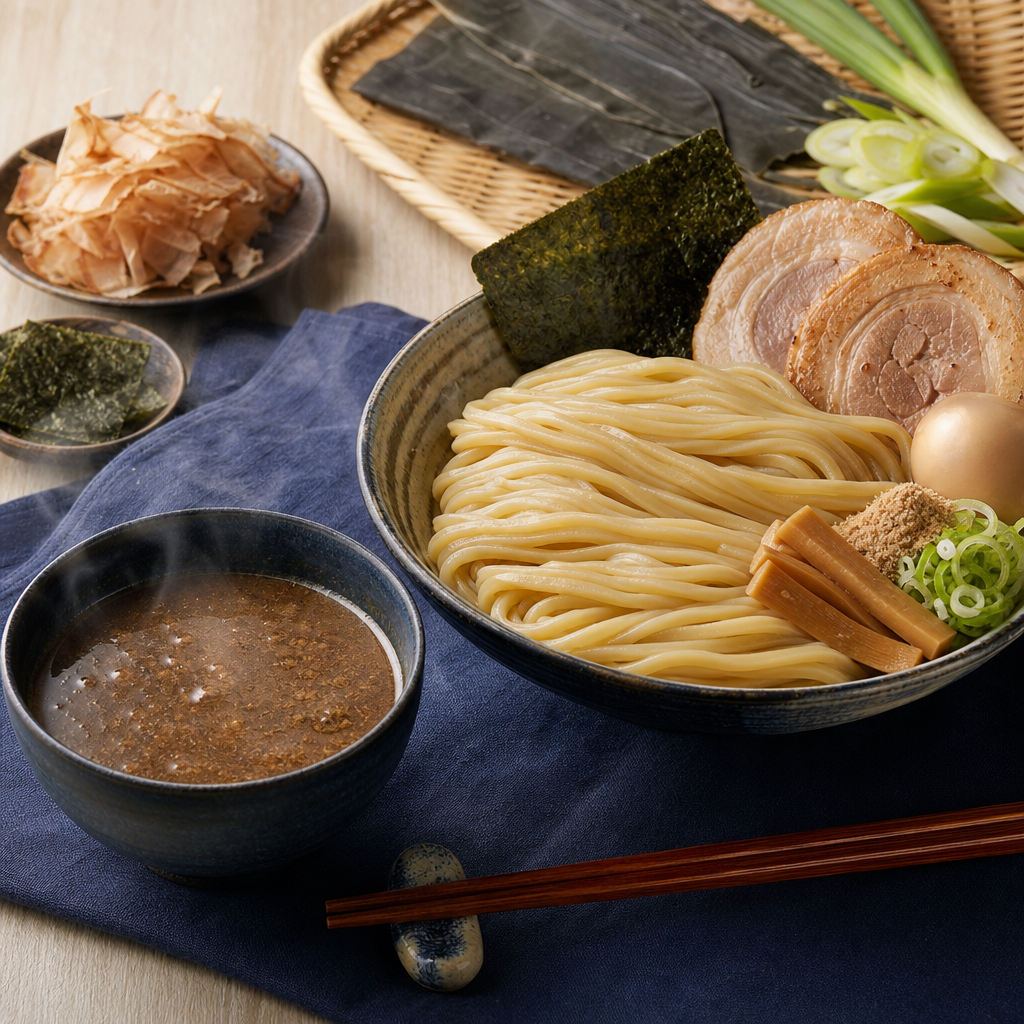
Tsukemen (つけ麺) developed in the Tokyo ramen world as noodles served separately from a concentrated dipping soup, with Higashi-Ikebukuro Taishoken's morisoba often cited as the key ancestor. The format became a major Tokyo specialty before spreading through ramen shops across Japan, especially during the late twentieth-century ramen boom. Modern Tokyo-style tsukemen now splits into lighter sweet-sour shoyu lines and thick tonkotsu-gyokai versions built on pork bone and dried seafood. This recipe follows the latter: dense pork-chicken broth, strong seafood dashi, shoyu tare, thick noodles, and soup-wari at the end.
Method 11 steps · 600 min
Clean the bones
Cover pork bones, trotter, and chicken backs with cold water. Bring to a hard boil for 10 minutes, then drain and scrub away grey scum and blood clots under running water.
Build the animal broth
Return the cleaned bones to the pot with 5 L water. Boil hard for 30 minutes, skimming heavily, then reduce to a strong simmer and cook 6-7 hours, topping up water to keep the bones mostly submerged.
Add aromatics late
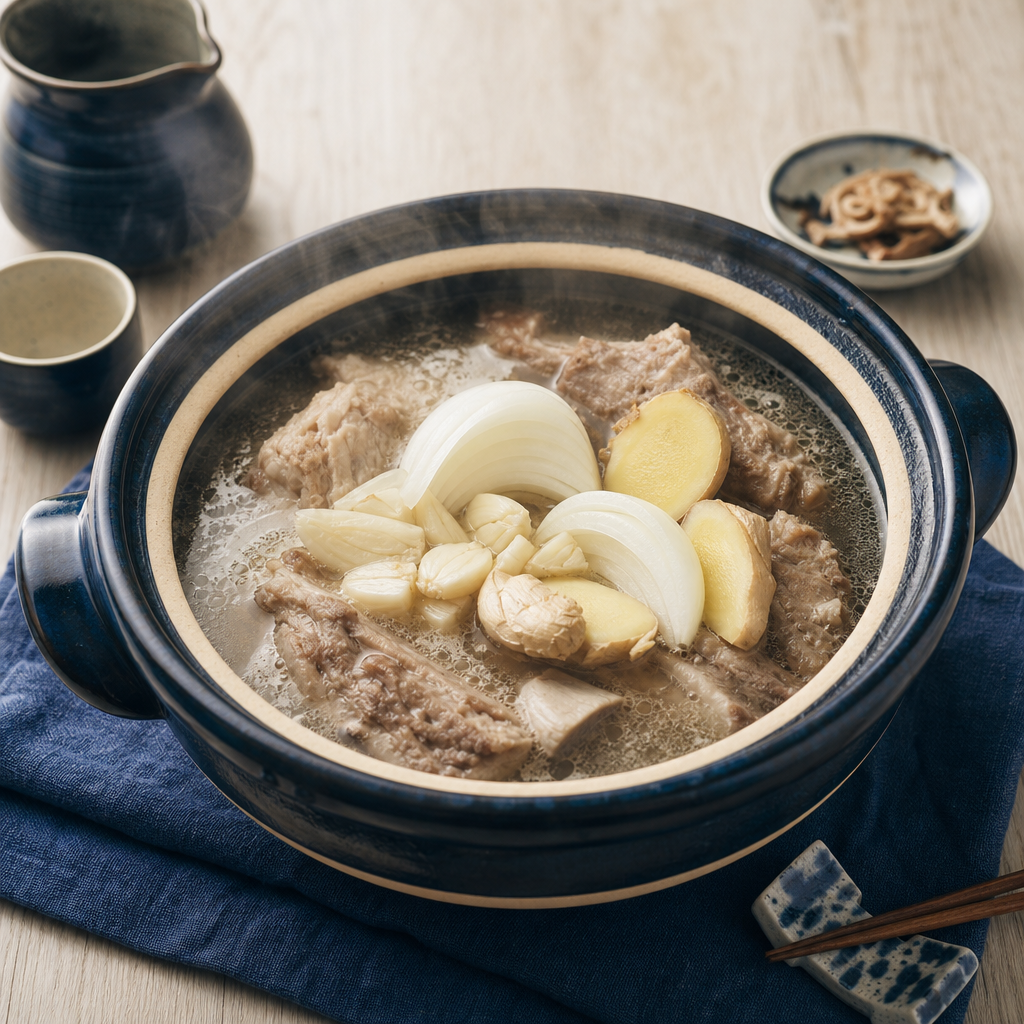
Add onion, garlic, and ginger for the final 90 minutes of the broth cook. Do not add them at the beginning.
Make the seafood dashi
Cold-soak kombu and prepared niboshi in 900 ml water for 30 minutes. Heat slowly until small bubbles form at the pot edge, remove kombu before boiling, add katsuobushi and saba-bushi, steep off heat for 8 minutes, then strain.
Strain and concentrate the broth
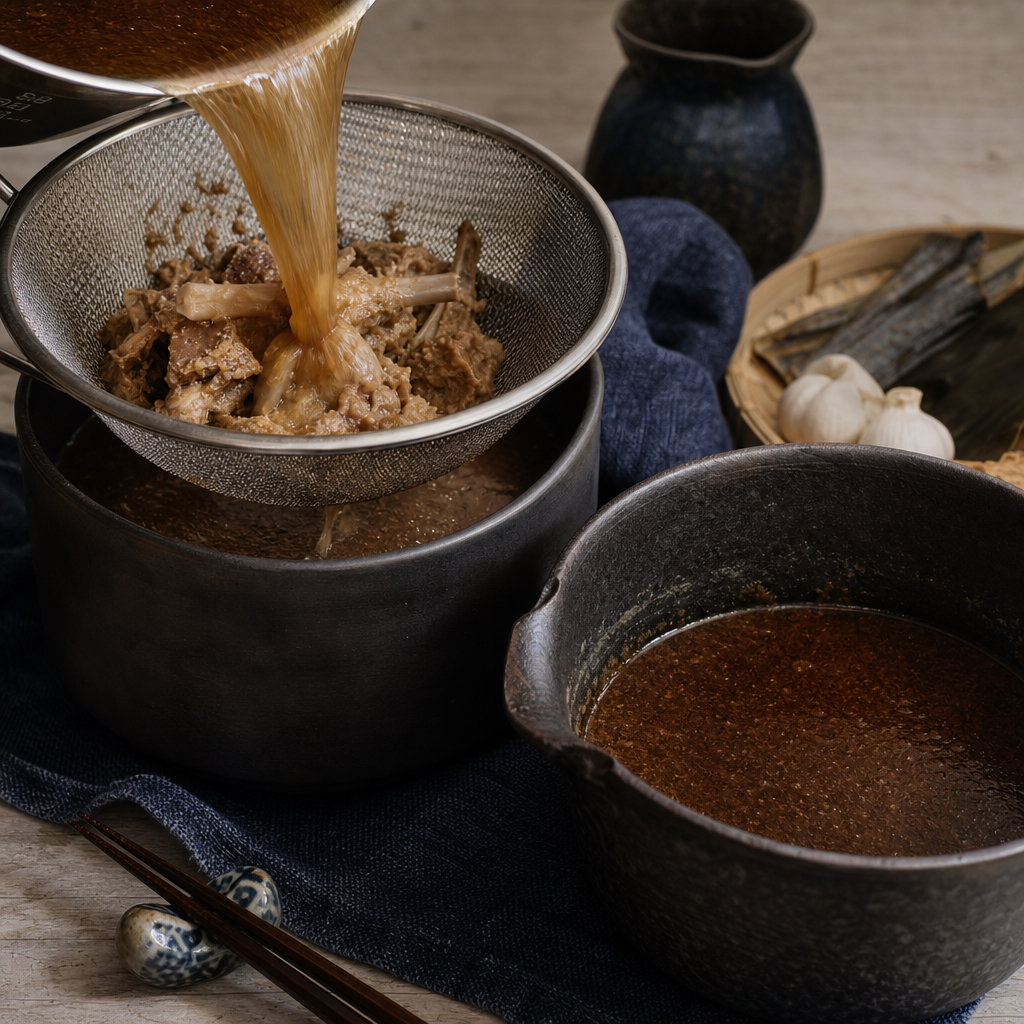
Strain the animal broth through a coarse sieve, pressing lightly on the bones and soft tissue. Boil the strained broth until reduced to about 1.4 L, then whisk in 600 ml seafood dashi.
Cook the tare
Combine koikuchi shoyu, usukuchi shoyu, sake, mirin, rice vinegar, sugar, and salt in a small saucepan. Bring to a brief simmer for 90 seconds, then turn off the heat.
Season the dipping soup
For each serving, combine 300 ml hot pork-seafood broth with 70-80 ml tare and 5 g fish powder. Whisk until the surface looks glossy and lightly speckled.
Cook the noodles hard and rinse them cold
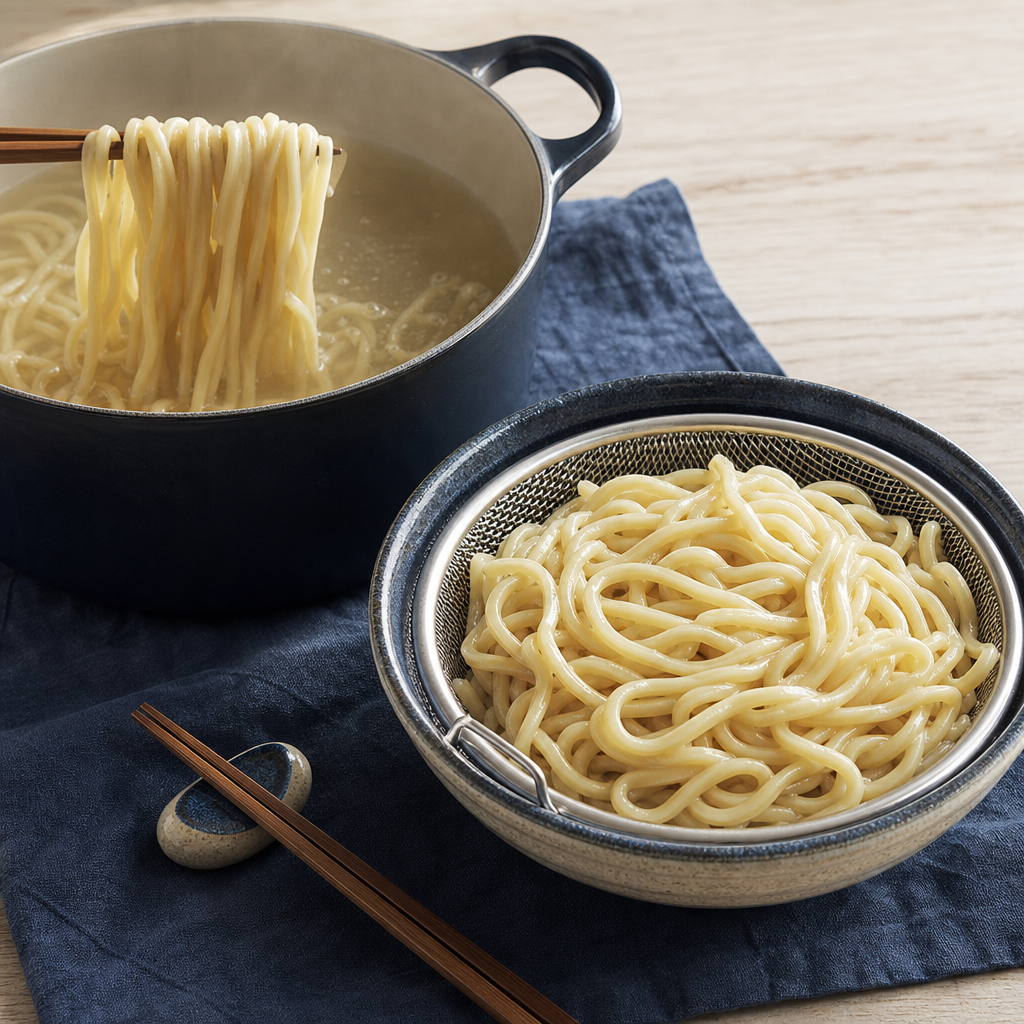
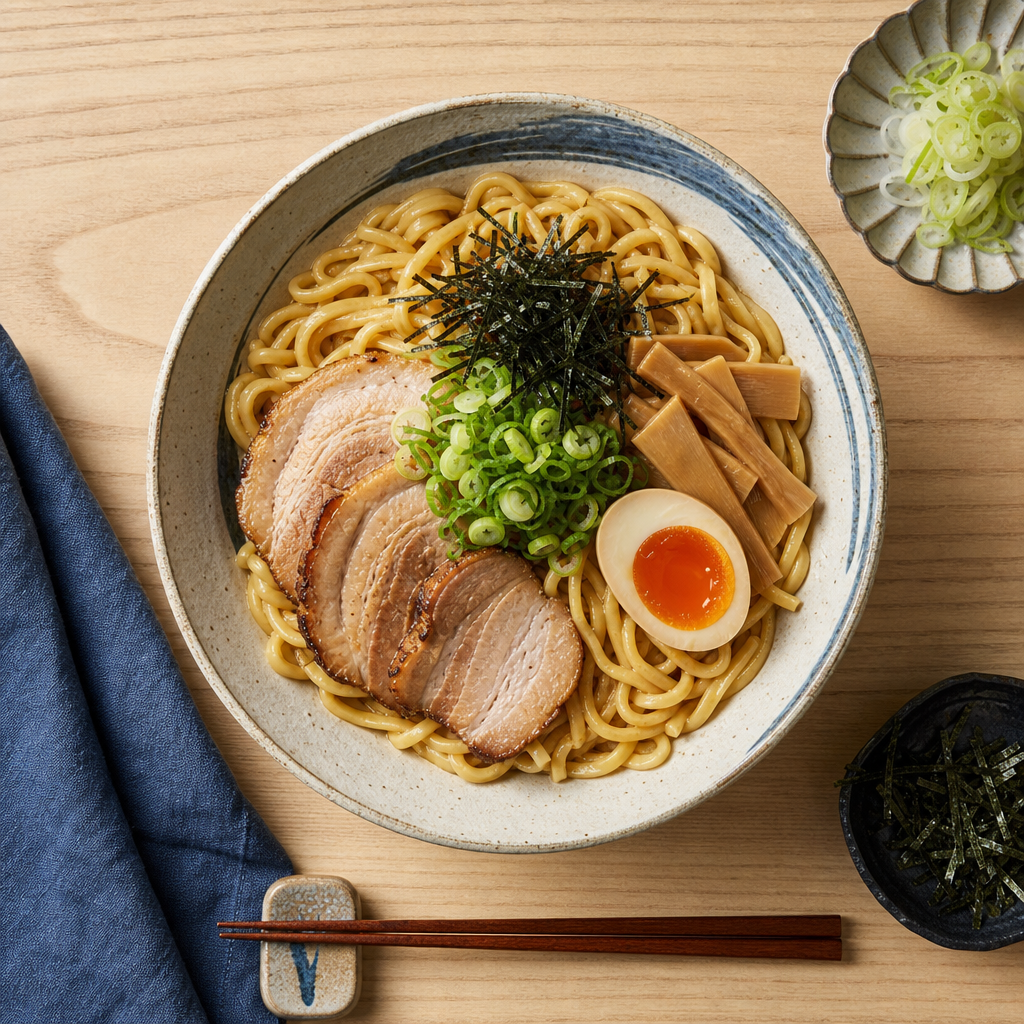
Boil thick ramen noodles in a large pot of unsalted water until cooked through with a firm chew, usually 5-7 minutes depending on thickness. Drain, rinse under cold running water, and scrub the noodle surface between both hands until the water runs clear.
Rewarm or serve cold
For standard hiyamori, drain the cold noodles hard and serve them cold. For ats盛り, dip the rinsed noodles back into hot water for 10 seconds, then drain hard before plating.
Plate the bowls
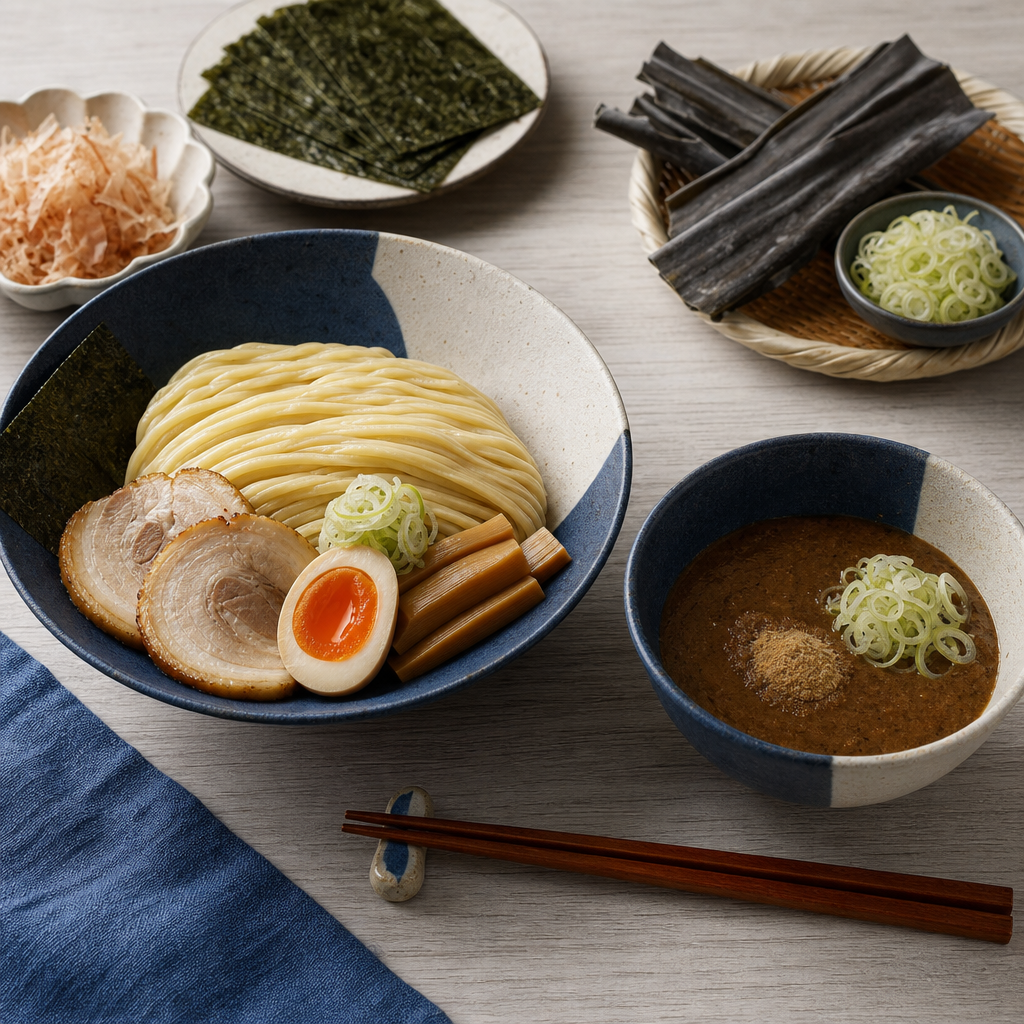
Mound noodles in wide bowls. Arrange chashu, ajitama, menma, nori, and some scallion on or beside the noodles; place the remaining scallion in the hot dipping soup.
Serve with soup-wari
After the noodles are finished, dilute the remaining dipping soup with hot seafood dashi or hot water until it becomes drinkable. Start with 1 part dashi to 1 part remaining soup.
Common mistakes
- {'mistake': 'Using ordinary ramen broth at normal salinity.', 'fix': 'Concentrate the broth and season it as a dipping soup. It should taste slightly too intense on its own.'}
- {'mistake': 'Skipping the noodle rinse.', 'fix': 'Rinse and rub the noodles under cold water until the surface starch is gone. Cloudy runoff means the job is not finished.'}
- {'mistake': 'Boiling kombu with the bones.', 'fix': 'Extract kombu separately and remove it before the boil. Boiled kombu gives slime and bitterness.'}
- {'mistake': 'Making the fish powder the whole broth.', 'fix': 'Use fish powder as a final punch, not as a substitute for dashi. Too much powder gives chalky soup.'}
- {'mistake': 'Serving the dipping soup lukewarm.', 'fix': 'Heat the soup bowls and serve the soup near boiling. Cold noodles will drop the temperature immediately.'}
What does not belong
- {'item': 'Italian pasta', 'reason': 'Pasta lacks kansui. Without alkaline ramen noodles, the chew and aroma are wrong.'}
- {'item': 'Cream or milk', 'reason': 'Dairy does not belong in this Tokyo pork-seafood style. Opacity should come from bones, gelatin, and emulsion.'}
- {'item': 'Sweet bottled teriyaki sauce', 'reason': 'Teriyaki sauce turns the tare syrupy and one-dimensional. Tsukemen tare needs salt, soy aroma, measured sweetness, and acidity.'}
- {'item': 'Chinese dark soy sauce as a direct swap', 'reason': 'It is darker, sweeter, and differently salted than Japanese koikuchi shoyu. The tare will read heavy before it reads balanced.'}
- {'item': 'Soft thin instant noodles', 'reason': 'They collapse under dipping and carry too much surface starch. Thick fresh or frozen ramen noodles are the correct structure.'}