Abura Soba
The dish in context
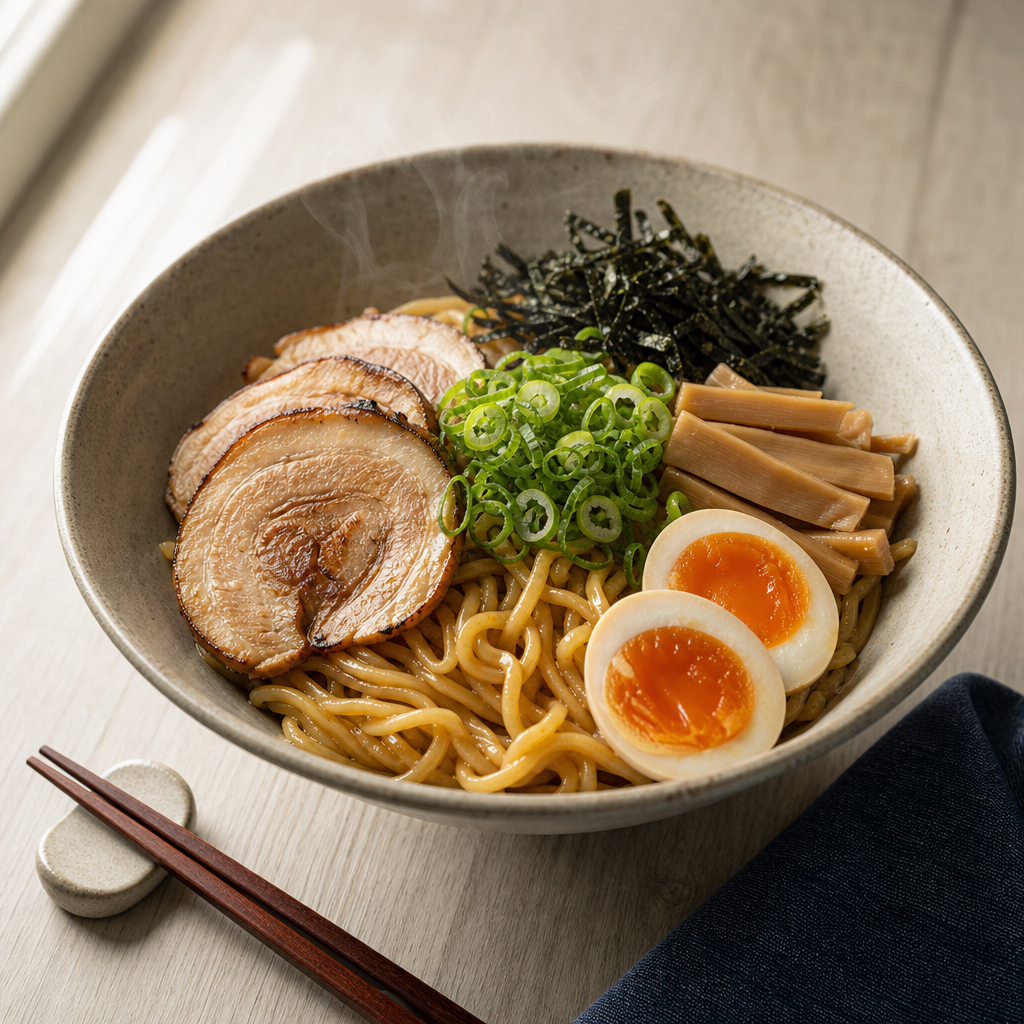
Abura soba is a Tokyo brothless ramen associated with western Tokyo, especially the Musashino and Musashi-Sakai area. Postwar ramen shops are commonly cited as its origin, with Chinchintei and other local shops tied to the 1950s story of a staff meal or low-cost student bowl made without broth. The structure is stable: hot ramen noodles, soy-based tare, animal fat or aromatic oil, and classic ramen toppings, mixed by the diner before eating. Mazesoba and modern maze-style bowls overlap with abura soba, but the older Tokyo form is leaner and less crowded.
Method 8 steps · 20 min
Heat the bowls
Fill two serving bowls with boiling water and leave them while the noodle water comes to a boil. Empty and dry the bowls immediately before adding the tare.
Make the shoyu-fat tare
Combine shoyu, mirin, sake, chicken stock powder, and sugar in a small pan. Bring to a brief simmer for 20-30 seconds, then turn off the heat and stir in the melted lard and sesame oil.
Divide tare into hot bowls
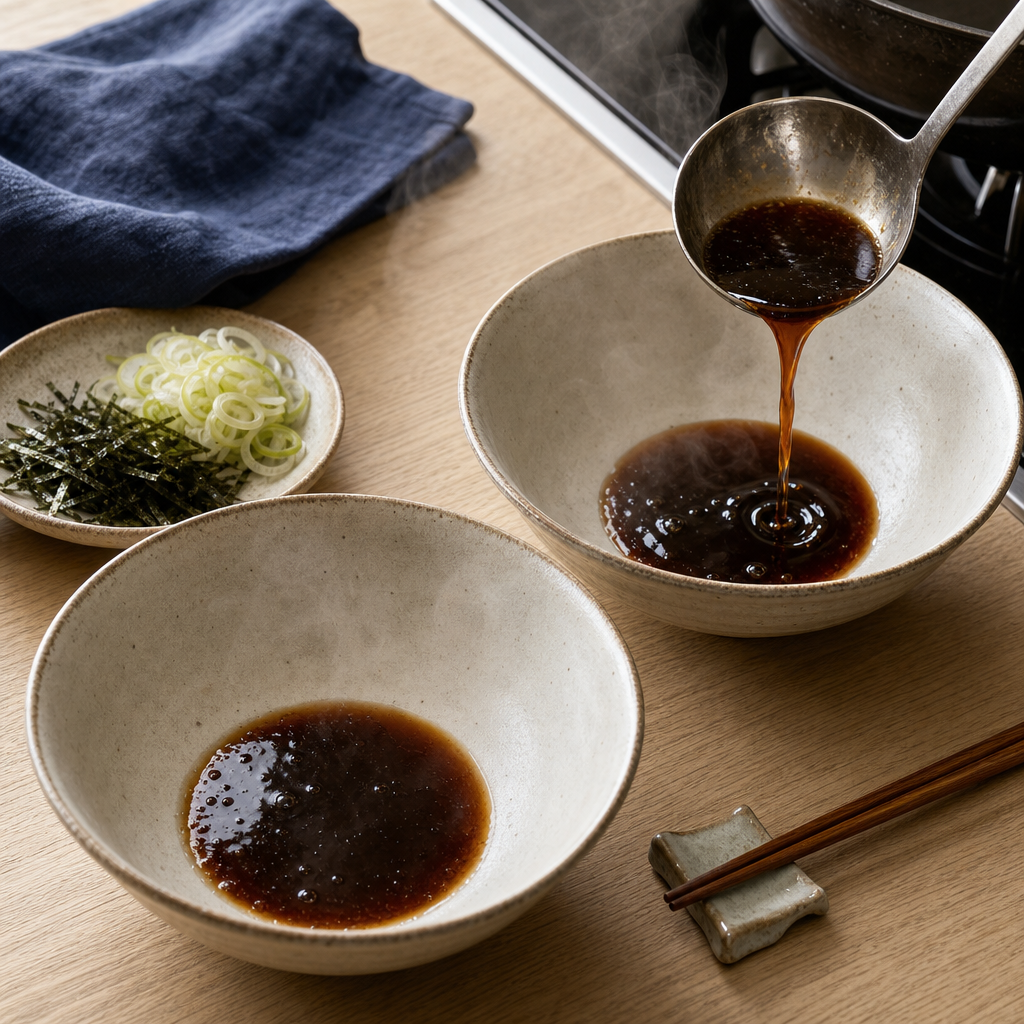
Pour half the tare into each warmed bowl. Keep the bowls near the stove so the tare stays fluid.
Cook the ramen noodles
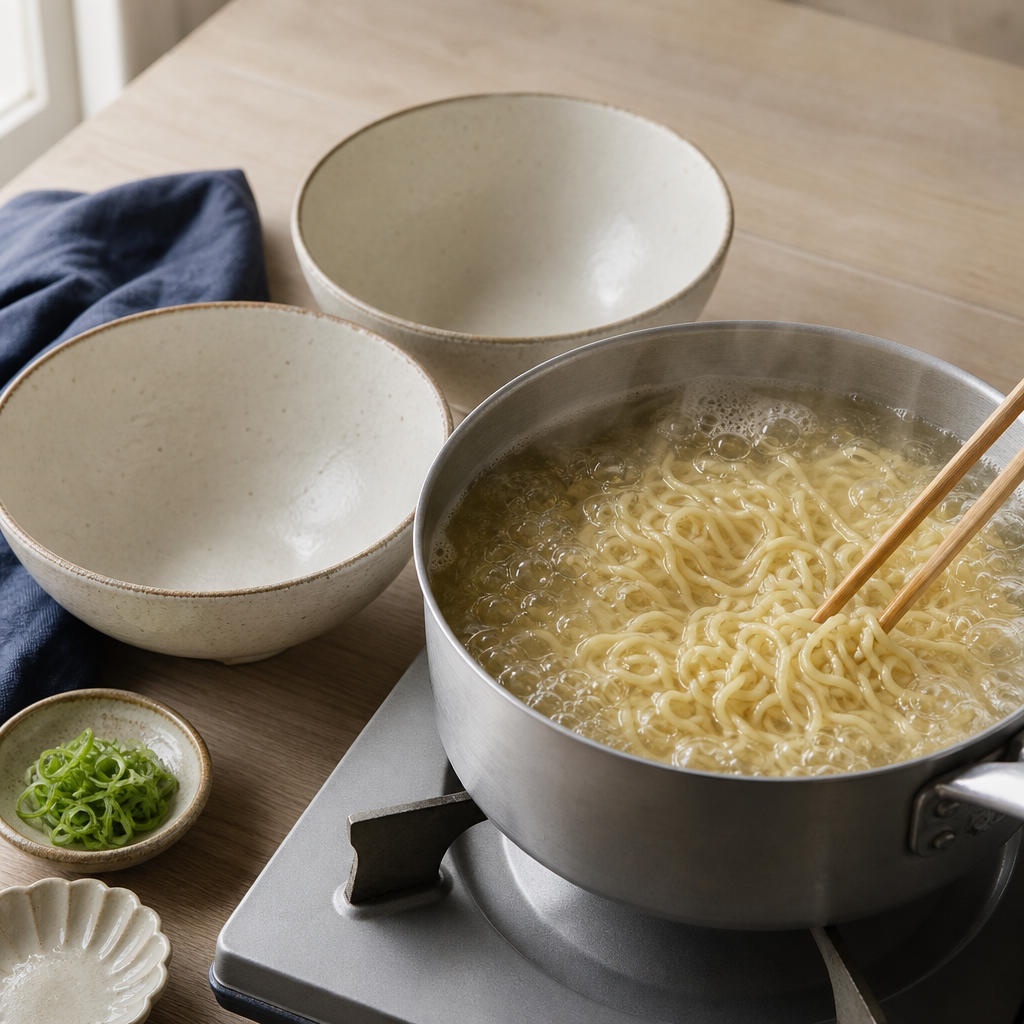
Boil the ramen noodles in plenty of unsalted water according to the package timing, usually 2-4 minutes for fresh thick noodles. Stir at the start so the strands separate, then stop fussing with them.
Drain hard
Drain the noodles in a colander and shake hard for 5-8 seconds. Do not rinse.
Toss while hot
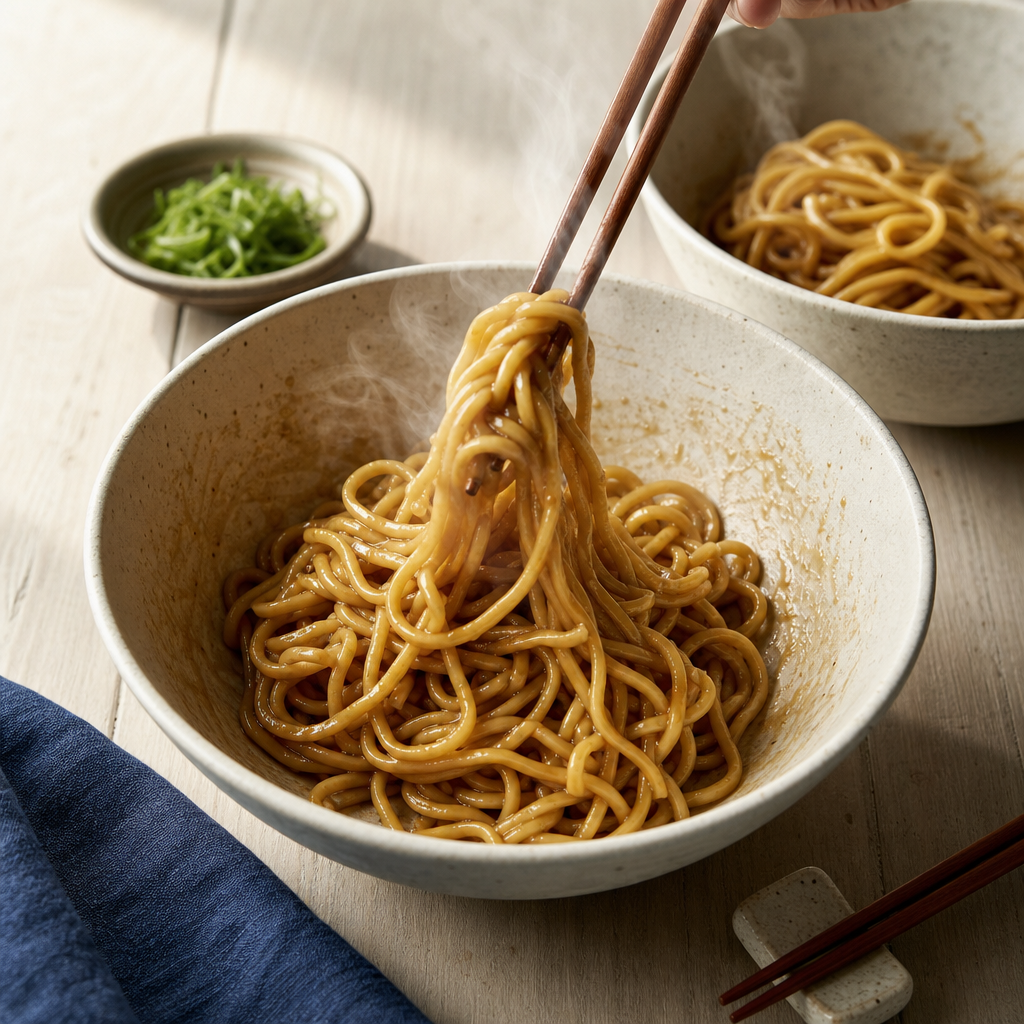
Drop the hot noodles directly into the bowls. Lift and fold with chopsticks or tongs until every strand looks glossy and lightly stained, about 20 seconds.
Top the bowls
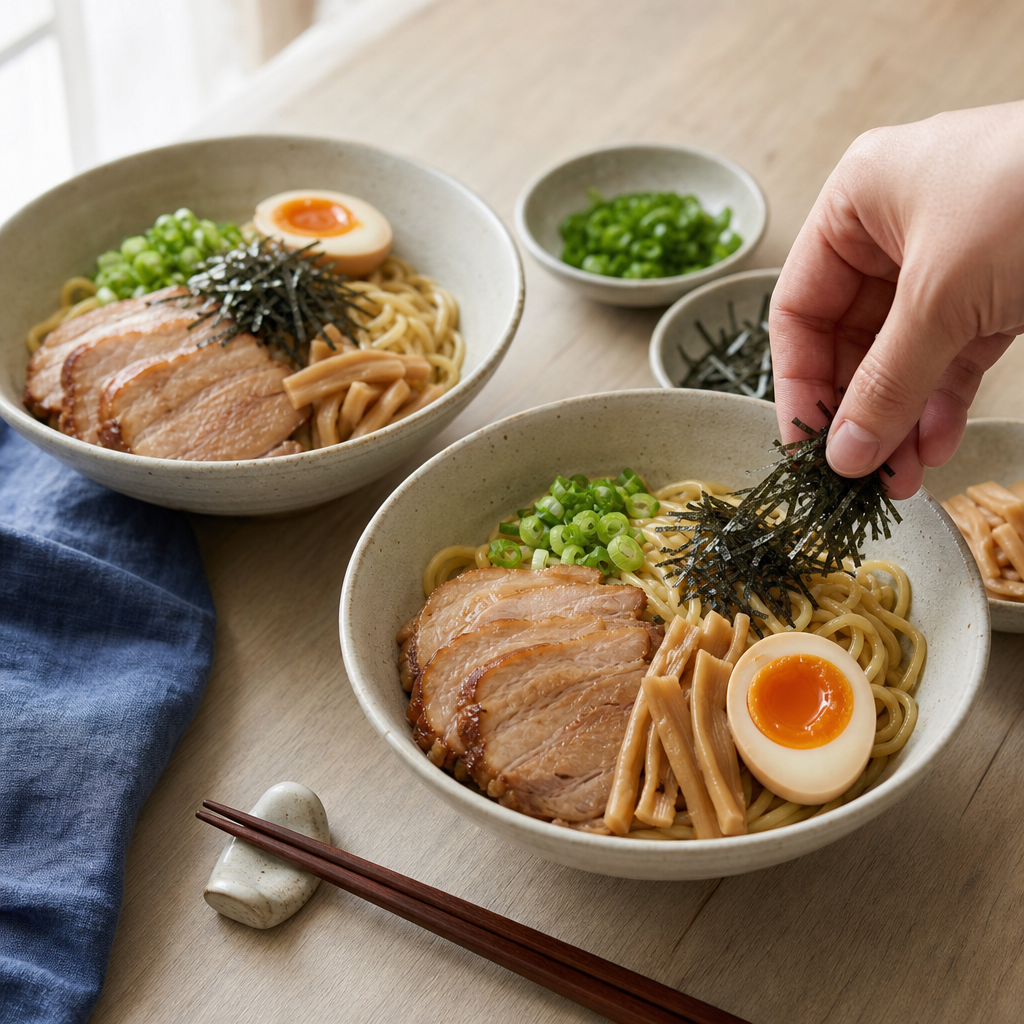
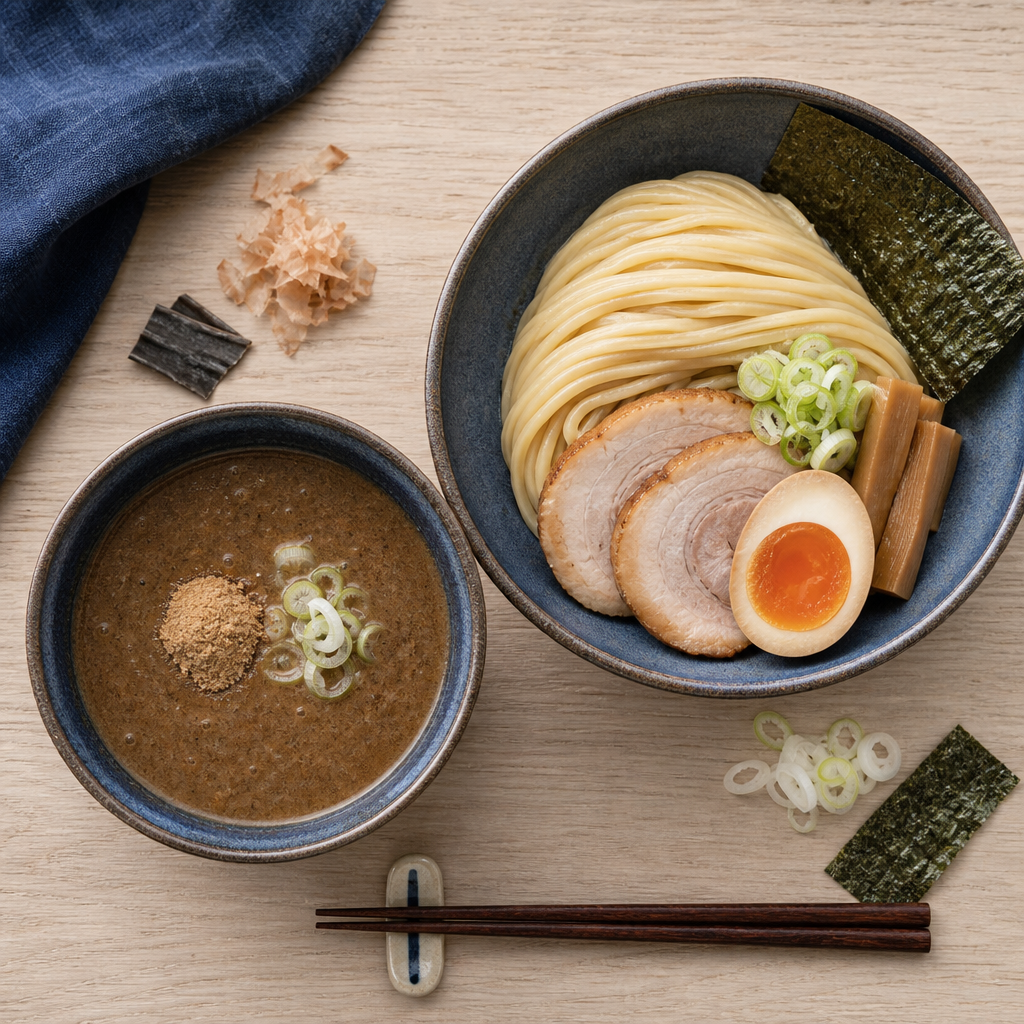
Arrange chashu, menma, green onion, nori, and egg if using over the noodles. Keep the toppings in sections rather than burying the noodles.
Finish with vinegar and rāyu
Serve immediately with rice vinegar and rāyu at the table. Add roughly 2 tsp vinegar and 1 tsp rāyu per bowl to start, then mix from the bottom until the noodles look evenly coated.
Common mistakes
- {'mistake': 'Using buckwheat soba because the dish is called soba.', 'fix': 'Use ramen noodles with kansui. In this dish, soba is part of the name, not an instruction to use buckwheat noodles.'}
- {'mistake': 'Leaving noodle water in the bowl.', 'fix': 'Drain hard. The sauce should cling as a coating, not sit like a weak soup.'}
- {'mistake': 'Serving it lukewarm.', 'fix': 'Warm the bowl and toss immediately after draining. The fat should look glossy, not opaque or waxy.'}
- {'mistake': 'Adding all the vinegar before mixing.', 'fix': 'Start with a moderate amount, mix, then adjust. Acid balance depends on the tare, noodle amount, and fat level.'}
- {'mistake': 'Crowding the pot with too many noodles.', 'fix': 'Cook in batches for more than four servings. Ramen needs boiling water movement to keep its texture.'}
What does not belong
- {'item': 'Broth', 'reason': 'Broth turns this into ramen or mazemen-adjacent noodles. Abura soba proper is brothless.'}
- {'item': 'Buckwheat soba noodles', 'reason': 'Buckwheat soba does not belong. The required texture is yellow, alkaline ramen chew.'}
- {'item': 'Sweet teriyaki sauce', 'reason': 'Teriyaki sauce makes the bowl sticky and sweet. The tare should read soy-fat-vinegar, not glaze.'}
- {'item': 'Mayonnaise', 'reason': 'Mayonnaise belongs to some modern convenience riffs, not the classic Tokyo structure.'}
- {'item': 'Cream, milk, or cheese', 'reason': 'Dairy blunts the sharp soy-vinegar profile and pushes the bowl into a different modern mazesoba style.'}
- {'item': 'Sesame paste as the main sauce', 'reason': 'Sesame paste makes tantan-style noodles. Abura soba uses fat and shoyu tare, not a thick nutty dressing.'}
Adaptations
Use neutral oil instead of lard, kombu or shiitake powder instead of chicken powder, and soy-braised king oyster mushrooms instead of chashu. Keep the ramen noodles egg-free if required; many fresh ramen noodles contain egg or egg color.
Replace pork chashu with soy-braised chicken, lard with chicken fat, and sake and mirin with the listed alcohol-free substitutions. Confirm the soy sauce and noodles are halal-certified if strict compliance is needed.
Use certified gluten-free tamari and gluten-free ramen-style noodles. Standard ramen noodles are wheat-based, so the texture will change; rice noodles do not give the same bite.
The base recipe contains no dairy. Do not add cheese or butter.
The base recipe contains no shellfish. Check commercial ramen soup powder, menma seasoning, and rāyu labels for shrimp or seafood extracts.