Shio Ramen
The dish in context
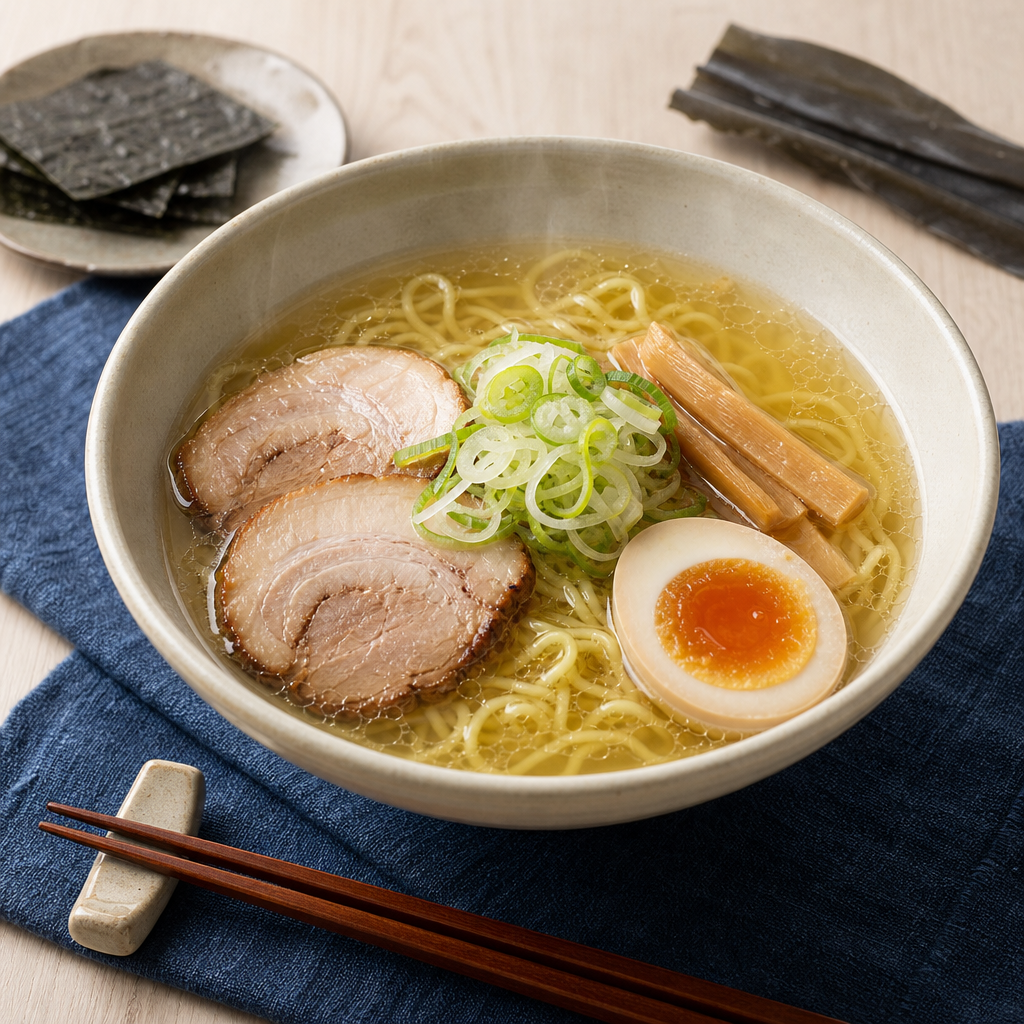
Shio ramen is one of Japan's major ramen categories, defined by its tare: salt is the main seasoning, not soy sauce or miso. Hokkaido sources commonly associate Hakodate with shio ramen, alongside Sapporo miso ramen and Asahikawa shoyu ramen. The style often uses a clear chicken or pork broth supported by seafood and kombu, which fits Hakodate's port-city food culture better than a heavy emulsified soup. Modern shops vary widely, but the shared grammar is clear broth, salt-forward tare, wheat noodles with kansui, and restrained toppings.
Method 8 steps · 210 min
Blanch the bones
Cover the chicken and pork bones with cold water in a pot, bring to a boil, and cook 3 minutes. Drain, rinse the bones under running water, and scrub away clotted blood or dark scum.
Start the clear stock
Return the cleaned bones to the pot with 2500 ml cold water, ginger, garlic, and green onion tops. Bring slowly to a bare simmer, then hold at 85-90°C for 2 hours, skimming foam without stirring hard.
Extract the seafood dashi
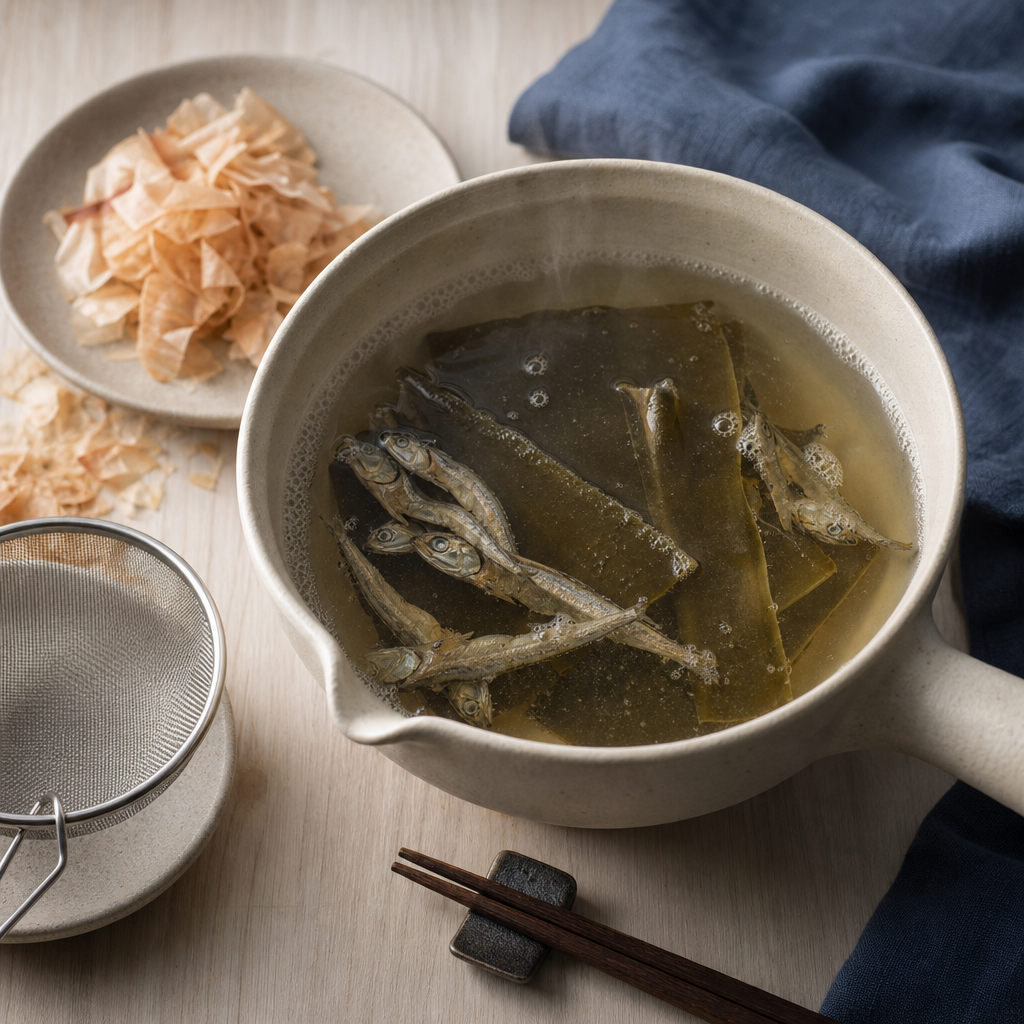
Add kombu and prepared niboshi to the hot broth and hold below a boil for 25 minutes. Remove the kombu, add katsuobushi, steep 2 minutes, then strain the broth through a fine sieve without pressing the solids hard.
Make the shio tare
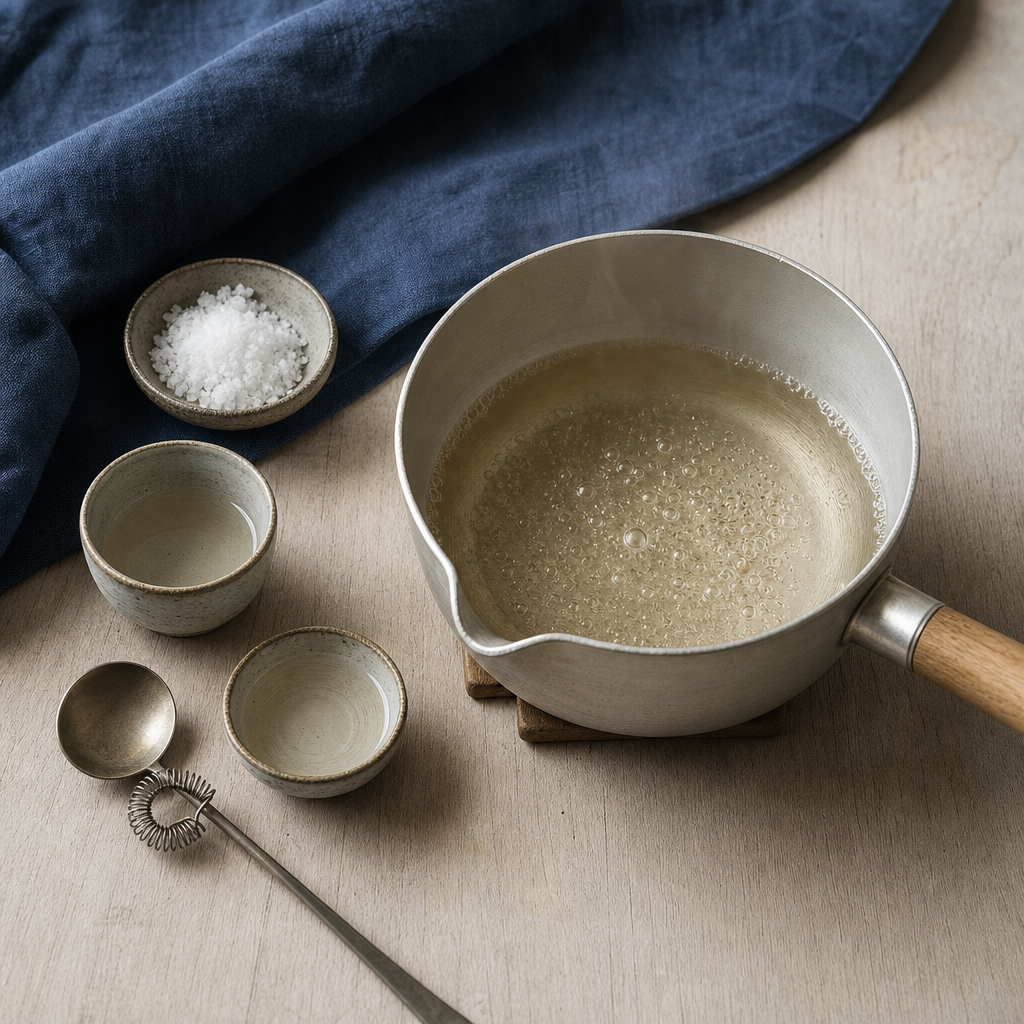
Combine sake, mirin, sea salt, and rice vinegar in a small pan. Heat until the salt dissolves and the alcohol smell softens, then cool.
Prepare the bowls
Warm four ramen bowls. Add 1 tablespoon shio tare and 2-3 teaspoons scallion oil or chicken fat to each bowl.
Heat the broth
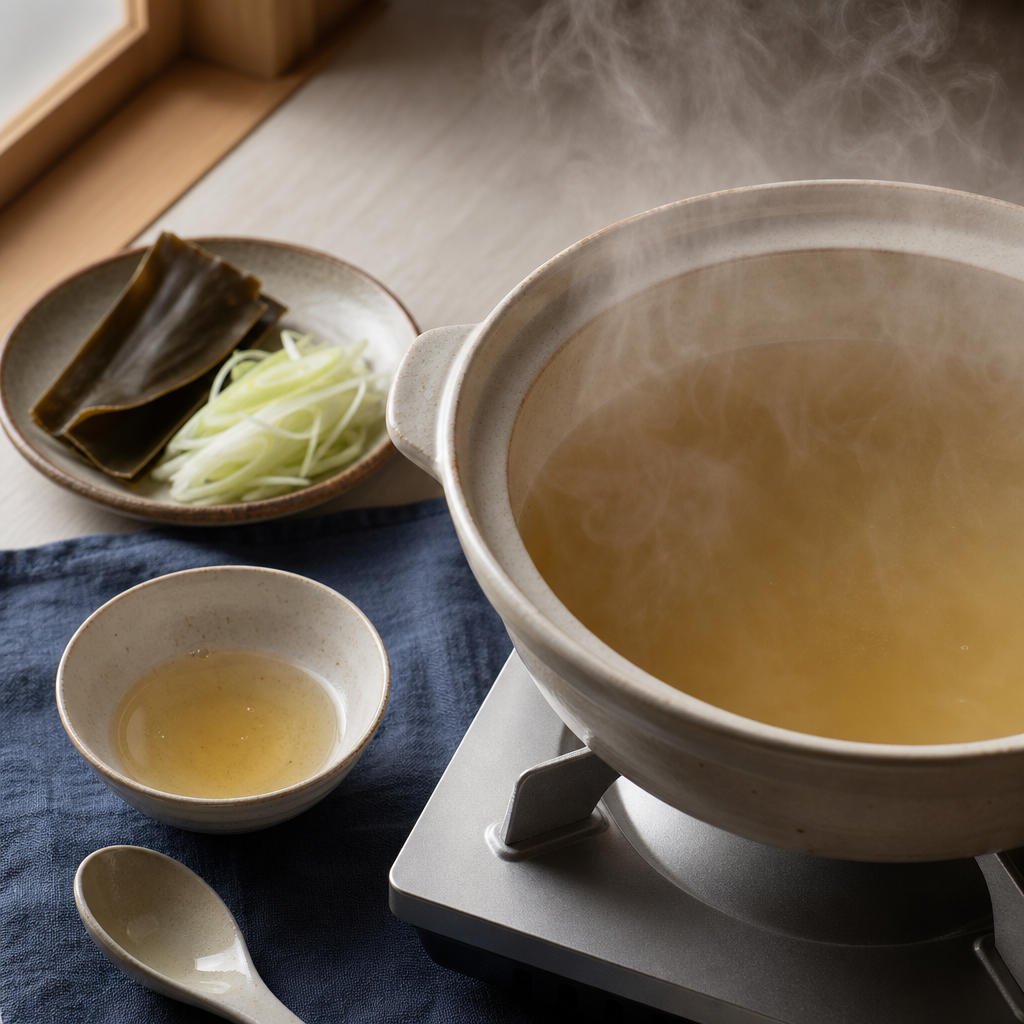
Bring the strained broth to a strong steam, about 90-95°C, without reducing it hard. Taste one test bowl with broth and tare; adjust tare by teaspoons, not by pouring salt into the pot.
Cook the noodles
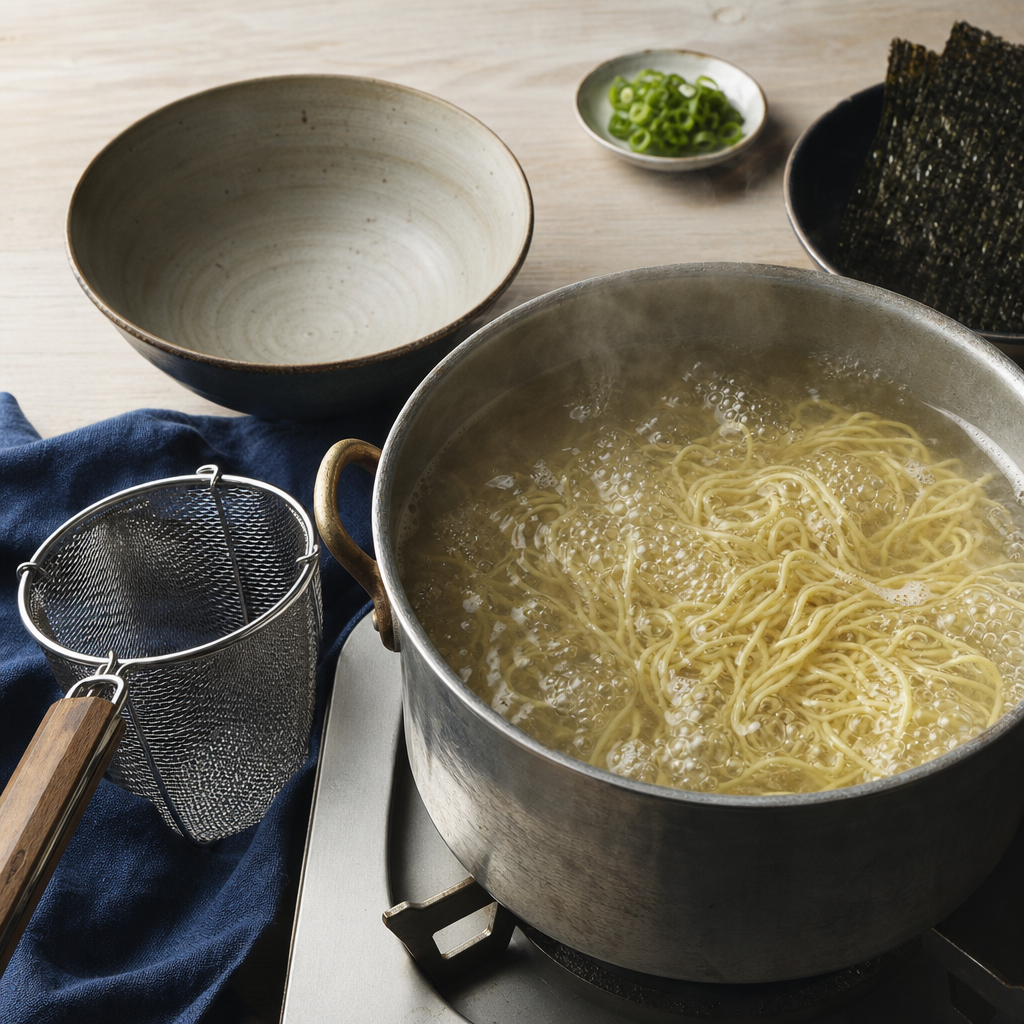
Boil the ramen noodles in a separate large pot of unsalted water until slightly firmer than the package target, usually 60-120 seconds for fresh noodles. Shake off water hard.
Assemble fast
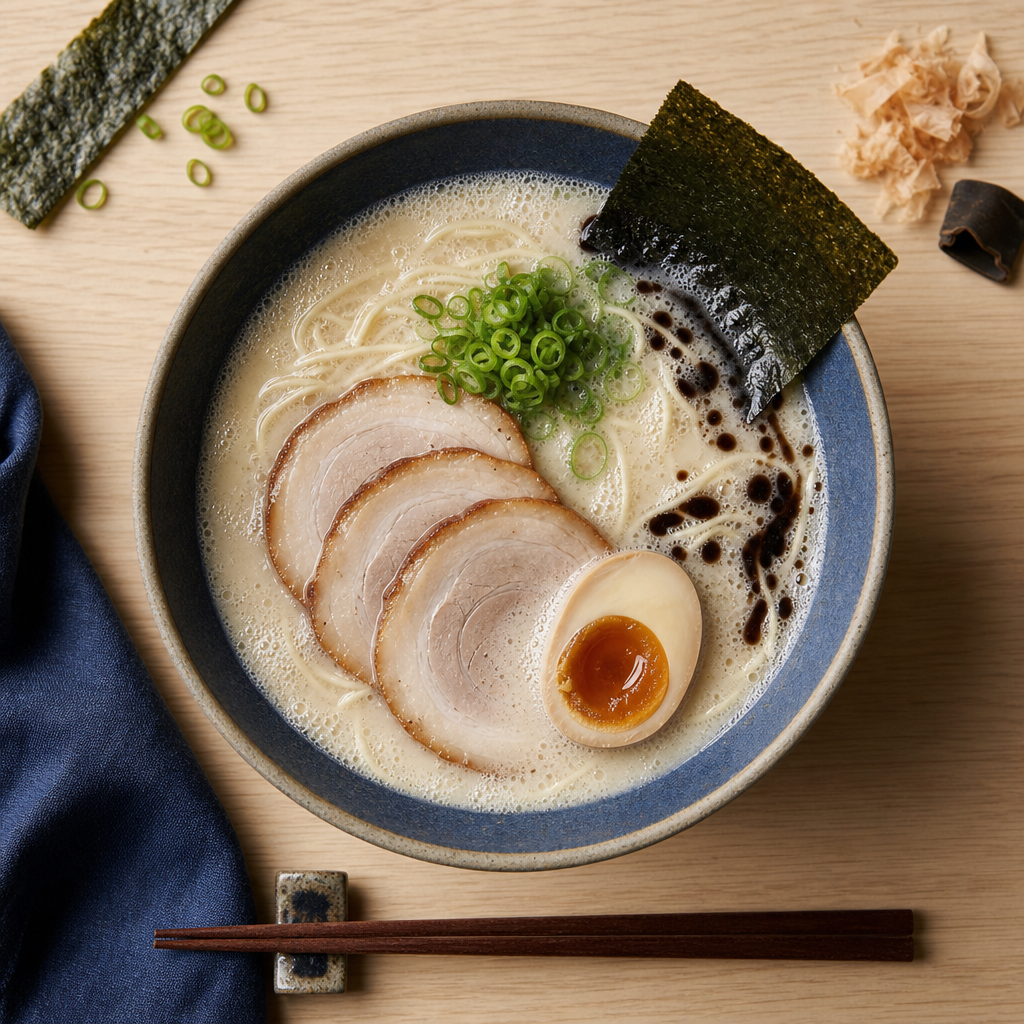
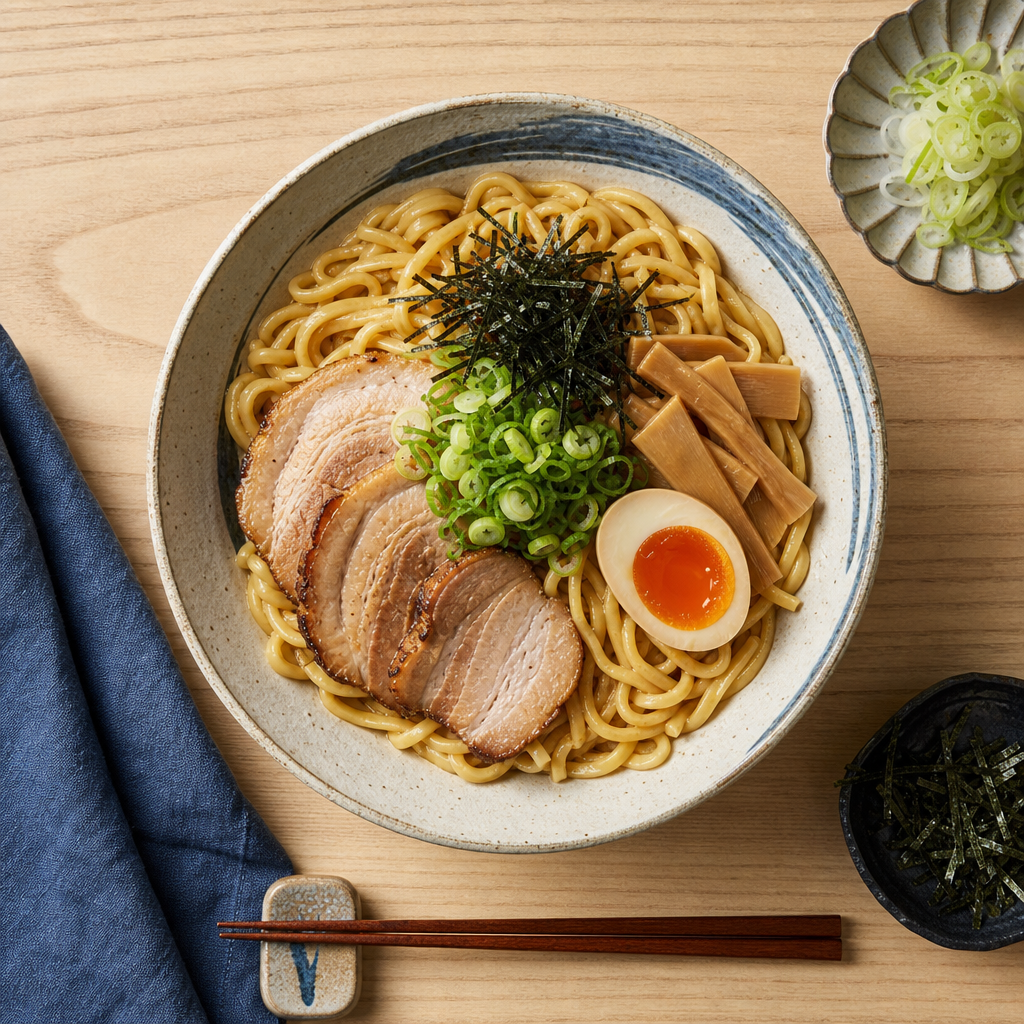
Ladle about 350 ml hot broth into each prepared bowl and stir once to combine with tare and oil. Add noodles, lift and fold them into a neat mound, then top with chashu, menma, scallion, egg, nori, and a small pinch of white pepper if using.
Common mistakes
- Boiling the broth hard after blanching. Cloudy broth is not a badge of richness here; it is the wrong style.
- Using soy sauce as the main seasoning. Once soy dominates, the bowl has moved into shoyu ramen.
- Using noodles without kansui. The yellow color, alkaline aroma, and springy bite are structural to ramen.
- Oversalting the pot instead of seasoning each bowl with tare. Shio ramen needs control at the bowl level.
- Letting cooked noodles sit while toppings are arranged. Ramen noodles go from springy to slack in minutes.
What does not belong
- Miso does not belong in shio ramen; it makes miso ramen.
- Cream does not belong in the broth.
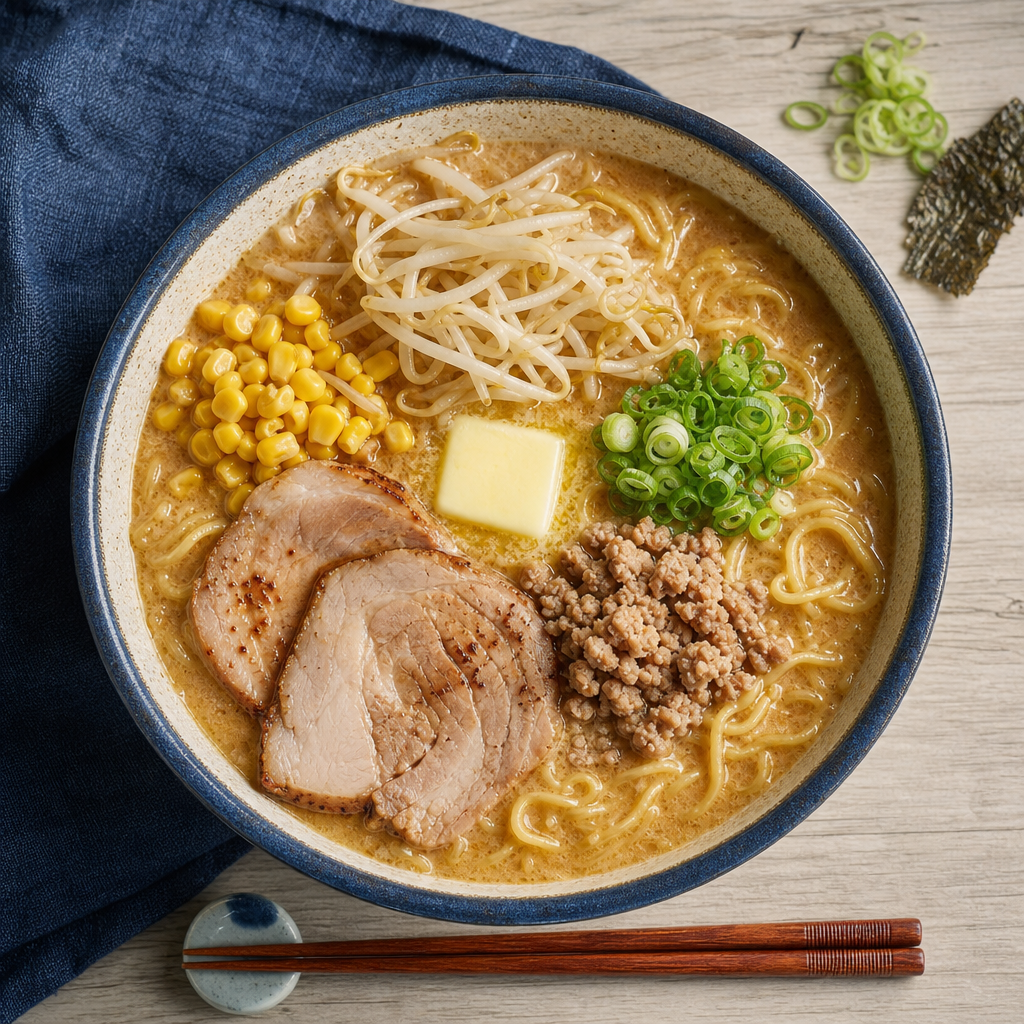
- Butter and corn do not belong in this Hakodate-leaning shio bowl unless making a Sapporo-style tourist variation.
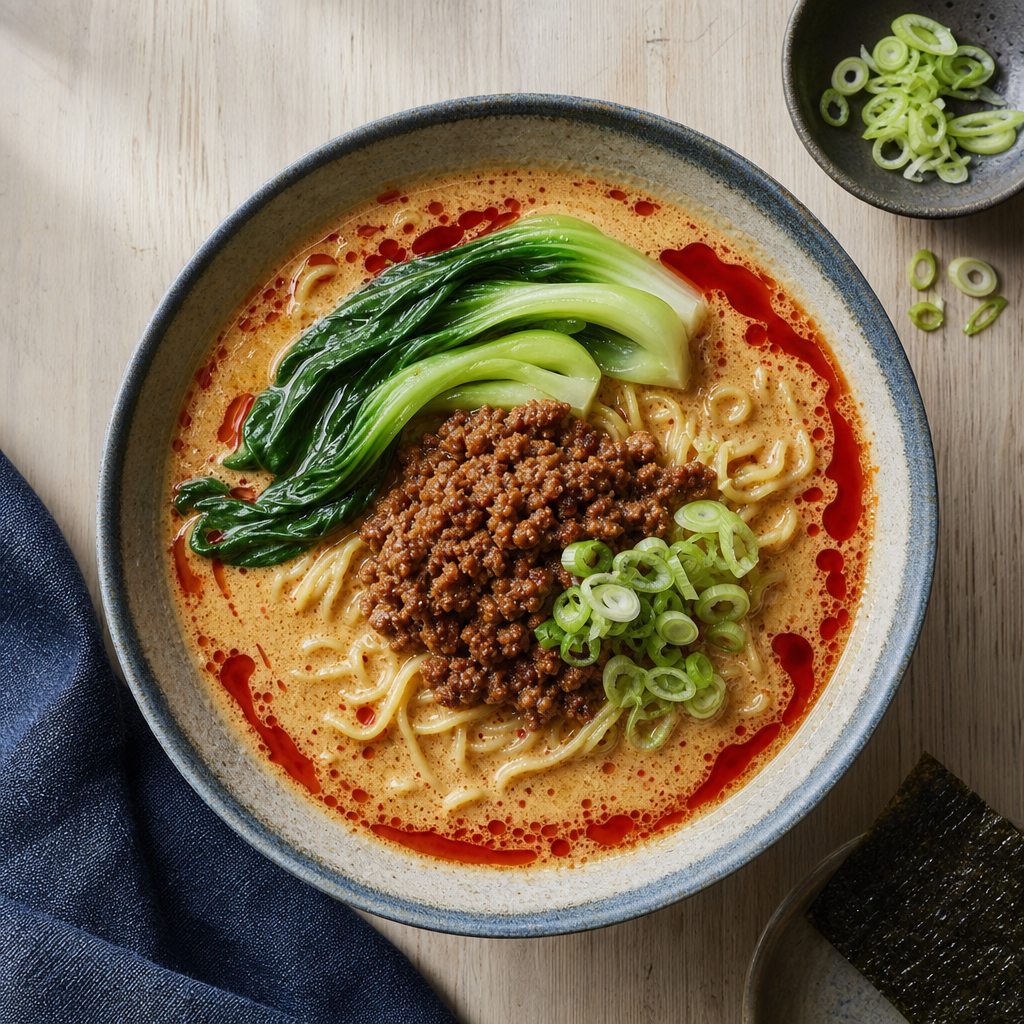
- Heavy chili oil does not belong as the default finish; it covers the salt tare and seafood dashi.
- Italian pasta does not belong. Without kansui, the texture is wrong.
Adaptations
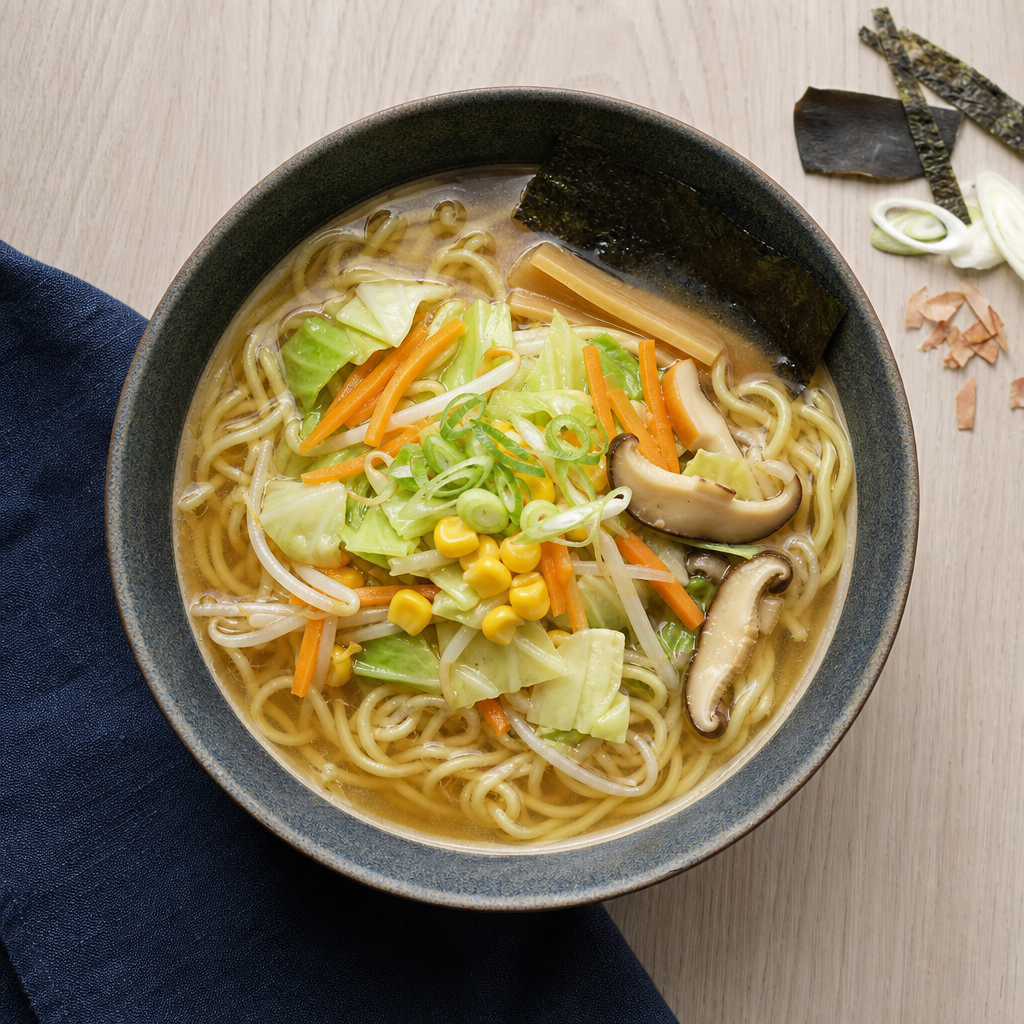
Use kombu, dried shiitake, and a small amount of toasted sesame or scallion oil for the broth; omit chicken, pork, bonito, chashu, and egg. This becomes vegan shio-style ramen, not a direct Hakodate bowl.
Use chicken only, replace chashu pork with chicken chashu, and replace sake and mirin with water plus a small amount of sugar and rice vinegar. Confirm ramen noodles and menma are alcohol-free.
Traditional ramen noodles are wheat noodles with kansui. Gluten-free noodles can make a shio-style noodle soup, but not standard ramen.
The recipe contains no dairy. Do not add butter to this version.
No shellfish is required. Check commercial noodles, menma, and broth powders for shrimp or shellfish additives.