Tonkotsu Ramen
The dish in context
Tonkotsu ramen developed in Kyushu, with Kurume commonly cited in Japanese regional ramen histories as a major origin point and Hakata as the internationally recognizable thin-noodle form. The defining move is not pork flavor alone; it is hard boiling pork bones until collagen, marrow, and fat emulsify into a cloudy broth. Older Kyushu shops often maintain a yobimodoshi (呼び戻し) system, refreshing a continuing mother broth, which contributes the sour-animal aroma associated with old-style tonkotsu. Home kitchens cannot safely or practically reproduce a perpetual commercial broth, so this recipe builds the same structural effect through blanching, cleaning, hard boiling, and controlled fat emulsification.
Method 13 steps · 780 min
Blanch the bones hard
Cover the trotters and pork bones with cold water, bring to a full boil, and boil 15 minutes. Drain everything. Discard the water.
Scrub the bones clean
Rinse the bones under running water. Scrub away dark clots, grey foam, and organ residue with fingers or a small brush until the bones look pale and clean.
Start the long boil
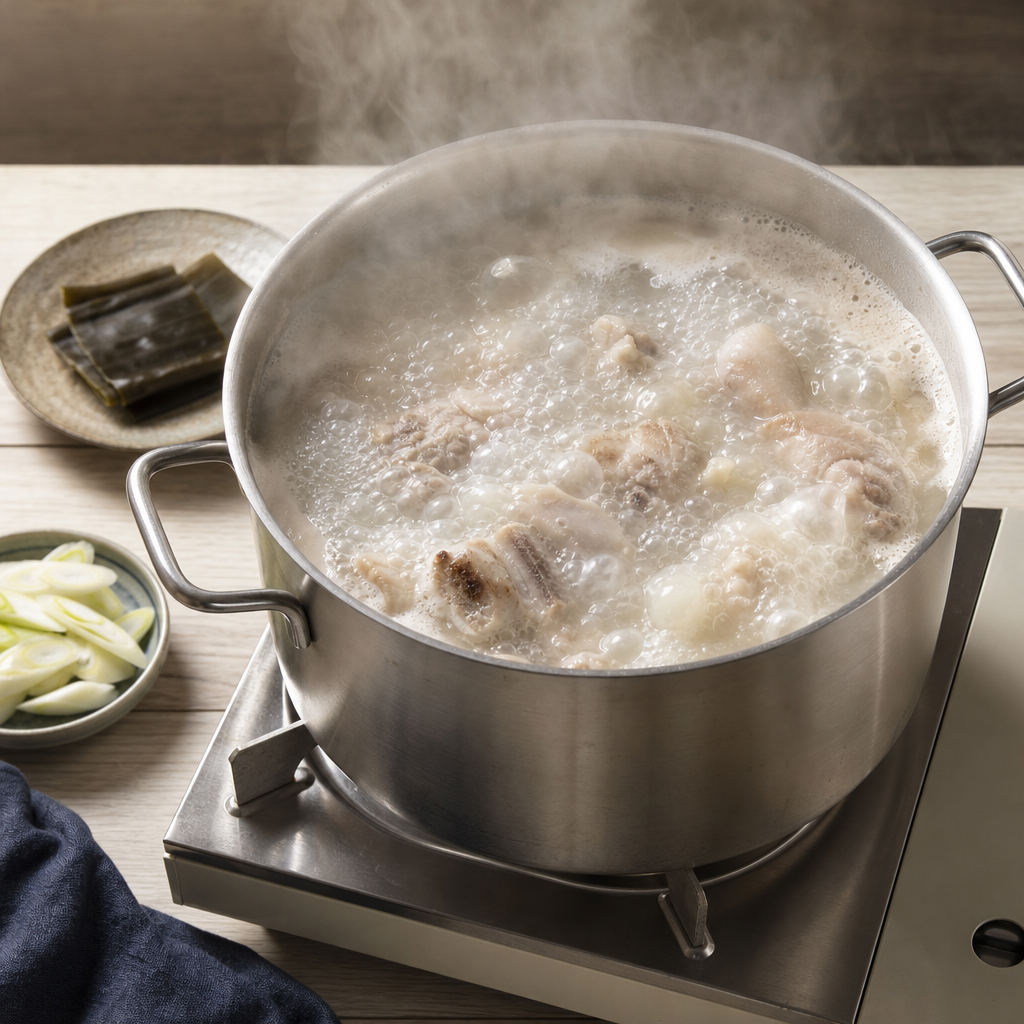
Return the cleaned bones and trotters to the stockpot with 6 L water. Bring to a rolling boil, then keep it there, uncovered, for 6 hours, adding boiling water as needed to keep the bones submerged.
Add fat and aromatics
Add the back fat, onion, garlic, ginger, and green onion tops. Continue boiling hard for 3-5 hours, topping up with boiling water when the level drops below the bones.
Break the bones and emulsify
When the trotters are collapsing and the broth is ivory and sticky, crush softened bones and skin pieces with tongs or a potato masher. Boil 30 minutes more, then stir hard to emulsify any surface fat into the liquid.
Strain and adjust the broth
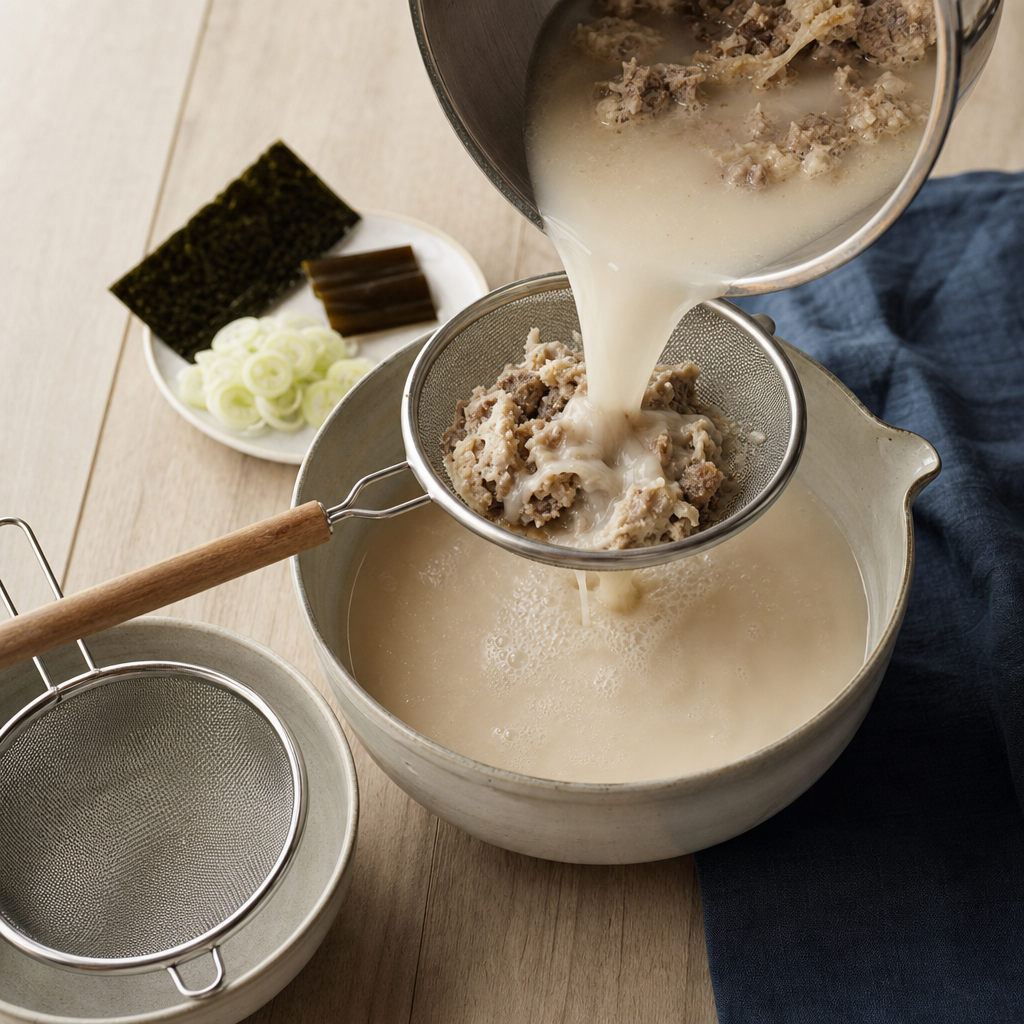
Strain through a coarse sieve, pressing the solids. For a smoother shop-style texture, strain again through a fine sieve. Measure the broth and adjust with boiling water to about 2.4 L for 4 bowls.
Make the shoyu tare
Soak kombu in the shoyu for 30 minutes. Remove the kombu before heating, then add sake, mirin, salt, and sugar. Bring to a brief simmer for 2 minutes and cool.
Braise the chashu
Tie the pork belly into a tight roll. Simmer it in the chashu braising liquid at a bare bubble for 2-3 hours, turning every 30 minutes, until a skewer slides through the center with little resistance.
Chill and slice the chashu
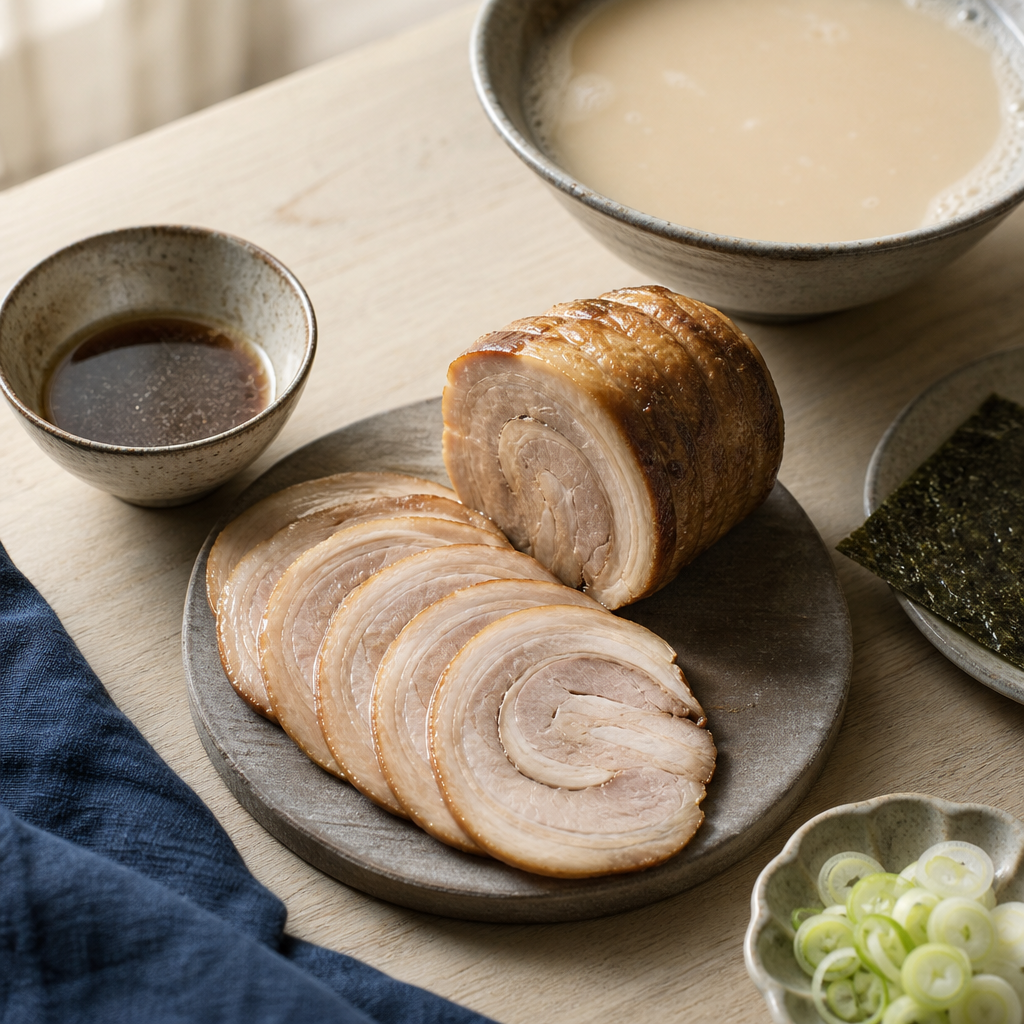
Cool the chashu in its liquid, then chill until firm. Slice into 3-4 mm rounds. Warm slices briefly in hot broth or pass with a torch at assembly.
Cook and marinate the eggs
Lower eggs into boiling water and cook 6 minutes 30 seconds for a jammy yolk. Shock in ice water, peel, and marinate in ajitama marinade 6-12 hours.
Heat bowls and reheat broth
Bring the strained tonkotsu broth back to a boil. Warm the ramen bowls with hot water, then empty them. Keep the noodles, tare, toppings, and hot broth within reach.
Boil the noodles
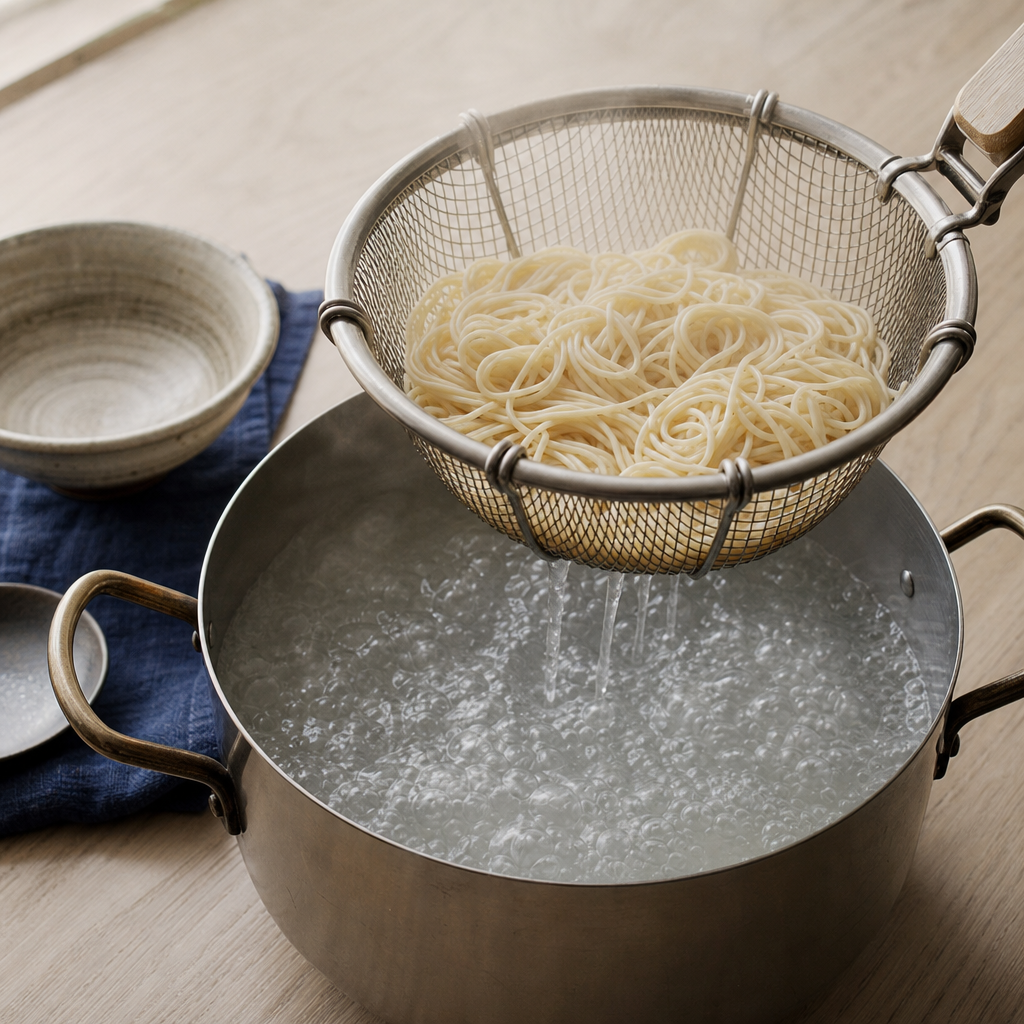
Cook the thin ramen noodles in a large pot of unsalted boiling water until firm, usually 45-75 seconds for fresh Hakata-style noodles. Shake off water aggressively.
Assemble the bowls
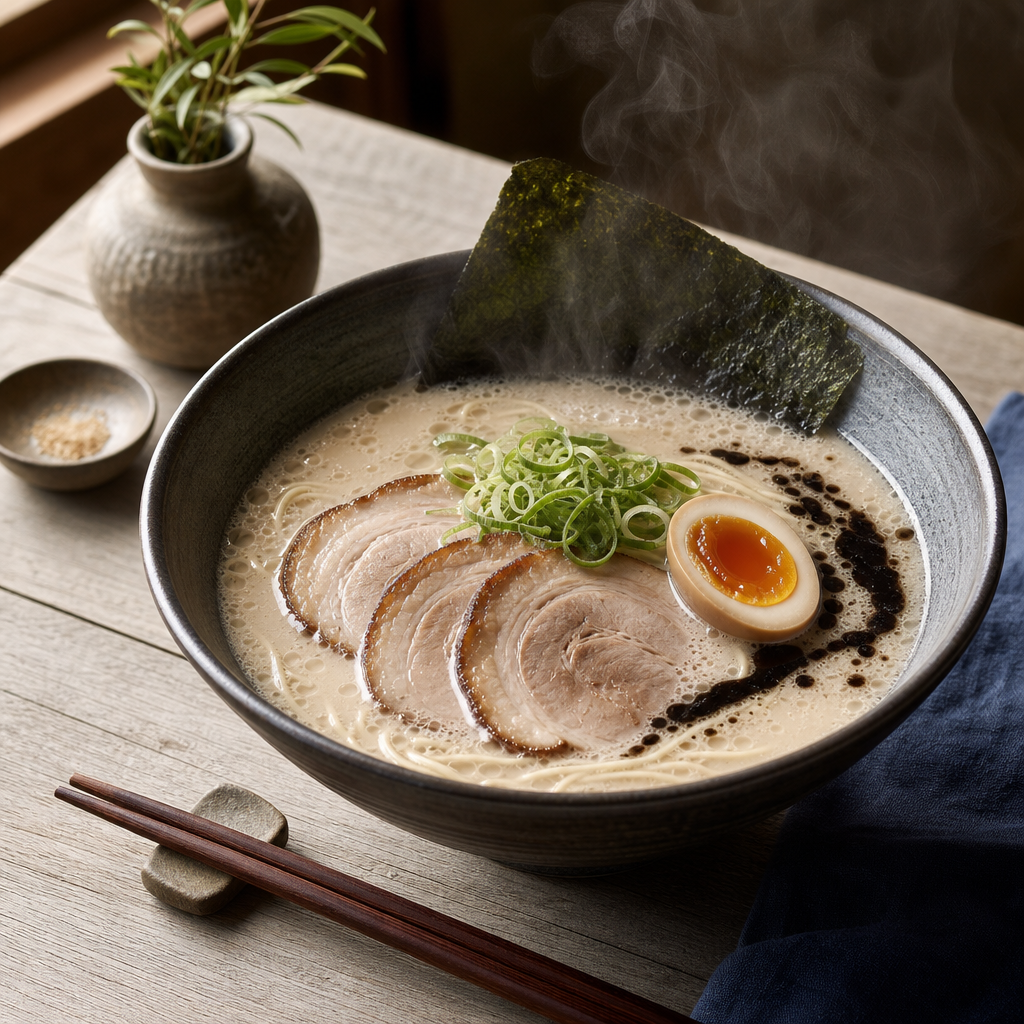
Add 35-45 ml tare to each warm bowl, then add about 600 ml boiling tonkotsu broth and stir. Add noodles, lift and fold them once to align, then top with chashu, ajitama, scallions, menma, nori, and 1-2 tsp mayu if using.
Common mistakes
- {'mistake': 'Simmering instead of boiling hard', 'fix': 'Maintain a visible rolling boil for most of the cook. Tonkotsu needs turbulence to emulsify fat and gelatin.'}
- {'mistake': 'Skipping the bone-cleaning step', 'fix': 'Blanch, drain, rinse, and scrub. Dirty proteins make a grey broth with a stale mineral edge.'}
- {'mistake': 'Seasoning the whole broth pot', 'fix': 'Use tare in each bowl. The broth reduces as it reheats, so salting the pot makes later bowls harsh.'}
- {'mistake': 'Using non-alkaline noodles', 'fix': 'Use ramen noodles made with kansui. Spaghetti hacks and egg noodles do not have the springy bite or alkaline aroma.'}
- {'mistake': 'Treating toppings as the main event', 'fix': 'Keep the bowl disciplined. Tonkotsu is broth and noodle first; overloading it turns the surface cold and cluttered.'}
What does not belong
- {'item': 'cream or milk', 'reason': 'Dairy whiteness is not tonkotsu. The color must come from emulsified pork fat, collagen, and bone solids.'}
- {'item': 'miso paste by default', 'reason': 'Miso makes a different tare direction. Tonkotsu describes the pork-bone broth, not a license to add every Japanese pantry item.'}
- {'item': 'chicken bouillon as the main base', 'reason': 'Chicken can appear in hybrid ramen broths, but tonkotsu is pork-bone driven. Bouillon cannot replace the collagen structure.'}
- {'item': 'sweet teriyaki sauce', 'reason': 'Commercial teriyaki sauce is too sweet and thick for ramen tare. It flattens the pork and makes the bowl taste like glaze.'}
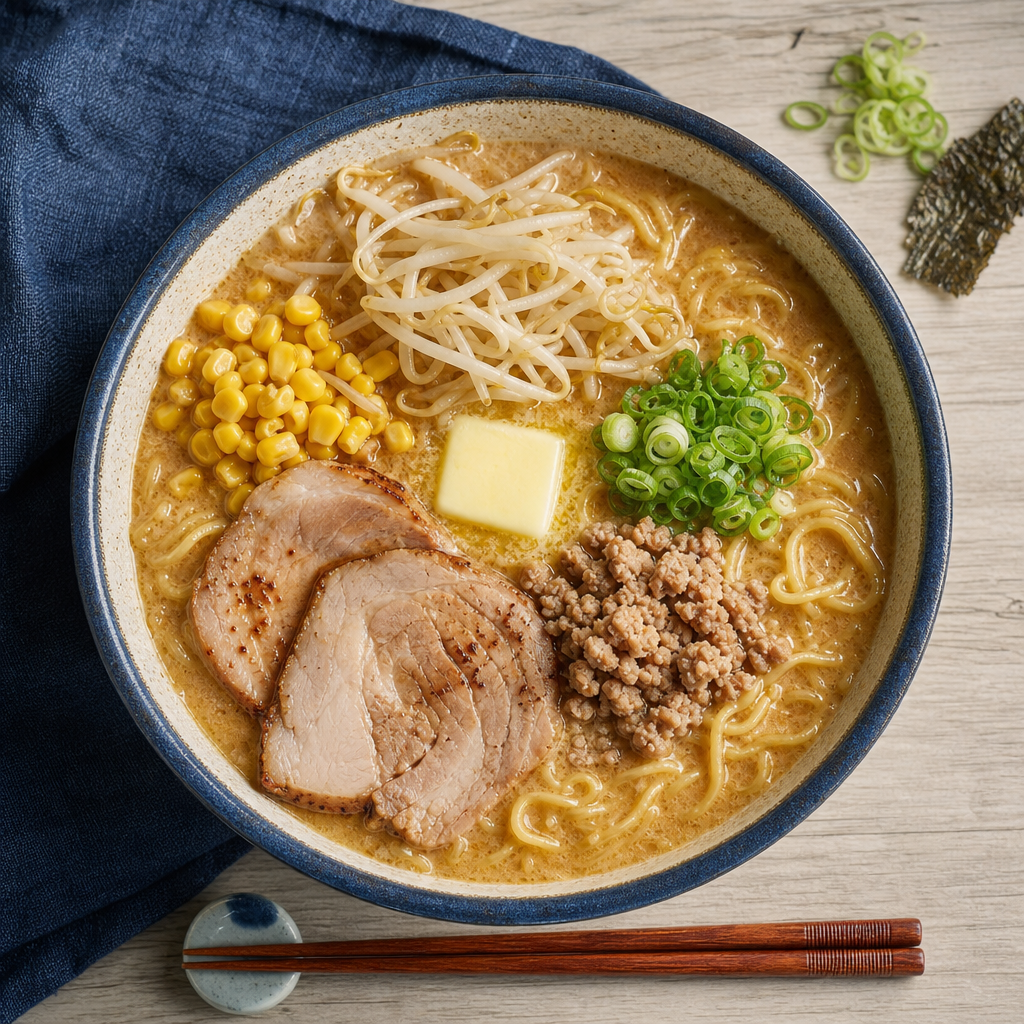
- {'item': 'corn and butter', 'reason': 'Those belong to many Hokkaido-style miso ramen bowls, not this Kyushu pork-bone structure.'}