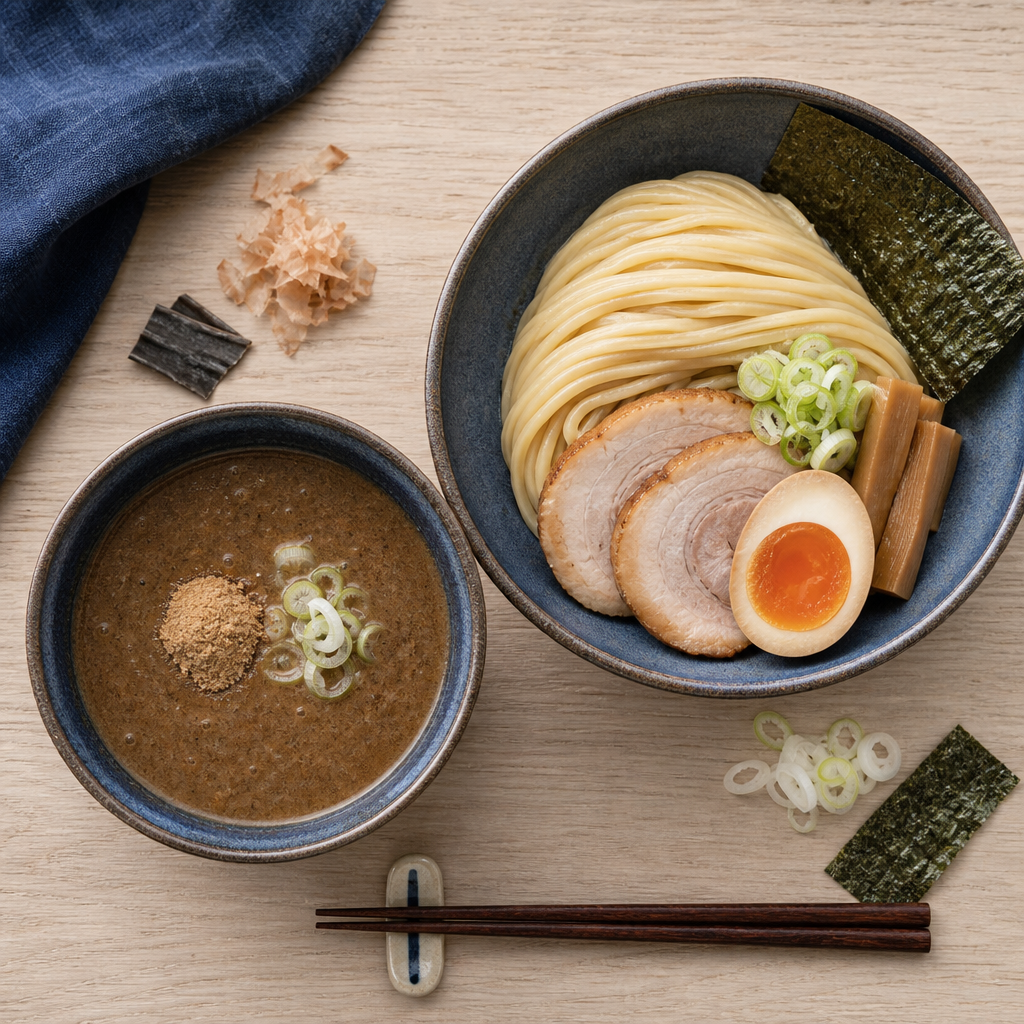
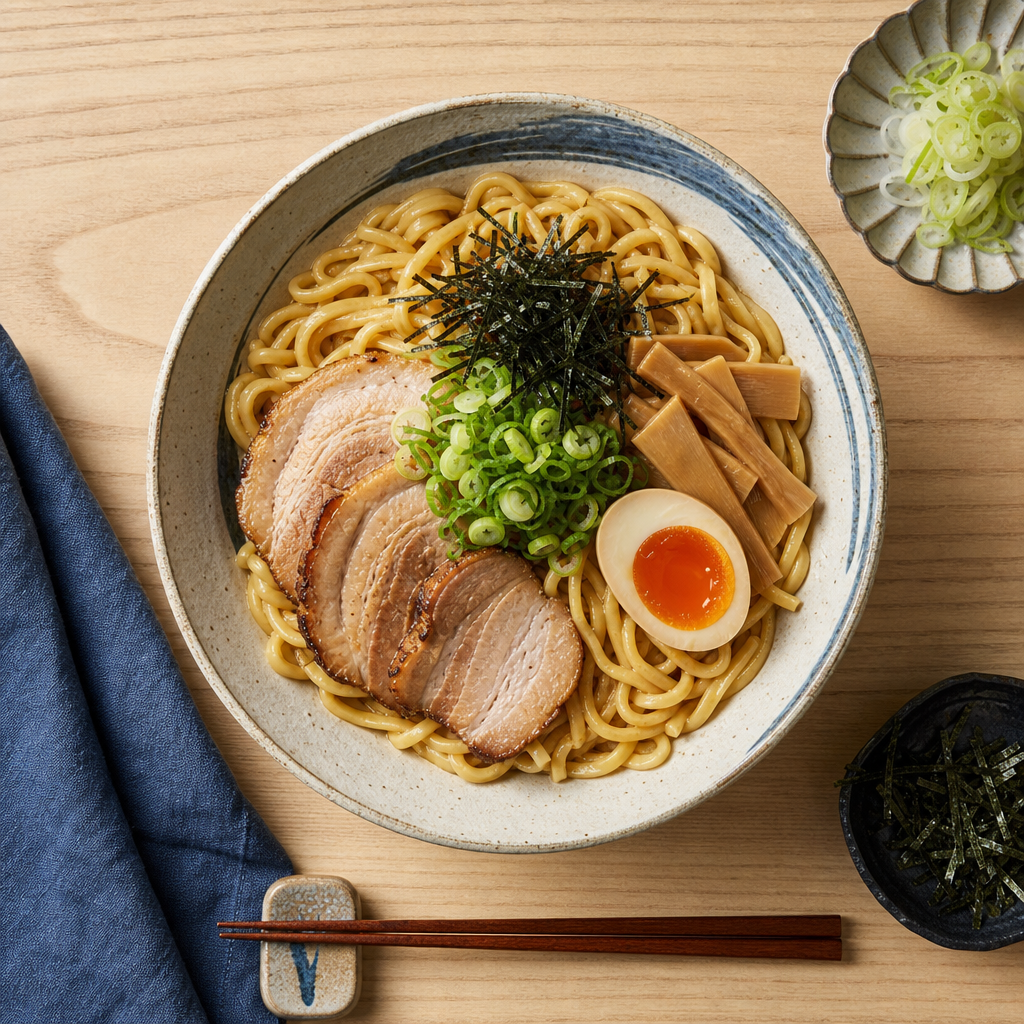
Vegetable Ramen
The dish in context
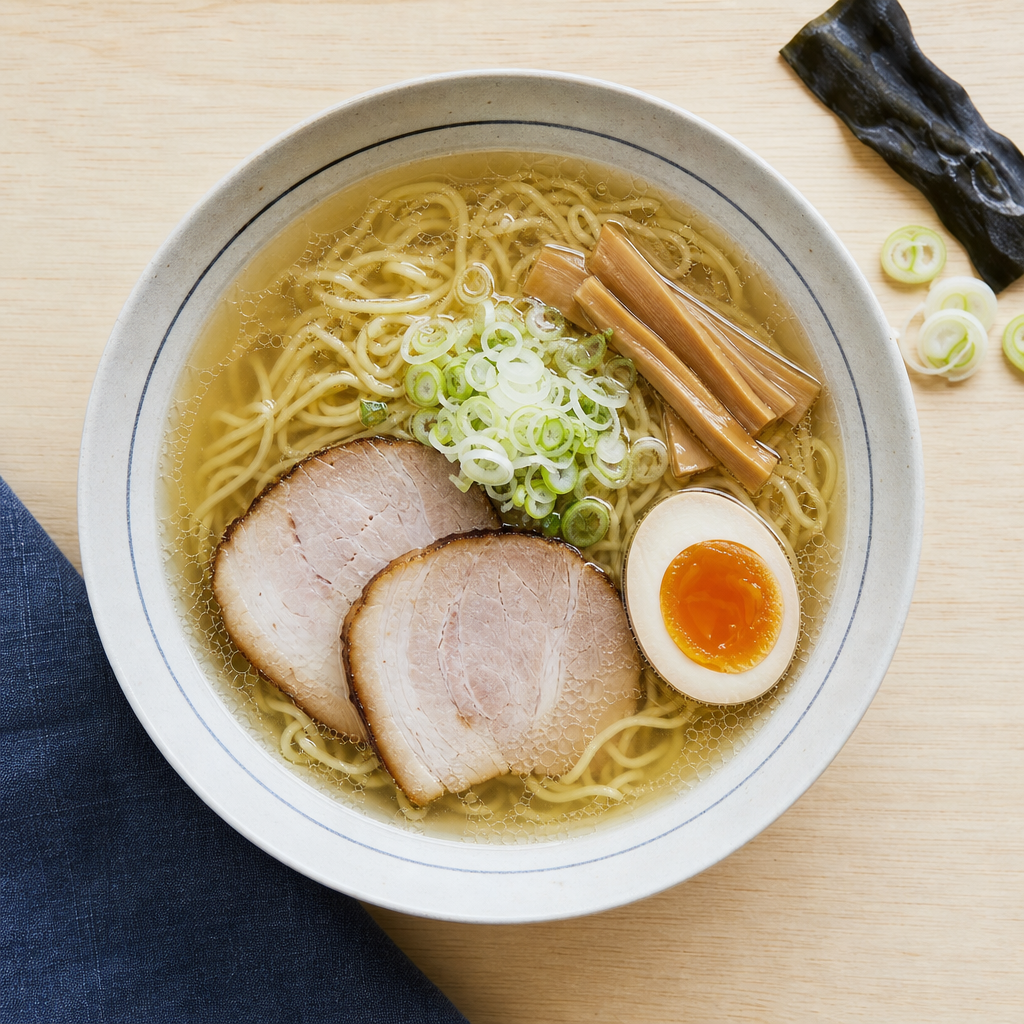
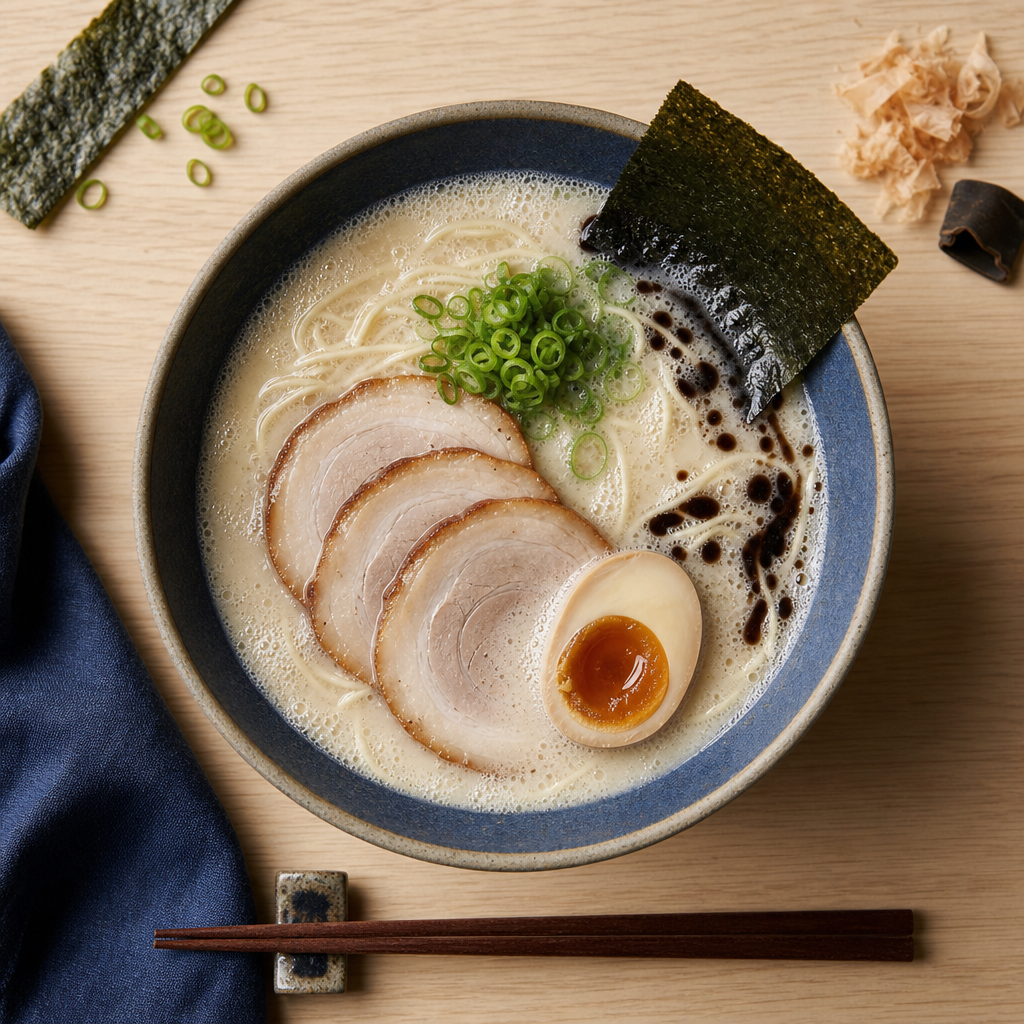
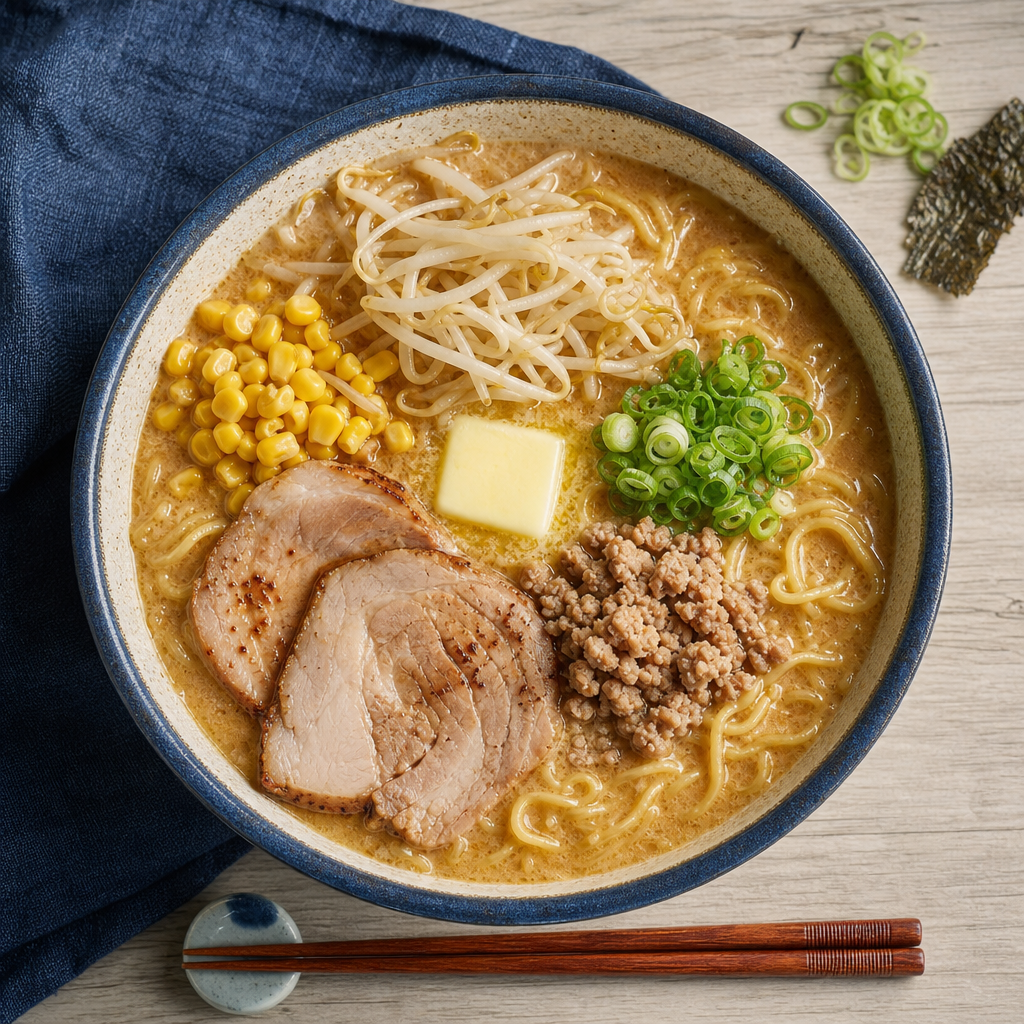
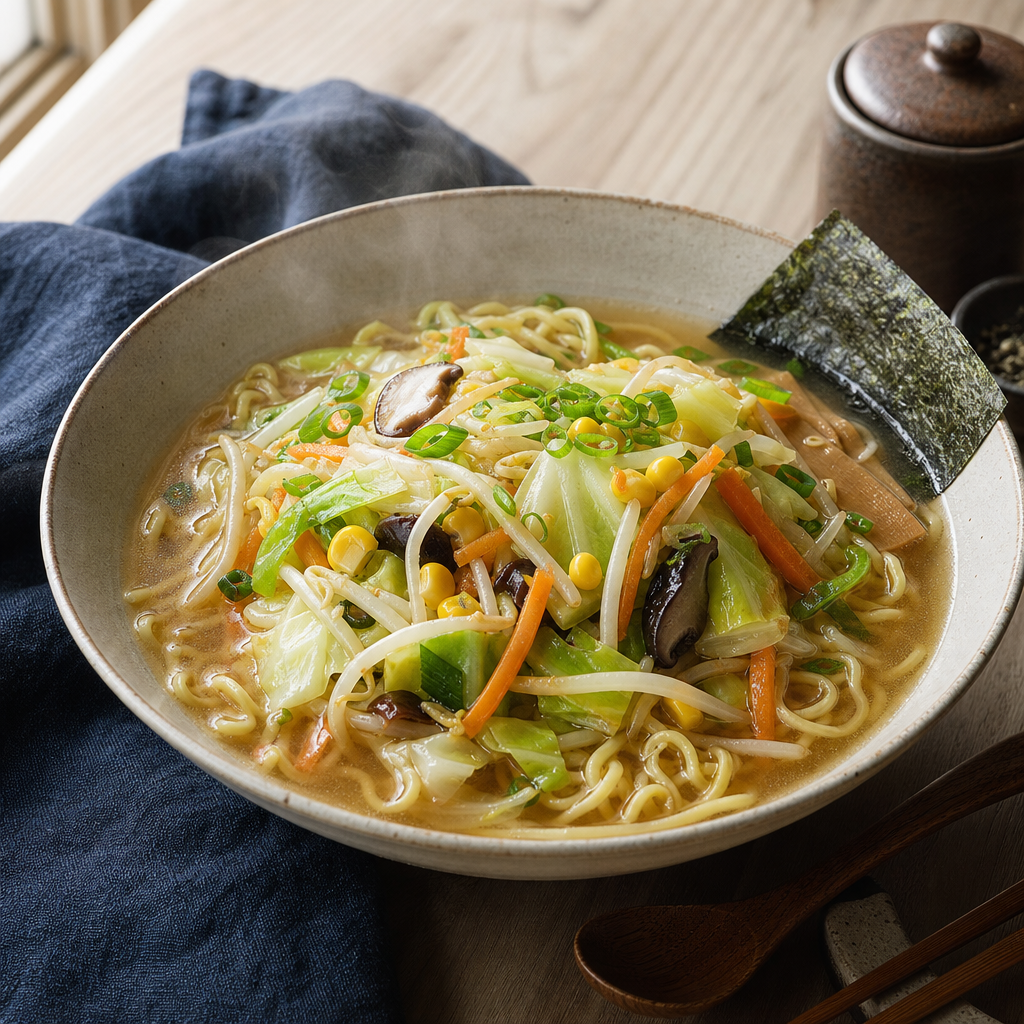
Ramen became embedded in Japanese everyday eating after World War II, moving from restaurant counters into school lunches, cafeterias, instant noodles, and home cooking. 野菜ラーメン usually means ramen topped generously with vegetables, not a single fixed regional style. In Japan the broth may be shoyu, shio, miso, or animal-based; this version uses kombu and dried shiitake to keep the bowl fully vegetable-based without pretending to be tonkotsu. The defining grammar stays the same: alkaline wheat noodles, seasoned broth, and toppings added at the end so they keep texture.
Method 7 steps · 45 min
Soak the dashi base
Combine water, kombu, and dried shiitake in a saucepan. Soak 20 minutes while cutting the vegetables.
Heat without boiling the kombu
Set the pan over medium heat and bring the liquid to 80-85°C, when small bubbles collect on the bottom but the surface is not rolling. Remove the kombu.
Finish the mushroom broth
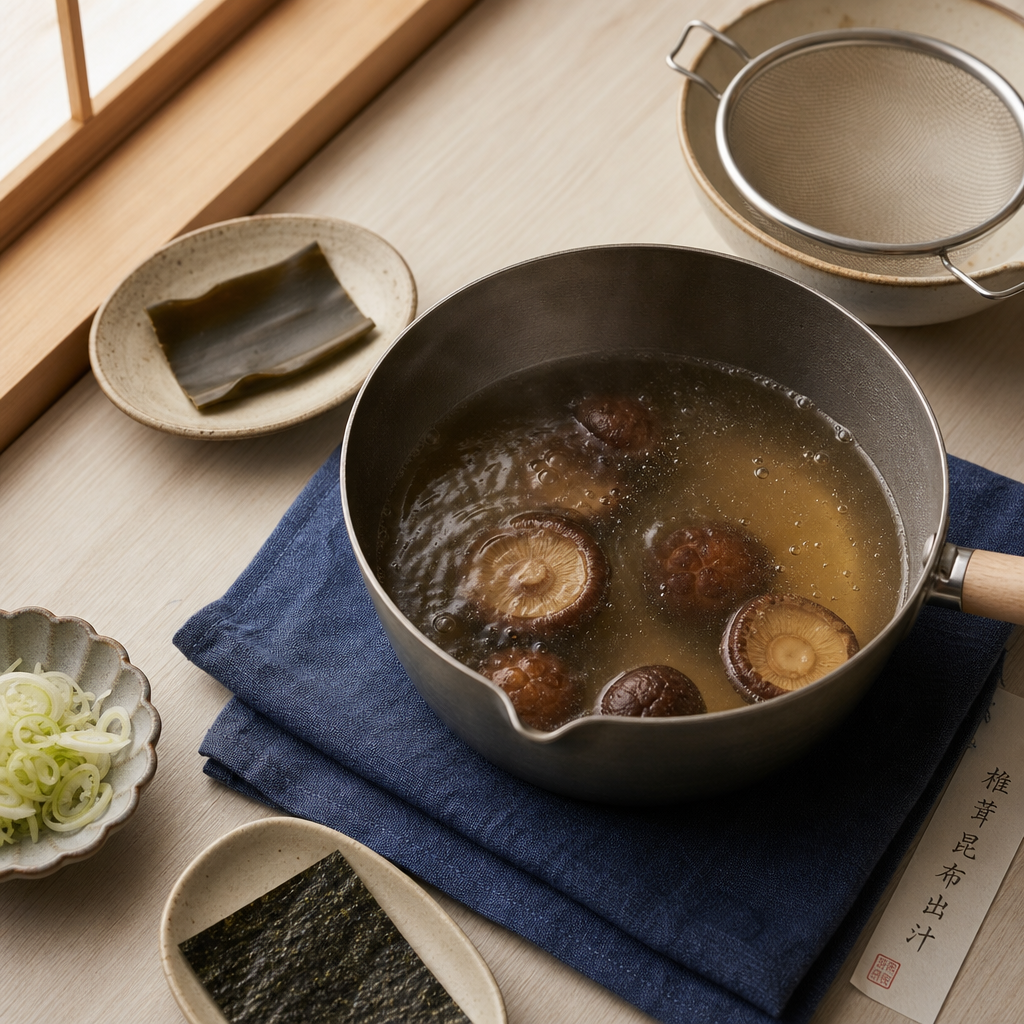
Bring the broth to a gentle simmer after removing the kombu. Simmer the dried shiitake 8 minutes, then strain the broth; reserve the mushrooms for slicing if the stems are not tough.
Season the broth
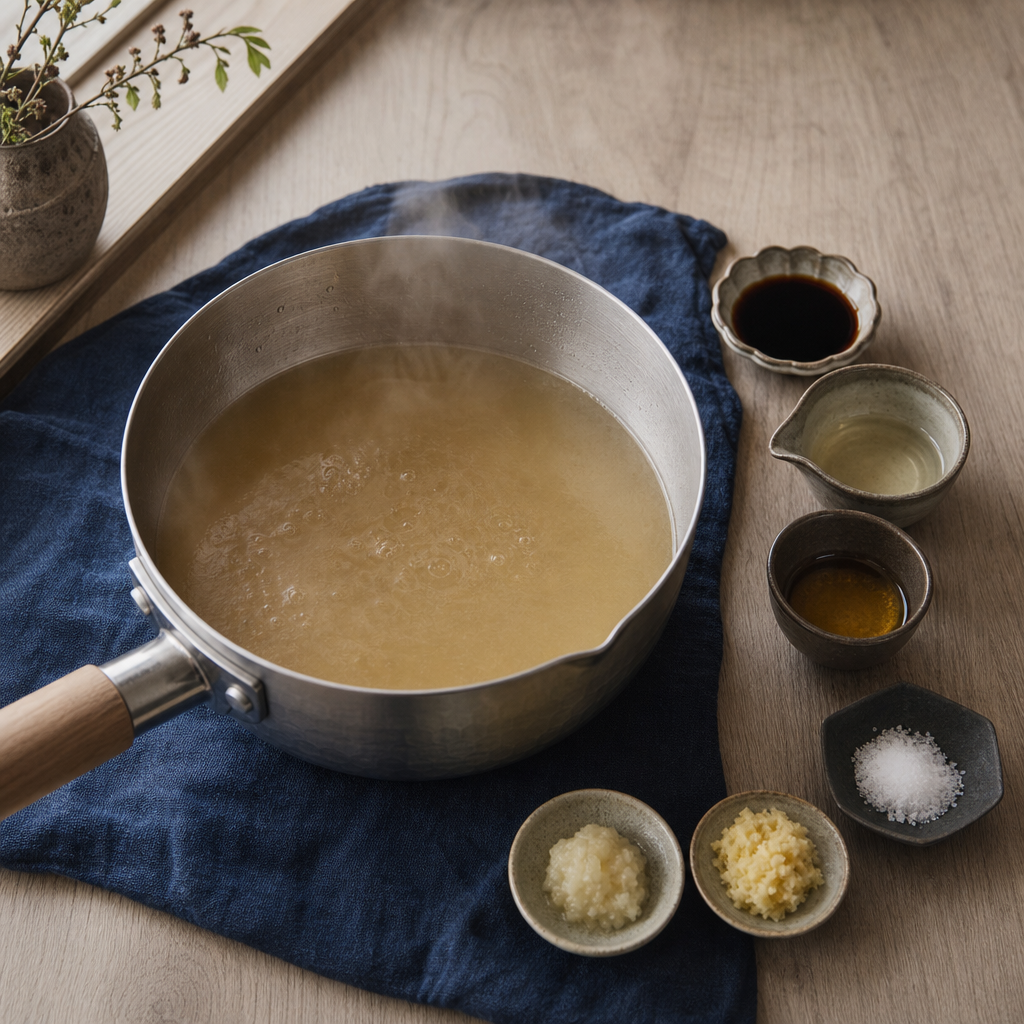
Return the broth to the pan. Add soy sauce, mirin, sake, salt, sesame oil, garlic, and ginger; simmer 2 minutes, then keep hot below a boil.
Stir-fry the vegetables
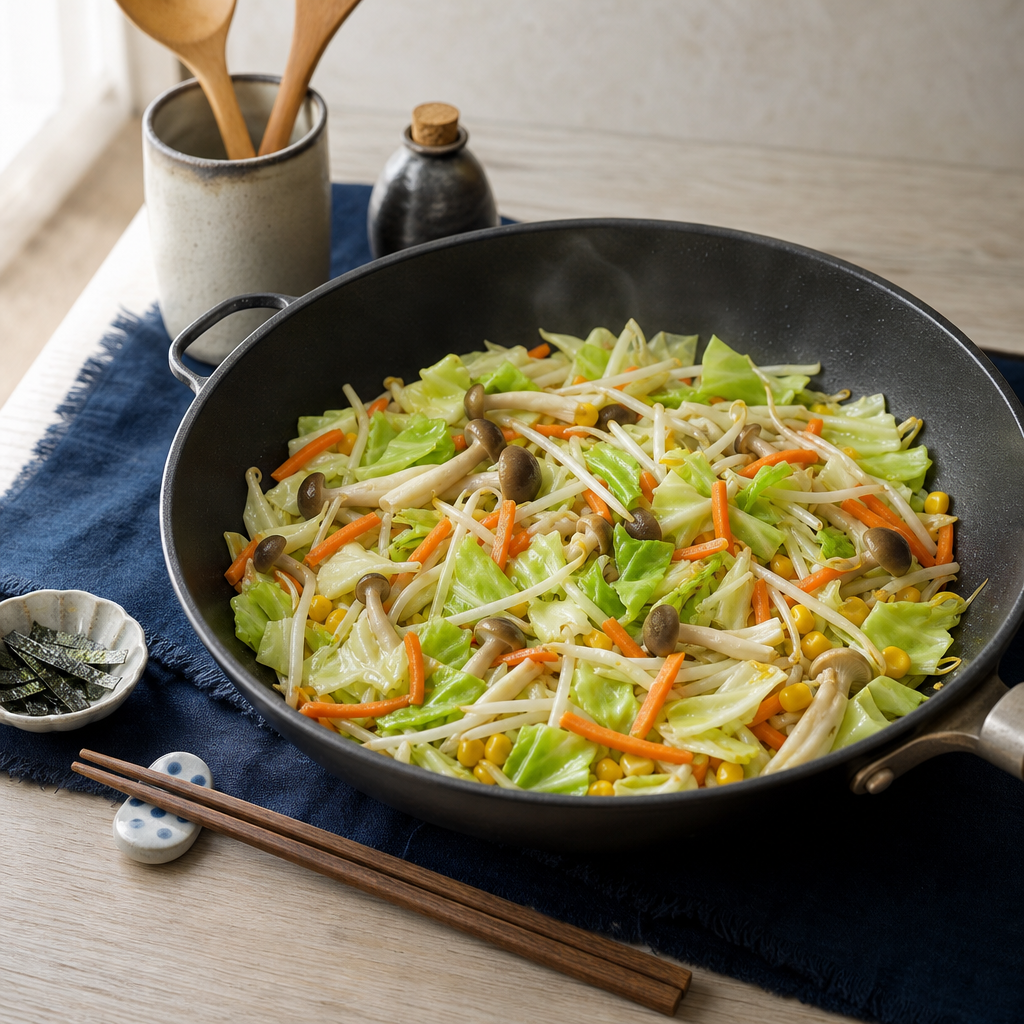
Heat neutral oil in a wide skillet over high heat. Add cabbage, carrot, and fresh mushrooms; cook 90 seconds, then add bean sprouts and corn and cook 45-60 seconds more. The cabbage should gloss at the edges while the sprouts still bend, not collapse.
Cook the noodles separately
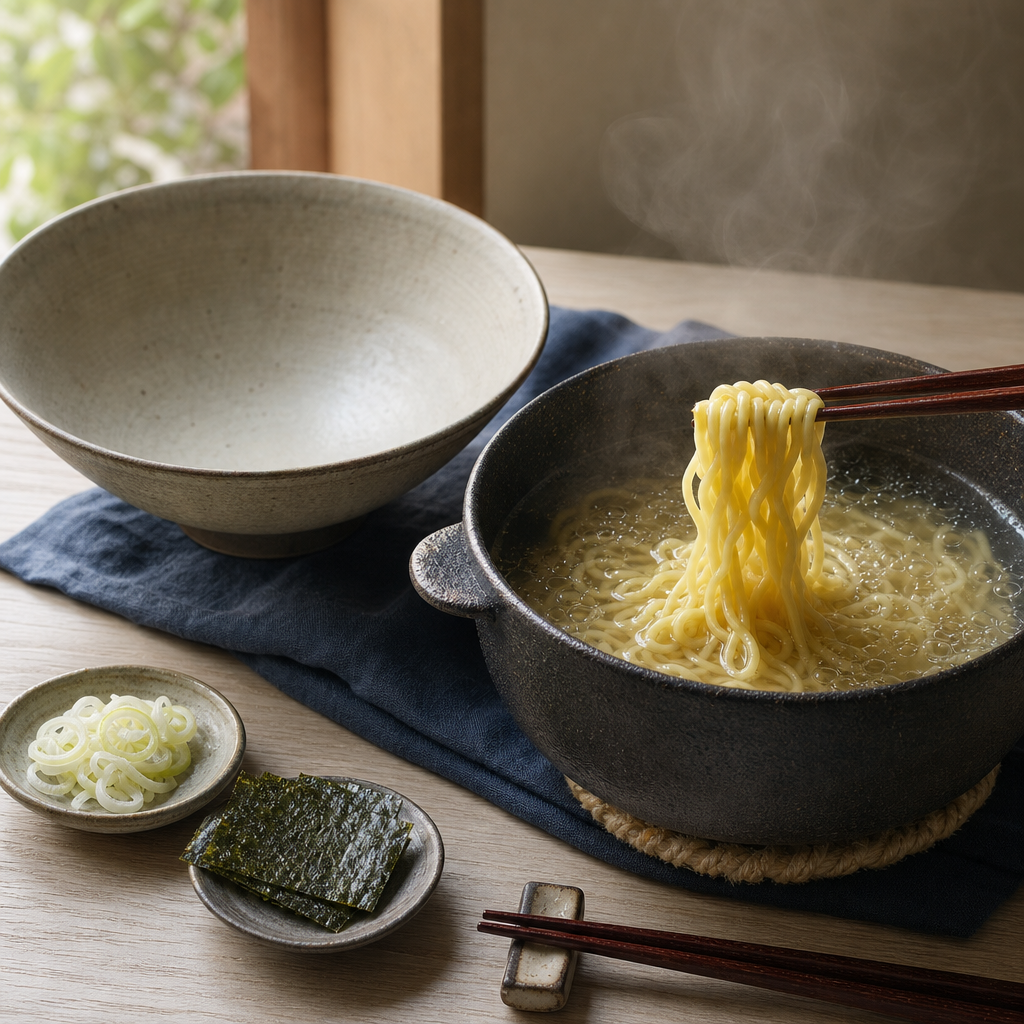
Boil a separate pot of unsalted water. Cook ramen noodles according to the package, usually 60-120 seconds for fresh noodles, then shake off excess water hard.
Build the bowls
Divide the hot broth between warmed bowls. Add drained noodles, lift them once with chopsticks to loosen, then mound the vegetables on top. Finish with scallions, menma, nori, and white pepper.
Common mistakes
- {'mistake': 'Using spaghetti or plain wheat noodles.', 'fix': 'Use ramen noodles made with kansui. Without alkalinity, the chew, color, and aroma are wrong.'}
- {'mistake': 'Boiling kombu.', 'fix': 'Pull kombu before a rolling boil. Slimy broth is not body; it is over-extracted kelp.'}
- {'mistake': 'Cooking the noodles in the broth.', 'fix': 'Use a separate pot of water. Ramen broth should season noodles, not absorb their surface starch.'}
- {'mistake': 'Simmering the vegetables until soft.', 'fix': 'Stir-fry fast and add them at the end. The topping should look glossy and lifted, not stewed.'}
- {'mistake': 'Treating shoyu as the whole broth.', 'fix': 'Soy sauce is tare, not soup. It needs dashi underneath or the bowl tastes salty and hollow.'}
What does not belong
- {'item': 'Cream or milk', 'reason': 'Cream does not belong in vegetable ramen. Body comes from oil, starch on the noodles, and dashi, not dairy.'}
- {'item': 'Teriyaki sauce', 'reason': 'Sweet bottled teriyaki sauce does not belong in the broth. It pushes the bowl toward sugar and garlic instead of shoyu-dashi balance.'}
- {'item': 'Italian pasta', 'reason': 'Spaghetti does not become ramen because it is served in broth. Kansui noodles are structural.'}
- {'item': 'Raw salad greens as the main topping', 'reason': 'Cold lettuce and spring mix wilt into the broth and water it down. Use vegetables that tolerate heat and keep shape.'}
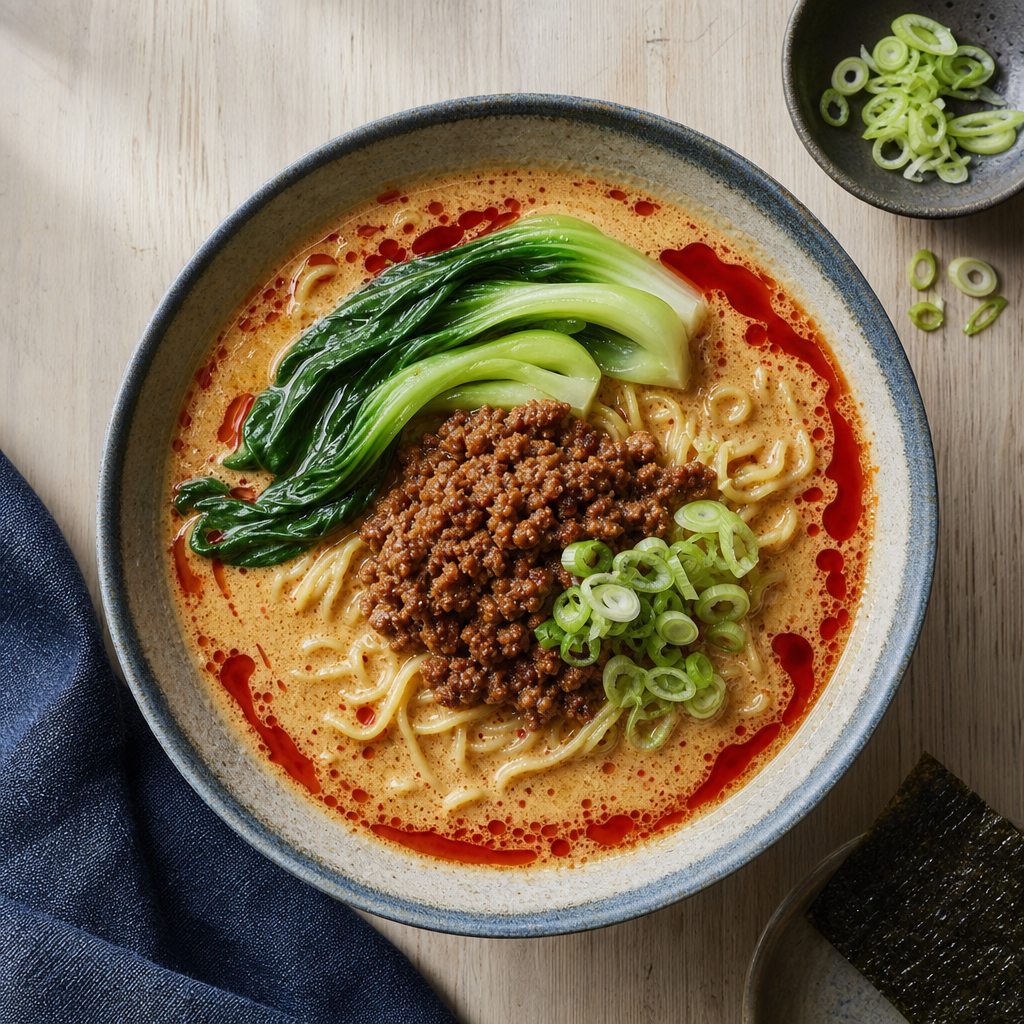
- {'item': 'Heavy chili oil by default', 'reason': 'Chili oil is a variant, not the base identity of this bowl. It can bury the kombu-shiitake broth.'}
Adaptations
This version uses kombu-shiitake dashi and no egg, pork, chicken, or bonito. Check packaged noodles; some fresh ramen contains egg.
Replace mirin with water plus sugar and replace sake with water. Confirm soy sauce and noodles are halal-certified if required.
Use gluten-free ramen-style noodles and tamari. Standard ramen noodles are wheat-based and not gluten-free.
No dairy is used. Do not add butter unless making a separate Hokkaido-style variant.
No shellfish is used. Check commercial dashi powders and packaged ramen seasonings, which may contain seafood extracts.