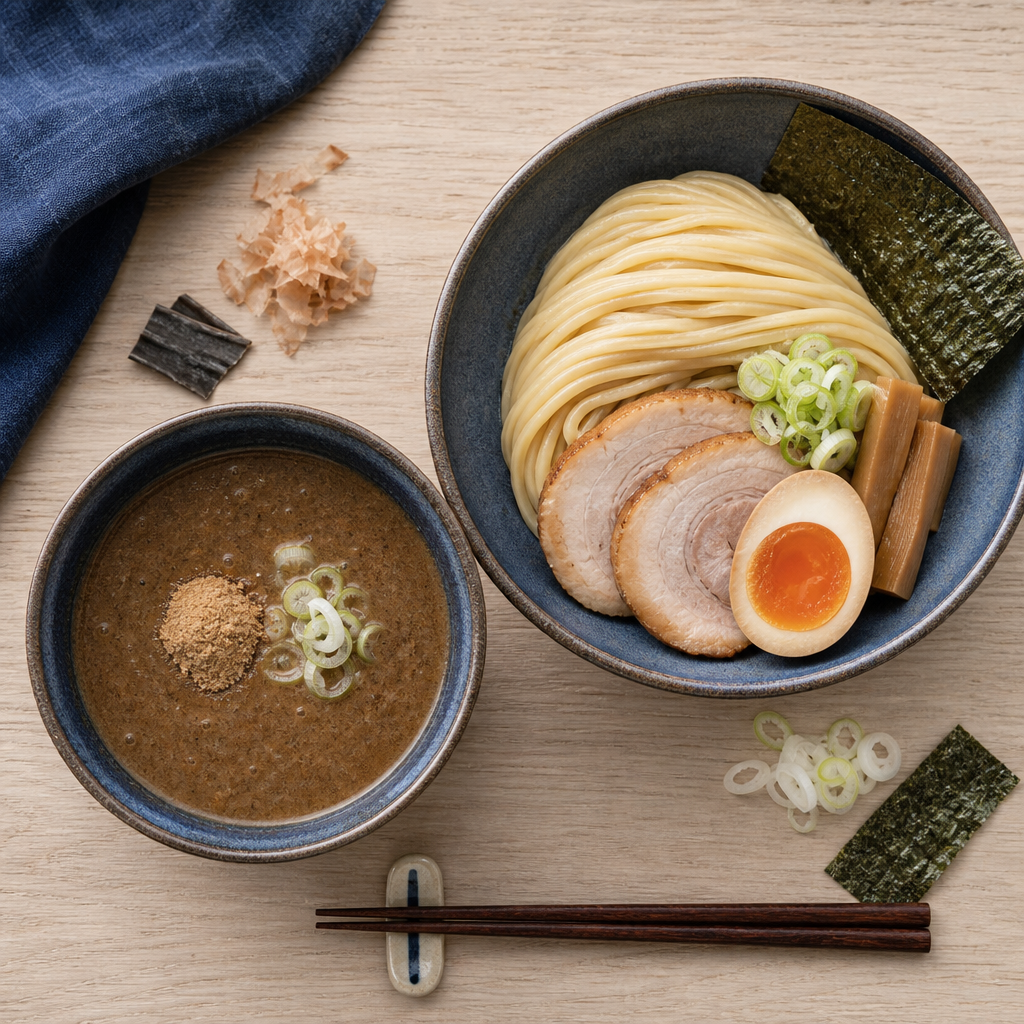
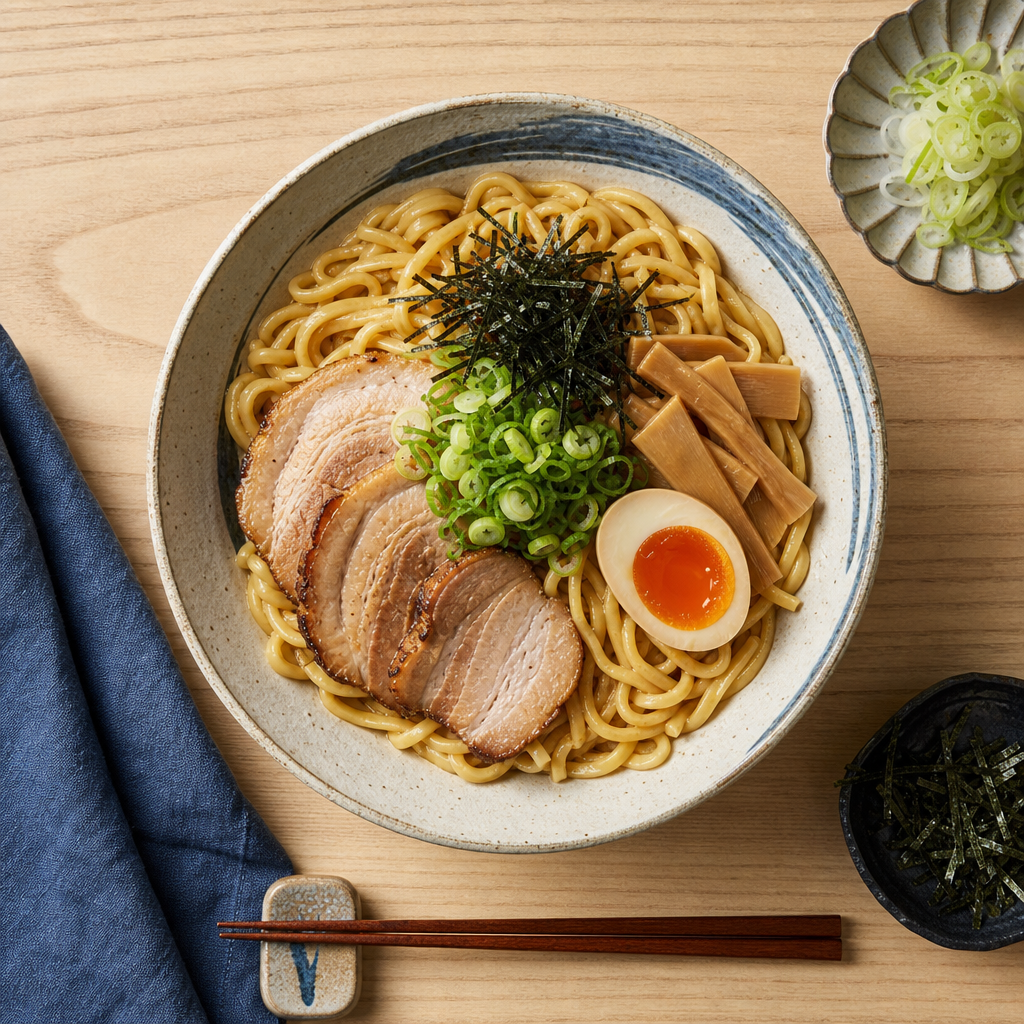
Miso Ramen
The dish in context
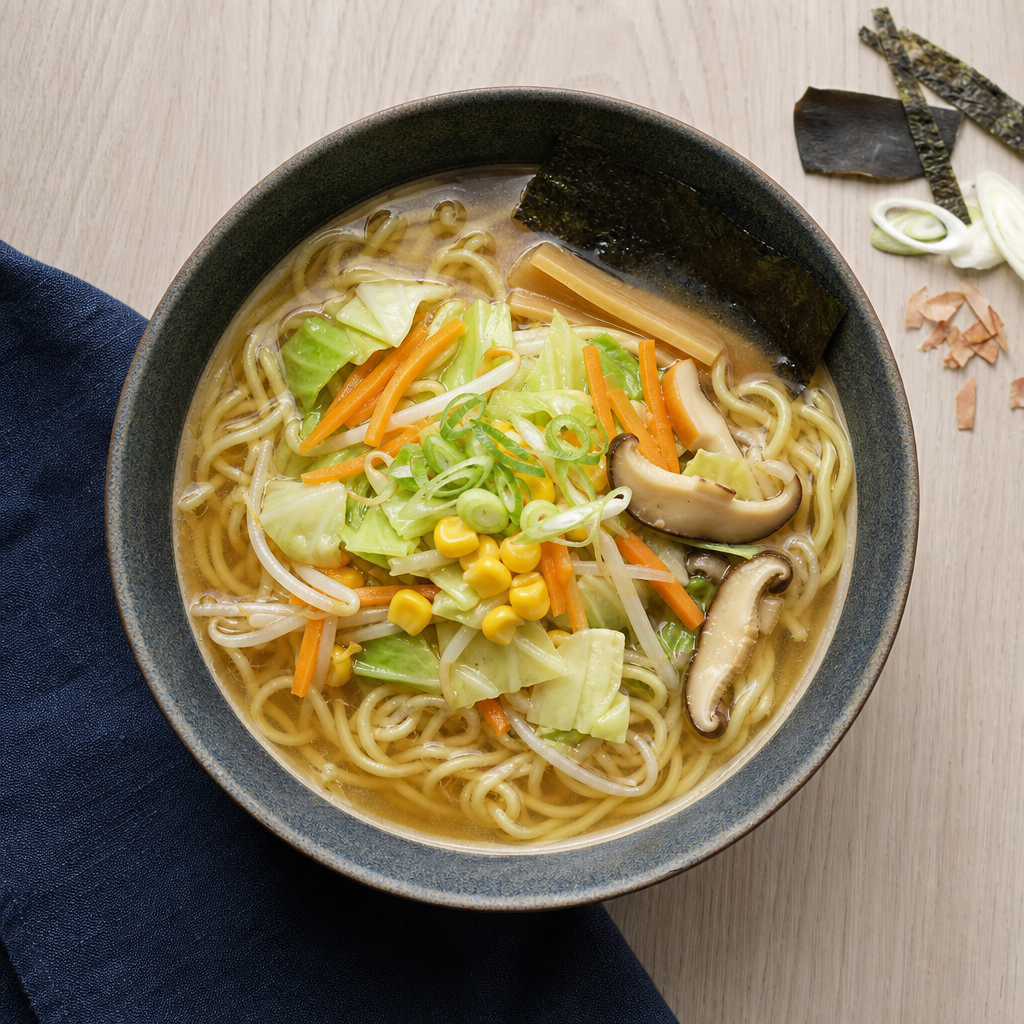
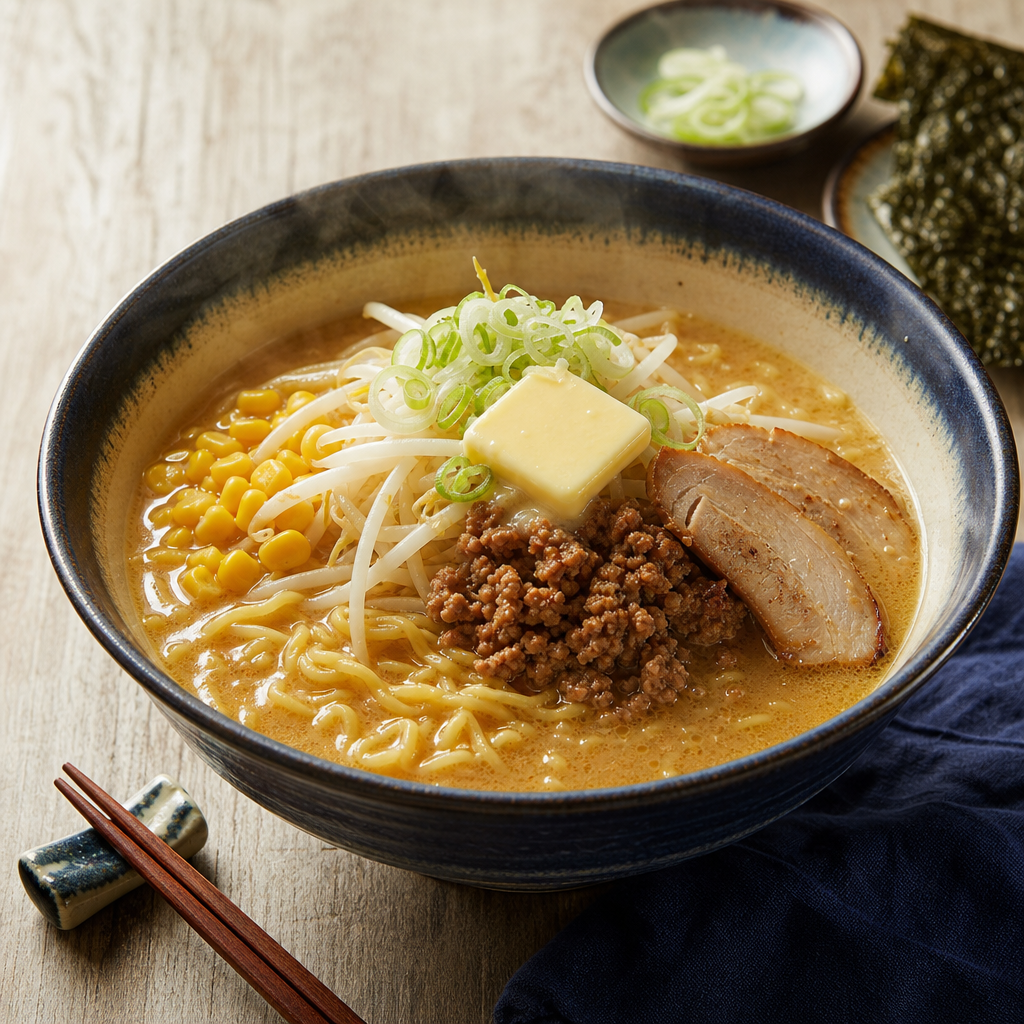
Miso ramen is strongly associated with Sapporo, Hokkaido, where the style became widely known in the postwar ramen boom and later turned into one of Japan’s major ramen categories alongside shoyu, shio, and tonkotsu. In ramen taxonomy, miso is the tare — the seasoning base — not the broth itself. Hokkaido versions commonly lean richer than Tokyo shoyu ramen, with miso, pork fat or butter, stir-fried vegetables, corn, and bean sprouts suited to cold-weather eating. Shops vary widely in broth base, miso blend, garlic level, and toppings, but kansui wheat noodles and a miso tare are non-negotiable.
Method 8 steps · 105 min
Make the dashi without boiling the kombu
Combine the water and kombu in a saucepan and soak 30 minutes. Heat over medium until small bubbles collect at the edge, then remove the kombu before the liquid boils. Add katsuobushi, steep 2 minutes off heat, then strain without pressing hard.
Build the miso tare
Mix miso, sesame paste, soy sauce, sake, mirin, and tobanjan in a bowl until smooth enough to spoon. Leave it thick; it will loosen in the pan.
Fry the pork and aromatics
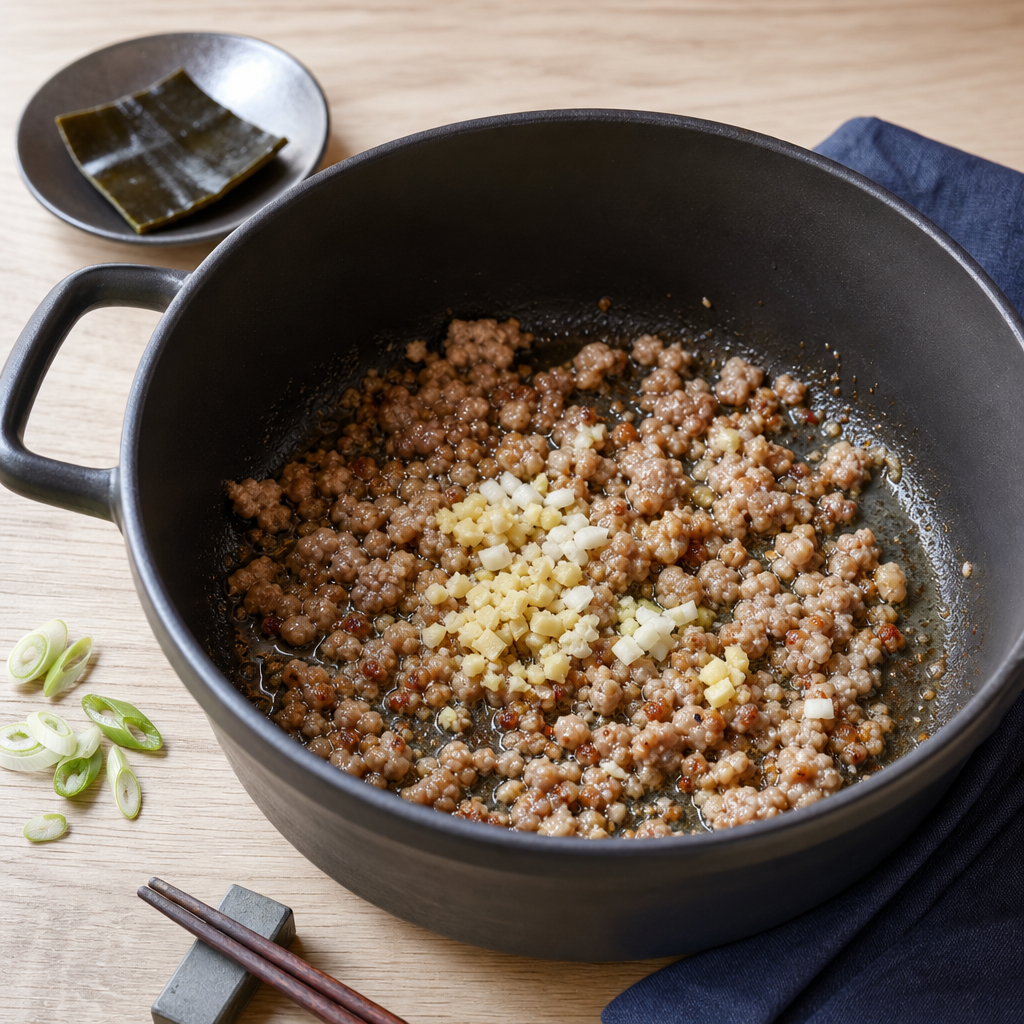
Heat lard in a wide pot over medium-high heat. Add ground pork and cook until the edges brown and the fat runs clear, 4-5 minutes. Add garlic and ginger and stir 30 seconds, stopping before either darkens.
Cook the tare in fat
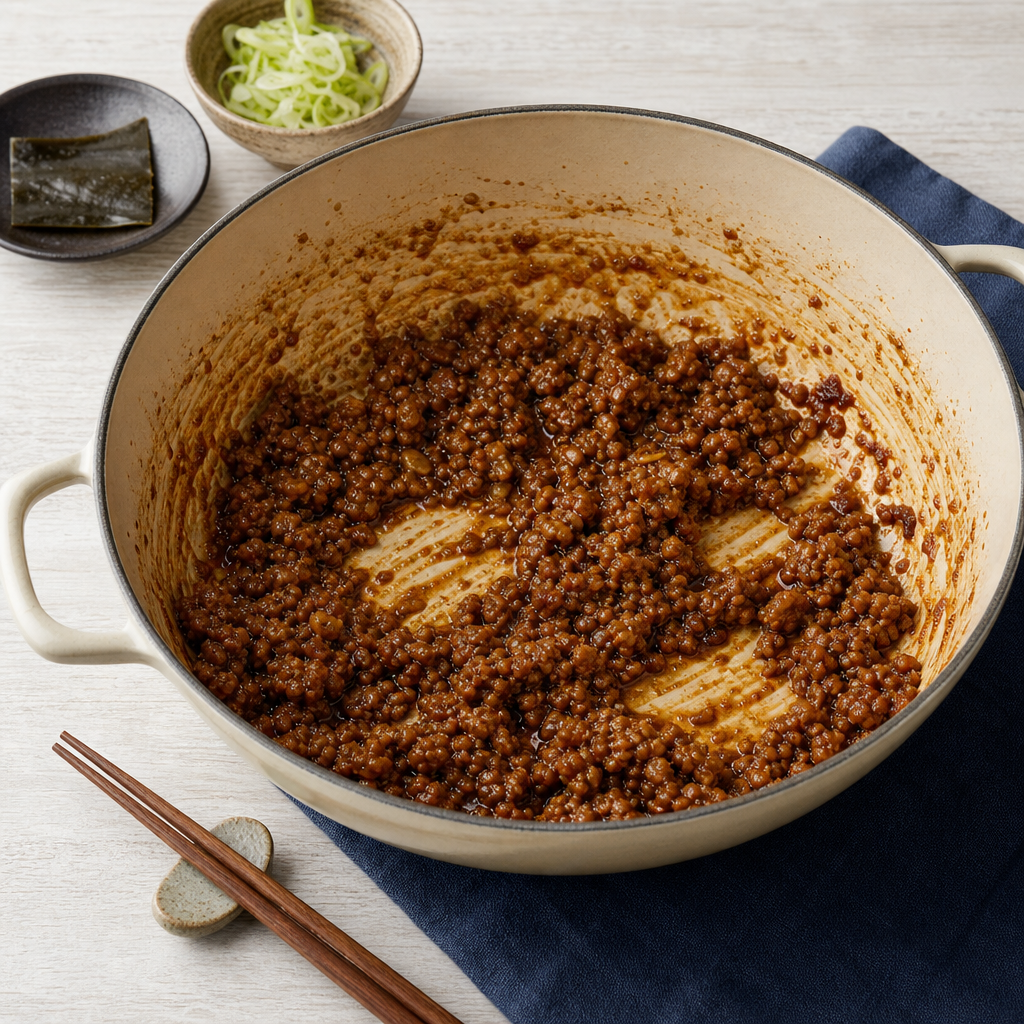
Lower the heat to medium. Add the miso tare to the pork and fry, stirring constantly, until it darkens slightly, smells roasted, and leaves a thin film on the bottom of the pot, 90 seconds.
Form the soup
Whisk in the strained dashi a little at a time, scraping the pot clean, then add the chicken stock. Bring the soup to a bare simmer and hold it there 8 minutes. Do not let it roll hard.
Stir-fry the vegetables
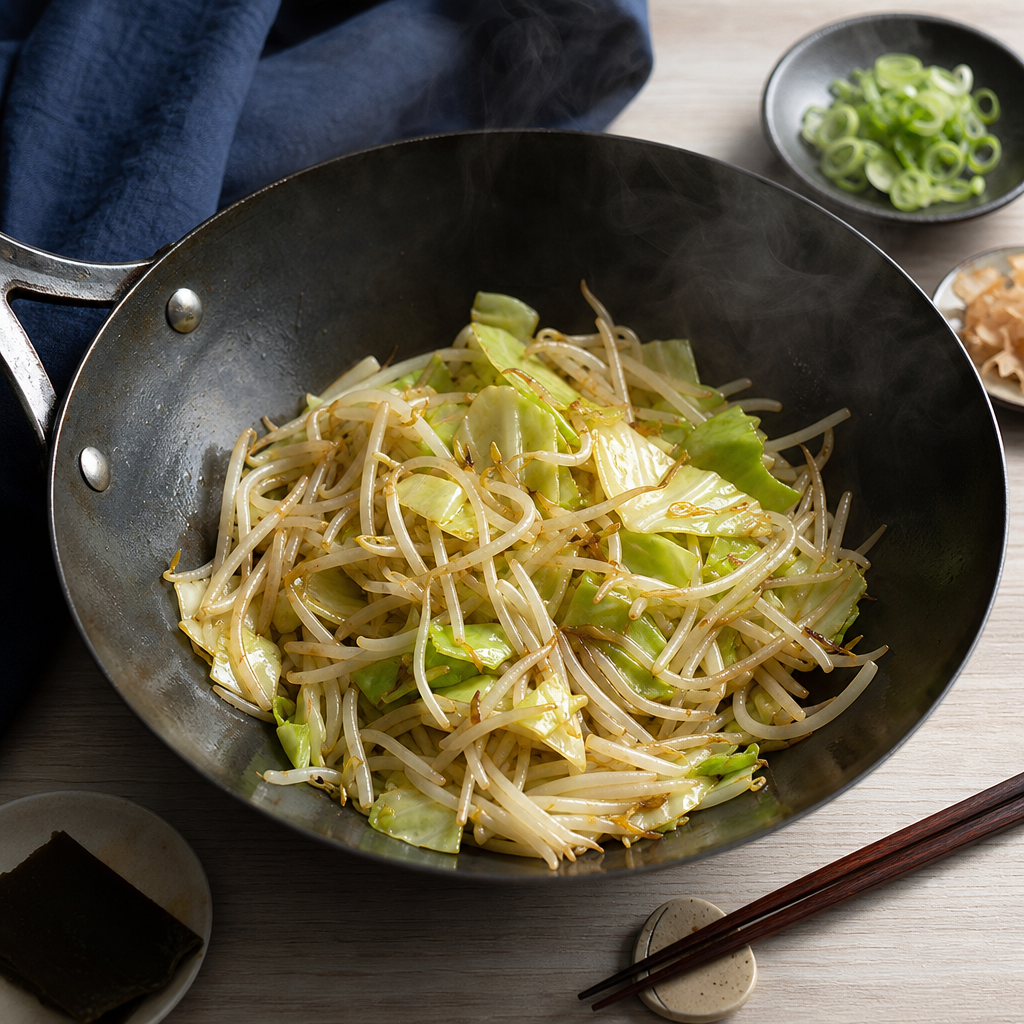
In a hot skillet or wok, cook bean sprouts and cabbage with a spoonful of fat or oil for 90 seconds. The sprouts should bend but still snap. Season with a pinch of salt.
Cook the noodles separately
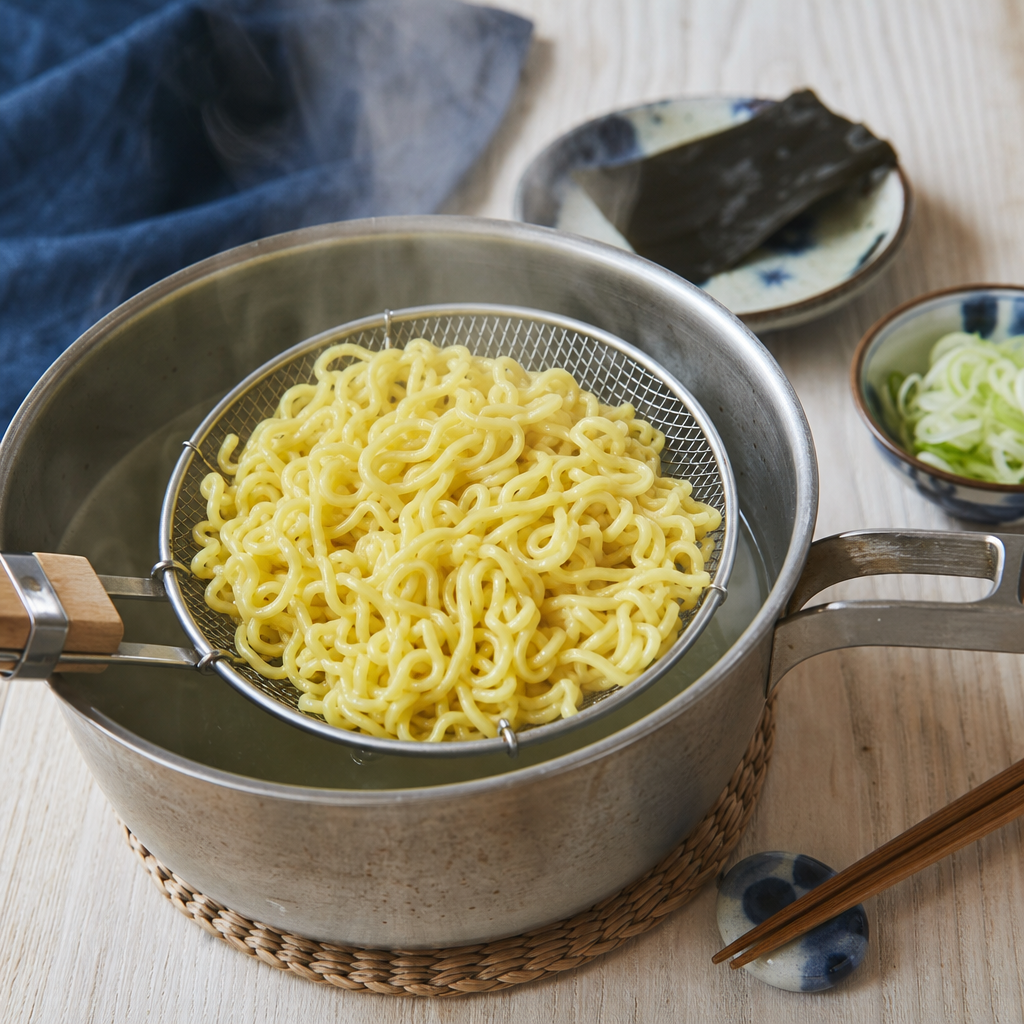
Boil ramen noodles in plenty of unsalted water according to the maker’s timing, usually 60-120 seconds for fresh noodles. Pull them slightly firm, shake off excess water hard, and divide among warmed bowls.
Assemble the bowls fast
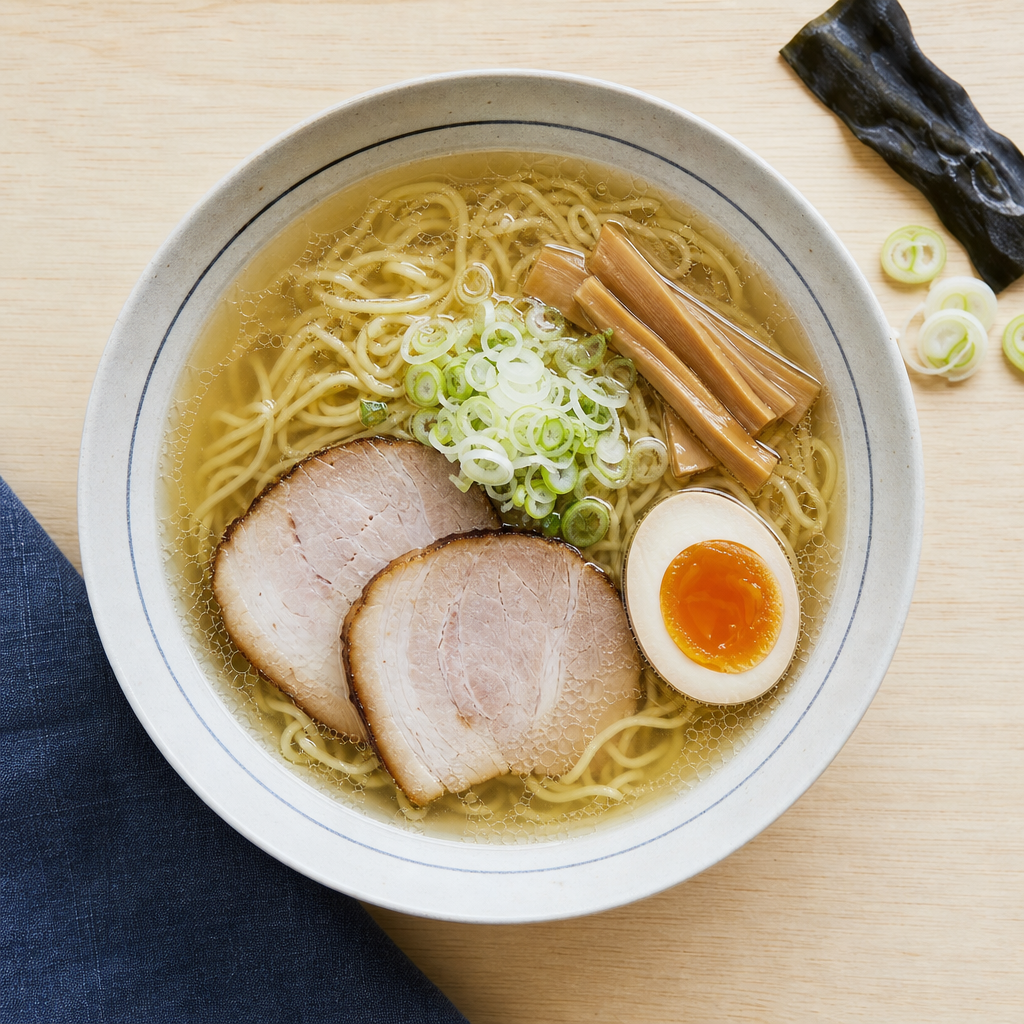
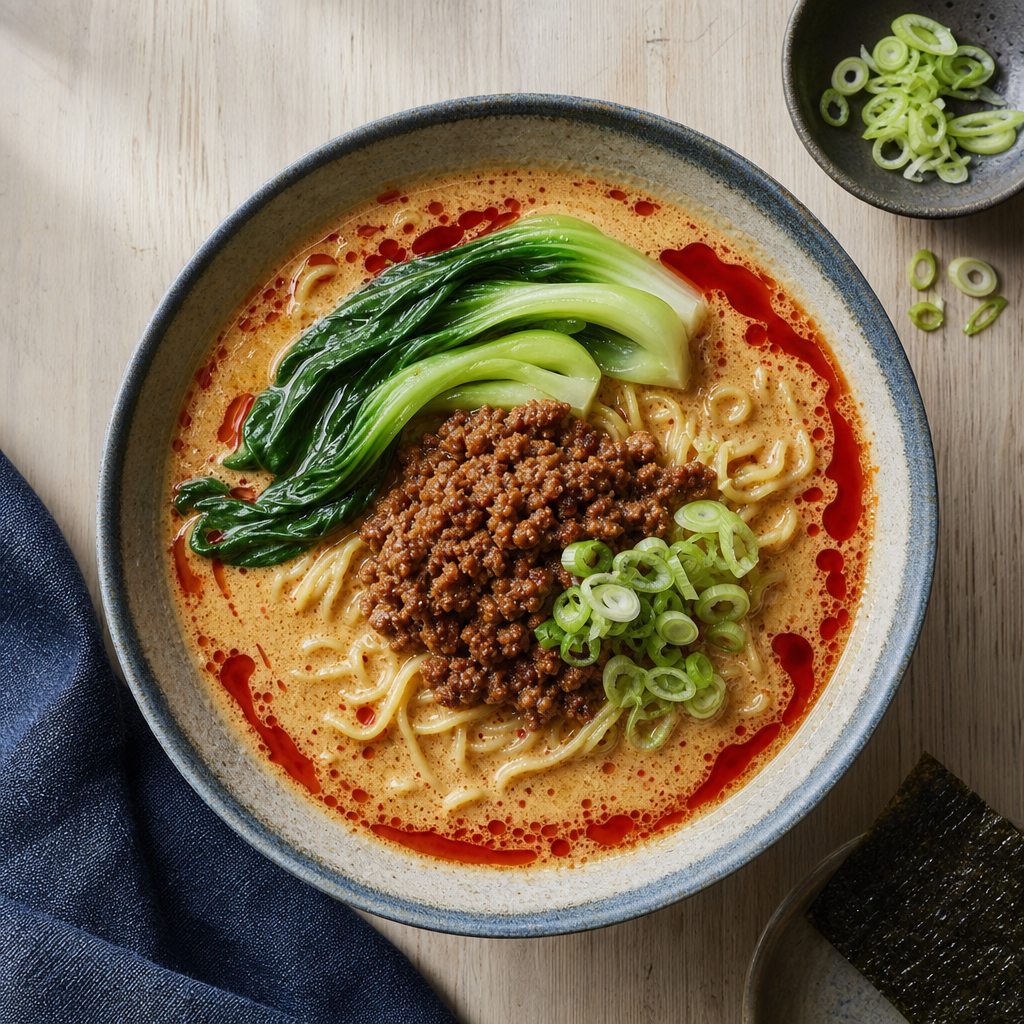
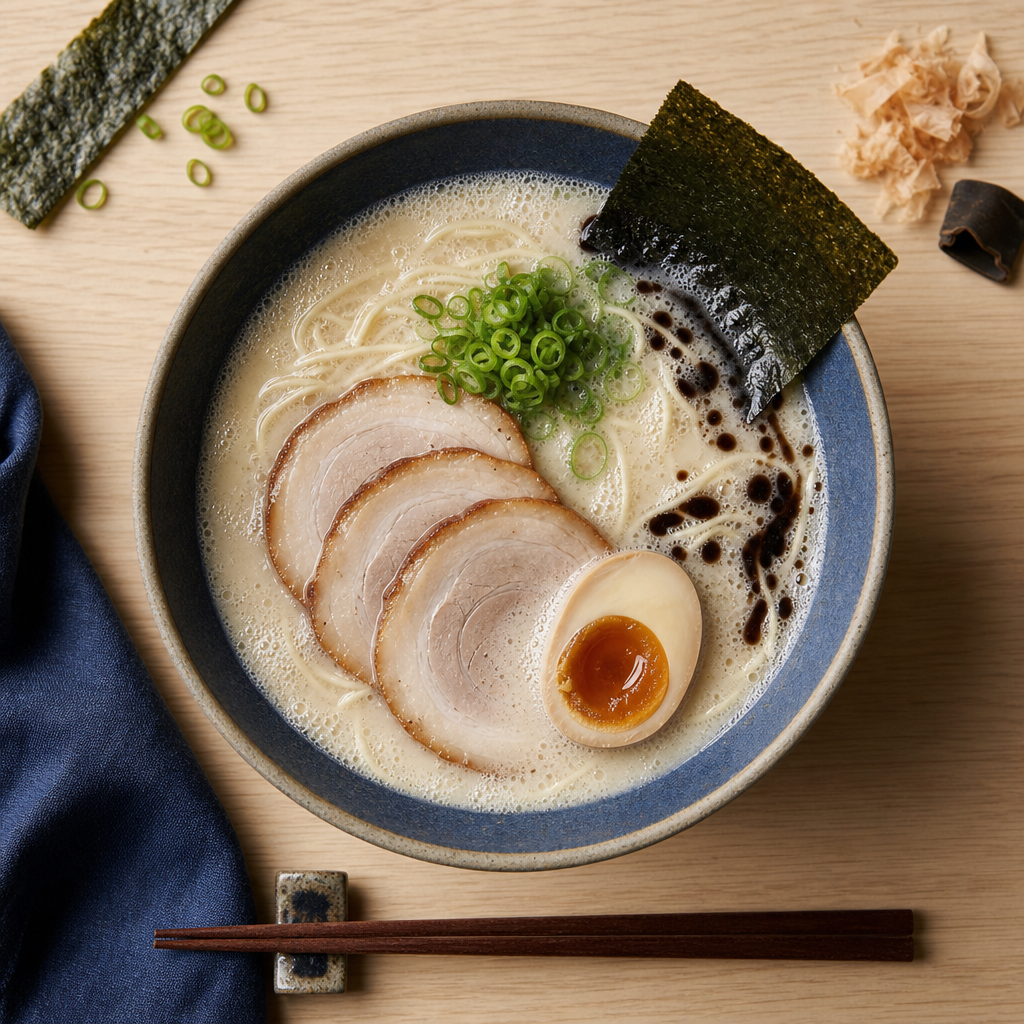
Ladle hot soup over each bowl of noodles. Lift and loosen the noodles once with chopsticks, then top with stir-fried sprouts and cabbage, corn, scallions, menma, ajitama, nori, and a 10 g pat of butter per bowl. Serve immediately.
Common mistakes
- {'mistake': 'Treating miso as the broth instead of the tare.', 'fix': 'Build a stock first, then season it with a cooked miso tare. Miso alone in water tastes thin and salty.'}
- {'mistake': 'Boiling kombu.', 'fix': 'Remove kombu before the water reaches a full boil. Slime and bitterness show up fast.'}
- {'mistake': 'Boiling the finished miso soup hard.', 'fix': 'Hold the soup at a bare simmer after the tare is diluted. The surface should tremble, not churn.'}
- {'mistake': 'Cooking noodles in the soup.', 'fix': 'Boil noodles separately, drain hard, and assemble bowls one at a time.'}
- {'mistake': 'Using Italian pasta or udon and calling it ramen.', 'fix': 'Use wheat noodles made with kansui. The alkaline bite is structural.'}
- {'mistake': 'Adding butter to the pot.', 'fix': 'Place butter on top of each finished bowl. The visual slick and gradual melting are part of the style.'}
What does not belong
- {'item': 'cream or milk', 'reason': 'Dairy enrichment in miso ramen comes from butter at the finish. Cream turns the broth into Western chowder.'}
- {'item': 'coconut milk', 'reason': 'Coconut milk does not belong in Japanese miso ramen. It moves the bowl into fusion soup.'}
- {'item': 'spaghetti without alkaline treatment', 'reason': 'Ramen noodles require kansui. Plain pasta lacks the chew, color, and mineral aroma.'}
- {'item': 'large amounts of sugar', 'reason': 'Miso has natural sweetness and mirin can round the salt. Sweet soup is not the target.'}
- {'item': 'raw miso paste dropped straight into the serving bowl', 'reason': 'That method works for some home miso soup structures, not for Hokkaido-style miso ramen. The tare needs fat and heat.'}
- {'item': 'low-quality instant seasoning packet as the base', 'reason': 'Instant seasoning makes instant ramen. This recipe is built around miso tare, dashi, and stock.'}