Tantanmen
The dish in context
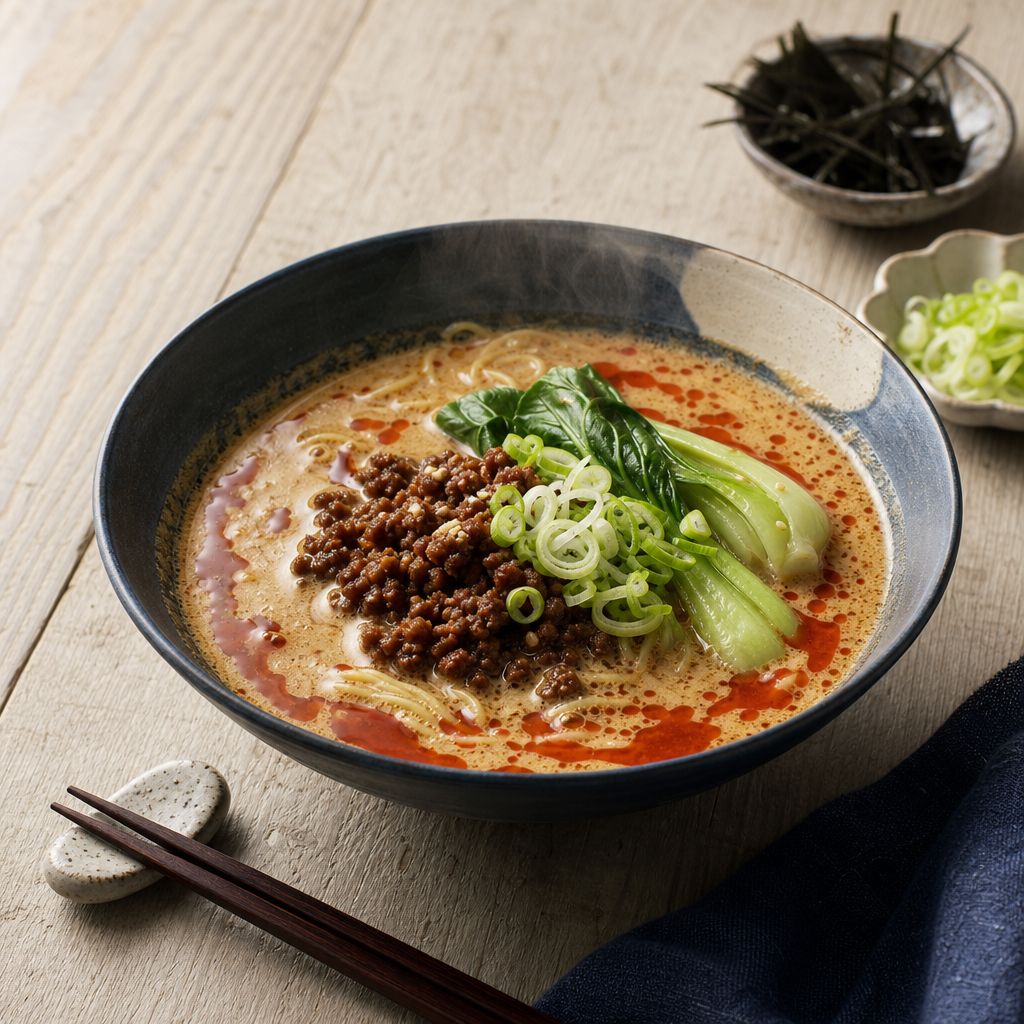
Tantanmen is Japan’s soup-ramen interpretation of Sichuan dandan noodles, 担担面, which are traditionally sauced noodles built around chile oil, sesame or nut paste, Sichuan pepper, and minced pork. In Japan, the dish moved into ramen shops as a full bowl of broth: sesame paste dissolved into chicken or pork stock, tare in the bowl, ramen noodles, and a spicy pork topping. Japanese sources usually frame it as a Chinese-origin dish adapted to domestic ramen practice rather than a regional Japanese ramen style like Sapporo miso or Hakata tonkotsu. The defining Japanese bowl is not dry; dry tantanmen exists, but soup tantanmen is the mainstream form searched internationally.
Method 8 steps · 50 min
Fortify the stock
Combine chicken stock and chicken wings in a pot. Bring to a bare simmer, skim the gray foam, and cook uncovered until the stock tastes round and slightly sticky on the lips, 25 minutes. Strain and keep hot; discard the wings or save the meat for another use.
Blanch the greens
Bring a small pot of salted water to a boil. Blanch the bok choy until the stems are crisp-tender and the leaves turn saturated green, 45-60 seconds, then drain. Do not leave it in the noodle water later.
Fry the pork topping
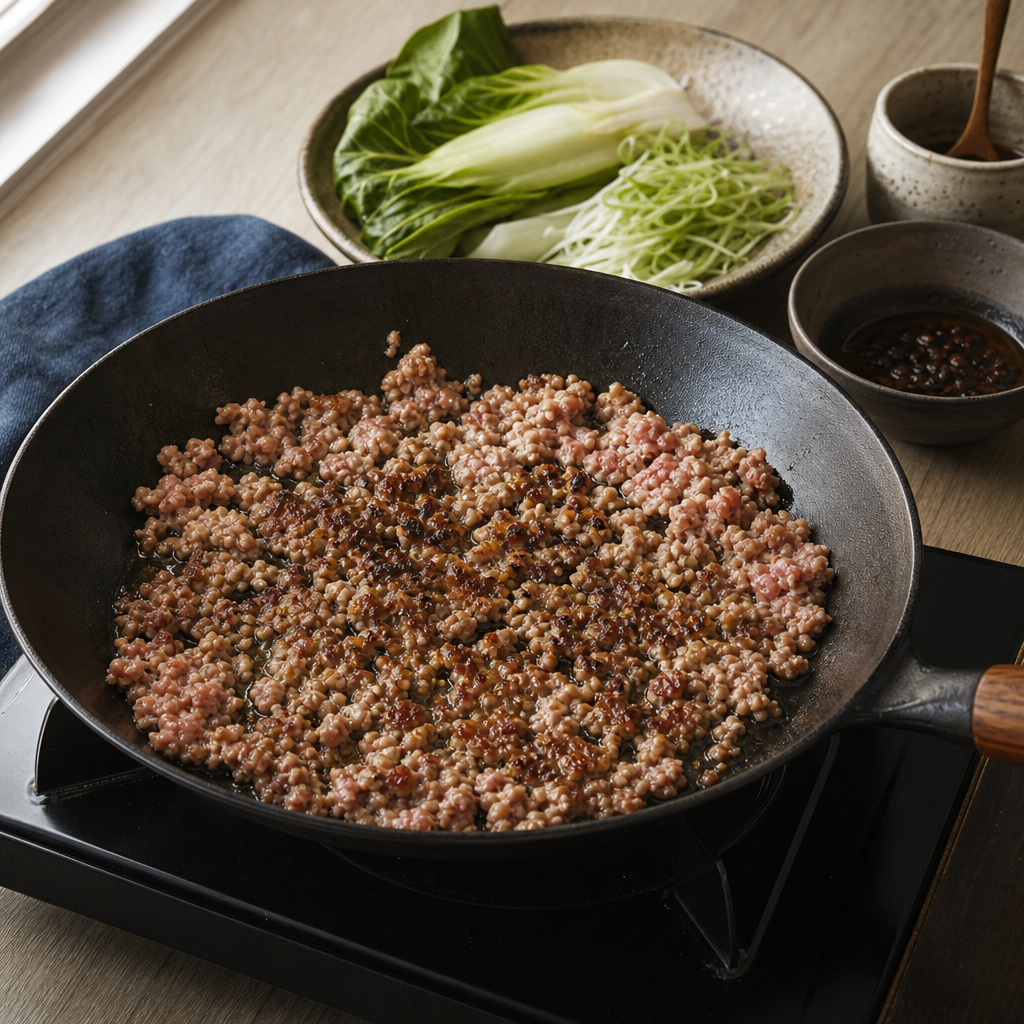
Heat toasted sesame oil in a skillet over medium-high heat. Add pork and spread it flat; leave it untouched until the underside browns, then break it into small crumbles. Cook until the pork is no longer steaming heavily and the edges look browned, 5-7 minutes.
Bloom the aromatics and chile bean paste
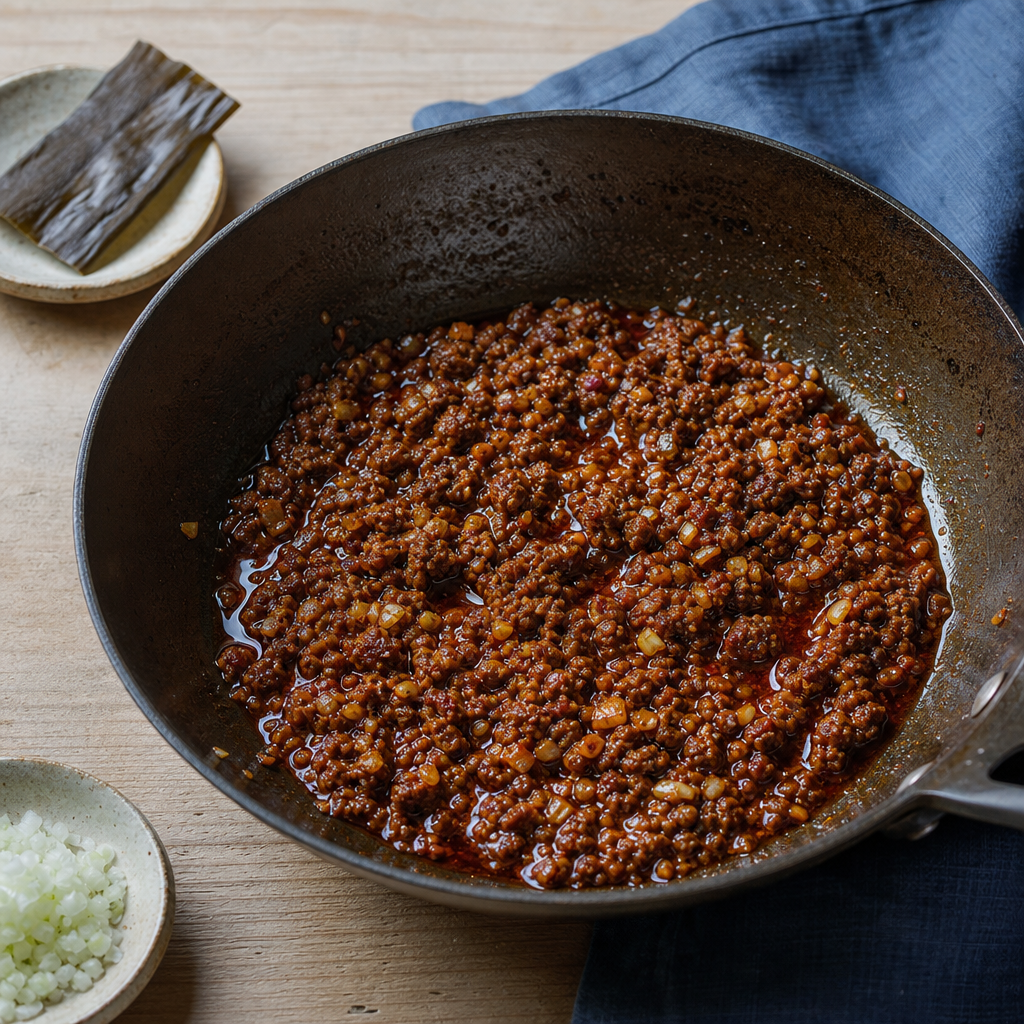
Add garlic, ginger, and minced scallion whites to the pork and stir for 45 seconds. Add tobanjan and fry until the oil turns brick-red and the paste smells fermented rather than raw, 60-90 seconds. Add sake, 25 ml soy sauce, sugar, and Sichuan pepper; cook until the pan looks glossy and nearly dry.
Build the sesame tare in the bowls
In each serving bowl, place 30 g neri goma, 10 g miso if using, 12 ml soy sauce, 7 ml rice vinegar, and 1 tablespoon hot stock. Stir until completely smooth before adding more liquid. Repeat with another ladle of stock until the tare loosens into a glossy cream.
Finish the broth
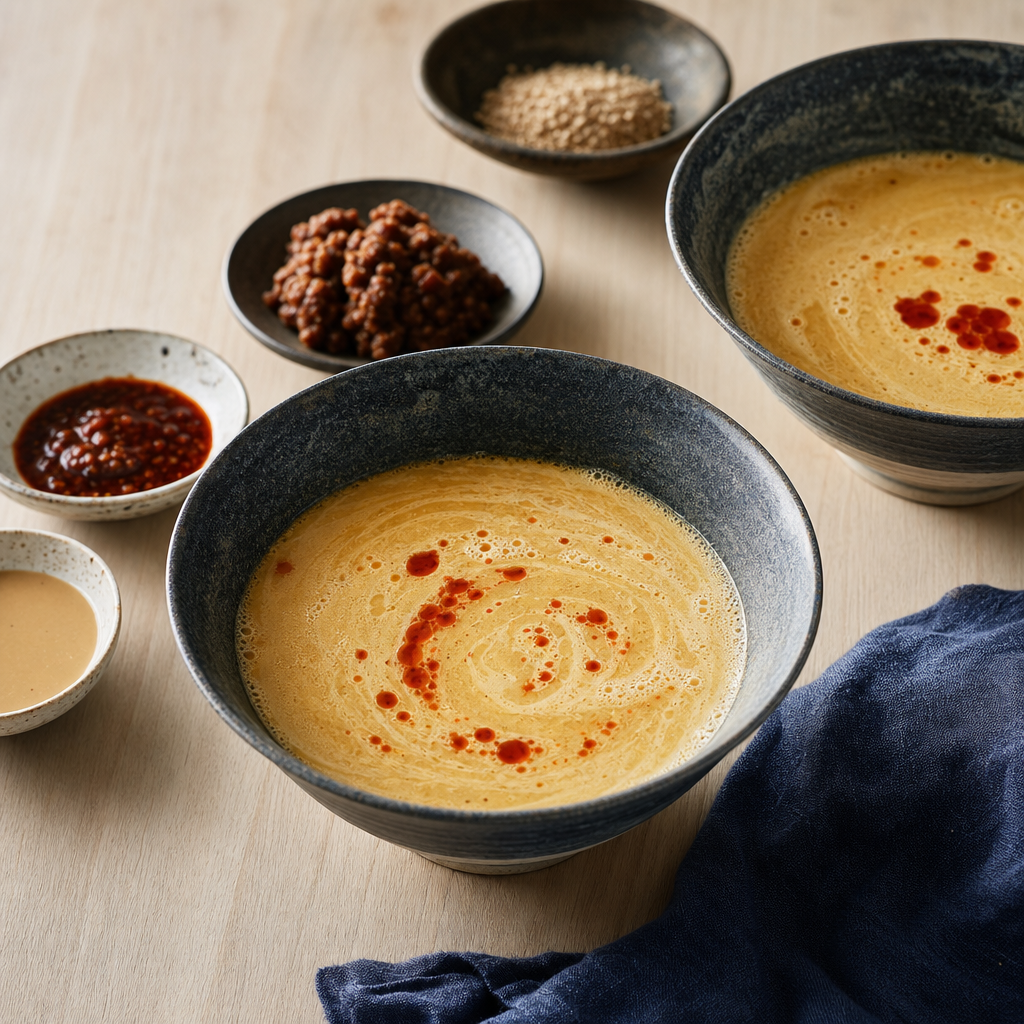
Add about 280-300 ml hot stock to each bowl and stir from the bottom until the broth turns opaque yellow-beige. Taste one bowl and correct with salt, not more soy sauce, if it needs sharper seasoning. Keep the bowls hot while the noodles cook.
Cook the ramen noodles
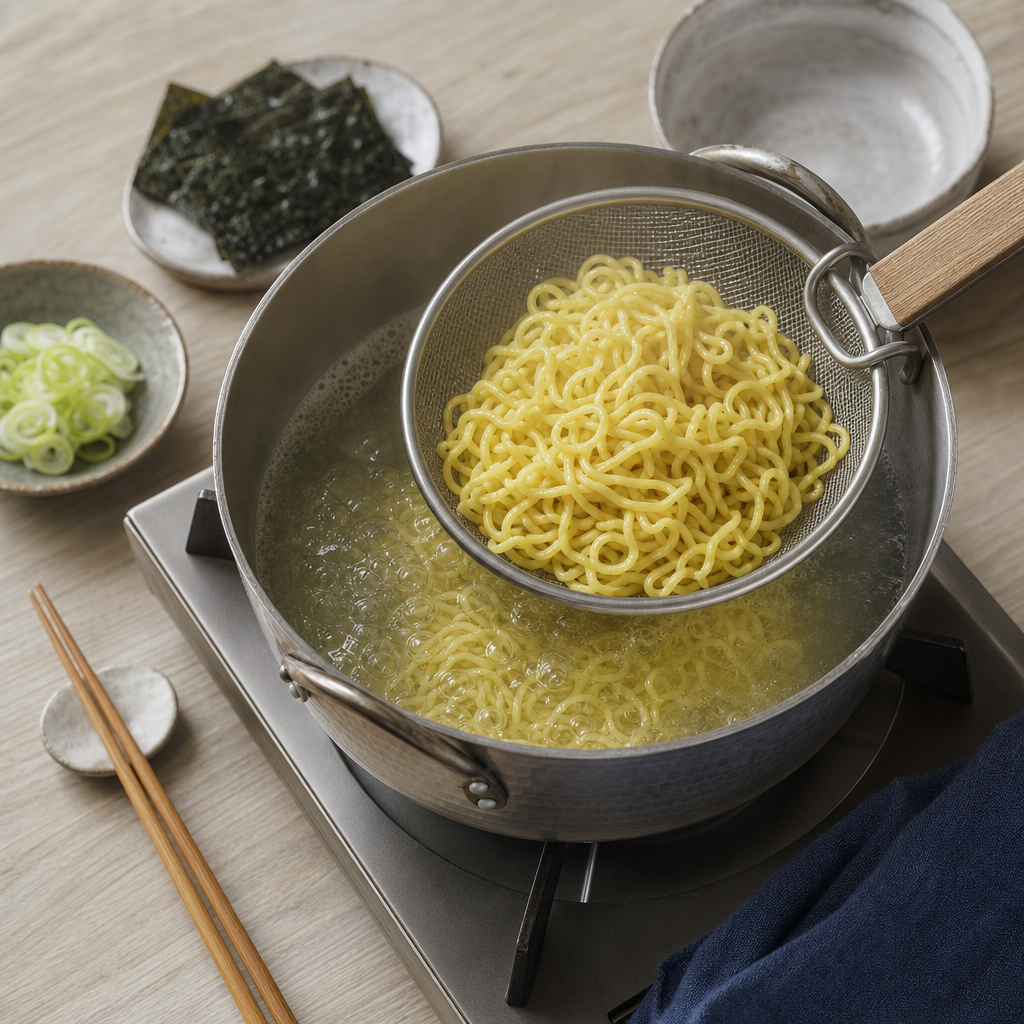
Boil the ramen noodles in a large pot of unsalted water until springy at the core, usually 60-120 seconds for fresh noodles. Stir during the first 20 seconds to separate strands. Drain hard; water clinging to the noodles thins the tare.
Assemble immediately
Divide noodles into the hot bowls and lift once with chopsticks to align them in the broth. Spoon pork mince over the center, add bok choy, scallion greens, crushed sesame, and rāyu. Serve while the noodles still have a firm bite.
Common mistakes
- {'mistake': 'Using non-alkaline noodles', 'fix': 'Use ramen noodles made with kansui. Udon, soba, spaghetti, and egg noodles give the wrong chew and surface texture.'}
- {'mistake': 'Adding sesame paste straight to the soup pot', 'fix': 'Loosen neri goma in the serving bowl with small additions of hot stock until smooth, then dilute.'}
- {'mistake': 'Boiling the sesame broth hard', 'fix': 'Keep the stock hot and simmering, but do not boil the finished sesame broth. Aggressive boiling makes the oil separate and the paste taste grainy.'}
- {'mistake': 'Leaving the pork pale', 'fix': 'Brown the pork before adding aromatics and tobanjan. Pale pork disappears into the broth instead of acting as a topping.'}
- {'mistake': 'Treating sweetness as the main balance', 'fix': 'Use sugar only to round the fermented chile paste. Tantanmen should read sesame, chile, salt, pork, and mild acidity, not sweet.'}
What does not belong
- {'item': 'cream or milk', 'reason': 'Dairy does not belong in tantanmen. The opaque body comes from sesame paste suspended in stock, not from cream.'}
- {'item': 'peanut butter', 'reason': 'Peanut butter does not belong in the tare. It makes a sweet peanut soup and erases the sesame profile; use neri goma, Chinese sesame paste, or tahini as a fallback.'}
- {'item': 'coconut milk', 'reason': 'Coconut milk pushes the bowl toward Southeast Asian curry noodle soup. It is not part of Japanese tantanmen.'}
- {'item': 'Italian spaghetti as the noodle', 'reason': 'Spaghetti lacks kansui. The yellow color and springy chew of ramen are not cosmetic; they are structural.'}
- {'item': 'American bottled teriyaki sauce', 'reason': 'Sweet teriyaki glaze does not belong here. It fights the chile-bean paste and turns the pork topping sticky-sweet.'}