Tempura Soba
The dish in context
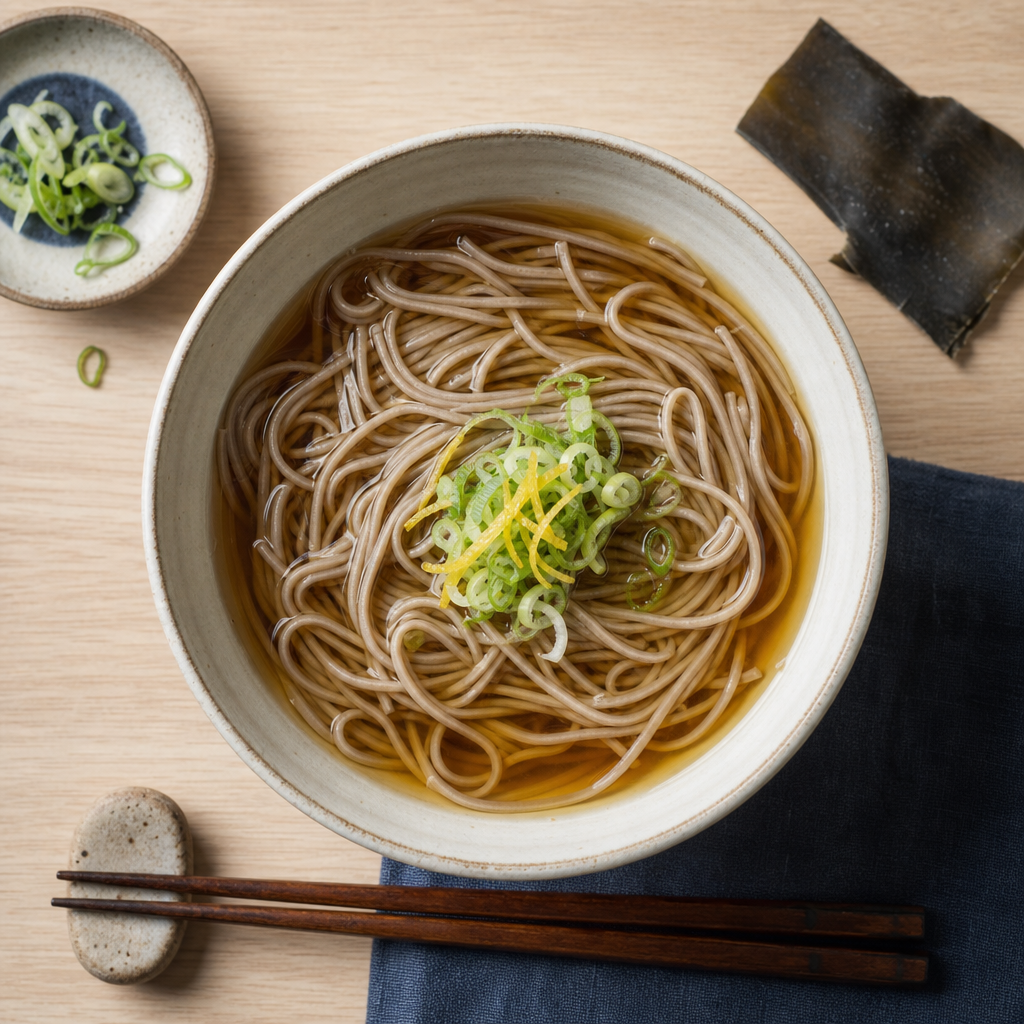
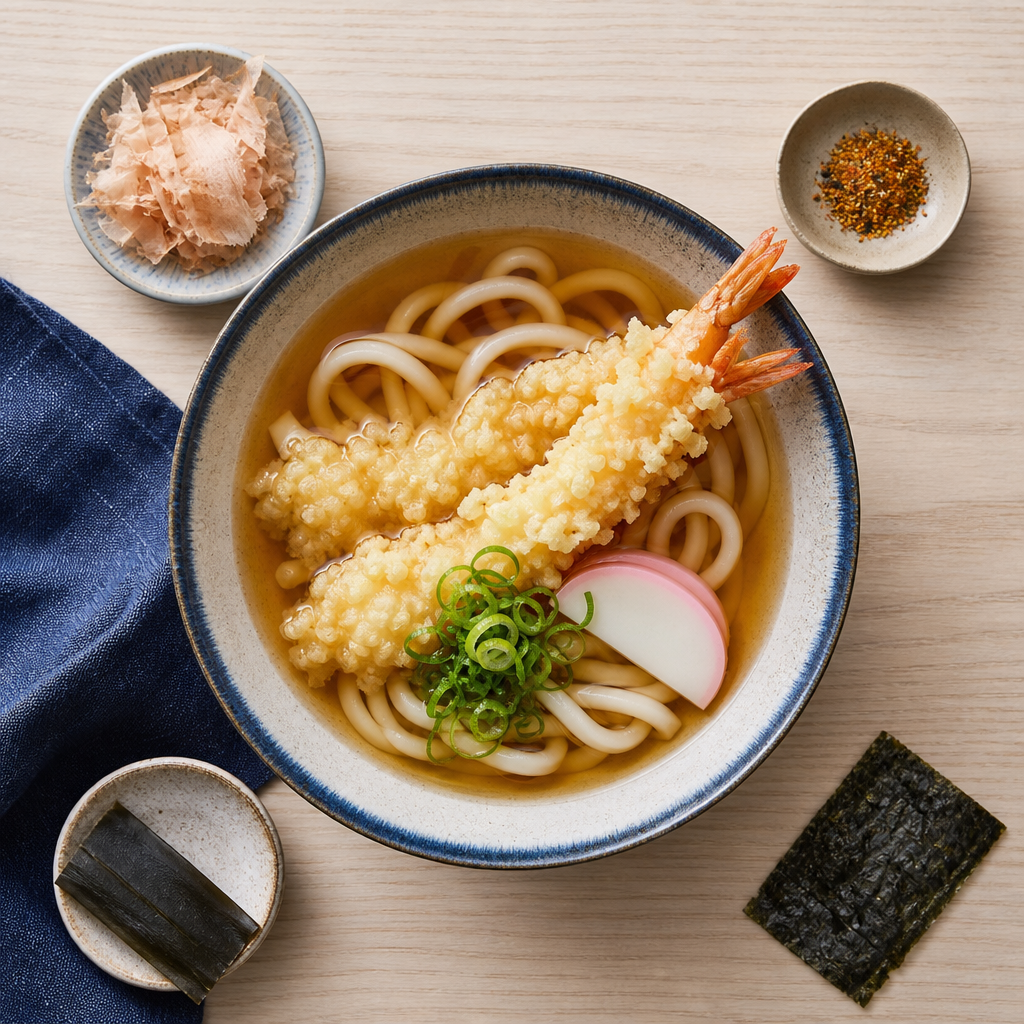
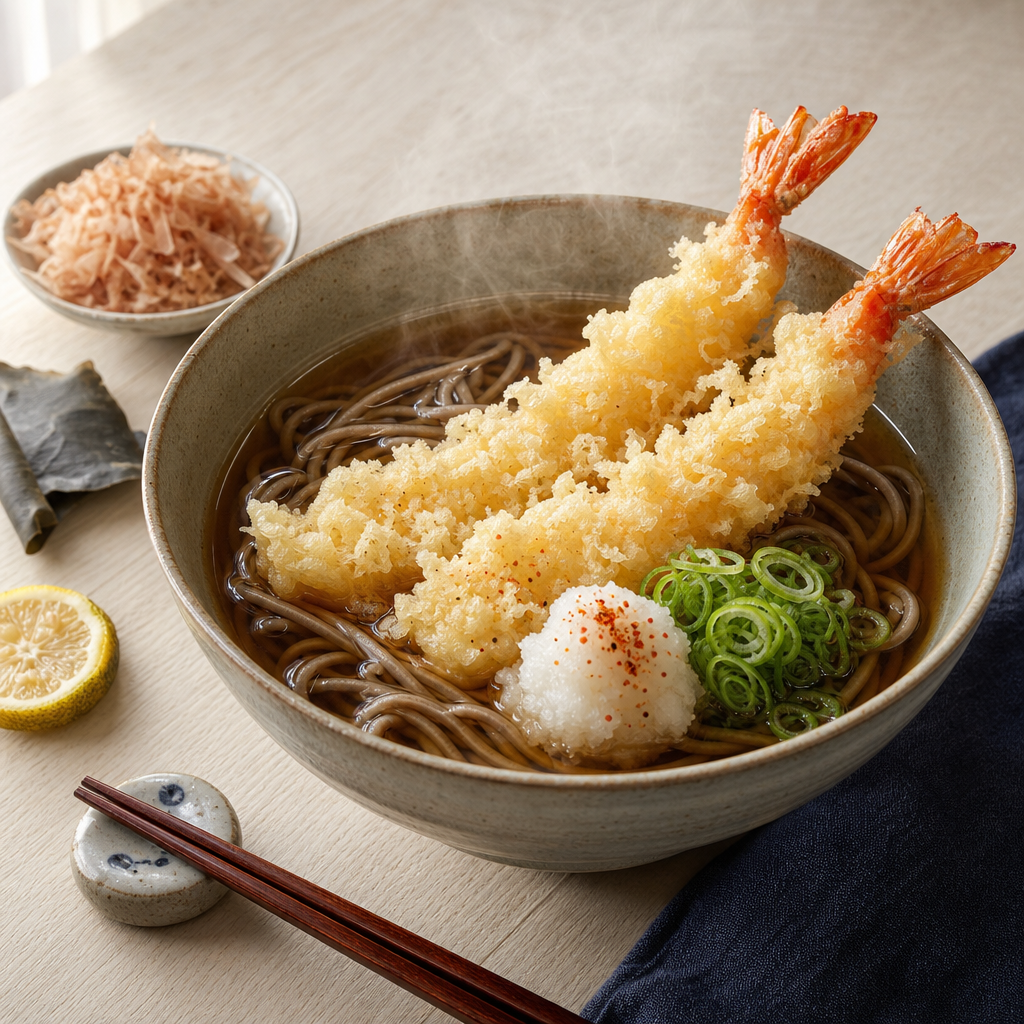
Soba and tempura both became defining urban foods of Edo, present in the same food culture that also elevated sushi and eel. Tempura entered Japan through earlier Portuguese frying techniques, then changed into a Japanese craft built around thin batter, clean oil, and precise temperature. Tempura soba brings two Edo foods into one bowl: buckwheat noodles in hot kake-tsuyu, finished with freshly fried tempura. In Japan the tempura may be shrimp, kakiage, or seasonal vegetables; shrimp tempura is the international restaurant standard and the clearest version for a home recipe.
Method 9 steps · 50 min
Make ichiban dashi
Combine water and kombu in a saucepan and soak 20 minutes. Heat slowly until small bubbles collect at the edge, then remove the kombu before the water boils. Add katsuobushi, bring just below a boil, turn off the heat, steep 1 minute, and strain without pressing hard.
Season the soba broth
Return 750 ml strained dashi to the pot. Add shoyu, mirin, sake, and sugar, then simmer 2 minutes to take the raw edge off the alcohol and soy. Hold hot but do not reduce aggressively.
Prepare the shrimp
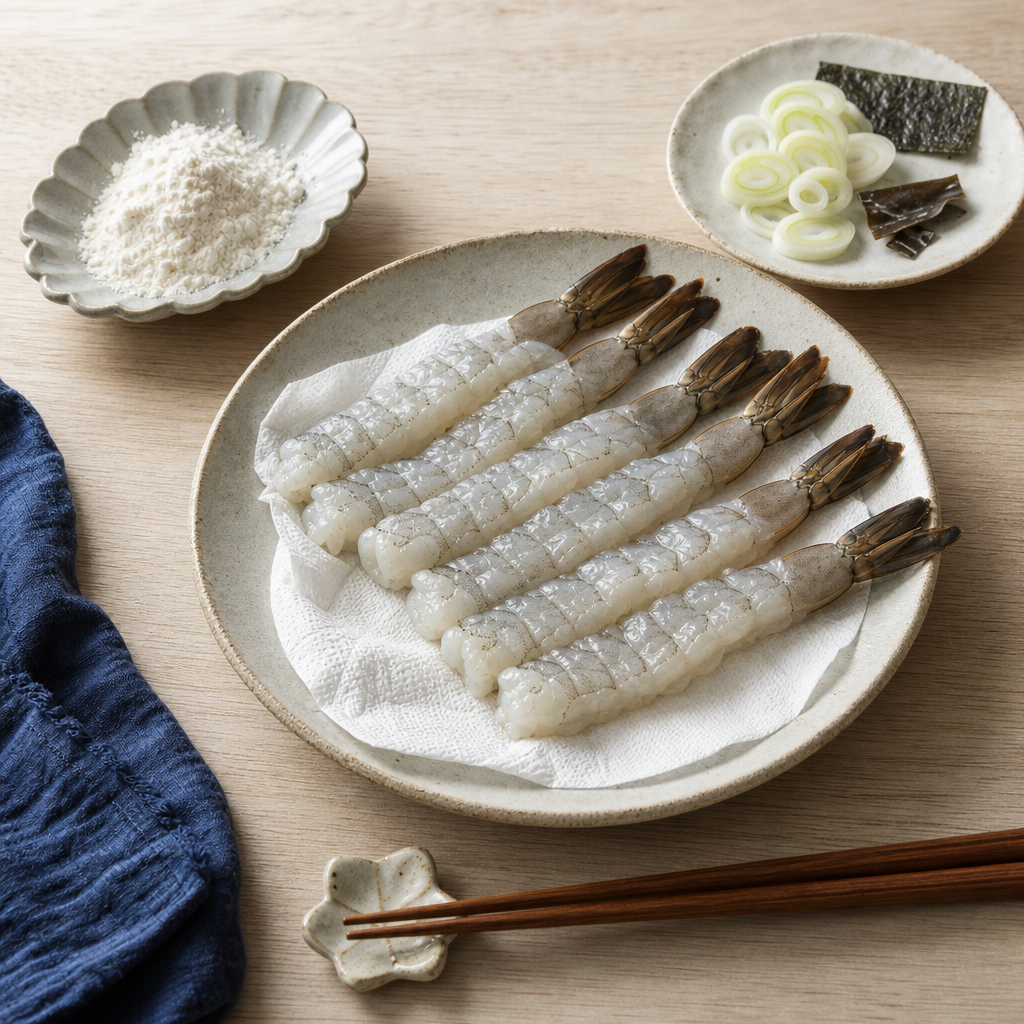
Pat the shrimp dry. Make 3 shallow cuts across the belly of each shrimp and press gently to straighten; leave the tail on for handling. Dust lightly with flour and shake off excess.
Cook and rinse the soba
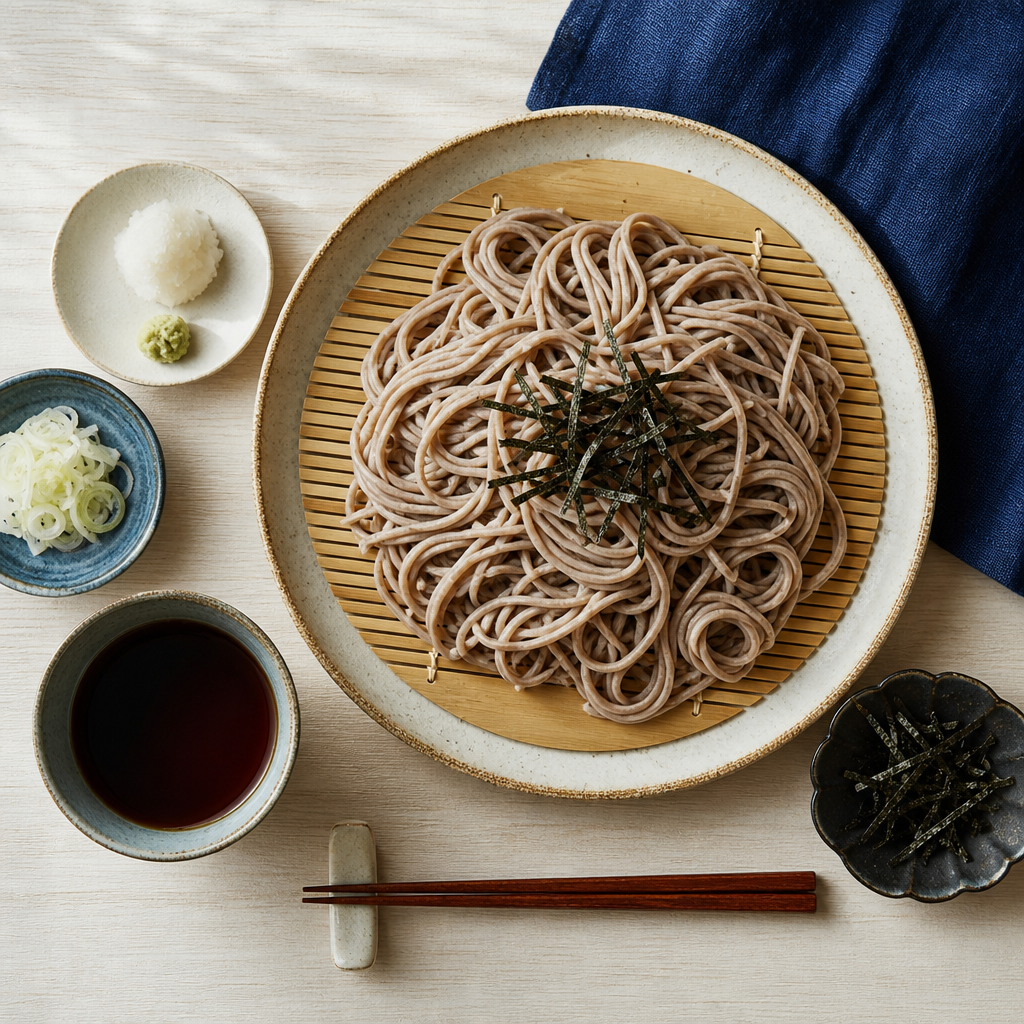
Boil soba in unsalted water according to the package timing, usually 4-6 minutes for dried noodles. Drain, then rinse under cold running water while rubbing the noodles gently until the surface starch is gone and the noodles feel clean, not slick. Drain well.
Heat the oil
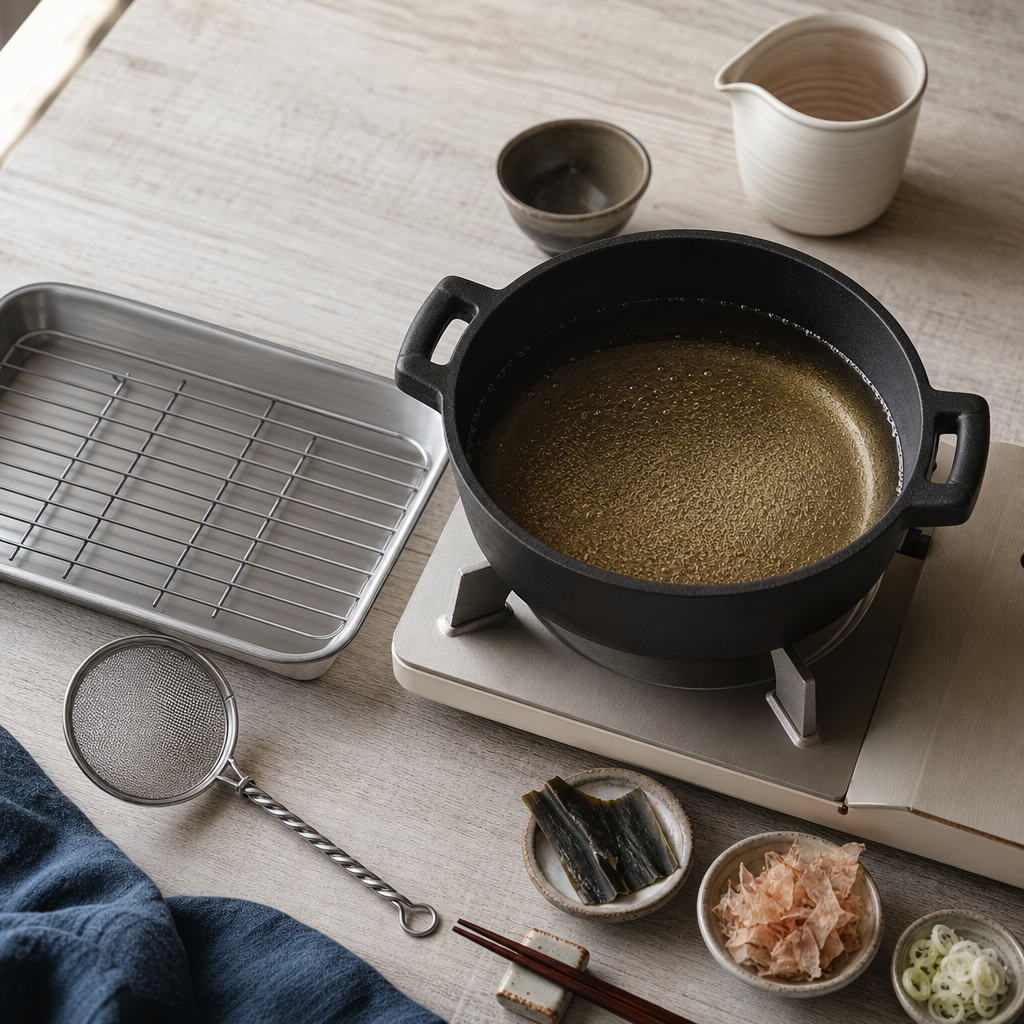
Heat 5-6 cm oil to 180°C. Set a wire rack over a tray. Keep a small spider or mesh skimmer nearby for loose batter crumbs.
Mix the batter late
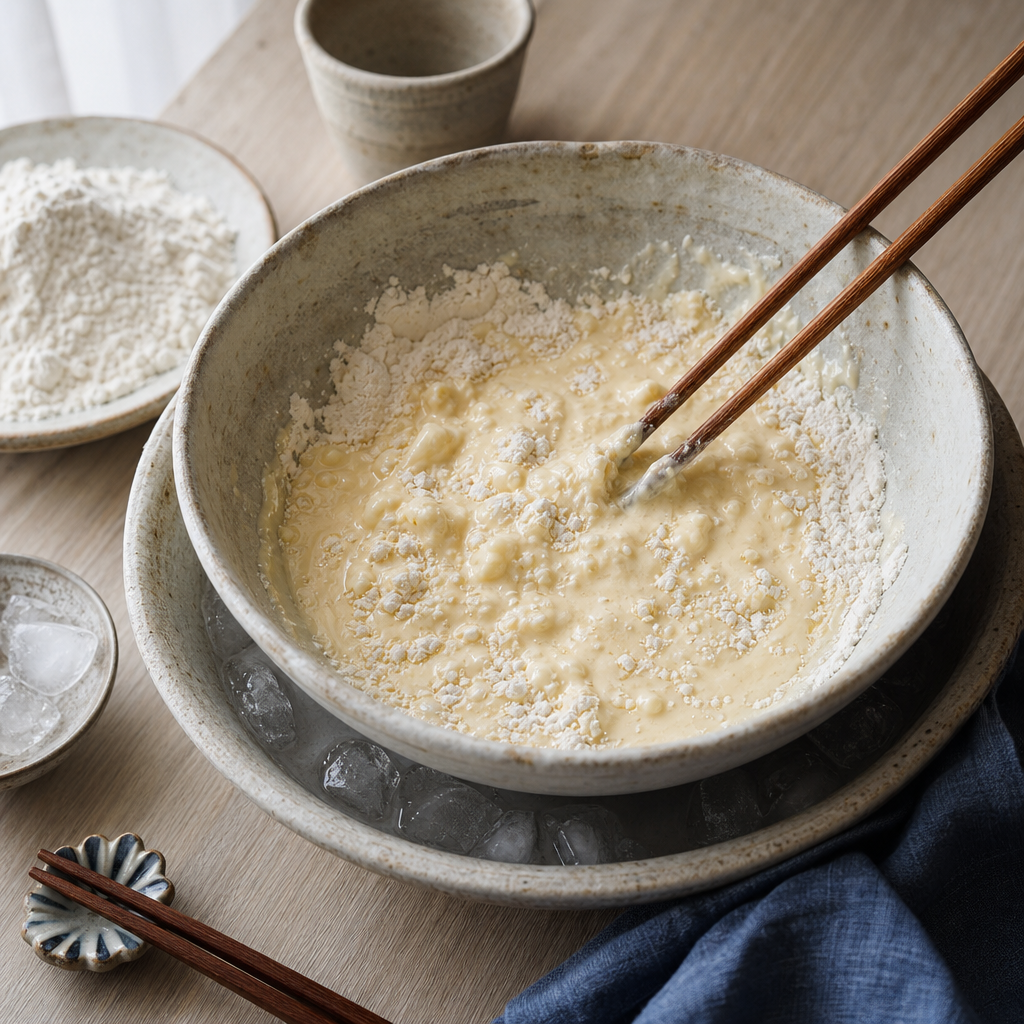
Whisk the cold egg yolk into the ice water. Add chilled flour and stir with chopsticks 8-10 strokes only; leave visible lumps and dry streaks. Do not make a smooth batter.
Fry the tempura
Dip each floured shrimp into the batter and lower it into the oil. Fry 90-120 seconds, turning once, until the coating is pale gold and crisp; scoop out loose crumbs between batches. Drain on the rack, not on paper towels.
Reheat the noodles in broth
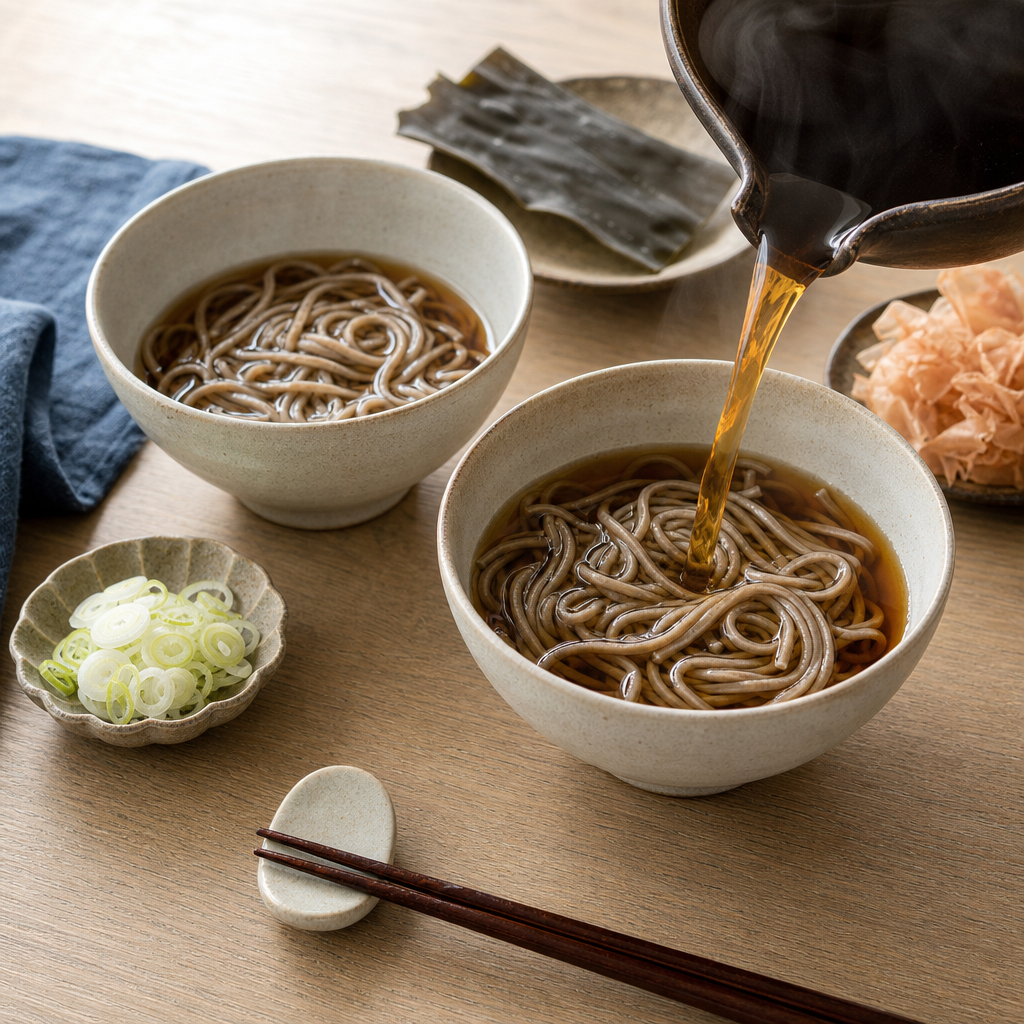
Dip the rinsed soba briefly in boiling water for 10 seconds, drain, and divide between bowls. Pour hot broth over the noodles until they are covered but not swimming.
Assemble immediately
Place shrimp tempura on top of the noodles or across the bowl rim. Add sliced negi and, if using, a small mound of grated daikon. Serve shichimi togarashi at the table.
Common mistakes
- {'mistake': 'Mixing tempura batter smooth', 'fix': 'Stop while the batter is still lumpy. Gluten is the enemy here.'}
- {'mistake': 'Using cold unrinsed soba straight from the pot', 'fix': 'Rinse the noodles thoroughly, then reheat for seconds before serving. Clean noodles make clean broth.'}
- {'mistake': 'Boiling kombu', 'fix': 'Remove kombu before the water reaches a full boil. Slime and bitterness do not belong in soba broth.'}
- {'mistake': 'Frying at low temperature', 'fix': 'Hold 180°C for shrimp. If the oil stops bubbling briskly, wait before adding more pieces.'}
- {'mistake': 'Holding tempura on paper towels', 'fix': 'Use a rack. Steam trapped under fried batter softens it faster than the broth does.'}
What does not belong
- {'item': 'Breadcrumbs or panko', 'reason': 'Panko makes ebi fry, not tempura. Tempura batter is flour, cold water, and egg yolk.'}
- {'item': 'Teriyaki sauce', 'reason': 'Sweet glaze does not belong in tempura soba. The seasoning is dashi, soy, and mirin in the broth.'}
- {'item': 'Cream or butter', 'reason': 'Dairy muddies the dashi and breaks the grammar of the bowl.'}
- {'item': 'Chinese soy sauce as a direct swap', 'reason': 'It has a different salt and aroma profile. Use Japanese koikuchi shoyu or adjust with restraint.'}
- {'item': 'Garlic-heavy seasoning', 'reason': 'Garlic pulls the bowl away from soba-tsuyu and covers the buckwheat aroma.'}