Kake Soba
The dish in context
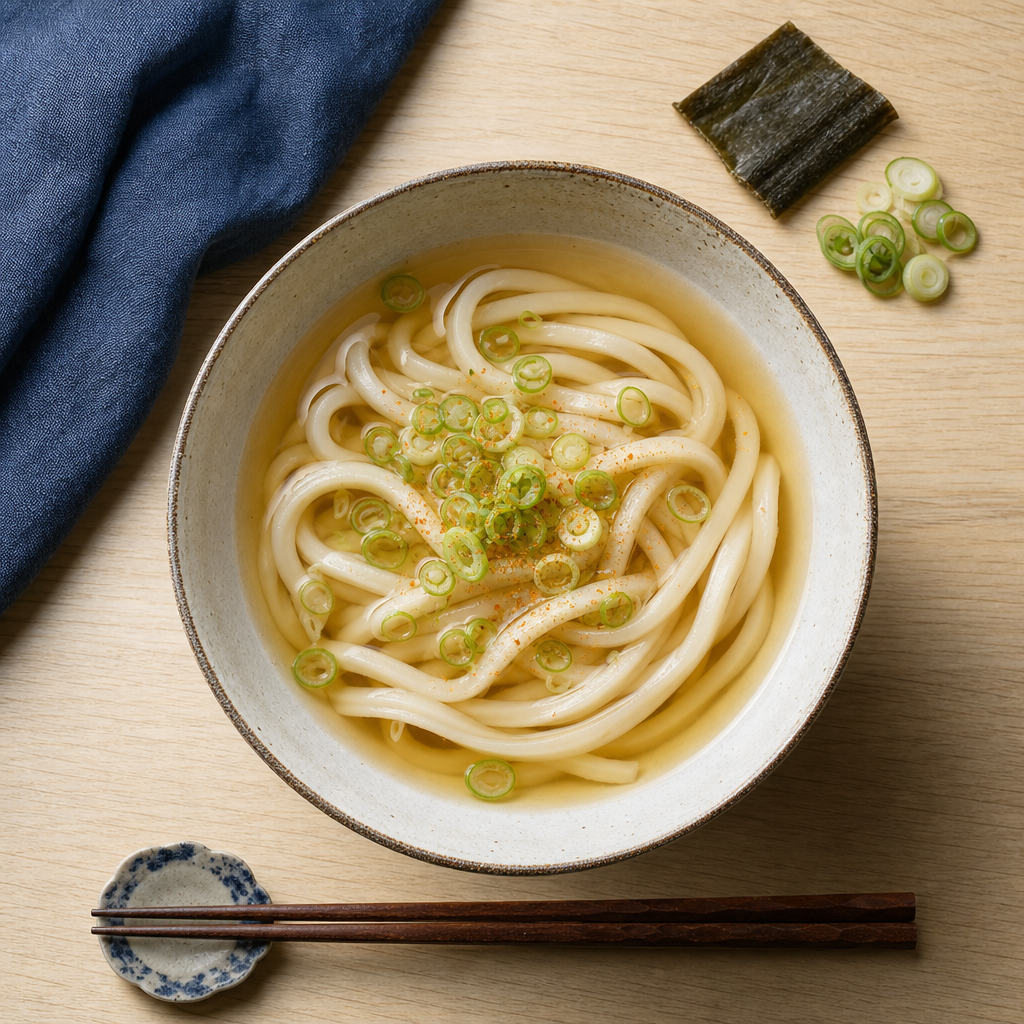
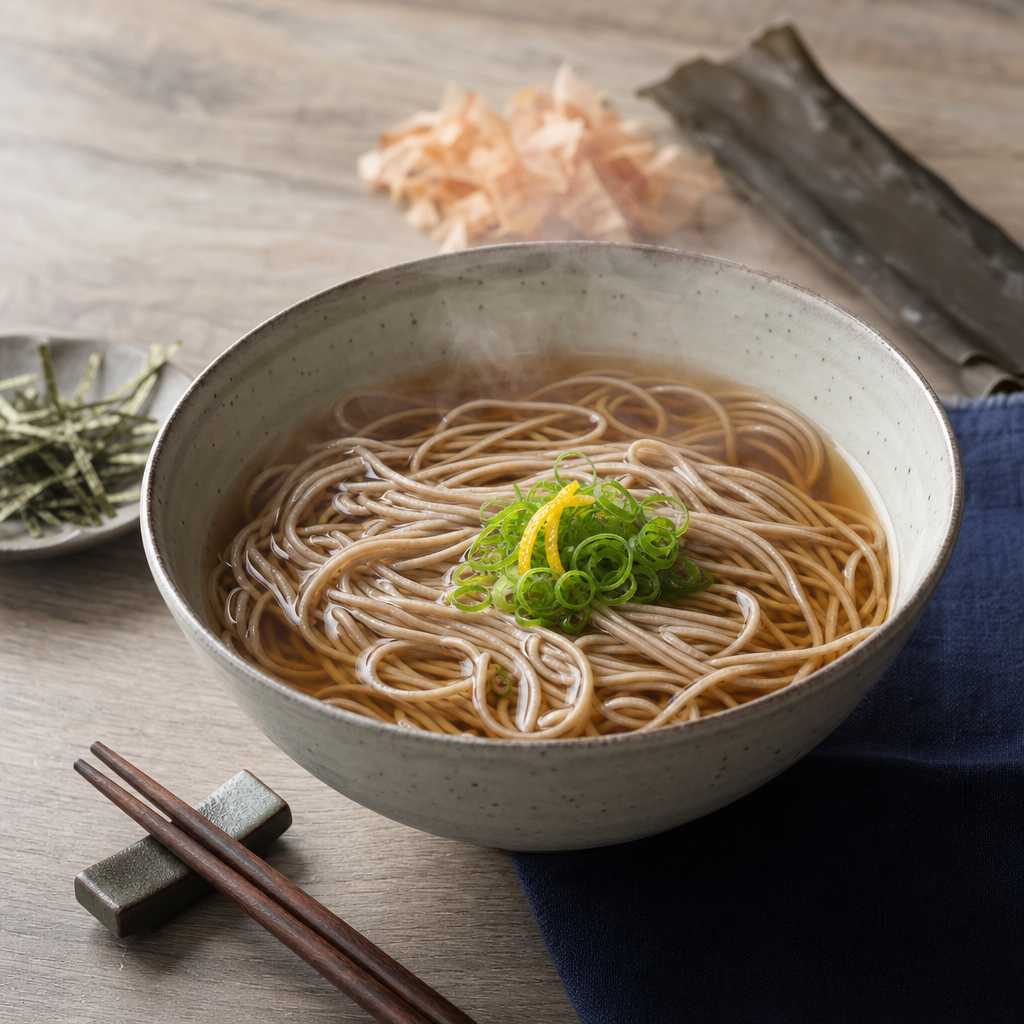
Kake soba is the baseline hot soba of Japan: buckwheat noodles served in kakejiru, a seasoned dashi broth. Its plainness is the point; more elaborate bowls such as tempura soba, kitsune soba, or nishin soba are built from this structure. Soba became widely associated with everyday urban eating from the Edo period onward, with shops ranging from standing counters to specialist restaurants. Regional broths vary: Tokyo-leaning versions are darker and soy-forward, while Kansai styles often use lighter soy and a paler dashi. This recipe uses a balanced household-standard broth built from ichiban-style kombu and katsuobushi dashi plus a small kaeshi.
Method 9 steps · 30 min
Soak the kombu
Put 700 ml water and the kombu in a saucepan. Soak 20 minutes if time allows; 30-60 minutes gives a rounder broth.
Draw the dashi
Set the pan over medium heat and bring the water slowly to 80-85°C, when small bubbles cling to the pot but the surface is not rolling. Remove the kombu before the water boils.
Steep the bonito
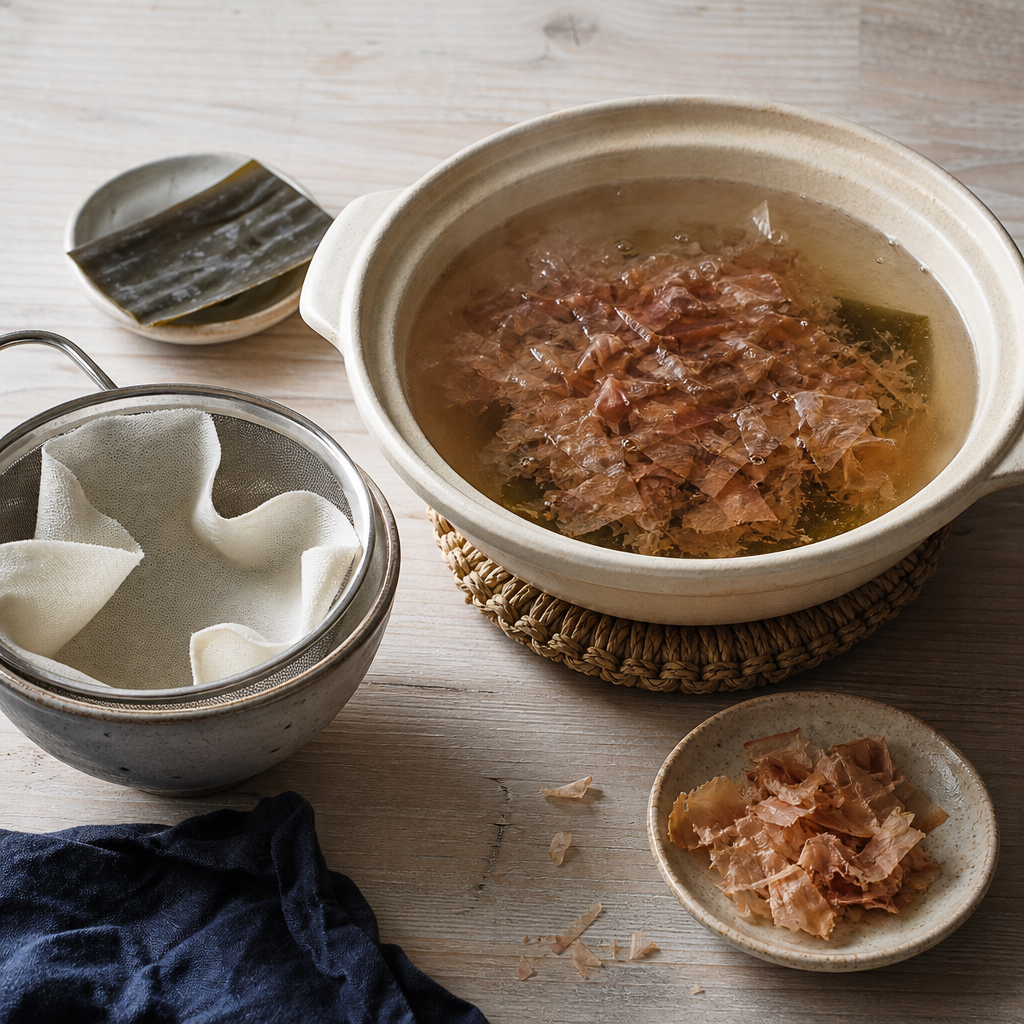
Bring the kombu water to a brief boil, turn off the heat, and add the katsuobushi. Let the flakes sink for 60 seconds, then strain through a fine sieve without pressing.
Make the kaeshi
In a small pan, combine mirin, sake, and sugar. Simmer 30-45 seconds to dissolve the sugar and drive off raw alcohol, then stir in the soy sauce and remove from heat as soon as it steams.
Season the kakejiru
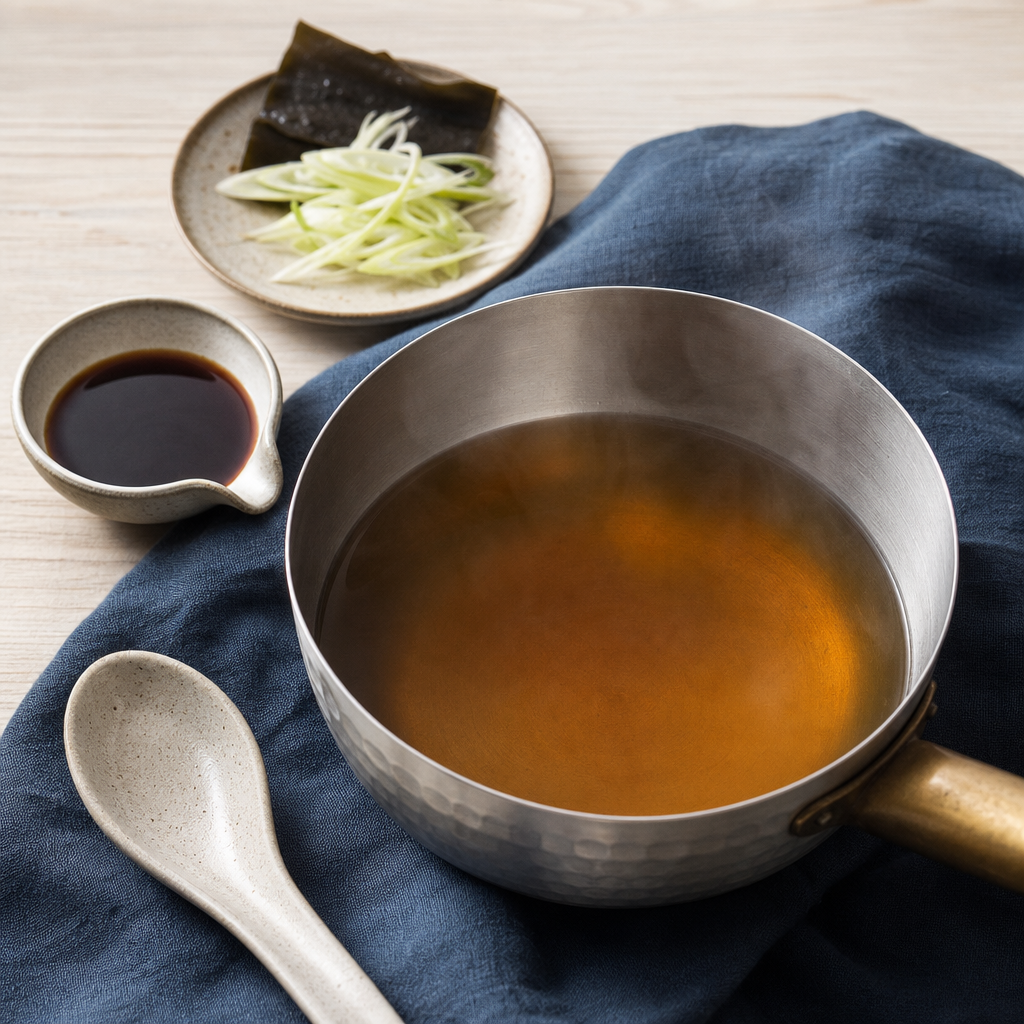
Combine the strained dashi with the kaeshi. Heat until steaming, then taste: it should be a shade saltier than a sipping broth because the noodles will dilute it.
Boil the soba separately
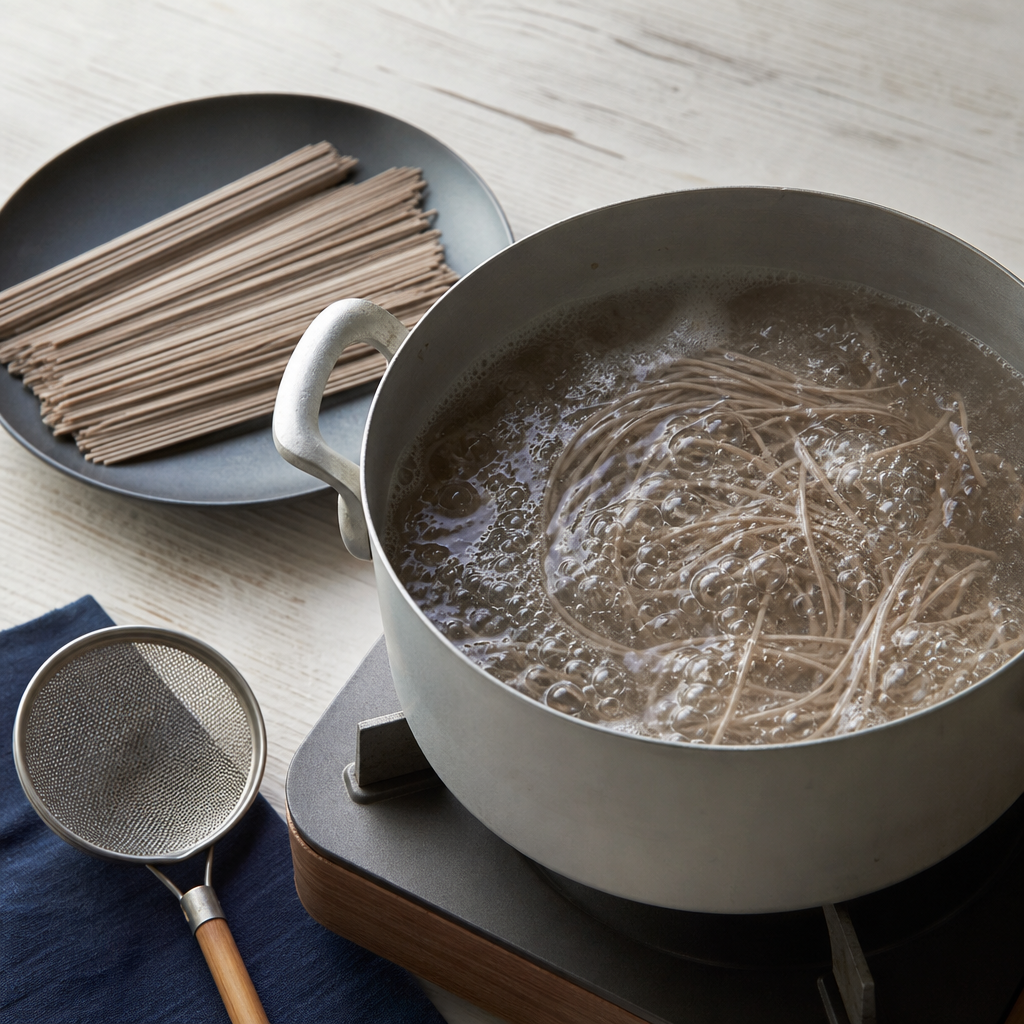
Bring a large pot of unsalted water to a rolling boil. Add the soba, stir once to separate, and cook according to the package timing, usually 4-6 minutes for dried soba.
Rinse the noodles hard
Drain the soba and rinse under cold running water, rubbing the noodles lightly between fingers until the surface no longer feels slick. Drain well.
Rewarm and assemble
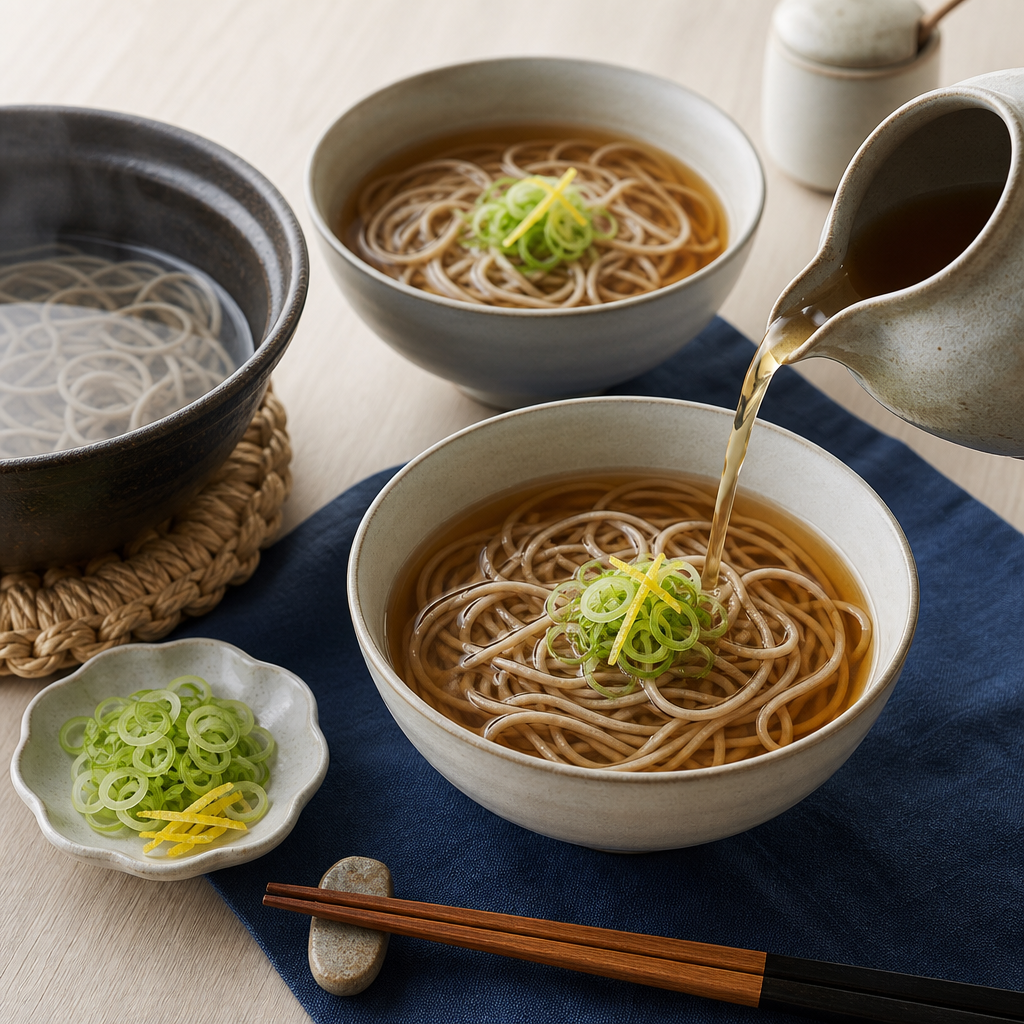
Dip the rinsed soba in hot water for 10-15 seconds, then drain and divide between warm bowls. Pour over hot kakejiru, then top with sliced green onion and a sliver of yuzu peel if using.
Serve with shichimi
Serve immediately with shichimi togarashi on the side. Add it at the table, not to the pot.
Common mistakes
- {'mistake': 'Boiling kombu', 'fix': 'Remove kombu before a rolling boil. The cue is small bubbles on the pan and steam rising, not violent movement.'}
- {'mistake': 'Cooking soba in the serving broth', 'fix': 'Cook soba in plain water, rinse it cold, then rewarm it briefly. Starch does not belong in kakejiru.'}
- {'mistake': 'Skipping the rinse because the dish is served hot', 'fix': 'Rinse anyway. Hot soba still needs the surface starch removed before it meets the broth.'}
- {'mistake': 'Using bottled American-style teriyaki sauce as the broth base', 'fix': 'Use dashi, soy sauce, mirin, and sake. Teriyaki sauce is too sweet and thick for kake soba.'}
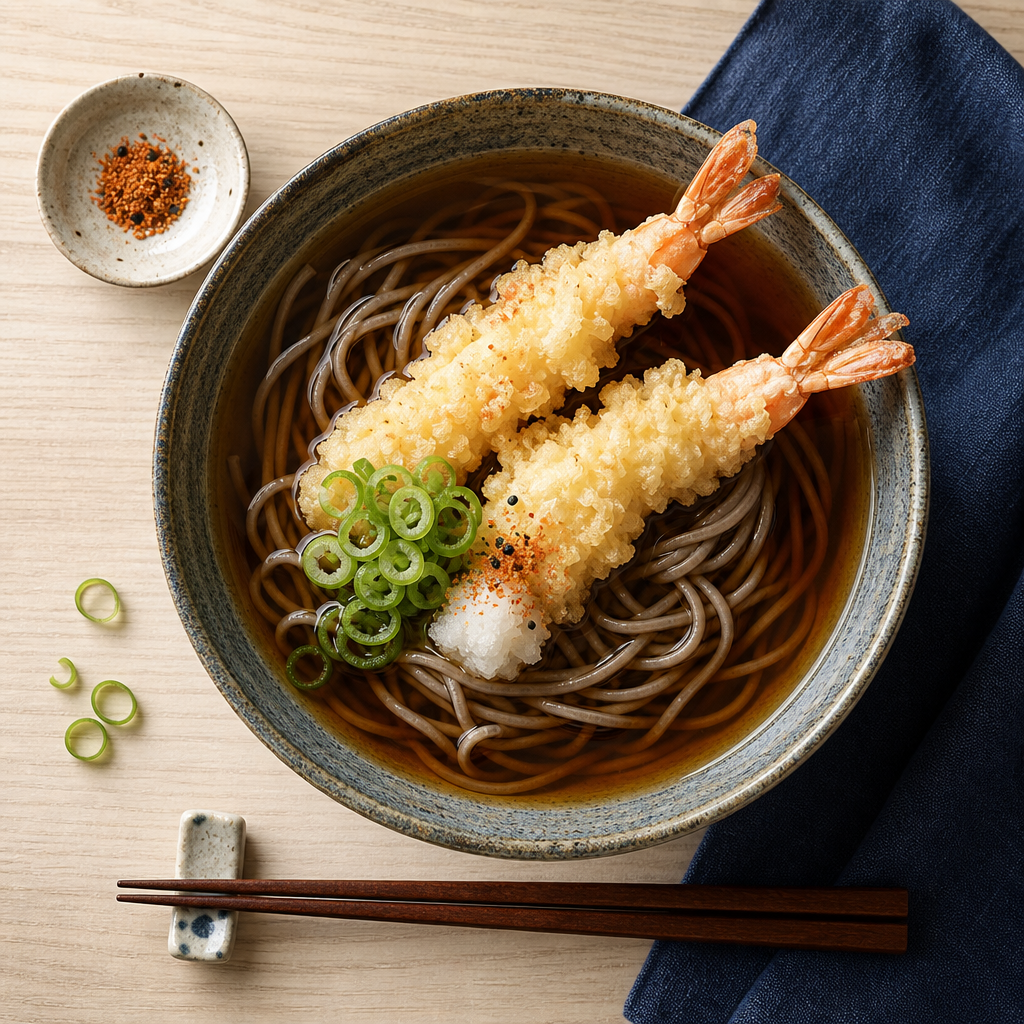
- {'mistake': 'Overgarnishing the bowl', 'fix': 'Keep the garnish small: green onion, optional yuzu, optional shichimi. Once tempura, fried tofu, egg, or herring is added, the dish becomes another named soba.'}
What does not belong
- {'item': 'cream or milk', 'reason': 'Dairy does not belong in kake soba. The broth should be clear dashi, not a creamy soup.'}
- {'item': 'chicken stock as the main broth', 'reason': 'Chicken stock changes the grammar of the dish. Kake soba is built on dashi.'}
- {'item': 'garlic and ginger', 'reason': 'They pull the bowl toward ramen or a pan-Asian soup. Kake soba depends on restrained dashi and buckwheat aroma.'}
- {'item': 'sesame oil', 'reason': 'Sesame oil coats the noodles and masks the dashi. It does not belong in the hot broth.'}
- {'item': 'heavy toppings', 'reason': 'Tempura, aburaage, egg, duck, and herring are valid soba toppings, but not for plain kake soba. They create different dishes.'}