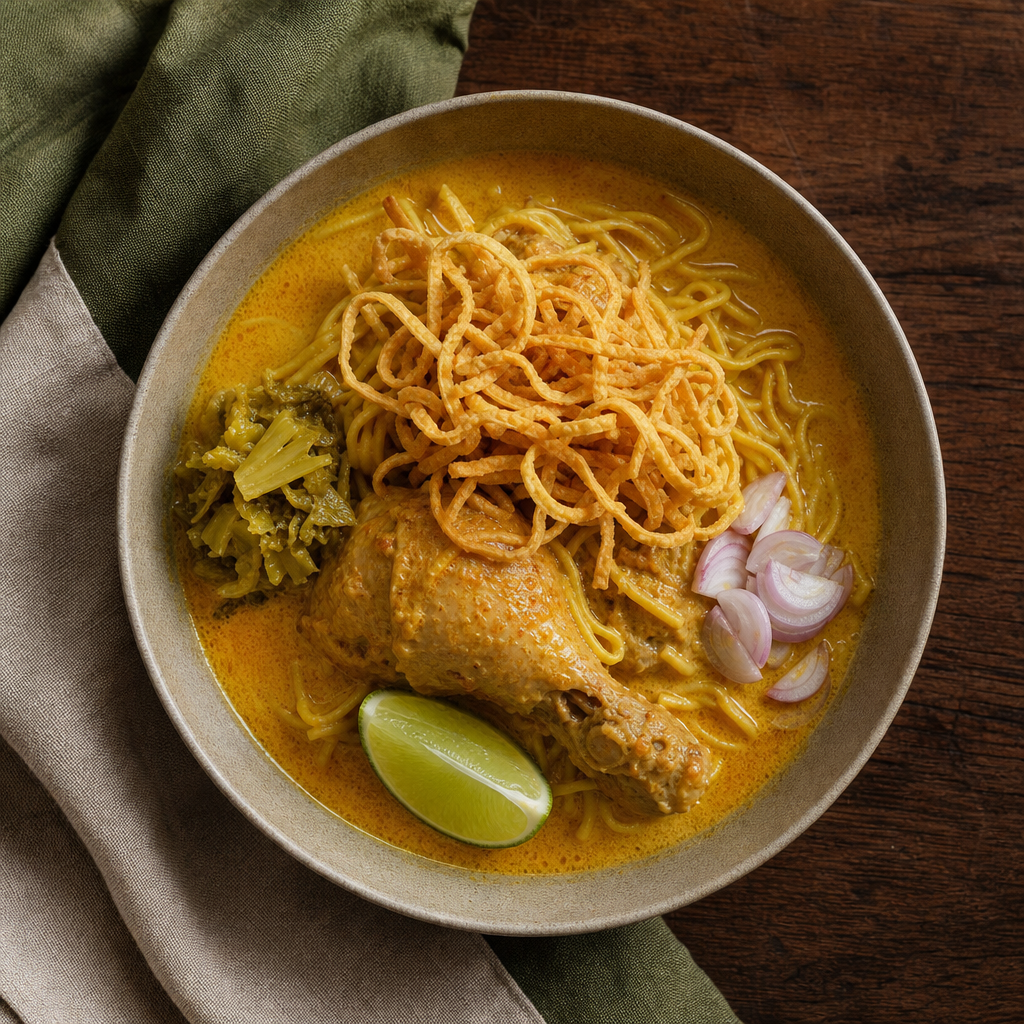
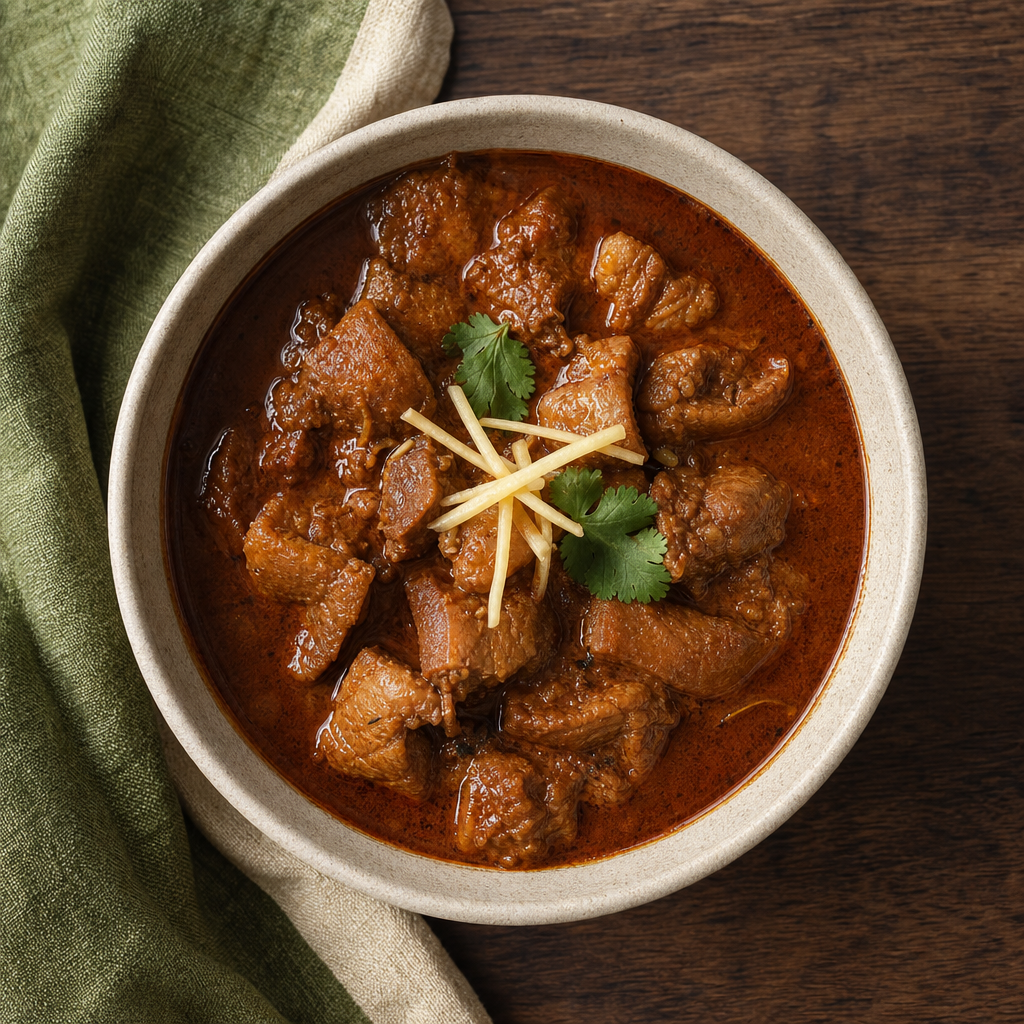
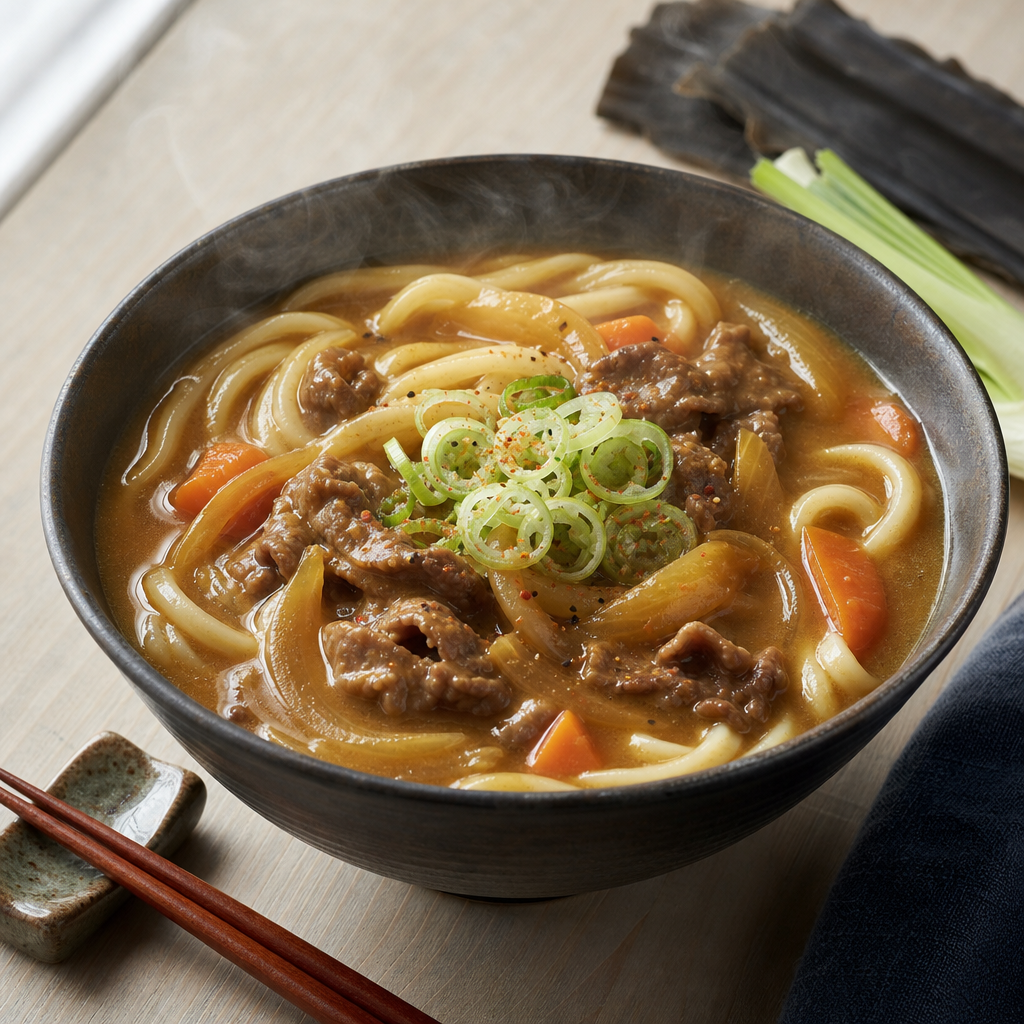
Curry Udon
The dish in context
Curry udon belongs to the Japanese curry family, but its logic comes from noodle shops rather than rice plates. In the early 20th century, soba and udon shops began folding curry into dashi-based broths seasoned with soy sauce and mirin, making a curry sauce that behaves like noodle soup. Regional and shop styles vary: some use leftover Japanese curry, some use curry roux blocks, and some thicken a dashi broth with curry powder and starch. The constant is not the brand of curry; it is the dashi backbone under the spice.
Method 7 steps · 45 min
Make the dashi
Combine water and kombu in a pot and warm over medium-low heat until small bubbles collect at the edges, 10-12 minutes. Remove the kombu before the water boils. Add katsuobushi, turn off the heat, steep 2 minutes, then strain without pressing hard.
Start the curry base
Heat oil in a 4 L pot over medium heat. Add onion and cook until translucent at the edges, 5-6 minutes. Add beef and cook until the red is mostly gone, then add carrot and potato if using.
Bloom the curry
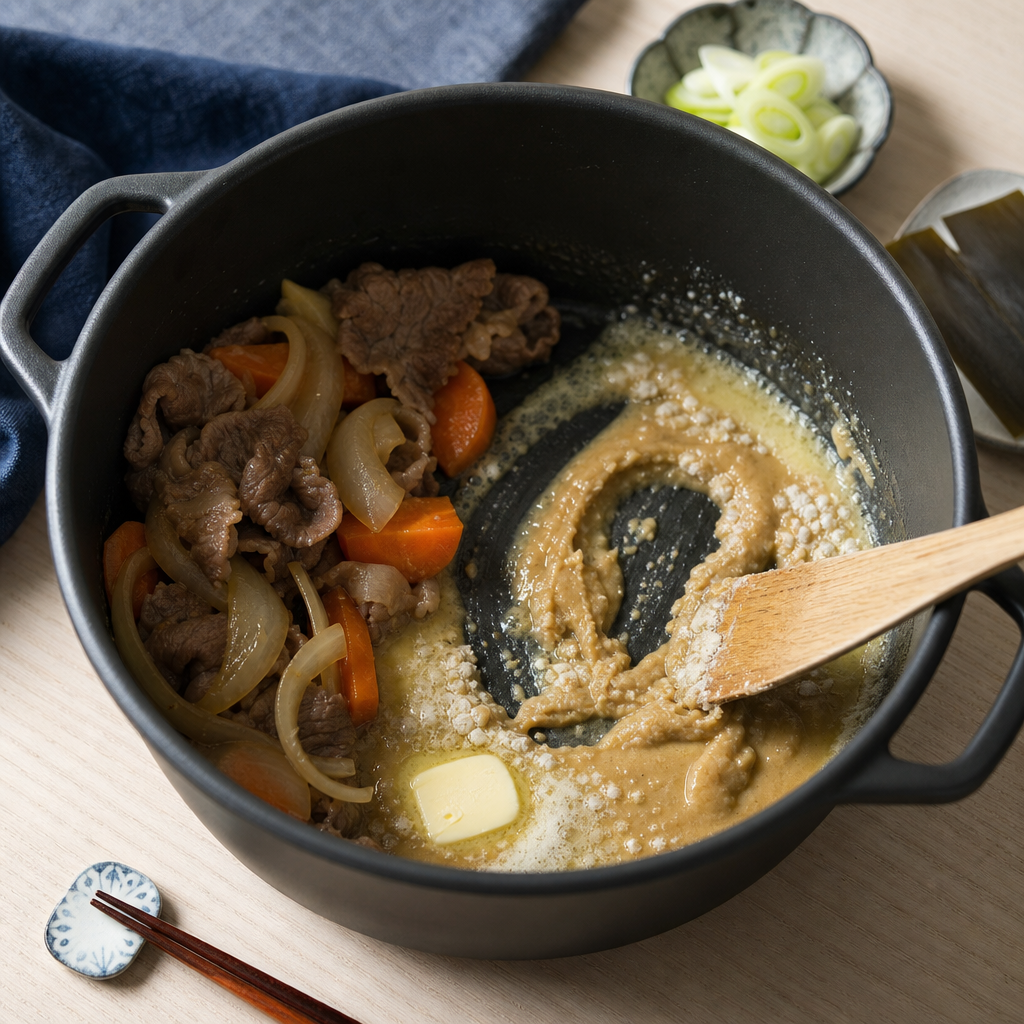
Push the solids to one side and add butter to the open space. Stir in flour and cook until the paste smells nutty and turns light tan, about 2 minutes. Stir in curry powder and garam masala for 30 seconds; do not let the spices scorch.
Build the soup-thick sauce
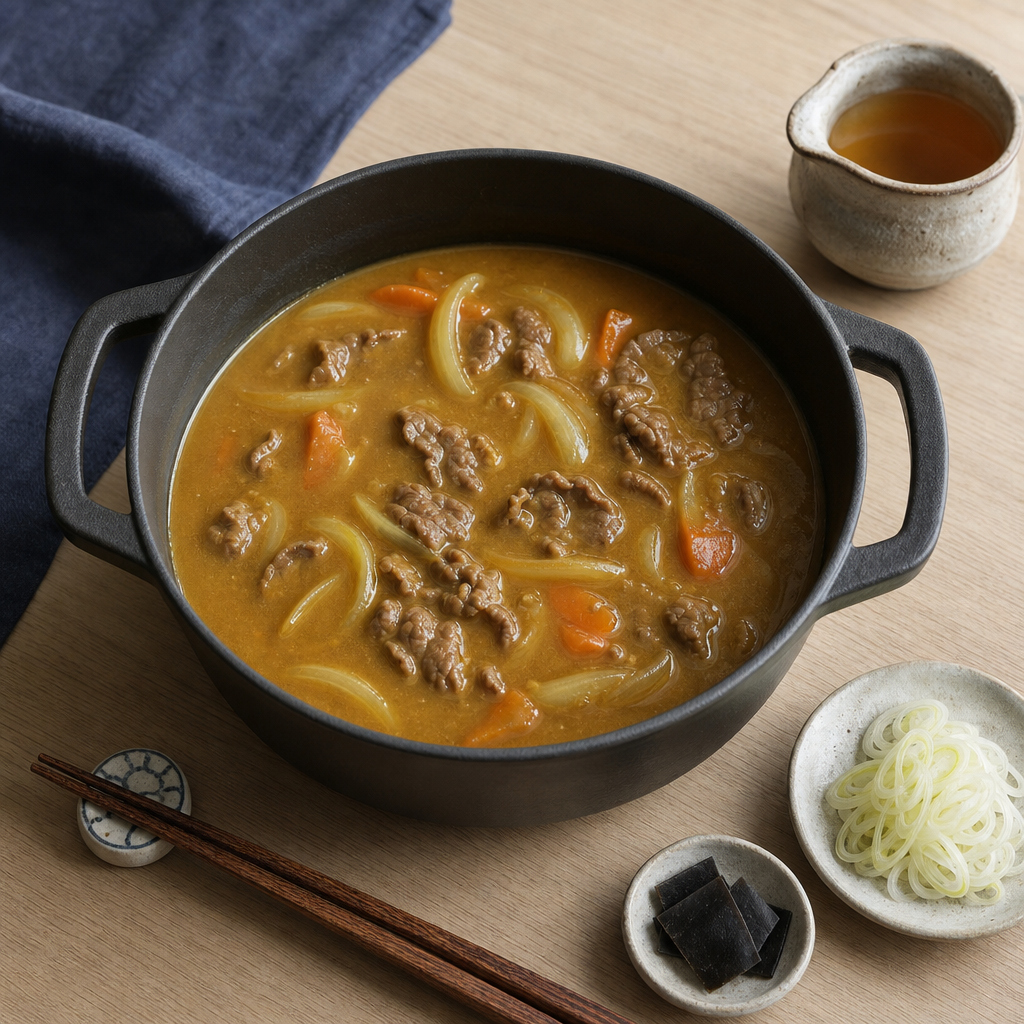
Add sake, scraping the bottom of the pot. Add 900 ml strained dashi in three additions, stirring after each addition until smooth. Add soy sauce and mirin, then simmer until the potato is tender and the broth coats a spoon in a thin layer, 10-12 minutes.
Cook the udon separately
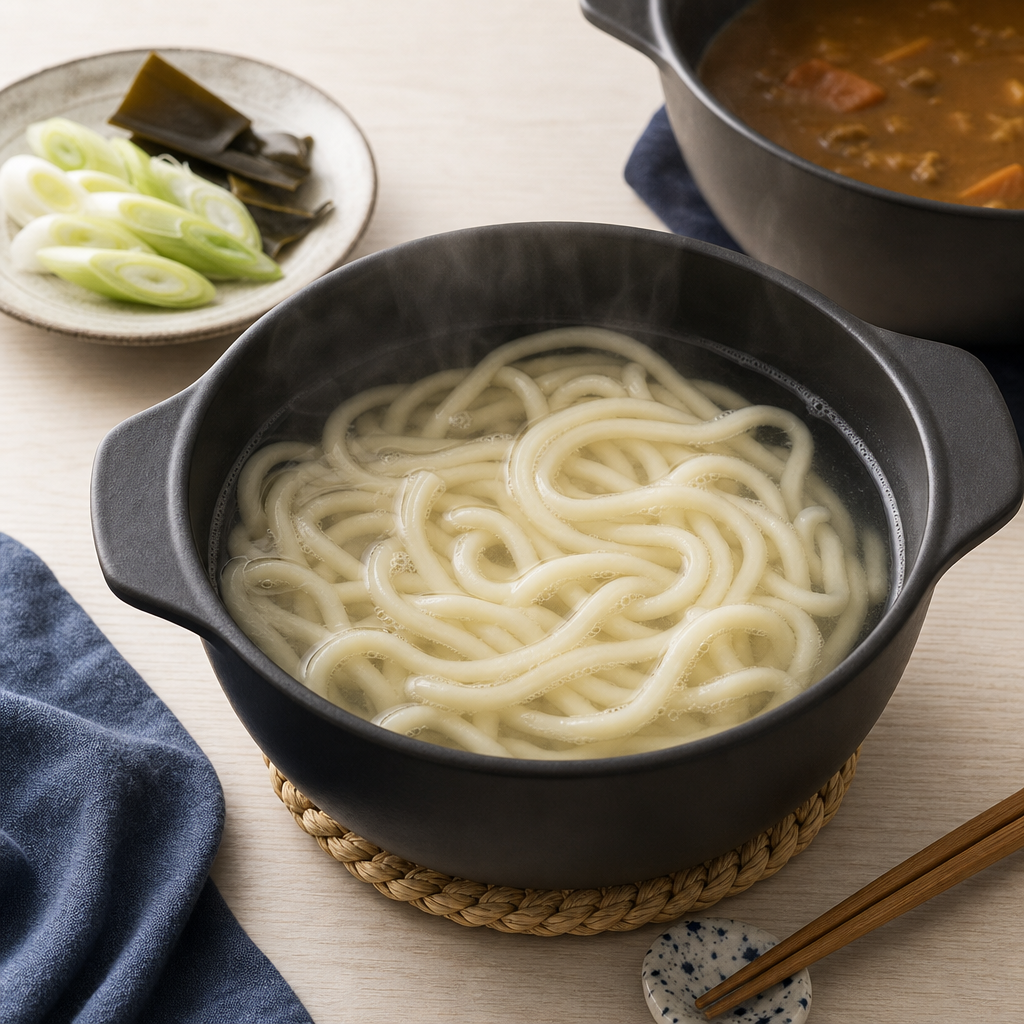
Bring a separate pot of water to a boil. Cook fresh or frozen udon until loosened and hot, usually 1-3 minutes; dried udon will take longer according to the package. Drain well.
Adjust the broth
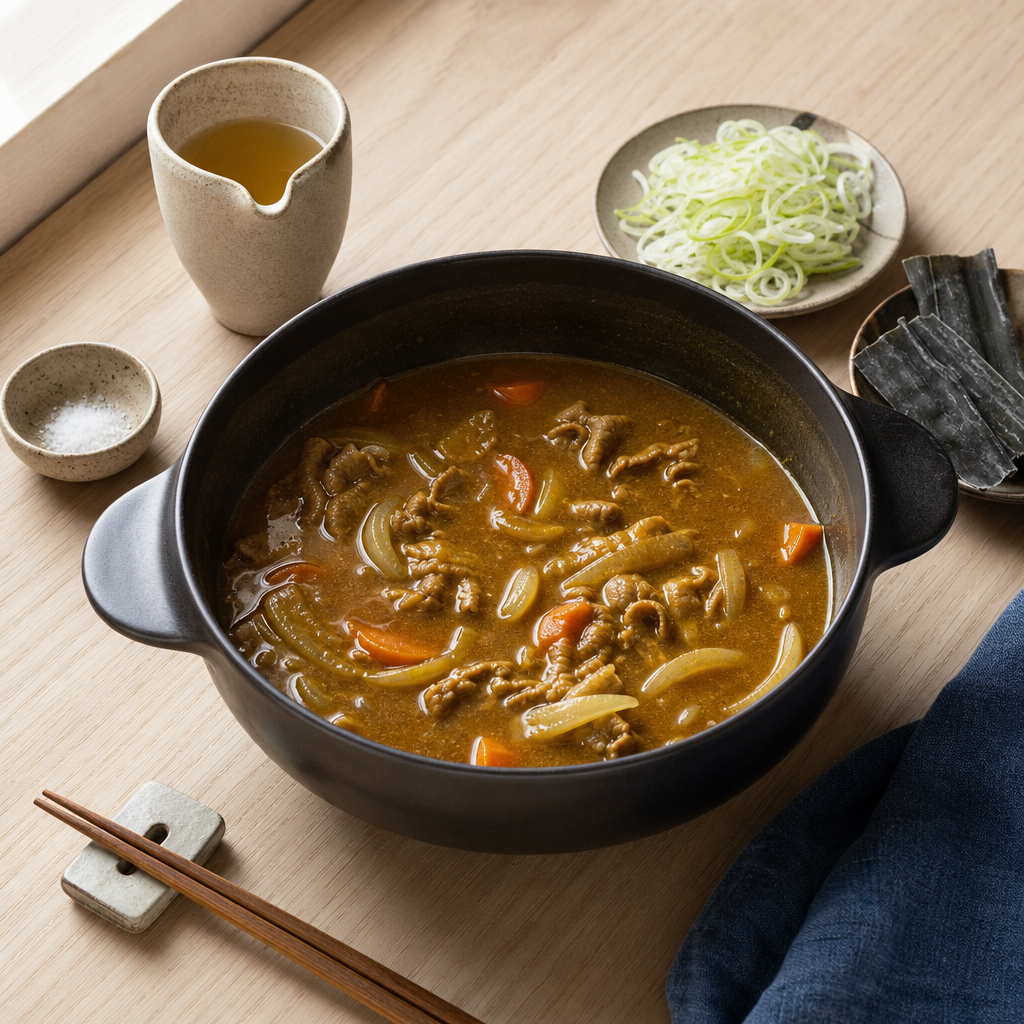
Check the curry sauce before adding noodles. If it is too thick, loosen with the remaining dashi; if it tastes flat, add a small pinch of salt or a few drops of soy sauce. The sauce should fall from a spoon in a steady sheet, not a heavy blob.
Combine and serve
Divide udon among warm bowls and ladle the hot curry sauce over the noodles. Lift the noodles once with chopsticks or tongs so the sauce runs through them. Finish with scallions and shichimi if using.
Common mistakes
- {'mistake': 'Boiling the kombu', 'fix': 'Remove kombu before the dashi reaches a full boil. The cue is edge bubbles, not rolling water.'}
- {'mistake': 'Making curry rice sauce and calling it curry udon', 'fix': 'Thin the curry with dashi until it moves like a thick soup. Udon needs broth, not paste.'}
- {'mistake': 'Cooking udon in the curry pot', 'fix': 'Cook noodles separately, drain, then combine per bowl. Surface starch turns the sauce heavy.'}
- {'mistake': 'Using generic curry powder without Japanese seasoning balance', 'fix': 'Use Japanese curry powder or Japanese curry roux blocks. British or Indian blends can work technically, but the bowl shifts away from カレーうどん.'}
- {'mistake': 'Letting the finished noodles sit', 'fix': 'Serve immediately. After 10 minutes the noodles swell and the broth loses its clean pour.'}
What does not belong
- {'item': 'cream', 'reason': 'Cream does not belong in curry udon. Japanese curry gets body from roux and dashi, not dairy enrichment.'}
- {'item': 'coconut milk', 'reason': 'Coconut milk pulls the dish toward Southeast Asian curry noodle soup. It erases the dashi-soy structure.'}
- {'item': 'Indian curry paste', 'reason': 'Indian curry paste does not replace Japanese curry powder or roux. The spice profile, fat handling, and acidity are different.'}
- {'item': 'Long pasta', 'reason': "Spaghetti does not belong here. Udon's thickness and chew are part of the dish, not a neutral starch."}
- {'item': 'Heavy sugar', 'reason': 'Curry udon can have mirin sweetness, but it should not taste sweet. Sugar-forward curry blocks need restraint with mirin.'}