Pork Panang Curry
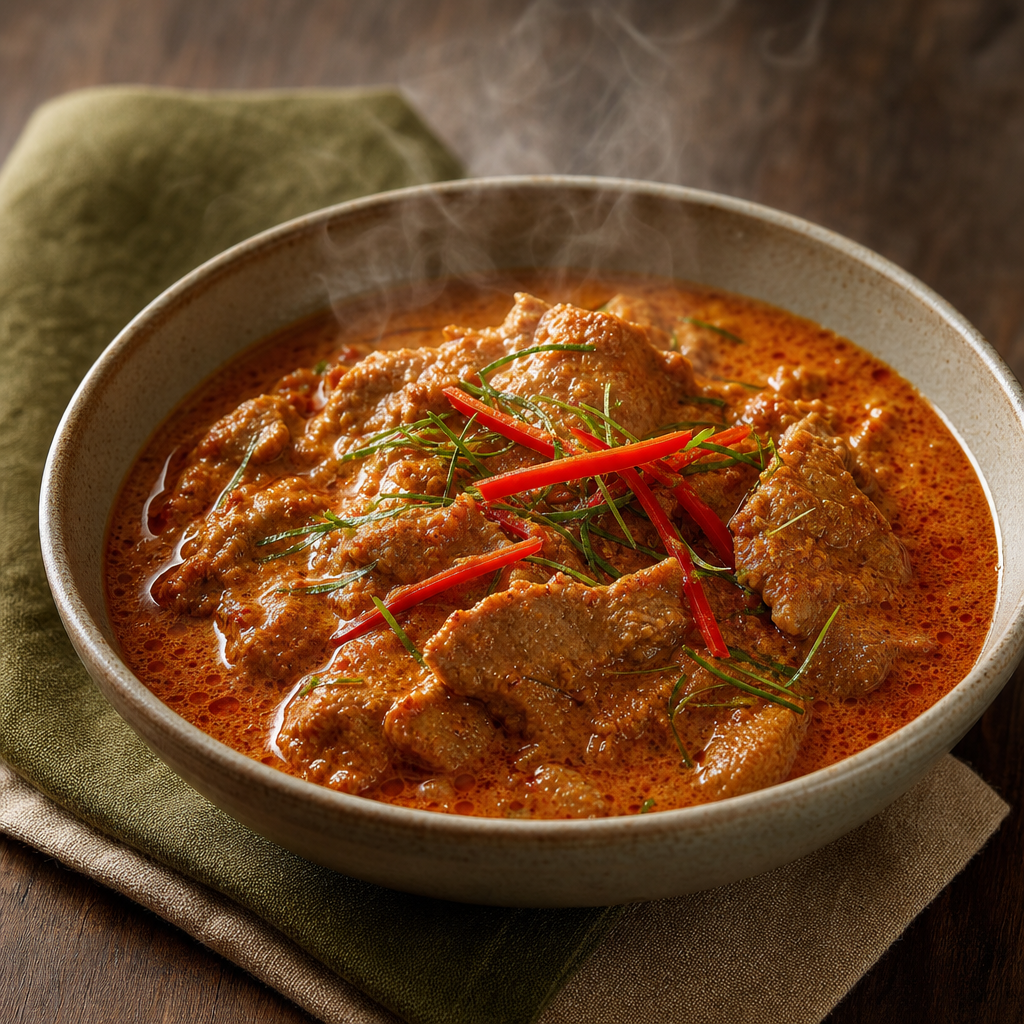
The dish in context
Panang appears in Thai written sources by the late 19th century, with older references describing chicken coated in curry paste mixed with coconut and grilled rather than simmered as a modern curry. The contemporary household version is a thick coconut curry, usually richer and drier than red curry, with pork, beef, chicken, or duck. Panang curry paste shares much of the red-curry base but is set apart by roasted peanuts and warm spices such as cumin, coriander seed, and sometimes nutmeg. Central Thai versions usually lean salty-sweet with makrut lime leaf on top; they are not sour and they are not a vegetable stew.
Method 7 steps · 40 min
Slice the pork thin
Slice the pork across the grain into 3 mm pieces. Keep the pieces broad rather than diced; Panang should coat slices, not hide cubes in sauce.
Split the coconut cream
Set a wide pan over medium heat and add 180 ml coconut cream. Simmer, stirring often, until it thickens, turns glossy, and small beads of clear oil appear at the edges, 5-8 minutes. If the cream refuses to split after 8 minutes, add the neutral oil.
Fry the curry paste
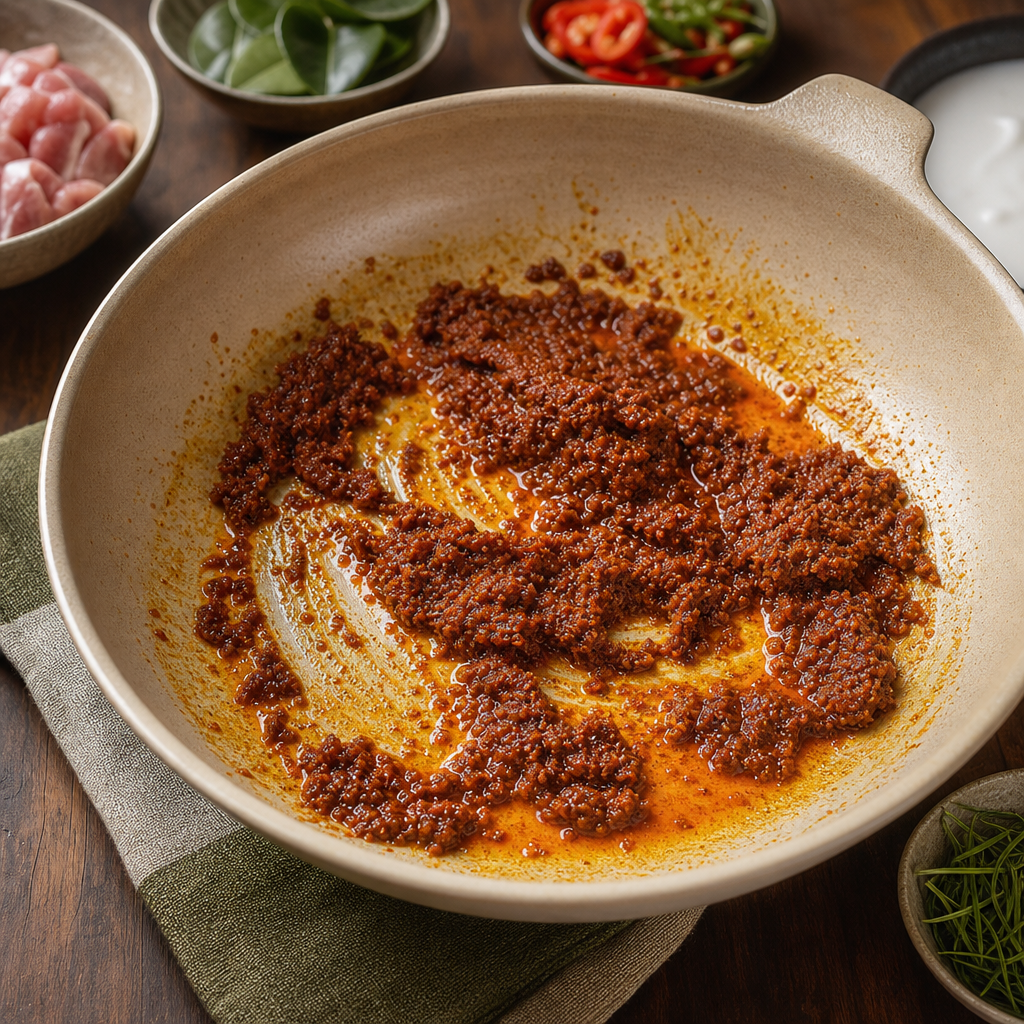
Add the Panang curry paste and fry in the coconut fat, pressing and scraping, until the paste darkens slightly and smells roasted rather than raw, 3-5 minutes. Add the ground roasted peanuts if the paste tastes thin or lacks nutty body.
Coat the pork
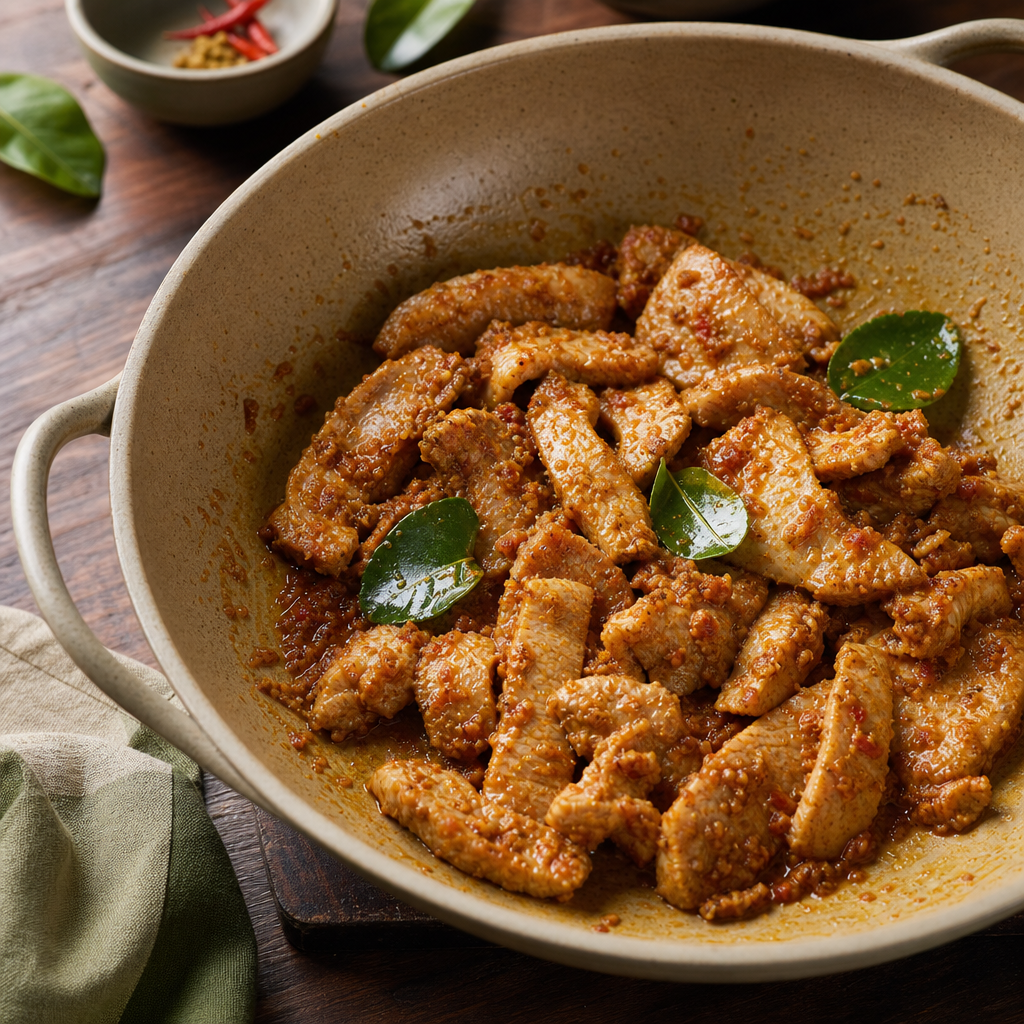
Add the pork and 3 torn makrut lime leaves. Stir until every slice is coated and the outside of the pork loses its raw color, 2-3 minutes.
Simmer to a thick curry
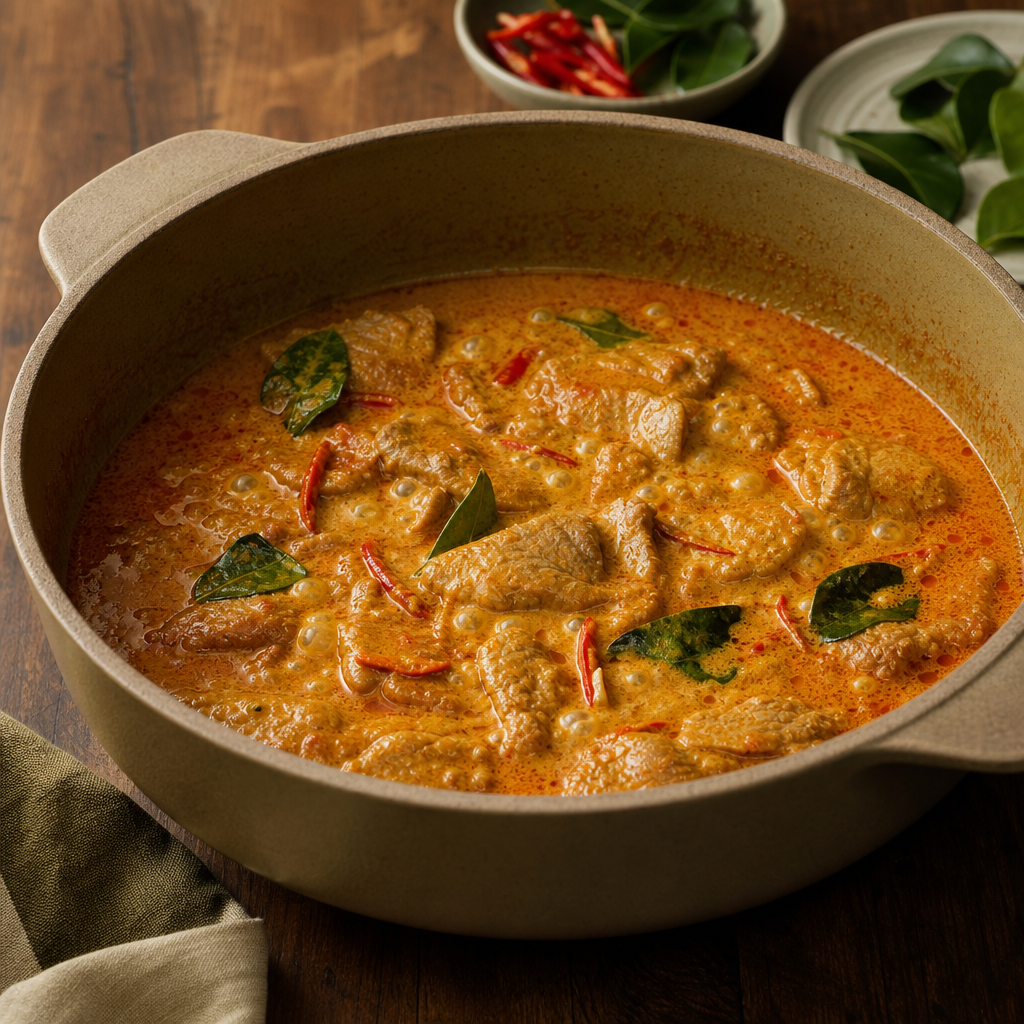
Add the remaining coconut cream and the coconut milk. Simmer uncovered over medium-low heat until the pork is cooked through and the sauce reduces to a thick, glossy coating, 10-14 minutes. Stir often near the end so the coconut solids do not catch.
Season salty-sweet
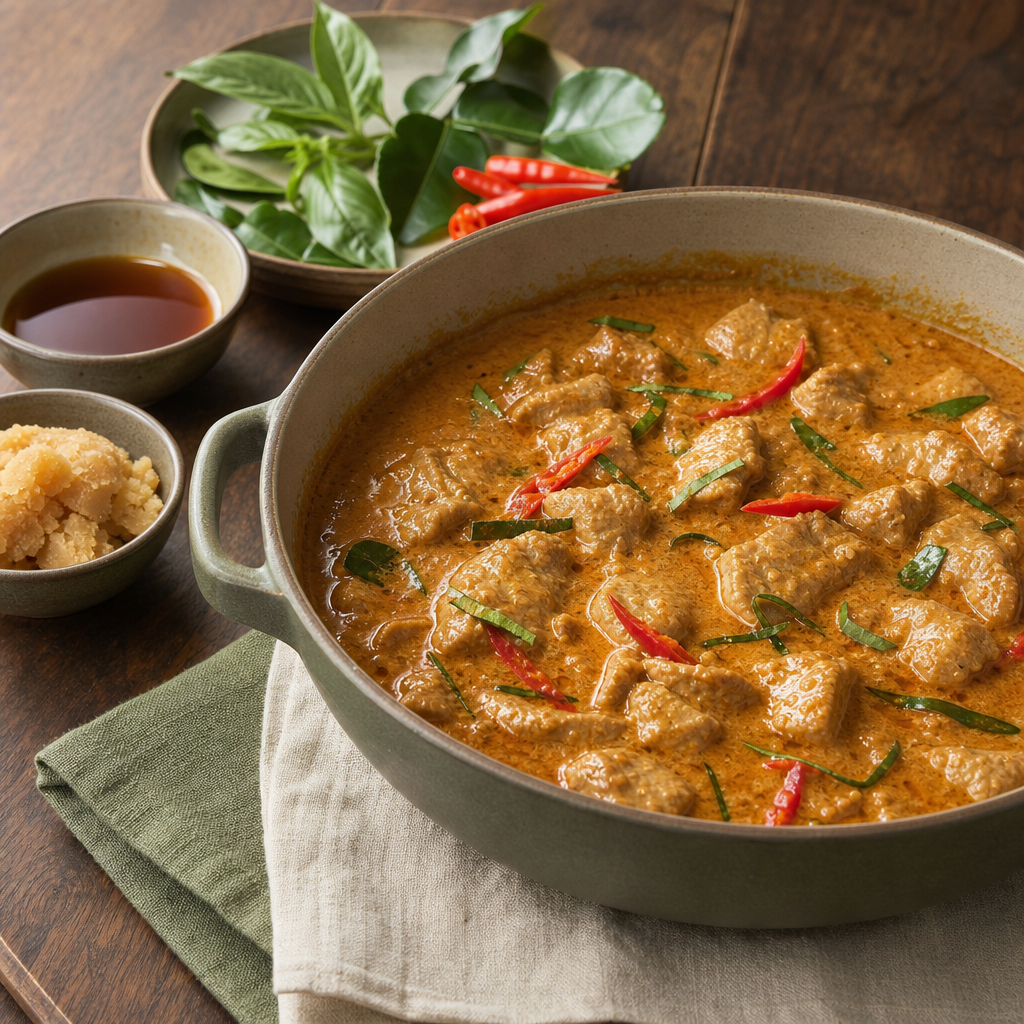
Season with fish sauce and palm sugar, starting with three-quarters of each. Simmer 1 minute, then correct the balance: salty first, rounded by sweetness, with no sour finish.
Finish with lime leaf and basil
Turn off the heat. Fold in Thai basil if using, then scatter the shredded makrut lime leaves and sliced red chile over the top. Serve with jasmine rice.
Common mistakes
- {'mistake': 'Making it too soupy', 'fix': 'Reduce until the sauce clings to the pork. Panang is a thick curry; if it moves like red curry broth, keep simmering.'}
- {'mistake': 'Adding the curry paste to watery coconut milk', 'fix': 'Split the coconut cream first, then fry the paste in the separated fat. Boiled paste tastes raw and one-dimensional.'}
- {'mistake': 'Using peanut butter', 'fix': 'Peanut butter does not belong. Use finely ground roasted peanuts only when the paste needs reinforcement.'}
- {'mistake': 'Seasoning before the sauce reduces', 'fix': 'Reduce first, season late. Fish sauce concentrates as liquid evaporates.'}
- {'mistake': 'Overloading the curry with vegetables', 'fix': 'Keep the curry centered on pork, coconut, paste, and makrut lime leaf. A handful of pea eggplants appears in some household versions, but mixed vegetables turn it into another dish.'}
What does not belong
- {'item': 'lime juice or tamarind', 'reason': 'Sourness does not belong in Pork Panang Curry. The profile is salty-sweet, rich, and aromatic.'}
- {'item': 'potatoes', 'reason': 'Potatoes belong in some massaman-style curries, not Panang.'}
- {'item': 'carrots, broccoli, zucchini, or mixed frozen vegetables', 'reason': 'These turn the curry into generic coconut vegetable curry. Panang is not a vegetable stew.'}
- {'item': 'peanut butter', 'reason': 'It makes the sauce pasty and sweet. Panang paste uses roasted peanuts as part of a pounded spice base, not a spread.'}
- {'item': 'heavy cream or dairy milk', 'reason': 'Dairy mutes the curry paste and gives the wrong fat profile. Coconut milk is structural here.'}
- {'item': 'curry powder as the main seasoning', 'reason': 'Panang is built from Thai curry paste. Curry powder cannot replace the chile, lemongrass, galangal, makrut lime, garlic, shallot, shrimp paste, peanut, and spice base.'}