Khao Soi Gai
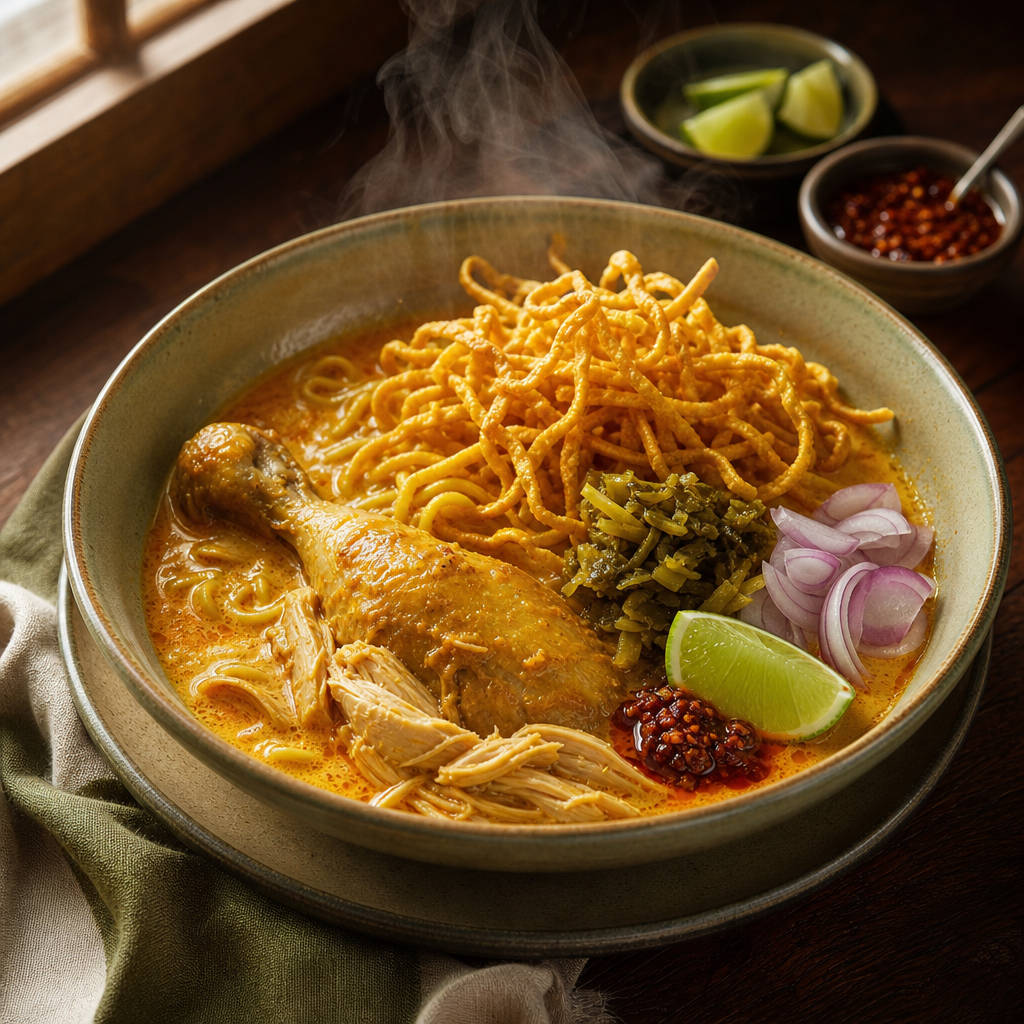
The dish in context
Khao soi is strongly associated with Chiang Mai and the wider north of Thailand, with related noodle-and-coconut curry dishes found across parts of Myanmar, Laos, and Yunnan-influenced Muslim Chinese foodways. Thai restaurant and press sources consistently describe the northern Thai bowl as egg noodles in a coconut curry broth, usually with chicken or beef, finished with crisp fried noodles and sharp condiments. The dish is not one fixed formula: some cooks build the paste from scratch, some reinforce red curry paste with curry powder and warm spices, and some versions avoid shrimp paste for halal practice. This recipe follows the Chiang Mai-style restaurant grammar: bone-in chicken, split coconut cream, turmeric-yellow curry, boiled noodles, fried noodles, pickled mustard greens, shallot, lime, and roasted chili oil.
Method 11 steps · 120 min
Soften the chilies
Cover the seeded dried chilies with boiling water and soak for 25 minutes. Drain well and reserve 3-4 tablespoons of the soaking liquid only if the paste needs help grinding.
Toast the dry spices and shrimp paste
Toast coriander seed, cumin seed, and black cardamom seeds in a dry pan over medium heat until fragrant, 60-90 seconds. Toast the foil-wrapped shrimp paste in the same pan for 2 minutes, turning once.
Pound the curry paste
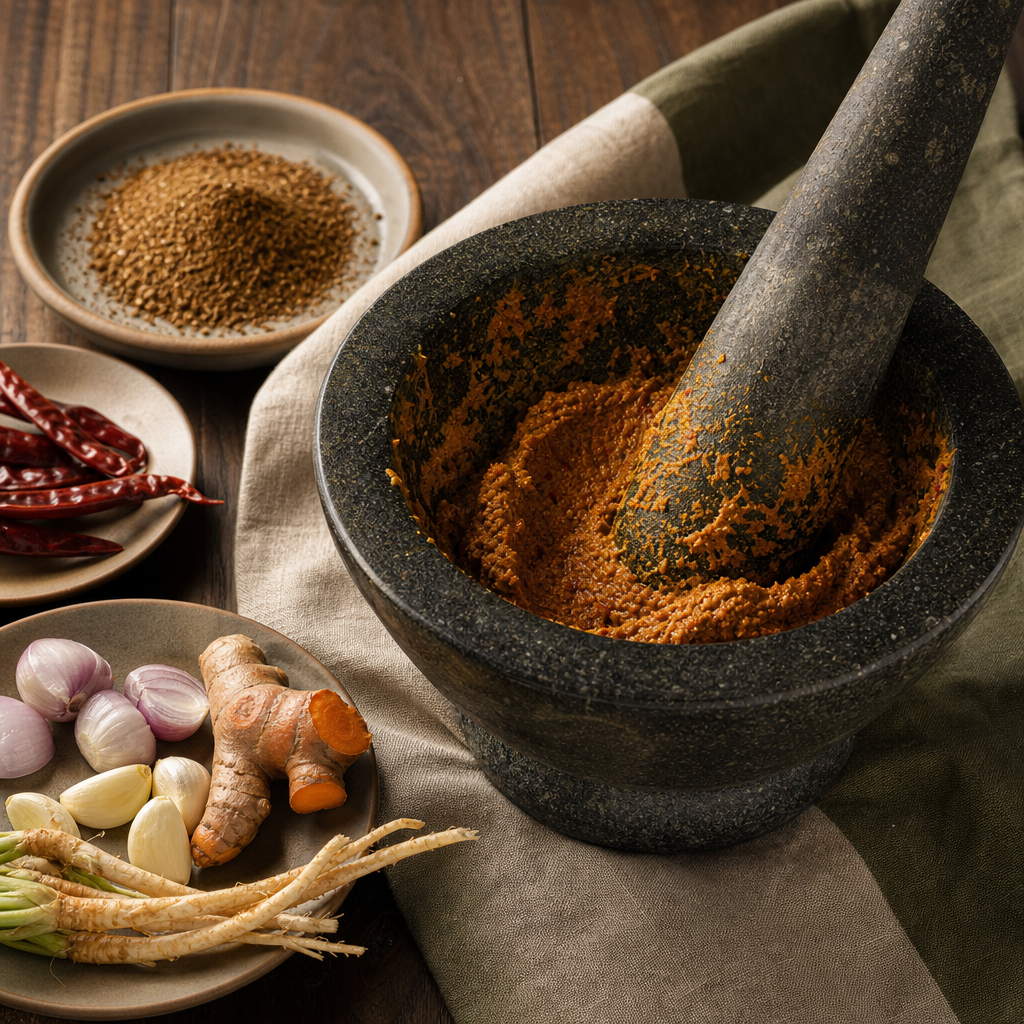
Grind the toasted spices to powder. Pound or grind chilies, shallots, garlic, turmeric, ginger, cilantro roots, curry powder, toasted spices, and shrimp paste into a dense paste; use the smallest amount of chili soaking liquid needed to move the blades if using a machine.
Fry the noodle garnish
Separate 150 g of the egg noodles for garnish. Heat oil to 175-180°C and fry the noodles in small nests until puffed and deep golden, 30-60 seconds per batch; drain on a rack and salt lightly.
Crack the coconut cream
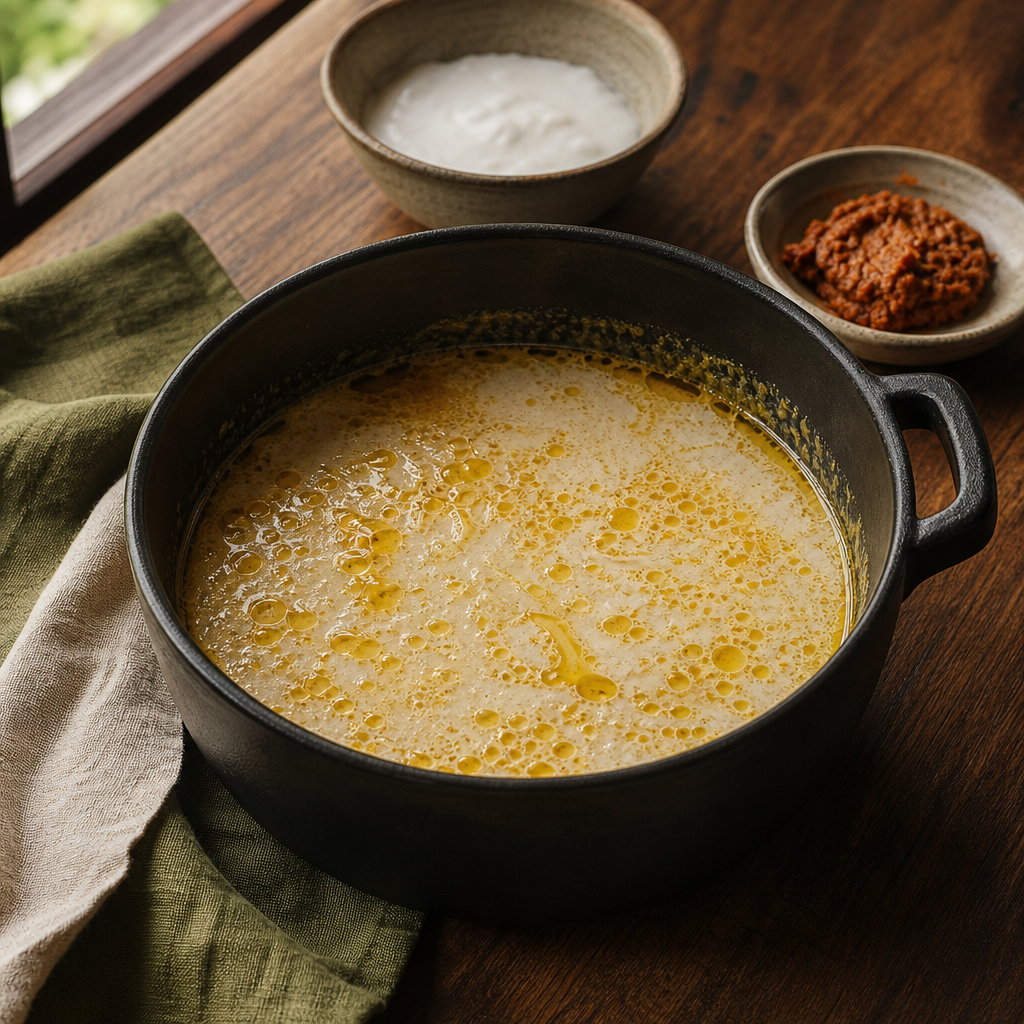
Spoon 250 ml coconut cream into a heavy pot and simmer over medium heat, stirring often, until the oil begins to separate and shiny beads appear at the edges, 8-12 minutes. If the cream refuses to split, add 1 tablespoon neutral oil and continue.
Fry the paste
Add the curry paste to the cracked coconut cream and fry, stirring and scraping, until the paste darkens, the oil stains orange-yellow, and the raw garlic smell is gone, 8-10 minutes.
Build the braise
Add the chicken and turn the pieces through the fried paste for 2 minutes. Add the remaining coconut cream, coconut milk, chicken stock, fish sauce, palm sugar, and salt; bring to a low simmer.
Braise the chicken
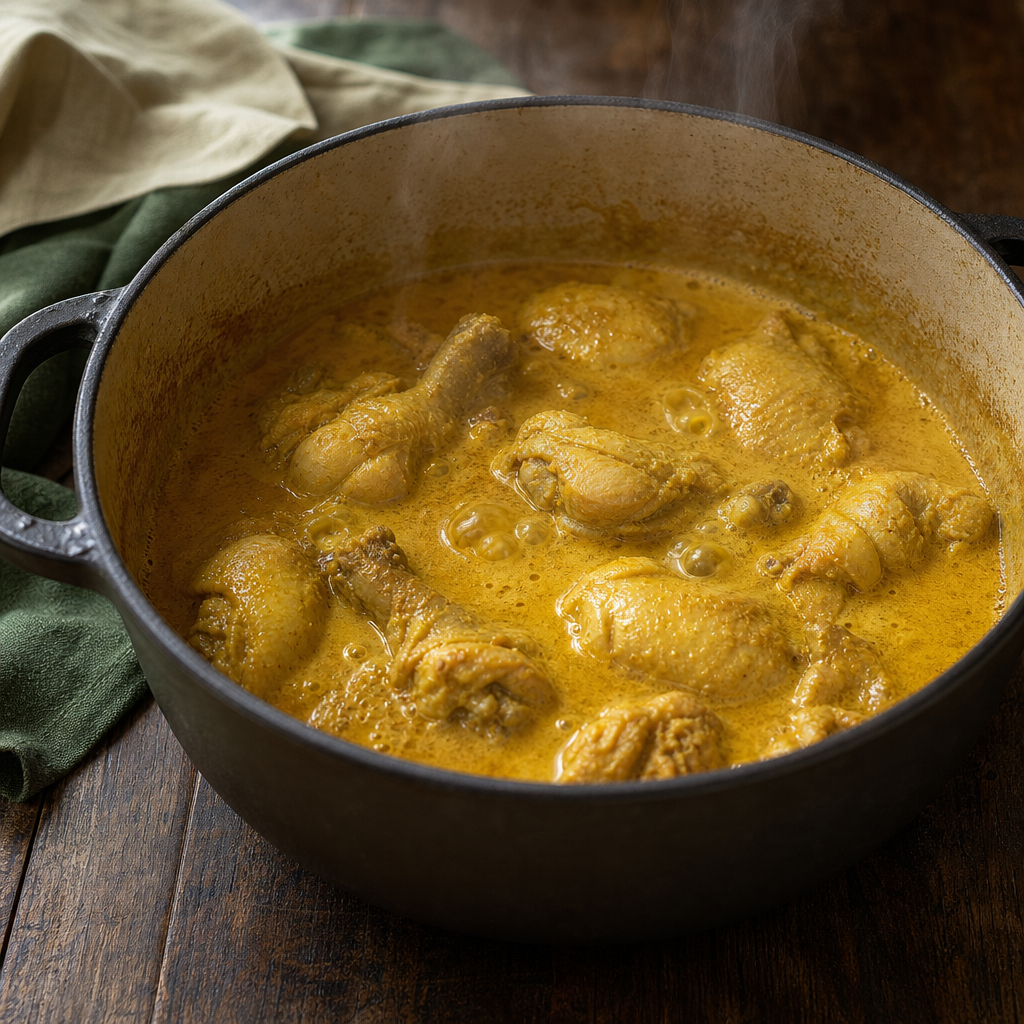
Simmer uncovered or partly covered at a gentle bubble until the chicken is tender and the broth coats a spoon lightly, 45-60 minutes. Turn the pieces once or twice; add a splash of water if the curry tightens before the chicken is done.
Correct the broth
Taste the broth and adjust with fish sauce or salt. It should read salty and aromatic before lime, with mild sweetness from coconut rather than sugar.
Boil the serving noodles

Boil the remaining 450 g egg noodles in unsalted water until springy and cooked through, usually 60-120 seconds for fresh noodles. Rinse briefly under hot water or dip back into the hot water to remove surface starch, then drain hard.
Assemble the bowls
Divide boiled noodles among bowls. Ladle over curry and one or two chicken pieces, then top with fried noodles, pickled mustard greens, sliced shallots, cilantro, roasted chili oil, and lime wedges on the side.
Common mistakes
- {'mistake': 'Using only boiled noodles.', 'fix': 'Fry a portion of the egg noodles until crisp. Without that brittle top, the bowl loses one of its defining textures.'}
- {'mistake': 'Adding lime juice to the pot.', 'fix': 'Serve lime wedges at the table. Boiled lime turns dull and can make coconut curry taste muddy.'}
- {'mistake': 'Treating bottled red curry paste as a full khao soi paste.', 'fix': 'If using red curry paste, reinforce it with curry powder, turmeric, toasted coriander, cumin, ginger, and extra shallot. Plain red curry paste tastes like a different dish.'}
- {'mistake': 'Boiling the coconut broth hard.', 'fix': 'Keep the pot at a low simmer. A rolling boil separates fat aggressively and toughens the chicken skin.'}
- {'mistake': 'Making the broth sweet.', 'fix': 'Use palm sugar as a bitterness correction only. Khao soi gai is rich, salty, spiced, and balanced by sour condiments; it is not a sweet curry.'}
- {'mistake': 'Skipping the pickled mustard greens.', 'fix': 'Rinse, squeeze, and chop them instead of omitting them. Their sour crunch is the main counterweight to the coconut.'}
What does not belong
- {'item': 'Basil', 'reason': 'Basil does not belong in khao soi gai. It pushes the bowl toward central Thai curry grammar.'}
- {'item': 'Bell peppers, zucchini, or mixed vegetables', 'reason': 'Mixed vegetables do not belong. The bowl is built around noodles, chicken, curry broth, and sharp condiments.'}
- {'item': 'Peanut butter', 'reason': 'Peanut butter does not belong. It makes the broth heavy and reads as pan-Southeast-Asian restaurant sauce, not northern Thai khao soi.'}
- {'item': 'Sweet Thai chili sauce', 'reason': 'Sweet chili sauce does not belong. Heat should come from roasted chili oil or fried chili flakes, not sugar syrup.'}
- {'item': 'Lemon juice', 'reason': 'Lemon juice does not belong. Lime has the sharper floral acidity expected with the condiments.'}
- {'item': 'Cream or dairy milk', 'reason': 'Dairy does not belong. Coconut milk is the fat and liquid structure of the broth.'}