Northern Thai Pork Curry
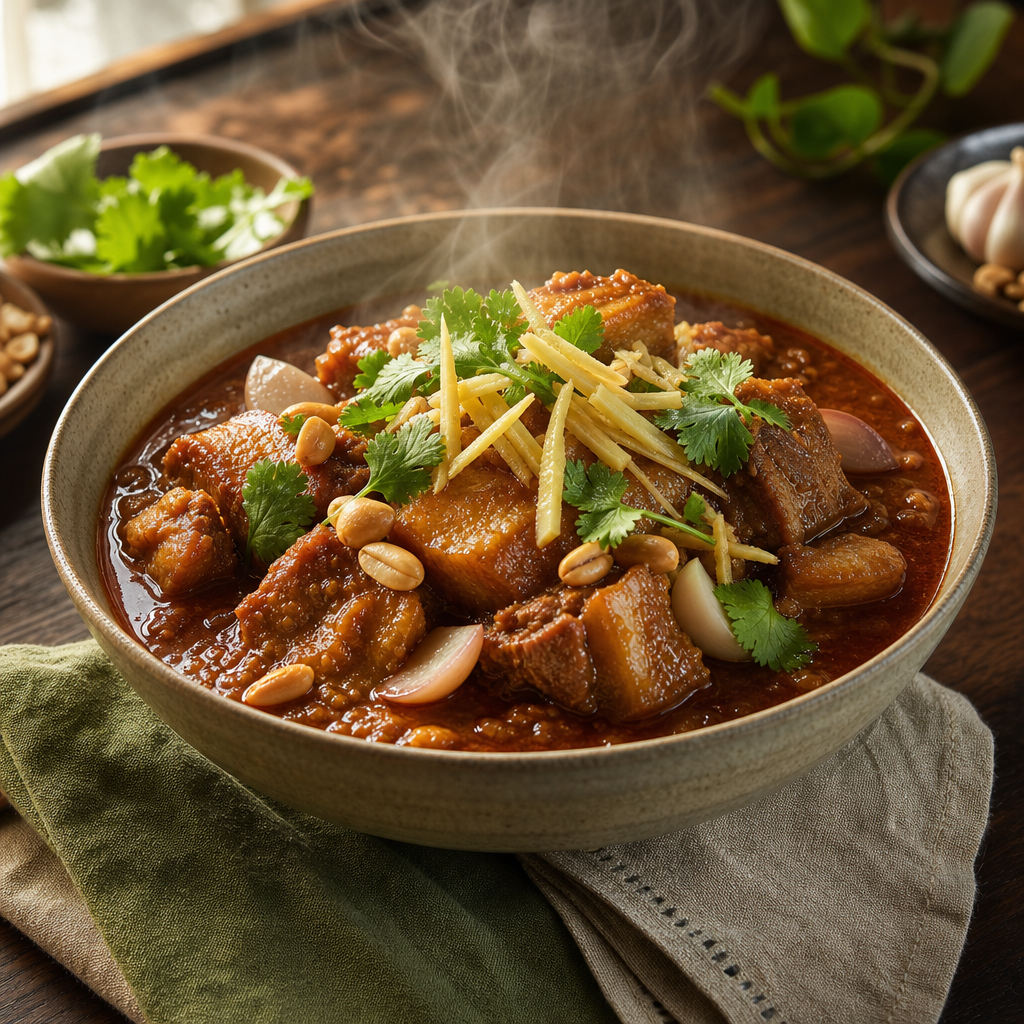
The dish in context
Gaeng Hung Lay is a northern Thai pork curry shaped by old movement between Burma and Lanna kitchens; the name is widely understood as a Thai rendering of a Burmese-rooted curry term. In northern Thailand it became a pork braise rather than a beef curry, built around dried chile paste, warm spice powder, tamarind, palm sugar or cane sugar, ginger, pickled garlic, and long cooking. It appears in household cooking and in ceremonial meals because it holds well and improves after resting. Lamphun and Lampang sources also document local variants, including longan versions, but the central grammar remains pork, sour-salty-sweet balance, dryish curry sauce, and no coconut milk.
Method 7 steps · 210 min
Pound the curry paste
Pound soaked dried chiles with coarse salt until broken down. Add lemongrass, galangal, turmeric, shallots, and garlic in stages and pound to a coarse paste; finish by pounding in the shrimp paste.
Marinate the pork
Mix pork belly and ribs with the curry paste and hung lay powder until every surface is stained red-brown. Cover and refrigerate 45-60 minutes, or up to overnight.
Bloom the paste in fat
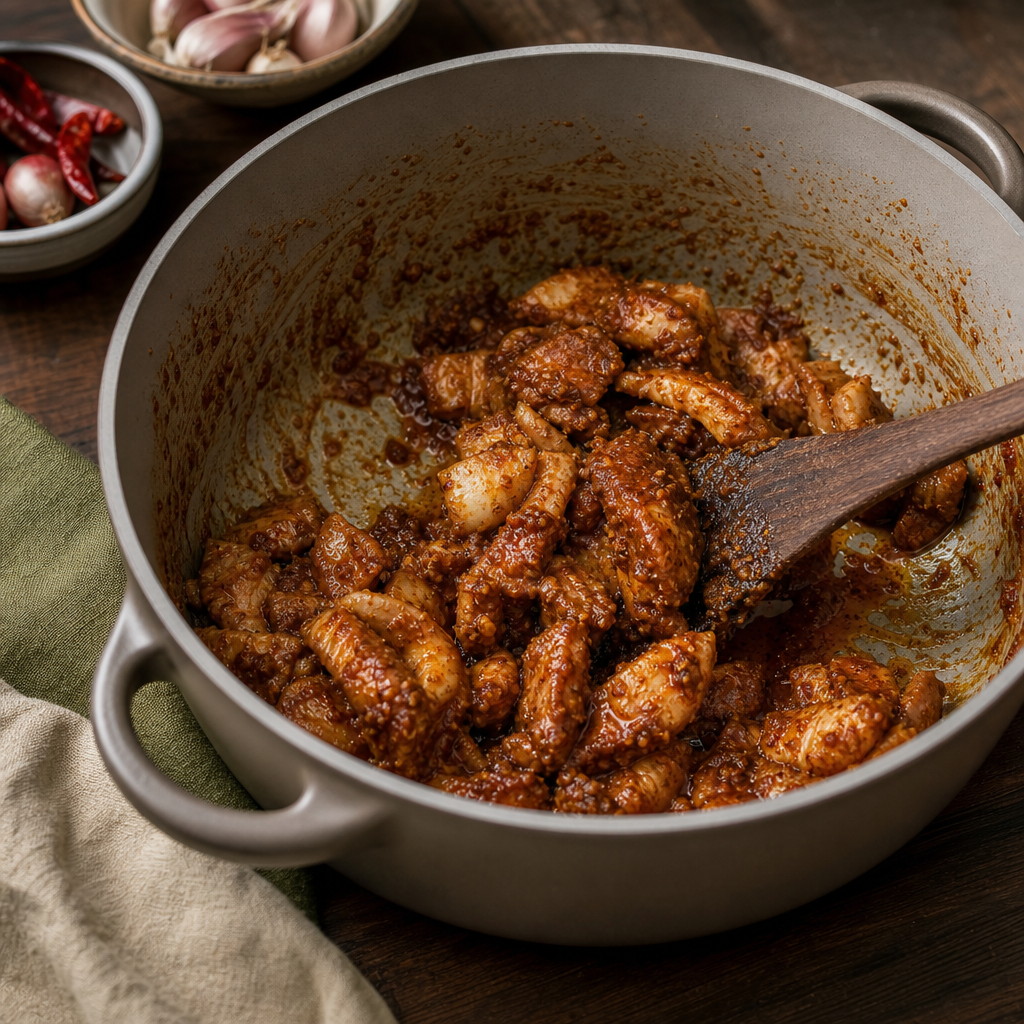
Heat the oil in a heavy pot over medium-low heat. Add the marinated pork and scrape in all paste; stir until the paste darkens slightly, smells roasted rather than raw, and the pork begins to release fat, 8-10 minutes.
Braise until the pork yields
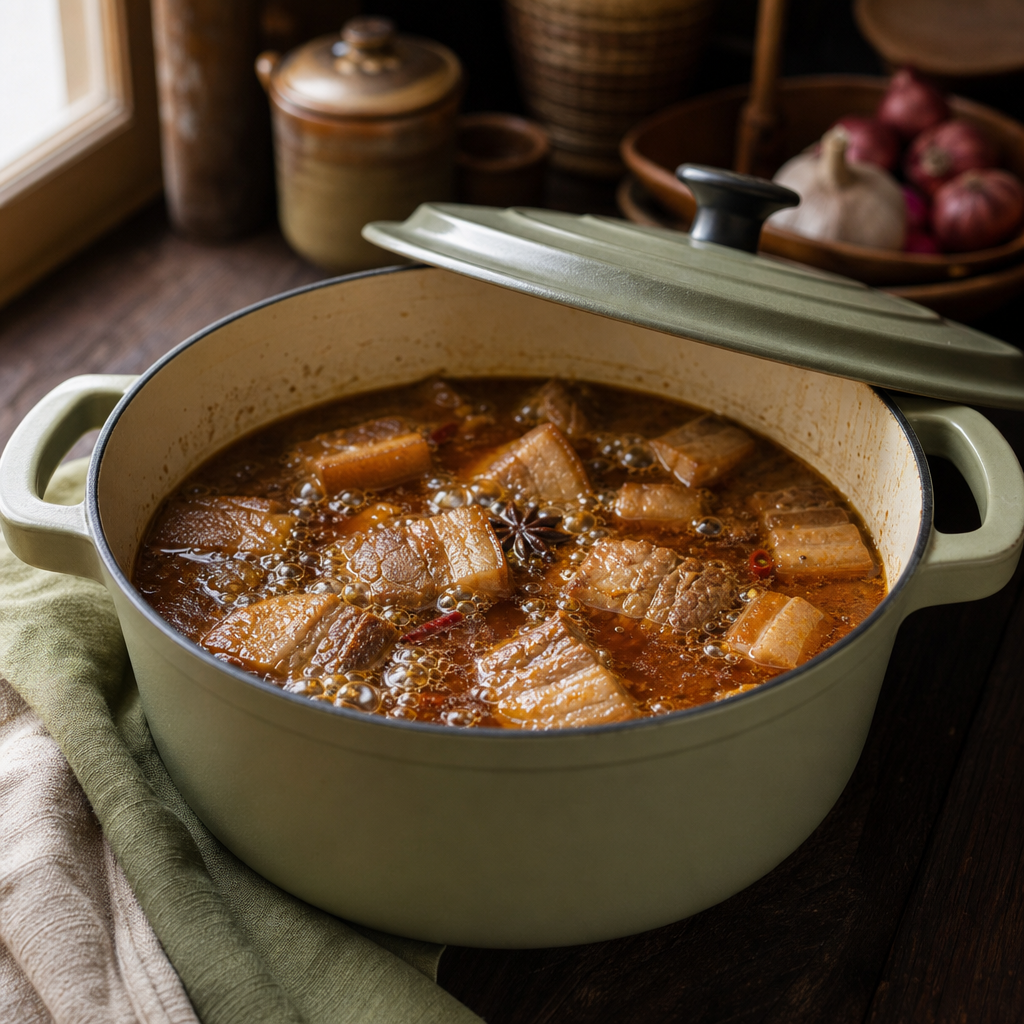
Add 750 ml water, scraping the bottom of the pot. Bring to a low boil, then reduce to a steady bare simmer, cover partly, and cook until the ribs flex and the belly is tender but not falling apart, 90-120 minutes; add small splashes of the remaining water if the pot threatens to dry out.
Season the curry
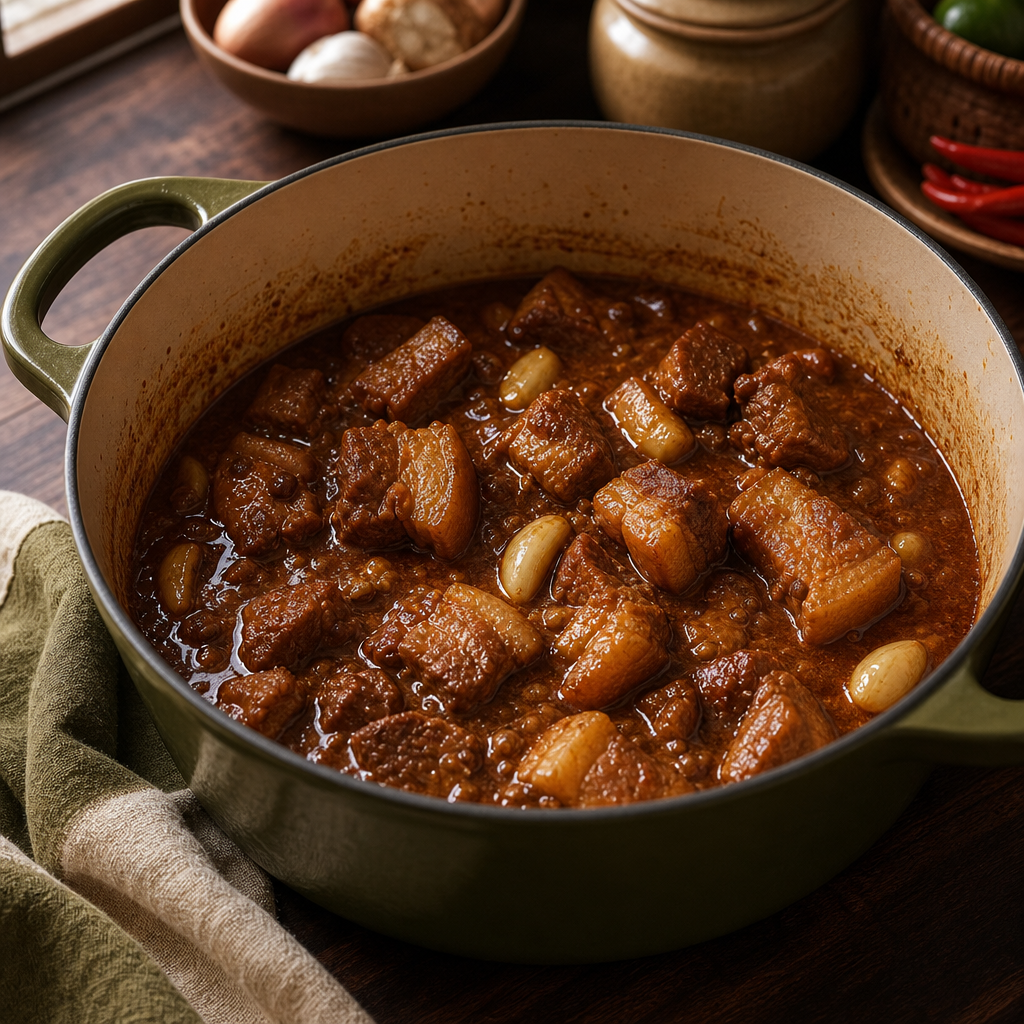
Stir in tamarind water, palm sugar, soy sauce if using, pickled garlic, and pickling liquid. Simmer uncovered 20-30 minutes, stirring often, until the sauce is glossy and clings to the pork instead of pooling like soup.
Add ginger and peanuts
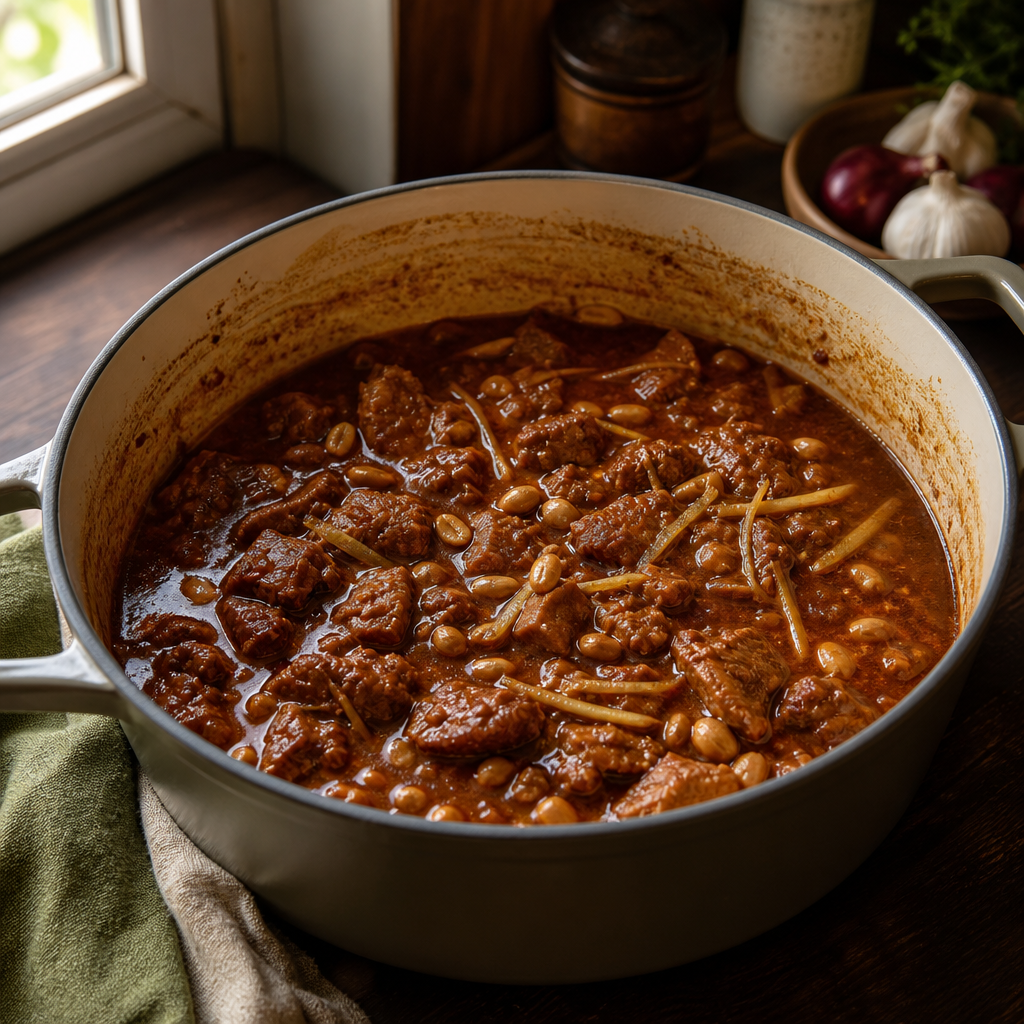
Fold in the ginger matchsticks and roasted peanuts. Simmer 10-15 minutes more, until the ginger softens at the edges but still tastes fresh and the peanuts have taken on some sauce.
Rest and correct the balance
Take the pot off heat and rest 20 minutes. Skim only excessive surface fat, then correct with small amounts of tamarind, sugar, or salt: the final taste should read sour-salty, warm-spiced, mildly sweet, and not soupy.
Common mistakes
- {'mistake': 'Adding coconut milk.', 'fix': 'Do not add it. Gaeng Hung Lay is a dryish northern pork curry-braise, not a coconut curry.'}
- {'mistake': 'Boiling the pork hard.', 'fix': 'Keep the pot at a bare simmer. The surface should tremble with occasional bubbles, not roll.'}
- {'mistake': 'Using only lean pork.', 'fix': 'Use belly, ribs, shoulder, or a mix with visible fat and connective tissue. Lean loin dries out before the sauce reduces.'}
- {'mistake': 'Adding all souring ingredients at the beginning.', 'fix': 'Braise the pork first, then season with tamarind and pickled garlic. The meat softens better and the sourness stays cleaner.'}
- {'mistake': 'Leaving the sauce thin.', 'fix': 'Uncover and reduce until the sauce coats the pork in a shiny layer. A puddle of watery broth is unfinished.'}
- {'mistake': 'Treating hung lay powder like generic curry powder.', 'fix': 'Use Thai hung lay powder or a coriander-led warm spice blend. Madras curry powder pushes the dish in the wrong direction.'}
What does not belong
- {'item': 'coconut milk', 'reason': 'Coconut milk does not belong in Gaeng Hung Lay. It blurs the tamarind-pickled garlic edge and turns the dish into a different curry.'}
- {'item': 'fish sauce as the main salt', 'reason': 'Fish sauce can make the braise sharp and marine. Traditional and household versions more often use salt, shrimp paste, soy sauce, or a mix.'}
- {'item': 'lime juice', 'reason': 'The souring agent is tamarind, supported by pickled garlic brine. Lime reads too bright and thin for this long-cooked curry.'}
- {'item': 'green curry paste or red curry paste from a tub', 'reason': 'Commercial central Thai curry pastes contain a different aromatic balance and usually lack the hung lay spice structure.'}
- {'item': 'potatoes', 'reason': 'Potatoes point the dish toward Massaman curry. Gaeng Hung Lay should reduce around pork, ginger, pickled garlic, and spice.'}
- {'item': 'large amounts of pineapple', 'reason': 'A small amount appears in some modern recipes as a tenderizer or sweet-sour accent, but heavy pineapple makes the curry fruity and wet. It is not the core version.'}