Massaman Curry Beef
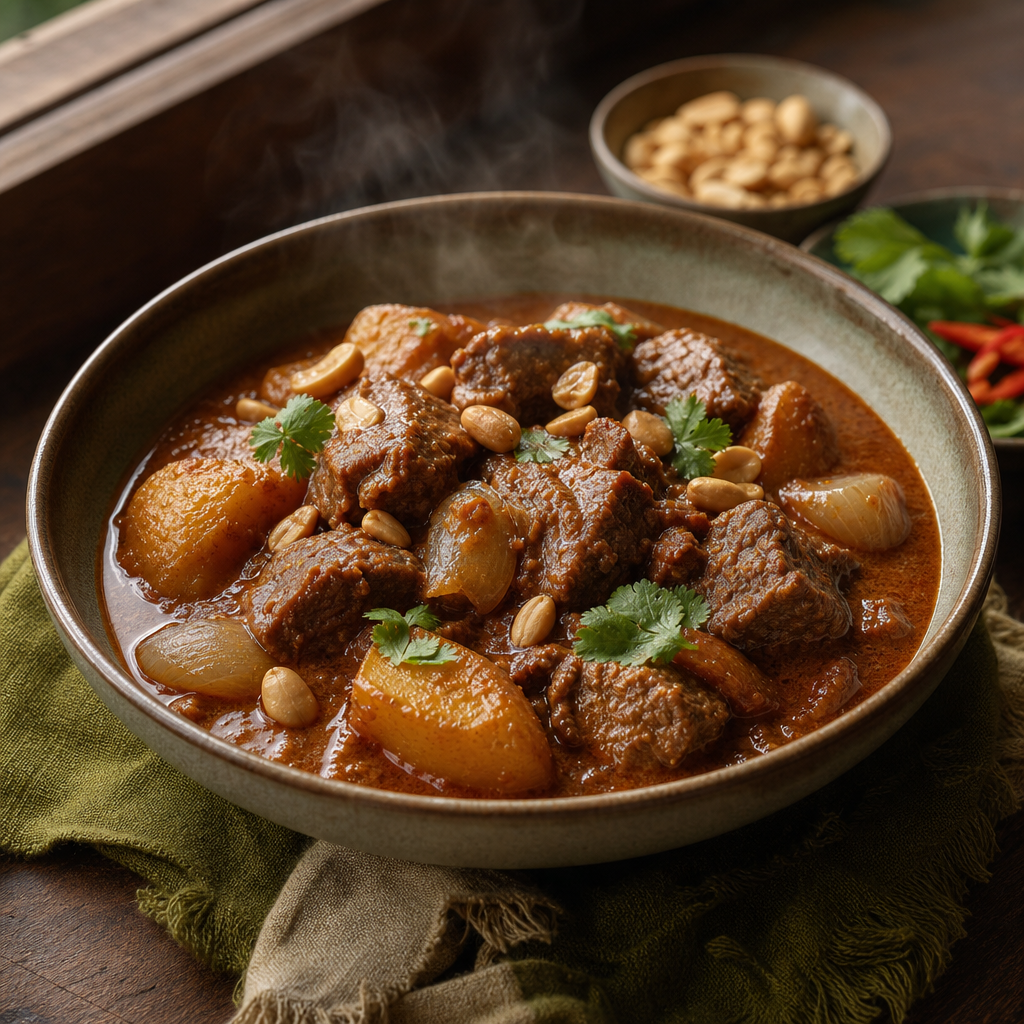
The dish in context
Massaman curry sits at the Thai-Muslim edge of the Thai curry family: coconut, dried chilies, and Thai aromatics meet cardamom, cinnamon, clove, nutmeg, and cumin. Historical writing often links the dish to Persian and South Asian Muslim trade networks around Ayutthaya, while modern Thai sources also place beef massaman firmly in southern and Malay-Thai food culture. Older court and household versions vary in fruit, souring agents, and the amount of broth, but the core grammar is stable: spiced curry paste fried in coconut fat, slow-cooked meat, potatoes or onions, peanuts, and a sweet-sour-salty finish. Beef is one of the strongest expressions of the dish because the long braise can stand up to the heavy spice structure.
Method 10 steps · 240 min
Toast the dried spices
Toast coriander seed, cumin, white pepper, cinnamon, cardamom seeds, cloves, nutmeg, and mace in a dry pan over medium-low heat until the coriander darkens one shade and the air smells warm, 3-5 minutes. Cool completely, then grind to a fine powder.
Char the wet aromatics
Dry-roast shallots, garlic, lemongrass, galangal, cilantro roots, and makrut lime zest in a heavy pan until the cut edges pick up brown spots and the moisture cooks off, 8-12 minutes. Do not blacken them.
Pound the paste
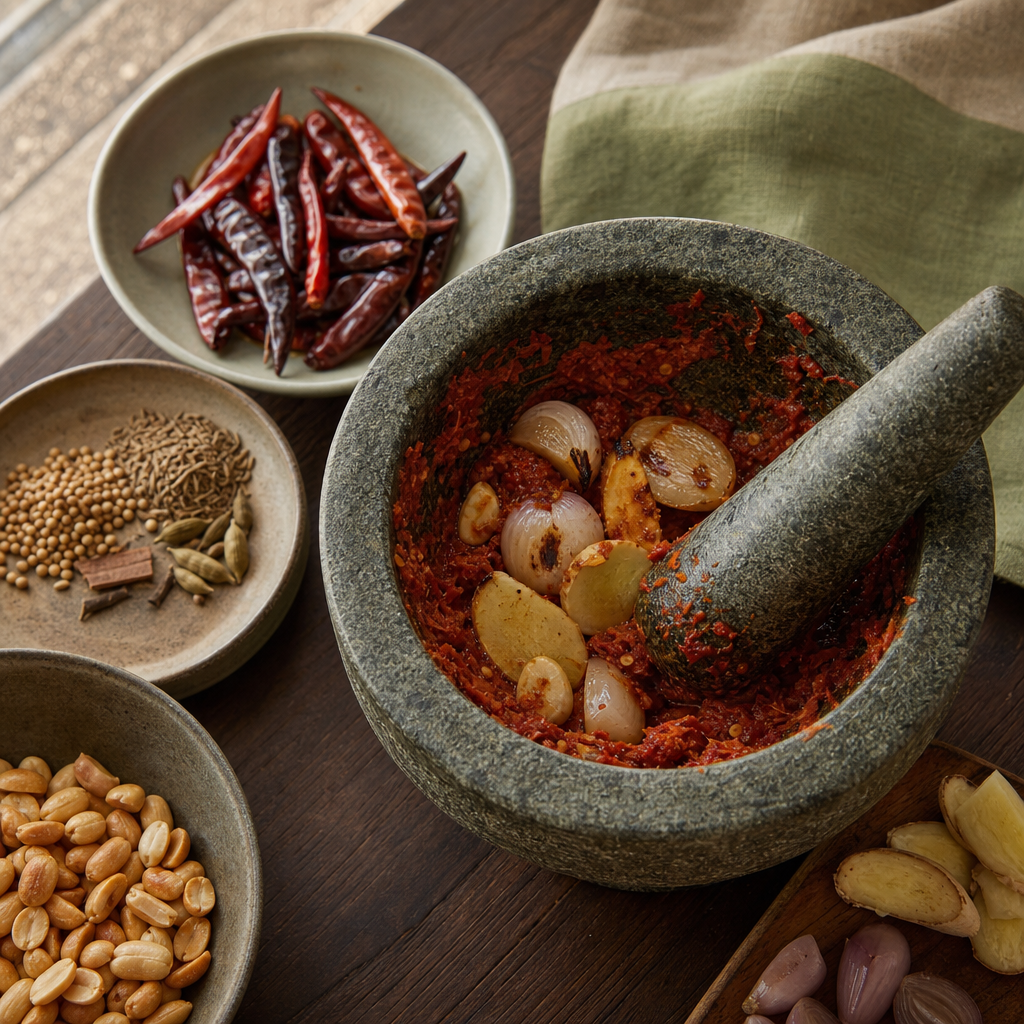
Pound soaked chilies with salt until the skins break down, then add the roasted aromatics in stages. Pound in the ground spices and roasted shrimp paste, if using, until the paste is thick and cohesive with no long lemongrass fibers.
Start the beef braise
Combine beef, thin coconut milk, and water or stock in a heavy pot. Bring to a bare simmer, skim once, then cover and cook gently until the beef resists a skewer but is no longer tough, 75-105 minutes.
Crack the coconut cream
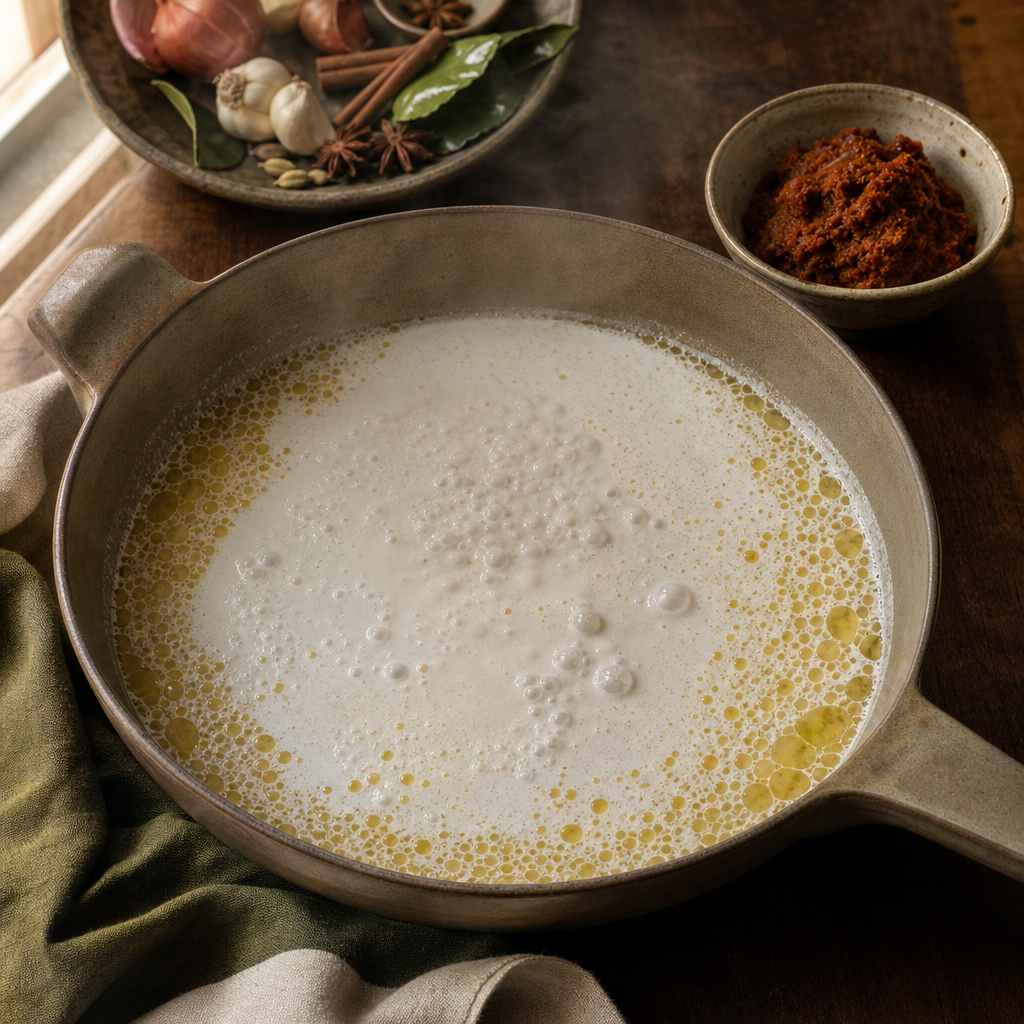
Spoon 250 ml coconut cream into a wide pot and simmer over medium heat until the fat separates and glossy oil beads appear at the edges, 8-15 minutes. If the cream refuses to split, add the neutral oil and continue.
Fry the paste
Add 220 g curry paste to the cracked coconut cream and fry, stirring and scraping, until the paste darkens, the oil stains yellow-orange, and the raw chili smell disappears, 10-14 minutes. Add splashes of coconut cream if the paste catches.
Marry the paste and beef
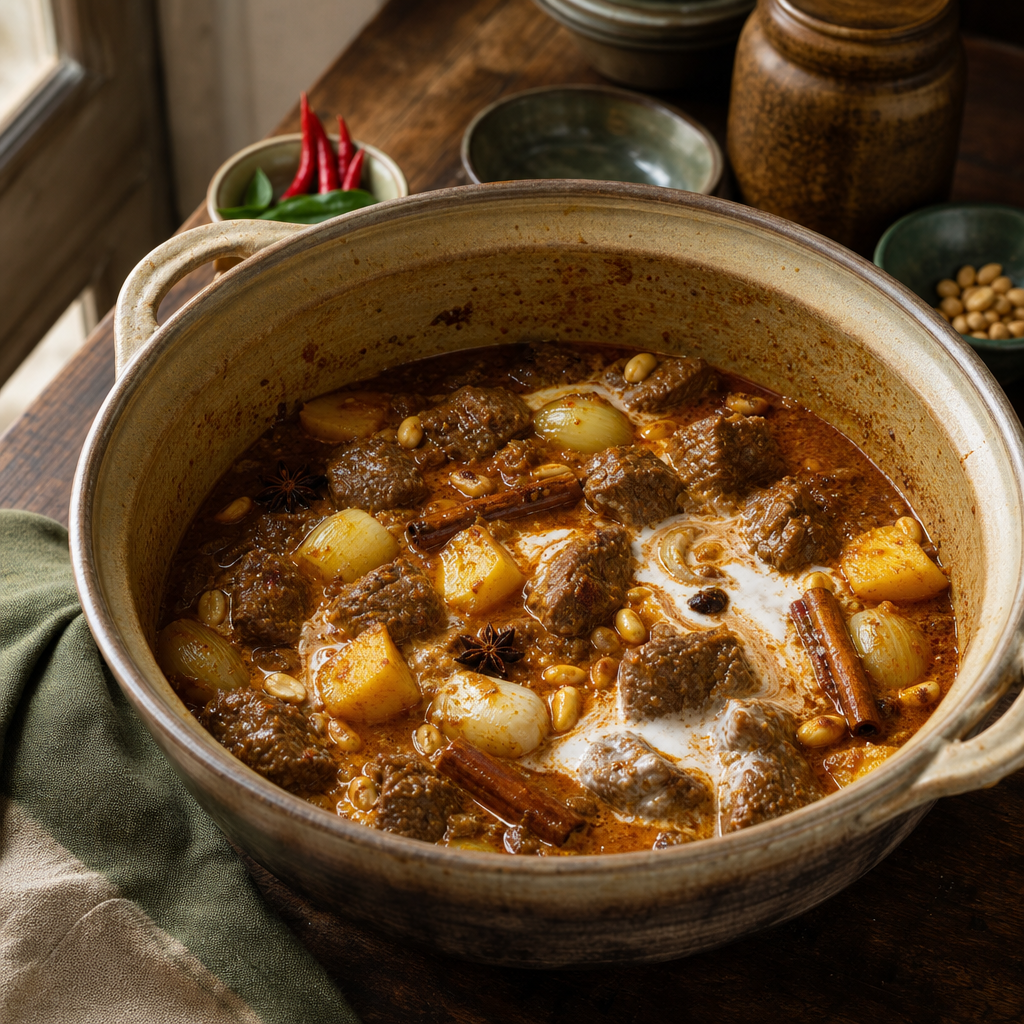
Transfer the beef and its braising liquid into the fried paste pot. Add the whole braising spices, remaining coconut cream, peanuts, and half the tamarind, then simmer uncovered for 25 minutes.
Cook the potatoes and onions
Add potatoes and simmer until the edges turn translucent and a skewer slides through with slight resistance, 20-30 minutes. Add onion wedges for the final 10-12 minutes so they soften but keep shape.
Season the curry
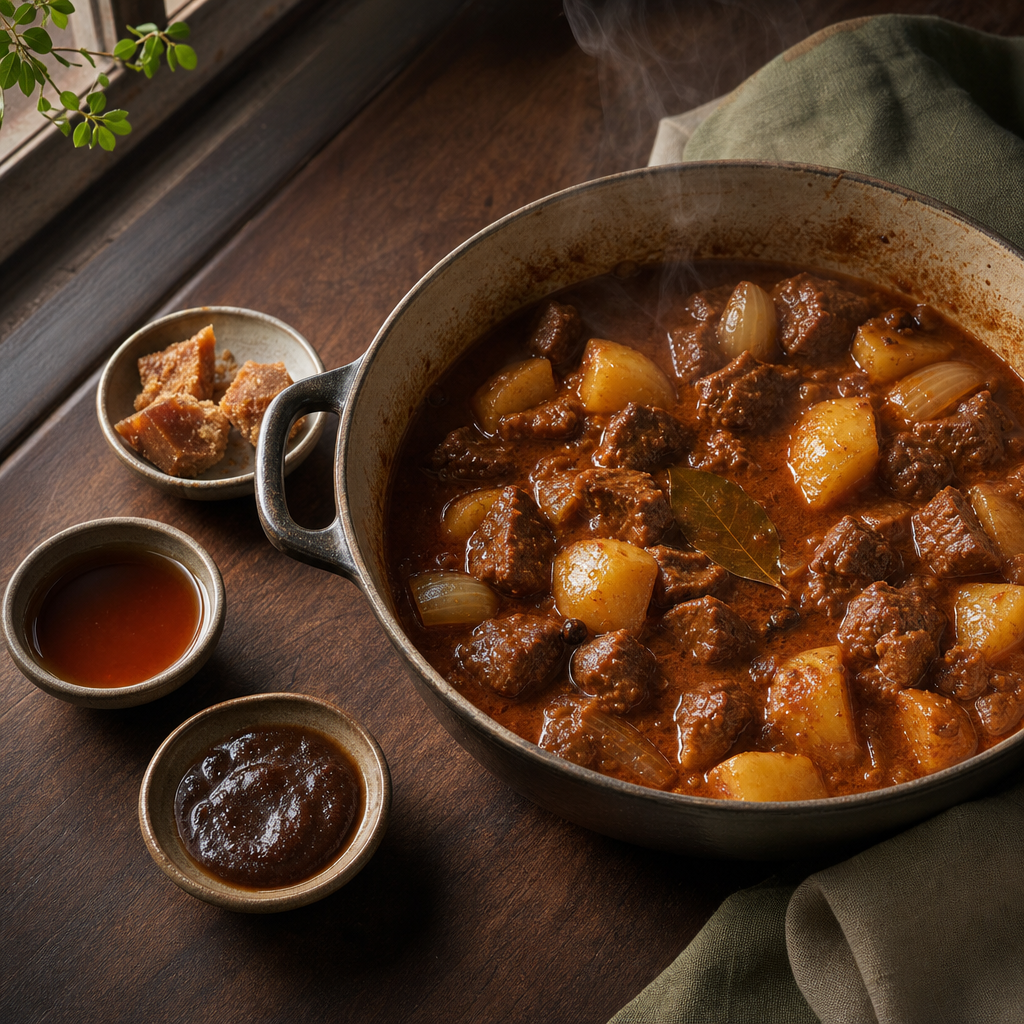
Add palm sugar and fish sauce in stages, then adjust with remaining tamarind. Simmer 5 minutes between corrections; the finished sauce should land sweet first, then salty, then gently sour, with warm spice lingering after the coconut.
Rest before serving
Turn off the heat and rest the curry 20-30 minutes. Remove large whole spices if they are easy to find, then serve with jasmine rice or roti.
Common mistakes
- {'mistake': 'Using generic yellow curry powder as the paste', 'why_it_fails': 'Massaman uses a Thai curry paste structure plus roasted dried spices. Curry powder alone gives color and cumin, not the layered paste.'}
- {'mistake': 'Boiling the curry hard after coconut milk goes in', 'why_it_fails': 'A hard boil turns the sauce greasy and can make the beef fibers tighten. Keep it at a low simmer with lazy bubbles.'}
- {'mistake': 'Adding potatoes at the beginning', 'why_it_fails': 'The beef needs a long braise. Potatoes cannot survive that timing without breaking down into the sauce.'}
- {'mistake': 'Balancing the curry while it is still thin', 'why_it_fails': 'Reduction concentrates fish sauce and sugar. Season late or the final pot becomes salty-sweet with no room for tamarind.'}
- {'mistake': 'Skipping the coconut-fat fry', 'why_it_fails': 'Paste boiled directly in liquid tastes raw and separate. Frying in coconut fat blooms the spices and stains the oil.'}
- {'mistake': 'Treating galangal as interchangeable with ginger', 'why_it_fails': 'Galangal is sharper, piney, and more resinous. Ginger is a fallback, not an equal substitute.'}
What does not belong
- {'item': 'Lime juice', 'reason': 'Lime does not belong in the cooked body of massaman. Tamarind supplies the sourness; lime makes the curry read like a different Thai dish.'}
- {'item': 'Basil', 'reason': 'Holy basil and Thai basil do not belong here. Their volatile green aroma fights the roasted spice profile.'}
- {'item': 'Green curry paste or red curry paste by itself', 'reason': 'Those pastes lack the massaman dried-spice structure. Adding cinnamon to red curry paste does not fix the base.'}
- {'item': 'Pork for a Thai-Muslim framing', 'reason': 'Pork does not belong in this version. Massaman has strong Muslim cultural roots, and beef is the appropriate meat here.'}
- {'item': 'Heavy cream or dairy milk', 'reason': 'Dairy does not belong. Coconut cream provides the fat, sweetness, and texture.'}
- {'item': 'Curry roux blocks', 'reason': 'Japanese-style curry roux brings wheat-thickened sweetness and a different spice logic. It makes another dish.'}