Zaru Soba
The dish in context
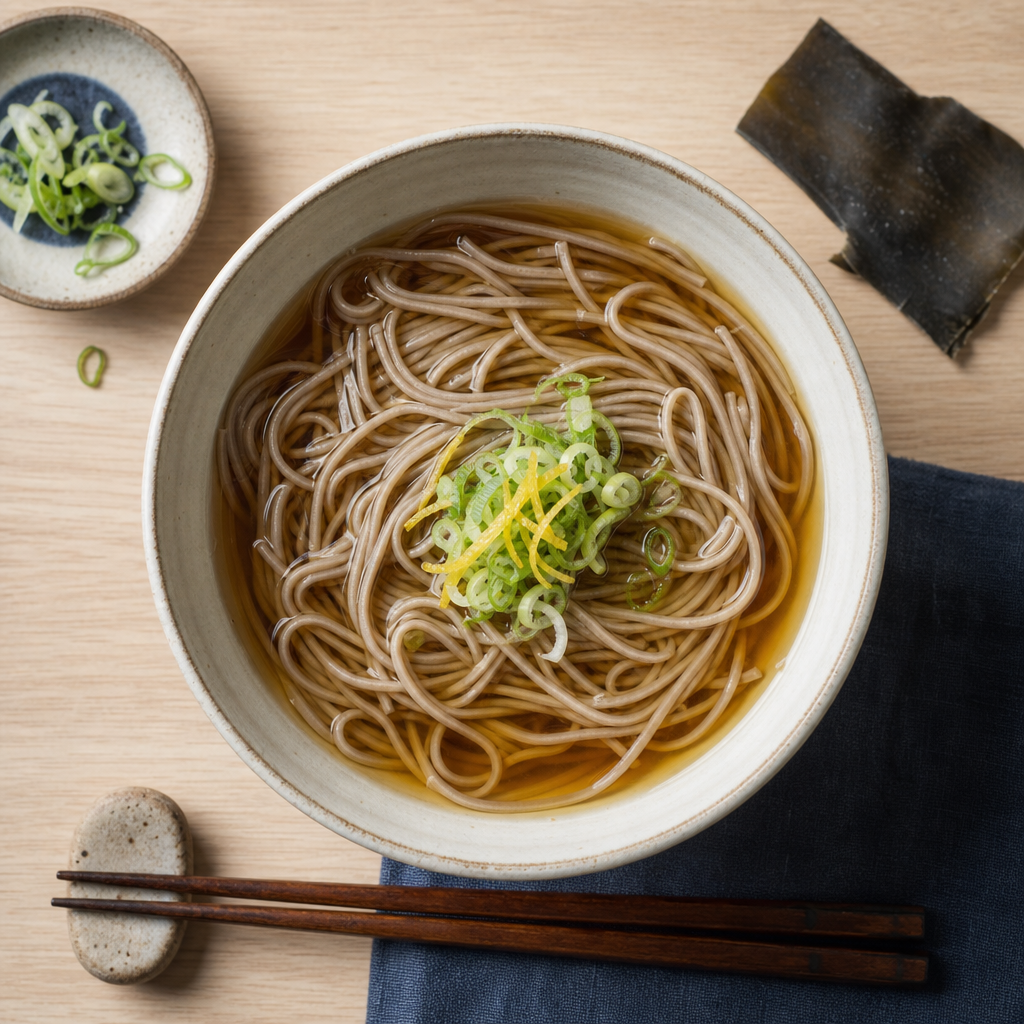
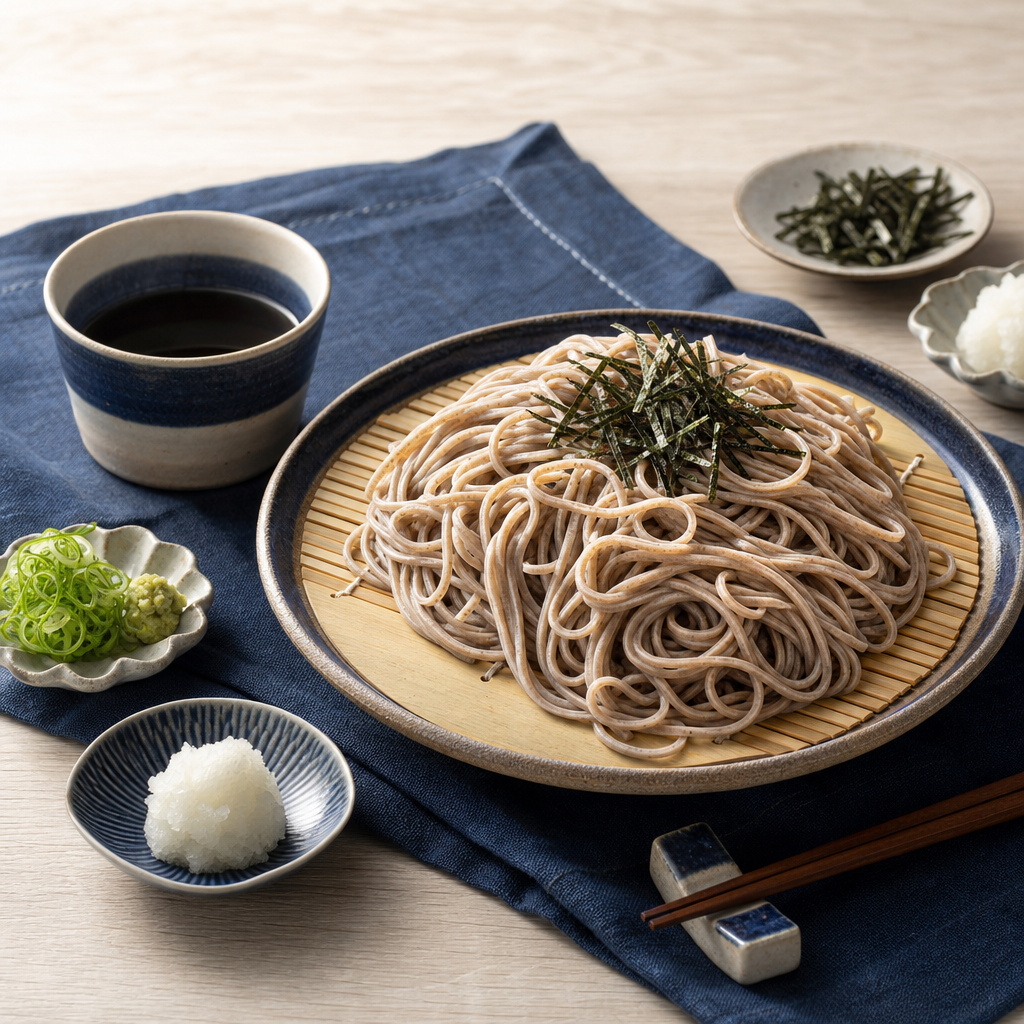
Zaru soba (ざる蕎麦) is one of Japan's standard cold soba formats: boiled buckwheat noodles rinsed cold, drained, and served with a concentrated soy-dashi dipping sauce. The word zaru refers to the bamboo draining basket traditionally used for serving, which keeps the noodles from sitting in water. In common restaurant usage, zaru soba is distinguished from mori soba by the shredded nori scattered over the noodles, though the boundary is not perfectly fixed across shops. The dish is strongly associated with hot weather because the noodles are cold and the seasoning is clean, salty, and restrained.
Method 9 steps · 25 min
Make the dipping sauce
Combine mirin and sugar in a small saucepan. Bring to a brief simmer for 30 seconds, then add soy sauce and dashi. Heat until steam rises and the edge trembles; do not reduce it hard.
Chill the mentsuyu
Transfer the sauce to a heatproof container and chill until cold. For faster service, set the container in an ice bath and stir until no warmth remains.
Cook the soba
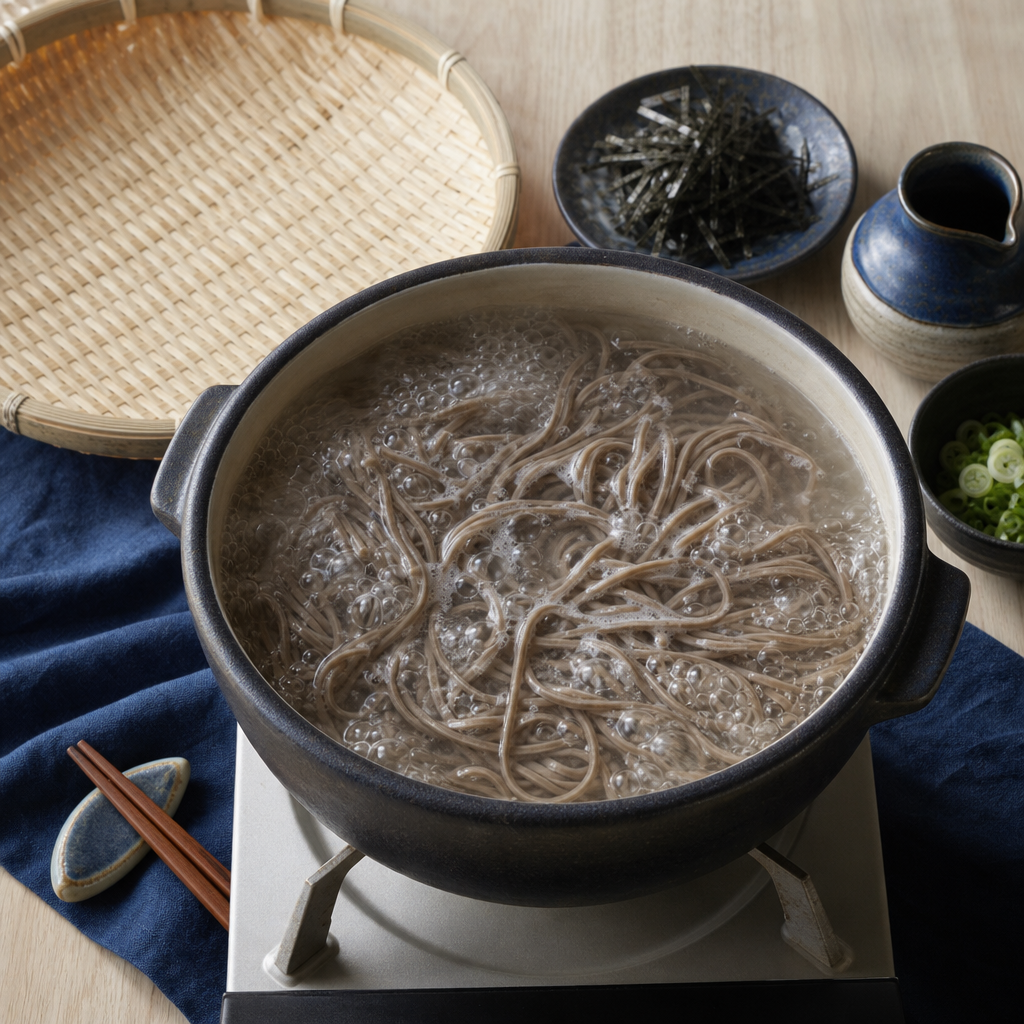
Bring the unsalted water to a full boil. Add the soba and stir for the first 20 seconds to separate the strands, then cook according to the package timing, usually 4-6 minutes for dried soba. Test a strand; the center should be cooked through but still firm.
Reserve soba-yu, then drain
Scoop out 250 ml of the cloudy cooking water and keep it warm for serving as soba-yu (蕎麦湯). Drain the noodles immediately in a colander.
Rinse hard
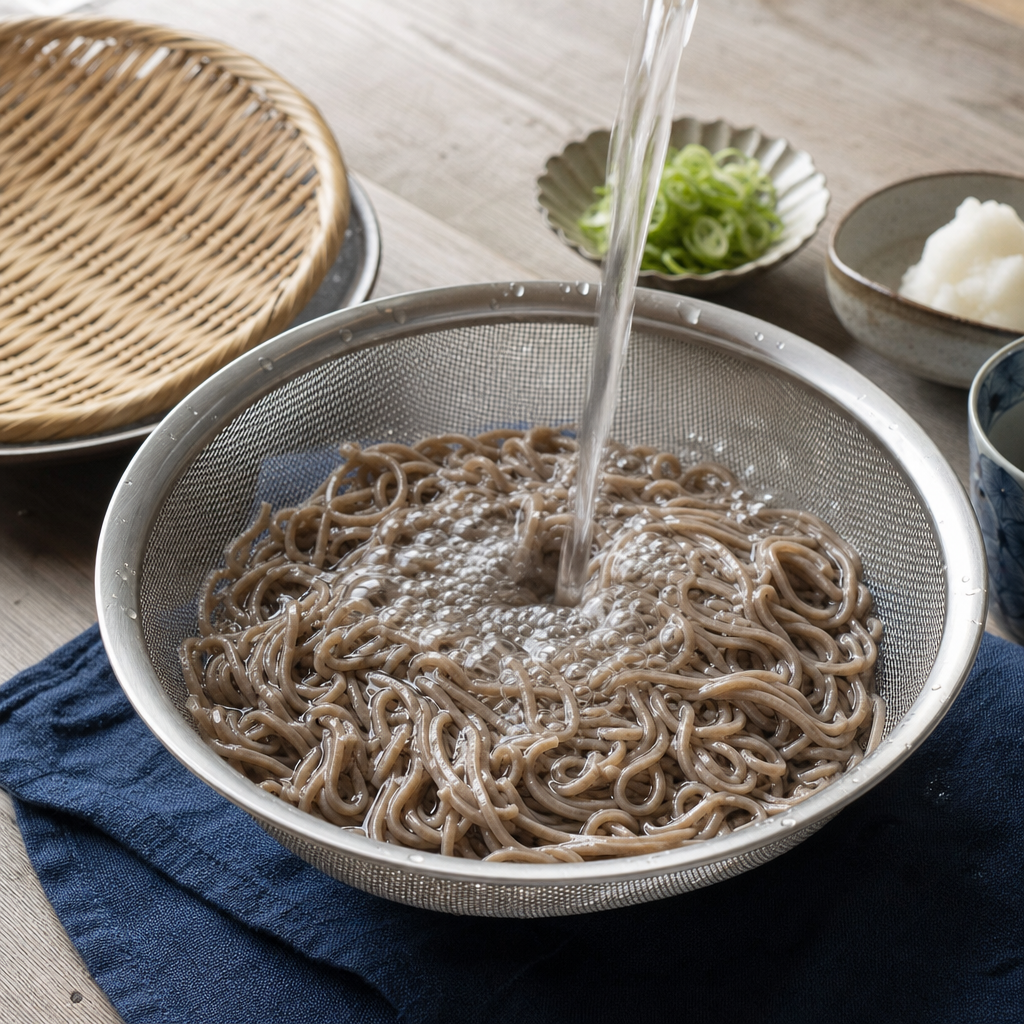
Rinse the noodles under cold running water, lifting and rubbing them between both hands until the water runs mostly clear and the noodles feel slick rather than pasty. If the tap water is not cold, finish with ice water for 30 seconds.
Drain until the noodles stop dripping
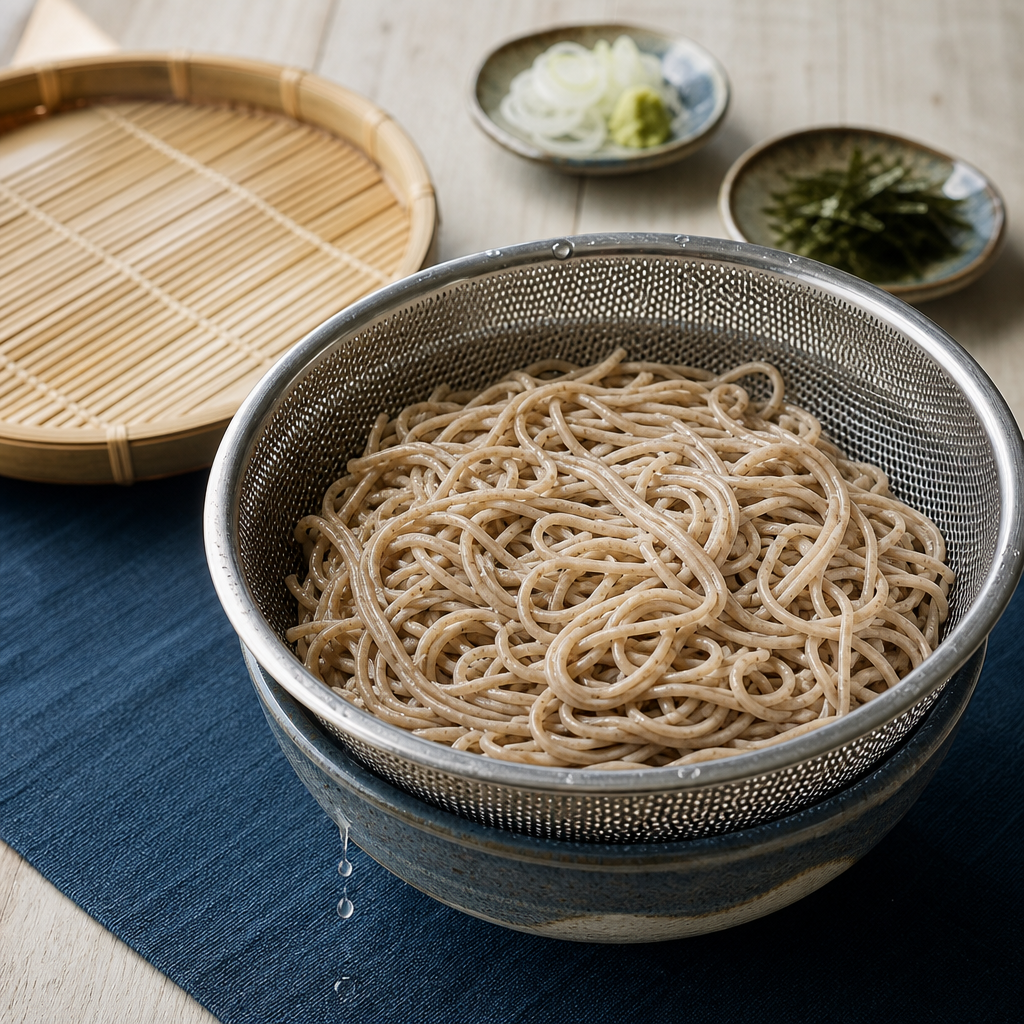
Shake the colander well, then let the noodles sit for 1 minute. Excess water should fall away, but the noodles should not dry out.
Plate and garnish
Arrange the noodles in loose bundles on a zaru or a plate lined with a bamboo mat. Scatter shredded nori over the top. Put scallion, wasabi, and grated daikon in small side dishes.
Serve for dipping
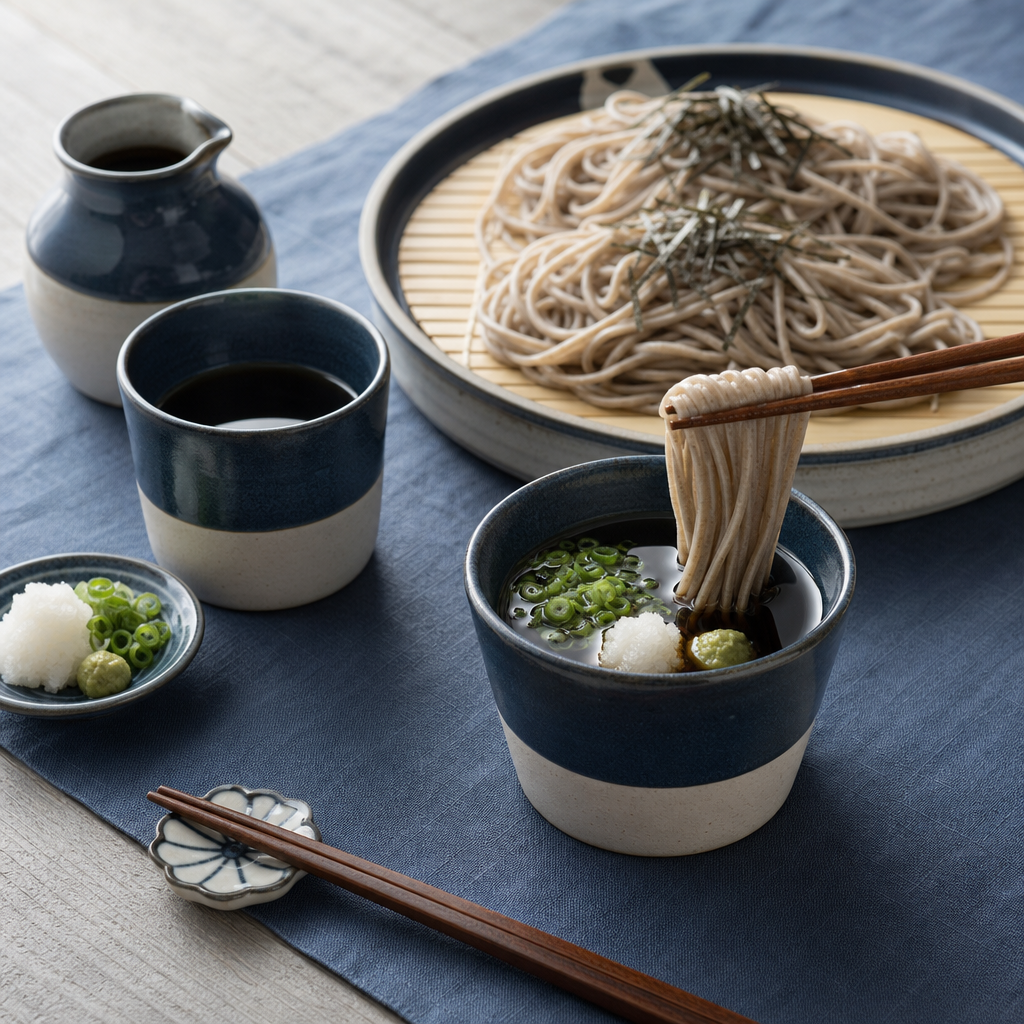
Pour chilled mentsuyu into individual cups. Add scallion, wasabi, or daikon to the cup as desired, then dip only the lower third of a small bundle of noodles before eating.
Finish with soba-yu
After the noodles are gone, pour warm soba-yu into the remaining mentsuyu to taste and drink it like a light broth.
Common mistakes
- {'mistake': 'Skipping the cold rinse.', 'fix': 'Rinse and rub the noodles until the surface starch is gone. A quick splash of water is not enough.'}
- {'mistake': 'Salting the noodle water.', 'fix': 'Use plain water. The noodles are seasoned by dipping, not by absorption during boiling.'}
- {'mistake': 'Serving the noodles wet.', 'fix': 'Drain until the noodles are glossy but not dripping. Pooled water weakens the mentsuyu immediately.'}
- {'mistake': 'Using straight soy sauce as the dip.', 'fix': 'Make mentsuyu with dashi and mirin. Straight soy sauce is too salty and too flat.'}
- {'mistake': 'Overcooking dried soba because it looks firm.', 'fix': 'Start checking before the package time ends. Soba can go from firm to fragile in less than a minute.'}
- {'mistake': 'Mixing all condiments into the noodle pile.', 'fix': 'Keep scallion, wasabi, and daikon in or beside the dipping cup. The noodles should stay clean.'}
What does not belong
- {'item': 'Sesame oil', 'reason': 'Sesame oil does not belong in zaru soba. It coats the noodles and blocks the buckwheat aroma.'}
- {'item': 'Teriyaki sauce', 'reason': 'Teriyaki sauce does not belong. Zaru soba uses mentsuyu, a thin dashi-soy-mirin dipping sauce, not a sweet glaze.'}
- {'item': 'Peanut sauce', 'reason': 'Peanut sauce does not belong. It changes the dish into a fusion noodle salad.'}
- {'item': 'Garlic or chili crisp', 'reason': 'Garlic and chili crisp do not belong in the canonical cold soba format. Their oil and heat overwhelm the clean dashi profile.'}
- {'item': 'Broth poured over the noodles', 'reason': 'Poured broth does not belong in zaru soba. Cold soba is dipped; hot or cold soup soba is a different preparation.'}
- {'item': 'Cream or mayonnaise', 'reason': 'Cream and mayonnaise do not belong. Fat-heavy dressings erase the lean structure of the dish.'}
Adaptations
Use kombu-shiitake dashi instead of katsuobushi dashi. Check that the soba contains no egg, though standard soba usually does not.
Use halal-certified soy sauce and replace mirin with water plus sugar, or use a halal mirin-style seasoning. If using instant dashi, check for alcohol-based extracts.
Use 100% buckwheat juwari soba and tamari or gluten-free Japanese soy sauce. Many soba noodles contain wheat flour, and many soy sauces contain wheat.
The dish contains no dairy.
Standard zaru soba contains no shellfish. Bonito dashi contains fish, not shellfish; use kombu-shiitake dashi if avoiding all seafood.