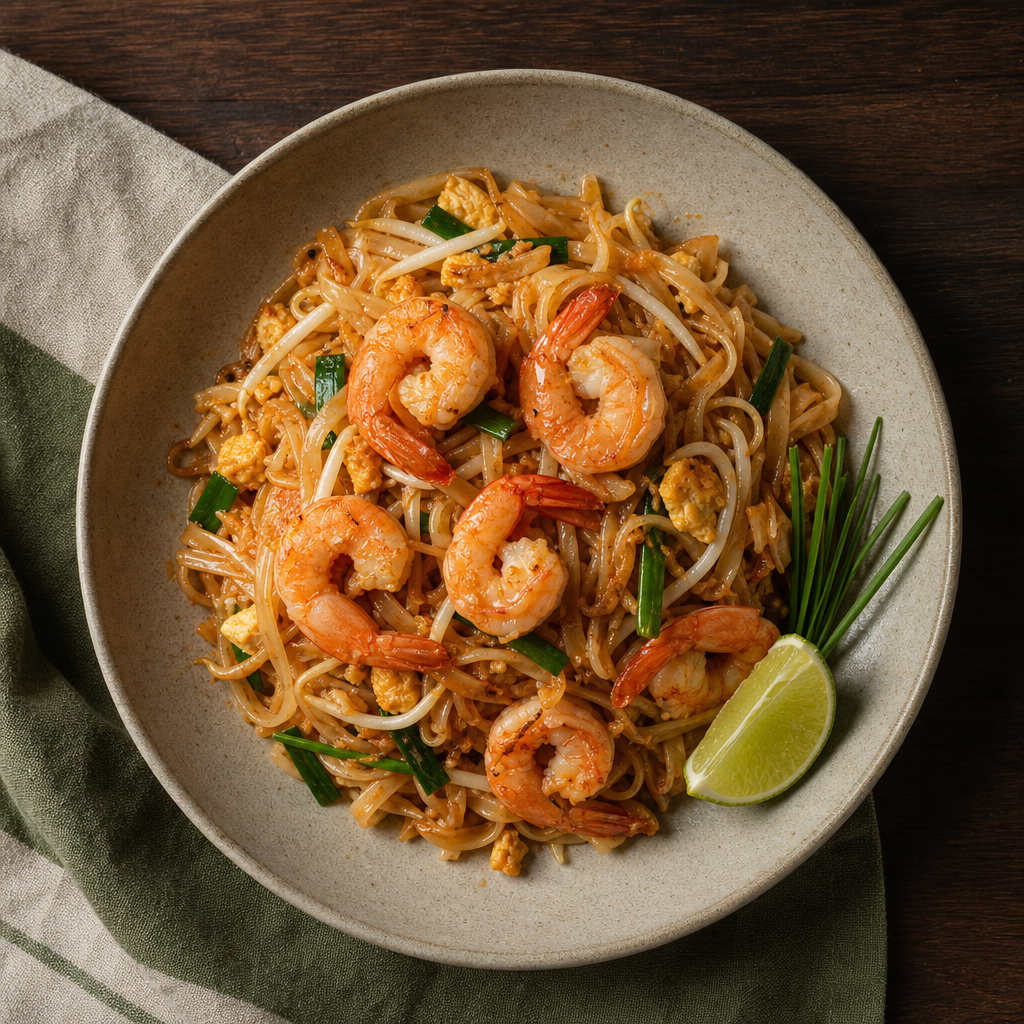
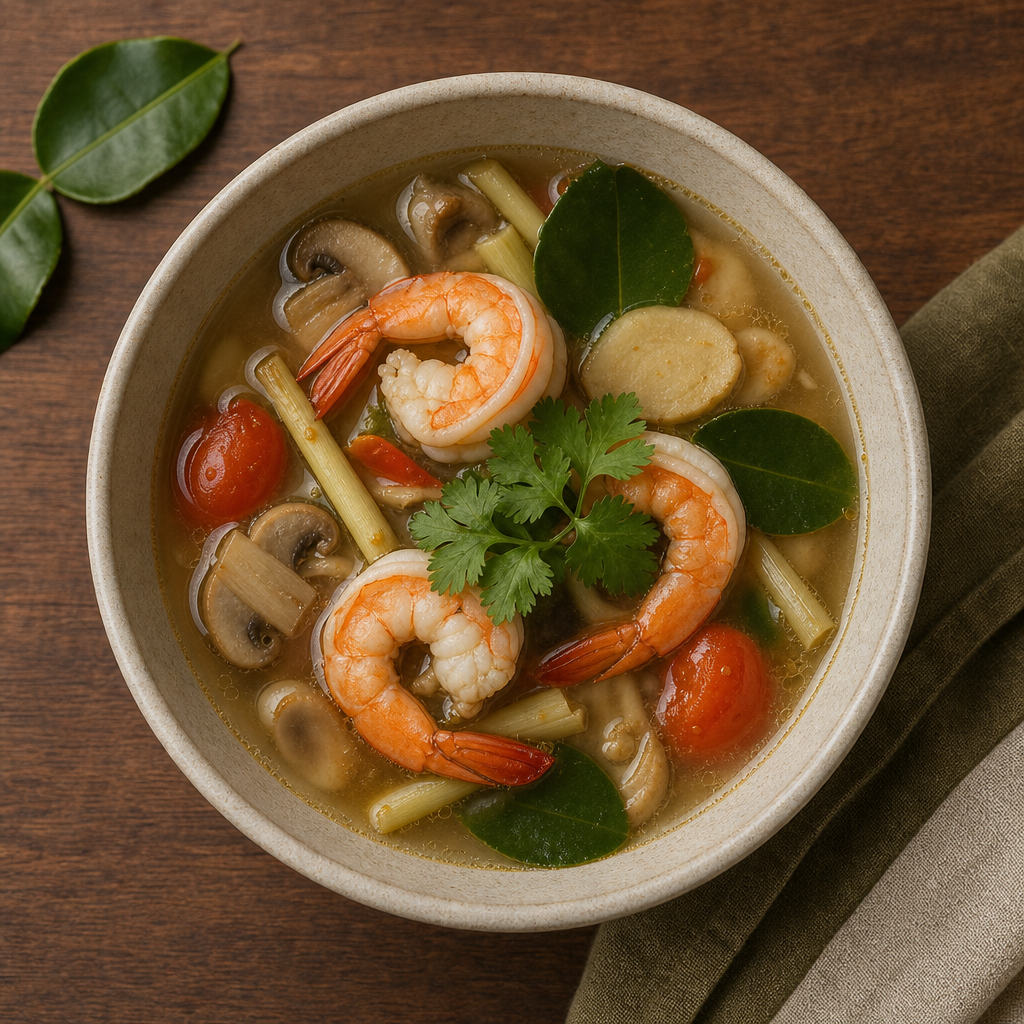
Shrimp Nigiri
The dish in context
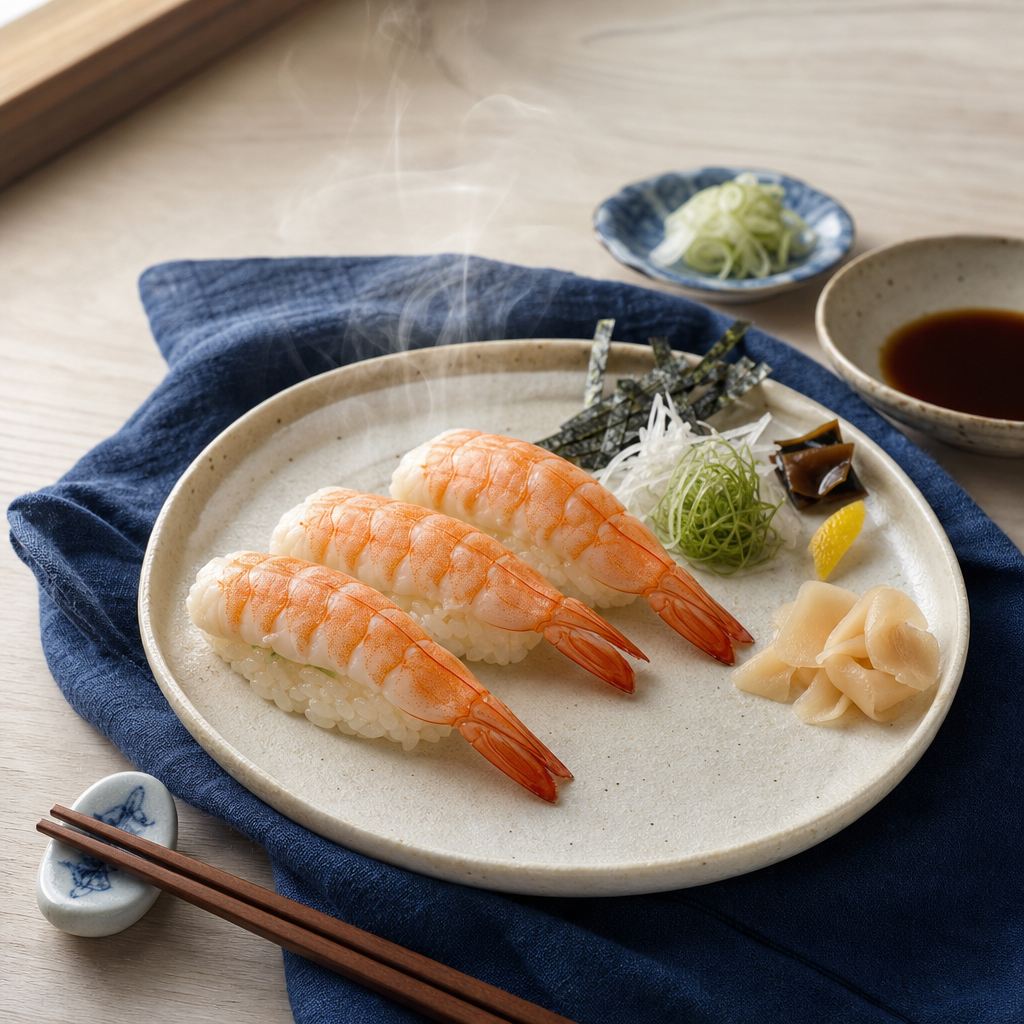
Nigiri sushi, or nigirizushi (握り寿司), developed in Edo-period Tokyo as hand-pressed sushi served from stalls and counters. Shrimp was already part of the early Edo sushi repertoire, including kuruma ebi (車海老), prized for its firm texture and clean sweetness after poaching. Modern ebi nigiri usually means cooked, butterflied shrimp over seasoned rice; raw shrimp nigiri is more specifically amaebi (甘海老), made with sweet shrimp handled for raw service. Treating any supermarket shrimp as raw sushi shrimp is not traditional practice and is not a safe shortcut.
Method 9 steps · 75 min
Wash and soak the rice
Rinse the rice 3-5 times in cold water until the water runs nearly clear, then drain. Add the measured cooking water and rest the rice 30 minutes before cooking. Add kombu now if using, then remove it before the rice boils if cooking in a saucepan.
Cook and rest the rice
Cook the rice in a rice cooker, or bring it to a covered simmer in a saucepan, reduce to low for 12 minutes, then turn off the heat. Rest covered for 10 minutes. Do not stir during the rest.
Season the shari
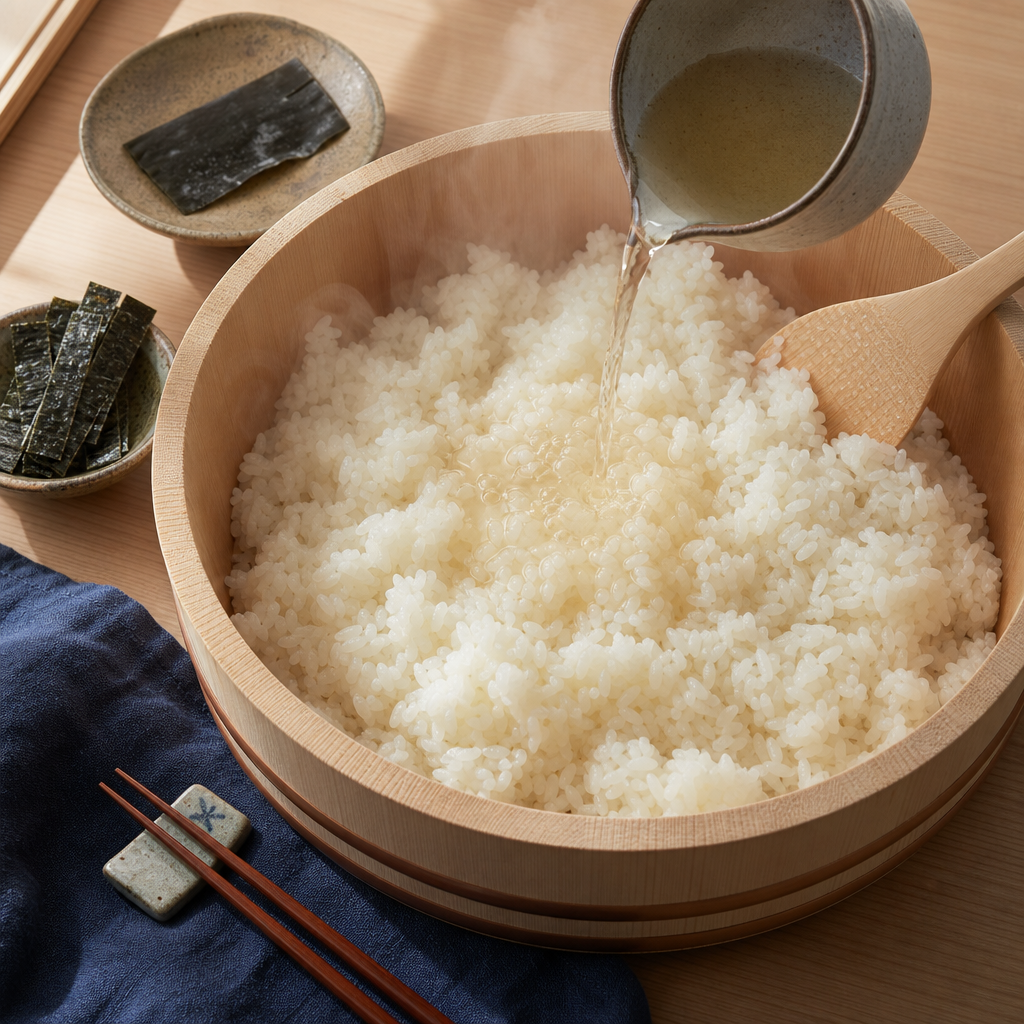
Warm the rice vinegar, sugar, and salt only until dissolved; do not boil hard. Turn the hot rice into a wide bowl, sprinkle the seasoning over it, and fold with a rice paddle using cutting motions while fanning until the rice looks glossy and no longer steams heavily. Cover with a damp cloth and hold at body temperature.
Skewer the shrimp straight
Insert a bamboo skewer lengthwise through each shell-on shrimp, starting near the tail and running toward the head end. Keep the shrimp as straight as possible without tearing it.
Poach the shrimp
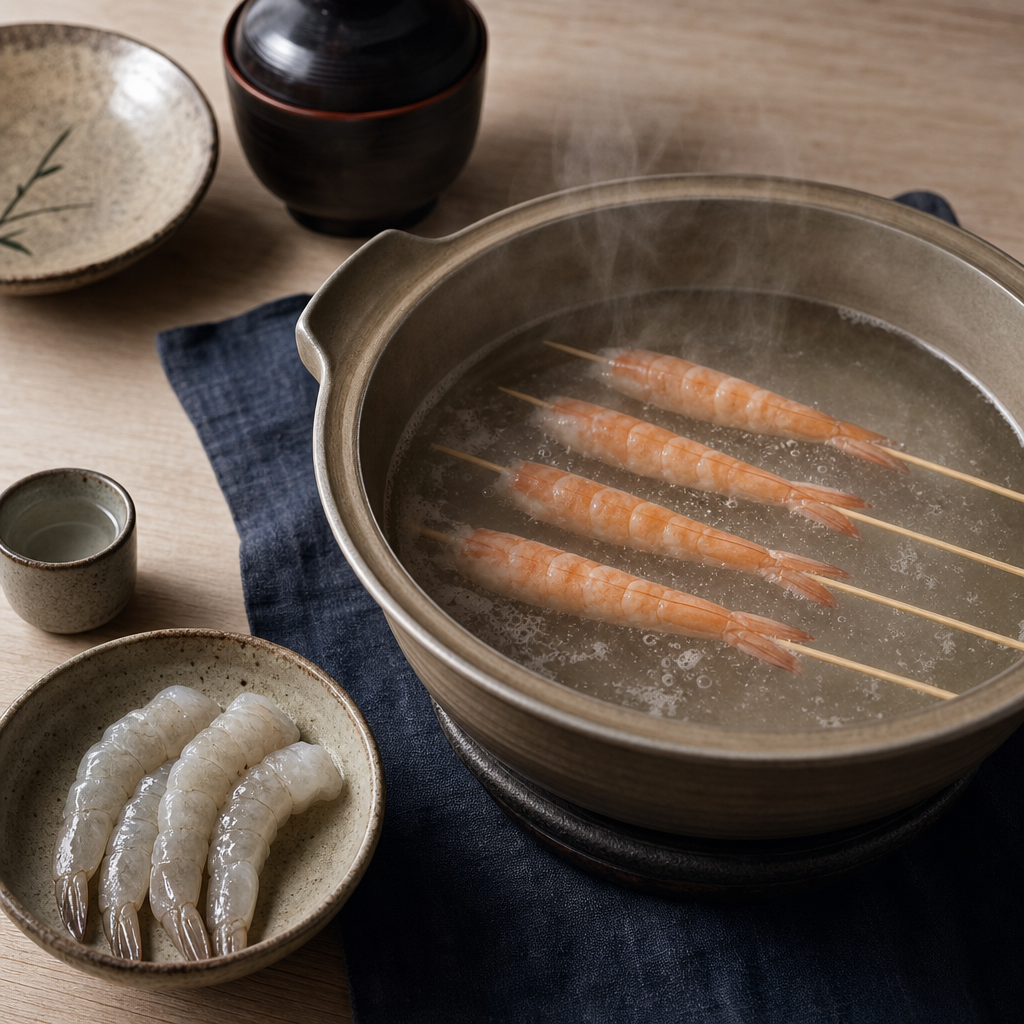
Bring 1 liter water, the poaching salt, and sake if using to a steady simmer. Add the skewered shrimp and cook until opaque and firm, about 2-3 minutes depending on size. Pull them before they contract into a tight C-shape.
Cool, peel, and butterfly
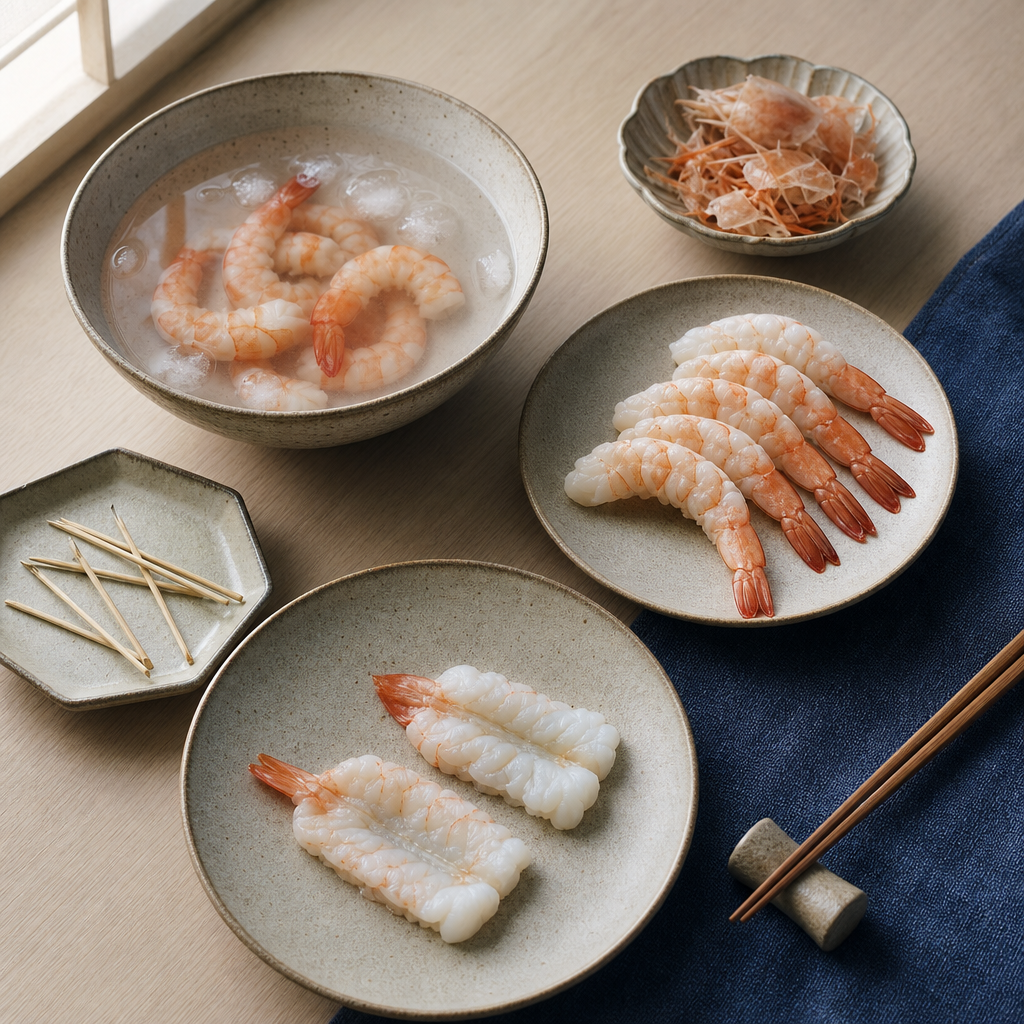
Transfer the shrimp to cold water for 1 minute, then drain. Remove the skewers and shells, leaving the tail shell on if desired. Slit the belly side lengthwise without cutting through the back, remove the vein, and open each shrimp flat.
Set up tezu and portions
Mix the tezu water and vinegar in a small bowl. Wet the fingertips lightly, then portion the rice into 10 pieces of about 18-20 g each. The rice should feel warm, lightly sticky, and separate-grained.
Shape the nigiri
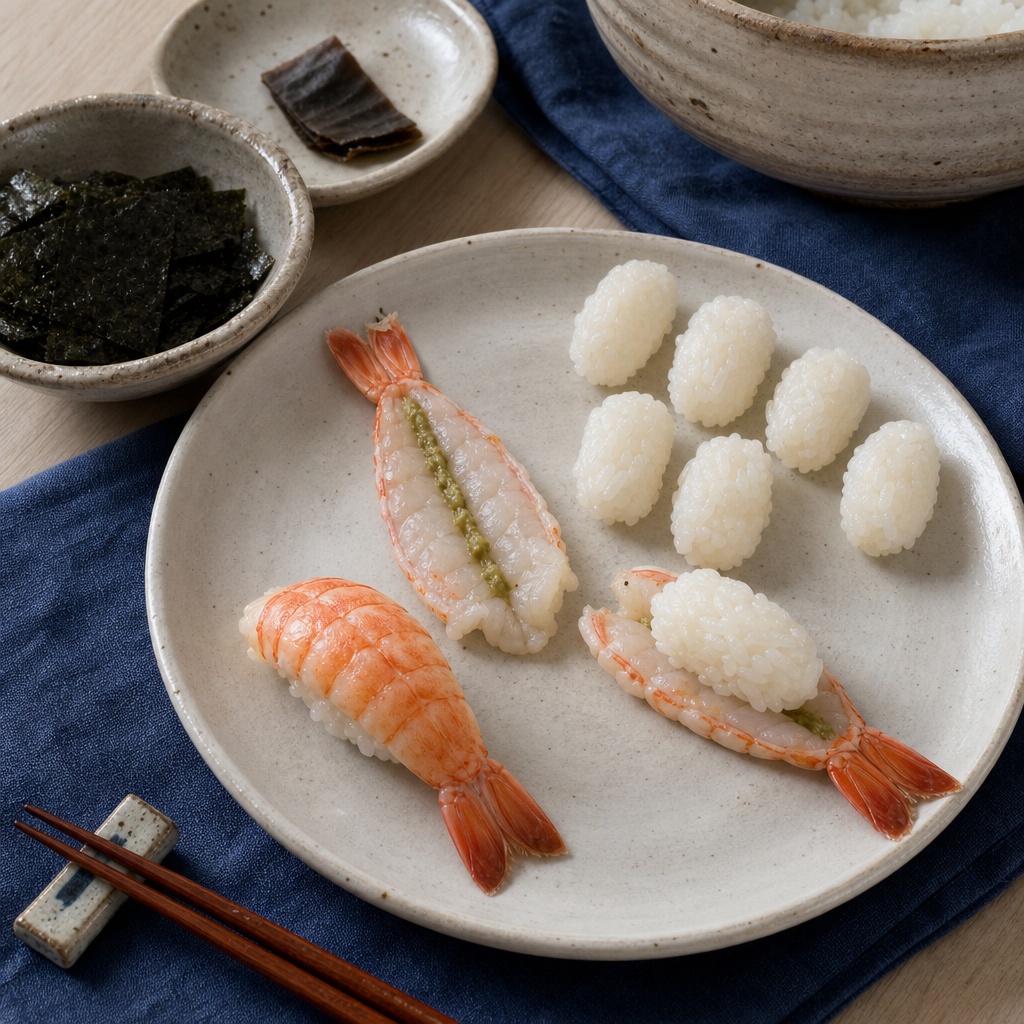
Lay one shrimp across the fingers of the non-dominant hand, cut side up, and smear a small line of wasabi down its center. Place one rice portion on top, press the sides to match the shrimp width, make a shallow thumb indentation in the rice, then turn the nigiri shrimp-side up. Press lightly from the top and sides until the rice holds but still looks aerated.
Serve
Serve the nigiri immediately with koikuchi shoyu and gari on the side. Dip the shrimp side into soy sauce, not the rice side. Do not soak the piece.
Common mistakes
- Using long-grain rice. It will not form proper shari and the nigiri will crumble or feel dry.
- Shaping with cold rice. Cold sushi rice turns firm and chalky; nigiri should be made while the rice is near body temperature.
- Skipping the skewers. Unskewered shrimp curl into tight commas and will not sit flat on the rice.
- Overpressing the rice. A nigiri that feels like a dense rice brick has been squeezed too hard.
- Putting soy sauce on the rice side. The rice absorbs liquid, falls apart, and becomes too salty.
- Serving raw standard shrimp. Raw shrimp nigiri requires properly handled amaebi or another shrimp intended for raw service.
What does not belong
- Mayonnaise does not belong on ebi nigiri.
- Teriyaki sauce does not belong on ebi nigiri.
- Avocado does not belong on traditional ebi nigiri.
- Sesame oil does not belong in the rice.
- Long-grain rice does not belong in sushi rice.
- Raw supermarket shrimp does not belong on nigiri.