Kung Chae Nam Pla
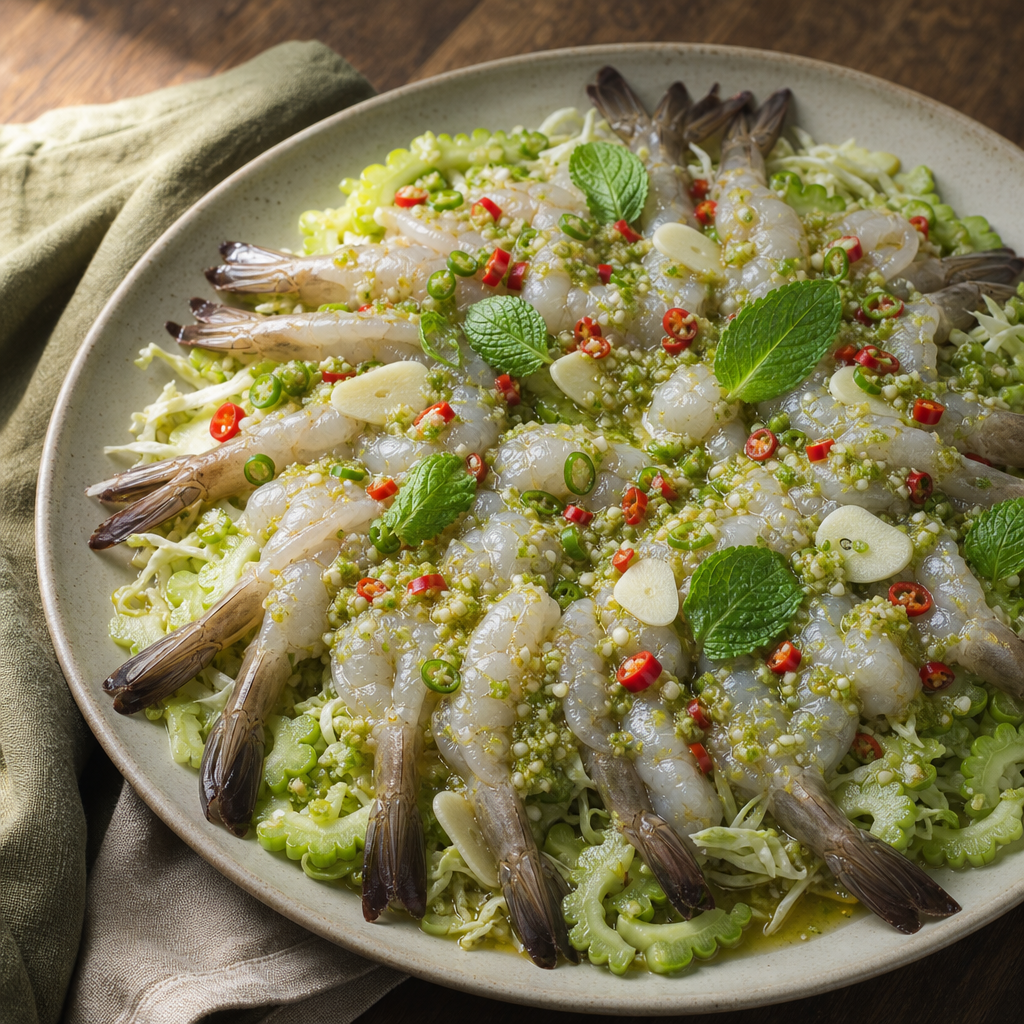
The dish in context
Kung chae nam pla is a central Thai raw shrimp dish built for the table rather than the stove: cold shrimp, fish sauce, lime, garlic, chilies, and bitter vegetables. It sits in the same social lane as Thai drinking food and seafood starters, where acid, salt, and chili cut through cold beer and richer dishes. Restaurant versions often lean sweet; the cleaner household-standard version does not need much sugar because fresh shrimp already has a mild natural sweetness. The dish is raw, so ingredient handling is not decorative detail — it is the technique.
Method 7 steps · 30 min
Chill the equipment
Put the serving platter and a mixing bowl over ice or in the freezer for 10 minutes. Keep the shrimp refrigerated until the moment of cutting.
Butterfly the shrimp
Peel the shrimp, leaving tails on if the presentation matters. Remove the vein, then cut along the back almost through and press each shrimp open into a flat butterfly.
Firm the shrimp
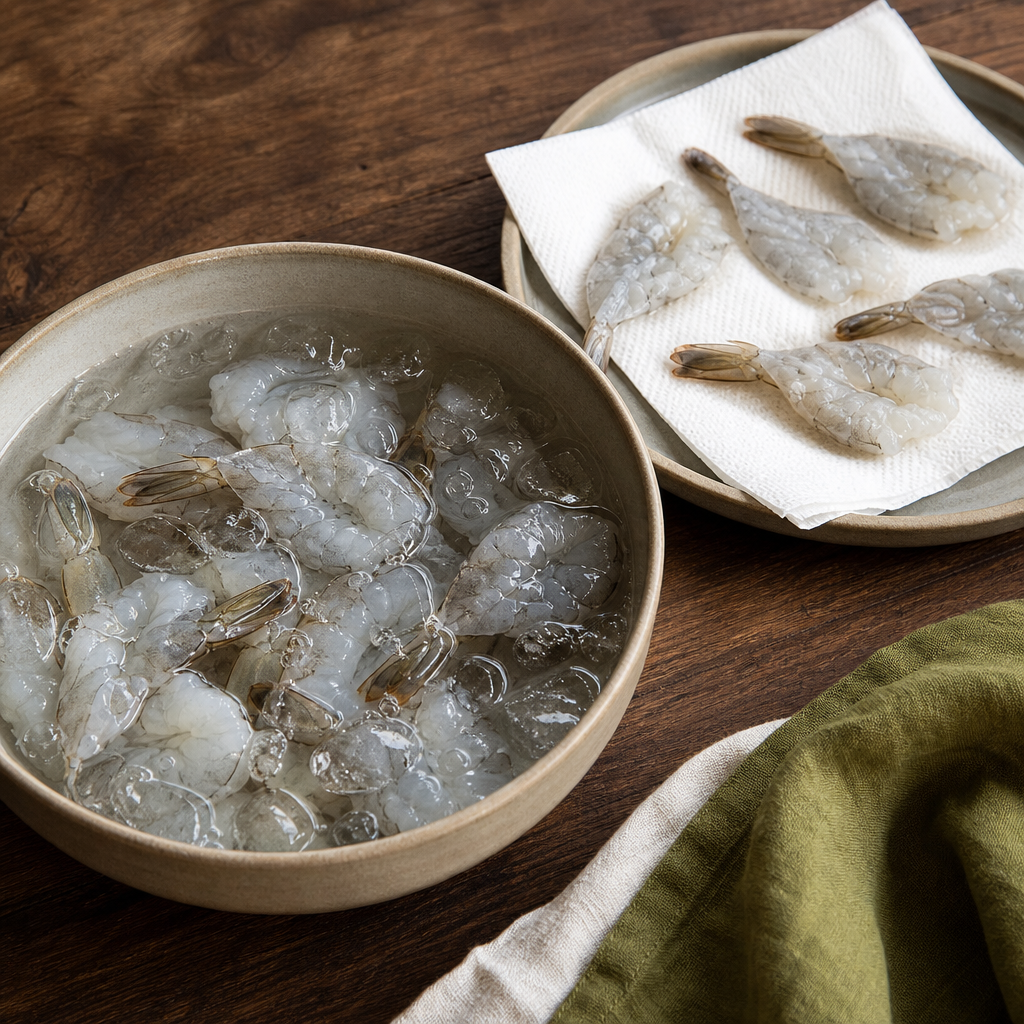
Submerge the butterflied shrimp in ice-cold soda water for 2 minutes. Drain, then blot dry with paper towels.
Briefly season the shrimp
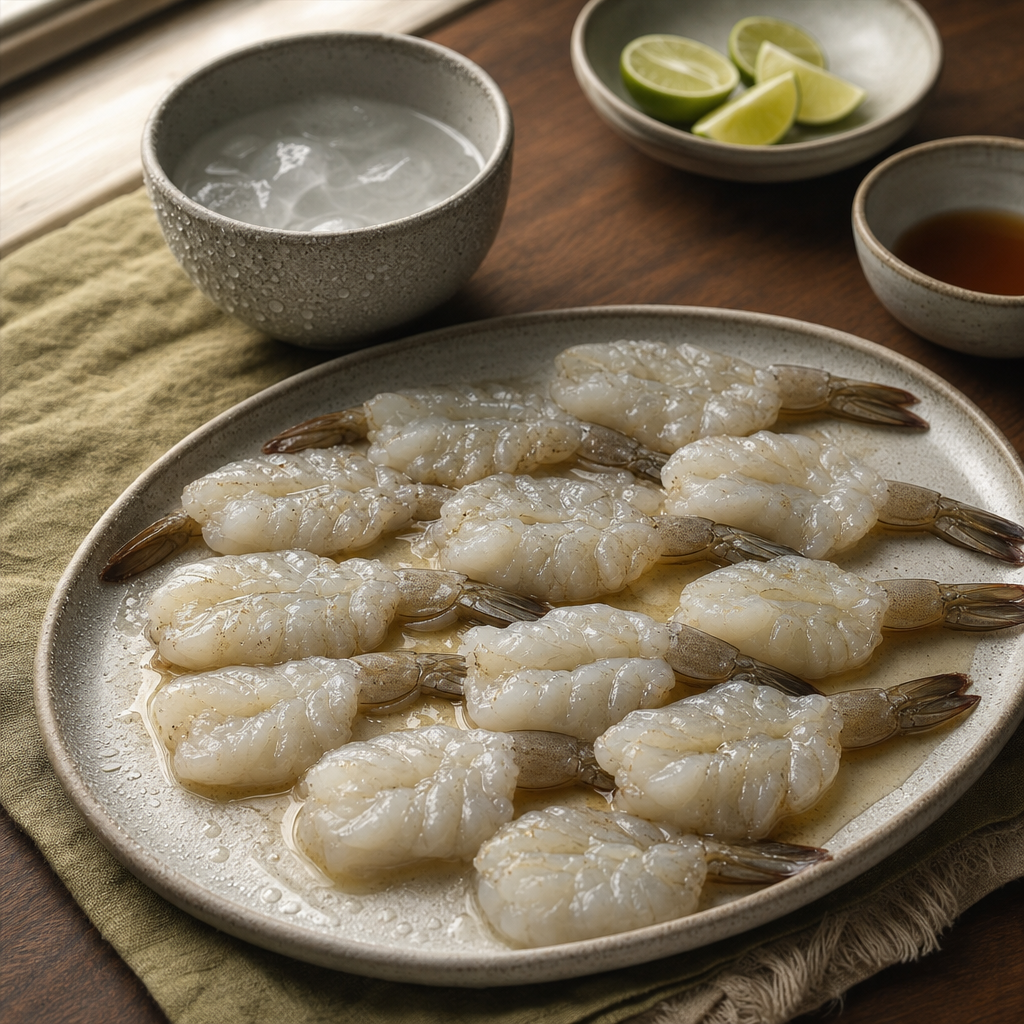
Toss the shrimp with 2 tablespoons fish sauce and 1 tablespoon lime juice. Spread on the chilled platter and refrigerate for 5 minutes, then pour off any pooled liquid.
Tame the bitter melon
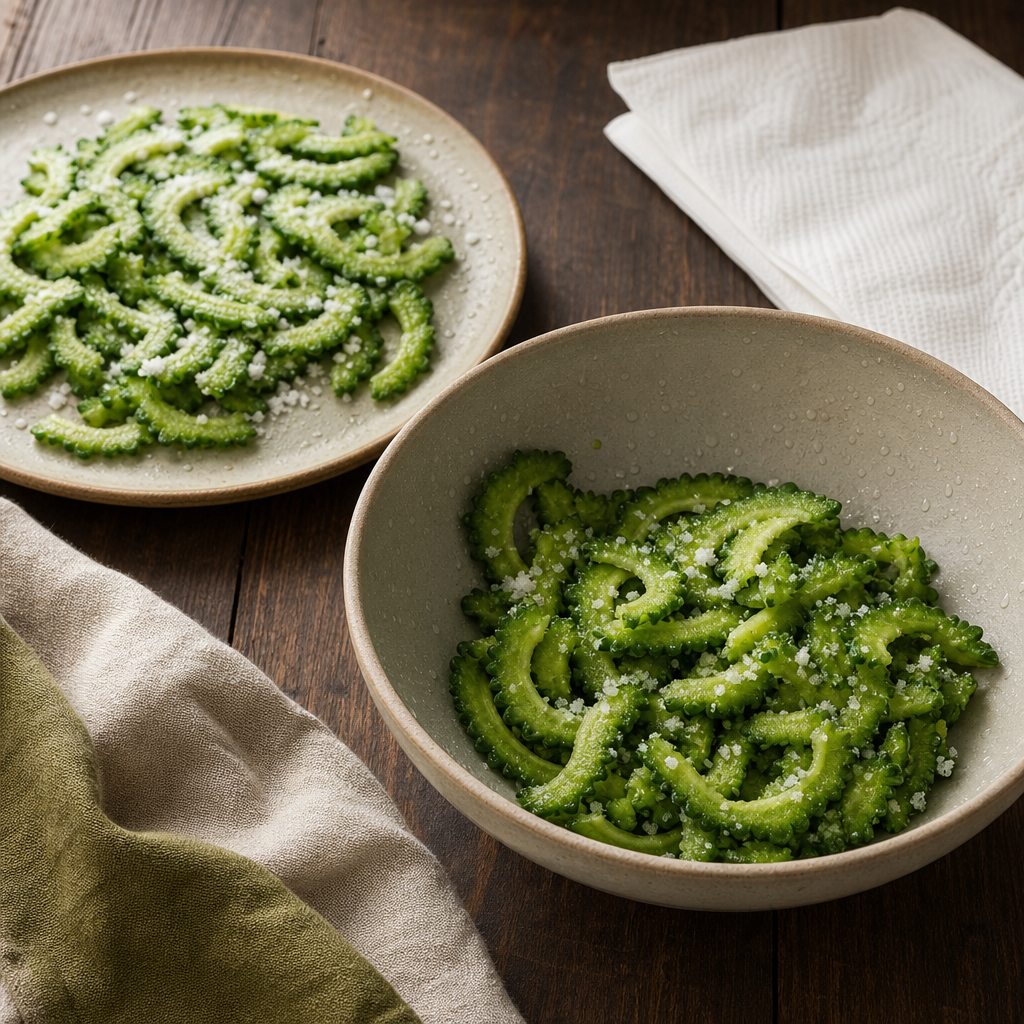
Rub the bitter melon slices with 1/2 teaspoon salt for 1 minute. Rinse briefly, squeeze dry, and keep cold.
Pound the dressing
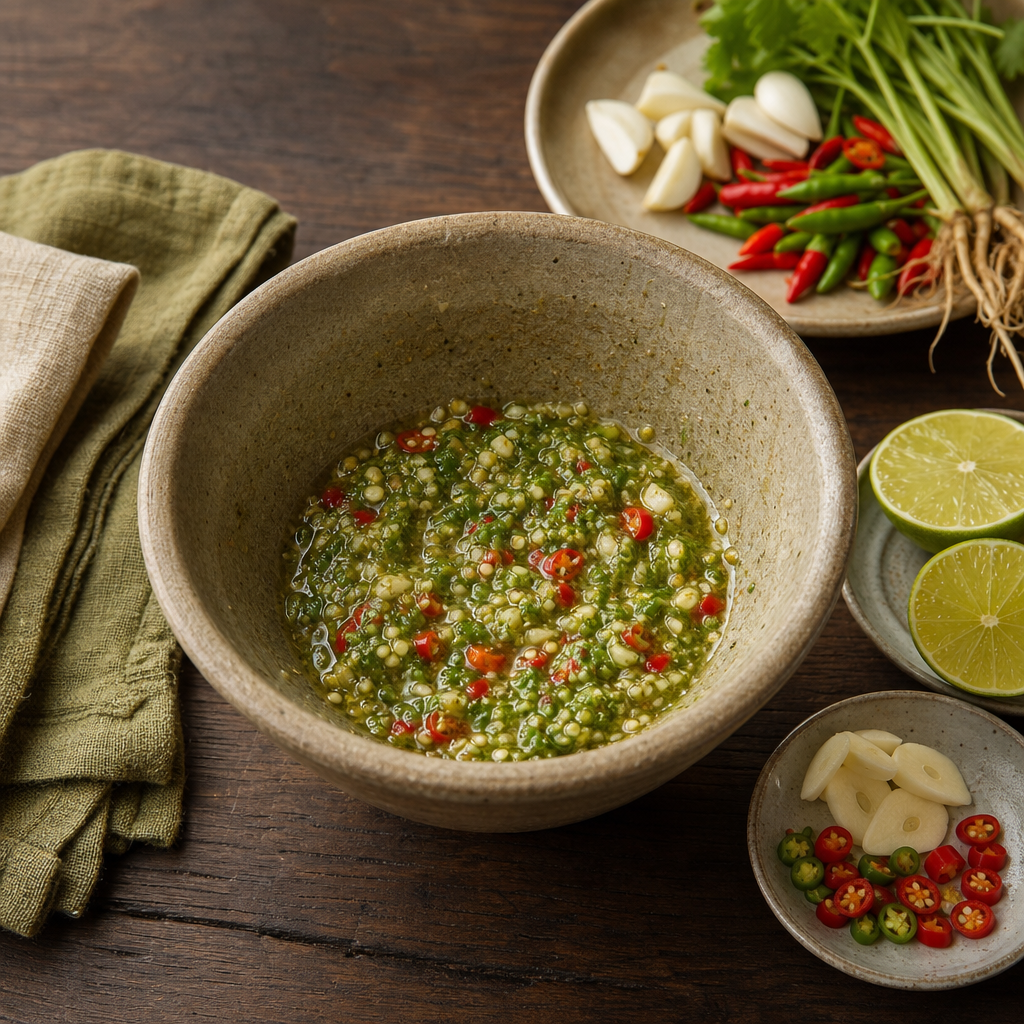
Pound garlic, chilies, and cilantro roots to a rough paste. Stir in 2 tablespoons fish sauce and 3 tablespoons lime juice; add the optional palm sugar only if the fish sauce tastes blunt or aggressively salty.
Plate cold and serve immediately
Lay shredded cabbage and bitter melon on the chilled platter. Arrange the shrimp on top, spoon over the dressing, and finish with mint leaves and extra garlic or chili slices if using. Serve at once.
Common mistakes
- Using unfrozen, unknown-source shrimp for a raw dish. Lime and fish sauce do not sterilize seafood.
- Marinating the shrimp for 20-30 minutes. That produces chalky, opaque shrimp with a tired lime smell.
- Blending the dressing until smooth. Kung chae nam pla needs a raw pounded sauce with visible garlic and chili.
- Adding enough sugar for the sauce to taste sweet. The balance is salty-sour-hot, with shrimp sweetness underneath.
- Serving at room temperature. Warm raw shrimp smells louder and eats softer.
What does not belong
- Coconut milk does not belong in kung chae nam pla.
- Chili jam does not belong; it makes the dressing oily and sweet.
- Soy sauce does not replace fish sauce here. It changes the entire salt profile.
- Lemon juice does not belong as the primary acid unless lime is genuinely unavailable.
- Heavy sugar syrup does not belong. This is not a sweet seafood salad.
- Mayonnaise, ketchup, or seafood cocktail sauce do not belong.