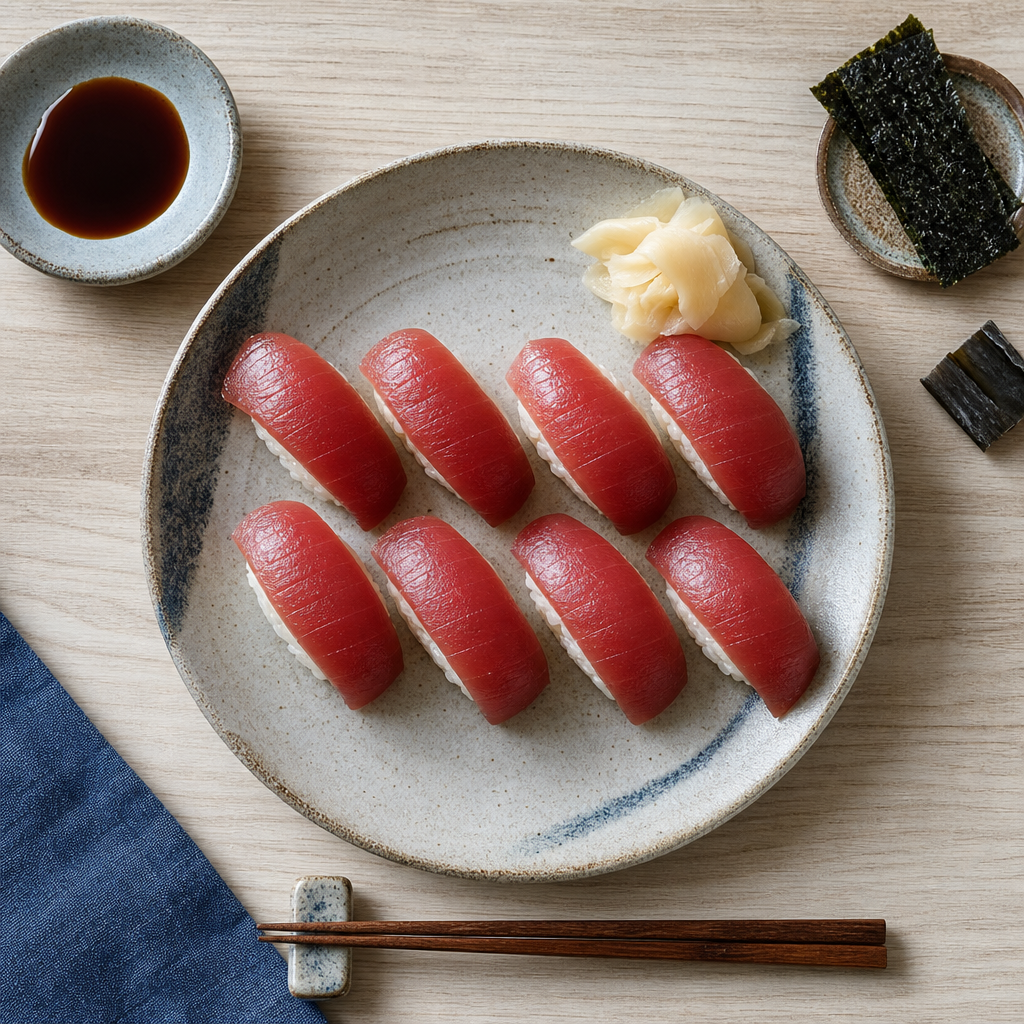
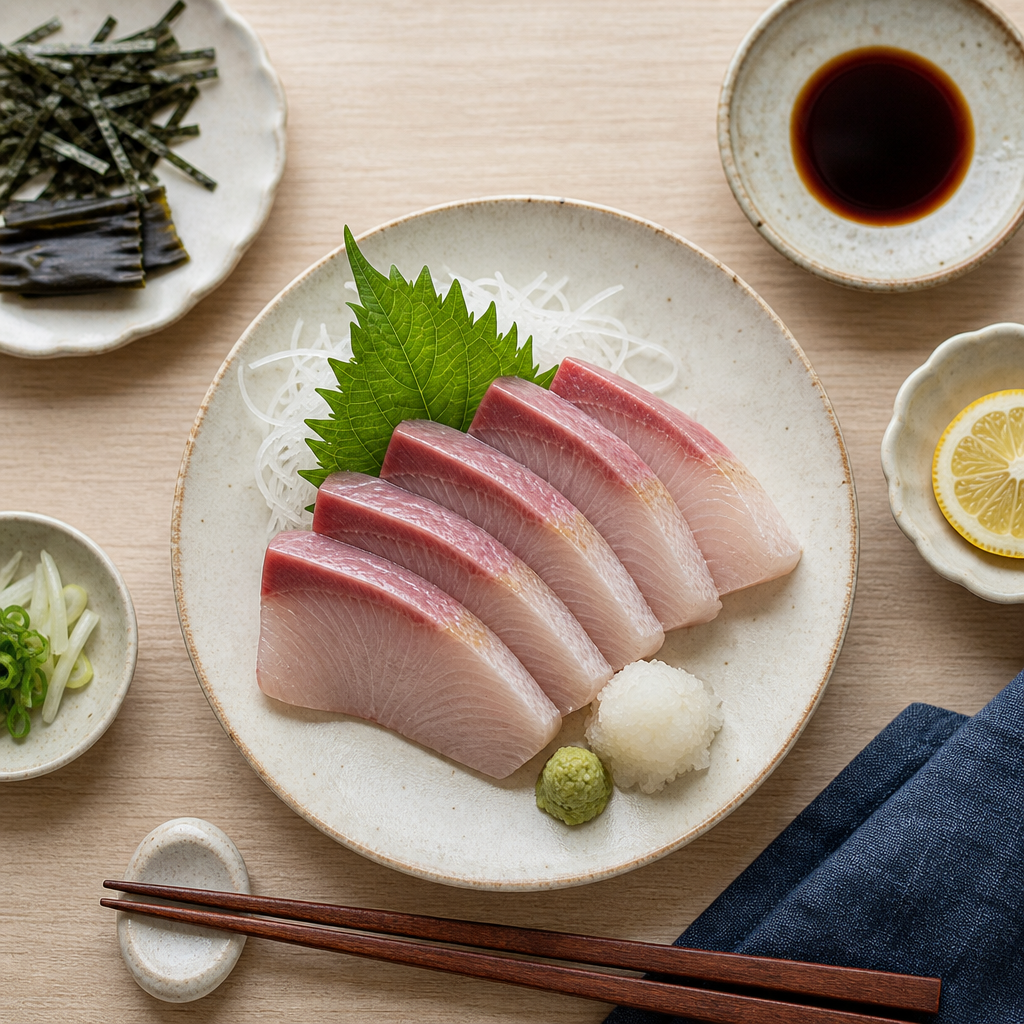
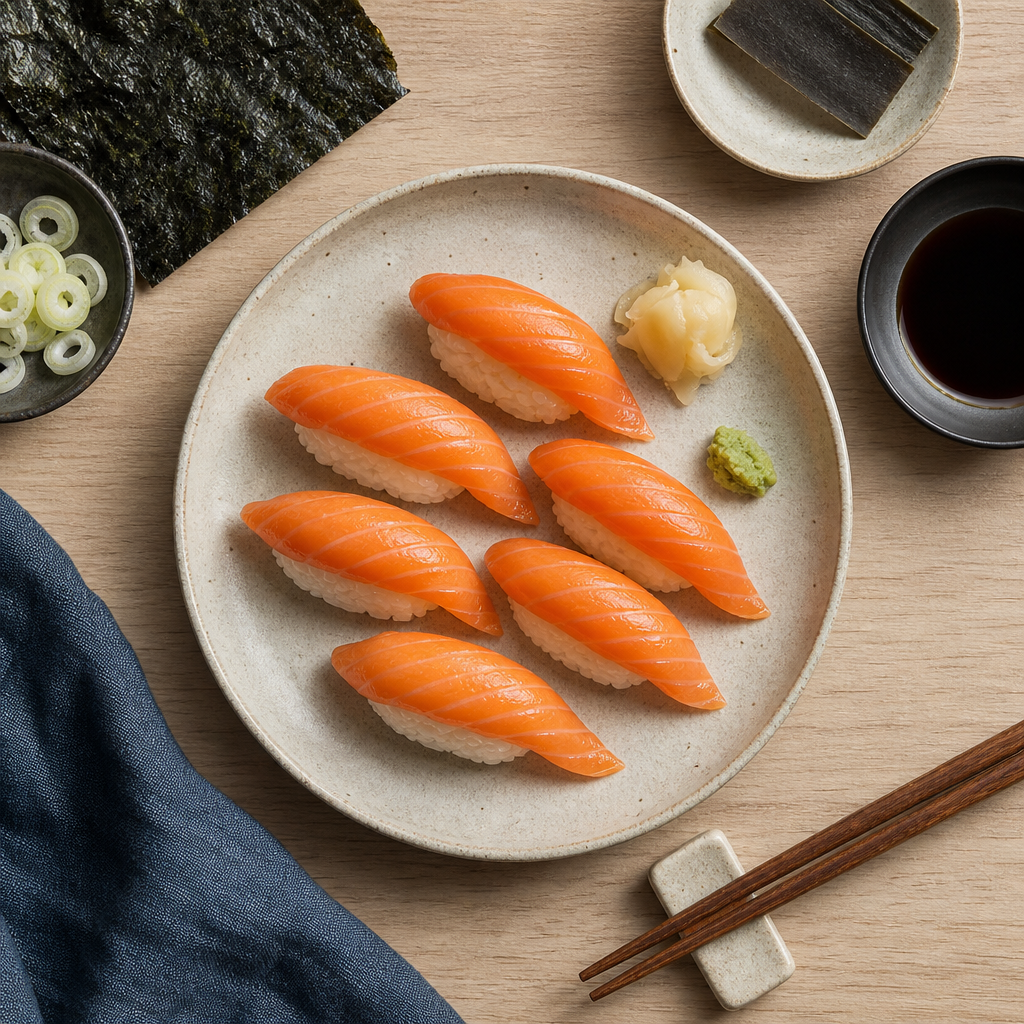
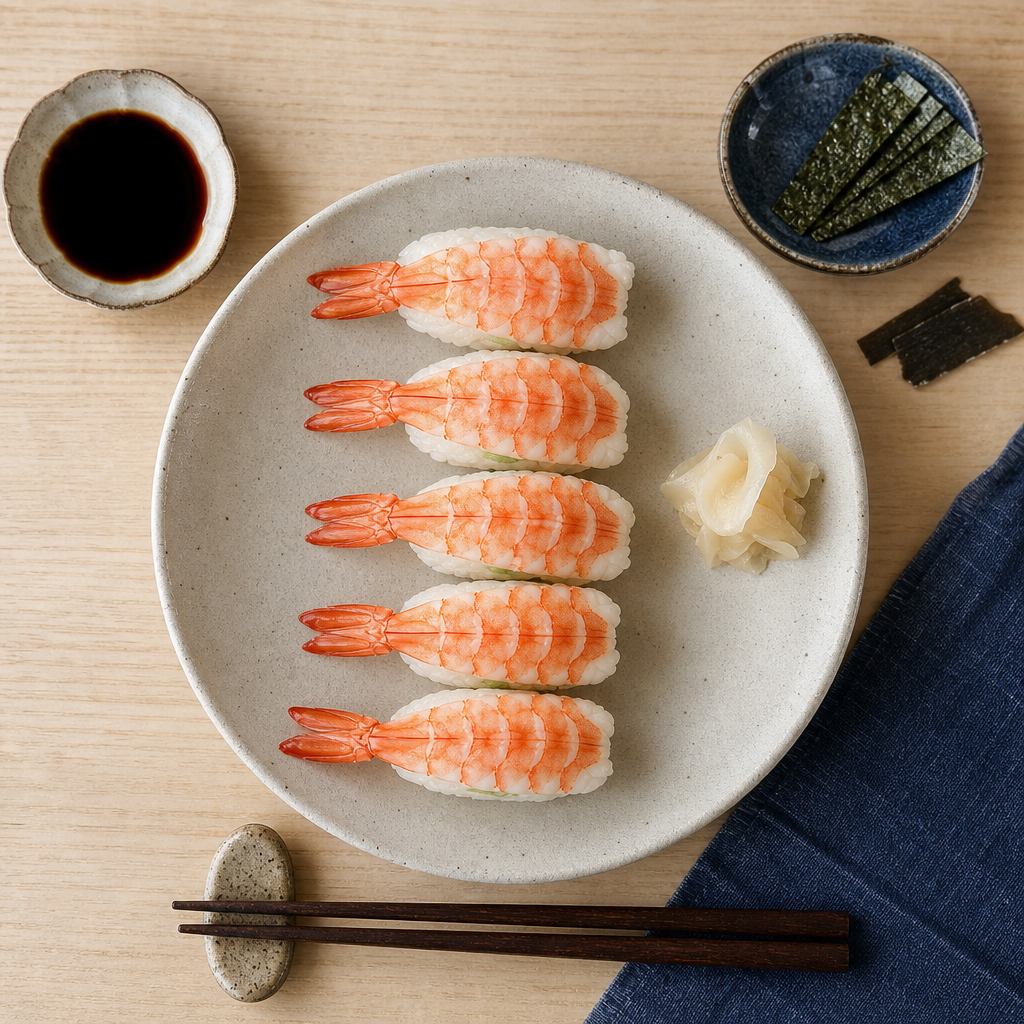
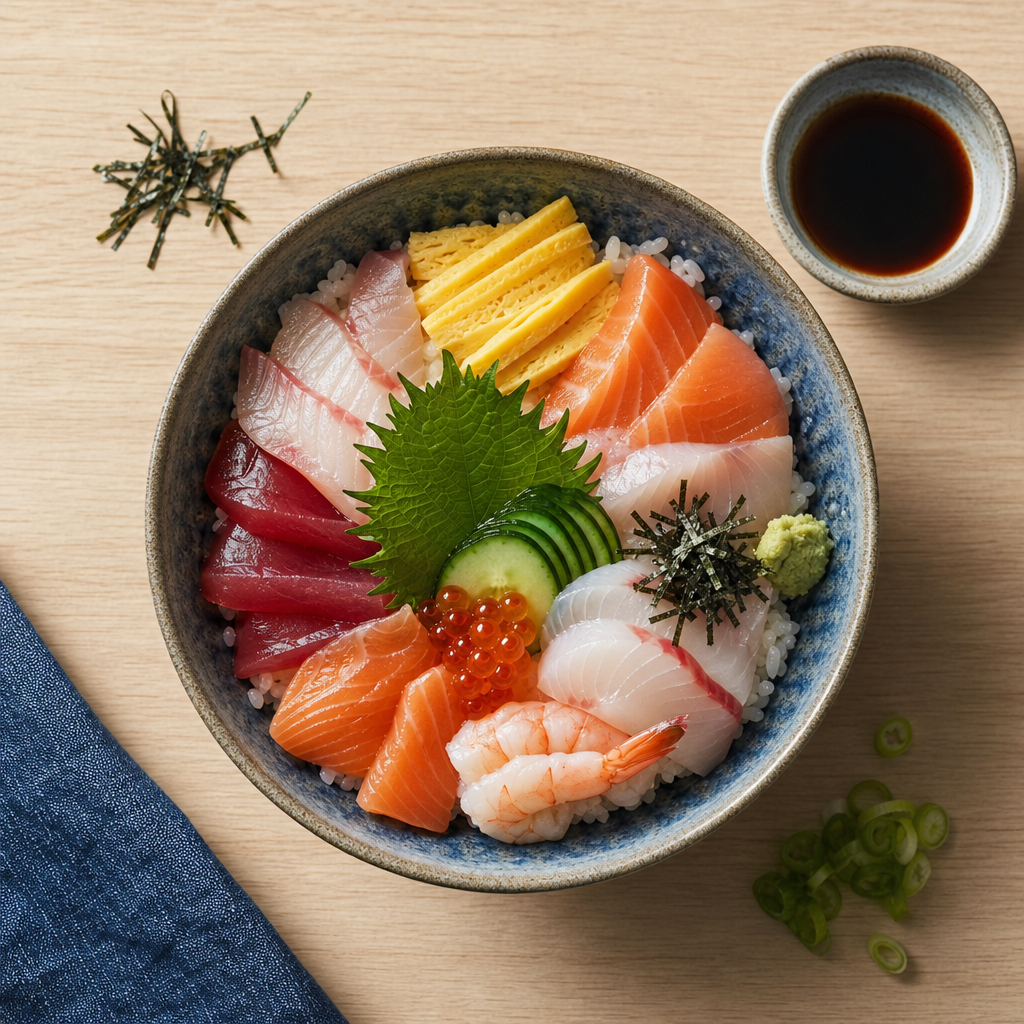
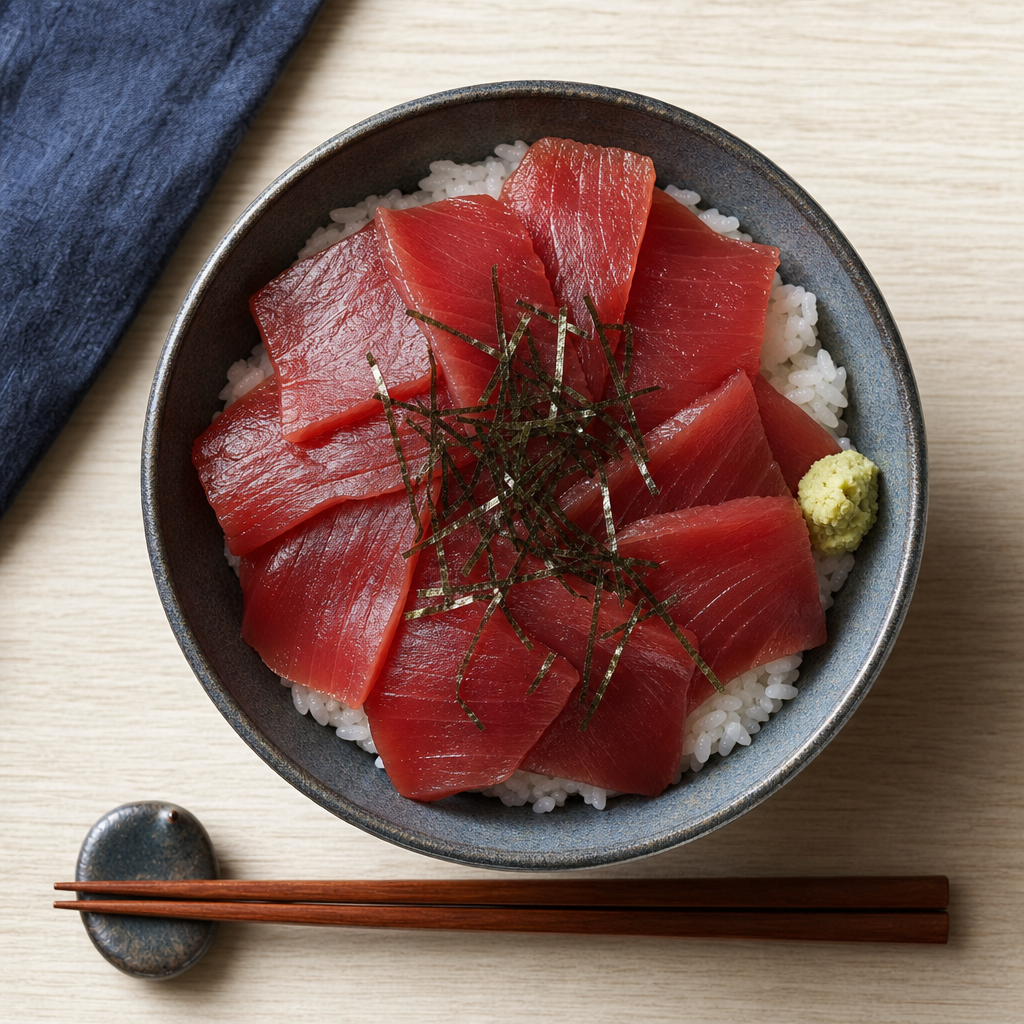
Yellowtail Nigiri
The dish in context
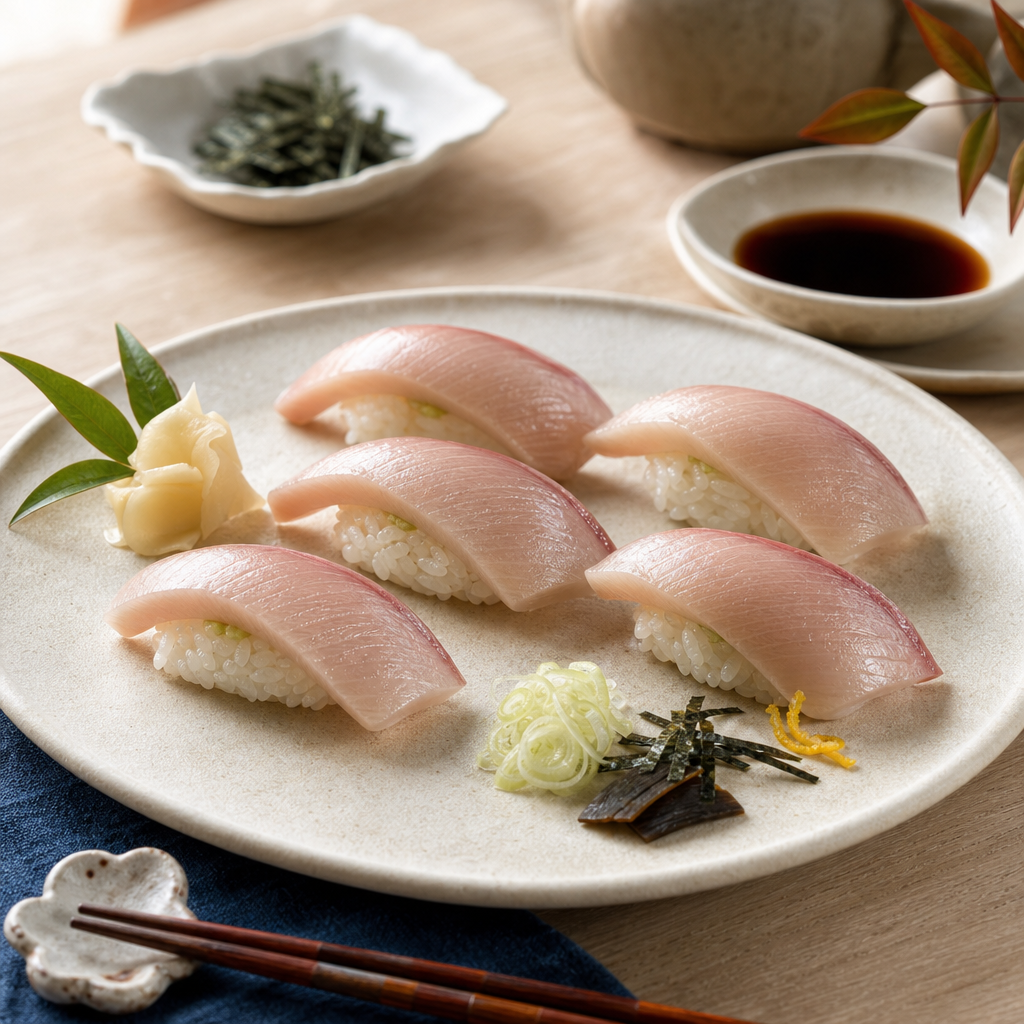
Nigiri sushi developed in Edo, present-day Tokyo, as a hand-formed style built around seasoned rice and a topping that could be served piece by piece. Yellowtail in Japan refers to buri (ブリ), a name used especially for mature Japanese amberjack, while hamachi (ハマチ) commonly indicates younger or farmed fish; menus outside Japan often collapse both into “yellowtail.” Winter buri carries more visible fat and a denser texture, which is why it is prized for sushi and sashimi. This recipe uses the clean modern nigiri structure: body-temperature shari, a small amount of wasabi, and one precise slice of fish.
Method 9 steps · 75 min
Wash and soak the rice
Rinse the rice in several changes of cold water until the water runs nearly clear, then drain for 10 minutes. Add 200 ml cold water and the kombu if using, then soak 30 minutes before cooking.
Cook and rest the rice
Cook the rice in a rice cooker, or bring it to a boil in a covered saucepan, reduce to low, cook 12 minutes, then rest off heat 10 minutes without lifting the lid. Remove and discard the kombu.
Season the shari
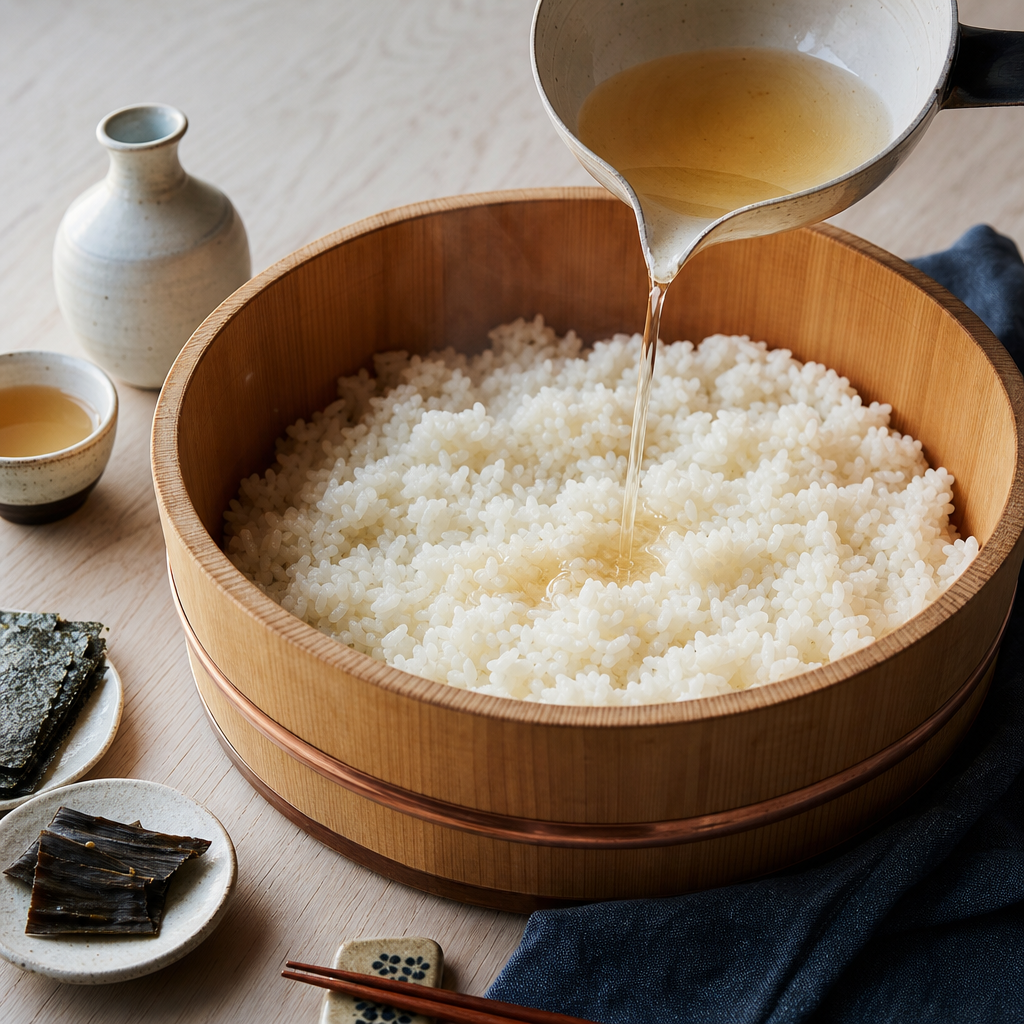
Warm the rice vinegar, sugar, and salt only until dissolved; do not boil hard. Transfer the hot rice to a wide bowl, pour the seasoning over it, and fold with a rice paddle using cutting motions while fanning until glossy and warm to the touch.
Hold the rice correctly
Cover the seasoned rice with a clean damp cloth and keep it at body temperature. Do not refrigerate it.
Slice the yellowtail
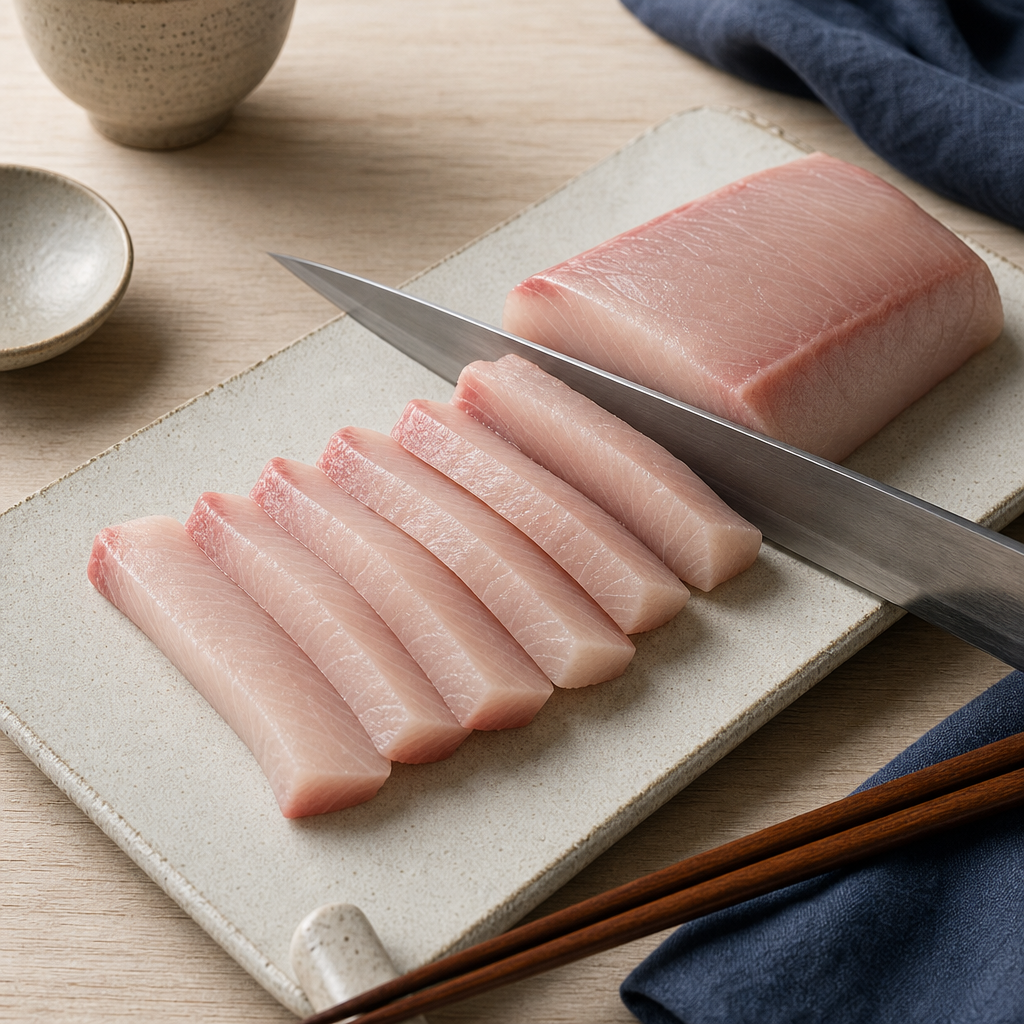
Use a long sharp knife and cut the yellowtail across the grain into 12 slices, each about 14-16 g and 5-6 mm thick. Pull the blade through in one stroke; do not saw.
Set up tezu
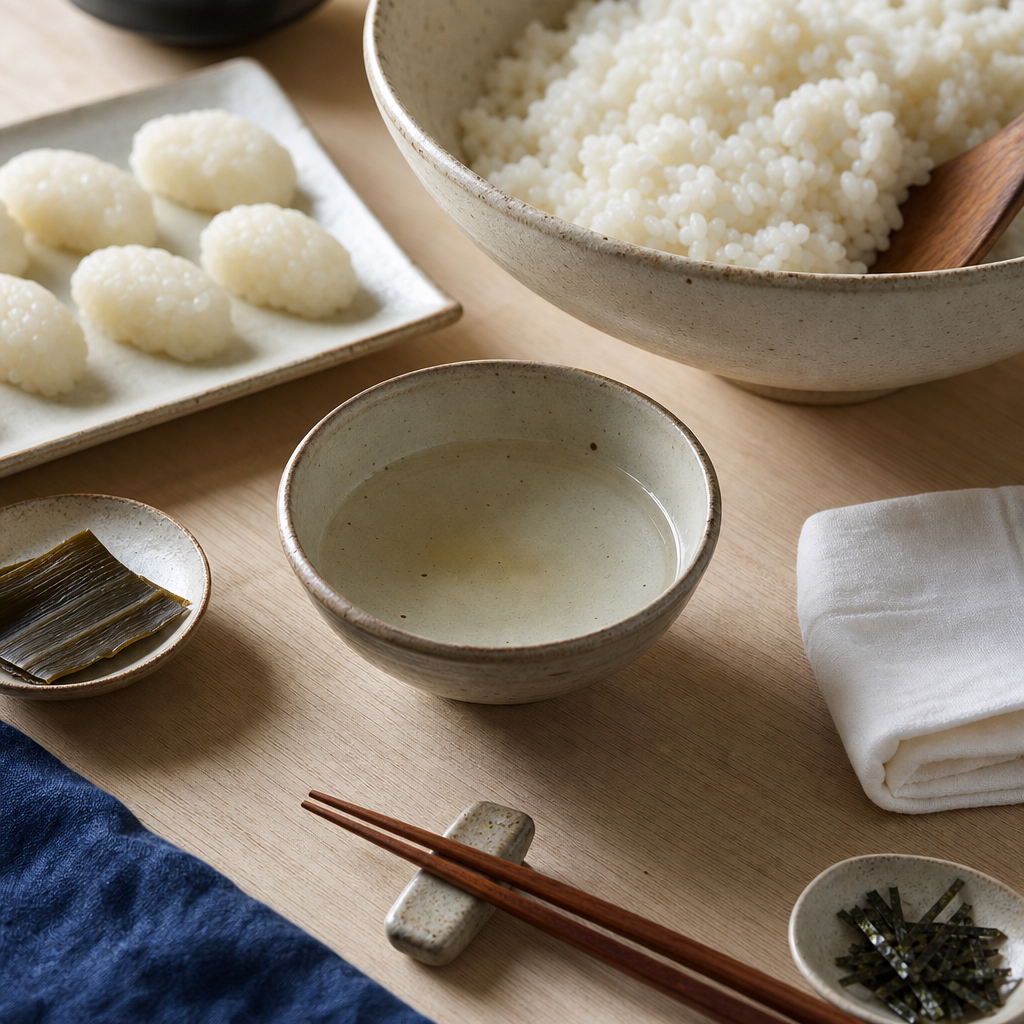
Mix 60 ml water with 15 ml rice vinegar in a small bowl. Dip fingertips lightly and wipe off excess before touching the rice.
Shape each rice base
Pick up 18-20 g warm shari and form it into a short oval with light pressure. The rice should hold together but still show individual grains.
Add wasabi and fish
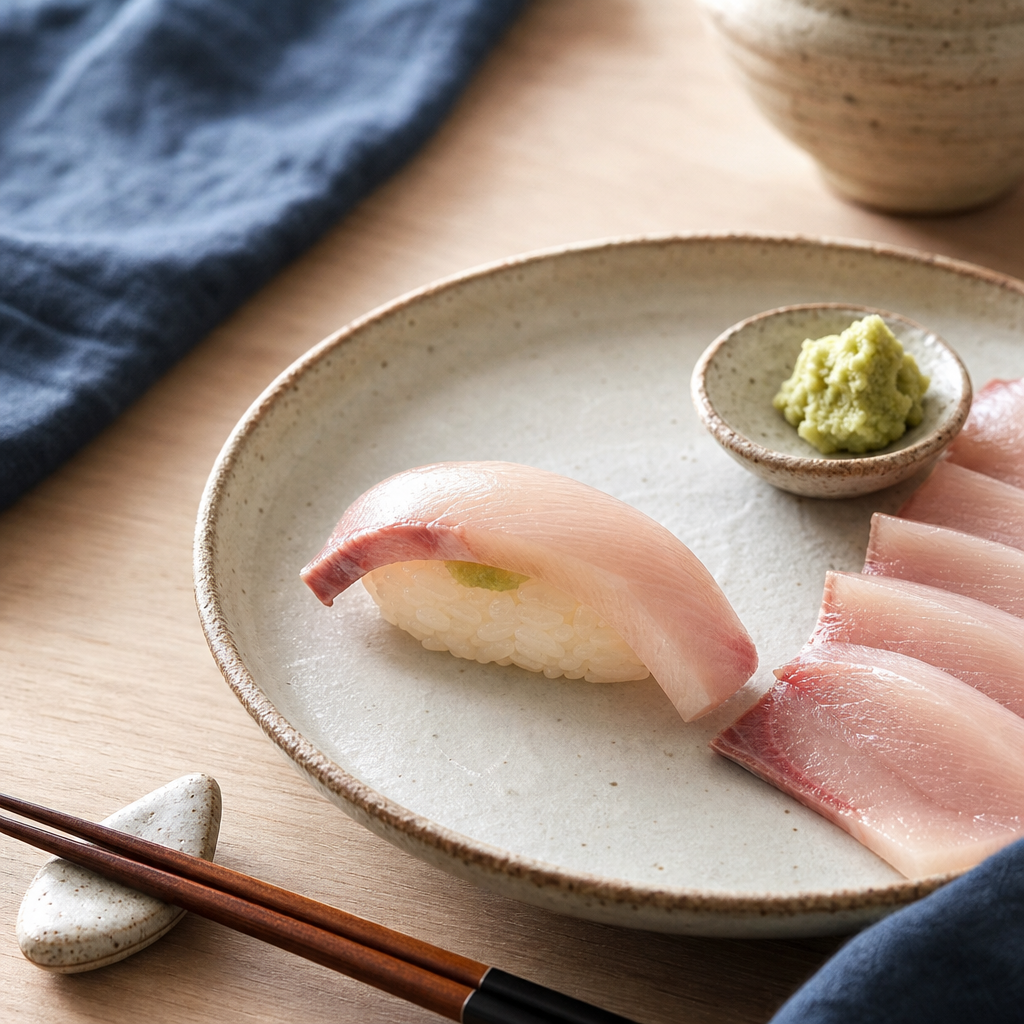
Place one yellowtail slice across the fingers of the non-dominant hand, smear a tiny amount of wasabi in the center, then set the rice oval on top. Press gently so the fish conforms to the rice, turn fish-side up, and square the sides with two light presses.
Serve immediately
Serve the nigiri as soon as it is shaped, with shoyu and gari on the side. Dip fish-side down into soy sauce; the rice side should not soak up soy.
Common mistakes
- {'mistake': 'Using long-grain rice.', 'fix': 'Use Japanese short-grain rice. Long-grain rice stays separate and cannot form proper shari without being crushed.'}
- {'mistake': 'Refrigerating seasoned sushi rice.', 'fix': 'Hold shari covered at body temperature and shape close to serving. Refrigeration turns the grains firm and chalky.'}
- {'mistake': 'Packing the rice too tightly.', 'fix': 'Use light pressure. A finished piece should hold together when lifted but break apart cleanly in the mouth.'}
- {'mistake': 'Cutting yellowtail with a sawing motion.', 'fix': 'Use one long draw of a sharp knife. Torn fish loses its glossy surface and feels fibrous.'}
- {'mistake': 'Dipping the rice side into soy sauce.', 'fix': 'Turn the nigiri and touch only the fish side to soy. Rice drinks soy too fast and destroys the balance.'}
- {'mistake': 'Buying ordinary raw fish and treating it as sushi fish.', 'fix': 'Use fish sold specifically for raw consumption by a trusted supplier, preferably farmed yellowtail or properly frozen wild fish.'}
What does not belong
- {'item': 'Long-grain rice', 'reason': 'It does not have the starch structure for nigiri. The grains separate until they are crushed, and crushed rice is not shari.'}
- {'item': 'Teriyaki sauce', 'reason': 'Sweet glaze buries the fat and clean marine character of yellowtail. It belongs to a different preparation.'}
- {'item': 'Mayonnaise or spicy mayo', 'reason': 'Nigiri is built on fish, rice, and restraint. Mayo turns it into an international roll flavor profile, not buri nigiri.'}
- {'item': 'Sesame oil', 'reason': 'Sesame oil is too aromatic for this application and makes the fish read like poke, not sushi.'}
- {'item': 'Cream cheese', 'reason': 'Cream cheese does not belong in traditional nigiri and dulls both the rice seasoning and fish texture.'}
- {'item': 'Wasabi stirred into soy sauce', 'reason': 'For nigiri, wasabi sits between fish and rice. Mixing it into soy makes a harsh paste and over-seasons every piece the same way.'}