Chirashi Don
The dish in context
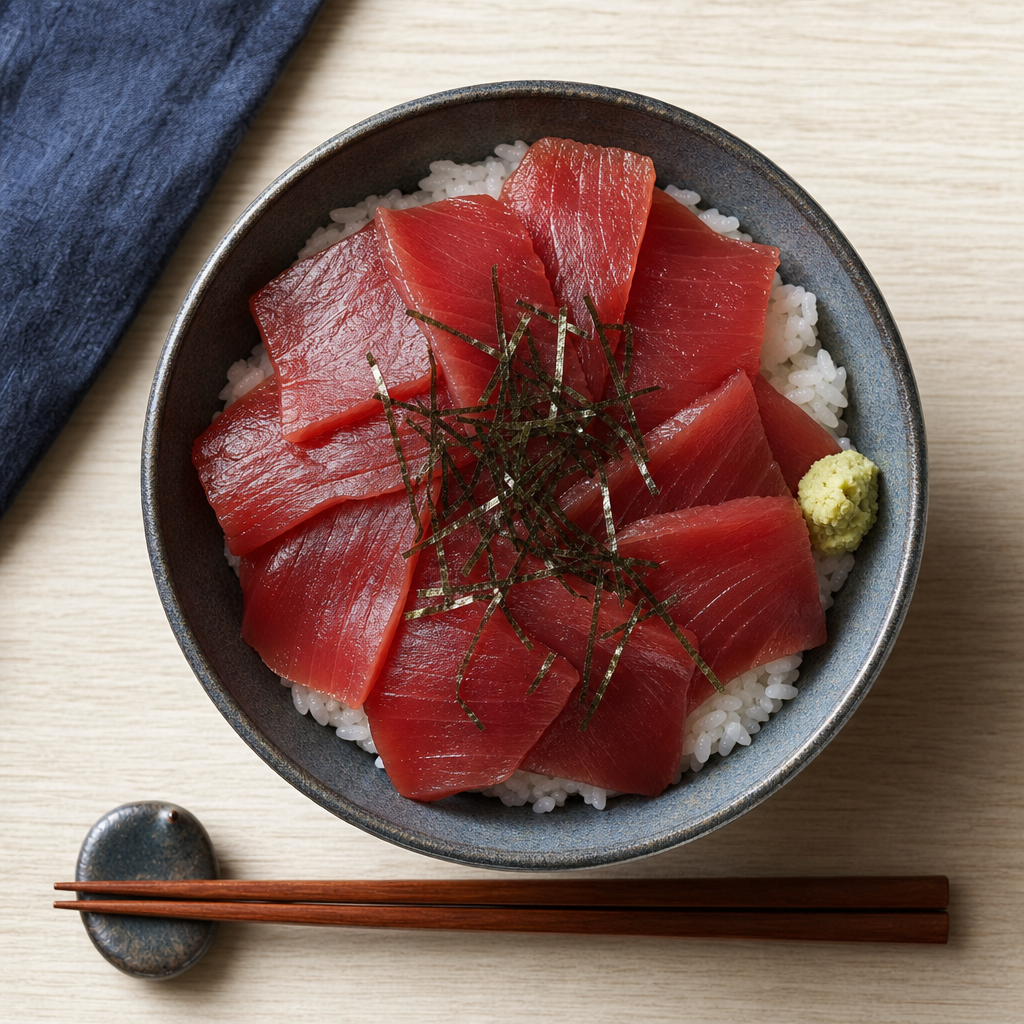
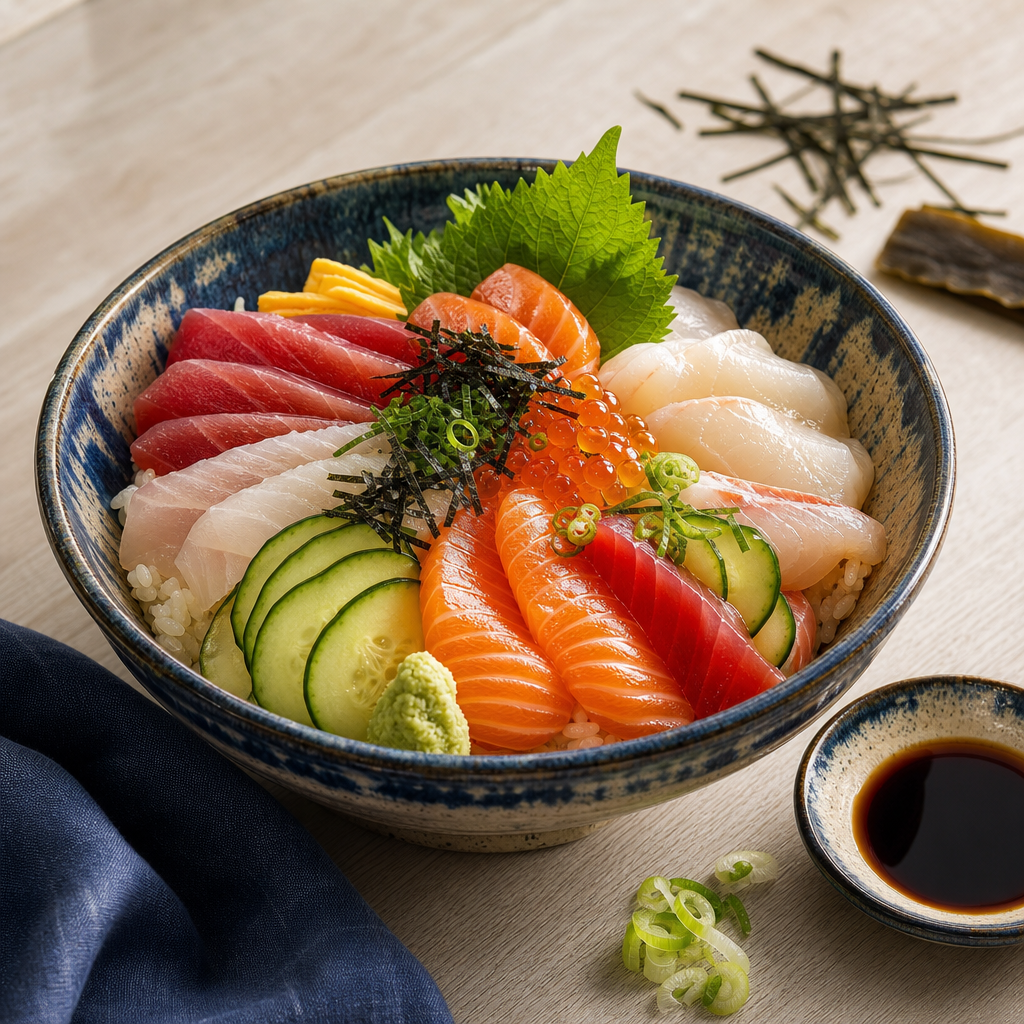
Chirashi means “scattered,” and in sushi usage it refers to toppings distributed over seasoned rice rather than formed into nigiri or rolled maki. Kanto-style chirashi-zushi often places raw fish and garnishes decoratively over sushi rice; Kansai-style gomoku chirashi more often mixes cooked vegetables and other ingredients through the rice. Chirashi don sits in the practical donburi lane: a bowl meal built from sushi rice and sashimi-market toppings. Restaurant versions can be precise and expensive; home versions are more flexible, but the rice still has to be treated as sushi rice, not plain hot rice with fish on top.
Method 7 steps · 60 min
Wash and soak the rice
Wash the short-grain rice in 3-5 changes of cold water, rubbing lightly, until the water runs nearly clear. Drain well, then soak with the measured cooking water for 30 minutes.
Cook and rest
Cook the rice with the kombu, if using, in a rice cooker or covered saucepan. When the cooking cycle finishes, remove the kombu and rest the rice, covered, for 10 minutes.
Make the sushi vinegar
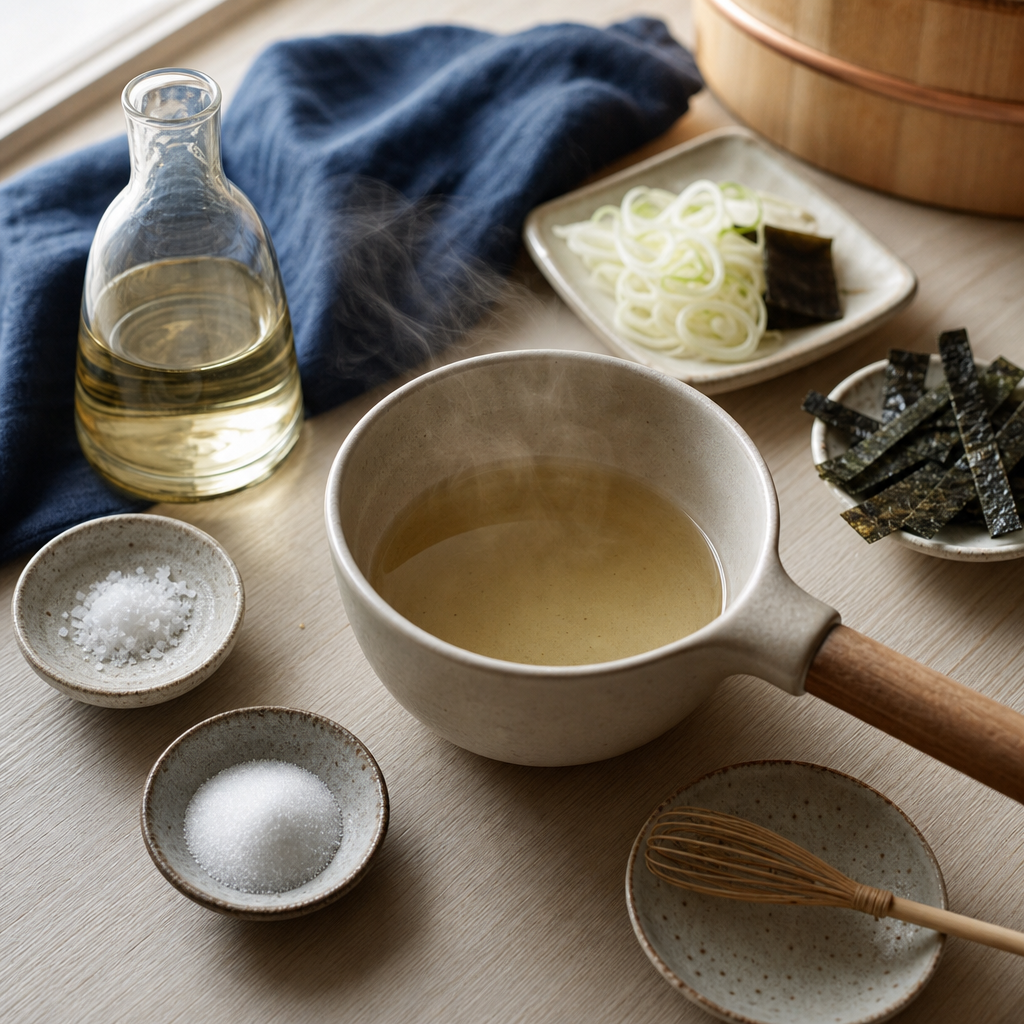
Warm the rice vinegar, sugar, and salt in a small pan or microwave until the sugar dissolves. Do not boil it hard; the vinegar should smell clean, not harsh.
Season and cool the rice
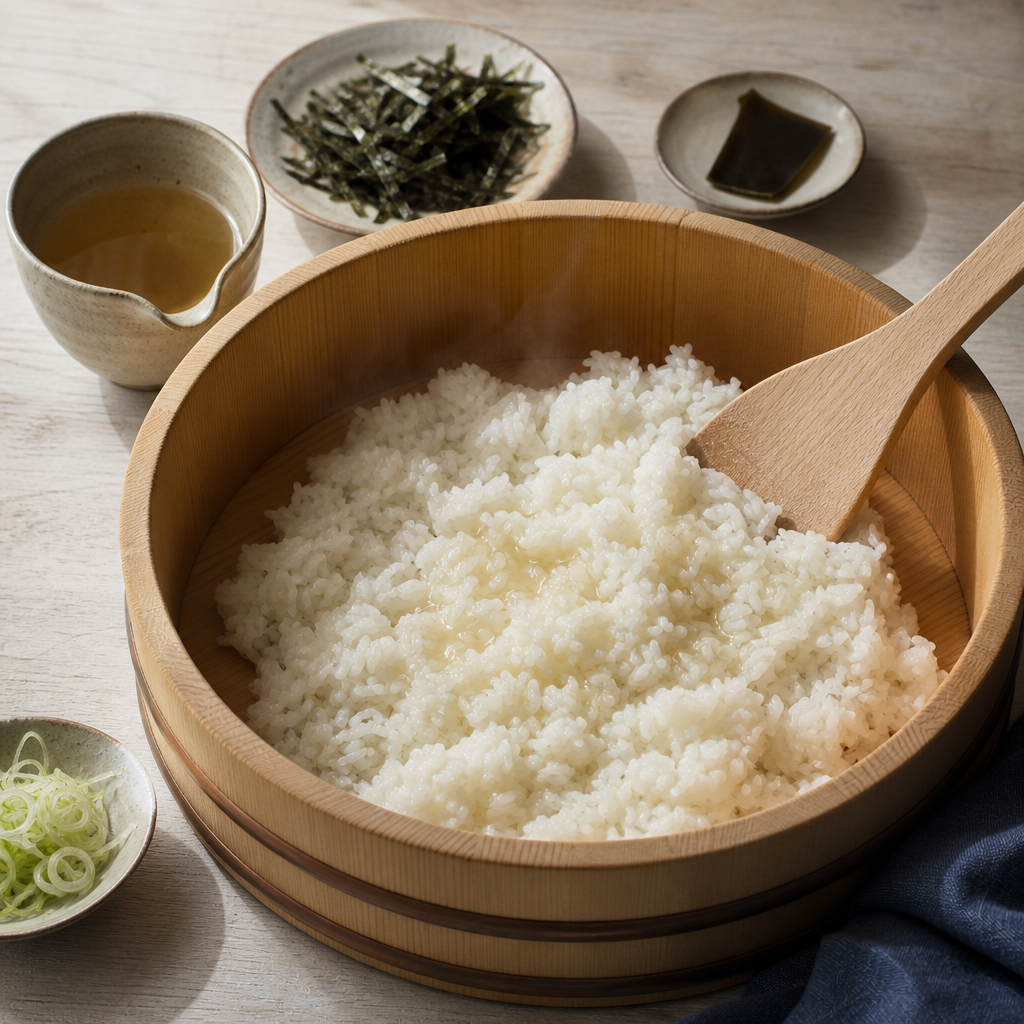
Transfer the hot rice to a wide bowl or hangiri. Sprinkle the sushi vinegar over it and fold with a rice paddle using slicing motions while fanning until the rice turns glossy and cools to body temperature.
Cut the toppings
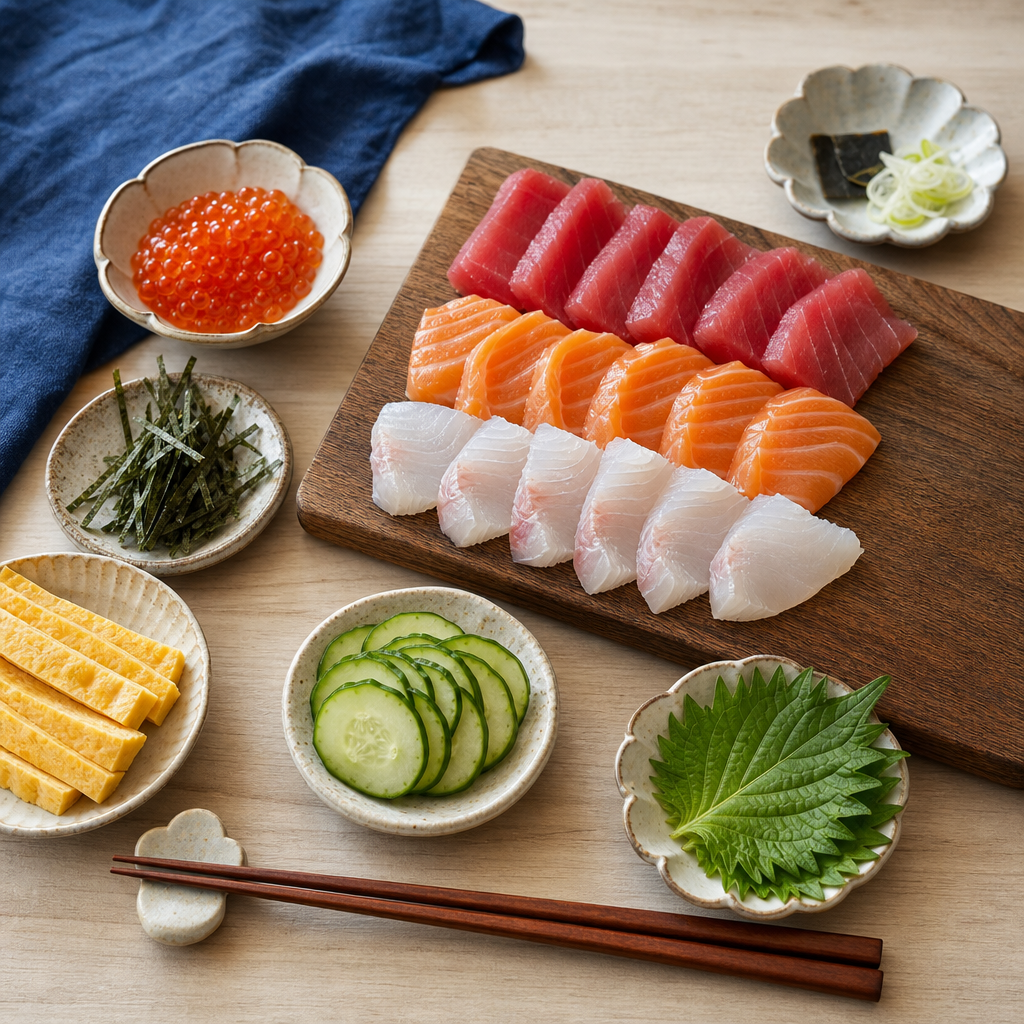
Slice sashimi with one long pull of a sharp knife into 6-8 mm pieces. Cut tamagoyaki, cucumber, shiso, and nori so each topping can be picked up with chopsticks without tearing.
Build the bowls
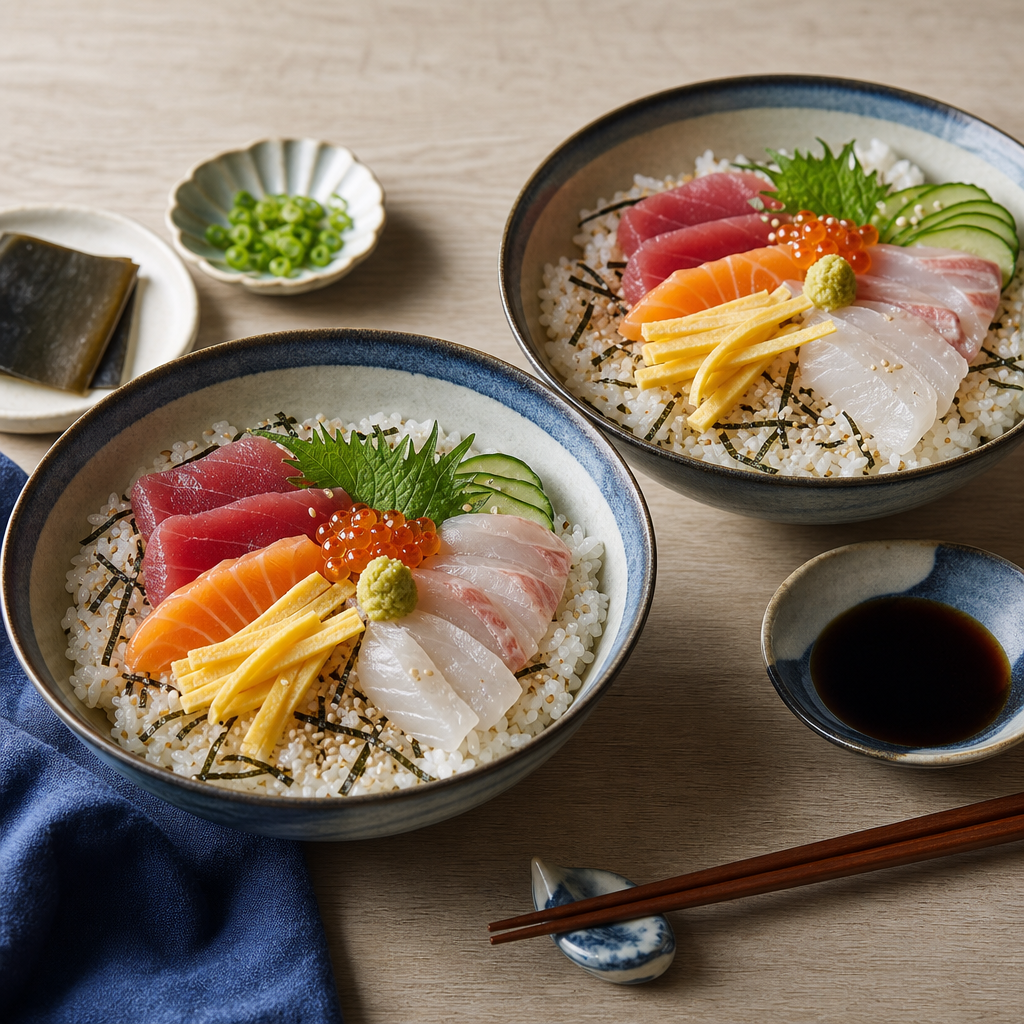
Divide the sushi rice between bowls and level it without packing. Scatter nori and sesame over the rice, then arrange fish, shrimp, tamagoyaki, cucumber, shiso, and roe in separate small zones.
Serve with soy on the side
Serve immediately with wasabi, gari, and a small dish of shoyu. Dip pieces of fish into soy sauce as needed; do not pour soy sauce over the rice.
Common mistakes
- {'mistake': 'Using plain hot rice.', 'fix': 'Use sushi rice: warm short-grain rice folded with rice vinegar, sugar, and salt. Plain rice makes a seafood donburi, not chirashi in the sushi sense.'}
- {'mistake': 'Refrigerating the finished rice until cold.', 'fix': 'Hold sushi rice covered at room temperature and use it the same day. Cold rice hardens because the starch retrogrades.'}
- {'mistake': 'Buying fish by appearance alone.', 'fix': 'Use fish sold for raw consumption by a reliable fishmonger. Anisakis and other parasite risks are not solved by a bright color and no smell.'}
- {'mistake': 'Pouring soy sauce over the whole bowl.', 'fix': 'Dip fish separately or touch a little soy to the topping. Flooding the rice makes it wet, salty, and difficult to pick up.'}
- {'mistake': 'Cutting sashimi with a serrated or dull knife.', 'fix': 'Use a sharp knife and one pull per slice. Ragged fish reads as careless and feels mushy.'}
What does not belong
- {'item': 'Long-grain rice or basmati', 'reason': 'Long-grain rice does not belong in sushi rice. It lacks the cling and rounded texture needed for shari.'}
- {'item': 'Sweet bottled teriyaki sauce', 'reason': 'Teriyaki sauce turns chirashi into a sweet rice bowl and covers the fish. Shoyu belongs on the side.'}
- {'item': 'Mayonnaise drizzle', 'reason': 'Mayonnaise is for certain modern sushi-roll styles, not a standard chirashi don. It smears the clean acid-salt balance of the rice and fish.'}
- {'item': 'Marinated poke-style fish cubes', 'reason': 'Poke is a different dish. Chirashi uses clean-cut toppings over seasoned rice, not soy-sesame-marinated cubes mixed as a salad.'}
- {'item': 'Mint, cilantro, or basil', 'reason': 'These herbs do not belong here. Shiso is the Japanese aromatic; if it is unavailable, omit it.'}
- {'item': 'Warm raw fish', 'reason': 'Raw fish should stay cold until assembly. Warm fish turns slack and increases food-safety risk.'}