Inari Sushi
The dish in context
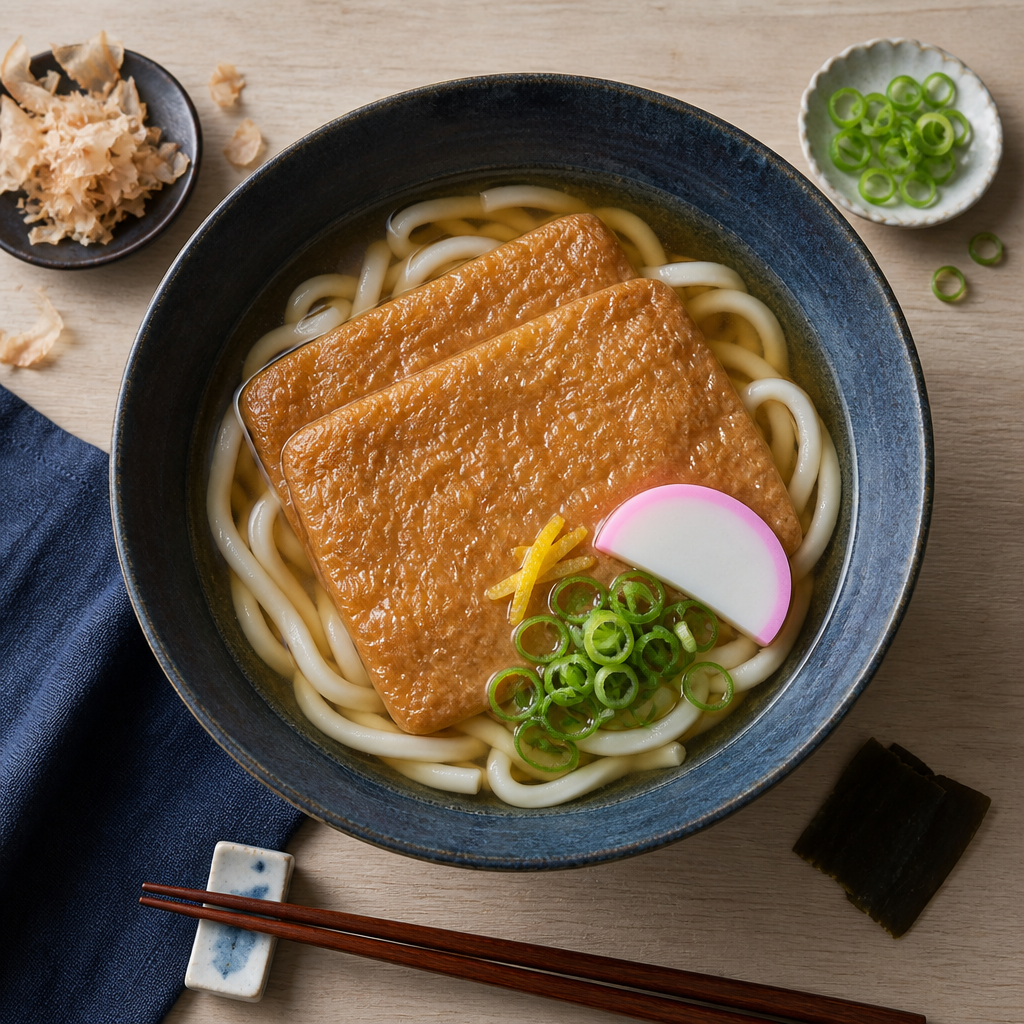
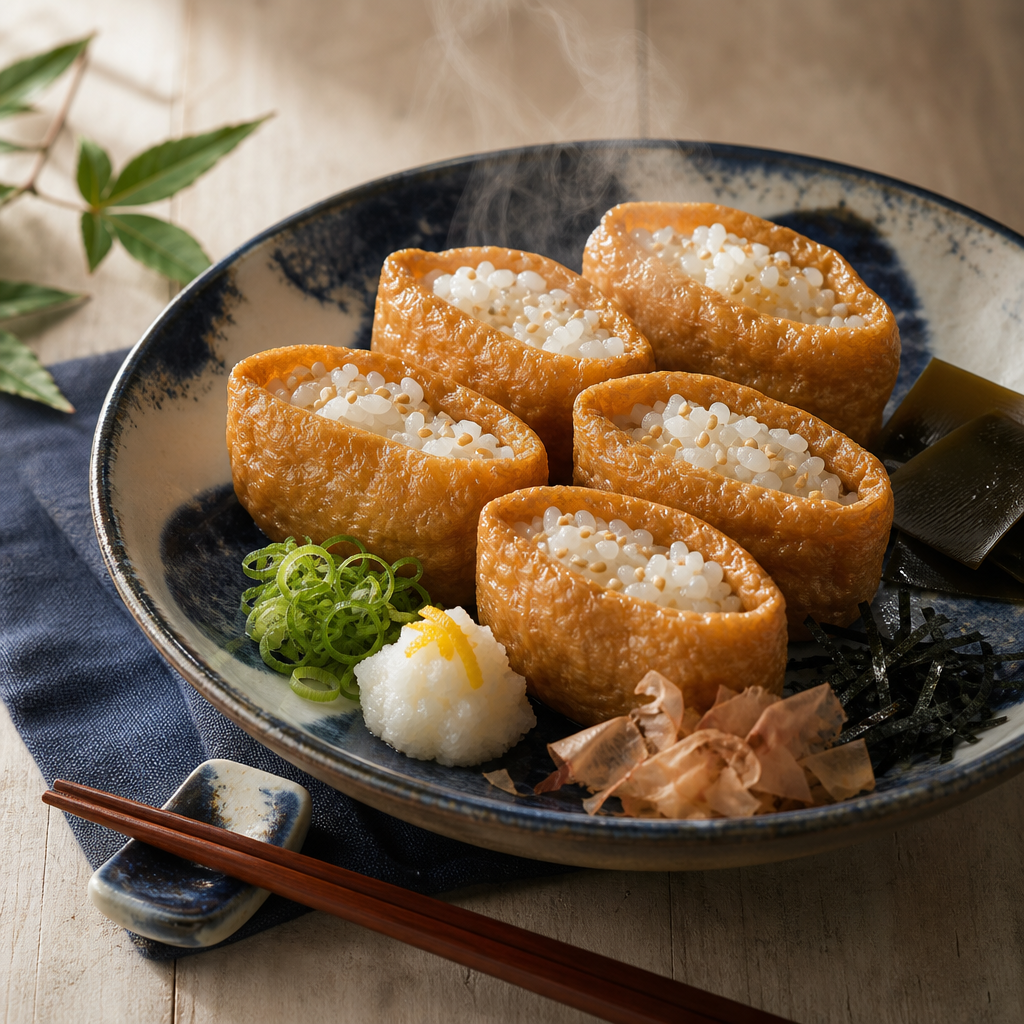
Inari sushi is made by filling sweet-salty simmered aburaage (油揚げ, fried tofu skin) with sushi rice. Tsuji Culinary Institute describes it as a familiar Japanese rice dish tied to Inari shrines, where fried tofu became associated with foxes, the messengers of the grain deity Inari. The form varies by region: triangular pieces are common in western Japan and are often read as fox ears, while rectangular or barrel-shaped pieces are more common in eastern Japan and evoke rice bales. The pairing of inari sushi with makizushi is called Sukeroku-zushi (助六寿司), a wordplay from kabuki linking “age” fried tofu and “maki” rolls.
Method 11 steps · 75 min
Wash and soak the rice
Wash the short-grain rice in 3-5 changes of cold water until the water runs nearly clear. Drain well, add 400 ml water, and soak 30 minutes before cooking.
Cook and rest the rice
Cook the soaked rice in a rice cooker or covered pot. Rest 10 minutes with the lid closed before opening.
Open the aburaage
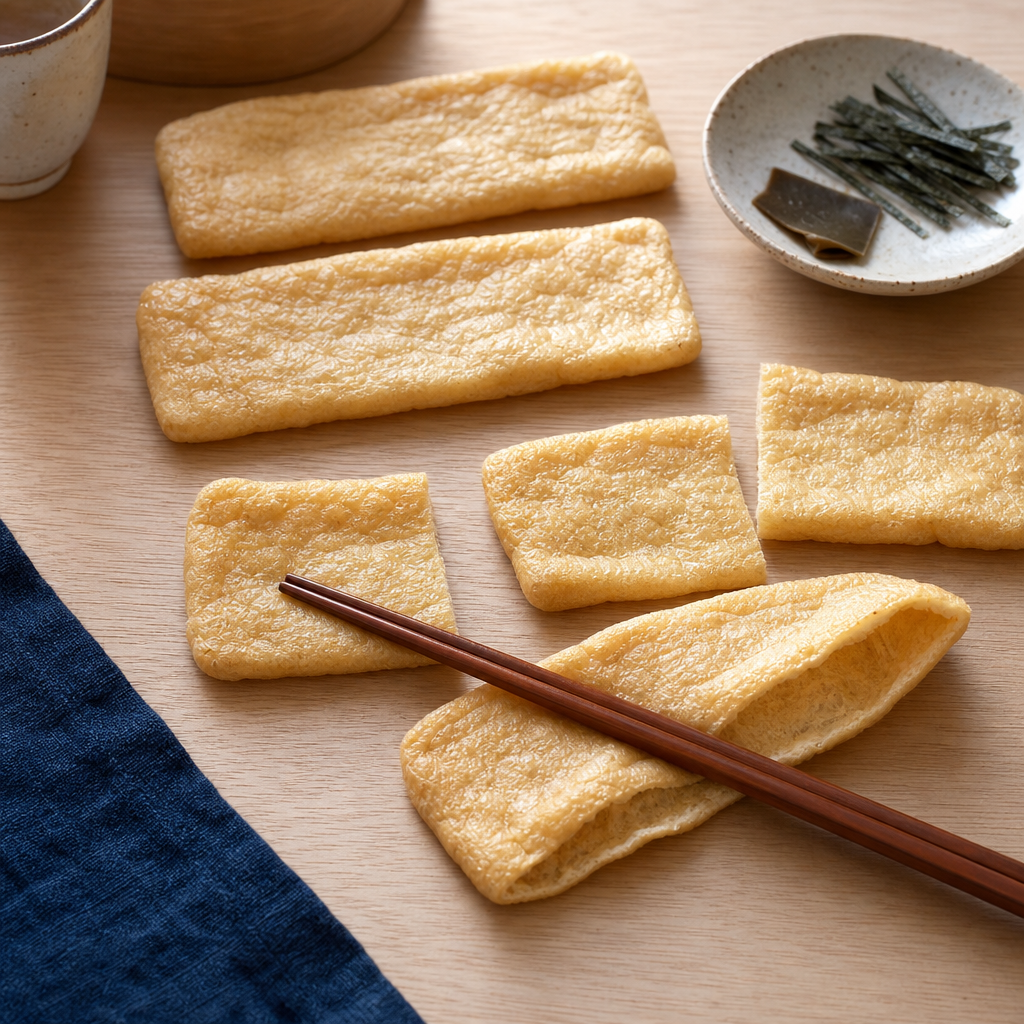
Lay each aburaage sheet flat and roll a chopstick or small rolling pin over it with moderate pressure. Cut each sheet crosswise in half, then open each half into a pouch without forcing the corners.
Oil-blanch the tofu skins
Boil the aburaage pockets for 2 minutes, pressing them below the surface. Drain, rinse briefly under warm water, then press between palms or a tray and board to remove excess water without crushing them flat.
Simmer the pouches
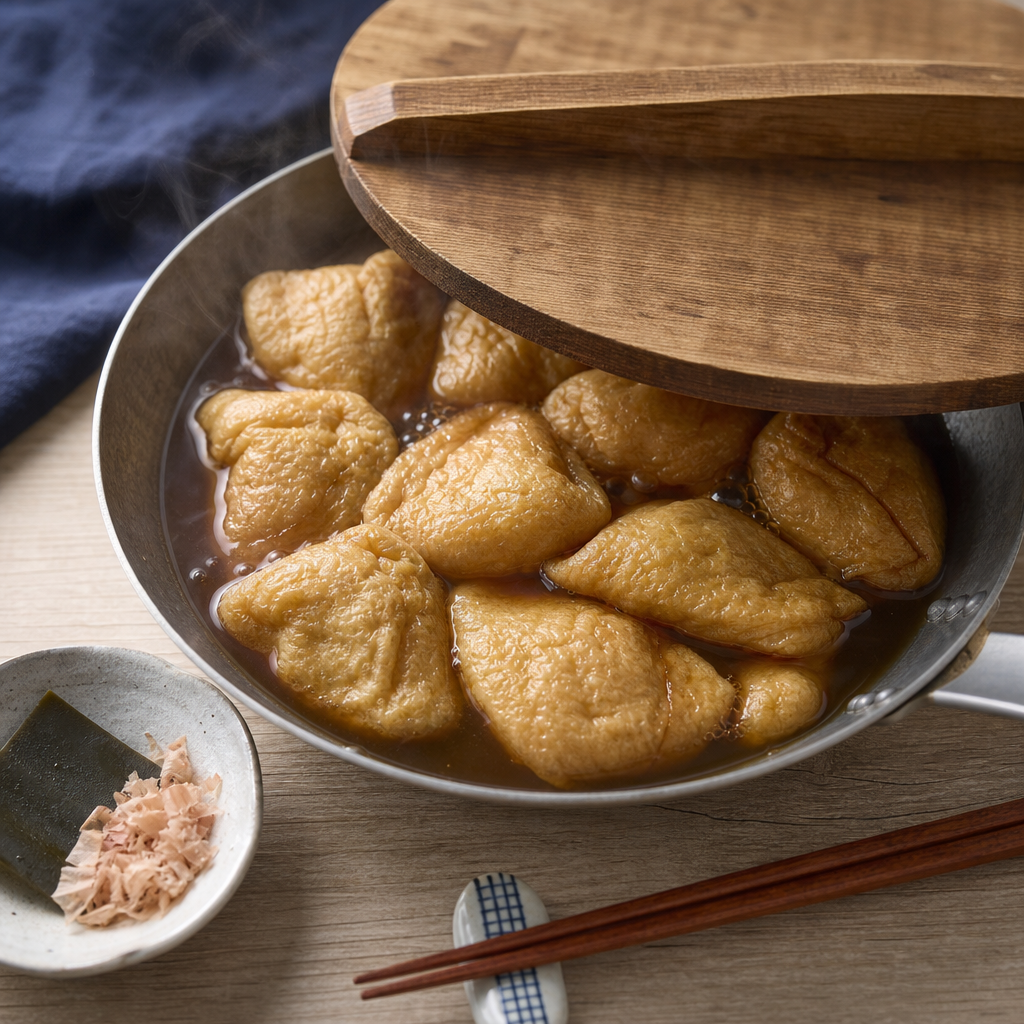
Combine dashi, shoyu, mirin, sugar, and sake in a wide pan and bring to a simmer. Add the aburaage in a single layer, cover with a drop lid or parchment circle, and simmer gently until the liquid is mostly absorbed, 12-15 minutes. Turn once with chopsticks or tongs.
Cool in the seasoning liquid
Remove the pan from heat and let the pouches cool in the remaining liquid for at least 20 minutes. Press each pouch lightly before filling; it should be moist, not dripping.
Make sushi vinegar
Stir rice vinegar, sugar, and salt until dissolved. Warm the mixture briefly if needed, but do not reduce it.
Season the rice
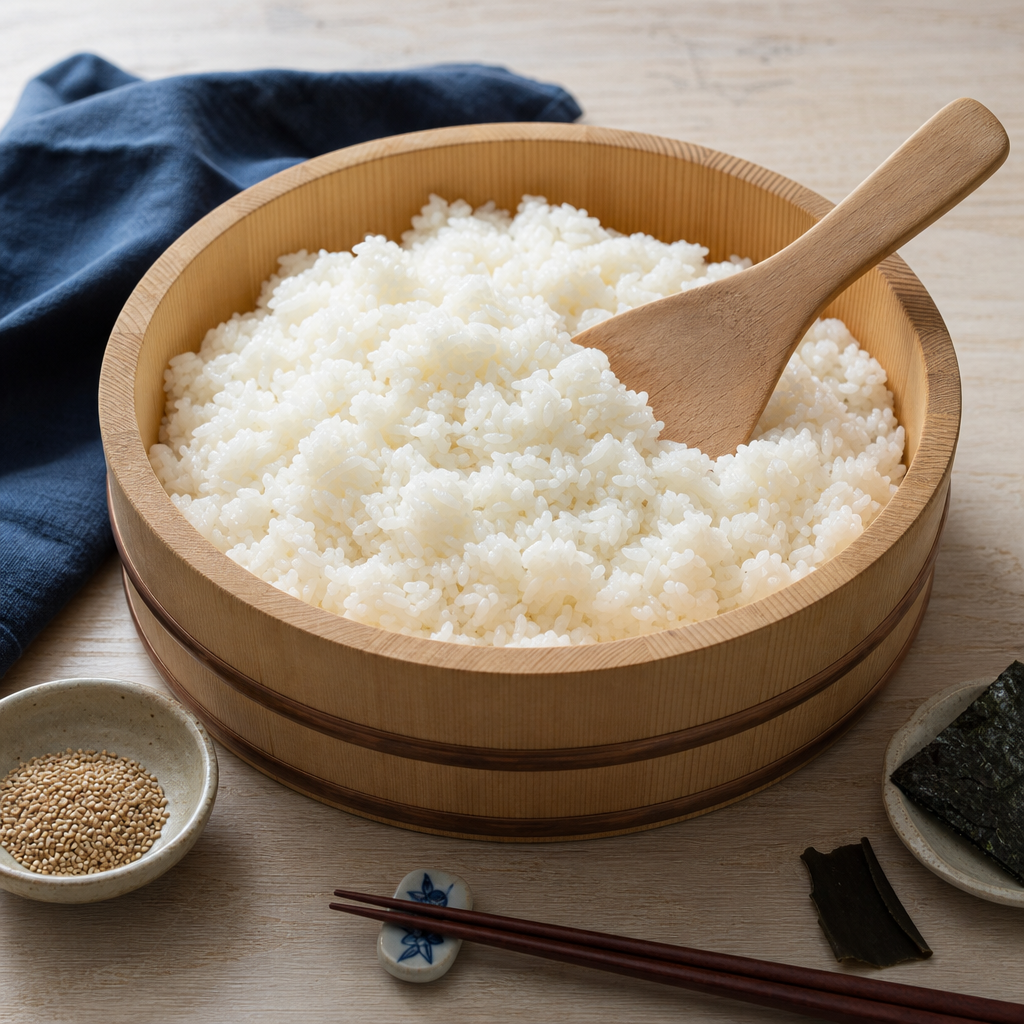
Turn the hot rice into a wide bowl or hangiri. Sprinkle the sushi vinegar over the rice and fold with a rice paddle using slicing motions while fanning until the grains look glossy and the steam drops.
Add sesame and portion the filling
Fold in toasted sesame if using. Divide the rice into 12 loose portions, about 45-50 g each, and shape each into a small oval with damp hands.
Fill the inari
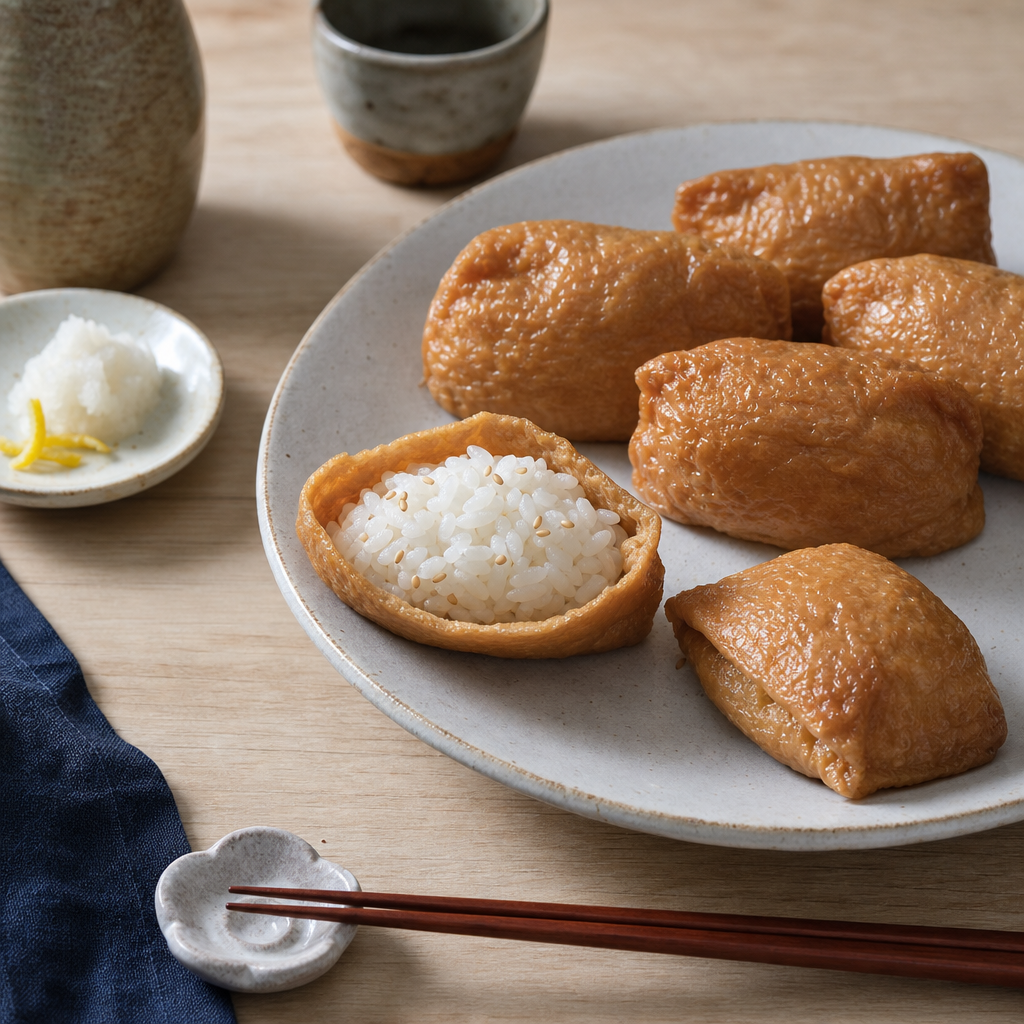
Open one pouch, tuck in one rice oval, and press the rice gently into the corners. Fold the cut edges over the rice and place seam-side down, or leave the top open if serving with visible rice.
Rest before serving
Let the finished inari sushi sit 10-15 minutes at room temperature before serving with gari if used. Do not refrigerate unless holding for food safety; cold sushi rice hardens fast.
Common mistakes
- {'mistake': 'Using long-grain rice', 'fix': 'Use Japanese short-grain rice. Long-grain rice stays separate and dry; it does not form the compact, glossy filling needed for inari sushi.'}
- {'mistake': 'Skipping the oil-blanch', 'fix': 'Boil the aburaage before simmering. Surface oil blocks seasoning and leaves a slick finish.'}
- {'mistake': 'Boiling the aburaage hard', 'fix': 'Keep the simmer gentle and use a drop lid. Violent bubbling tears the pockets and toughens the edges.'}
- {'mistake': 'Stuffing cold rice', 'fix': 'Shape the sushi rice while it is slightly warm, around body temperature. Cold rice clumps and cracks the pouch.'}
- {'mistake': 'Overfilling the pouch', 'fix': 'Use 45-50 g rice per standard half-sheet pouch. Inari should be plump, not bulging.'}
- {'mistake': 'Serving straight from the refrigerator', 'fix': 'Bring the pieces back toward room temperature. Cold sushi rice turns hard and loses its vinegar aroma.'}
What does not belong
- {'item': 'Long-grain rice or basmati', 'reason': 'It does not belong in sushi rice. The grain shape and starch profile are wrong for shari.'}
- {'item': 'Mayonnaise', 'reason': 'Mayonnaise turns inari into a different modern salad-stuffed pouch. It is not part of the standard rice-and-aburaage structure.'}
- {'item': 'Cream cheese', 'reason': 'Cream cheese does not belong in inari sushi. It dulls the vinegar and fights the sweet soy tofu skin.'}
- {'item': 'Raw fish inside the pouch', 'reason': 'Inari sushi is built around seasoned aburaage and sushi rice. Raw fish belongs to other sushi forms, not this one.'}
- {'item': 'Teriyaki sauce', 'reason': 'Commercial teriyaki sauce is too thick and sweet for simmering aburaage. Use dashi, shoyu, mirin, and sugar.'}
- {'item': 'Chinese dark soy sauce as a 1:1 swap', 'reason': 'It is darker, heavier, and often sweeter than Japanese koikuchi shoyu. The pouches turn muddy before they are properly seasoned.'}
Adaptations
Use kombu-shiitake dashi instead of bonito-based dashi. Check aburaage labels; some packaged seasoned inari-age contains fish extract.
Omit sake or replace with extra dashi. Replace hon mirin with halal mirin-style seasoning, or use extra dashi plus a small amount of sugar to maintain sweetness. Confirm soy sauce and vinegar production if strict certification is required.
Use gluten-free tamari instead of shoyu and verify aburaage labels. Many fried tofu products contain wheat or are processed with wheat-containing soy sauce.
Traditional inari sushi contains no dairy. Dairy additions do not belong.
The base recipe contains no shellfish. Check prepared dashi powder labels for mixed seafood extracts.