Salmon Avocado Roll
The dish in context
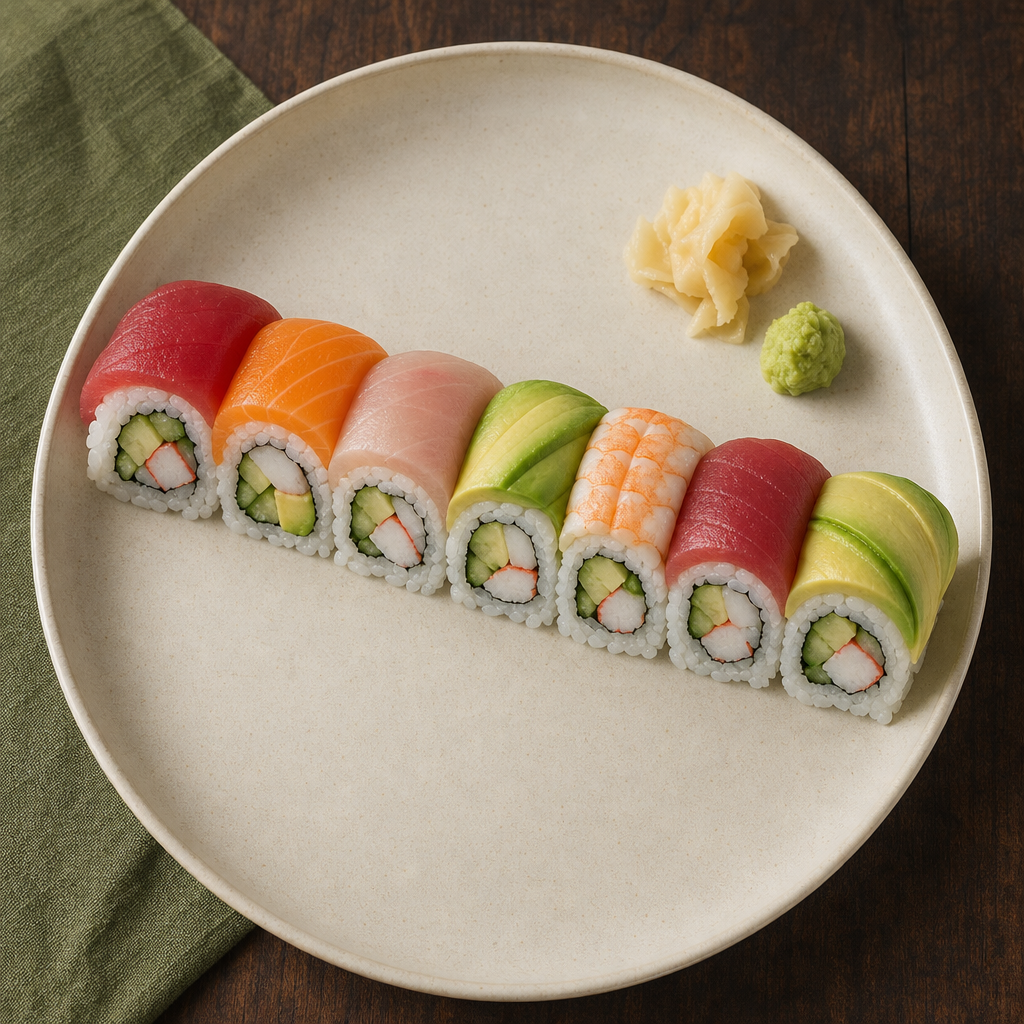
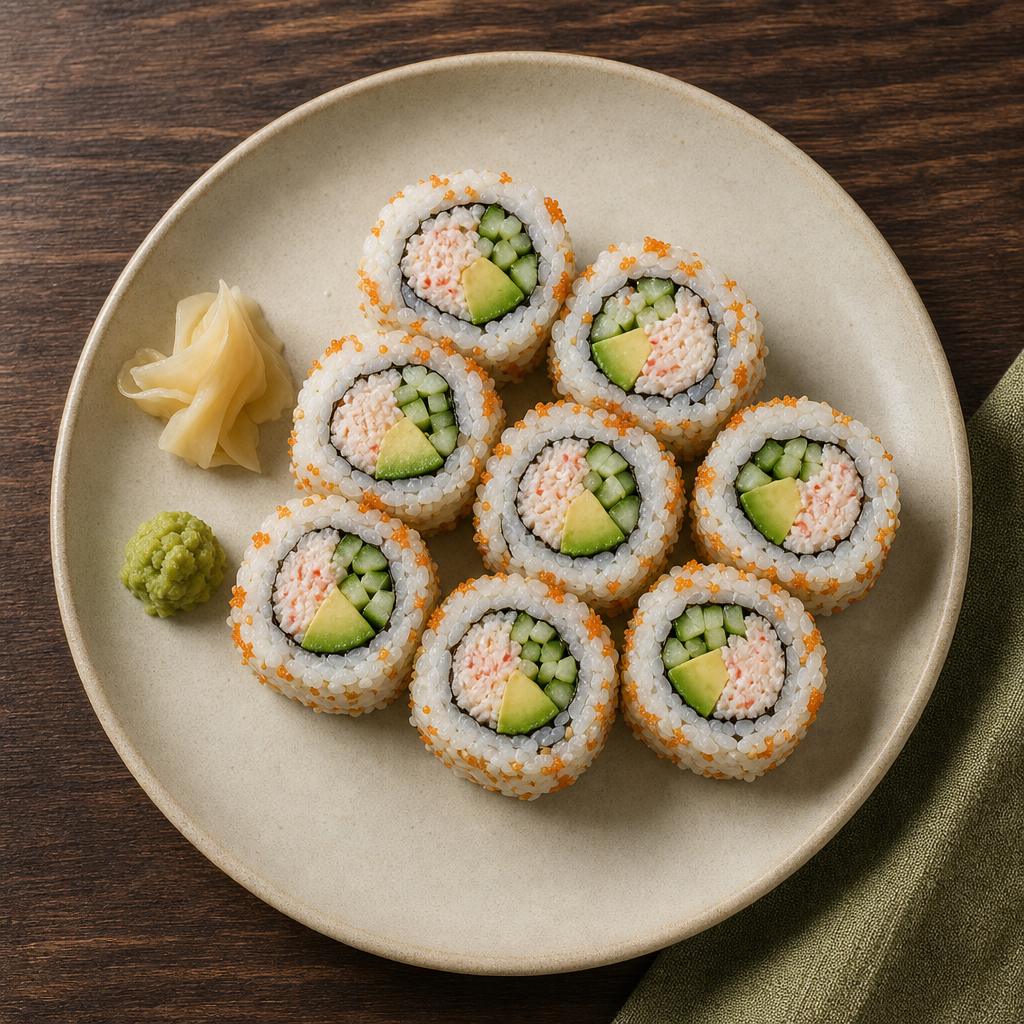
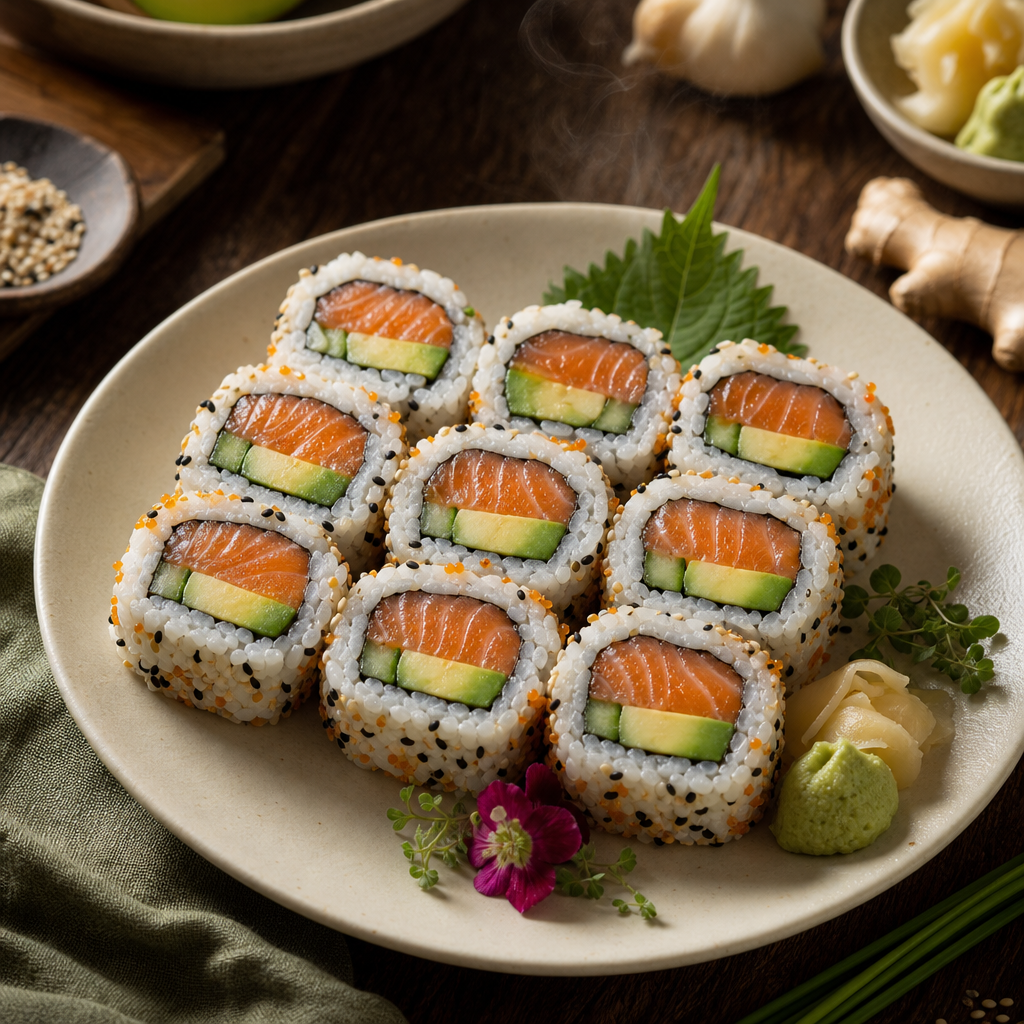
The salmon avocado roll belongs to international-style sushi, not traditional Edomae sushi. Its grammar comes from uramaki, the rice-outside roll form popularized through North American sushi bars, then adopted widely in restaurant menus from Europe to Japan-facing casual chains. Salmon itself became a major sushi fish only after modern cold-chain handling and parasite-control freezing made raw service more practical. This version keeps the restaurant structure: seasoned short-grain rice, nori, raw salmon, avocado, and a restrained sesame or roe coating.
Method 10 steps · 65 min
Wash and soak the rice
Wash the rice in several changes of cold water until the water runs nearly clear, then drain for 10 minutes. Add 200 ml water and soak 30 minutes before cooking.
Cook and rest the rice
Cook the rice in a rice cooker, or bring it to a brief boil in a covered saucepan, reduce to the lowest heat for 12 minutes, then rest off heat for 10 minutes without lifting the lid.
Make the sushi vinegar
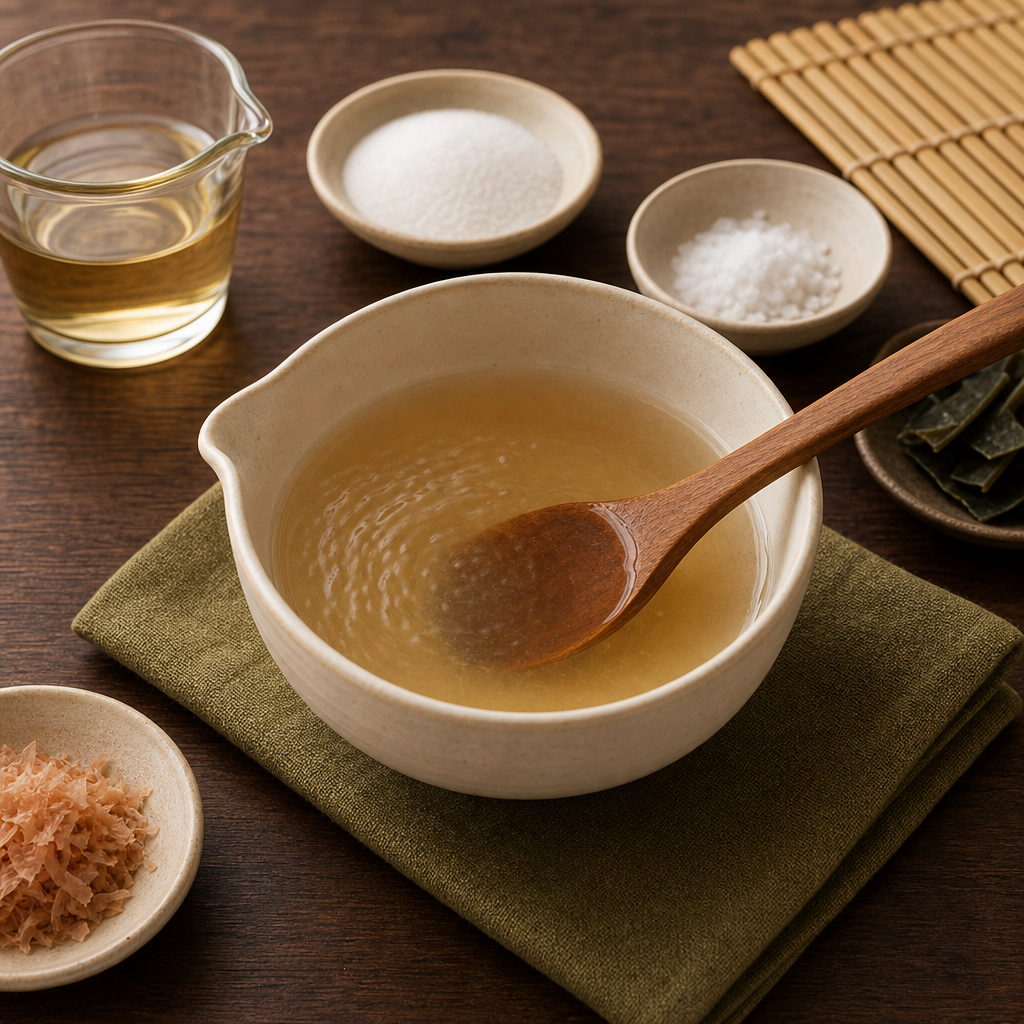
Warm the rice vinegar, sugar, and salt only until dissolved. Do not boil it.
Season and cool the rice
Turn the hot rice into a wide nonreactive bowl. Drizzle over the sushi vinegar and fold with a rice paddle using cutting motions while fanning until the rice is glossy and body-temperature.
Cut the fillings
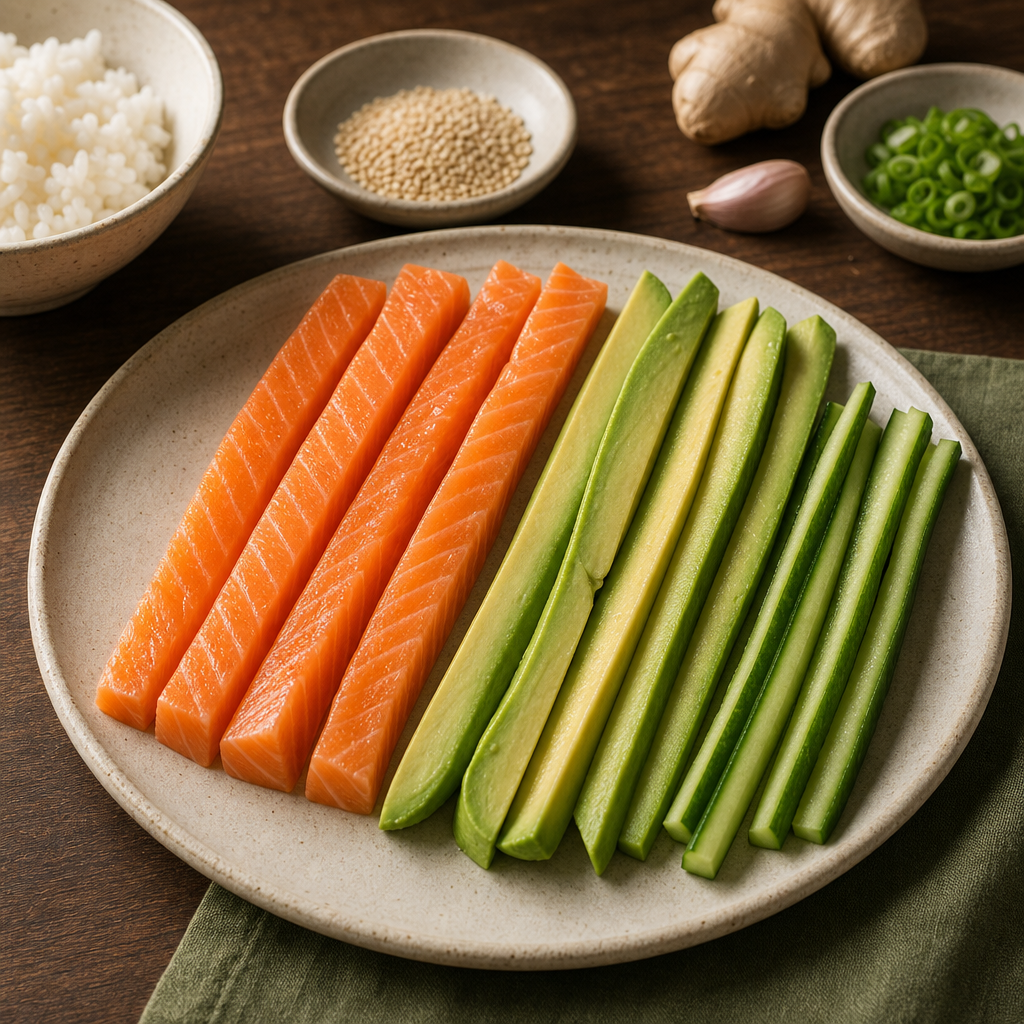
Cut the salmon into long strips about 1 cm thick. Cut the avocado into similar strips and keep the pieces long enough to run across the nori; patch short pieces end to end if needed.
Set up the mat
Wrap a bamboo sushi mat in plastic wrap. Place one nori half-sheet on the mat, rough side up, with the long edge facing you.
Build the rice-outside sheet
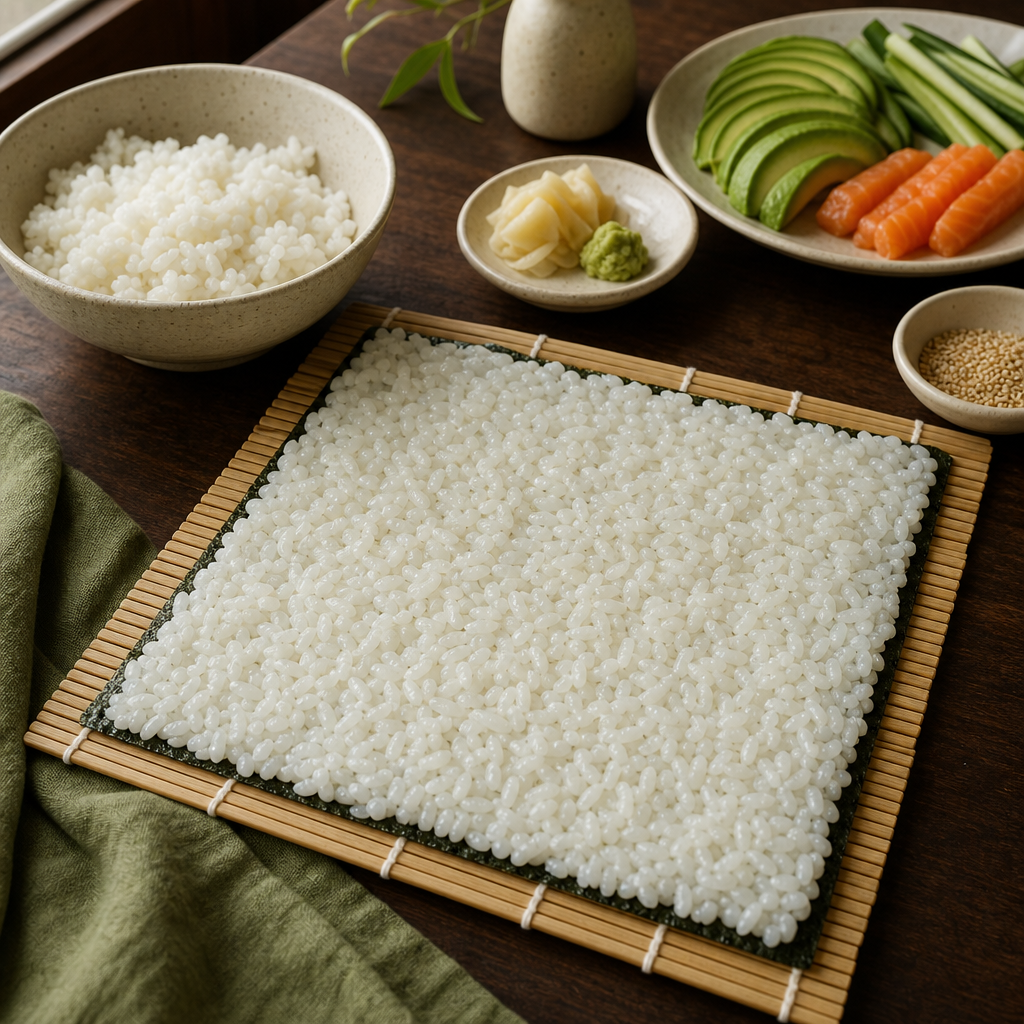
With damp fingers, spread about 100-120 g cooked seasoned rice over the nori in a thin even layer, leaving no bare corners; reserve any excess rice rather than forcing it onto the roll. Sprinkle with sesame seeds, then flip so the rice faces down and the nori faces up.
Fill and roll
Lay half the salmon, avocado, and cucumber if using across the lower third of the nori. Lift the mat and roll forward once to enclose the filling, then tighten with even pressure and finish the roll seam-side down.
Cut cleanly
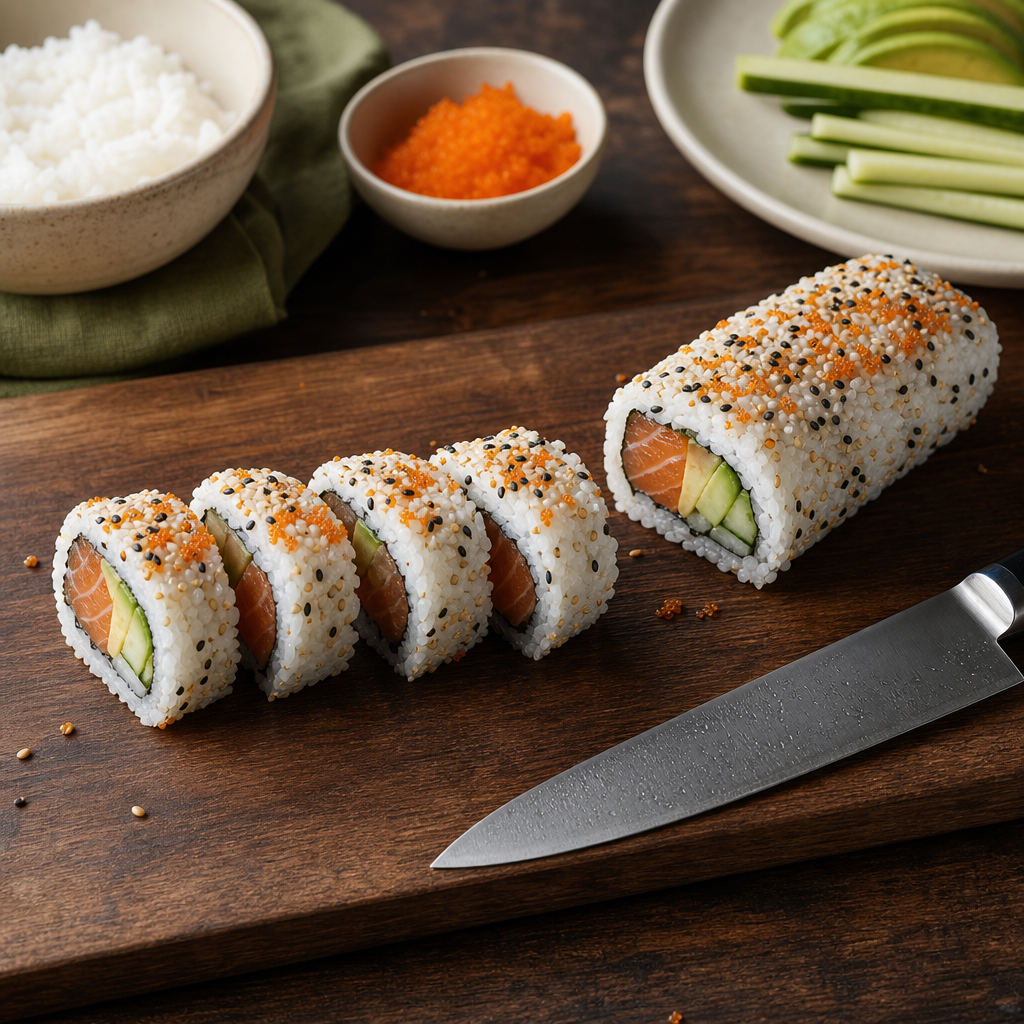
Wet a sharp knife, wipe it, and cut the roll in half. Line up the halves and cut each half into 4 pieces, wiping and re-wetting the blade between cuts.
Serve
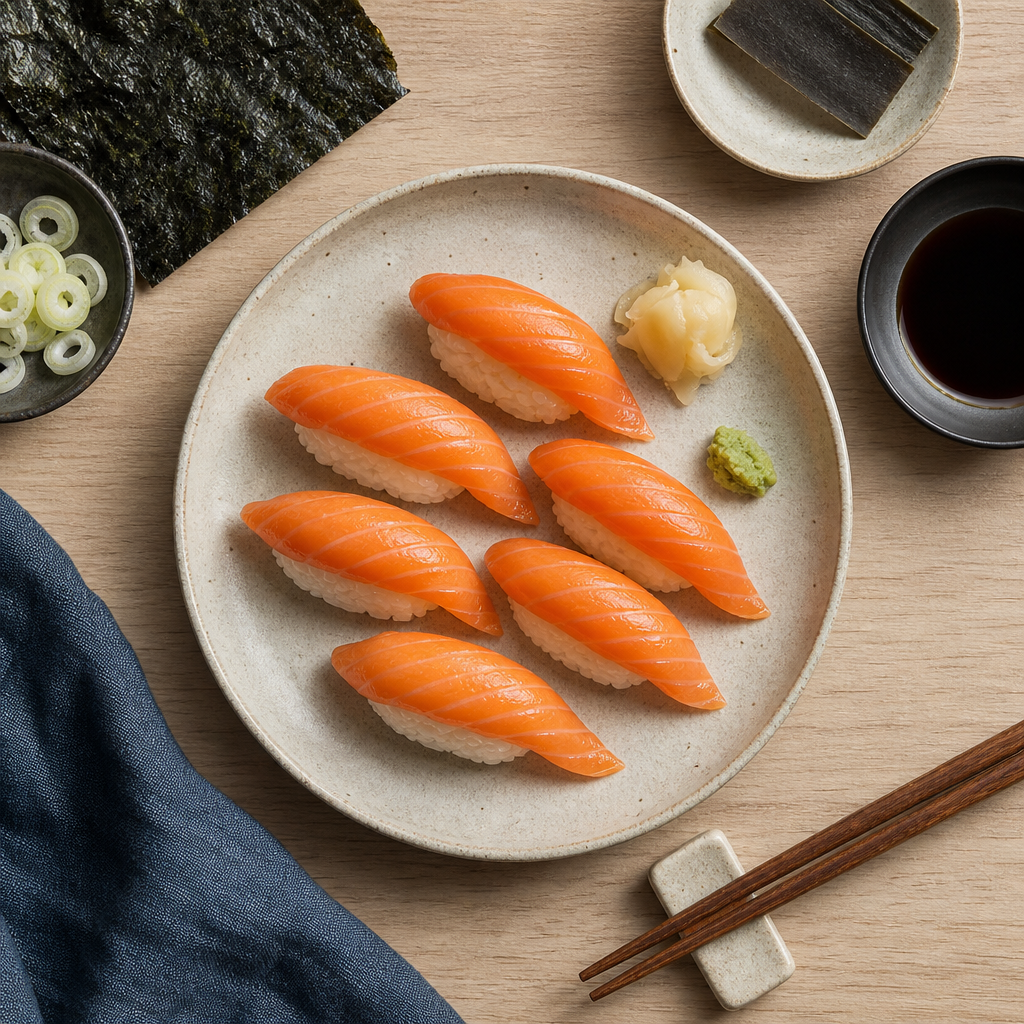
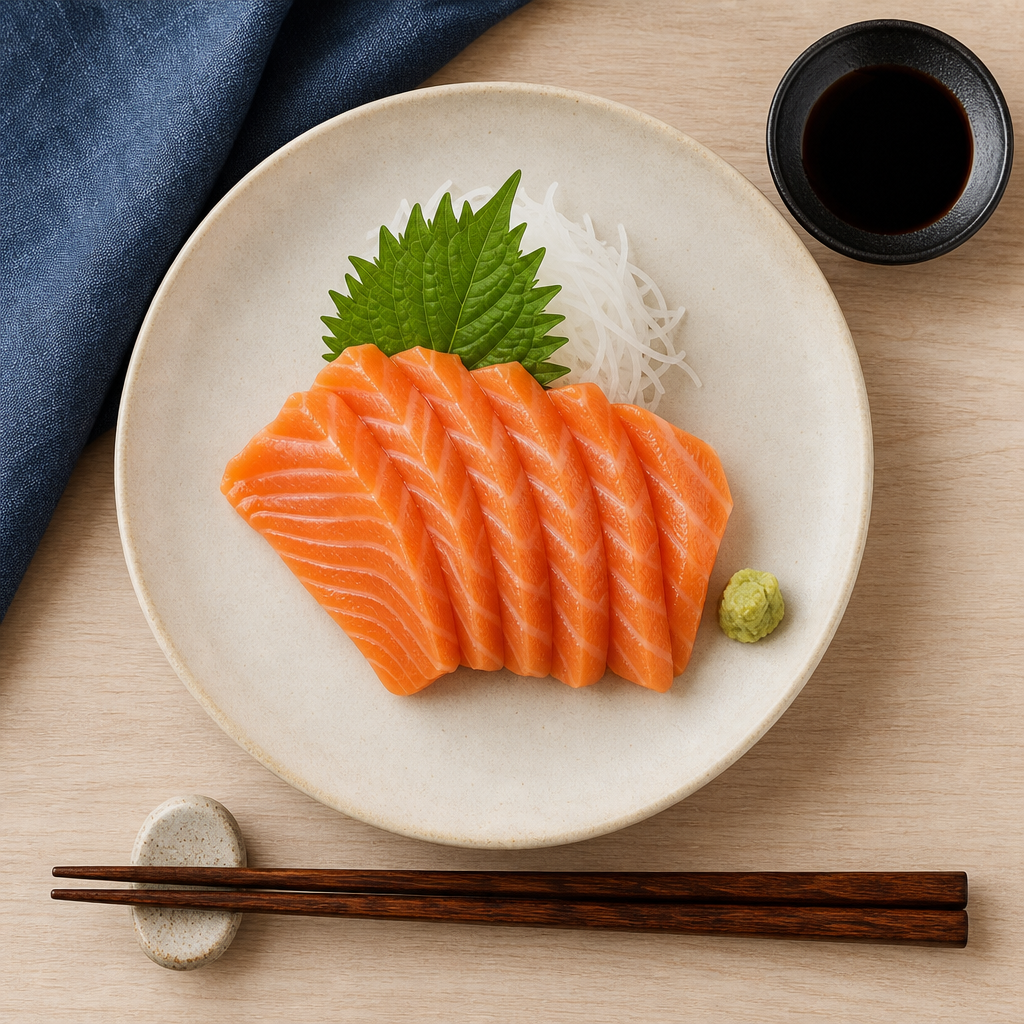
Serve with koikuchi shoyu, wasabi, and gari. Dip lightly; soy sauce should season the fish side, not flood the rice.
Common mistakes
- {'mistake': 'Using long-grain rice', 'why_it_fails': 'Long-grain rice stays separate and dry. It cannot form the soft adhesive matrix needed for maki.'}
- {'mistake': 'Rolling with hot rice', 'why_it_fails': 'Hot rice steams the nori until it becomes limp and leathery, and it warms the raw salmon into a dull texture.'}
- {'mistake': 'Packing the rice thickly', 'why_it_fails': 'A thick rice jacket turns the roll into a starch cylinder with a hidden filling. The target is a thin, even coat.'}
- {'mistake': 'Buying ordinary salmon and serving it raw', 'why_it_fails': 'Raw-service salmon requires specific handling and parasite-control freezing. A fresh-looking fillet is not a safety standard.'}
- {'mistake': 'Sawing with a dry knife', 'why_it_fails': 'The blade drags starch through the cut and tears the nori. Wet, wipe, cut, repeat.'}
What does not belong
- {'item': 'Long-grain rice or basmati', 'reason': 'It does not bind like Japanese short-grain rice and does not belong in sushi rolls.'}
- {'item': 'Sweet bottled teriyaki sauce inside the roll', 'reason': 'It masks the salmon and makes the rice wet. This is a salmon avocado roll, not a glazed salmon roll.'}
- {'item': 'Cream cheese', 'reason': 'Cream cheese moves the roll into Philadelphia-roll territory. It does not belong in a standard salmon avocado roll.'}
- {'item': 'Mayonnaise as a default filling', 'reason': 'Spicy mayo is a separate restaurant variant. It turns the clean salmon-avocado structure heavy.'}
- {'item': 'Warm cooked salmon', 'reason': 'Cooked salmon makes a different roll and sheds heat into the rice and nori.'}
Adaptations
Use sesame instead of masago or tobiko.
Check rice vinegar and prepared sushi vinegar labels if alcohol processing is a concern.
Plain rice, salmon, avocado, cucumber, and sesame are naturally gluten-free, but condiments are the risk point.
Cream cheese does not belong in this roll.
Fish remains present because salmon is structural.