California Roll
The dish in context
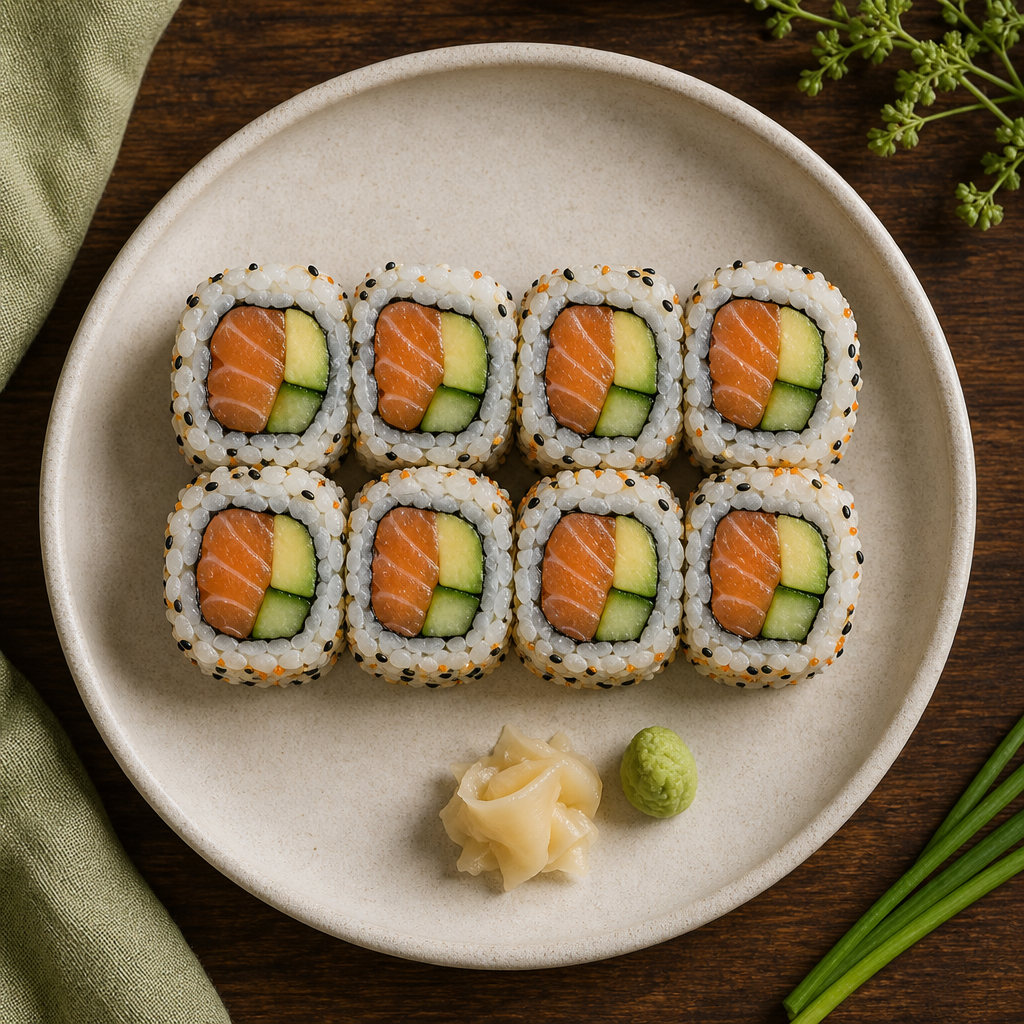
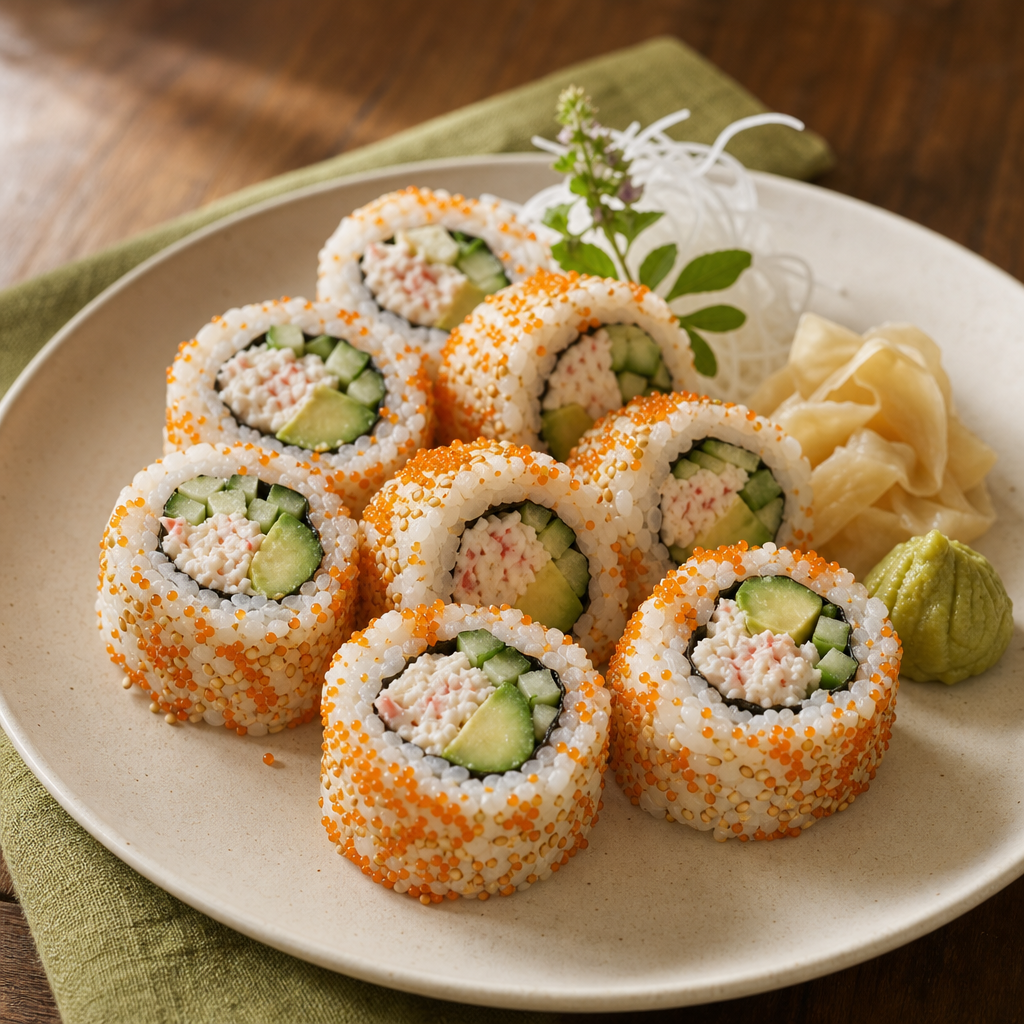
The California roll is international-style sushi, not traditional Edomae sushi. It emerged in North America in the late 20th century, with competing origin claims in Los Angeles and Vancouver, as sushi chefs adapted maki for diners wary of visible nori and raw fish. The now-standard form is uramaki: rice outside, nori inside, with avocado, cucumber, and cooked crab or surimi. Its importance is practical rather than ancient; it helped make sushi familiar across the United States, Canada, and later much of the world.
Method 10 steps · 65 min
Wash and soak the rice
Wash the rice in 3 to 5 changes of cold water until the water runs nearly clear. Drain for 10 minutes, then soak with the measured cooking water for 30 minutes.
Cook and rest the rice
Cook the rice in a rice cooker, or bring it to a boil in a covered saucepan, reduce to low, and cook 12 minutes. Rest off heat, covered, for 10 minutes.
Season the sushi rice
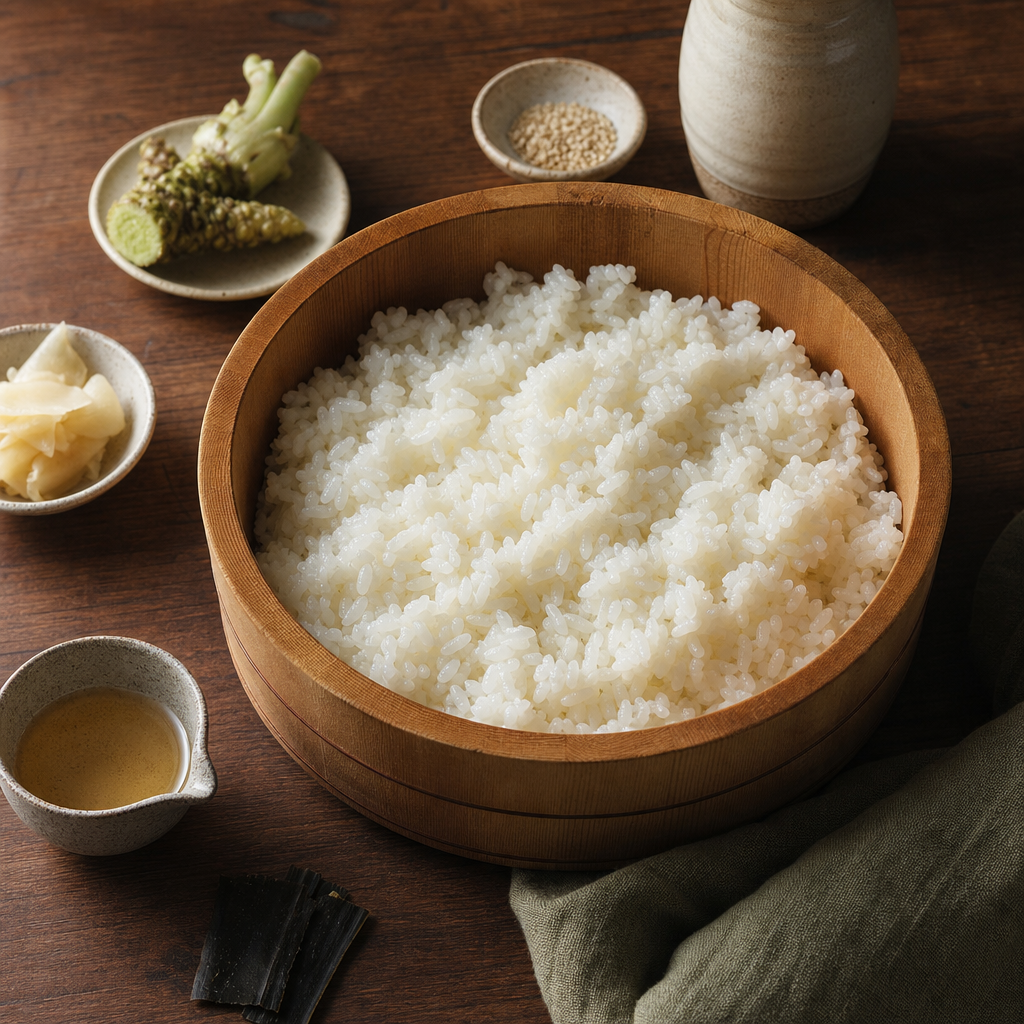
Warm the rice vinegar, sugar, and salt only until dissolved; do not boil it. Spread the hot rice in a wide wooden or nonreactive bowl, sprinkle over the sushi vinegar, and fold with a rice paddle while fanning until glossy and warm to the touch.
Prepare the fillings
Mix the cooked crab with the mayonnaise until lightly bound, not creamy. Cut avocado into long wedges and cucumber into narrow matchsticks that run the length of the nori.
Set the nori and rice
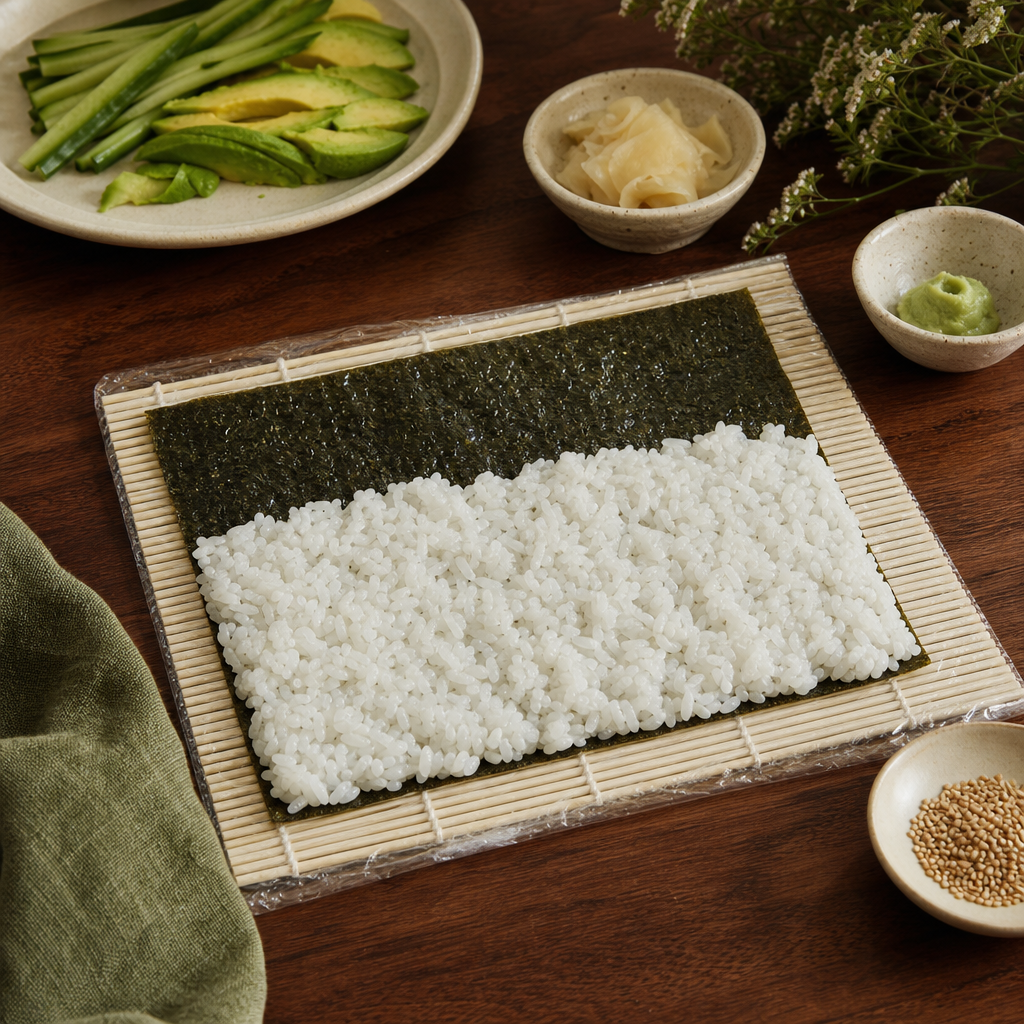
Wrap a bamboo mat in plastic wrap. Lay one nori sheet shiny side down, spread about one quarter of the warm sushi rice over it with damp fingertips, and keep the layer thin enough that nori still controls the structure.
Add the exterior garnish
Scatter sesame seeds or tobiko over the rice. Flip the sheet so the rice faces down on the plastic-wrapped mat and the nori faces up.
Fill without overloading
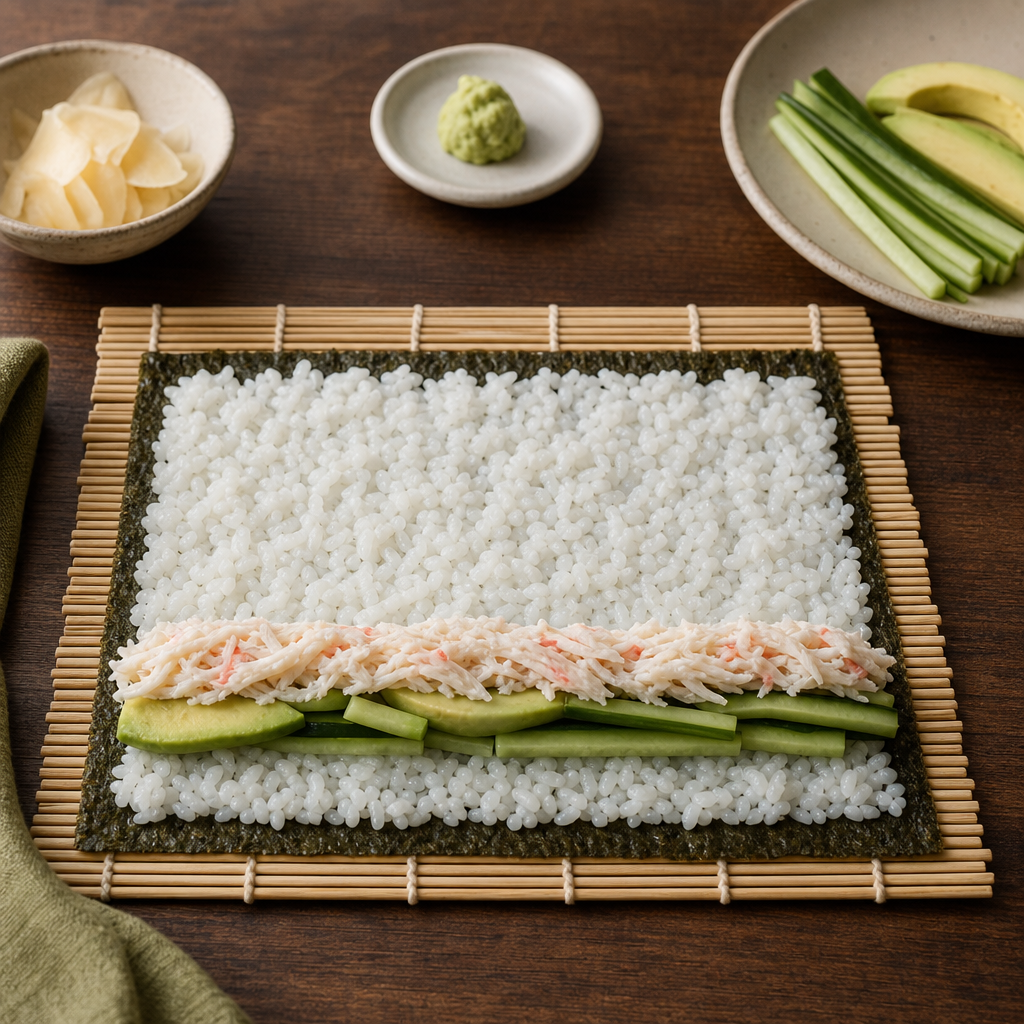
Place a narrow line of crab, avocado, and cucumber across the lower third of the nori, running edge to edge. Keep the filling compact; the roll should close around it without bulging.
Roll and compress
Lift the near edge of the mat, tuck the filling with fingertips, and roll until the rice meets rice. Pull the mat back and compress the cylinder gently from top and sides to square the roll without crushing it.
Slice cleanly
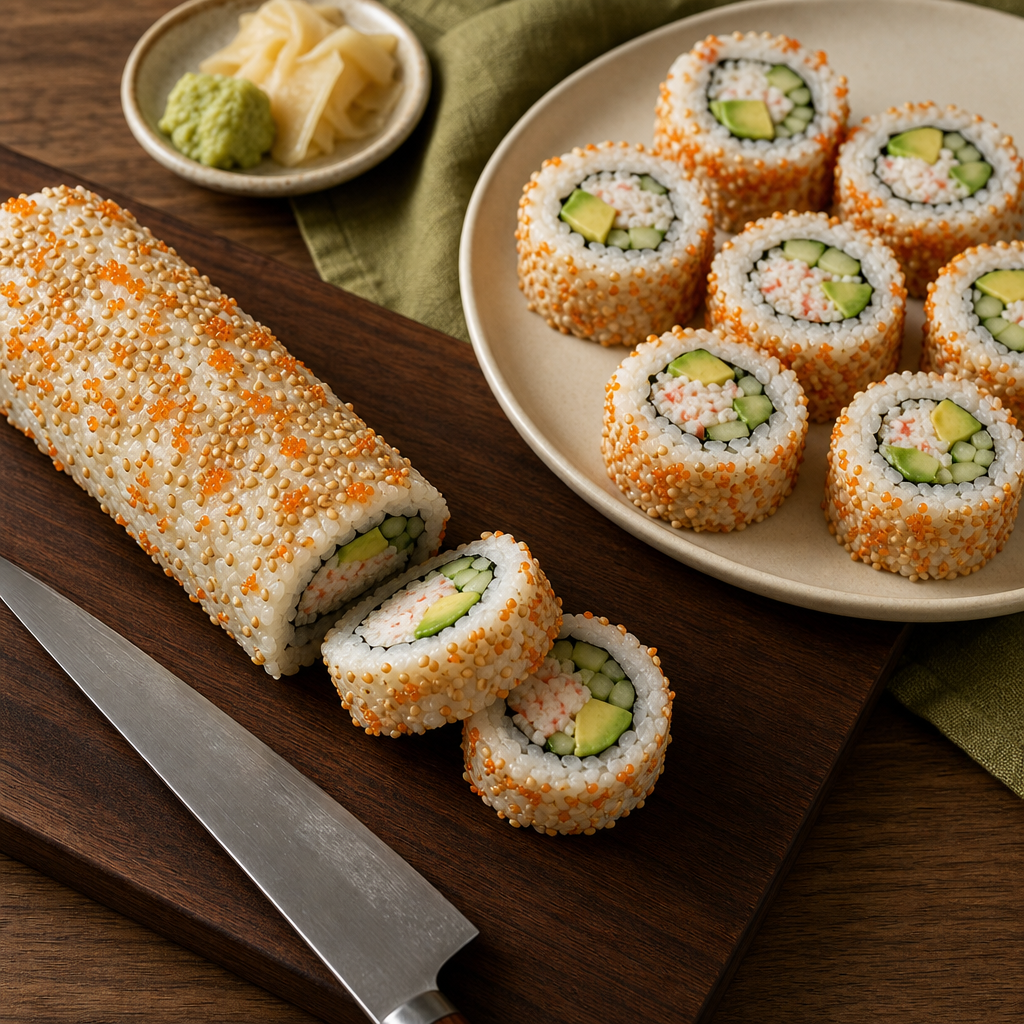
Dip a sharp knife in the vinegared hand water and wipe it between cuts. Cut each roll in half, then each half into 4 pieces for 8 pieces per roll.
Serve
Serve cut-side up with shoyu, wasabi, and gari. Dip lightly; soy sauce should season the piece, not soak the rice.
Common mistakes
- {'mistake': 'Using long-grain rice', 'correction': 'Use Japanese short-grain rice. Basmati, jasmine, and long-grain supermarket rice do not have the starch structure for maki.'}
- {'mistake': 'Spreading rice too thick', 'correction': 'Keep the rice layer thin and even. Thick rice makes a heavy roll and leaves no room for a clean center.'}
- {'mistake': 'Overfilling the roll', 'correction': 'Use a narrow line of filling. If the nori cannot close without pressure, remove filling.'}
- {'mistake': 'Using wet cucumber', 'correction': 'Seed watery cucumbers and pat them dry. Water softens nori and makes slices collapse.'}
- {'mistake': 'Cutting with a dry knife', 'correction': 'Moisten and wipe the blade between cuts. Sticky rice needs a clean edge.'}
- {'mistake': 'Chilling the finished roll for a long time', 'correction': 'Serve soon after rolling. Refrigeration hardens sushi rice and dulls avocado texture.'}
What does not belong
- {'item': 'Raw fish', 'reason': 'Raw fish does not define a California roll. The standard filling is cooked crab or surimi, avocado, and cucumber.'}
- {'item': 'Cream cheese', 'reason': 'Cream cheese belongs to Philadelphia-style rolls, not California rolls.'}
- {'item': 'Teriyaki sauce', 'reason': 'Sweet glaze turns the roll into a different North American sushi-bar construction. It does not belong in the core roll.'}
- {'item': 'Long-grain rice', 'reason': 'Long-grain rice does not belong in sushi rolls; it stays separate when the roll needs controlled stickiness.'}
- {'item': 'Heavy spicy mayonnaise', 'reason': 'Spicy mayo can be served with many sushi-bar rolls, but loading it into a California roll buries the crab and softens the nori.'}