Tuna Temaki
The dish in context
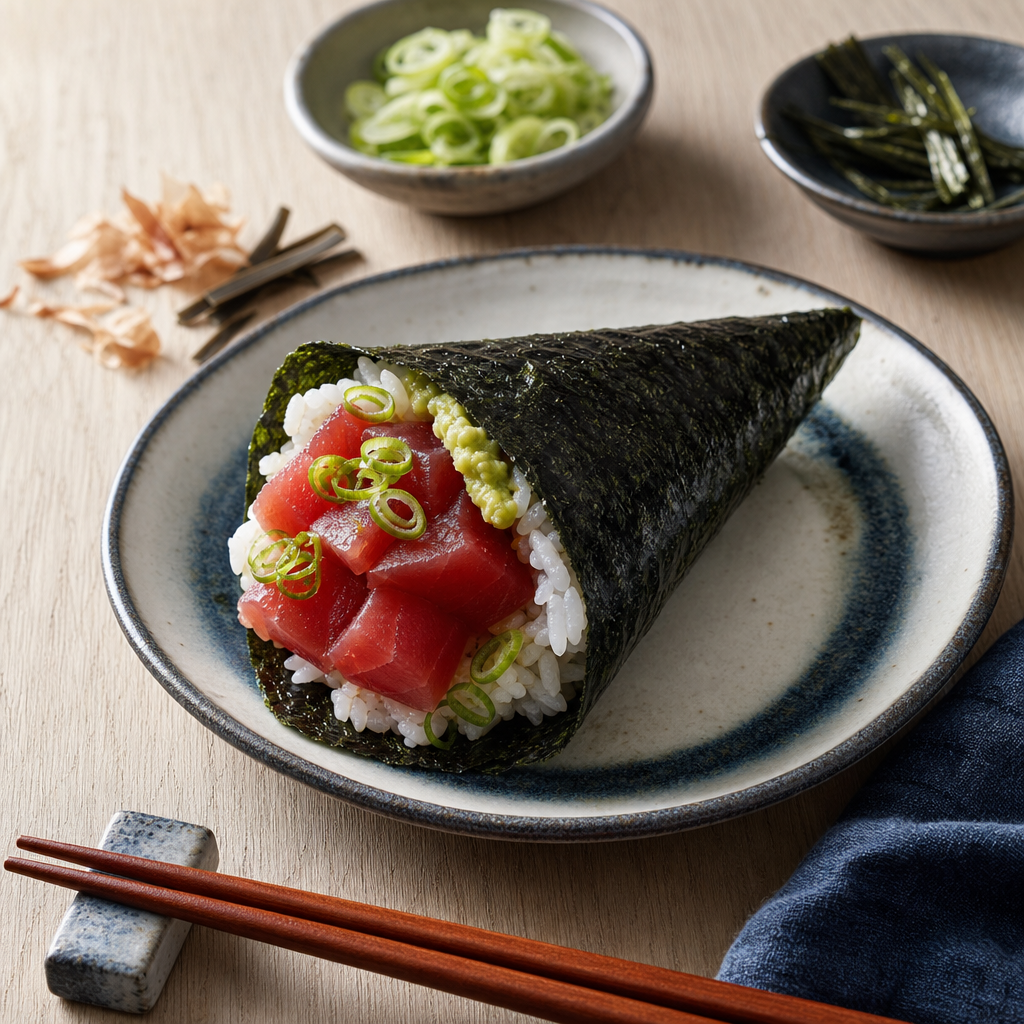
Temaki (手巻き) means hand roll: sushi rice and fillings wrapped by hand in a sheet of nori rather than pressed in a bamboo mat. It is common at home because the cook can prepare rice, nori, and fillings separately, then diners roll each piece as they eat. Tuna, especially maguro (鮪), has been central to modern sushi culture, from lean akami to fatty toro, though this recipe uses lean tuna because it is cleaner and easier to source. Restaurant temaki is usually eaten immediately; the form depends on crisp nori, warm-bodied rice, and raw fish that has nowhere to hide.
Method 8 steps · 75 min
Wash and soak the rice
Rinse the rice in several changes of cold water until the water runs nearly clear, then drain well. Add 330 ml water and soak for 30 minutes before cooking.
Cook and rest
Cook the rice in a rice cooker or covered saucepan until done, then rest it off heat with the lid closed for 10 minutes. Do not stir during the rest.
Make the sushi vinegar
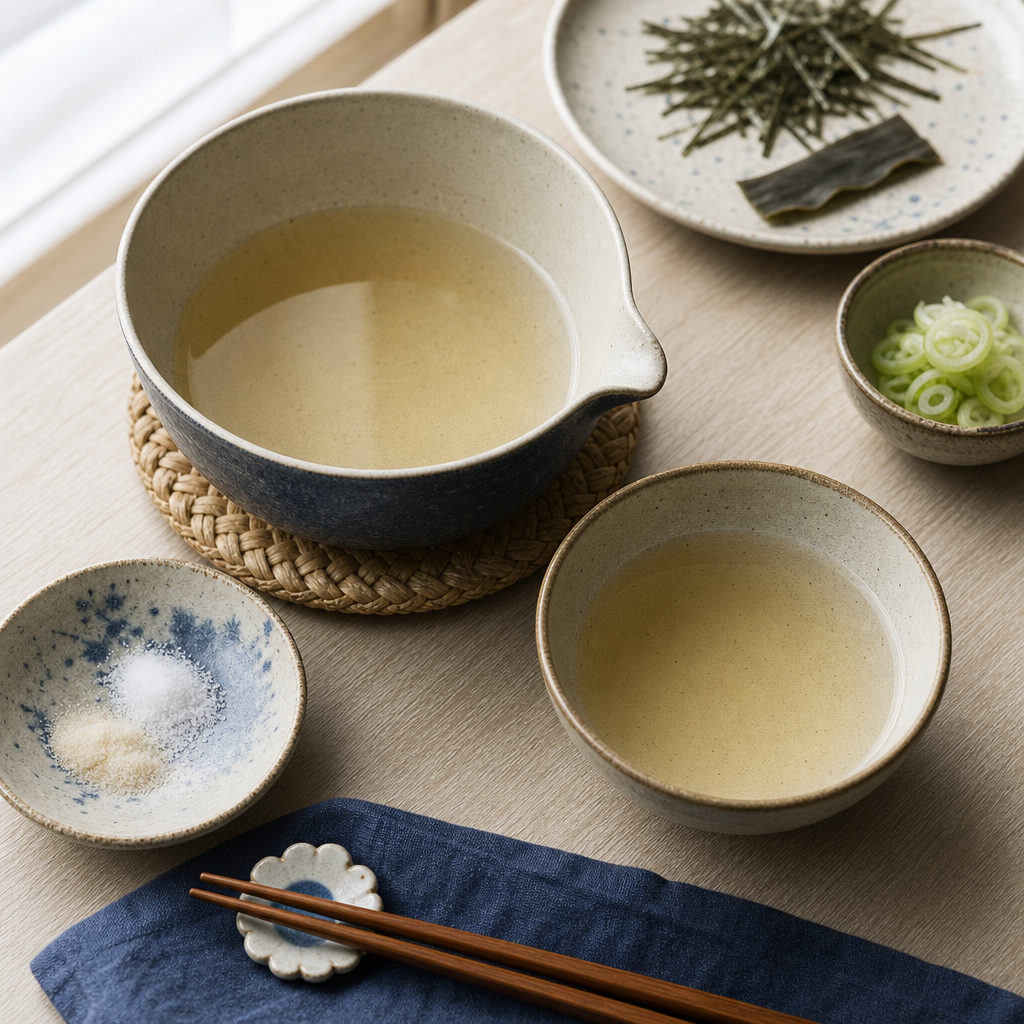
Warm the rice vinegar, sugar, and salt only until the sugar dissolves. Do not boil it. Cool to room temperature while the rice finishes resting.
Season the rice
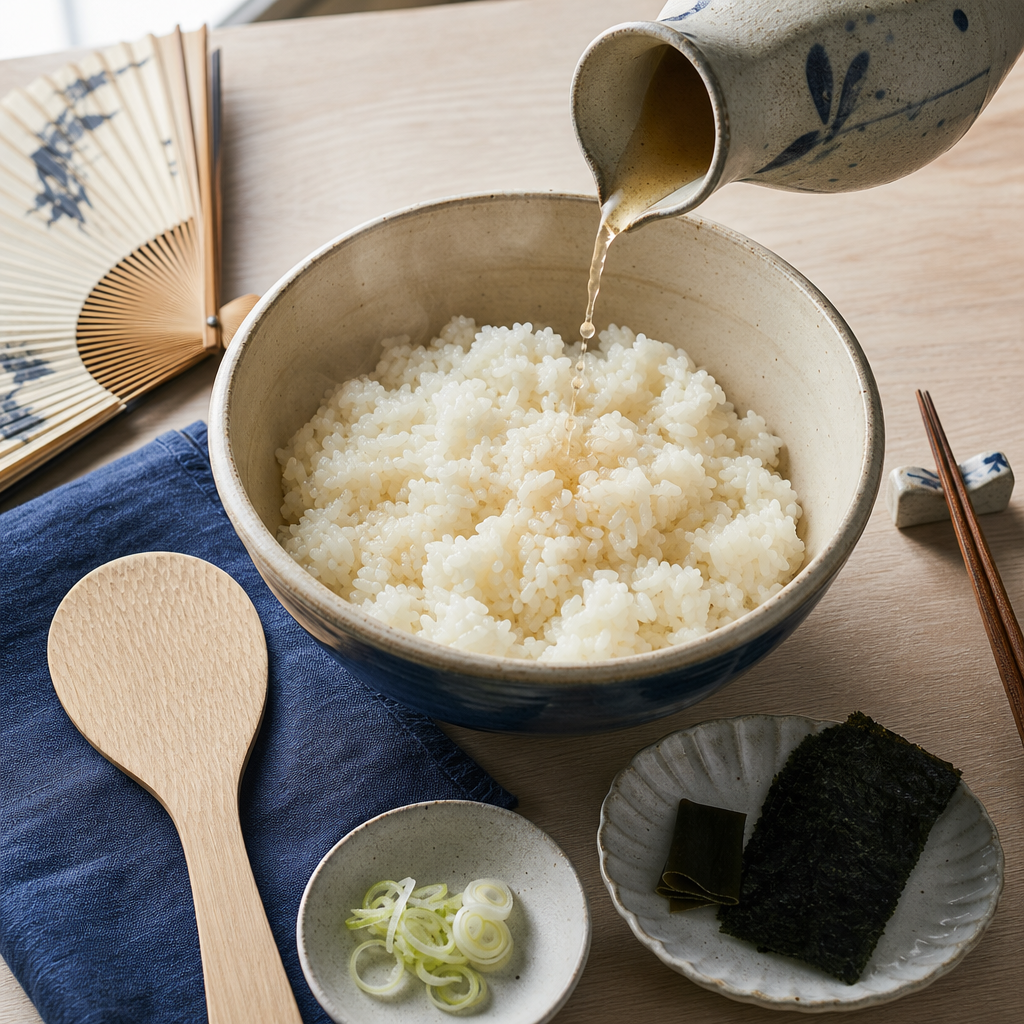
Transfer the hot rice to a wide bowl or hangiri. Sprinkle over the sushi vinegar and fold with a rice paddle using slicing motions while fanning until the rice is glossy and no longer steaming hard.
Prepare the tuna
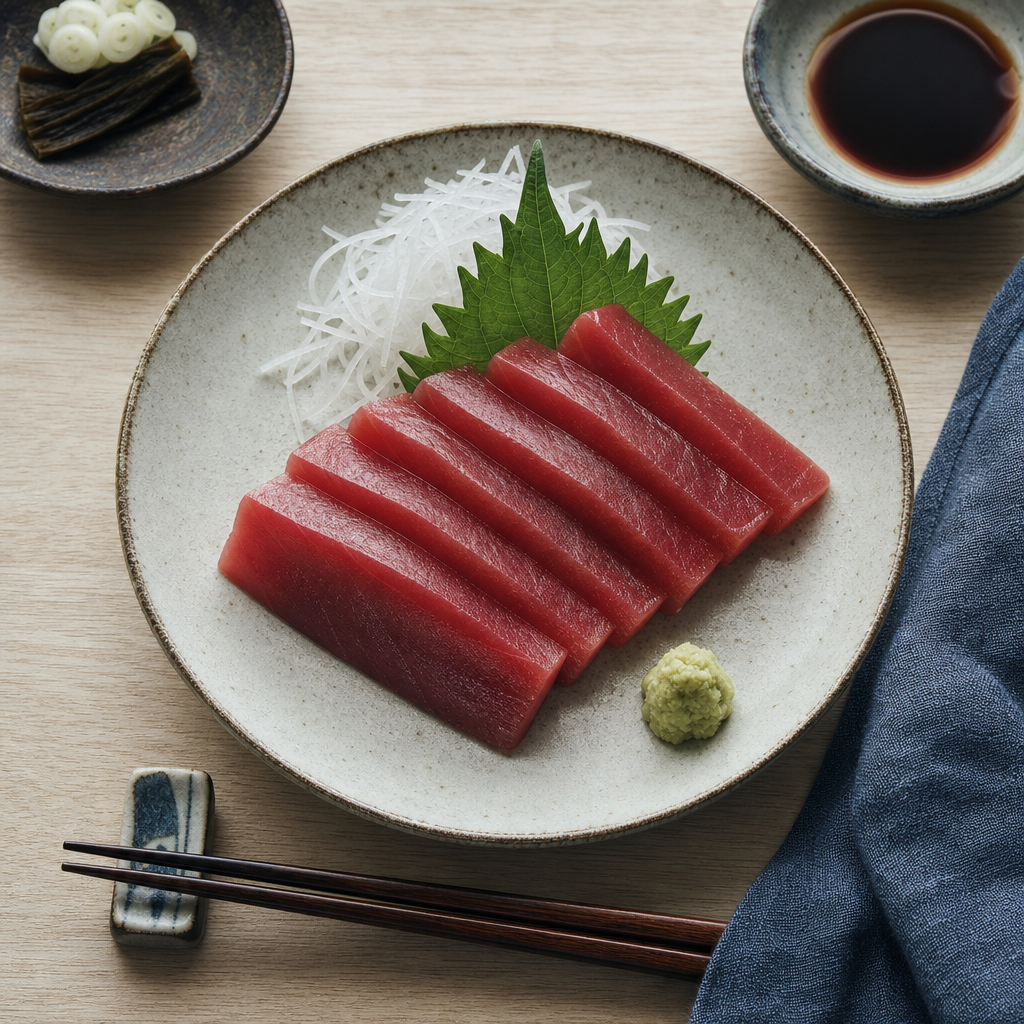
Cut the tuna into 1 cm strips or small dice with single, clean strokes. Keep it chilled until assembly, then toss with the scallion and soy sauce immediately before rolling.
Cut the nori
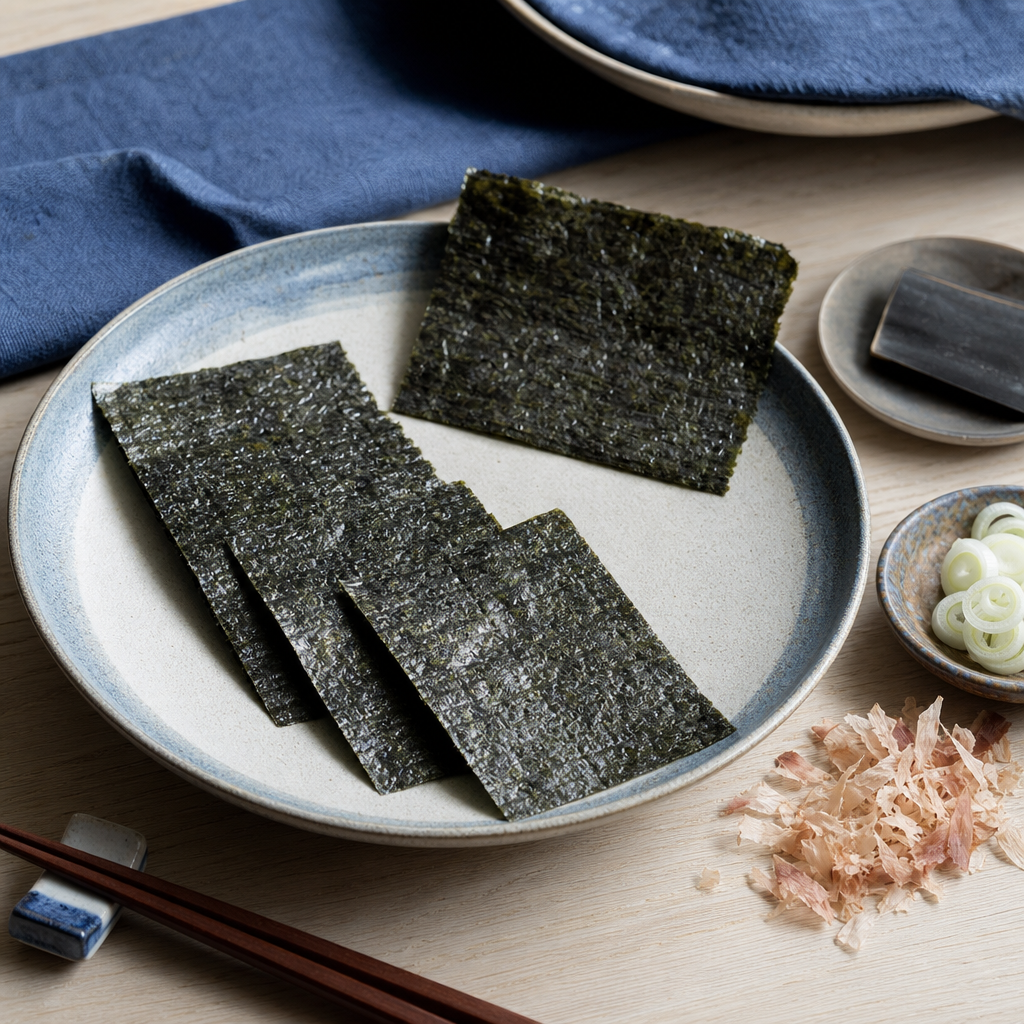
Cut each nori sheet in half crosswise. Keep the sheets covered and dry until the moment they are filled.
Roll each temaki
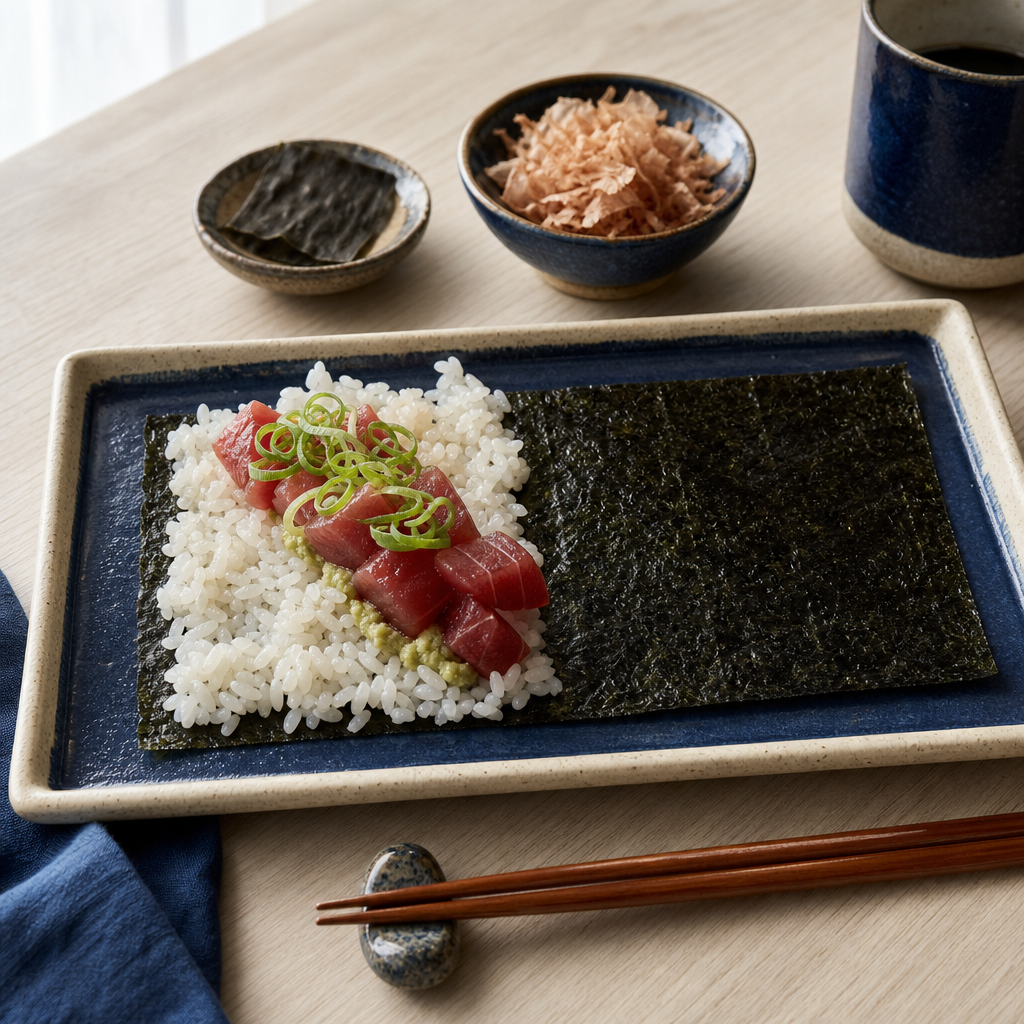
Place one half-sheet of nori shiny side down, with the long edge facing you. Spread about 45 g sushi rice over the left half, add a thin smear of wasabi if using, then add tuna and cucumber. Fold the lower-left corner up over the filling and roll diagonally into a cone with the pointed end closed.
Serve immediately
Serve each hand roll as soon as it is made. If extra soy is served, dip the tuna edge lightly; do not soak the rice.
Common mistakes
- {'mistake': 'Using ordinary supermarket tuna for raw service.', 'fix': 'Use tuna sold specifically for sashimi or sushi, from a supplier with raw-fish handling standards. Color alone is not a safety marker.'}
- {'mistake': 'Using long-grain rice.', 'fix': 'Use Japanese short-grain rice. Basmati, jasmine, and generic long-grain rice do not bind correctly and make the roll fall apart.'}
- {'mistake': 'Rolling with hot rice.', 'fix': 'Season the rice while hot, then cool it to body temperature. Hot rice steams the nori limp within seconds.'}
- {'mistake': 'Seasoning the tuna too early.', 'fix': 'Toss tuna with soy at the last moment. Salt draws out moisture and leaves the fish sitting in its own liquid.'}
- {'mistake': 'Overfilling the cone.', 'fix': 'Use less rice than looks necessary. A clean temaki has open space at the top and a sealed point at the bottom.'}
What does not belong
- {'item': 'Mayonnaise', 'reason': 'Mayonnaise belongs to spicy tuna or American-style tuna salad hand rolls. It does not belong in a lean maguro temaki.'}
- {'item': 'Sriracha or chili oil', 'reason': 'That makes spicy tuna. This roll should read as tuna, scallion, nori, rice, and soy.'}
- {'item': 'Long-grain rice', 'reason': 'It will not cling and it does not season like shari. Sushi rice requires Japanese short-grain rice.'}
- {'item': 'Sweet teriyaki sauce', 'reason': 'Teriyaki glaze overwhelms raw tuna and turns the roll into a different dish.'}
- {'item': 'Wet fillings packed against the nori', 'reason': 'Watery cucumber, over-soyed tuna, and wet greens destroy the only fragile texture temaki has.'}