Spicy Tuna Roll
The dish in context
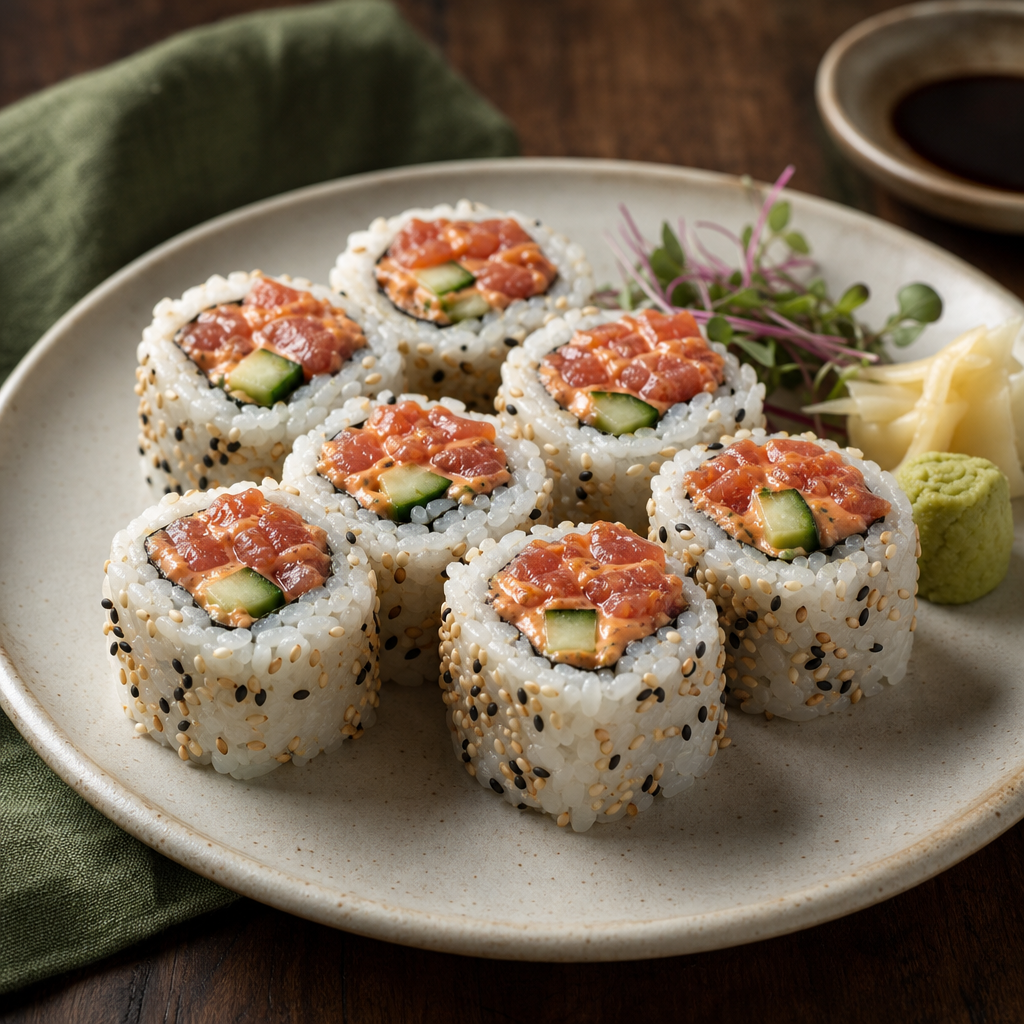
The spicy tuna roll is international-style sushi, not traditional Edomae sushi. It emerged in the United States in the 1980s, commonly associated with Seattle's Maneki restaurant, where chopped tuna scraps were mixed with chile sauce and rolled with sushi rice and nori. Its logic is practical: trim from high-quality tuna becomes a seasoned filling instead of waste. Modern restaurant versions vary between sriracha-mayo, chili oil, scallion, sesame oil, cucumber, avocado, and tobiko or masago, but the core remains raw tuna, seasoned heat, sushi rice, and nori.
Method 11 steps · 75 min
Wash and soak the rice
Wash the rice in several changes of cold water until the water runs mostly clear, then drain for 10 minutes. Add 330 ml water and the kombu, if using, and soak 30 minutes before cooking.
Cook and rest the rice
Cook the rice in a rice cooker or covered heavy saucepan. Remove the kombu before the water reaches a boil if cooking on the stove. Rest the cooked rice, covered and off heat, for 10 minutes.
Make the sushi vinegar
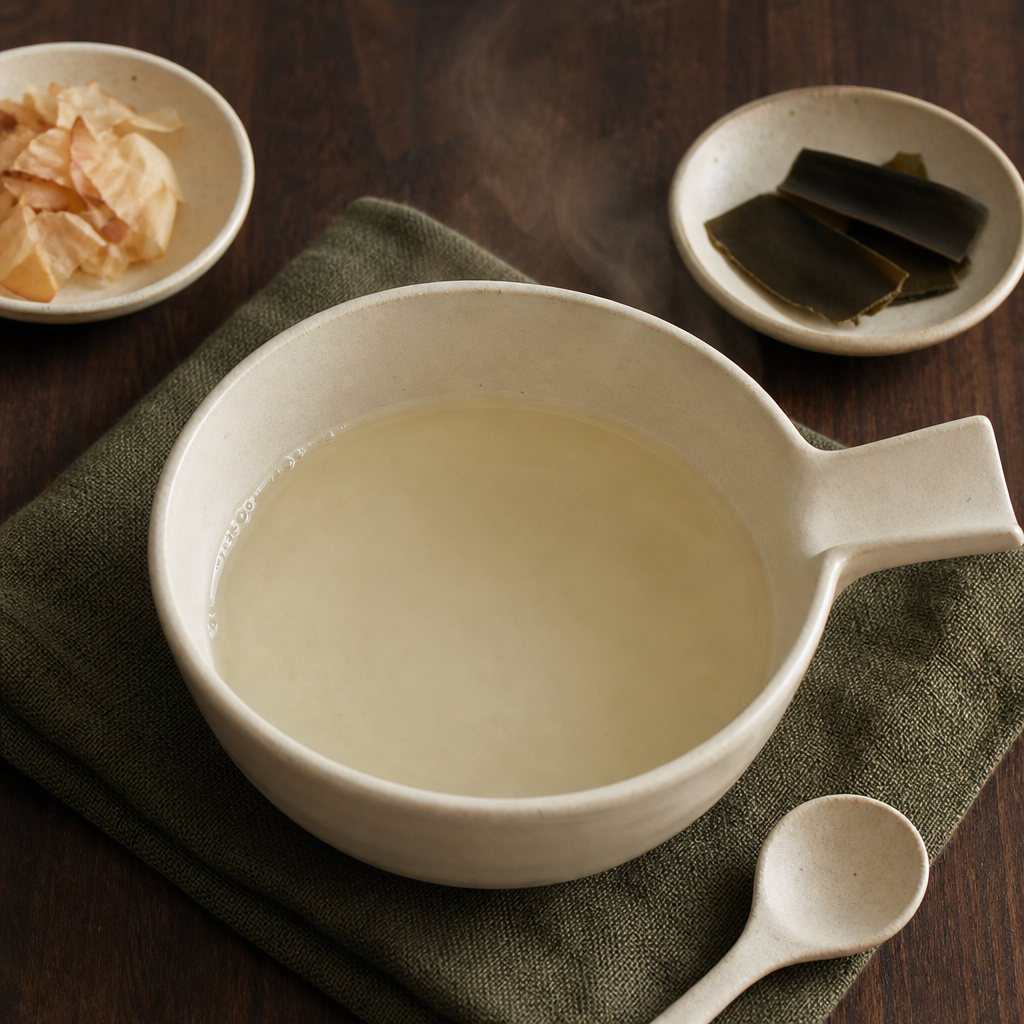
Warm the rice vinegar, sugar, and salt only until dissolved, then cool to room temperature. Do not boil it hard.
Season the shari
Turn the hot rice into a wide bowl or hangiri. Sprinkle the sushi vinegar over it and fold with a rice paddle using cutting motions while fanning until glossy and body-temperature.
Cut the tuna
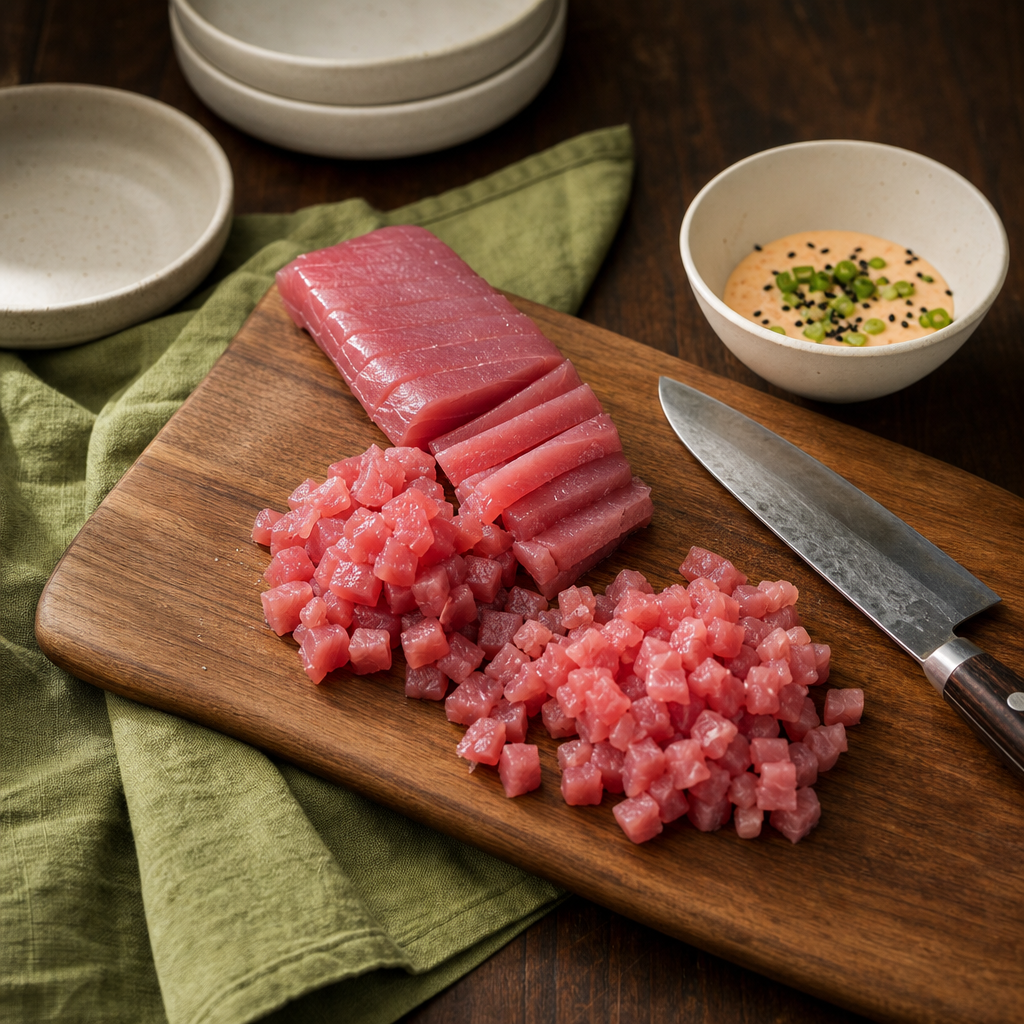
Keep the tuna cold. Slice it into thin strips, then cut into small dice; chop only enough to make a loose, spoonable texture with visible pieces.
Mix the spicy tuna
Combine tuna, Japanese mayonnaise, sriracha, sesame oil, shoyu, and scallion. Fold with a spoon until coated, then keep chilled while setting up the rolling mat.
Set up for uramaki
Wrap a bamboo mat in plastic wrap. Place a half sheet of nori shiny-side down, spread a thin layer of rice over it with damp hands, and sprinkle with sesame seeds.
Flip and fill
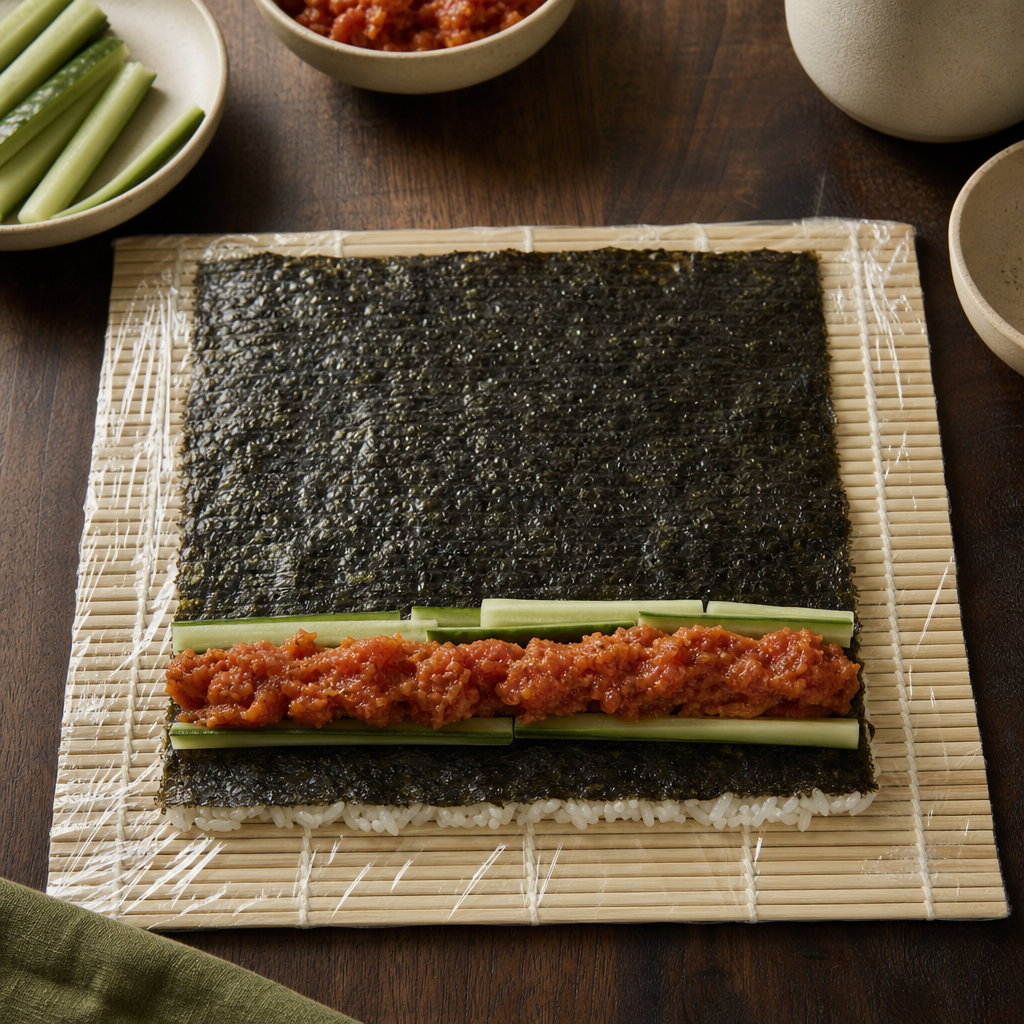
Flip the nori so the rice faces down on the plastic-wrapped mat. Lay cucumber batons and a line of spicy tuna across the lower third, leaving the far edge clear.
Roll and compress
Lift the near edge of the mat and roll over the filling in one firm motion. Compress along the length, then roll forward to seal into a tight cylinder.
Slice cleanly
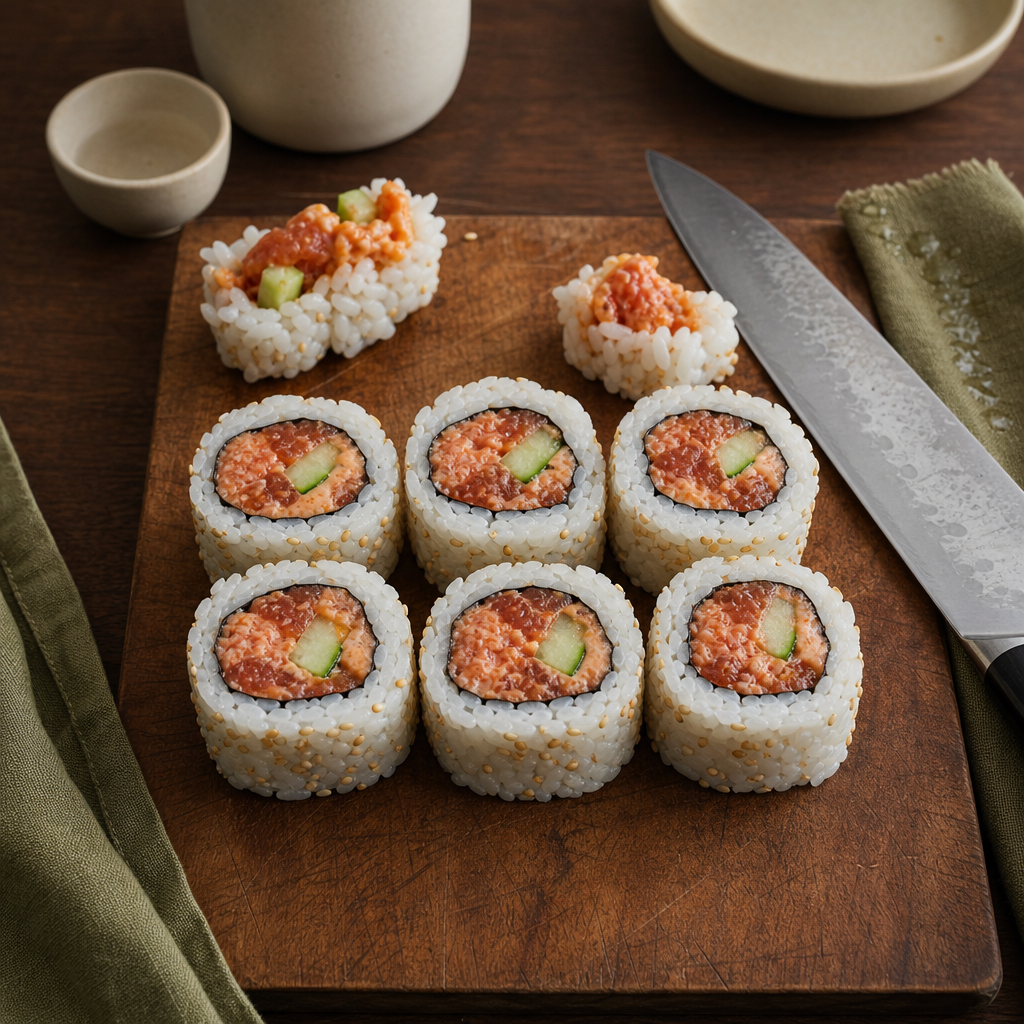
Move the roll to a board. Wipe a sharp knife with a wet towel, trim the ends, then cut each roll into 6 pieces, wiping the blade between cuts.
Serve
Serve cut-side up with shoyu and wasabi on the side. Dip lightly; soaking the rice in soy sauce collapses the seasoning balance.
Common mistakes
- {'mistake': 'Using long-grain rice', 'fix': 'Use Japanese short-grain rice or Calrose. Basmati, jasmine, and other long-grain rice do not hold a maki roll.'}
- {'mistake': 'Rolling with cold sushi rice', 'fix': 'Roll while the shari is body-temperature. Cold rice turns firm and resists shaping.'}
- {'mistake': 'Mashing the tuna into paste', 'fix': 'Dice and lightly chop until spoonable with visible pieces. The filling should look chopped, not puréed.'}
- {'mistake': 'Over-saucing the tuna', 'fix': 'Use enough spicy mayo to coat. If the bowl looks wet, drain or add more tuna before rolling.'}
- {'mistake': 'Letting raw fish sit warm during setup', 'fix': 'Keep the tuna chilled until the moment of filling. Raw fish safety and texture both fail at room temperature.'}
- {'mistake': 'Cutting with a dry knife', 'fix': 'Wipe the blade with a damp towel between cuts. Rice starch builds up fast and tears the roll.'}
What does not belong
- {'item': 'Canned tuna', 'reason': 'Canned tuna makes a tuna-mayo roll. It does not have the texture or clean raw-fish profile of spicy tuna.'}
- {'item': 'Long-grain rice', 'reason': 'Long-grain rice does not belong in sushi rolls. It separates instead of forming a cohesive shari layer.'}
- {'item': 'Cream cheese', 'reason': 'Cream cheese turns the roll into a different American sushi style and muddies the tuna.'}
- {'item': 'Teriyaki sauce', 'reason': 'Sweet teriyaki sauce does not belong in spicy tuna. It covers the raw fish and makes the filling cloying.'}
- {'item': 'Large amounts of soy sauce inside the filling', 'reason': 'Soy sauce belongs mostly at the table. Inside the filling it loosens the tuna and makes the roll leak.'}