Tuna Sashimi
The dish in context
Sashimi (刺身) is raw sliced seafood served without rice; that separation from sushi matters. Maguro (鮪) became especially prominent in modern sushi and sashimi culture as refrigeration, freezing, and long-distance tuna markets made high-quality tuna more available beyond fishing ports. Japanese retail and restaurant practice distinguishes species, cut, origin, farmed or wild status, and whether the fish has been thawed; those details are not decoration when the fish is eaten raw. Home sashimi is less about a recipe than procurement, cold handling, and clean knife work.
Method 5 steps · 15 min
Chill the working surface
Chill the serving plate for 10 minutes. Keep the tuna refrigerated until the moment of slicing, then pat the surface dry with a clean paper towel.
Inspect and square the tuna
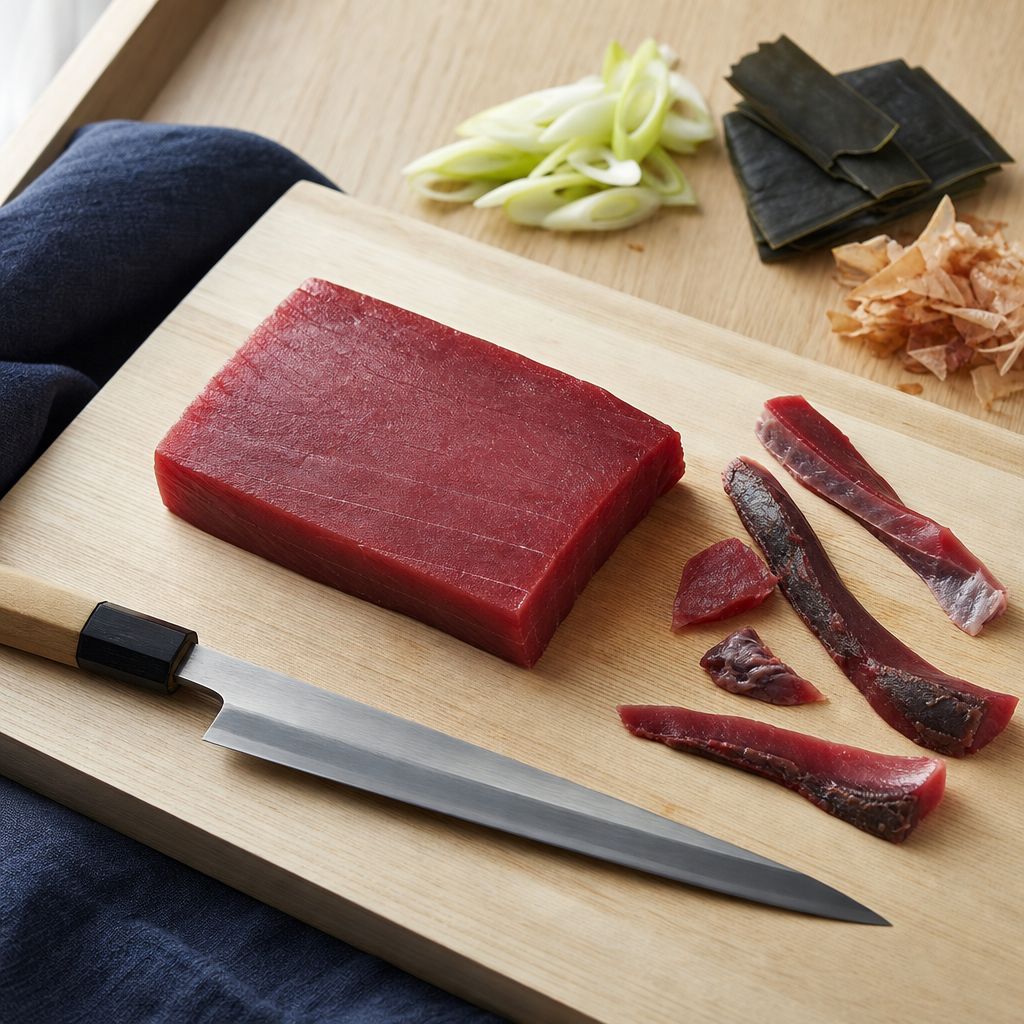
Place the tuna block on a clean board and trim away any dark bloodline, bruised patches, sinew, or dry oxidized edges. Shape the block into a neat rectangle if needed.
Slice with one pulling stroke
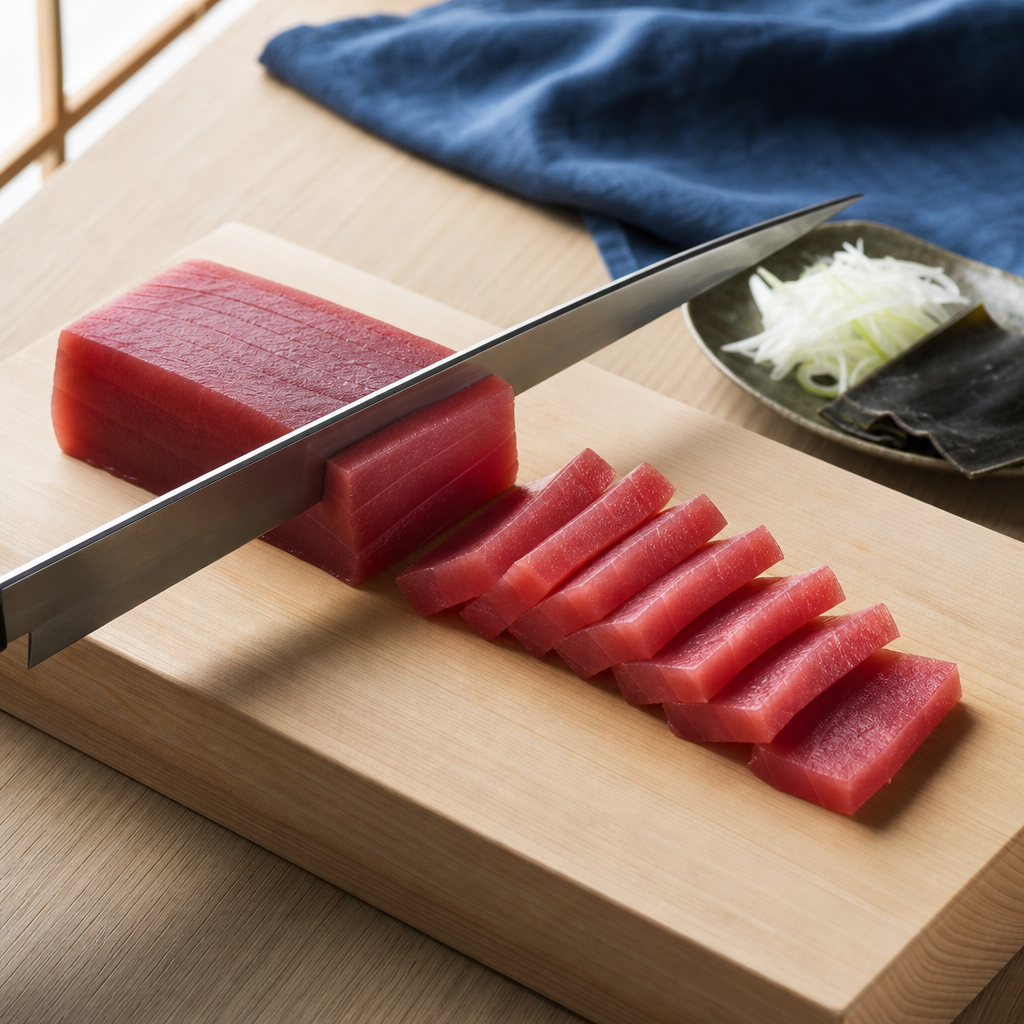
Use a long, sharp knife. Cut across the grain into 7-9 mm slices, pulling the knife from heel to tip in one stroke; do not saw back and forth.
Plate immediately
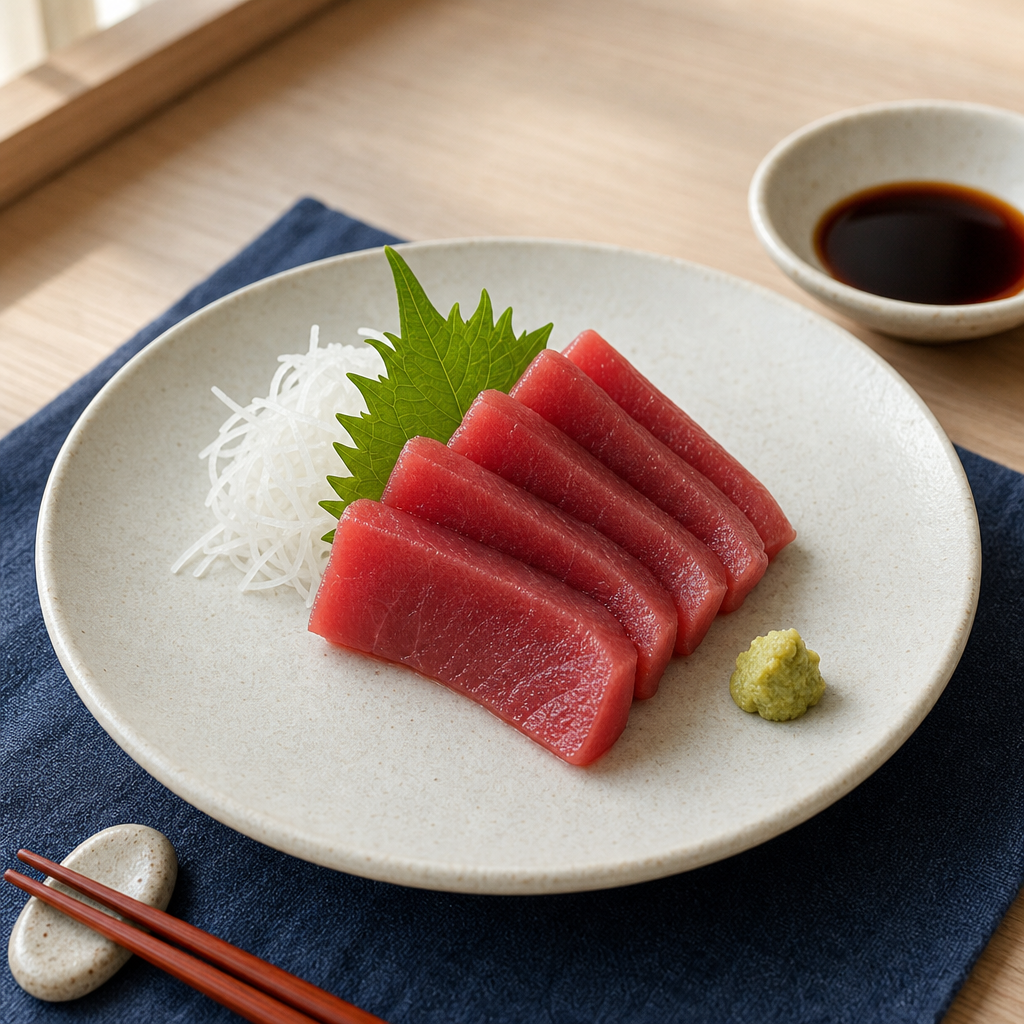
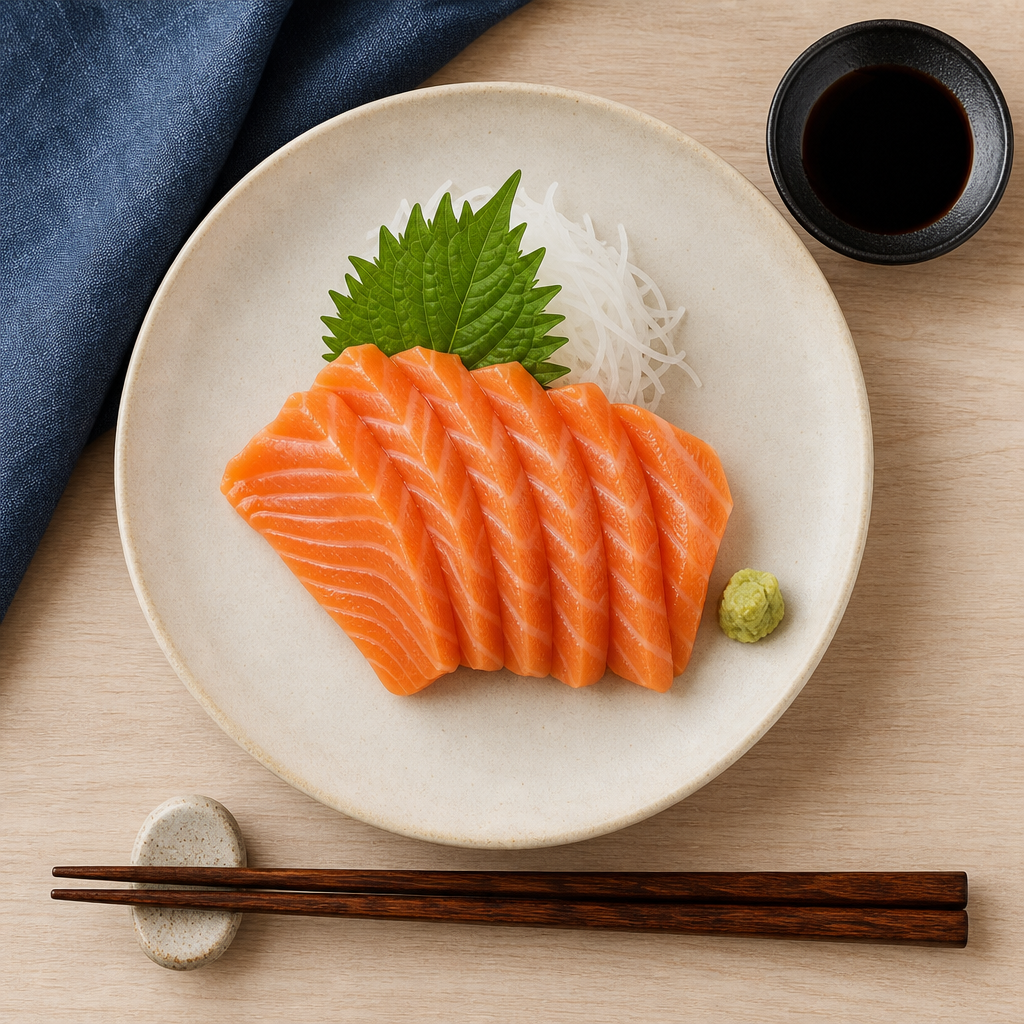
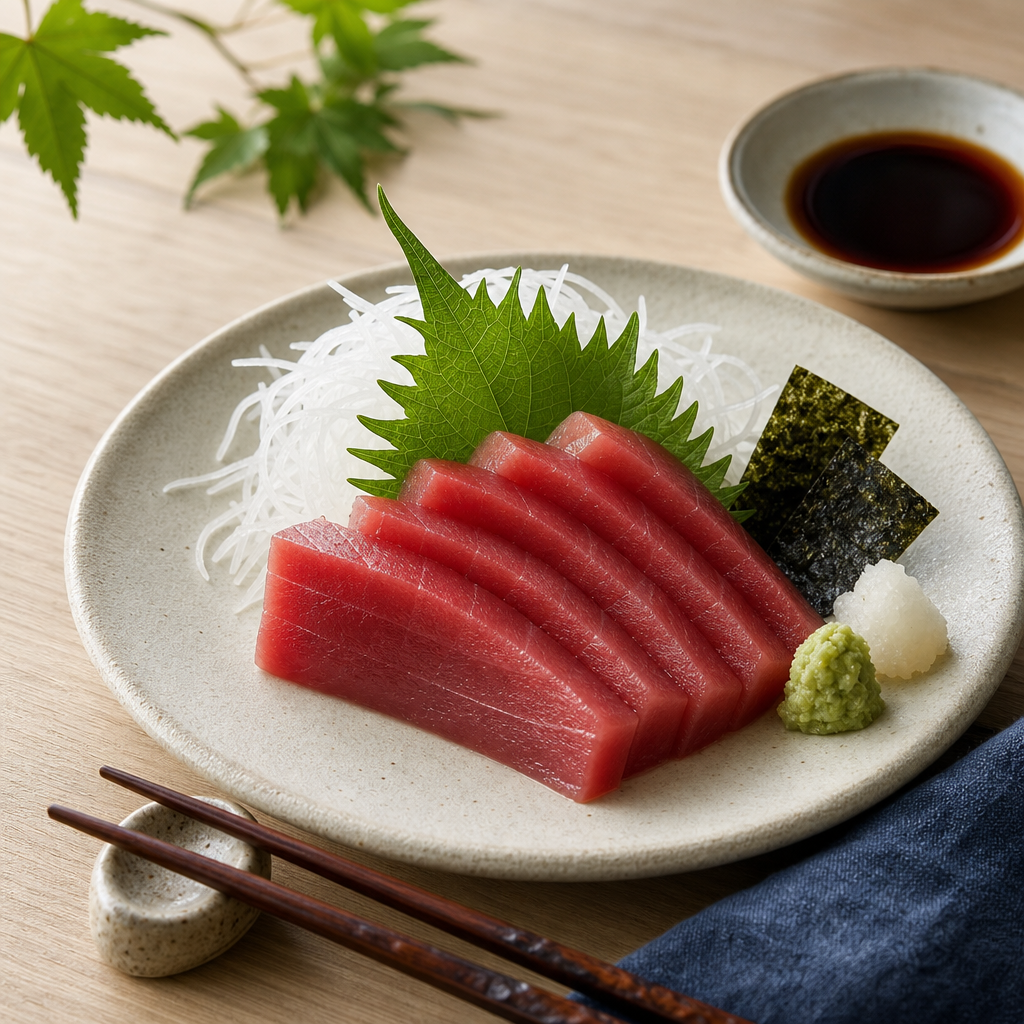
Arrange the slices in a slight overlap on the chilled plate. Add shredded daikon, shiso, and a small dab of wasabi to the side, not smeared over the fish.
Serve with soy on the side
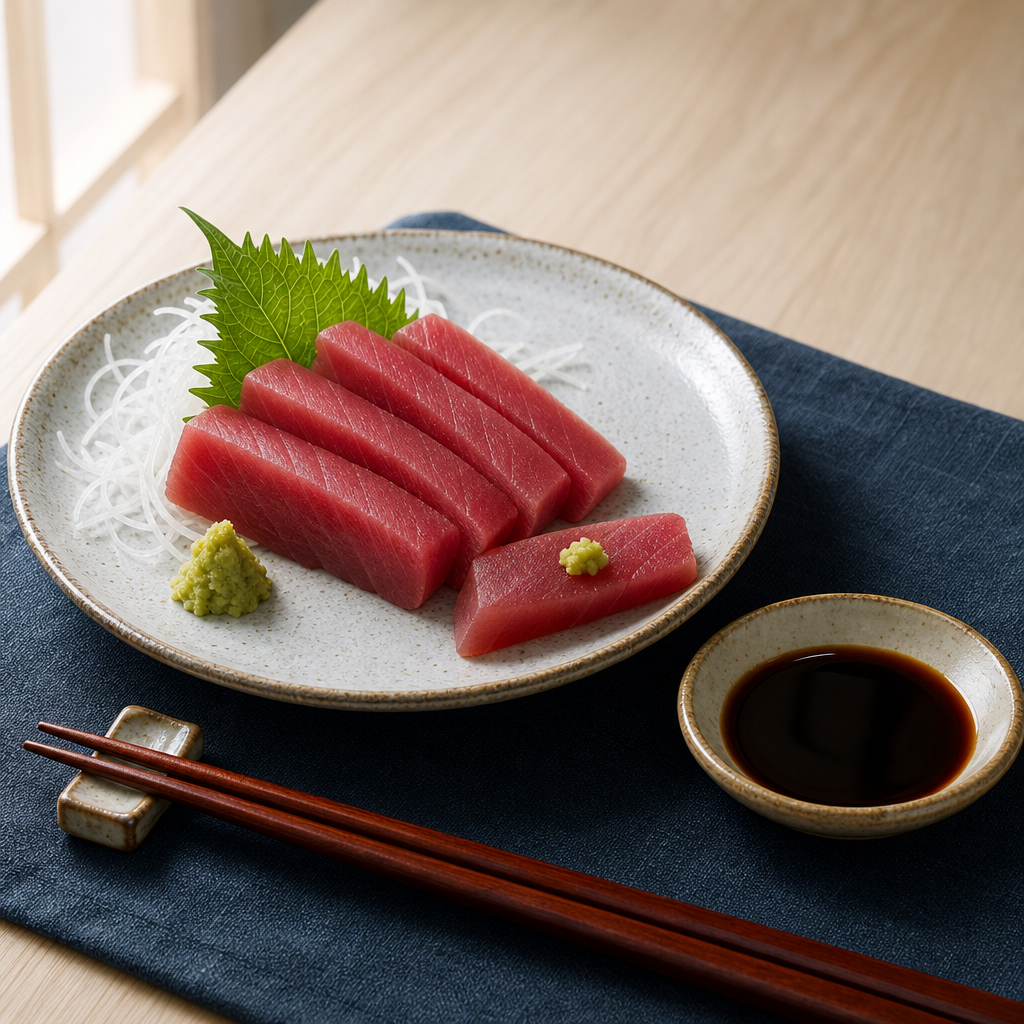
Pour soy sauce into a small dipping dish. Dab a trace of wasabi onto a slice if using, then dip one edge of the fish into soy sauce.
Common mistakes
- Using tuna that is merely fresh, not sold for raw consumption. Freshness and raw-safety handling are different questions.
- Letting the tuna warm on the counter. Warm tuna smears under the knife and develops a dull surface.
- Sawing through the fish. The cut face should be smooth, not ridged or woolly.
- Drowning the slices in soy sauce. Sashimi is dipped at the edge; it is not marinated on the plate.
- Pre-slicing too early. Tuna oxidizes fast, especially lean akami, and the edges turn flat and brown-red.
What does not belong
- Citrus marinade does not belong in tuna sashimi. That becomes ceviche, tiradito, or a Nikkei-style preparation.
- Sesame oil does not belong in this plate. It coats the tongue and buries the clean iron-rich taste of tuna.
- Mayonnaise, spicy mayo, or eel sauce does not belong. Those are roll-shop flavors, not maguro sashimi.
- Avocado does not belong on a traditional sashimi plate. It changes the dish into a fusion raw-fish plate.
- Sugar does not belong in the dipping sauce. Use Japanese soy sauce or tamari, not a sweet glaze.