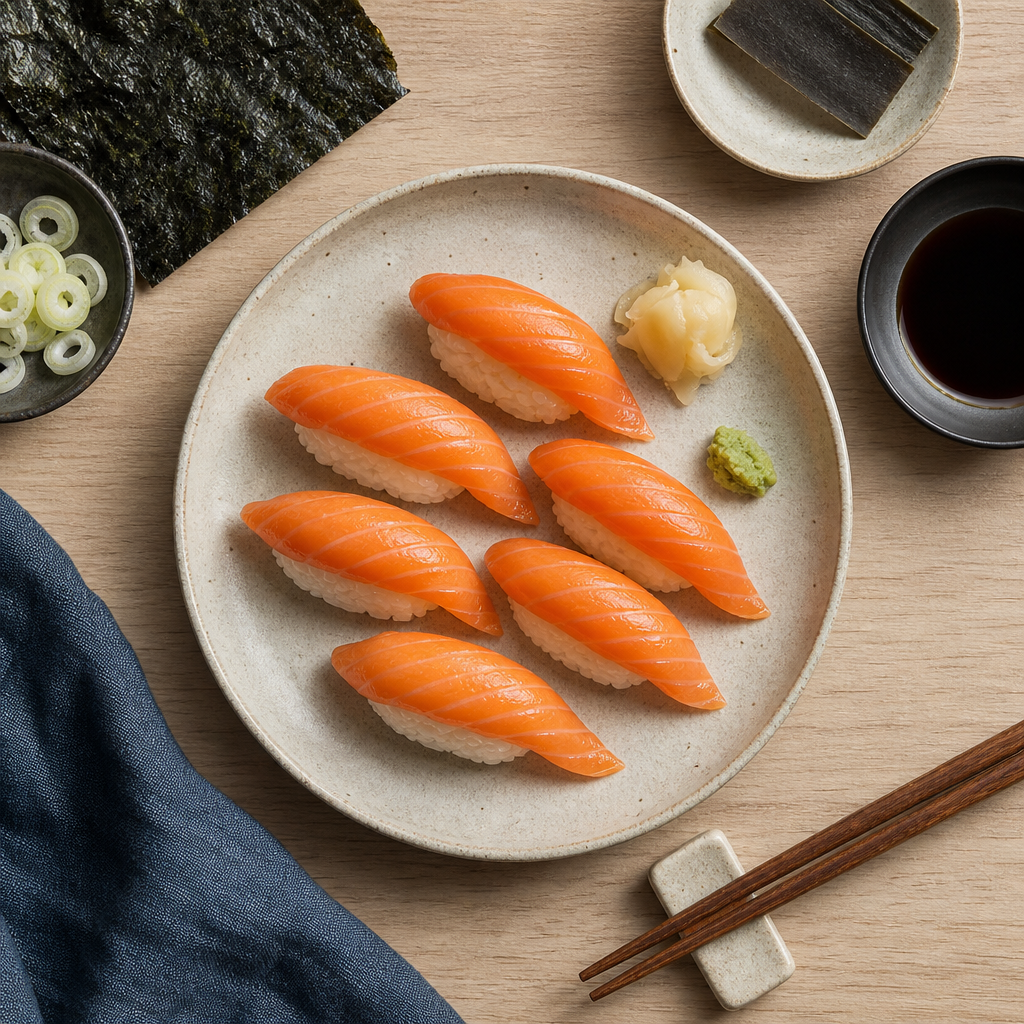
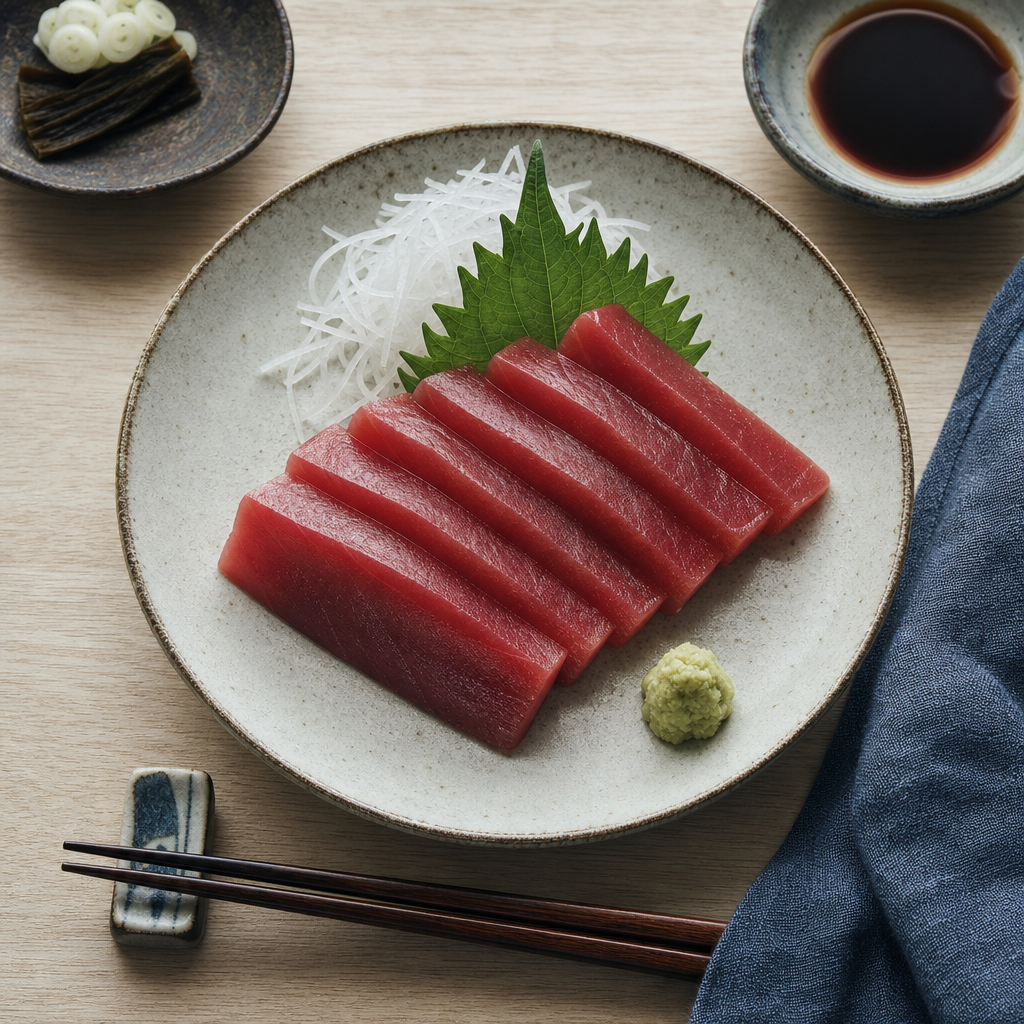
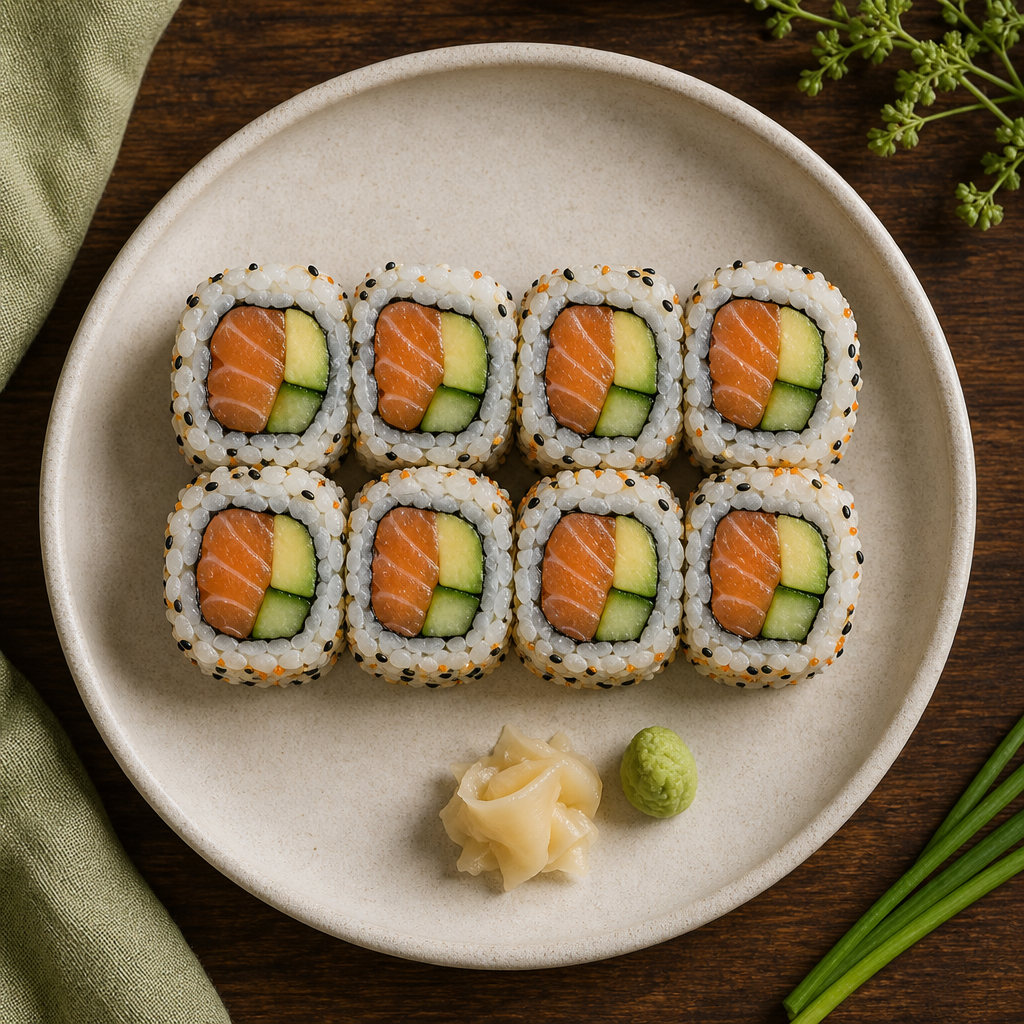
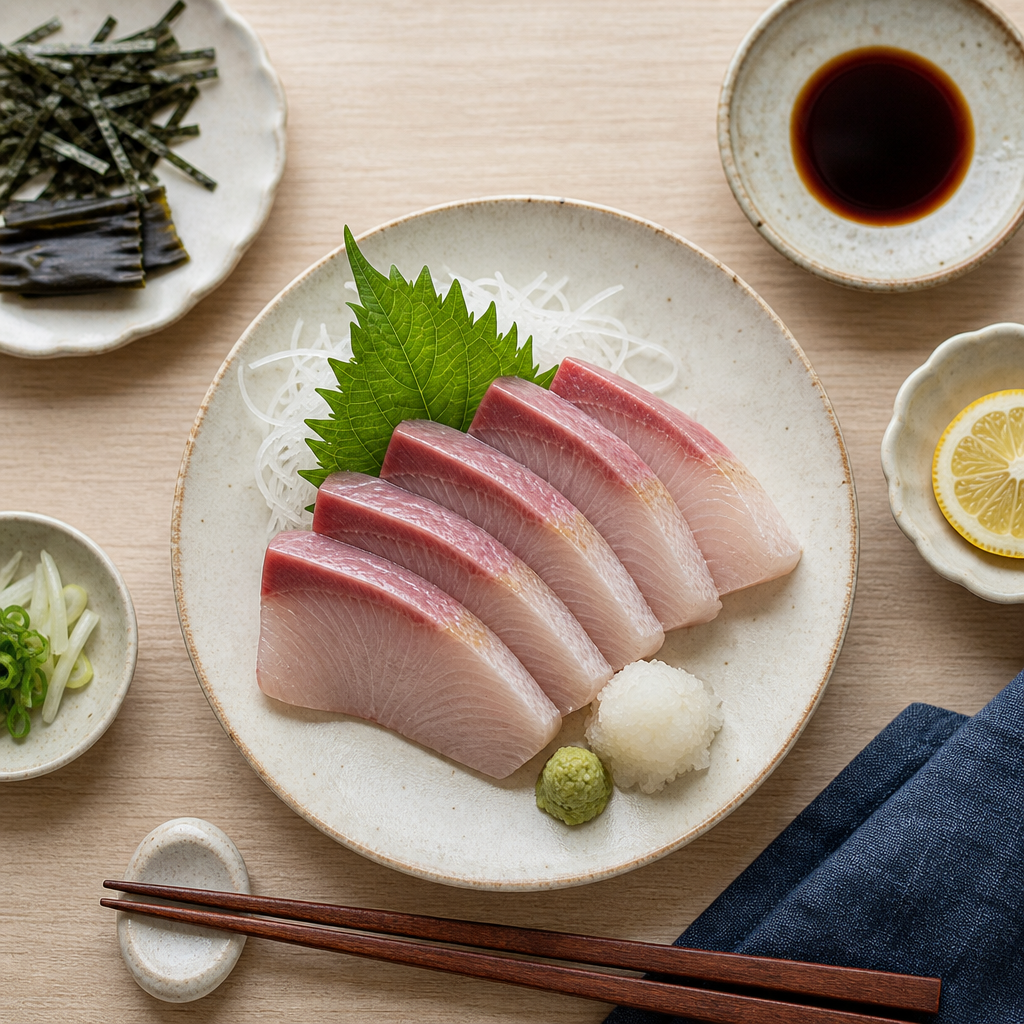
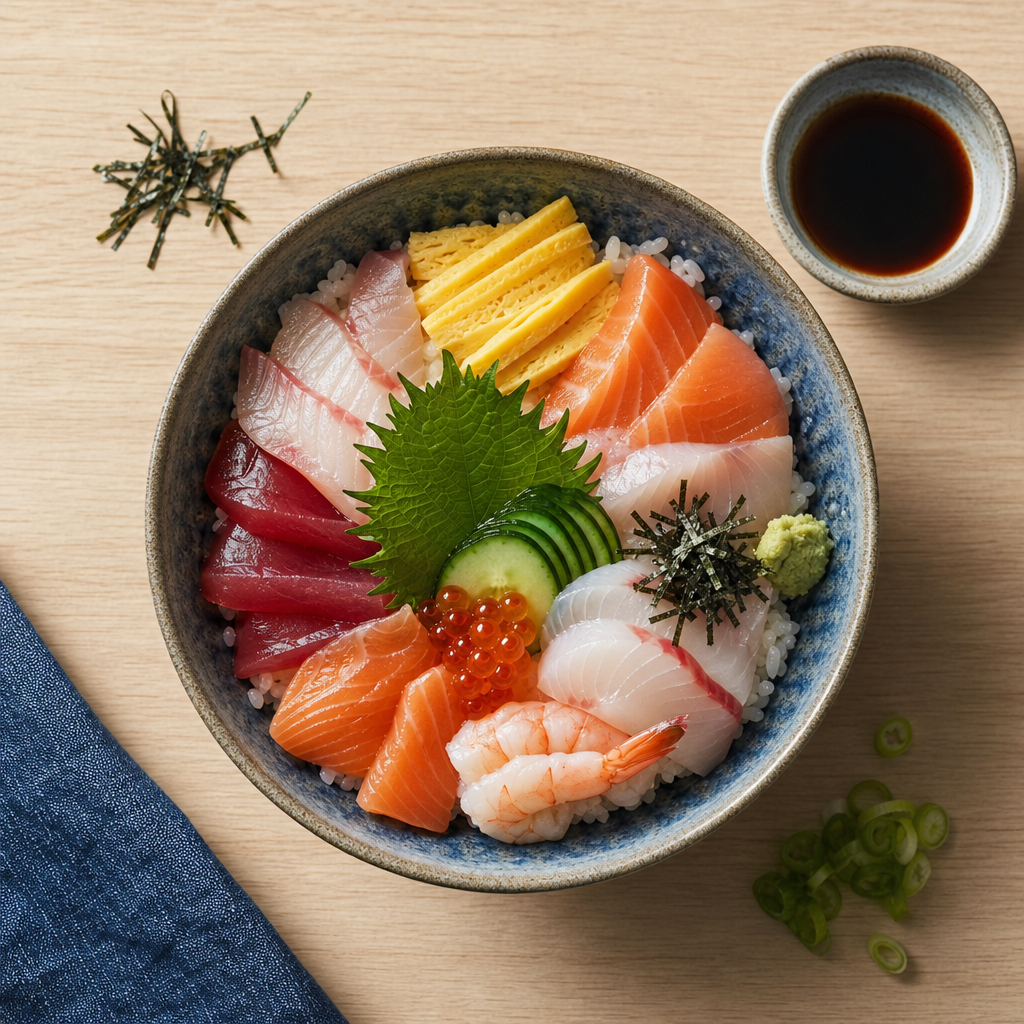
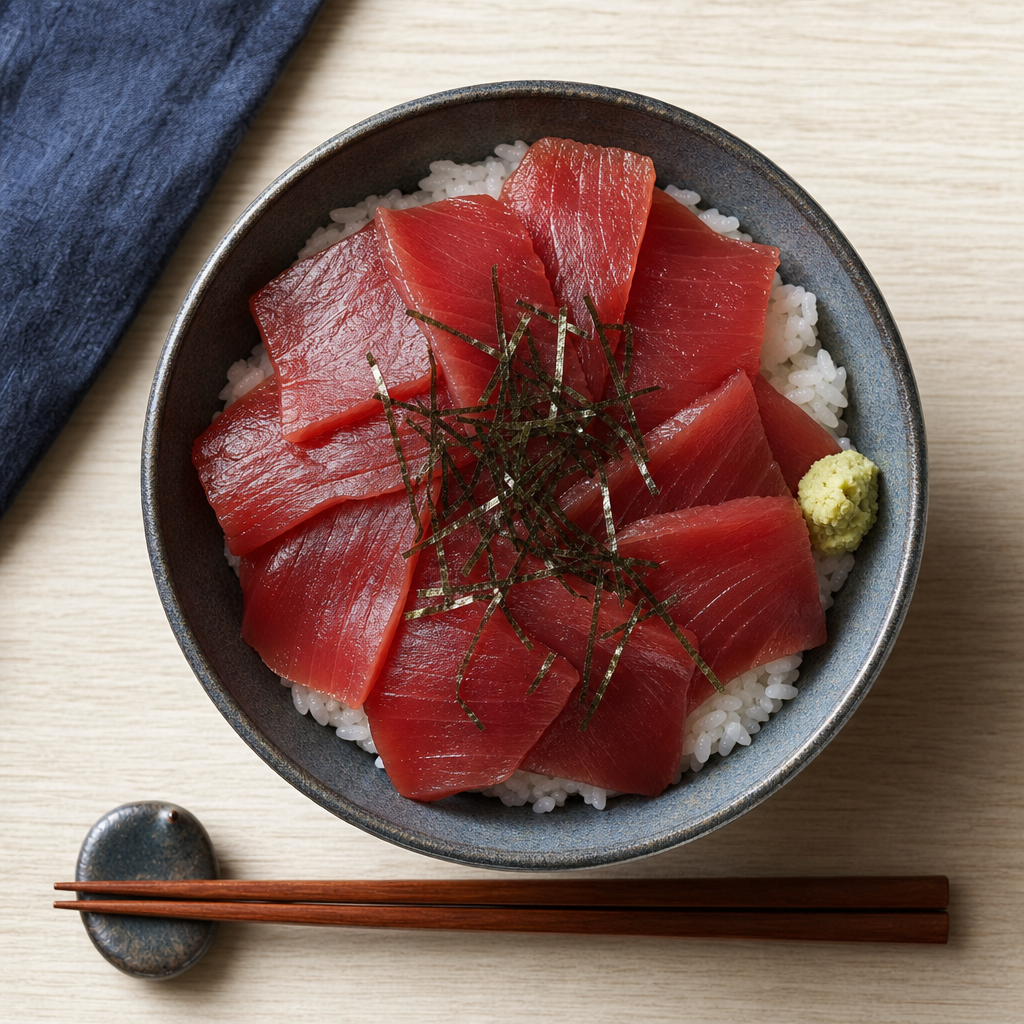
Salmon Sashimi
The dish in context
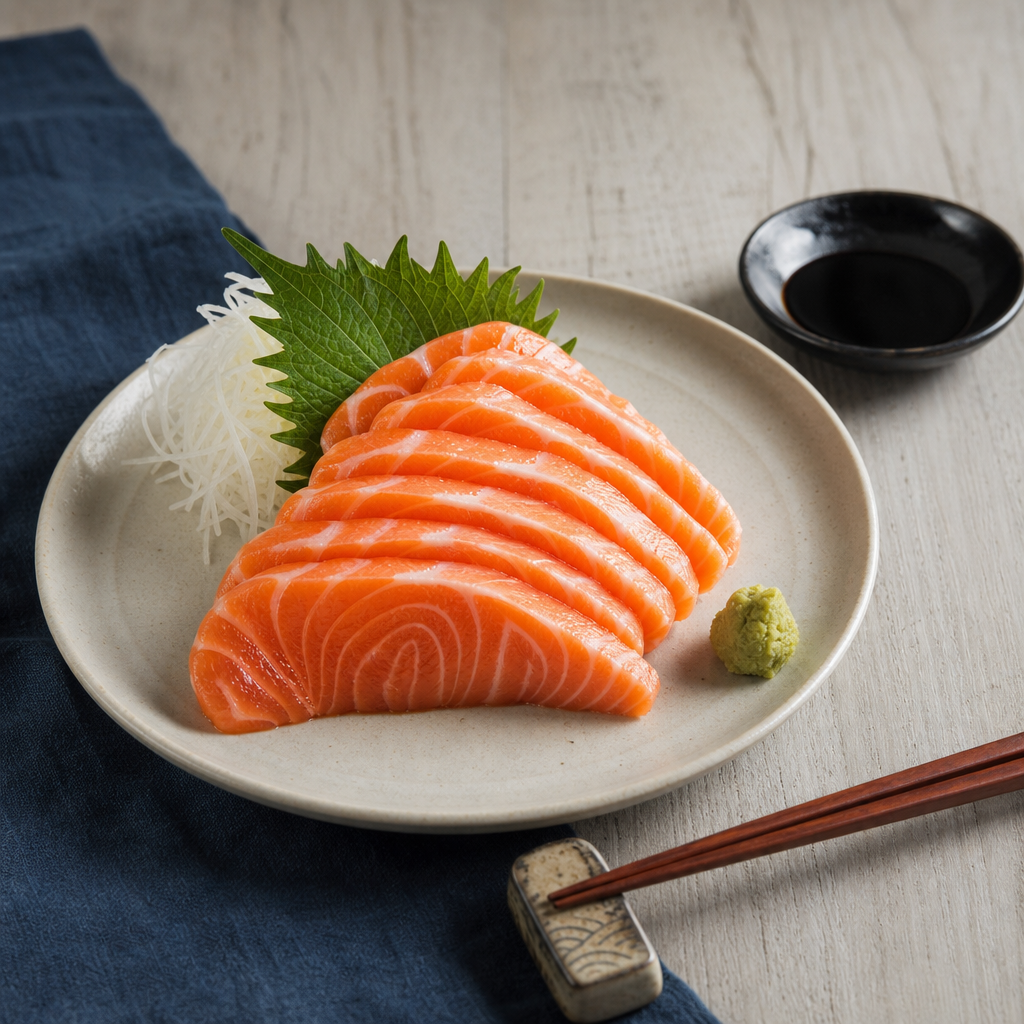
Sashimi (刺身) is the Japanese practice of serving raw, precisely cut seafood without rice; the knife work is the dish, not decoration. Salmon is a newer sashimi fish in Japan than tuna, sea bream, or squid, with farmed Atlantic salmon becoming common in the late 20th century as freezing and aquaculture addressed parasite risk. The Japanese term サーモン usually points to farmed salmon or trout salmon prepared for raw use, not any random wild salmon fillet. The household version is spare: fish, shoyu, wasabi, and a small garnish if wanted.
Method 7 steps · 15 min
Chill the plate and fish
Put the serving plate in the refrigerator or freezer for 10 minutes. Keep the salmon wrapped and refrigerated until the cutting board is ready.
Prepare the garnish
Rinse the shredded or grated daikon under cold water, then squeeze it dry. Set it in a small mound with shiso if using.
Inspect and trim the salmon
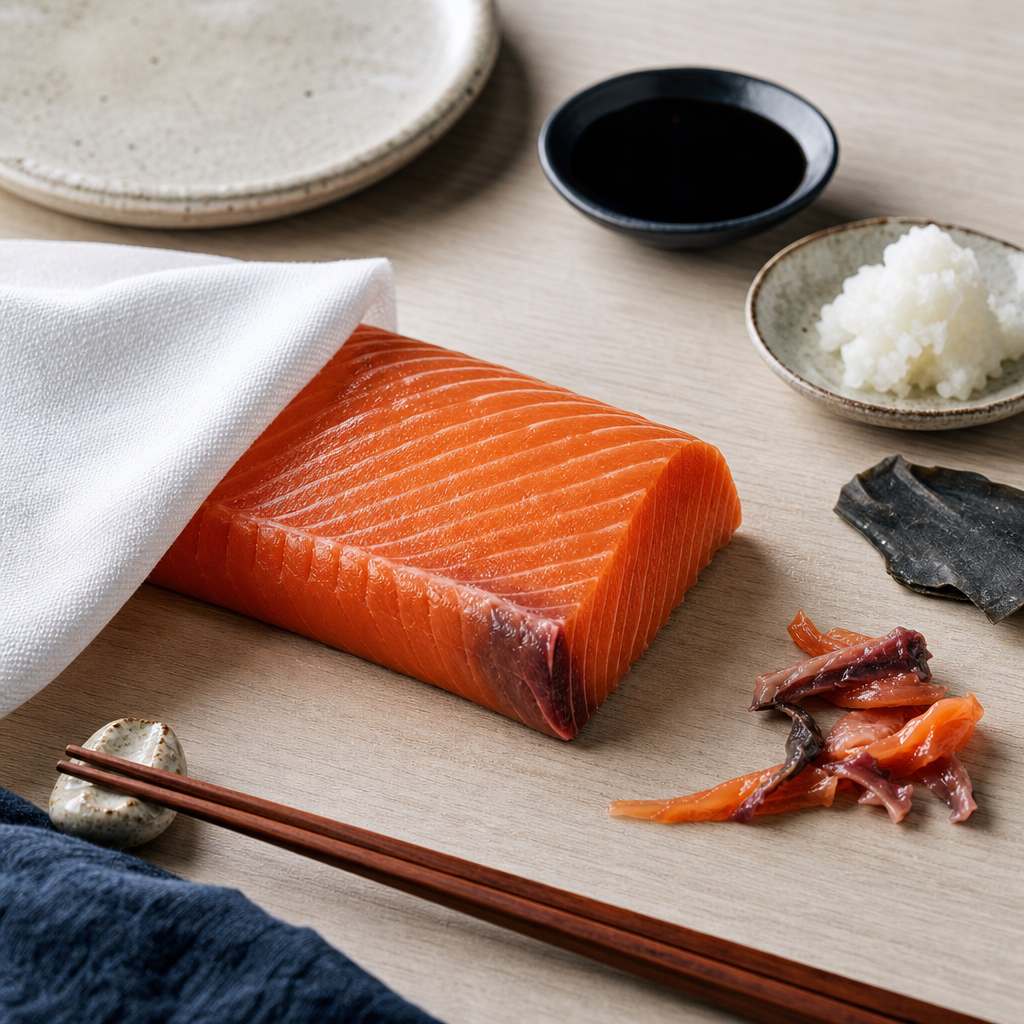
Remove any dark bloodline, ragged edges, or sinew from the salmon block. Pat the surface dry with a lint-free towel.
Orient the grain
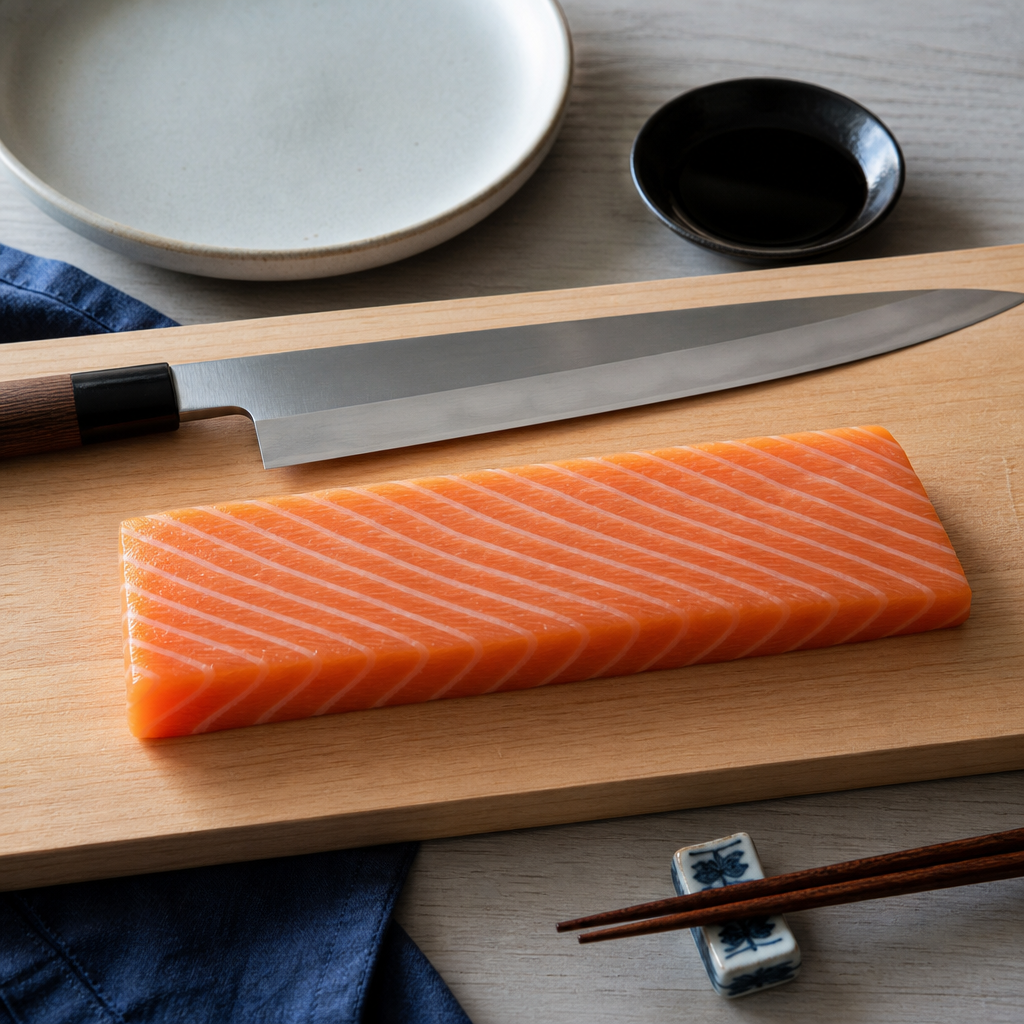
Set the salmon so the muscle lines run left to right, then plan cuts across those lines. Use a long, sharp slicing knife.
Slice in one stroke
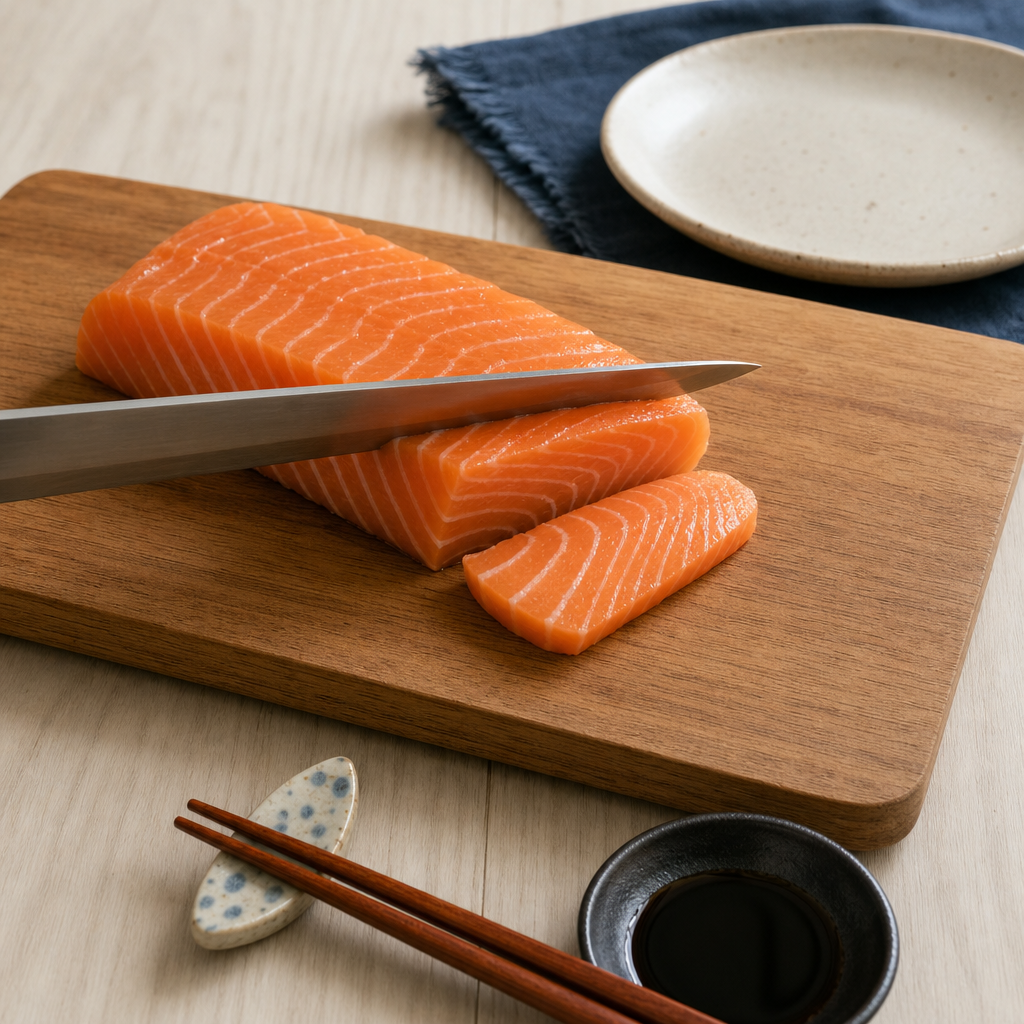
Cut slices 6-8 mm thick with one long pulling stroke from heel to tip. Do not saw back and forth.
Plate without crowding
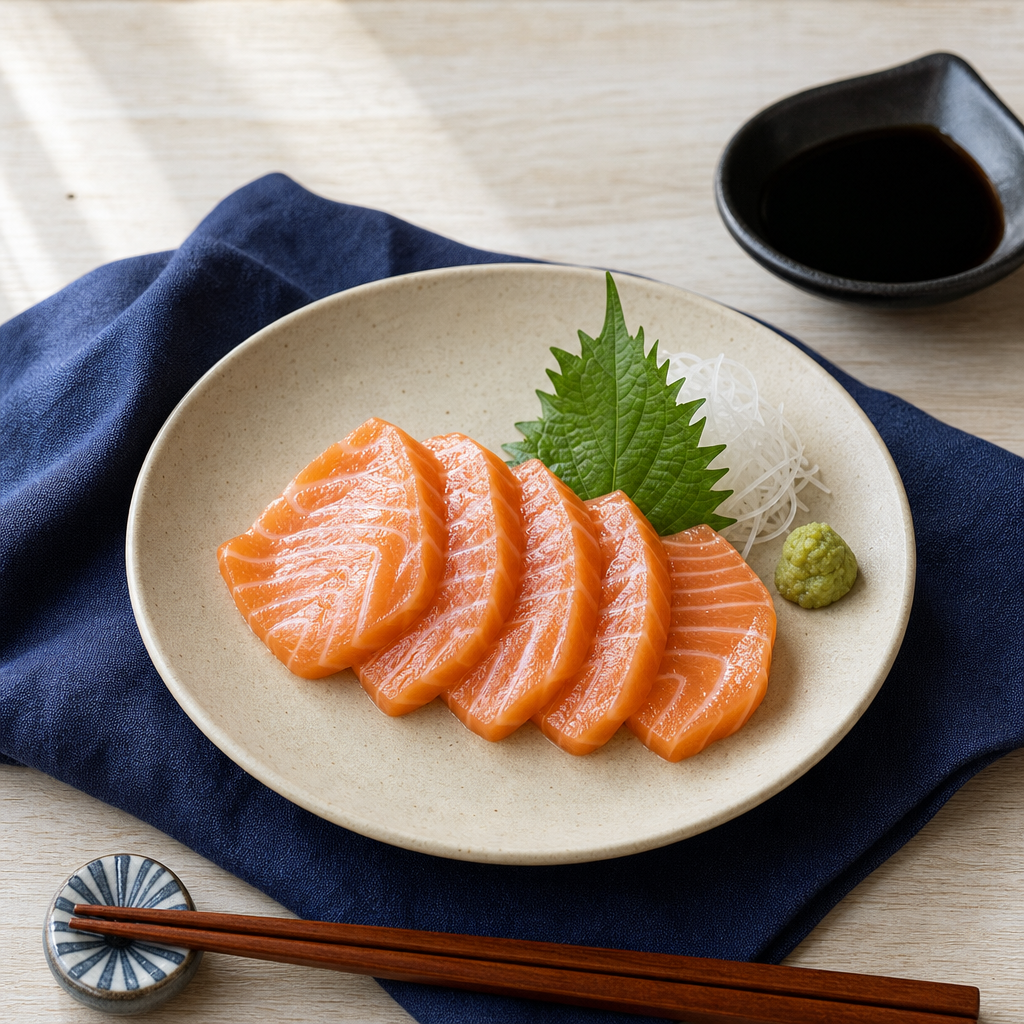
Lay the slices in a slight overlap, either in a fan or a straight row. Add daikon, shiso, and a small dab of wasabi to the side, not on top of every slice.
Serve with shoyu
Pour shoyu into a small dipping dish and serve immediately. Dip the fish lightly; do not soak it.
Common mistakes
- {'mistake': 'Using ordinary supermarket salmon because it smells fresh.', 'fix': 'Use salmon sold for raw consumption or confirmed previously frozen under a parasite-control process. Freshness and raw safety are different things.'}
- {'mistake': 'Slicing with a serrated knife or sawing motion.', 'fix': 'Use a long sharp knife and one pulling stroke. Ragged sashimi is a knife problem, not a plating problem.'}
- {'mistake': 'Cutting the salmon too thin.', 'fix': 'Aim for 6-8 mm. Paper-thin salmon warms fast and loses the fatty, clean bite expected from salmon sashimi.'}
- {'mistake': 'Leaving the salmon out while arranging garnishes.', 'fix': 'Prepare garnish first, then cut the fish last. The serving window is narrow.'}
- {'mistake': 'Mixing wasabi into soy sauce until it becomes green paste.', 'fix': 'Use a small amount of wasabi on the fish or dissolve a trace into the dip. A thick wasabi-soy slurry overwhelms the fish.'}
What does not belong
- {'item': 'sesame oil', 'reason': 'Sesame oil turns this into a dressed raw fish dish. It does not belong in plain salmon sashimi.'}
- {'item': 'mayonnaise or spicy mayo', 'reason': 'Mayo belongs to some international sushi rolls and poke-style bowls, not sashimi.'}
- {'item': 'teriyaki sauce', 'reason': 'Teriyaki is a cooked glaze. Sweet sauce on raw salmon erases the clean salt-fat balance.'}
- {'item': 'lemon juice squeezed over the fish', 'reason': 'Acid starts curing the surface and makes the fish opaque. Serve citrus only if making a separate modern sashimi variation.'}
- {'item': 'random microgreens and edible flowers', 'reason': 'They make the plate look busy and add aromas that fight the fish. Sashimi plating is restrained for a reason.'}
- {'item': 'long marinade in soy sauce', 'reason': 'That is zuke-style preparation, not plain sashimi. Soy-cured salmon is a separate dish.'}