Salmon Nigiri
The dish in context
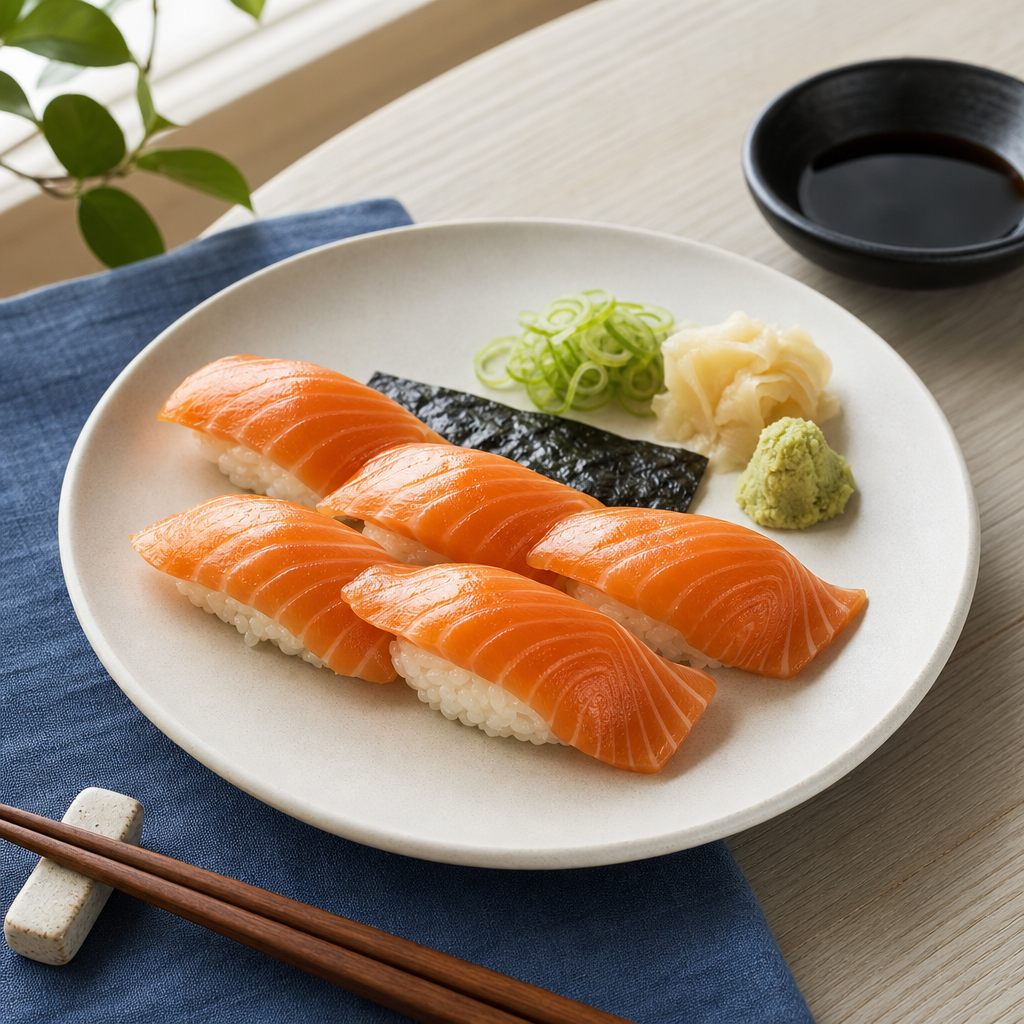
Nigiri sushi developed in Edo, now Tokyo, as a compact form of seasoned rice topped with fish and eaten by hand. Salmon nigiri is not old-line Edomae orthodoxy; raw salmon became widely accepted in Japan much later, especially with the rise of parasite-controlled farmed Atlantic salmon and global sushi supply chains. That does not make it fake. It makes it modern Japanese sushi: common in kaitenzushi, home sushi sets, and international sushi counters, but still governed by the same rice, knife, and shaping discipline as older toppings.
Method 9 steps · 75 min
Wash and soak the rice
Wash the rice in 3-5 changes of cold water until the water runs nearly clear. Drain well, then soak with the measured water for 30 minutes. Add the kombu if using.
Cook and rest
Cook the rice in a rice cooker, or bring it to a boil in a covered heavy saucepan, reduce to low, cook 12 minutes, then rest off heat 10 minutes without lifting the lid. Remove the kombu before seasoning.
Make sushi vinegar
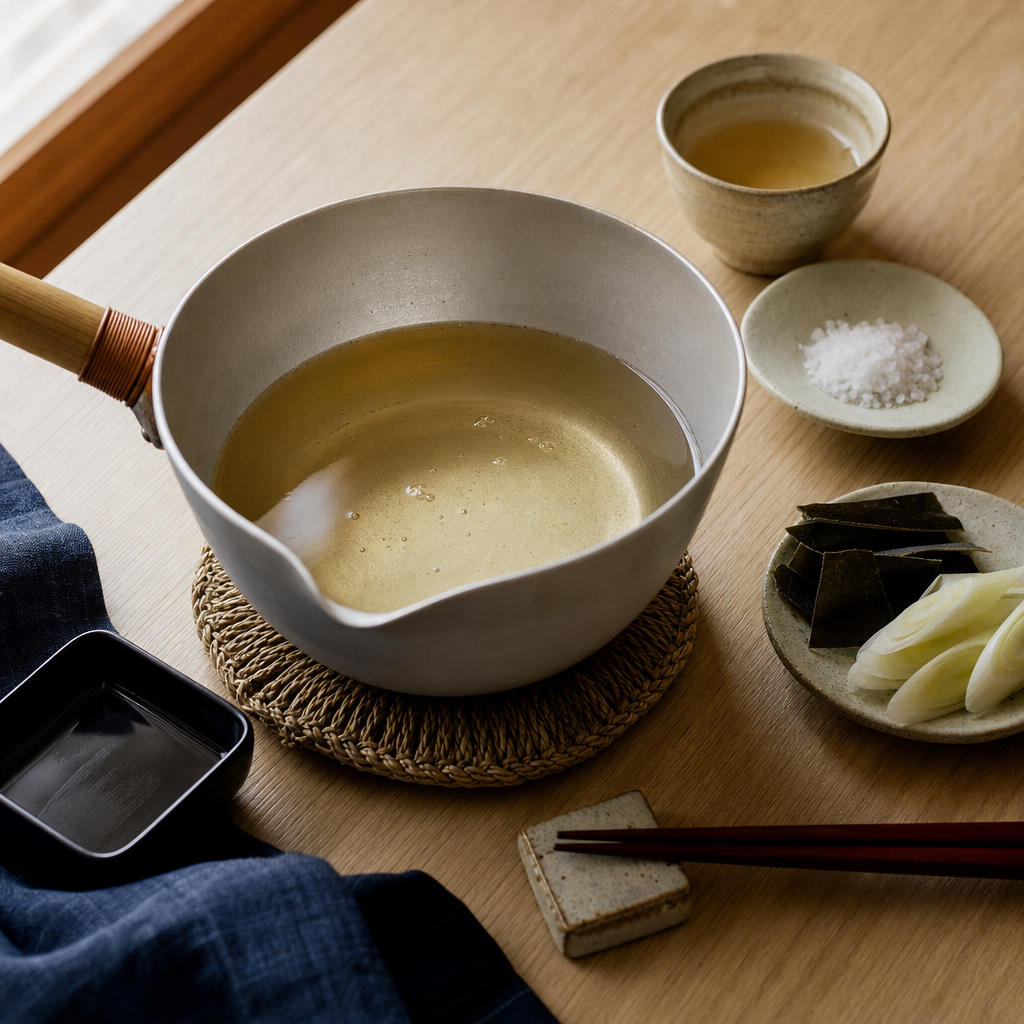
Warm the rice vinegar, sugar, and salt only until dissolved; do not boil hard. Cool to room temperature while the rice finishes.
Season the rice
Transfer hot rice to a wide wooden hangiri or a shallow nonreactive tray. Sprinkle the sushi vinegar over the rice and fold with a rice paddle using cutting motions while fanning until the grains look glossy and the rice is warm, not hot.
Prepare the salmon block
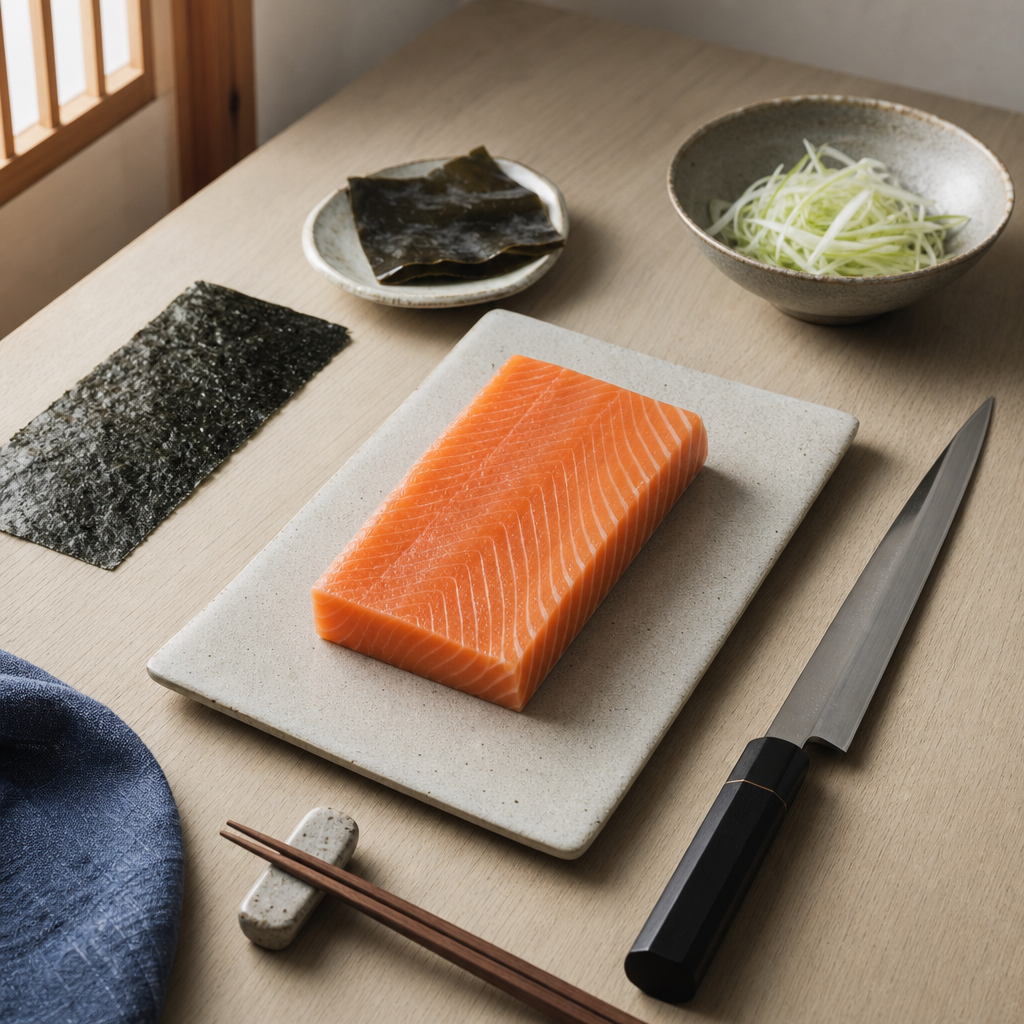
Keep the salmon cold until the moment of slicing. Trim ragged edges, then orient the block so the knife cuts across the visible connective lines rather than along them.
Slice the neta
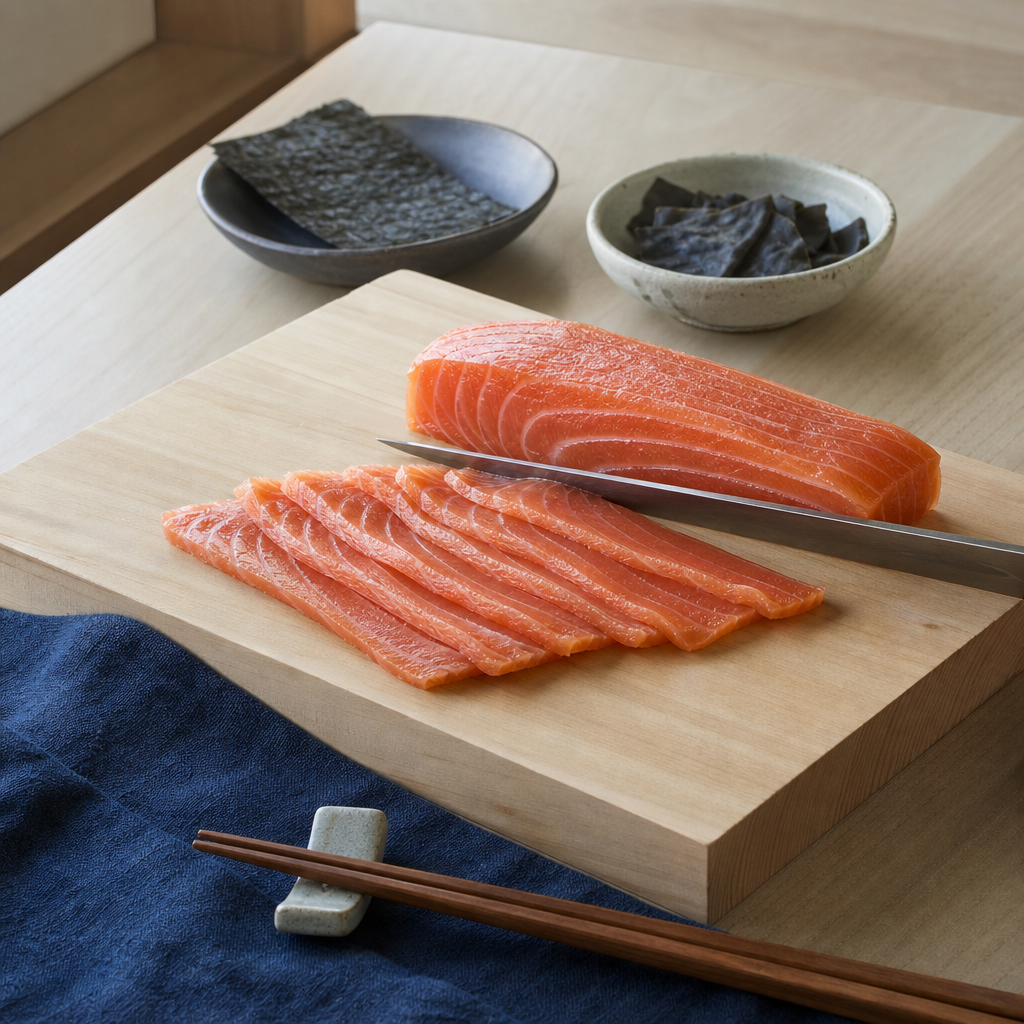
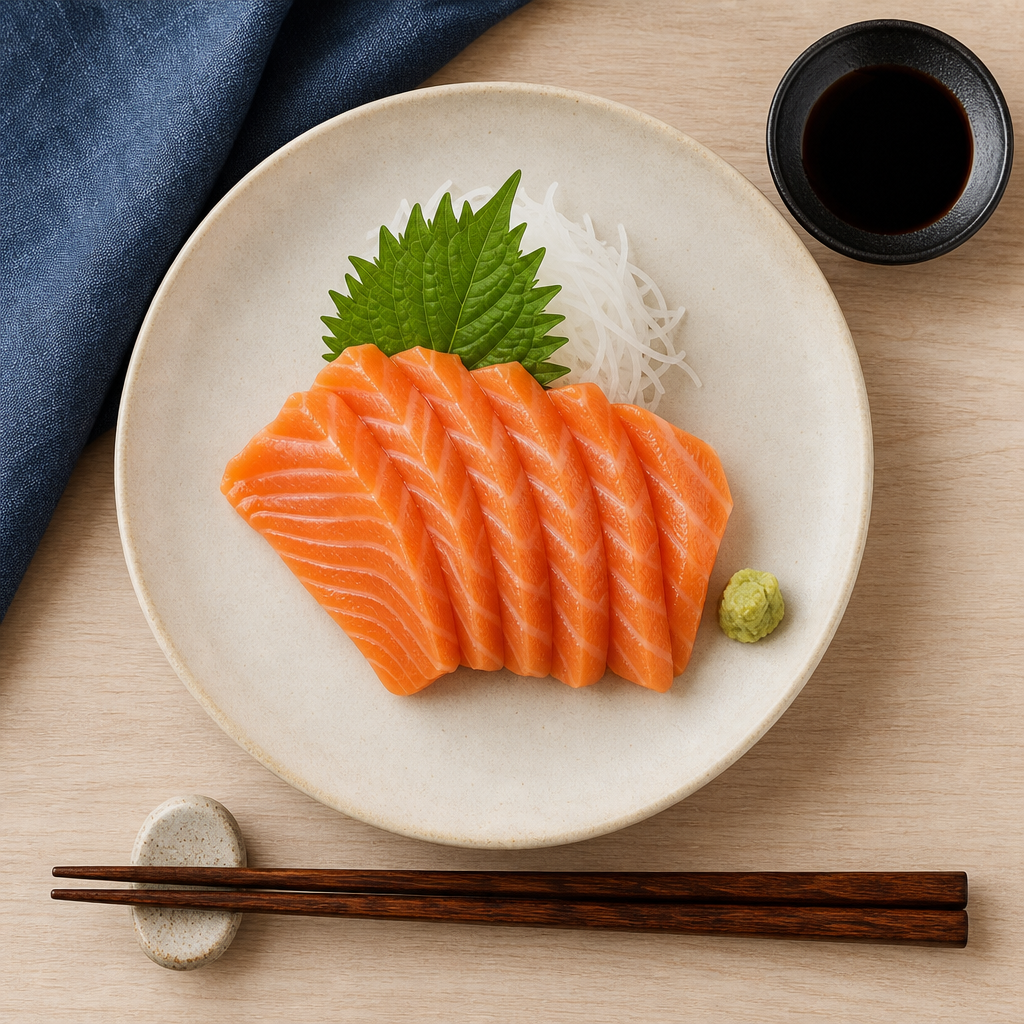
With a very sharp long knife, cut 16 slices, each about 6-7 cm long, 3 cm wide, and 3-4 mm thick. Use one smooth pulling stroke at a shallow angle; do not saw.
Shape the rice
Dip fingertips lightly in tezu and shake off excess. Pick up 18-20 g warm sushi rice and form a small oval with light pressure: firm outside, airy center.
Assemble the nigiri
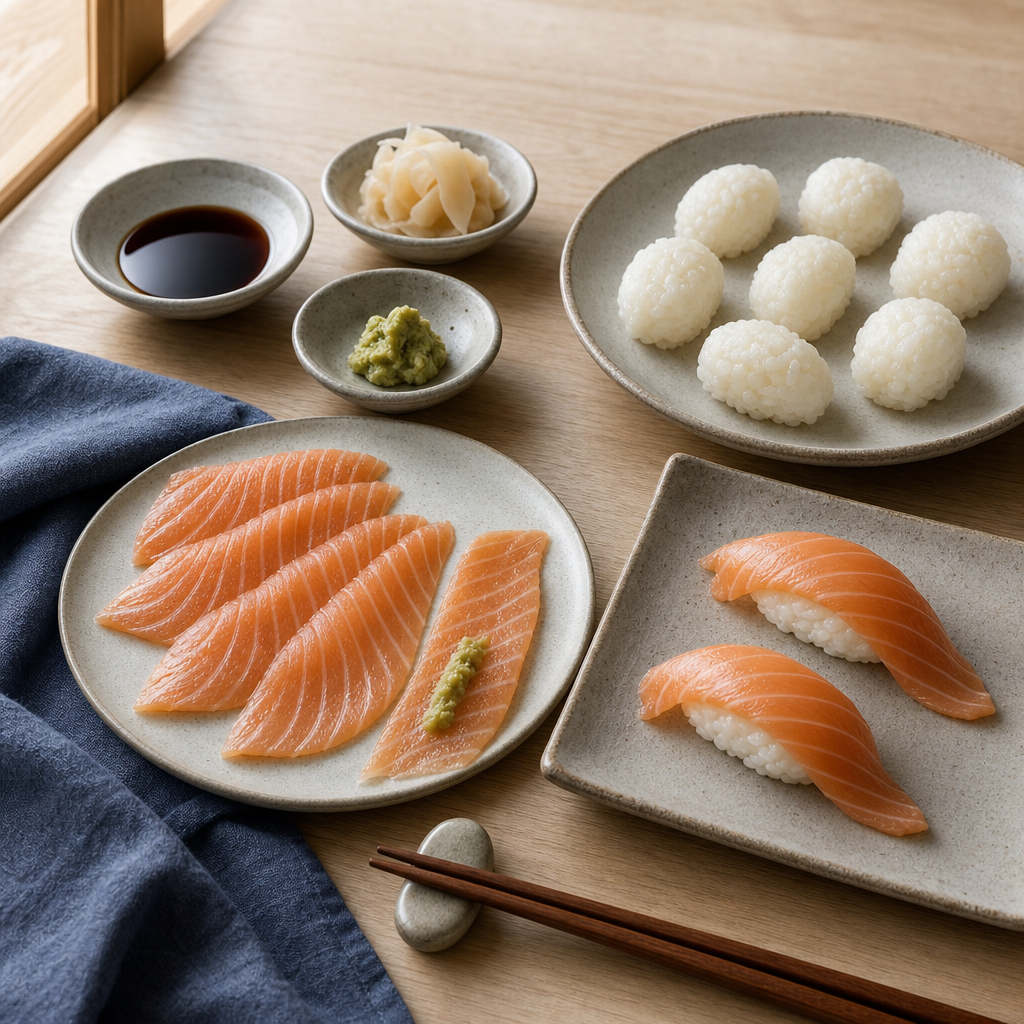
Lay one salmon slice across the fingers of the non-dominant hand. Add a tiny smear of wasabi to the underside of the fish, place the rice on top, press once along the center, turn fish-side up, and press the sides and top lightly to finish.
Serve
Serve immediately with koikuchi shoyu and gari. Dip fish-side down into soy sauce; rice-side dipping soaks and breaks the shari.
Common mistakes
- {'mistake': 'Using cooked rice after it has gone cold.', 'fix': 'Shape at body temperature. Cold shari firms up and loses the soft release that nigiri needs.'}
- {'mistake': 'Buying ordinary salmon fillet and serving it raw.', 'fix': "Use salmon sold for raw consumption from a fishmonger who can explain its freezing and handling. The word 'fresh' is not a parasite-control plan."}
- {'mistake': 'Slicing salmon straight down into thick blocks.', 'fix': 'Use a shallow angle and one pulling stroke. The slice should bend over the rice, not sit on it like a tile.'}
- {'mistake': 'Packing the rice too tightly.', 'fix': 'Press the exterior enough to hold, then stop. The center should retain air.'}
- {'mistake': 'Dipping the rice side in soy sauce.', 'fix': 'Invert slightly and touch only the fish side to soy. Soaked rice collapses and tastes mostly of salt.'}
What does not belong
- Long-grain rice does not belong in nigiri. It lacks the sticky-elastic structure required for shari.
- Teriyaki sauce does not belong on raw salmon nigiri. That is a glaze for cooked fish.
- Mayonnaise and onion do not belong in this baseline version. They are common kaitenzushi-style variants, not the clean form of salmon nigiri.
- Sesame oil does not belong. It smothers the fish and makes the rice taste like a different dish.
- Cream cheese does not belong. That is international roll logic, not nigiri logic.
- A thick wasabi paste mixed into the soy sauce does not belong. Wasabi belongs between fish and rice, with soy used sparingly.