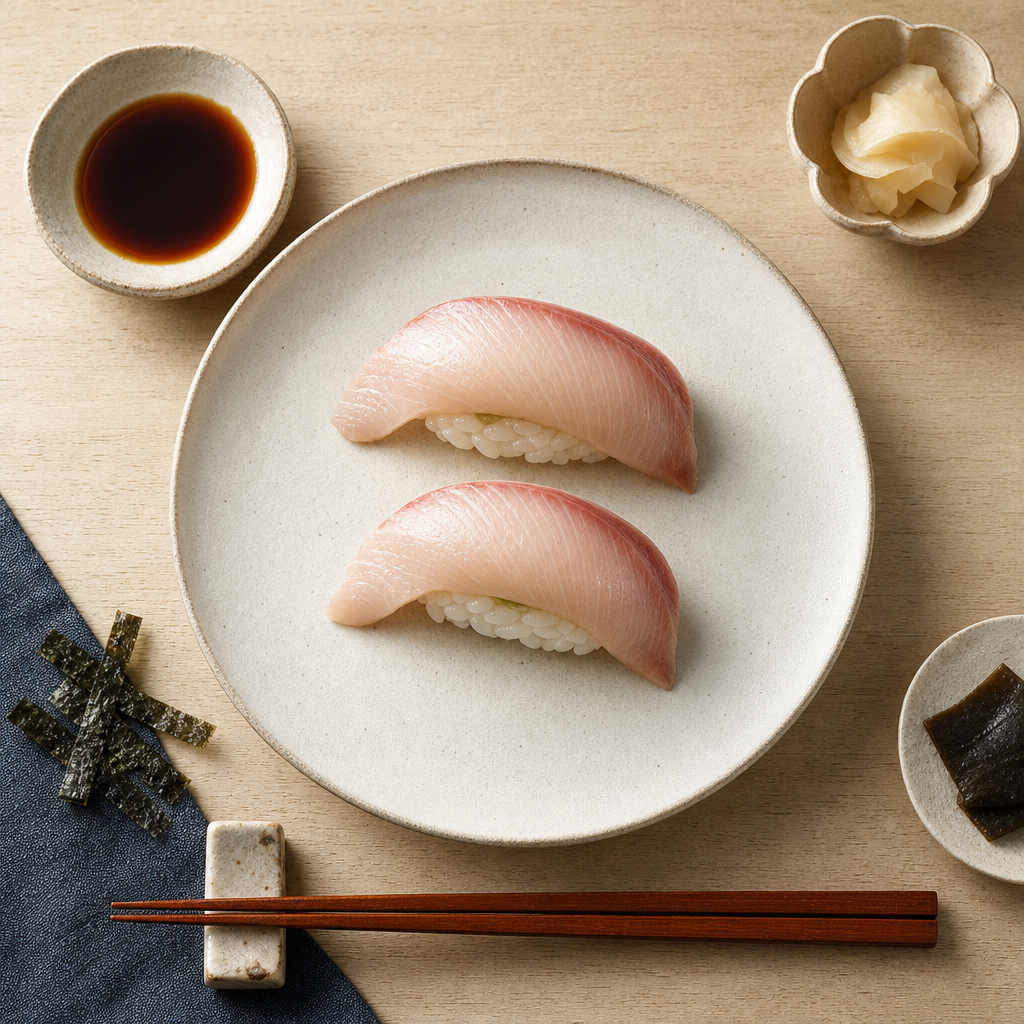
Yellowtail Sashimi
The dish in context
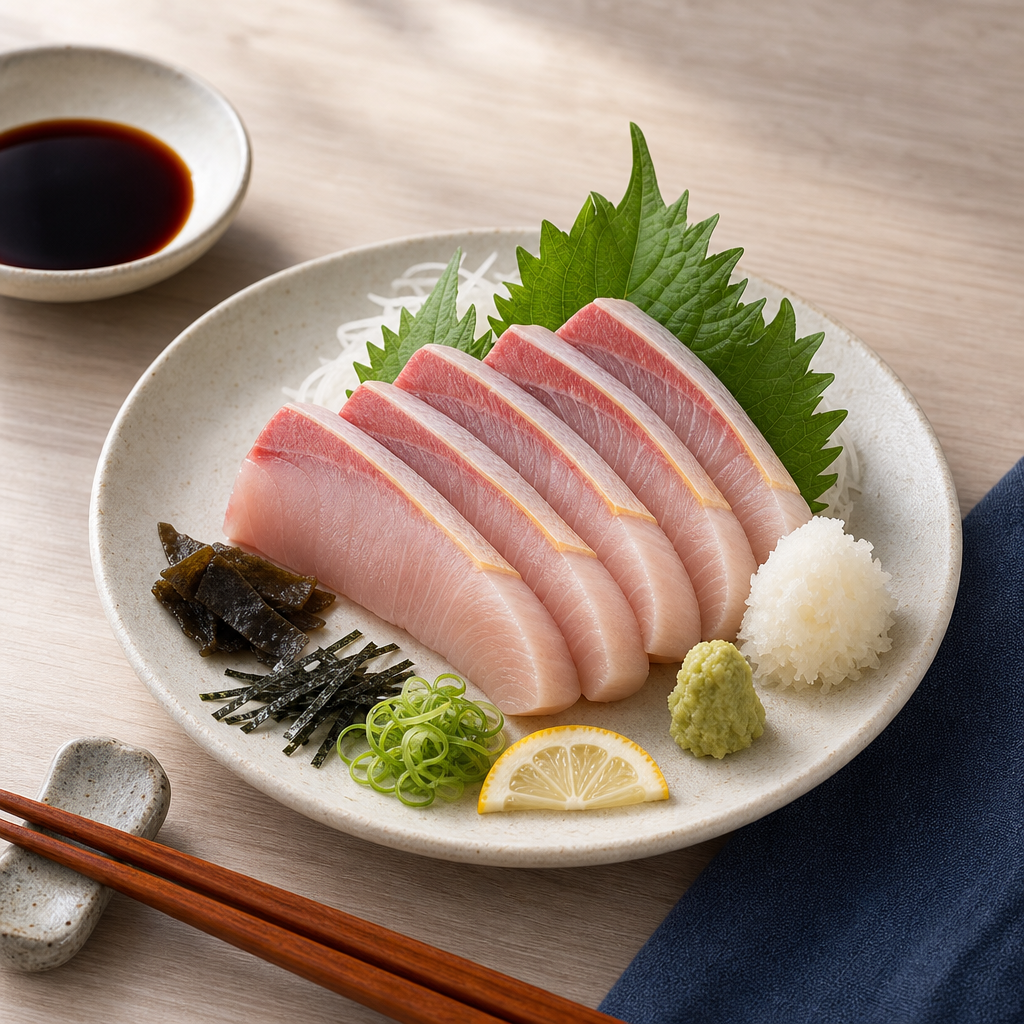
Buri (ブリ, Japanese amberjack; Seriola quinqueradiata) is a major sashimi fish in Japan, especially in winter when mature buri carries more fat. The same fish is named differently by size and region; hamachi often refers to younger or farmed yellowtail, while buri usually indicates the larger mature fish. Sashimi as a service is built around cut quality, temperature, and restraint rather than dressing. Modern home versions rely on sashimi-designated fillets from fishmongers or Japanese markets; whole-fish butchery is a different skill set and does not belong in a beginner recipe.
Method 6 steps · 20 min
Chill the fish and plate
Put the serving plate in the refrigerator. Keep the yellowtail block wrapped and cold until the cutting board is ready; 10 minutes in the freezer is acceptable if the fish is soft but not frozen hard.
Prepare the garnishes
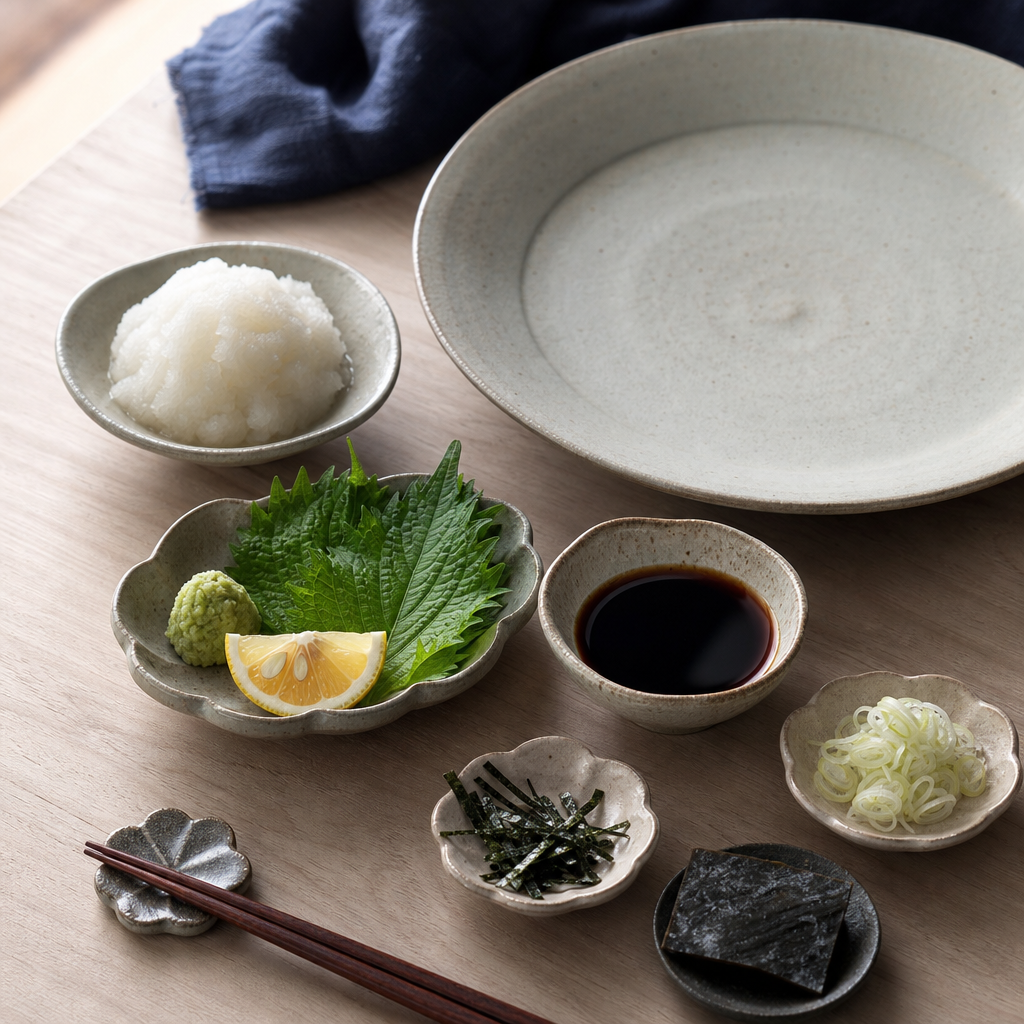
Grate the daikon and squeeze it lightly so it holds as a damp mound, not a puddle. Set out shiso, wasabi, citrus, and a small dipping dish of shoyu.
Dry the yellowtail
Unwrap the fish and blot every surface with clean paper towel. Trim away any oxidized dark edge or ragged flap.
Slice in one stroke
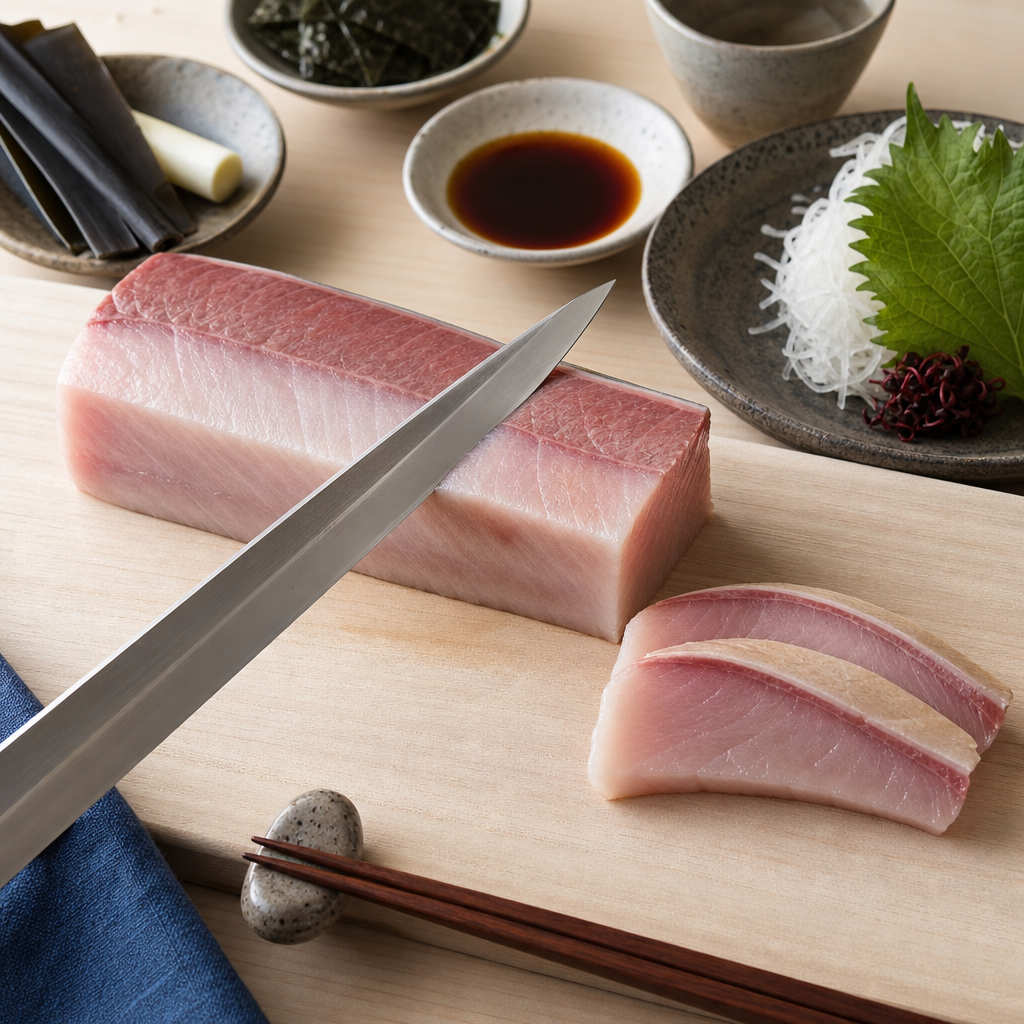
Place the block so the grain runs left to right. Hold a long sharp knife at a slight angle and pull from heel to tip in one continuous stroke, cutting slices about 7-10 mm thick.
Plate cold
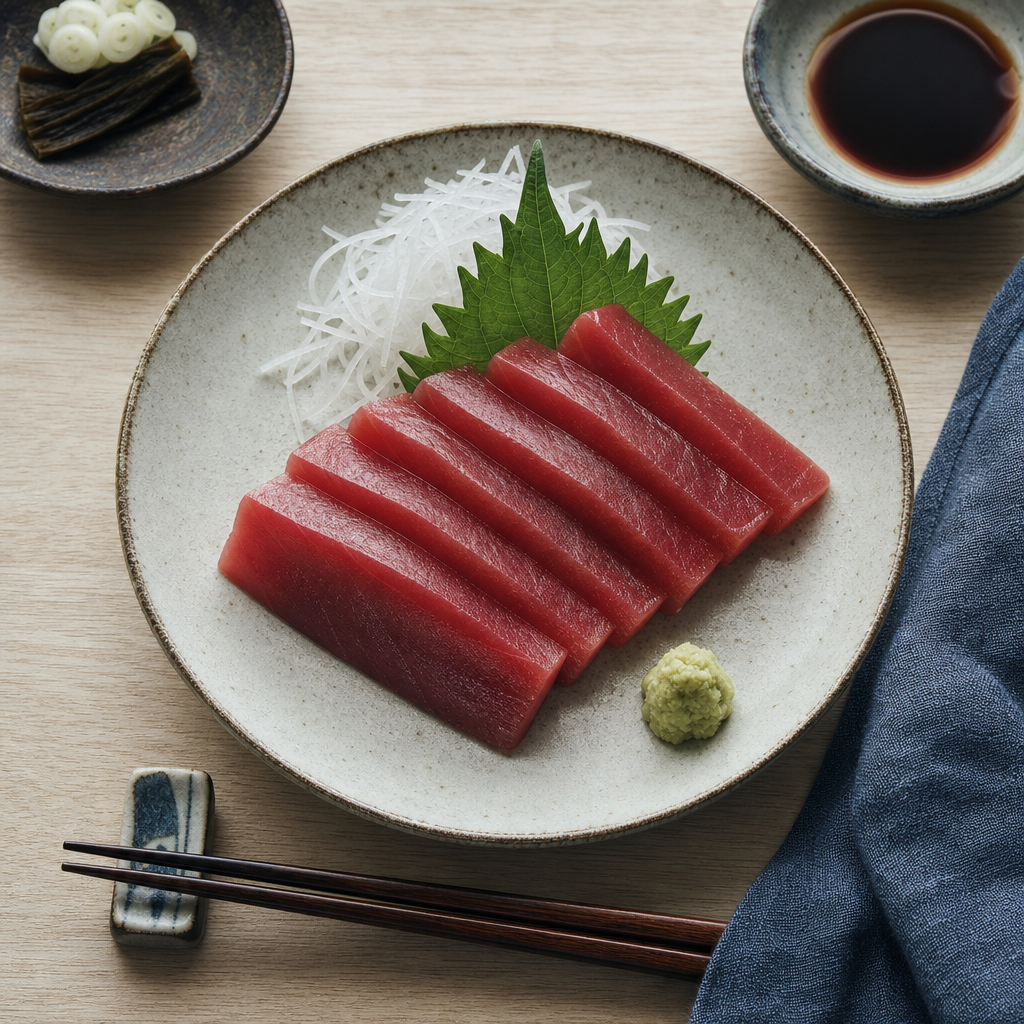
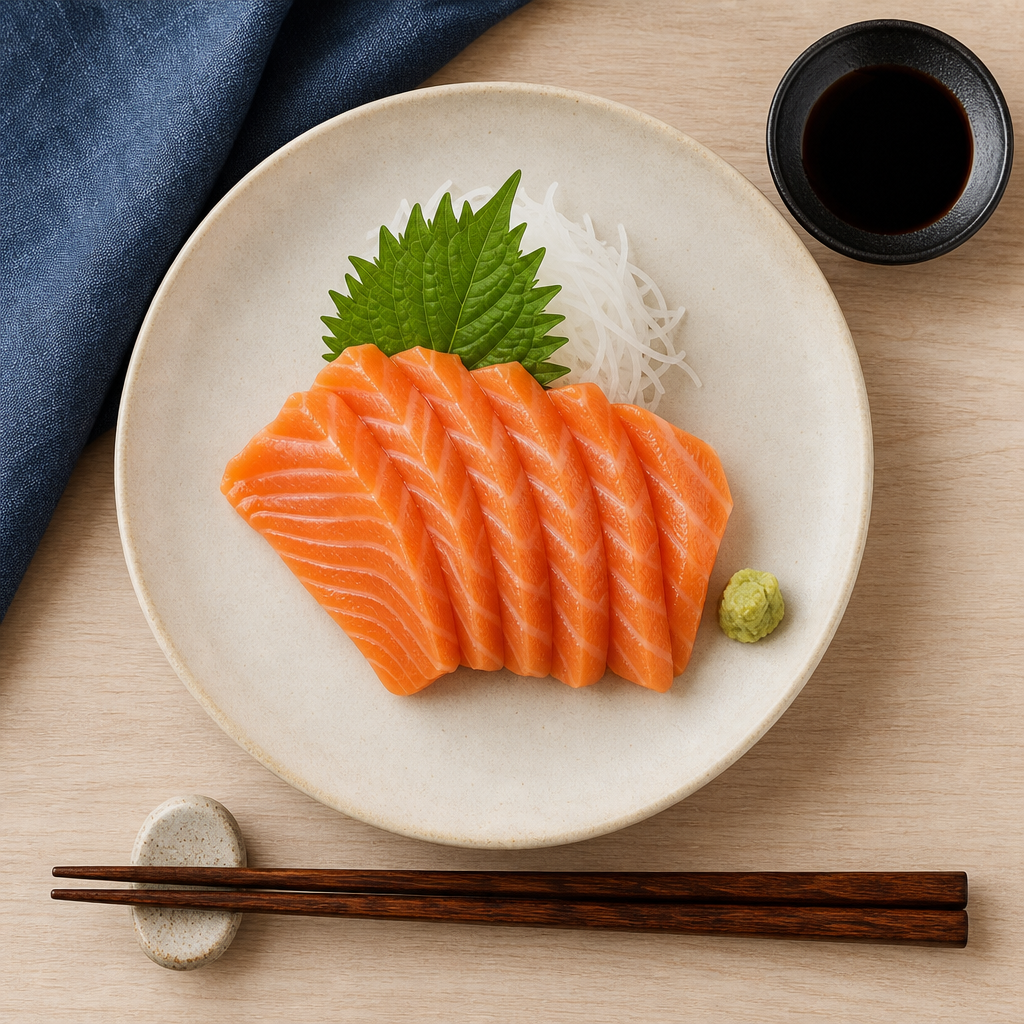
Lay the slices in a loose fan or staggered row on the chilled plate. Add shiso, daikon, and wasabi to the side; keep soy sauce separate.
Serve immediately
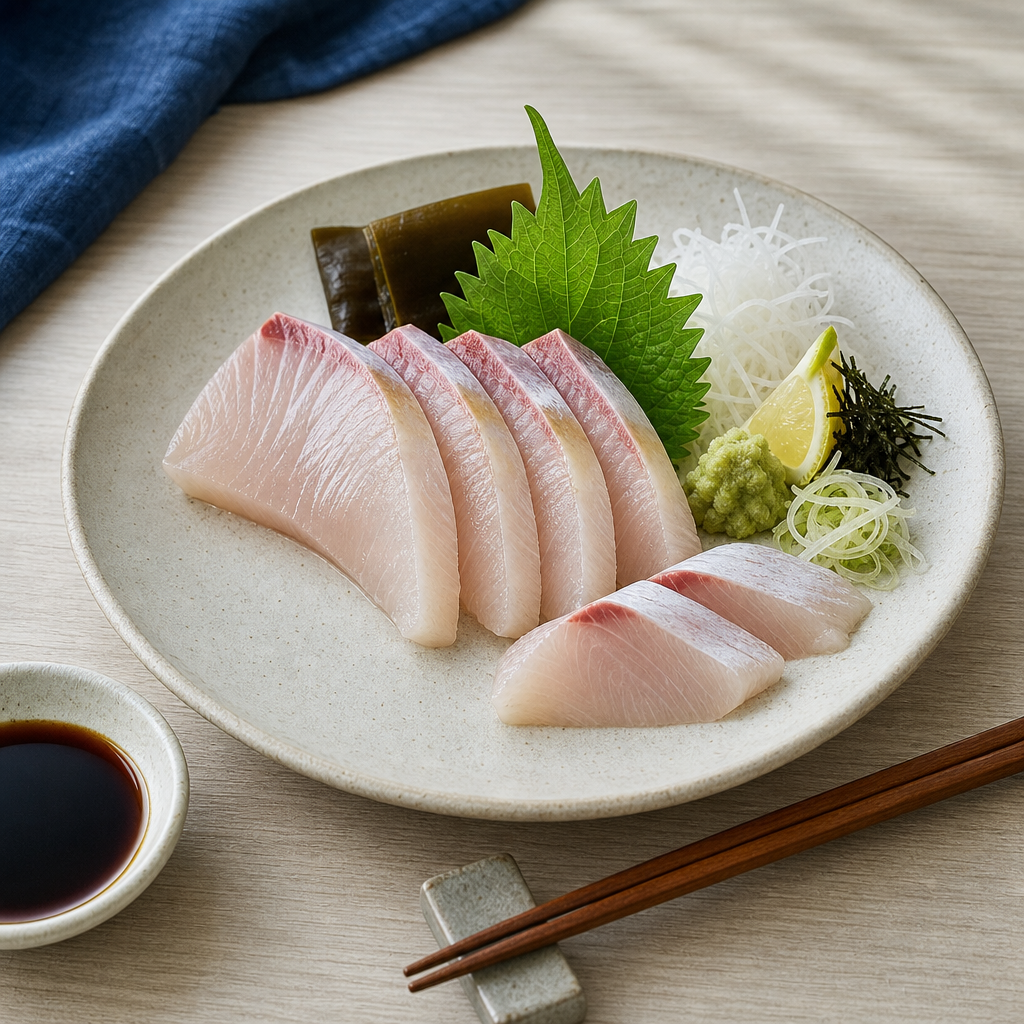
Serve within 5 minutes of slicing. If holding longer, cover and refrigerate the cut fish, then plate at the last moment.
Common mistakes
- {'mistake': 'Using ordinary raw fish because it looks fresh.', 'fix': 'Use fish sold for raw consumption by a reputable fishmonger or Japanese market. Fresh-looking does not address parasite handling, temperature control, or cutting-room sanitation.'}
- {'mistake': 'Cutting with a short dull knife.', 'fix': 'Use the longest sharp knife available and pull through in one stroke. Ragged sashimi is a knife problem before it is a fish problem.'}
- {'mistake': 'Letting the fish warm on the counter.', 'fix': 'Keep the block refrigerated until the board is ready and cut close to service. Yellowtail fat softens quickly.'}
- {'mistake': 'Pouring soy sauce over the slices.', 'fix': 'Serve shoyu in a dipping dish. Soy is seasoning for each bite, not a sauce for the plate.'}
- {'mistake': 'Mixing wasabi into soy until it becomes a cloudy paste.', 'fix': 'Put a small dab of wasabi on the fish, then touch the fish to soy. Cloudy wasabi-soy flattens both ingredients.'}
What does not belong
- {'item': 'Teriyaki sauce', 'reason': 'Sweet glaze belongs on cooked fish. It buries the fat and clean texture that define sashimi.'}
- {'item': 'Mayonnaise or spicy mayo', 'reason': 'That moves the dish into American sushi-roll territory. It does not belong on buri sashimi.'}
- {'item': 'Sesame oil dressing', 'reason': 'Sesame oil pushes the fish toward poke or yukhoe-style preparations. Plain sashimi needs restraint.'}
- {'item': 'Olive oil and citrus marinade', 'reason': 'That is crudo. Valid dish, wrong grammar.'}
- {'item': 'Chinese soy sauce as a 1:1 replacement', 'reason': 'The salt profile and aroma are different. Use Japanese koikuchi shoyu or tamari.'}