Rainbow Roll
The dish in context
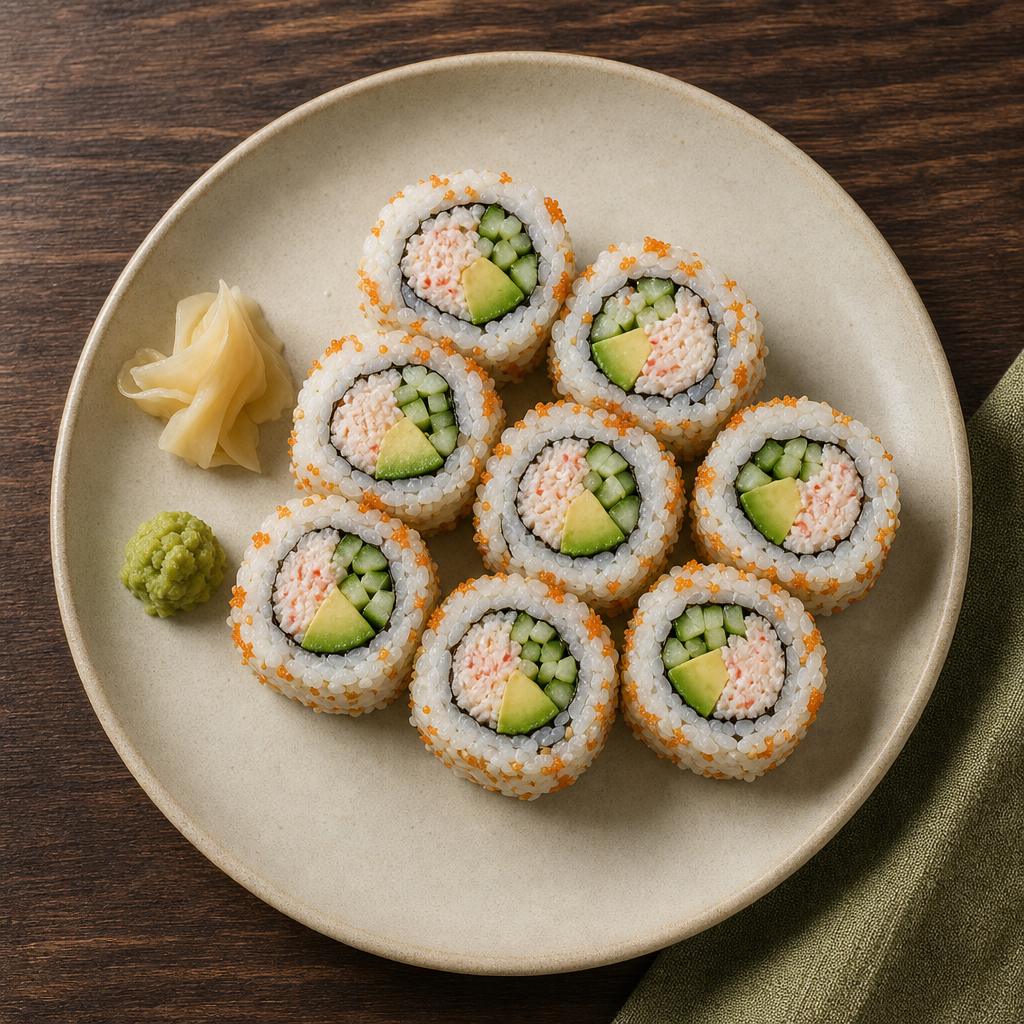
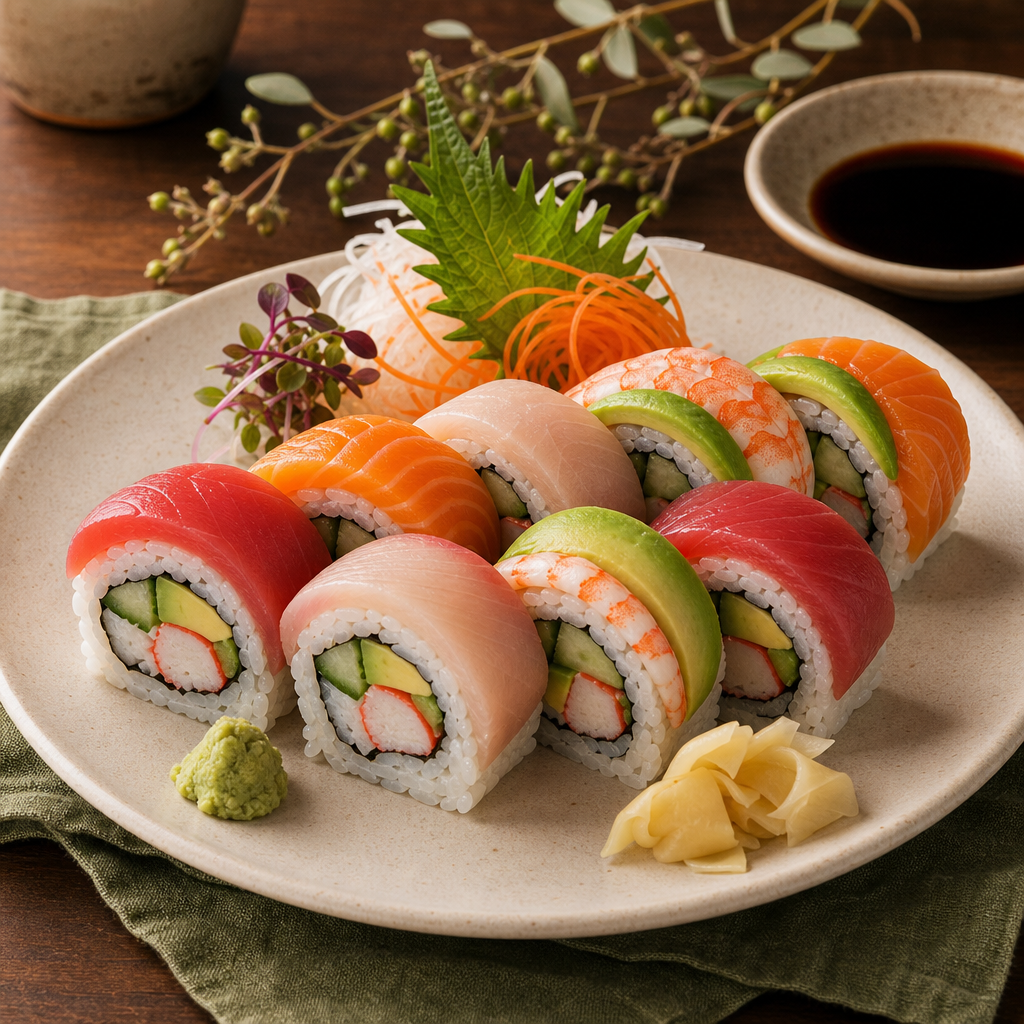
Rainbow roll is international-style sushi, not traditional Edomae sushi. It belongs to the same North American lineage as the California roll: rice outside, nori inside, avocado and crab in the center, then a decorative sashimi-and-avocado top. The roll likely developed in Japanese restaurants abroad as a way to present several fish types in one maki while easing diners into raw fish through the familiar California-roll structure. Japanese katakana usage, レインボーロール, reflects the borrowed name rather than a domestic classical sushi category.
Method 11 steps · 95 min
Wash and soak the rice
Rinse the rice in a bowl of cold water, rubbing the grains with a loose clawed hand, then drain. Repeat 4 to 5 times until the water runs nearly clear. Soak the drained rice in fresh cold water for 30 minutes, then drain for 10 minutes.
Cook the rice
Combine the drained rice and 400 ml water in a rice cooker or heavy saucepan. Add the kombu if using, cook on the white-rice setting or covered over low heat after the initial boil, then rest covered for 10 minutes. Remove the kombu before seasoning.
Season the shari
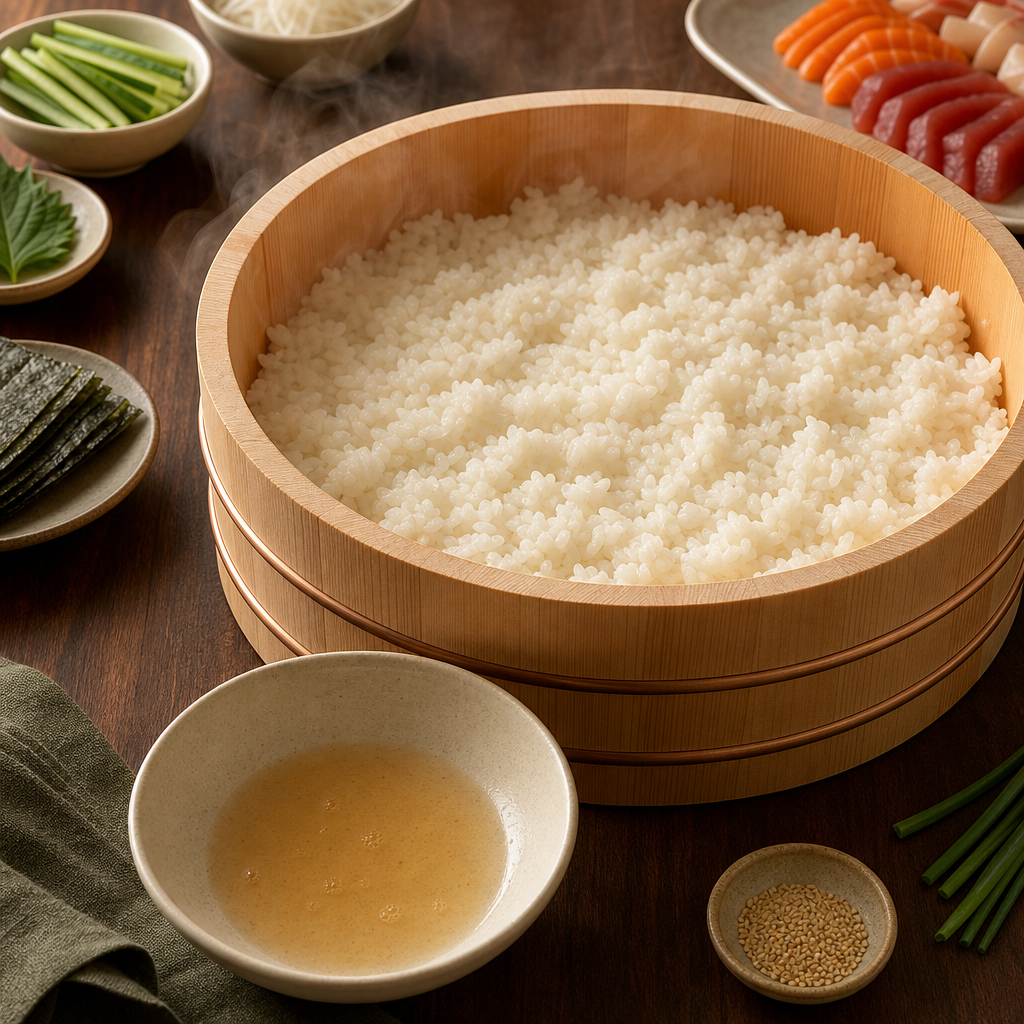
Warm the rice vinegar, sugar, and salt only until dissolved; do not boil it hard. Turn the hot rice into a wide wooden hangiri or a shallow nonreactive tray, drizzle over the seasoning, and fold with a rice paddle using slicing motions. Fan while folding until the rice looks glossy and has cooled to body temperature.
Prepare the fish and avocado topping
Slice tuna, salmon, and yellowtail into sheets about 3 mm thick and 4 to 5 cm wide, cutting in single strokes with a long sharp knife. Slice topping avocado into thin fans and brush lightly with lemon juice. Keep all fish covered and cold until the minute it goes on the roll.
Mix the crab filling
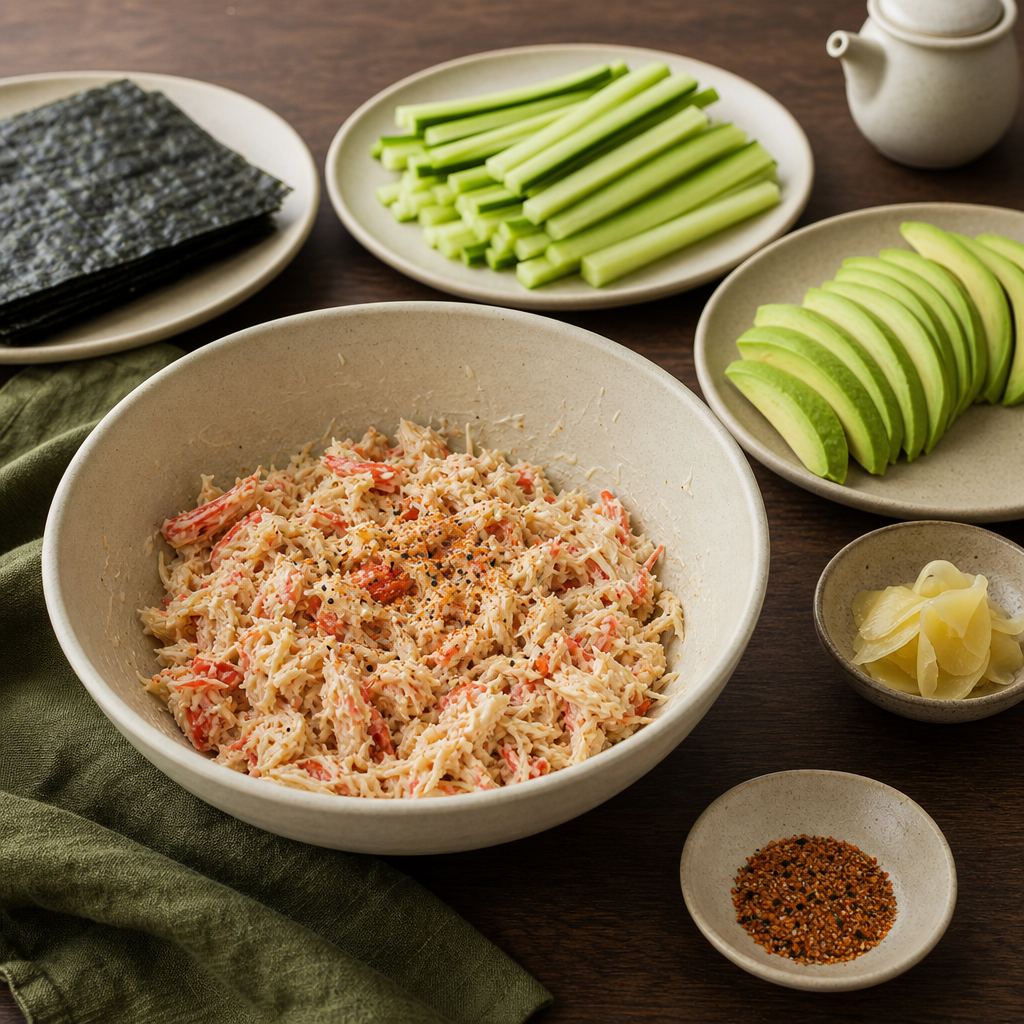
Fold crab meat with Kewpie mayonnaise and shichimi togarashi. Use enough mayonnaise to bind, not enough to make a salad. Cut cucumber and the remaining avocado into straight batons the length of the nori half-sheet.
Set the rolling station
Wrap a bamboo makisu tightly in plastic wrap. Place a half-sheet of nori shiny-side down on the mat, with the long edge facing you. Wet hands lightly with the vinegar water; they should be damp, not dripping.
Build the inside-out base
Spread about 150 g body-temperature sushi rice over the nori in an even layer, leaving no bare corners. Sprinkle lightly with sesame seeds, then flip so the rice faces down on the plastic-wrapped mat. Place crab, cucumber, and avocado across the lower third of the nori.
Roll and tighten
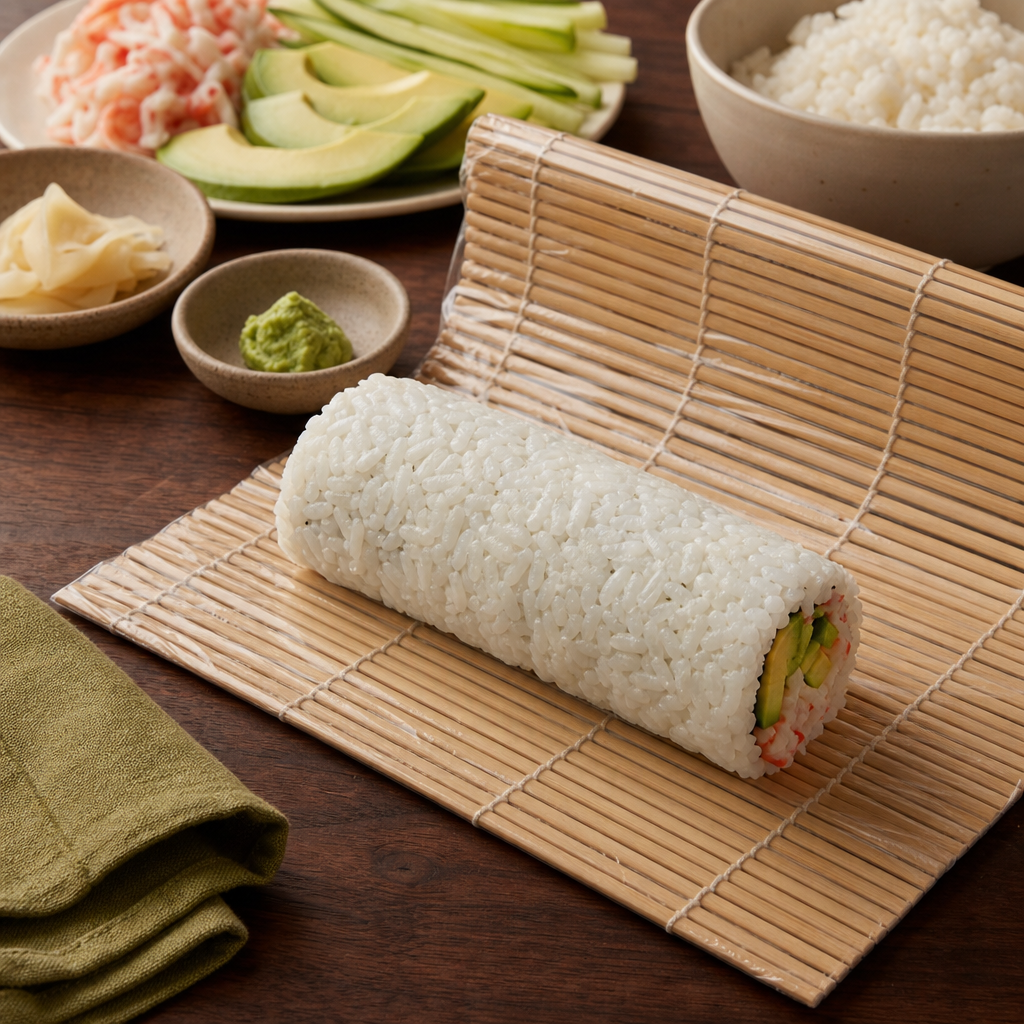
Lift the mat edge closest to you and roll over the filling in one firm tuck. Pull the mat back so it does not roll inside the sushi, then continue rolling forward. Compress the roll gently from the top and sides until it is oval-round, tight, and even from end to end.
Shingle the rainbow top
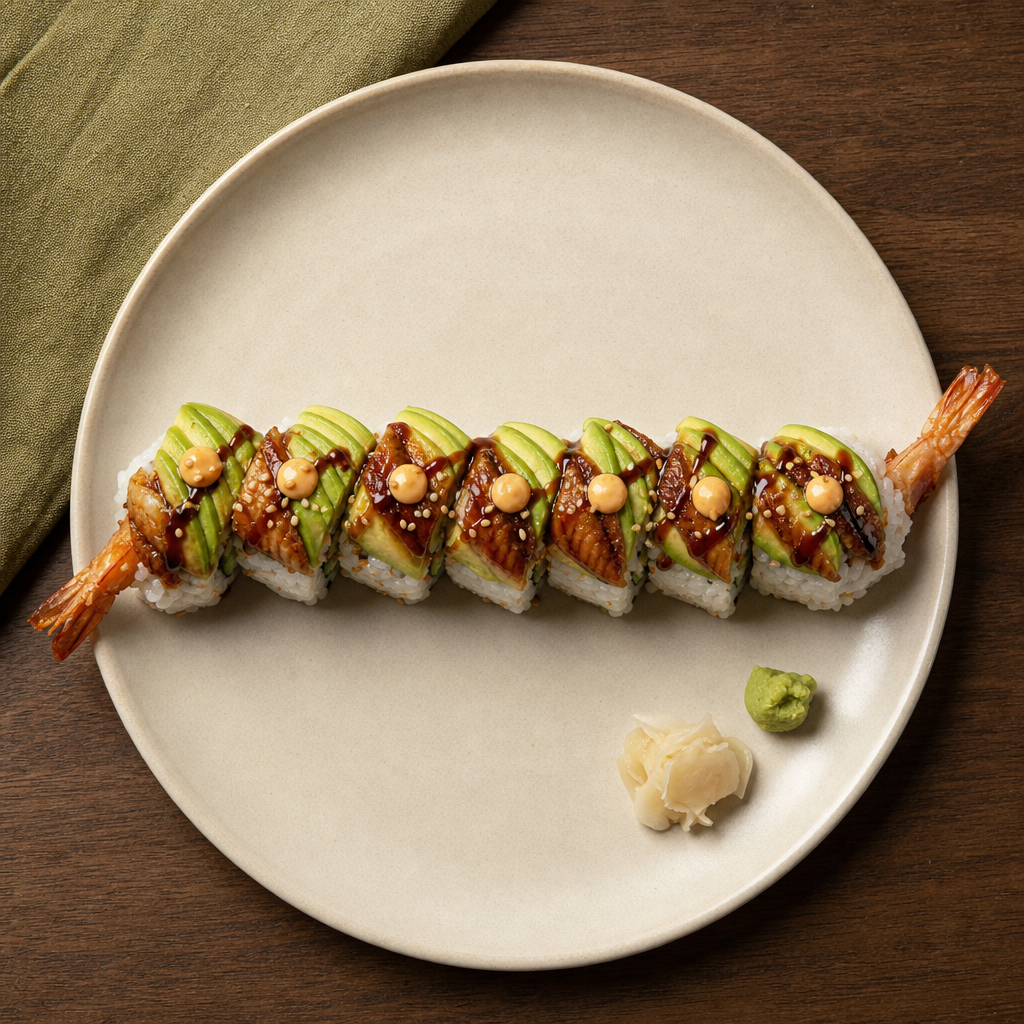
Lay alternating slices of tuna, salmon, yellowtail, shrimp, and avocado across the top of the roll, slightly overlapping each piece. Cover with plastic wrap and press with the mat to bond the topping to the rice. The fish should drape over the curve, not sit as separate slabs.
Cut the roll
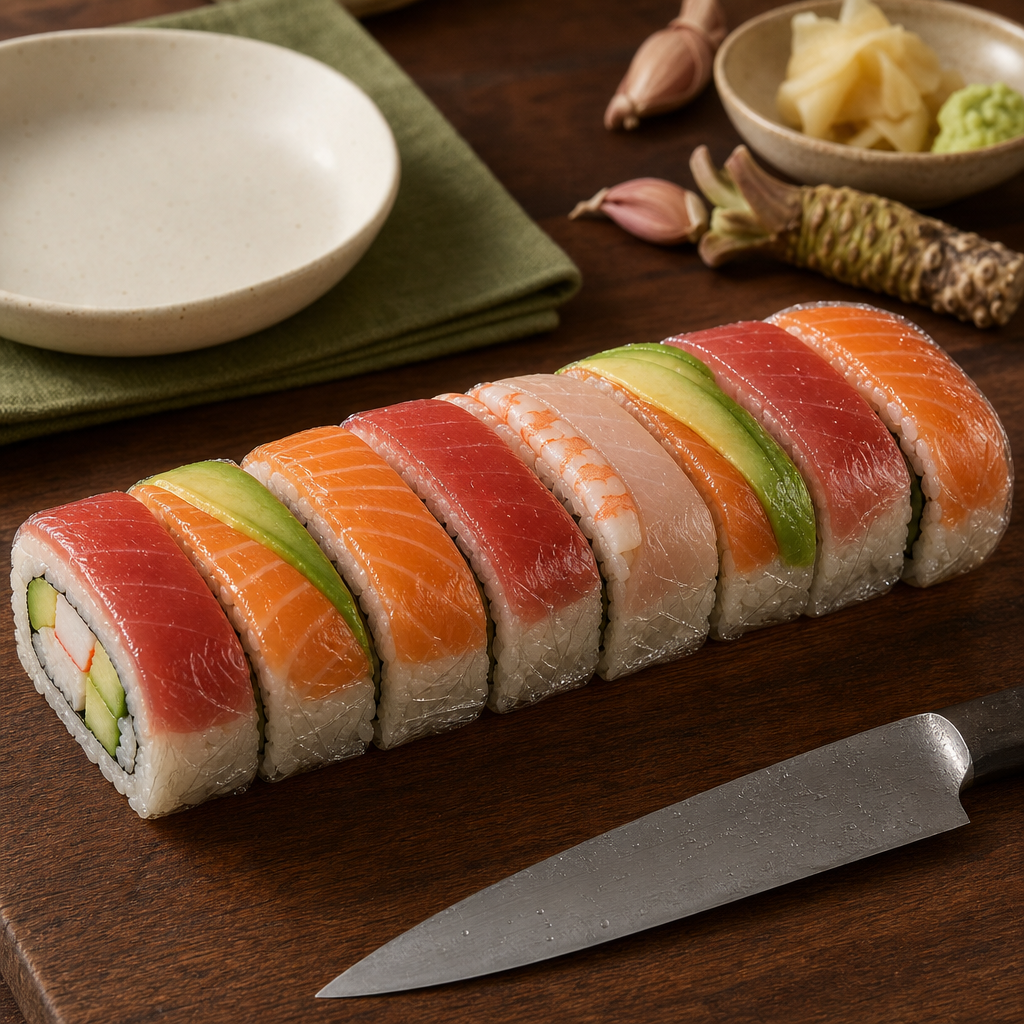
Keep the plastic wrap on and cut the roll into 8 pieces with a very sharp wet knife, wiping the blade between cuts. Use a single forward-and-back stroke per cut rather than sawing. Remove the plastic after cutting.
Plate and serve
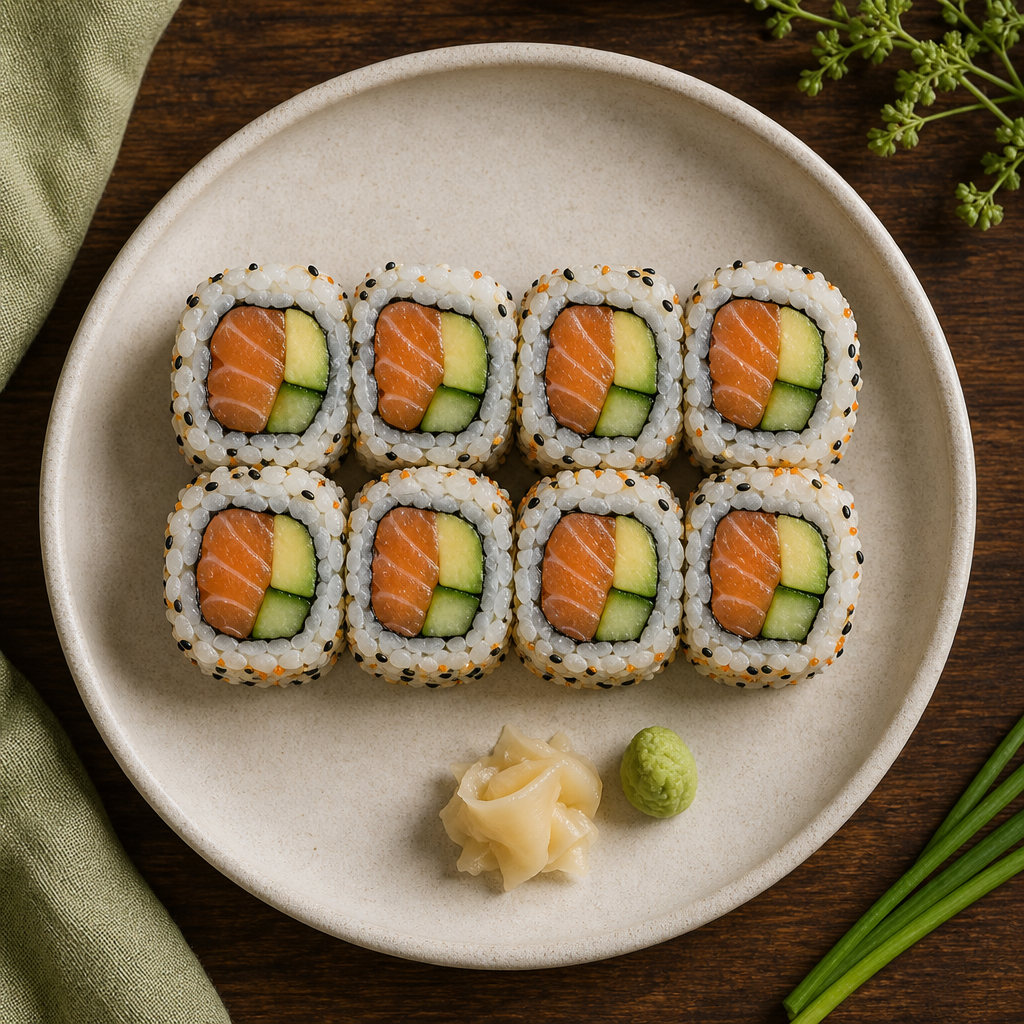
Arrange the pieces cut-side up or slightly angled so the topping bands remain visible. Serve with koikuchi shoyu, wasabi, and gari on the side. Dip lightly; drowning the rice in soy sauce makes the roll collapse and masks the fish.
Common mistakes
- Using cold sushi rice. Cold rice hardens and will not grip the nori or topping.
- Using long-grain rice. It does not have the starch structure for sushi and falls apart under the knife.
- Buying ordinary raw fish and calling it sushi-grade at home. Fish for raw service must come from a supplier that handles parasite control and cold-chain storage for raw consumption.
- Cutting fish too thick. Thick pieces resist the curve of the roll and slide off during slicing.
- Overfilling the center. A rainbow roll should close tightly around a narrow filling line.
- Letting wet hands drip onto the nori. Nori turns rubbery before the roll is even shaped.
- Sawing through the roll with a dull knife. The rice smears, the topping shifts, and the cross-section loses definition.
What does not belong
- Cream cheese does not belong in a rainbow roll; it muddies the clean fish-and-rice structure.
- Sweet bottled eel sauce does not belong on the standard version; it turns the roll into a dessert-leaning sauce delivery system.
- Spicy mayo over the top does not belong unless making a separate spicy variant. It hides the fish quality and the color pattern.
- Long-grain, jasmine, basmati, or Italian rice does not belong in sushi.
- Warm fish does not belong. Keep raw fish cold until assembly and serve promptly.
- Chinese dark soy sauce does not belong as a 1:1 dip; it is heavier and saltier in a different register than koikuchi shoyu.