Dragon Roll
The dish in context
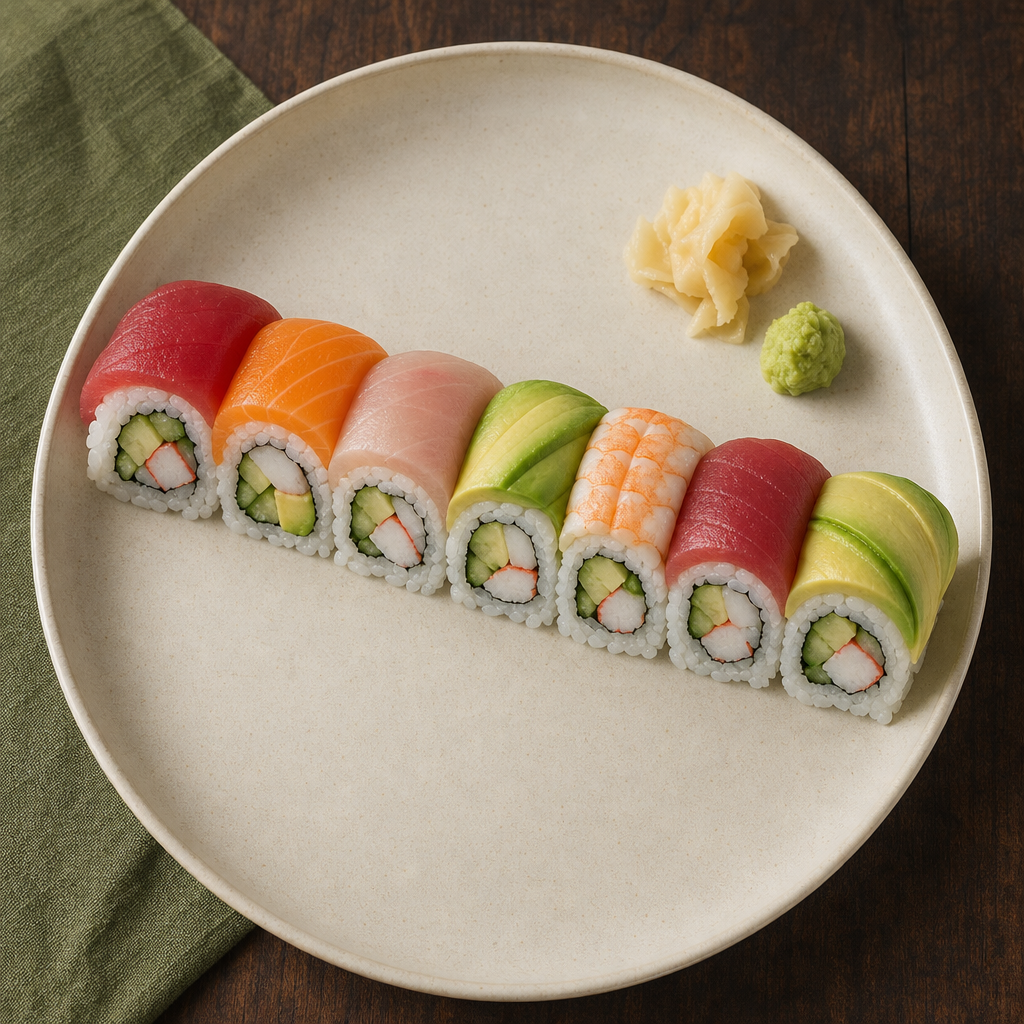
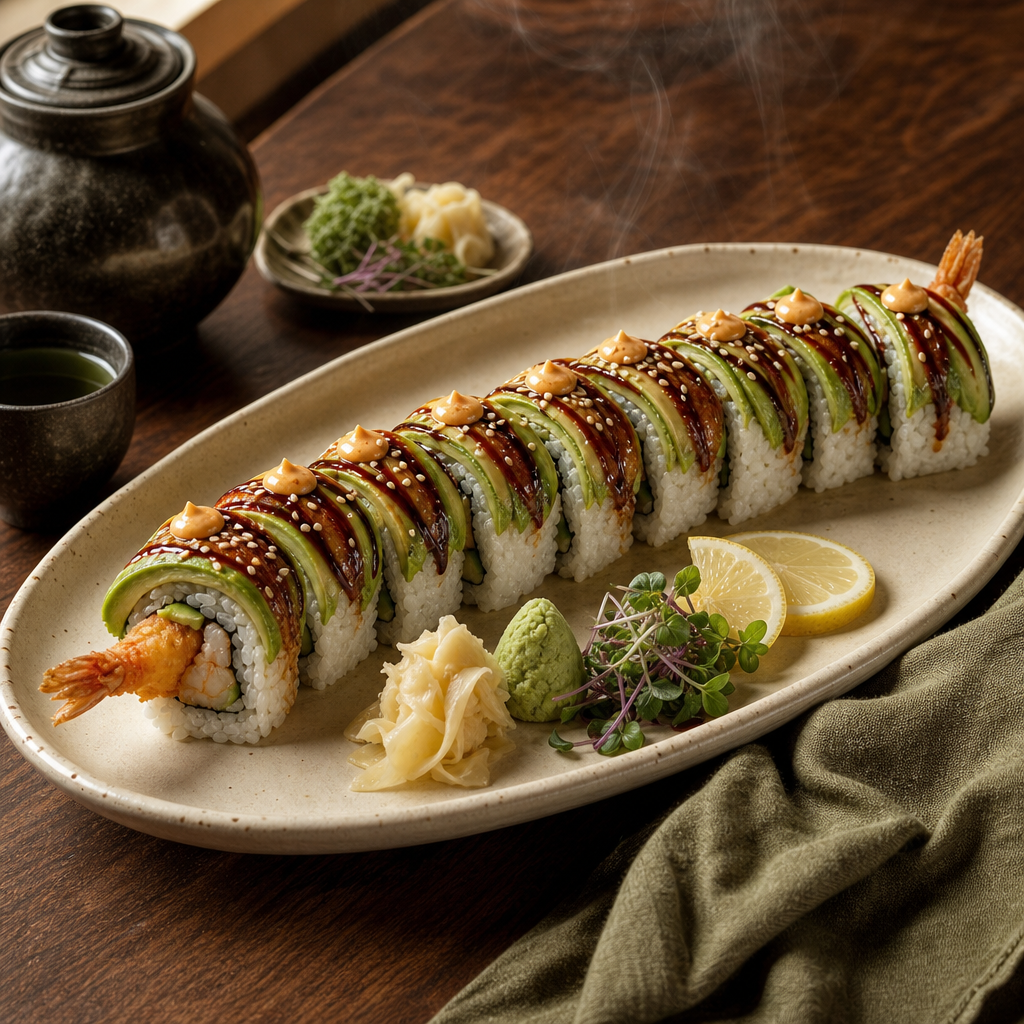
Dragon roll is international-style sushi, not traditional Edomae sushi. It belongs to the North American sushi-bar family of uramaki, the same inside-out format that made the California roll familiar to diners who were less used to visible nori. The name comes from the plated look: avocado and eel laid over the roll read as scales, with shrimp tempura tails sometimes used as the dragon’s head and tail. Japanese-language home recipes now use the katakana name ドラゴンロール, but the form is restaurant-export sushi rather than a Japan-domestic standard.
Method 10 steps · 90 min
Wash and soak the rice
Wash the rice in several changes of cold water until the water runs nearly clear, then drain for 10 minutes. Add 400 ml water and the kombu, if using, and soak 30 minutes before cooking.
Cook and rest the rice
Cook the rice in a rice cooker on the white-rice setting, or bring it to a boil in a covered saucepan, reduce to low, cook 12 minutes, then rest off heat 10 minutes. Remove and discard the kombu before seasoning.
Season the shari
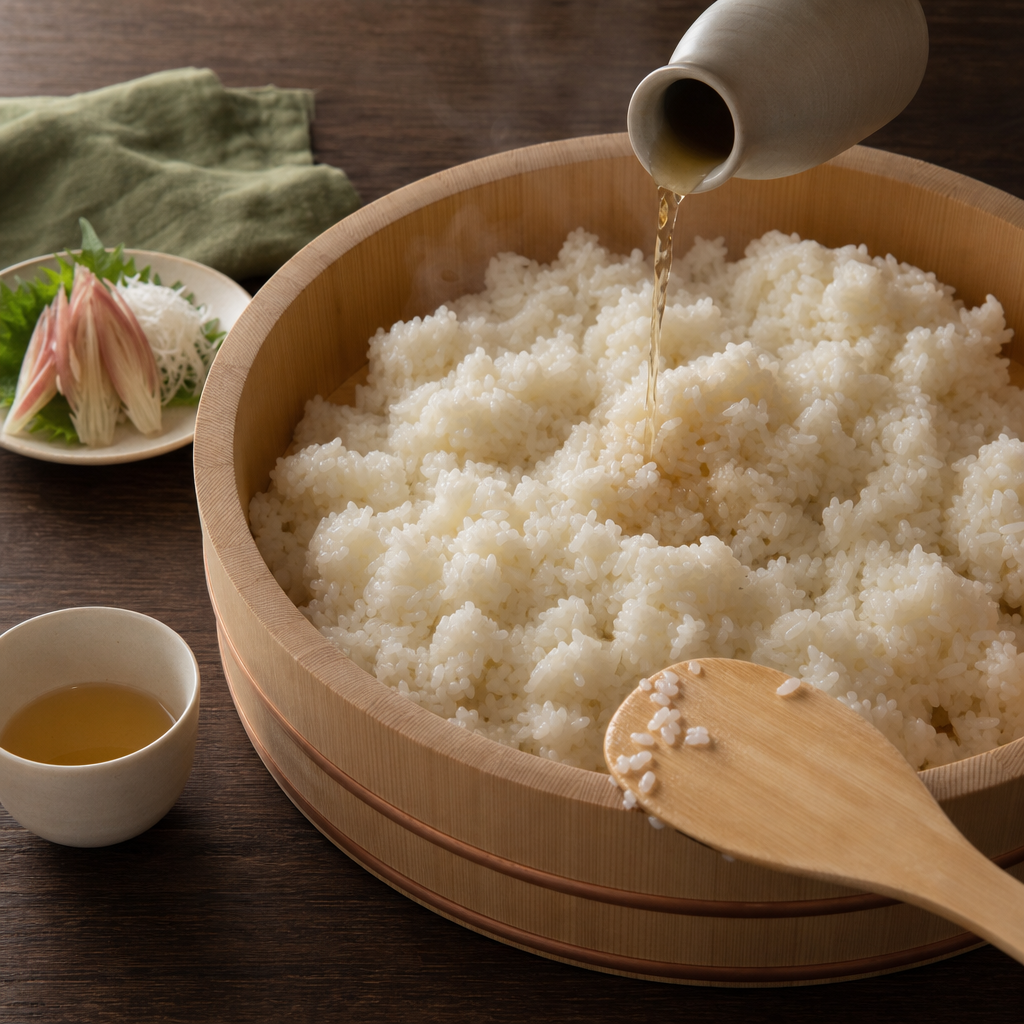
Warm the rice vinegar, sugar, and salt only until dissolved; do not boil. Spread the hot rice in a wide wooden hangiri or shallow tray, drizzle over the sushi vinegar, and fold with a rice paddle while fanning until glossy and warm, not cold.
Prepare the fillings and topping
Cut cucumber into straight batons about 8 mm thick. Warm the unagi gently until flexible, then cut it into strips long enough to run along the roll. Halve, peel, and thinly slice the avocado crosswise, keeping each half in its original shape.
Fry the shrimp tempura
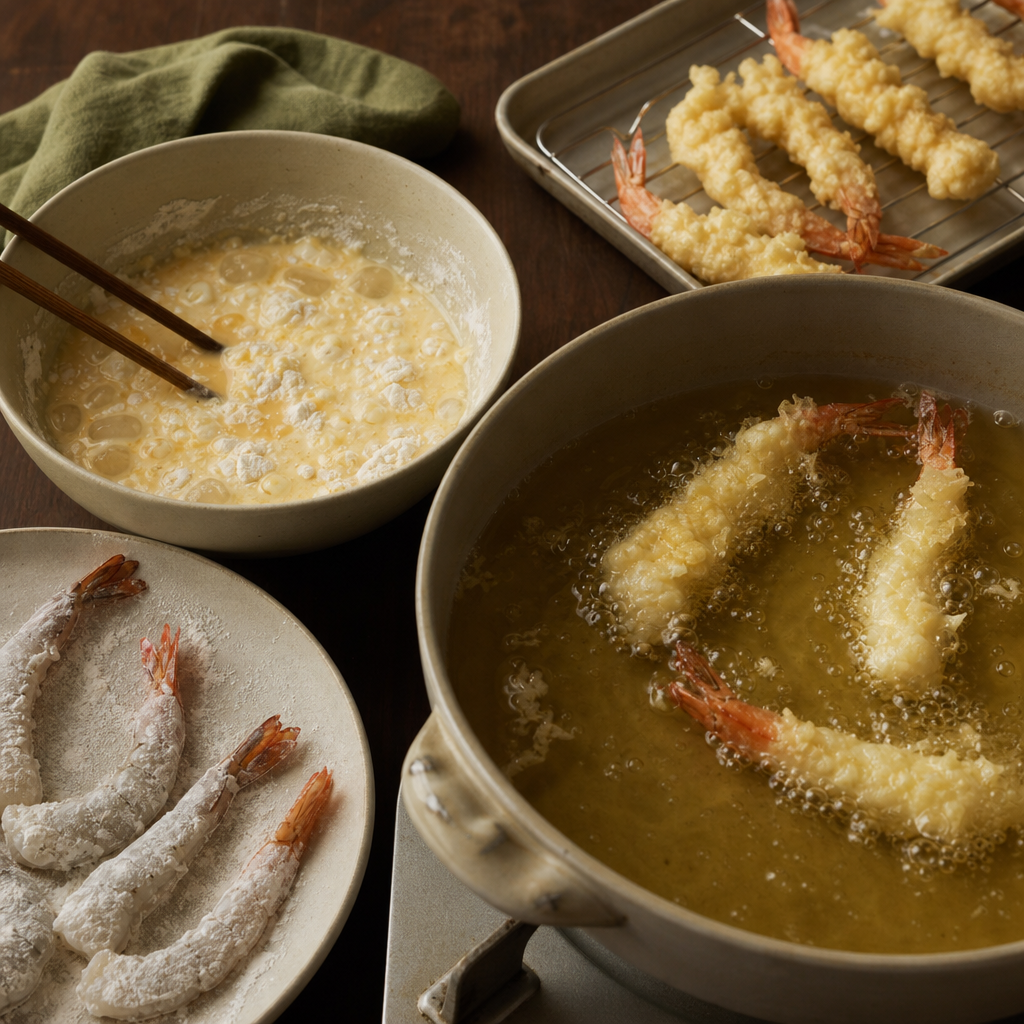
Heat oil to 185°C. Dust the shrimp lightly with flour, mix the egg yolk and ice water, then stir in the flour with chopsticks until the batter is lumpy. Dip the shrimp and fry 90 to 120 seconds, until pale-gold, crisp, and barely curled.
Set the rolling station
Wrap a bamboo mat tightly in plastic wrap. Place one half-sheet of nori shiny-side down, spread about 140 g warm shari over it in an even layer, and leave no bare corners. Sprinkle lightly with sesame, then flip so the rice faces the mat.
Roll the uramaki
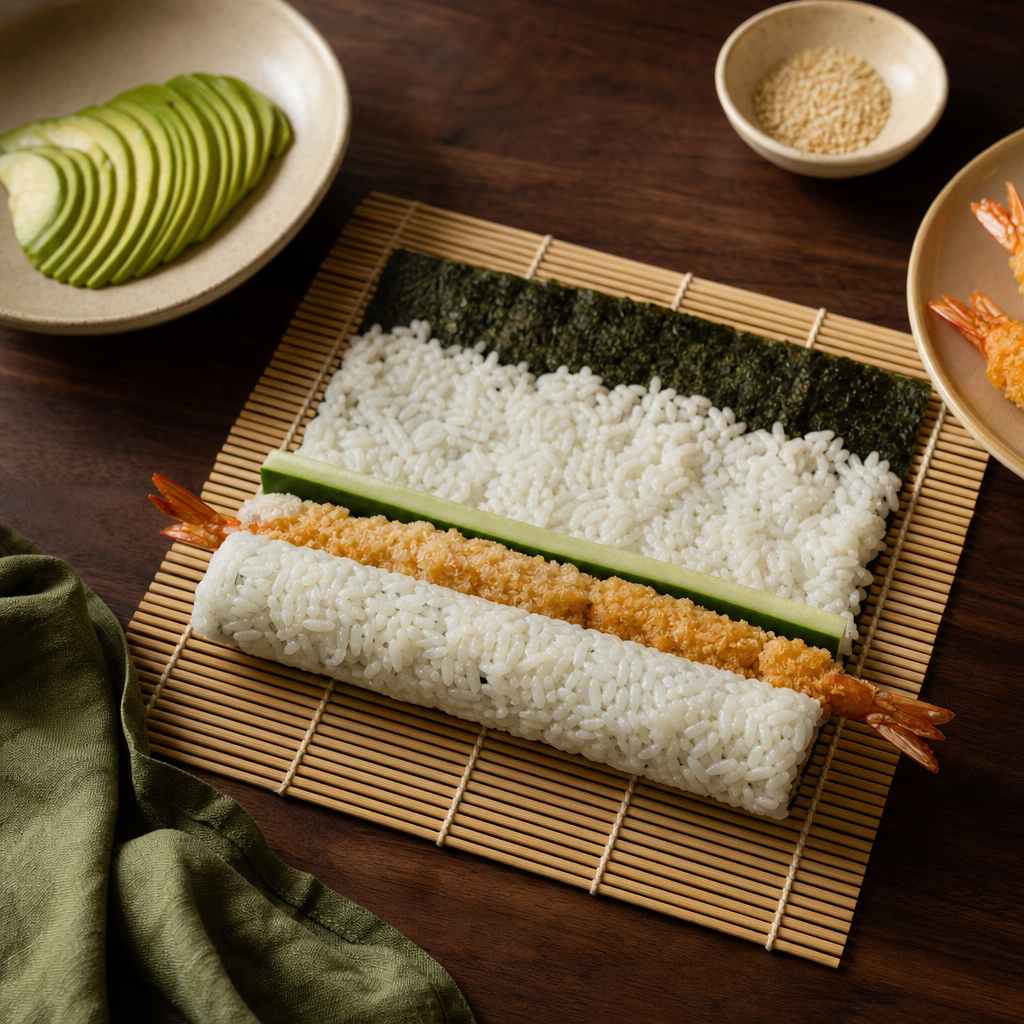
Lay two shrimp tempura and a cucumber baton across the lower third of the nori. Lift the mat and roll once to enclose the filling, compress lightly into a cylinder, then finish the roll with the seam underneath.
Apply the dragon scales
Fan half an avocado into a thin sheet and lay it over the top of the roll. Add strips of warm unagi over or beside the avocado, then cover with plastic wrap and press with the mat until the topping grips the rice.
Slice cleanly
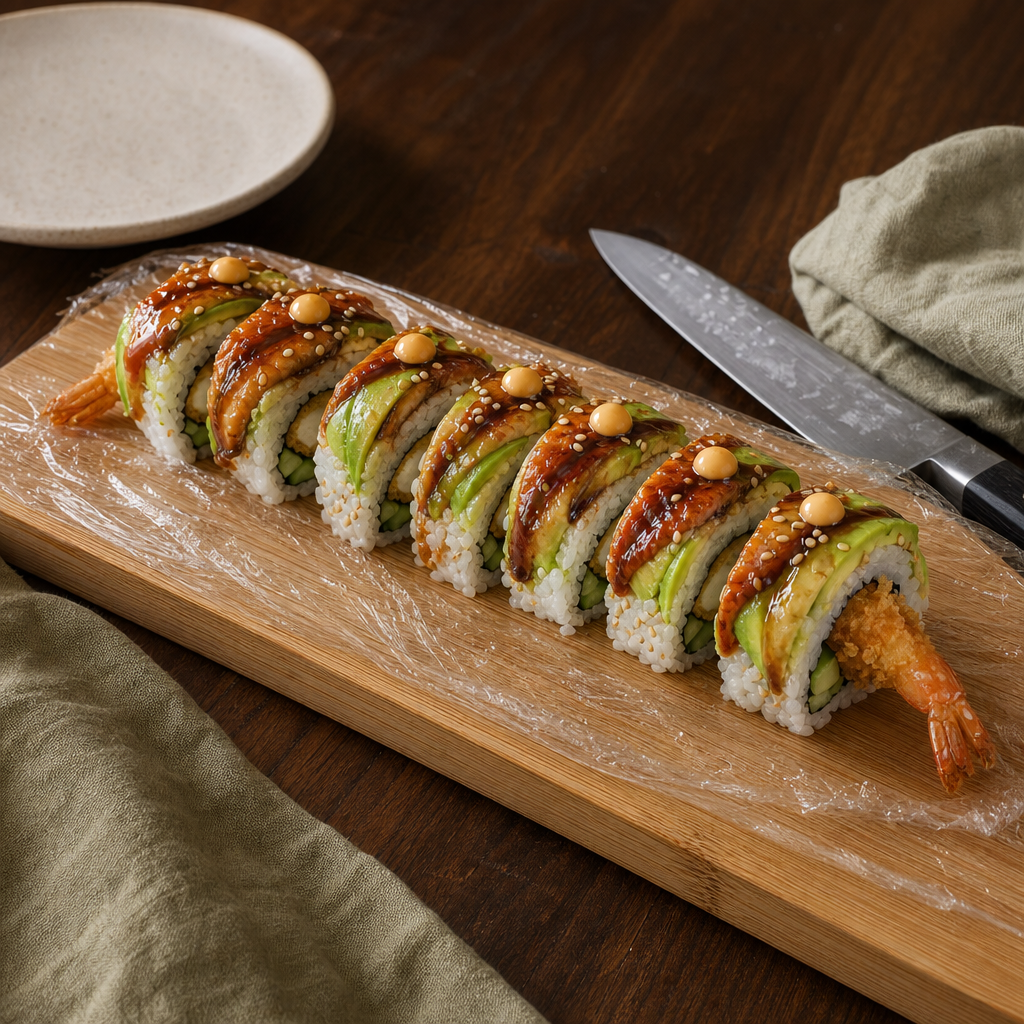
Keep the plastic wrap on the roll. Cut into 8 pieces with a very sharp knife wiped with a damp cloth between cuts, using one long pulling stroke instead of sawing.
Finish and serve
Remove the plastic wrap, plate the pieces in order, and drizzle thin lines of unagi sauce over the top. Add sesame and a restrained line of Japanese mayonnaise if using. Serve with shoyu, wasabi, and pickled ginger on the side.
Common mistakes
- Using long-grain rice. It separates under the mat and cannot form clean uramaki.
- Cooling the sushi rice until cold. Shari should be warm and pliable when shaped; cold rice cracks and feels hard.
- Mixing tempura batter smooth. Smooth batter develops gluten and fries bready.
- Slicing avocado too thick. Dragon scales need thin, overlapping slices that bend around the roll.
- Overfilling the center. Shrimp plus cucumber is enough; extra crab, lettuce, and cream cheese force the roll open.
- Cutting without plastic wrap. The topping shifts before the knife reaches the board.
- Sawing with a dry knife. Rice starch glues to the blade and pulls the roll apart.
What does not belong
- Cream cheese does not belong in a dragon roll; it makes the center heavy and masks the eel.
- Long-grain rice does not belong in sushi rolls.
- Teriyaki chicken does not belong here; dragon roll is built around shrimp tempura, avocado, and unagi.
- Thick bottled American teriyaki sauce does not belong as the main glaze; use unagi sauce or a controlled soy-sugar reduction.
- Lettuce does not belong inside this roll; it traps water and breaks the tight cylinder.
- Raw fish is not required. Adding tuna or salmon turns the roll into a different sushi-bar construction.
Adaptations
Replace shrimp tempura with tempura asparagus or king oyster mushroom, and replace unagi with glazed roasted eggplant. This is a vegan dragon-style uramaki, not the standard dragon roll.
Use halal-certified shrimp and eel. Replace mirin- or sake-based unagi sauce with a halal soy-sugar glaze; many commercial eel sauces contain alcohol-derived seasonings.
Use tamari instead of shoyu, gluten-free nori if labeled for cross-contact, and rice-flour/potato-starch tempura batter. Check unagi kabayaki and unagi sauce; wheat is common.
The base roll contains no dairy. Check mayonnaise labels if using the optional drizzle.
Omit shrimp tempura and use extra unagi, tempura asparagus, or tempura mushroom inside. It loses the standard crisp shrimp center.