Futomaki
The dish in context
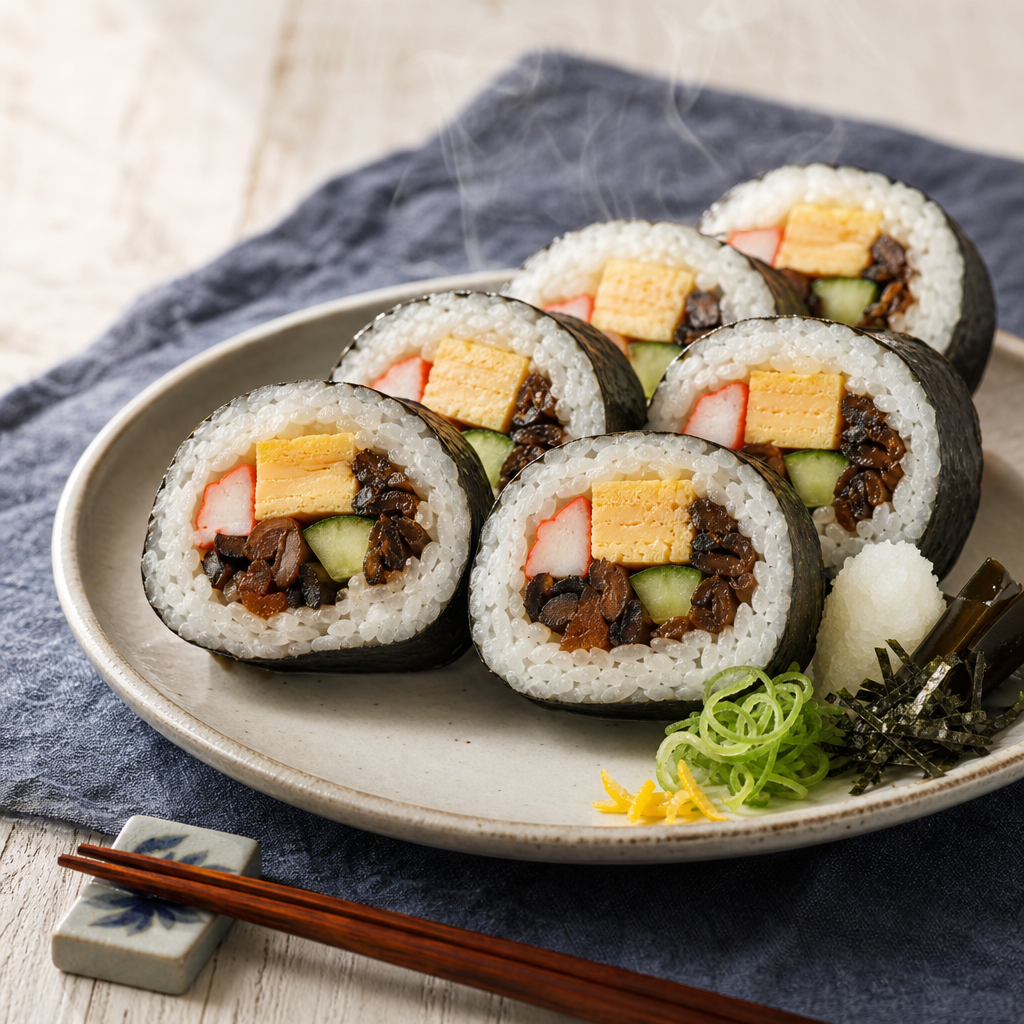
Futomaki (太巻き) means thick roll, a broad category of makizushi rather than one fixed filling formula. It is associated with family gatherings, bento, Setsubun ehōmaki practice, and regional festive rolls, especially the elaborate picture-roll tradition of Bōsō/Chiba known as futomaki matsuri-zushi (太巻き祭りずし). The highly decorative Chiba style builds flowers, insects, characters, and seasonal motifs into the cut face; the household-standard version here is the plainer thick roll used across Japan. The common grammar is stable: seasoned short-grain rice, full-sheet nori, cooked or preserved fillings, and a tight cylinder cut cleanly to show the filling balance.
Method 11 steps · 75 min
Wash and soak the rice
Wash the short-grain rice in several changes of cold water until the water is mostly clear, then drain for 10 minutes. Add 110 ml water and soak 30 minutes before cooking.
Rehydrate the dried fillings
Soak the dried shiitake in 150 ml water for 30 minutes, then squeeze gently, remove the stems, and slice into 1 cm strips. Rub the dried kanpyo with a pinch of salt, rinse, and simmer in plain water for 8-10 minutes until pliable; drain.
Cook and rest the rice
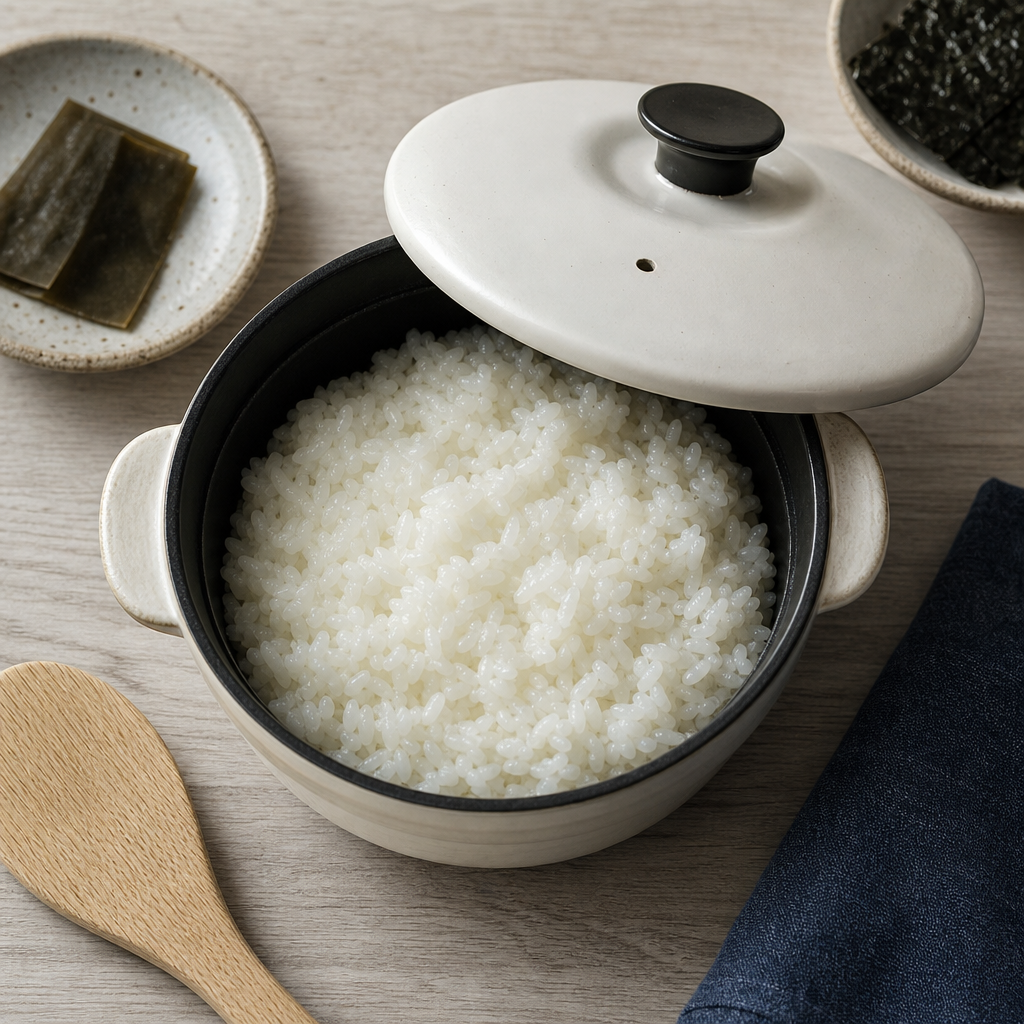
Cook the soaked rice in a rice cooker or covered saucepan until the water is absorbed. Rest 10 minutes with the lid closed before seasoning.
Season the sushi rice
Warm the rice vinegar, 8 g sugar, and 2 g salt only until dissolved. Transfer the hot rice to a wide bowl, pour the vinegar over it, and fold with a rice paddle using cutting motions while fanning until glossy and warm, not cold.
Simmer the shiitake and kanpyo
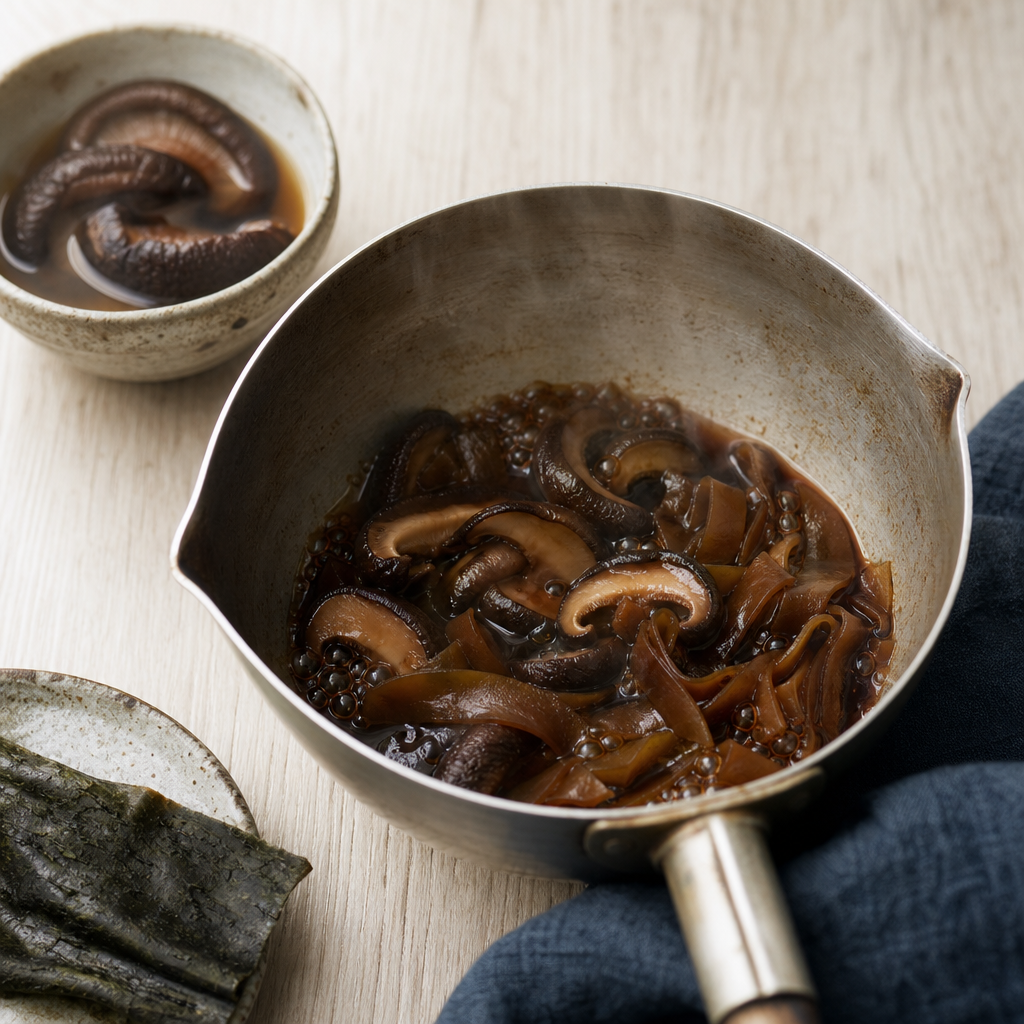
Combine the reserved shiitake soaking water, sake, mirin, shoyu, and 9 g sugar in a small saucepan. Add the shiitake and softened kanpyo, then simmer 10-12 minutes until the liquid is reduced to a light glaze; cool completely and blot dry.
Cook the thin omelet
Beat the egg with mirin and salt without whipping in bubbles. Oil a small nonstick pan, pour in the egg, and cook as a thin sheet over medium-low heat until set; cool, then cut into long strips.
Prepare the fresh fillings
Cut the cucumber into long 1 cm sticks and pat the surface dry. Split kanikama into long strips if the sticks are thick.
Lay out the nori and rice
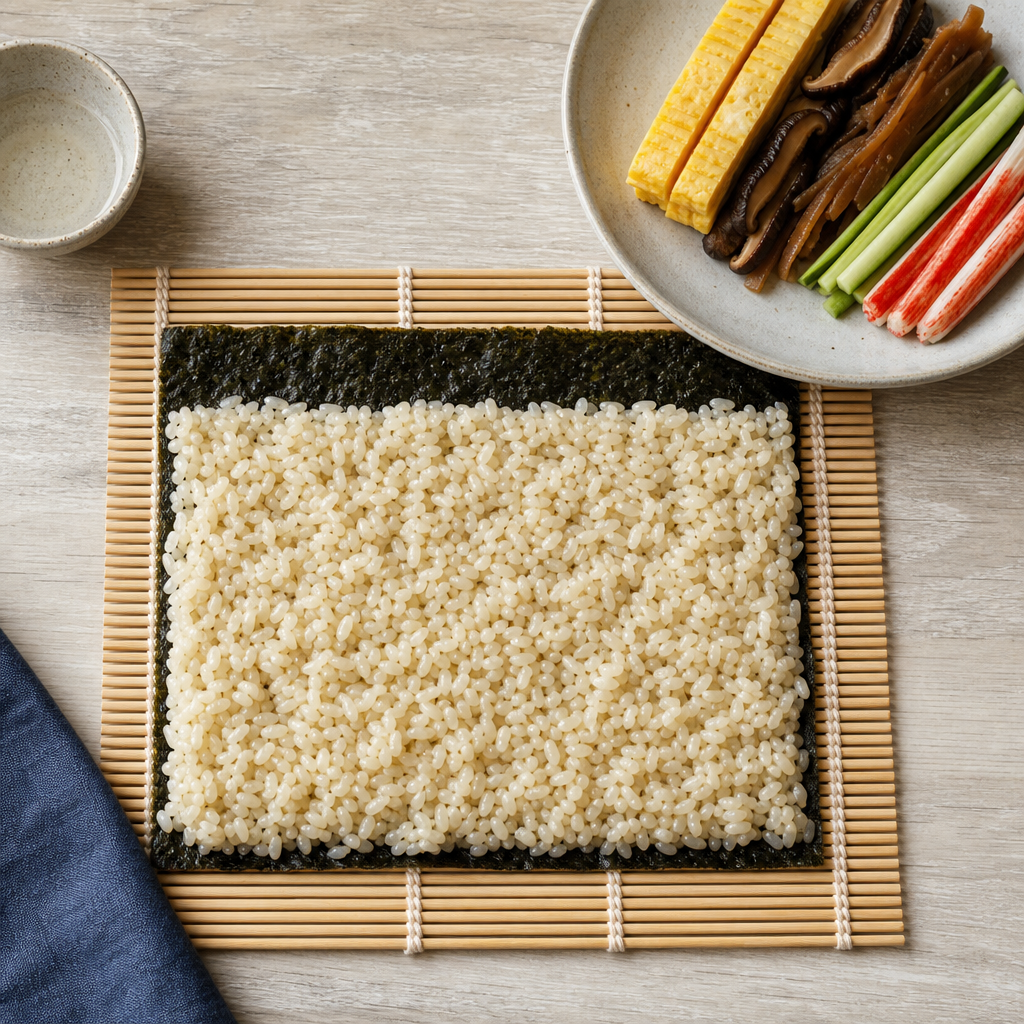
Place a bamboo mat with the slats running left to right, then set the nori shiny side down. Spread the warm shari evenly over the nori, leaving a 2 cm bare strip along the far edge.
Arrange the fillings
Place the omelet, shiitake, kanpyo, cucumber, and kanikama slightly forward of center, parallel to the bottom edge. Keep the stack tight and low; do not build a mound.
Roll and shape
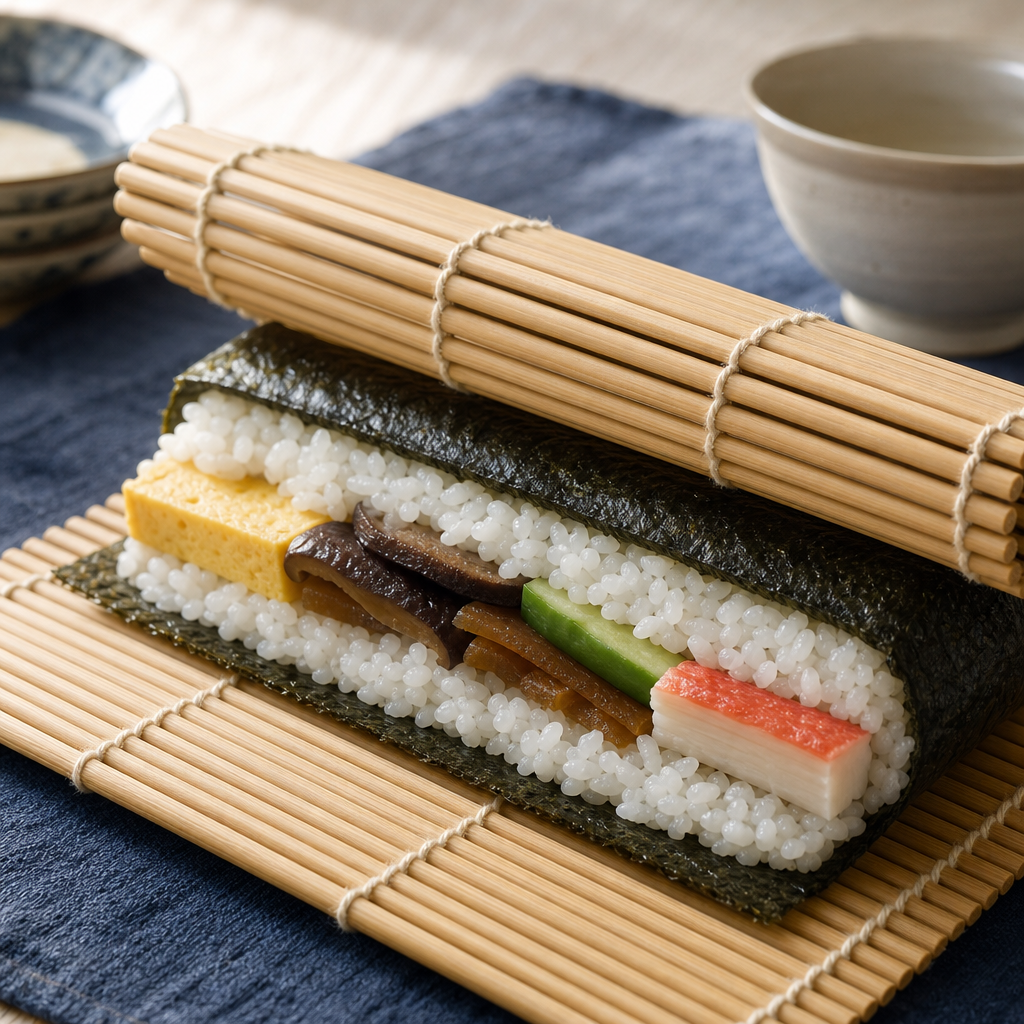
Lift the near edge of the mat and roll the nori up and over the fillings in one decisive motion, tucking the filling line under the rice. Pull the mat forward to tighten, continue to the bare nori edge, then press the roll into a round or slightly squared cylinder.
Rest and slice
Rest the roll seam-side down for 2 minutes. Wipe a sharp knife with a damp cloth, cut the roll in half, then cut each half into 4 pieces, wiping the blade between cuts.
Common mistakes
- Using long-grain rice. It will not bind correctly and the roll will crumble at the cut face.
- Spreading cold sushi rice. Cold shari is stiff, tears nori, and forms clumps instead of an even layer.
- Leaving fillings wet. Simmered shiitake and kanpyo must be reduced and blotted or the nori turns limp.
- Overfilling the center. Futomaki should close cleanly with a visible seam, not split under pressure.
- Cutting with a dry knife. Rice starch builds up on the blade and smears the cross-section.
What does not belong
- Cream cheese does not belong in futomaki.
- Mayonnaise does not belong in this household-standard Japanese roll.
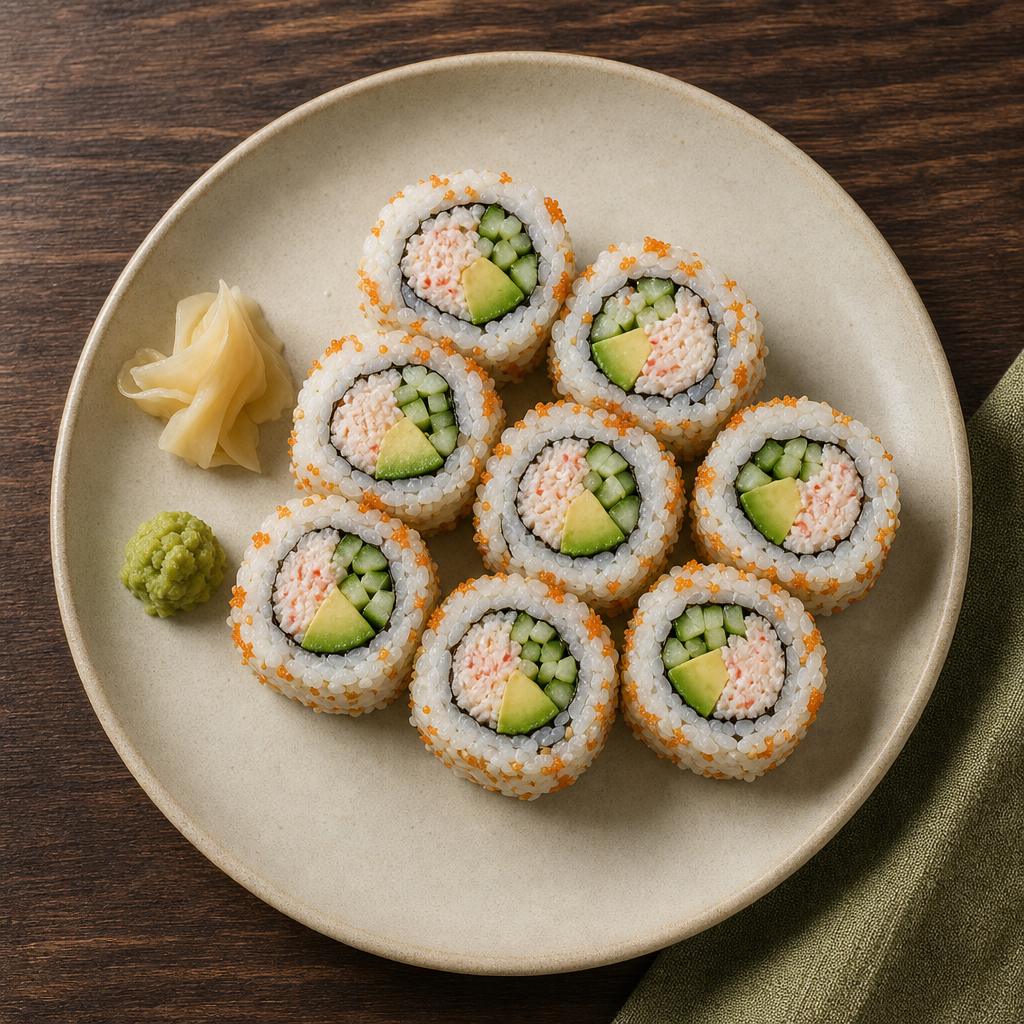
- Avocado is an international sushi-roll filling, not a futomaki requirement.
- Long-grain rice, basmati, and jasmine rice do not belong in sushi rice.
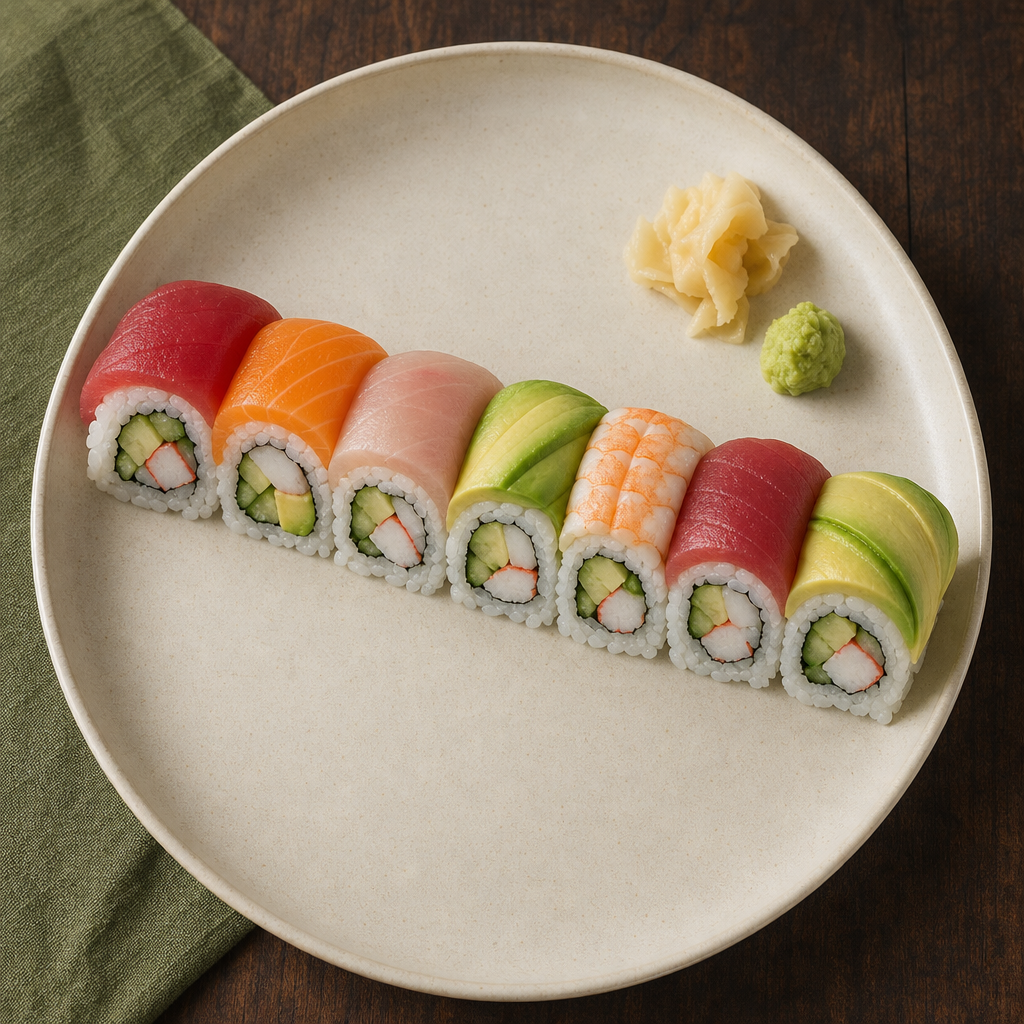
- Raw fish is not required here; adding it changes the storage rules and shortens the serving window.
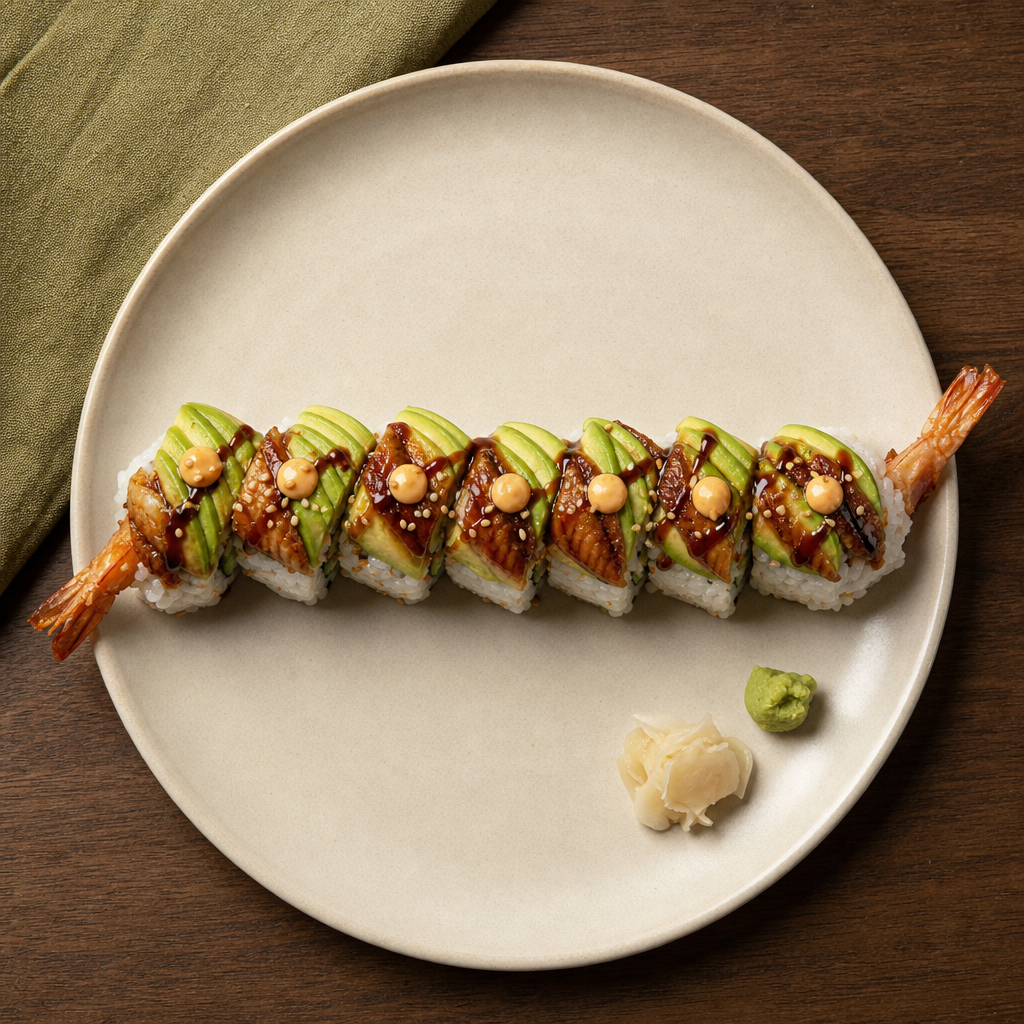
- Bottled sweet teriyaki sauce does not belong inside the roll.
Adaptations
['Omit egg and kanikama.', 'Use simmered shiitake, kanpyo, cucumber, pickled takuan, and blanched spinach.', 'Confirm the nori is plain and not seasoned with bonito extract.']
['Replace sake with water.', 'Replace mirin with water plus sugar as listed in the ingredient substitutions.', 'Use halal-certified kanikama or omit it.']
['Use gluten-free tamari instead of koikuchi shoyu.', 'Check kanikama labels; many contain wheat starch.']
['The base recipe contains no dairy.']
['Omit kanikama or use a verified shellfish-free fish surimi.', 'Many imitation crab products contain crab extract; the label decides.']