Pad Thai with Shrimp
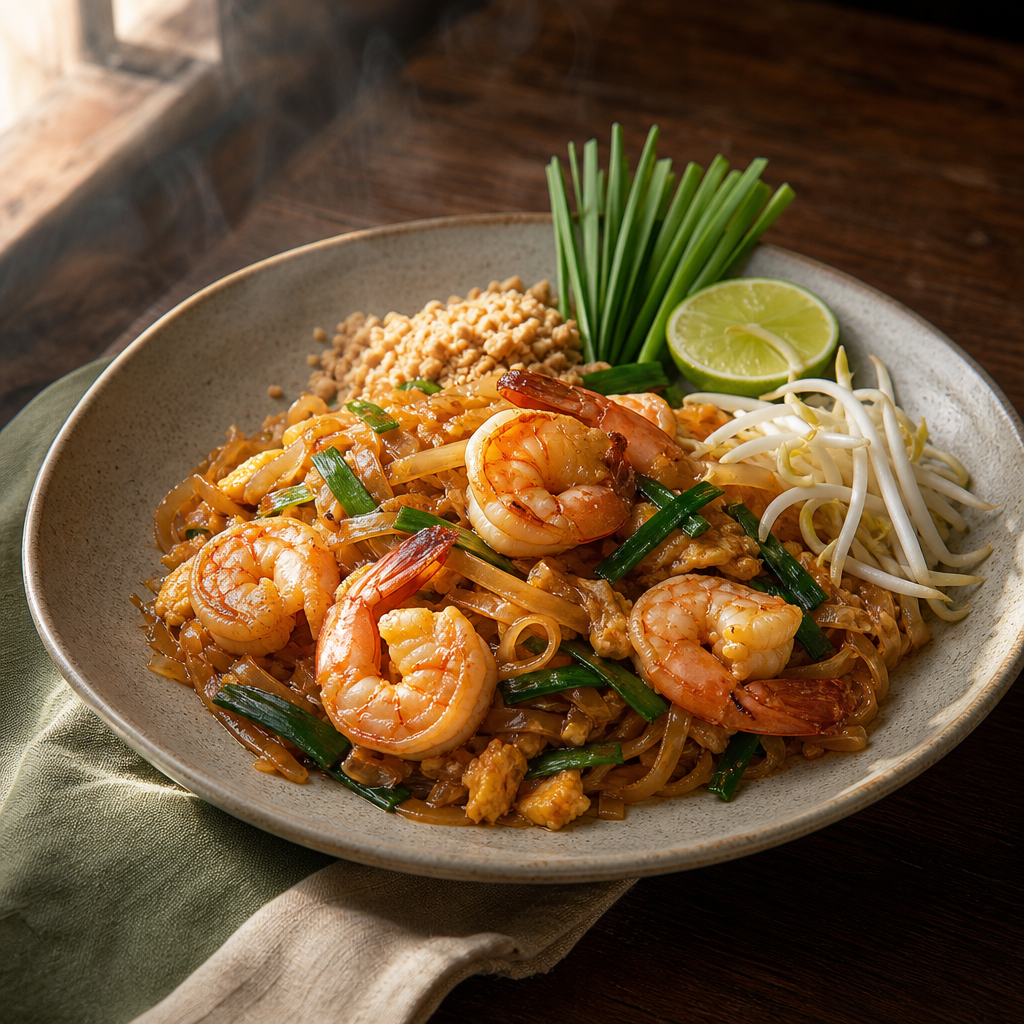
The dish in context
Pad Thai is a modern central Thai noodle dish shaped by Thai-Chinese wok technique, local rice noodles, and a sour-salty-sweet seasoning structure built around tamarind, fish sauce, and palm sugar. It became nationally prominent in the mid-20th century as rice noodles were promoted as an economical staple and later became one of Thailand’s best-known restaurant dishes abroad. The shrimp version, ผัดไทยกุ้ง, is a standard restaurant and street-stall form, often served with raw bean sprouts, garlic chives, lime, roasted peanuts, and dried chile for the diner to adjust at the table. Regional and vendor styles vary, but ketchup, heavy sweetness, and saucy wet noodles are not the central Thai target.
Method 8 steps · 35 min
Soak the noodles
Soak the dried rice noodles in room-temperature water until pliable but not soft, usually 20-30 minutes depending on brand. Drain well; the strands should bend around a finger without snapping, with a firm chalky core.
Make the sauce
Combine tamarind, fish sauce, palm sugar, and water in a small pan. Warm over low heat until the sugar dissolves, then stop; the sauce should taste sour first, salty second, sweet enough to round the edges.
Sear the shrimp
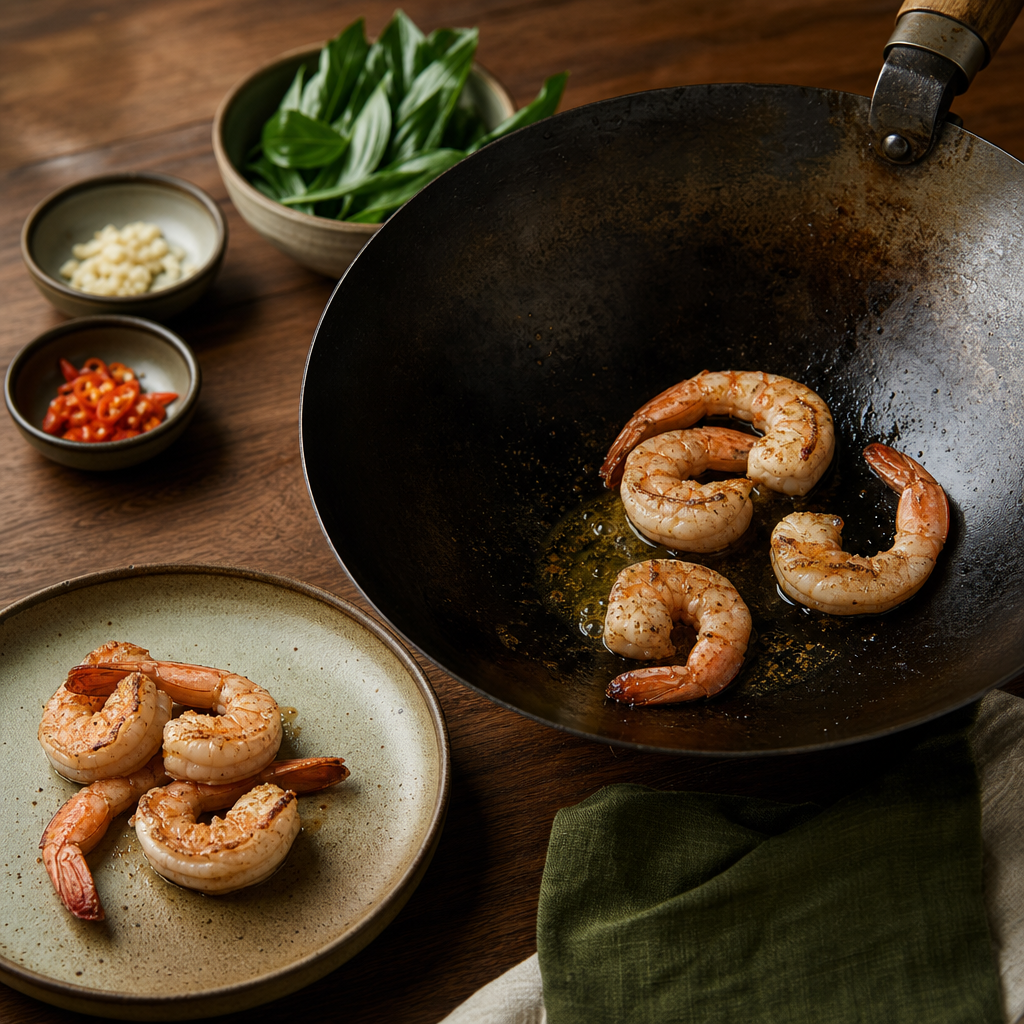
Heat a wok over medium-high heat, add 15 ml oil, and sear the shrimp until the outside turns opaque, about 45-60 seconds per side. Remove them while they are still a loose comma, not a tight C.
Fry the base
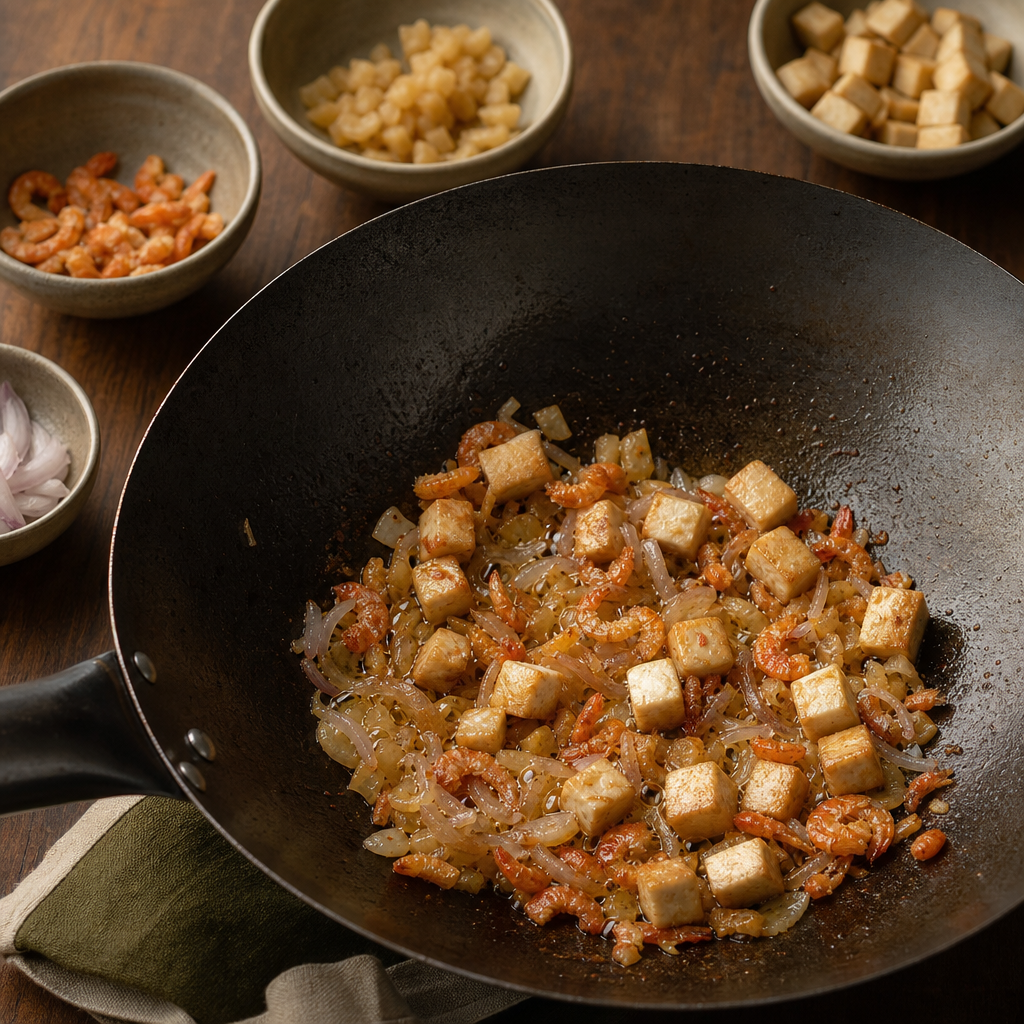
Add the remaining oil, then fry shallot, preserved radish, dried shrimp if using, and tofu until the shallot smells sweet and the tofu edges turn golden. Keep the ingredients moving but let the tofu touch the wok long enough to color.
Cook the noodles in sauce
Add the drained noodles and 80 percent of the sauce. Toss and press the noodles against the hot wok until they soften, gloss over, and separate; add the remaining sauce only if the noodles still taste underseasoned or look dry.
Set the egg
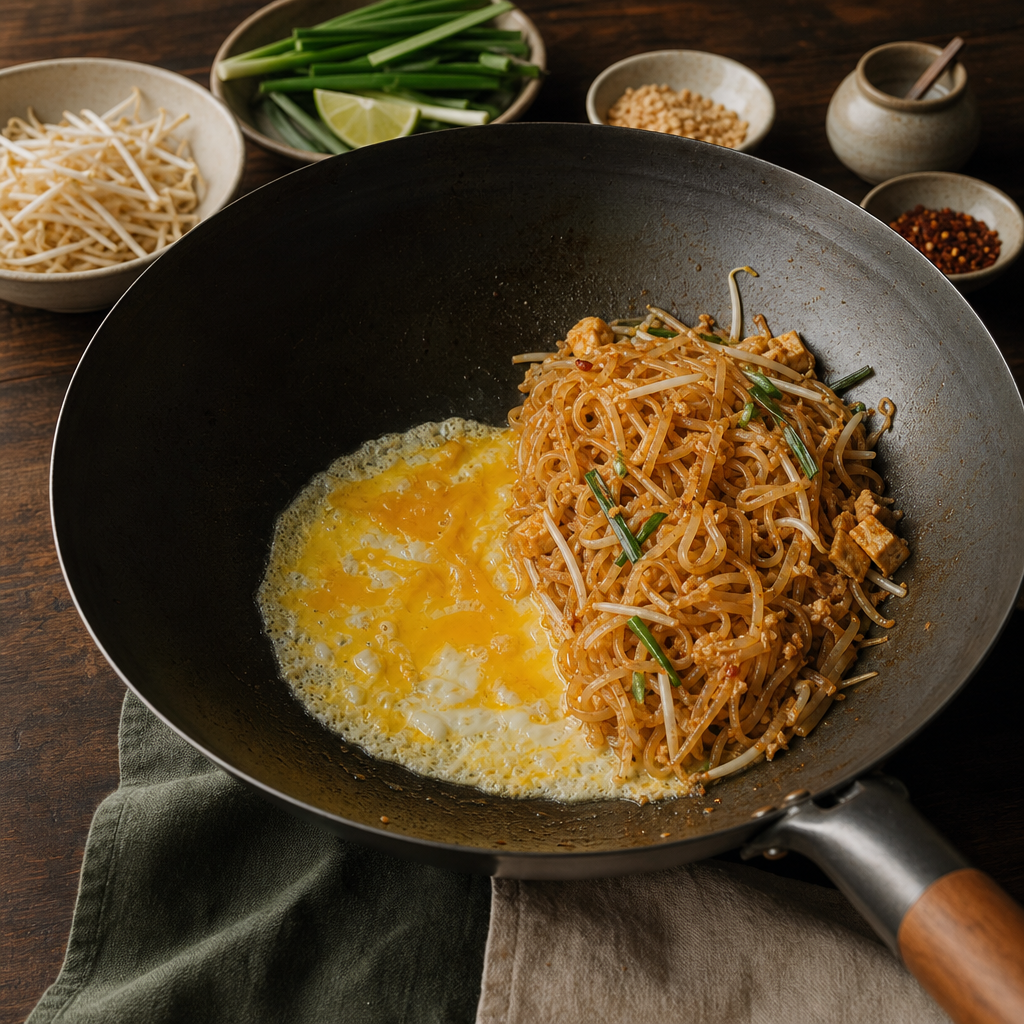
Push the noodles to one side. Crack in the egg, break the yolk, and let it set in a thin sheet for 20-30 seconds before folding the noodles through it.
Finish with shrimp and greens
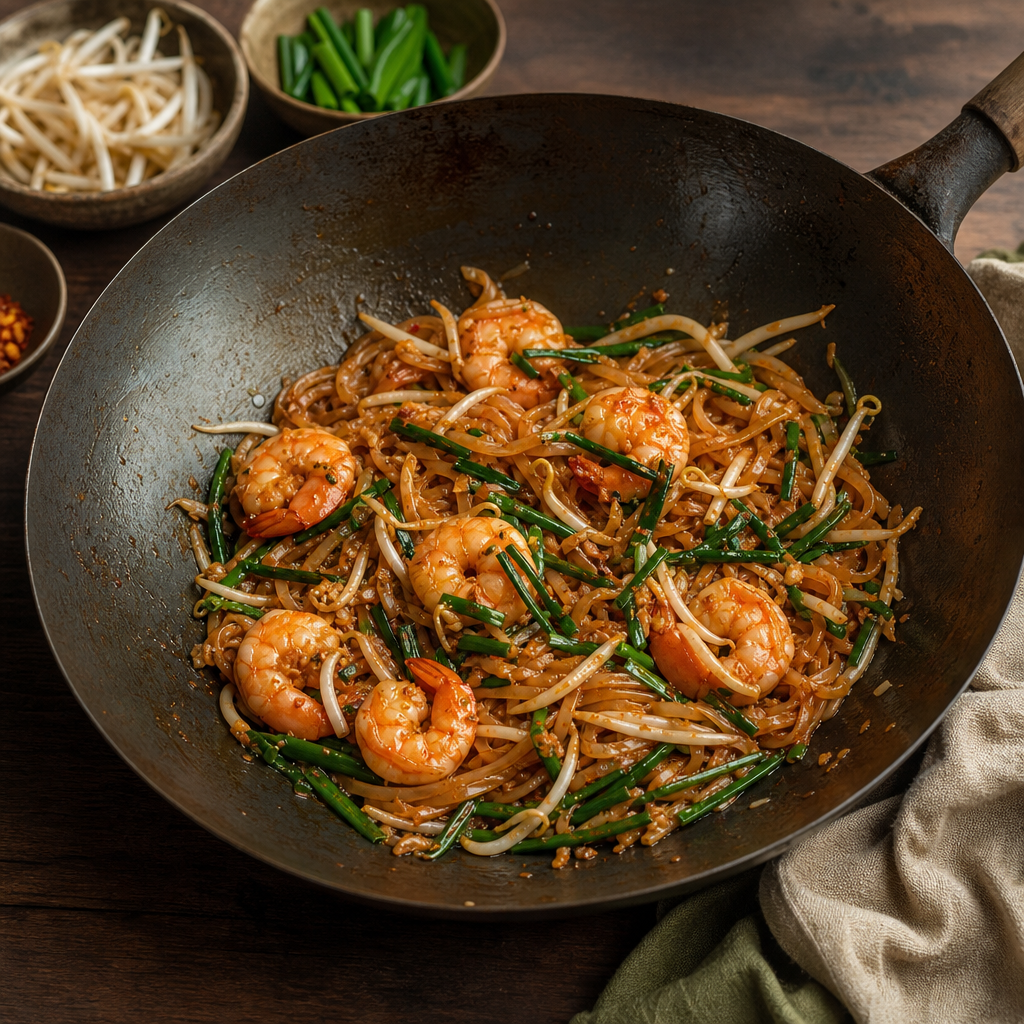
Return the shrimp with half the bean sprouts and most of the garlic chives. Toss for 30-45 seconds, only until the sprouts bend slightly and the chives turn glossy green.
Plate with table seasonings
Serve immediately with crushed roasted peanuts, remaining raw bean sprouts, garlic chives, lime wedges, dried chile flakes, and banana blossom if using. Squeeze lime at the table, not into the wok.
Common mistakes
- {'mistake': 'Boiling the rice noodles before stir-frying.', 'why_it_fails': 'They enter the wok already cooked, then break and clump as the sauce reduces.'}
- {'mistake': 'Using ketchup as the sour-sweet base.', 'why_it_fails': 'Tomato sweetness and vinegar move the dish away from tamarind’s dark fruit acidity.'}
- {'mistake': 'Cooking more than two servings in a weak home wok.', 'why_it_fails': 'The pan temperature drops, the noodles steam, and the sauce turns gluey.'}
- {'mistake': 'Adding all the sauce without watching the noodles.', 'why_it_fails': 'Different noodle brands absorb differently; excess sauce makes pad Thai wet and heavy.'}
- {'mistake': 'Overcooking the shrimp at the beginning.', 'why_it_fails': 'Shrimp tighten twice: once in the first sear and again in the final toss.'}
What does not belong
- {'item': 'ketchup', 'reason': 'Ketchup does not belong in pad Thai. Tamarind, fish sauce, and palm sugar supply the correct sour-salty-sweet structure.'}
- {'item': 'coconut milk', 'reason': 'Coconut milk does not belong in pad Thai. It dulls the tamarind and turns a dry wok noodle into a creamy noodle dish.'}
- {'item': 'soy sauce as the main seasoning in the standard shrimp version', 'reason': 'Soy sauce can support vegan adaptations, but fish sauce is the central seasoning in canonical pad Thai goong.'}
- {'item': 'bell peppers, broccoli, or cabbage', 'reason': 'Bulky vegetables release water and change the dish’s texture. Bean sprouts and garlic chives carry the fresh vegetable role.'}
- {'item': 'heavy sugar', 'reason': 'Pad Thai is balanced, not candy-sweet. Sugar rounds tamarind; it should not lead.'}
- {'item': 'fresh basil or cilantro as a main herb', 'reason': 'Those herbs belong elsewhere in Thai cooking. Garlic chives are the green aromatic here.'}