Pad See Ew
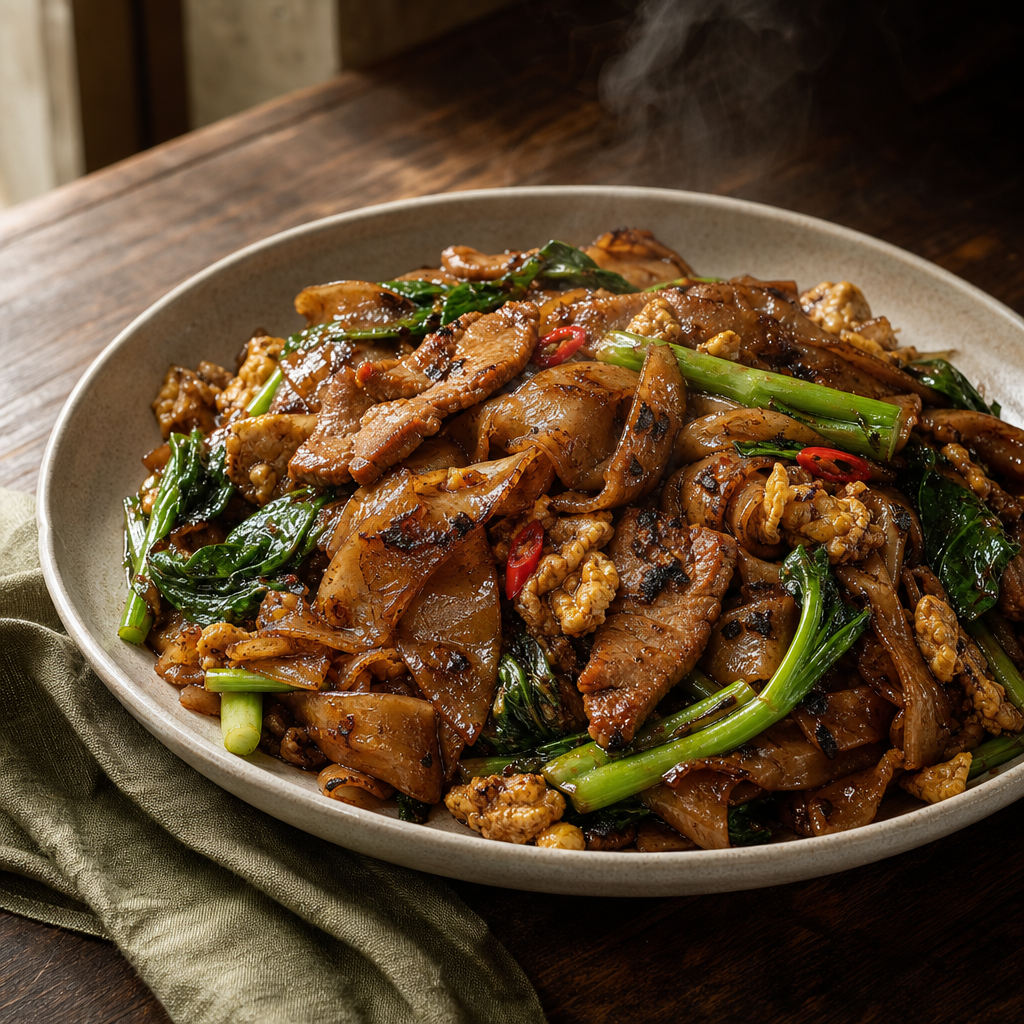
The dish in context
Pad see ew is a central Thai and Thai-Chinese wok noodle dish built around fresh wide rice noodles, soy sauce, egg, and a bitter-green snap from Chinese broccoli. The name is literal — “fried with soy sauce” — and the dish belongs to the same everyday noodle-shop grammar as rad na and pad kee mao, not to the aromatic curry or soup family.
Method 8 steps · 30 min
Separate the noodles
Pull the fresh rice noodles apart into wide ribbons. If they are stiff from refrigeration, microwave them briefly or steam for 1-2 minutes until flexible, then separate by hand.
Mix the seasoning
Stir thin soy sauce, dark soy sauce, oyster sauce, fish sauce, and sugar in a small bowl until the sugar dissolves. Keep it beside the stove.
Prep the Chinese broccoli
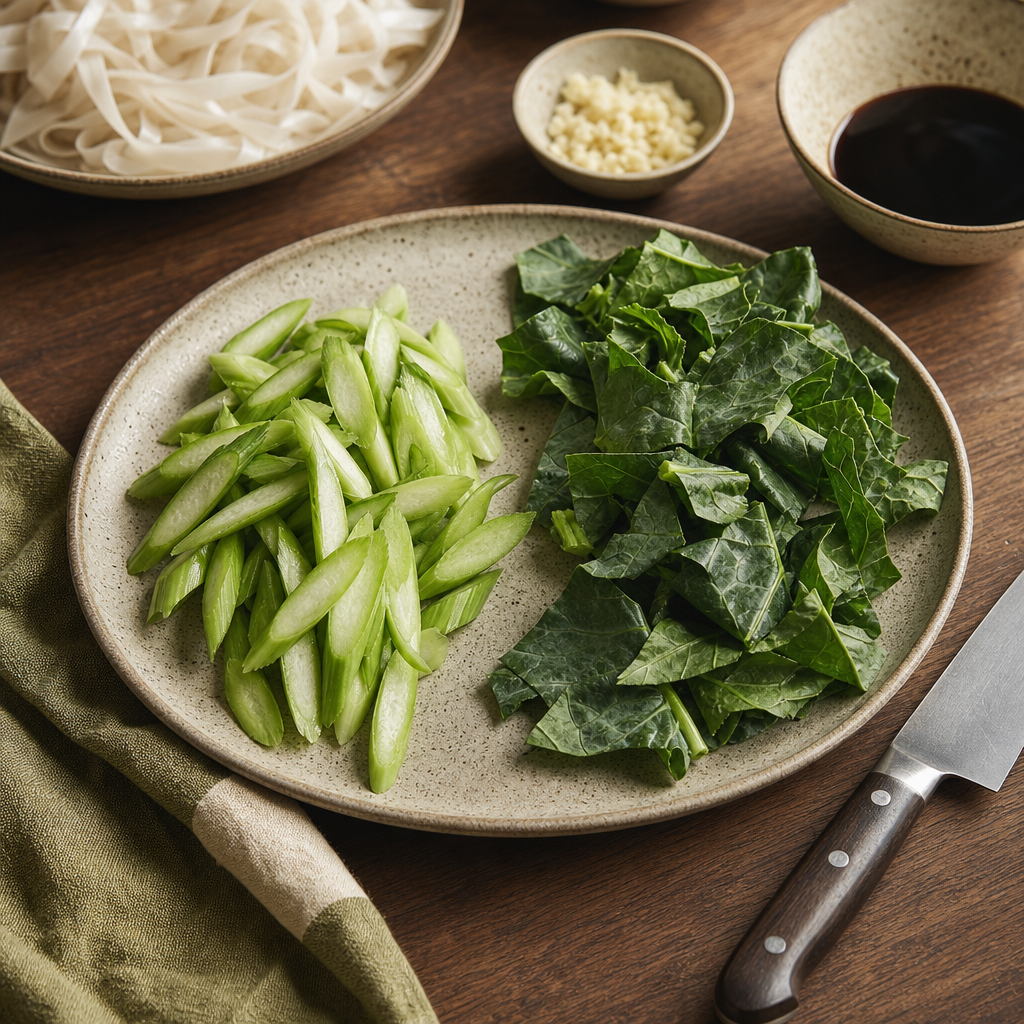
Slice Chinese broccoli stems thinly on the bias and cut the leaves into large pieces. Keep stems and leaves separate.
Sear the pork
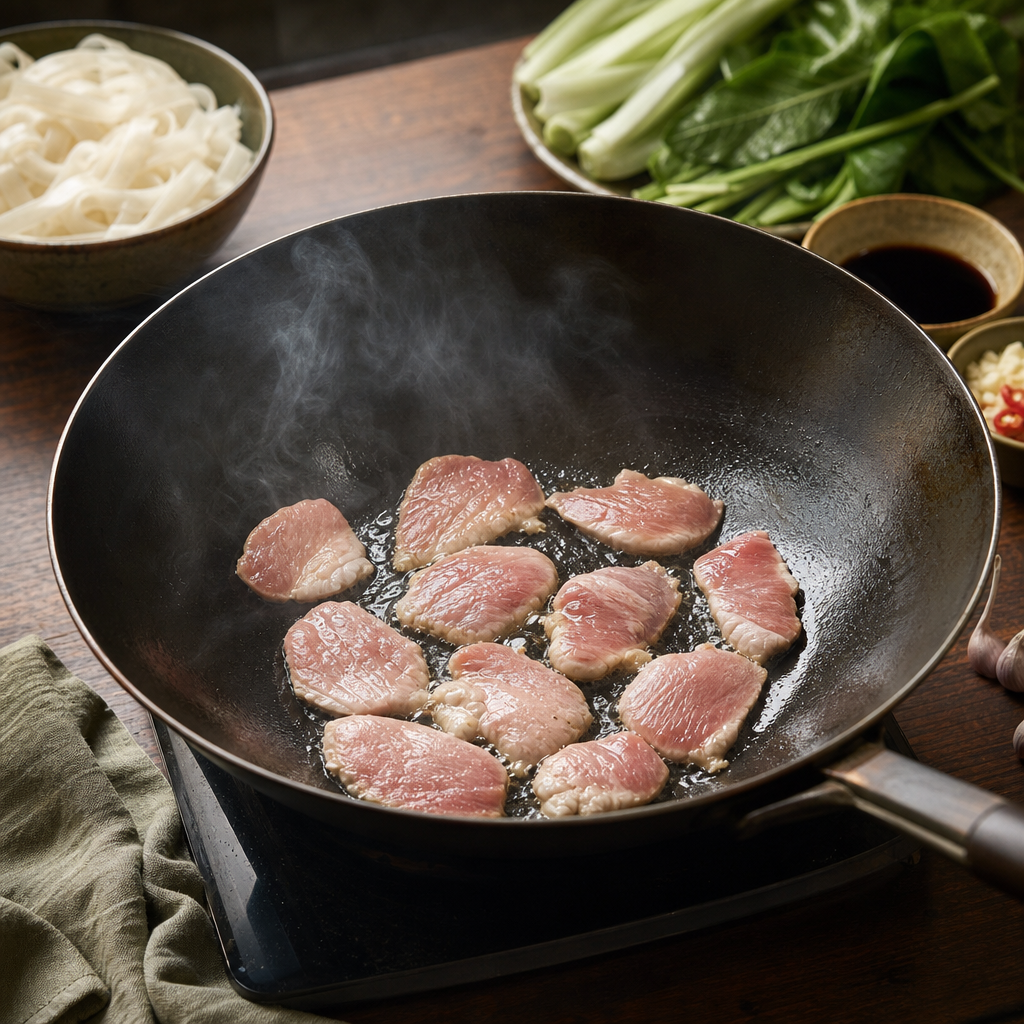
Heat a wok or heavy skillet over high heat until it begins to smoke lightly. Add oil, then pork in a single layer; sear 30-45 seconds before stirring until just cooked.
Fry garlic and stems
Add garlic and the Chinese broccoli stems. Stir-fry 20-30 seconds, keeping everything moving so the garlic turns sharp and fragrant without browning hard.
Set the egg
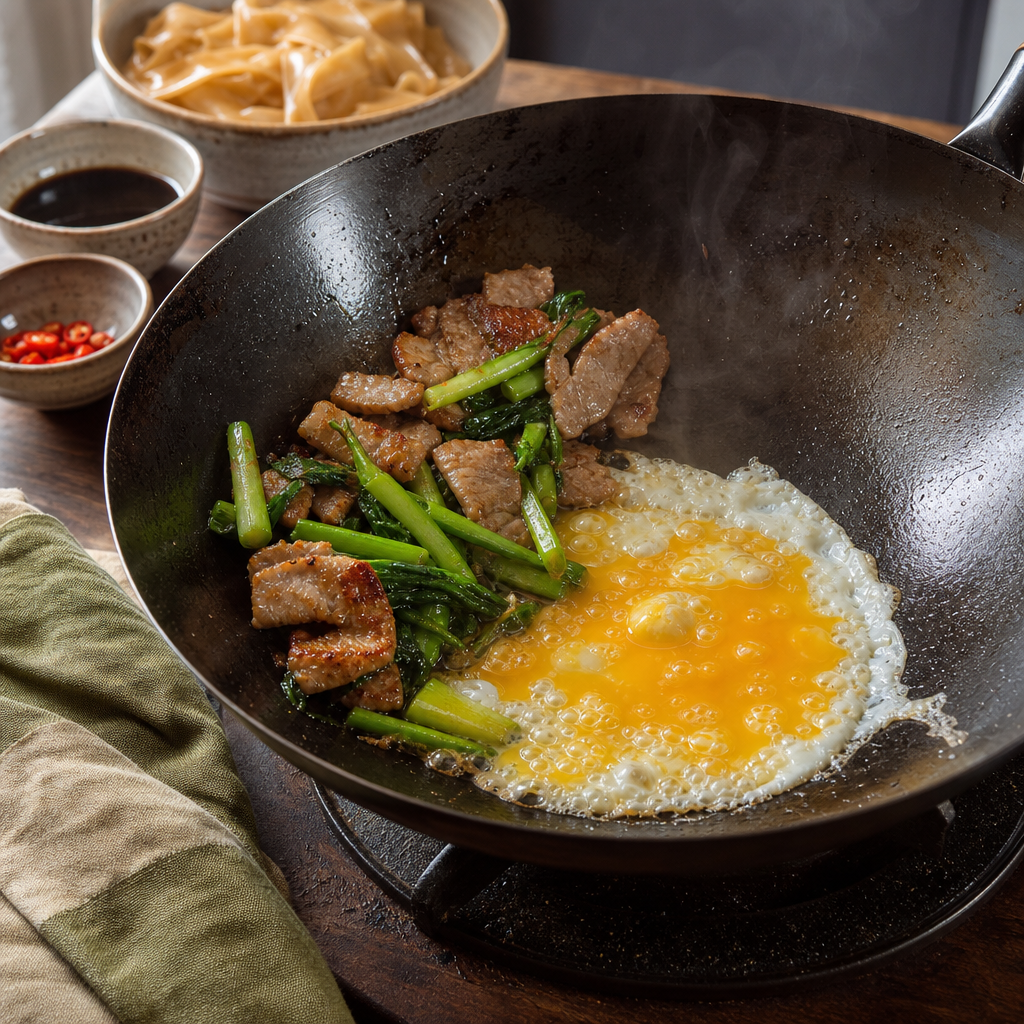
Push the pork and stems to one side. Crack in the egg, let it set around the edges, then break it into broad curds.
Char the noodles
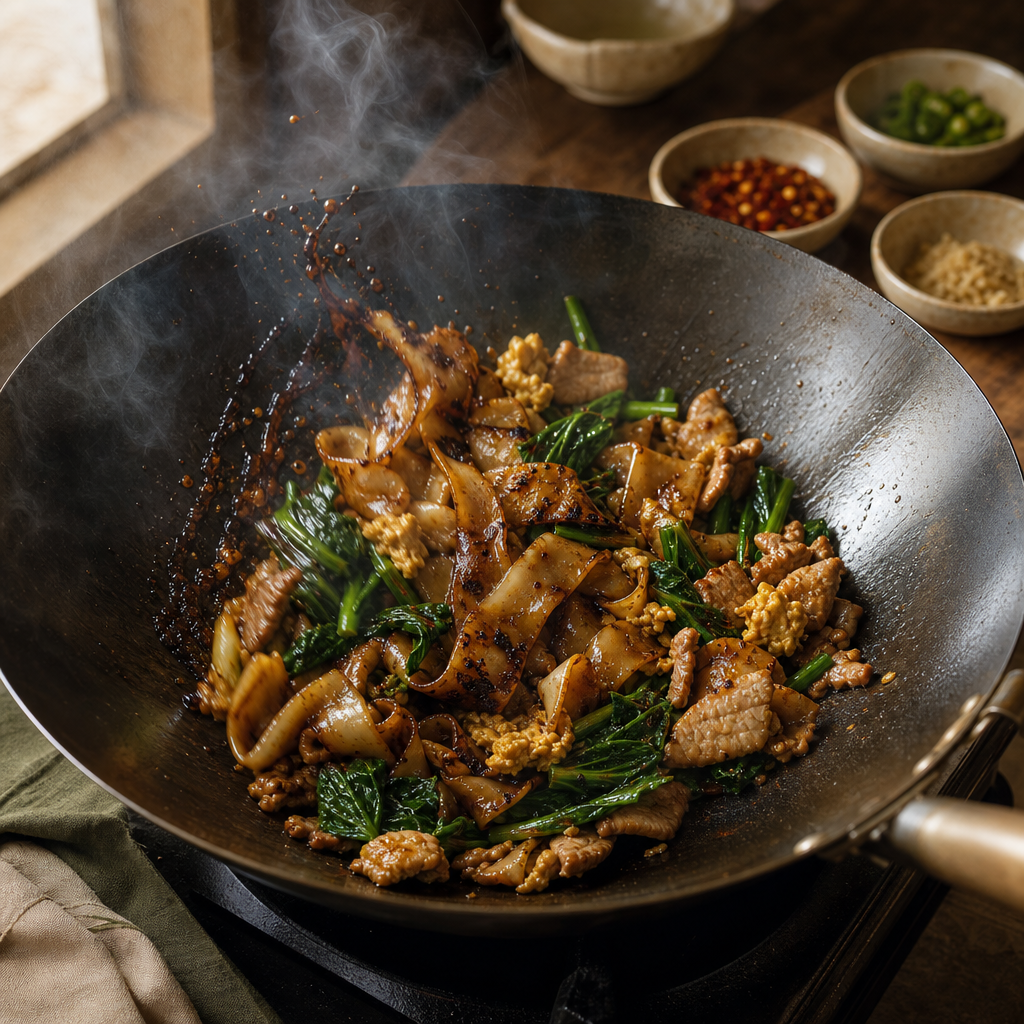
Add noodles and Chinese broccoli leaves. Pour the seasoning around the edge of the wok, then toss and press the noodles against the hot surface in short bursts until the edges darken and the leaves wilt, 1-2 minutes.
Finish dry, not saucy
Stop when the noodles are glossy, dark in patches, and no wet sauce remains in the pan. Finish with white pepper and serve immediately; serve chili vinegar on the side.
Common mistakes
- Using dried noodles without fully softening them, then blaming the wok when they shatter.
- Crowding the pan so the noodles steam instead of char.
- Adding too much dark soy sauce; black noodles are not better noodles.
- Cutting Chinese broccoli too small, so it overcooks before the noodles take color.
- Making the sauce sweet. Sugar rounds the soy; it should not announce itself.
What does not belong
- Do not add lemongrass, galangal, or makrut lime leaves. They are essential Thai aromatics in soups and curries, not in pad see ew; adding them turns a soy-sauce noodle dish into generic “Thai” flavor.
- Do not add coconut milk. There is no version of this wok noodle that needs creaminess.
- Do not add lime juice to the wok. If serving lime, squeeze it off heat at the table; for pad see ew, chili vinegar is the cleaner condiment.
- Do not replace Chinese broccoli with bell pepper and call it the same dish. The bitter-green contrast is the point.
Adaptations
Use firm tofu and vegetarian mushroom oyster sauce; omit fish sauce and increase thin soy by taste. This is a vegetarian pad see ew, not a pork noodle with invisible substitutions.
Use tofu, vegetarian mushroom oyster sauce, omit egg, and check noodles for egg-free production. The missing egg changes the texture; do not pretend otherwise.
Rice noodles are usually gluten-free, but standard soy and oyster sauces are not. Use Thai-style gluten-free soy and gluten-free oyster sauce; verify every bottle.
Use halal-certified oyster sauce and replace pork with chicken or beef. The technique stays the same.