Menchi Katsu
The dish in context
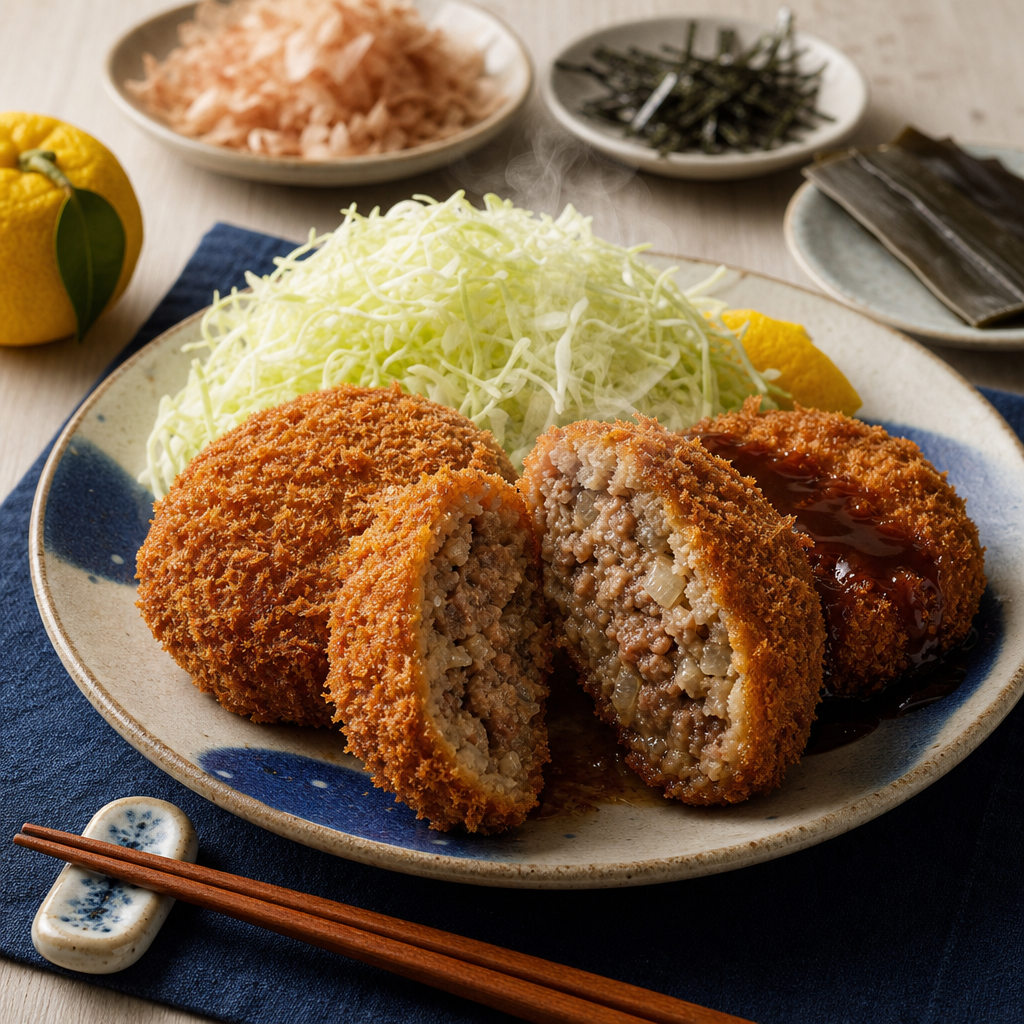
Menchi katsu (メンチカツ) belongs to yōshoku, the Japanese category of Western-influenced dishes adapted into domestic cooking and lunch counters. The structure is close to a hamburger steak coated in flour, egg, and panko, then deep-fried like korokke or tonkatsu. Tokyo-area usage commonly says menchi katsu, while parts of western Japan also use minchi katsu; both refer to a minced-meat cutlet, not a chopped whole cutlet. Modern versions appear in butcher shops, depachika food halls, school and company cafeterias, bentō, curry rice, and sandwiches. Food-safety sources in Japan treat menchi katsu seriously because ground meat carries surface contamination through the whole patty; visual browning is not proof of doneness.
Method 9 steps · 75 min
Soften the onion
Heat 10 ml neutral oil in a small pan over medium heat. Add the minced onion and cook 6-8 minutes, stirring often, until translucent and reduced but not browned hard. Spread on a plate and cool to room temperature.
Hydrate the internal panko
Combine 35 g panko and 45 ml milk in a small bowl. Let stand 5 minutes until the crumbs are evenly damp, then break up any dry clumps.
Mix the meat until sticky
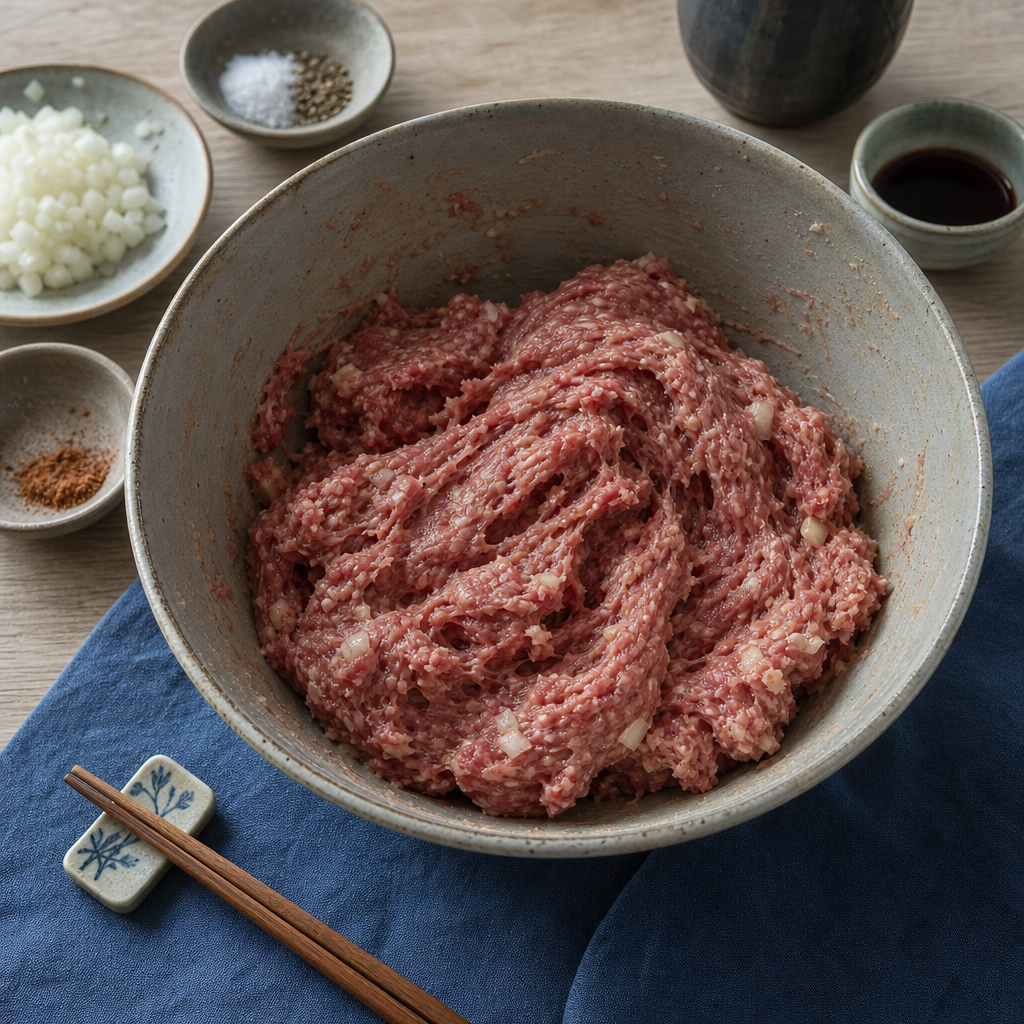
Combine beef, pork, salt, pepper, and nutmeg in a chilled bowl. Mix with a firm hand or paddle 1-2 minutes until the meat looks tacky and clings to the bowl. Add cooled onion, soaked panko, and 1 beaten egg; mix only until evenly distributed.
Shape and vent the cutlets
Divide the mixture into 4 equal portions, about 175 g each. Oil your hands lightly and shape each into an oval 2-2.5 cm thick, tossing it hand to hand a few times to drive out trapped air. Press the center slightly thinner than the edges.
Chill until firm
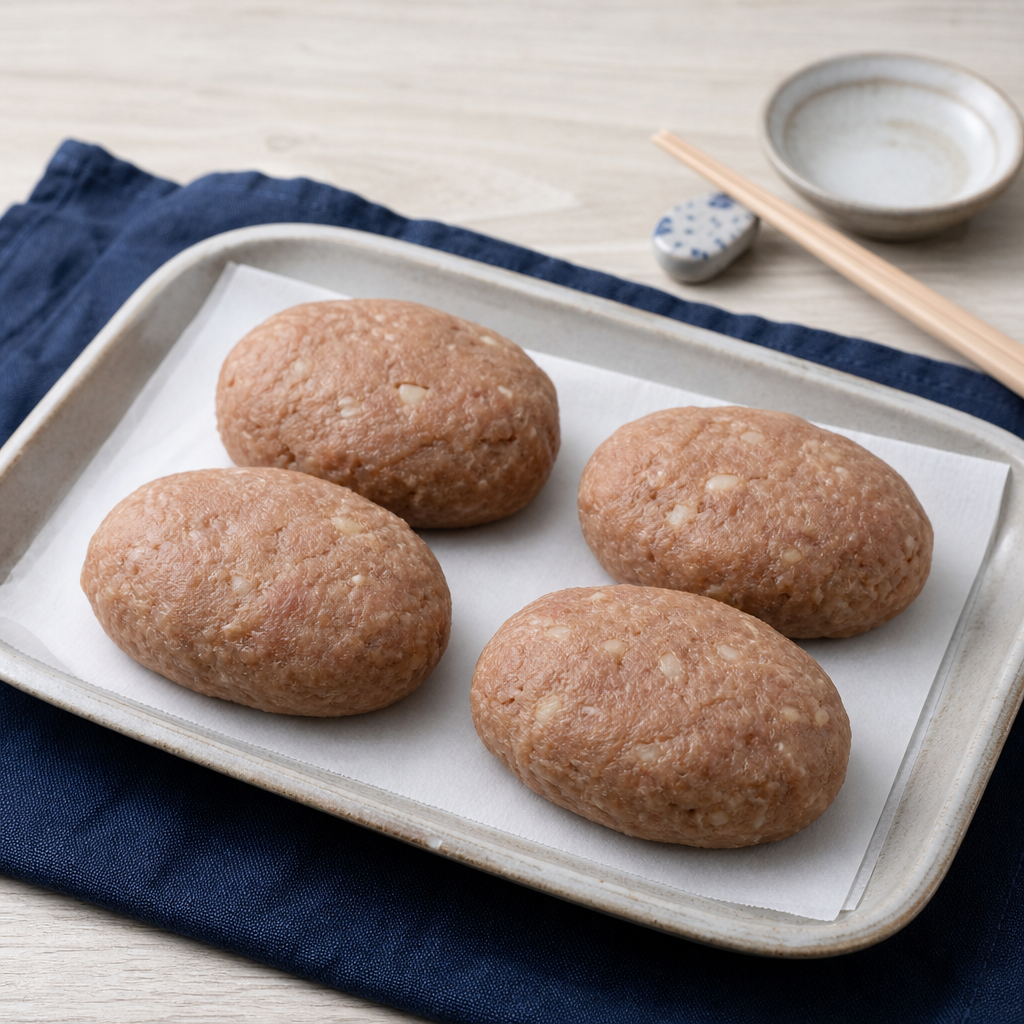
Set the shaped patties on a tray and refrigerate 20-30 minutes, uncovered or loosely covered. They should feel cold and firm, not wet on the surface.
Bread with panko
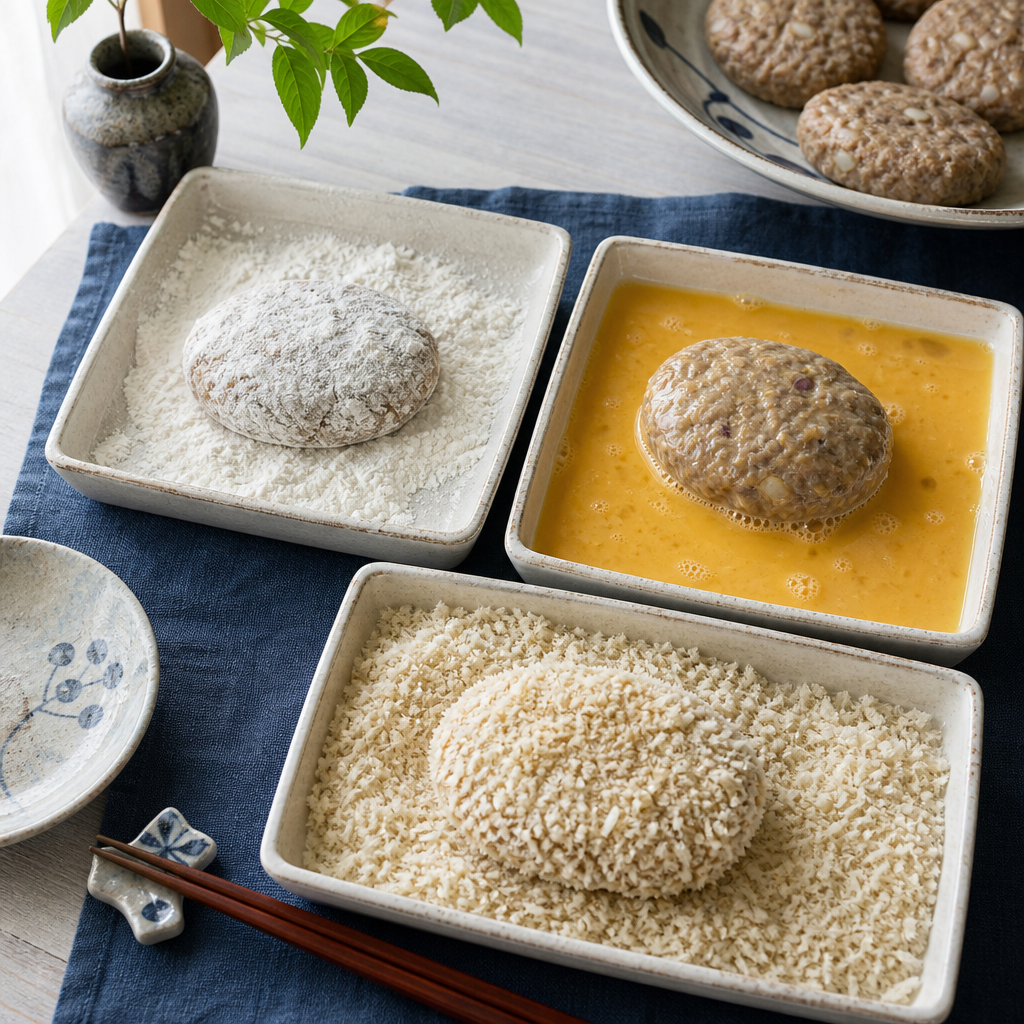
Set up flour, beaten eggs with 1 tbsp water, and coating panko in three shallow trays. Coat each patty lightly in flour, shake off excess, dip fully in egg, then press into panko on all sides. Rest the breaded cutlets 10 minutes while the oil heats.
Fry at a controlled lower temperature
Heat 5 cm oil to 165°C in a heavy pot. Fry 2 cutlets at a time for 5-6 minutes, turning every 90 seconds, until the crust is deep golden and the center registers at least 74°C. Keep the oil mostly between 160°C and 170°C.
Drain, then rest
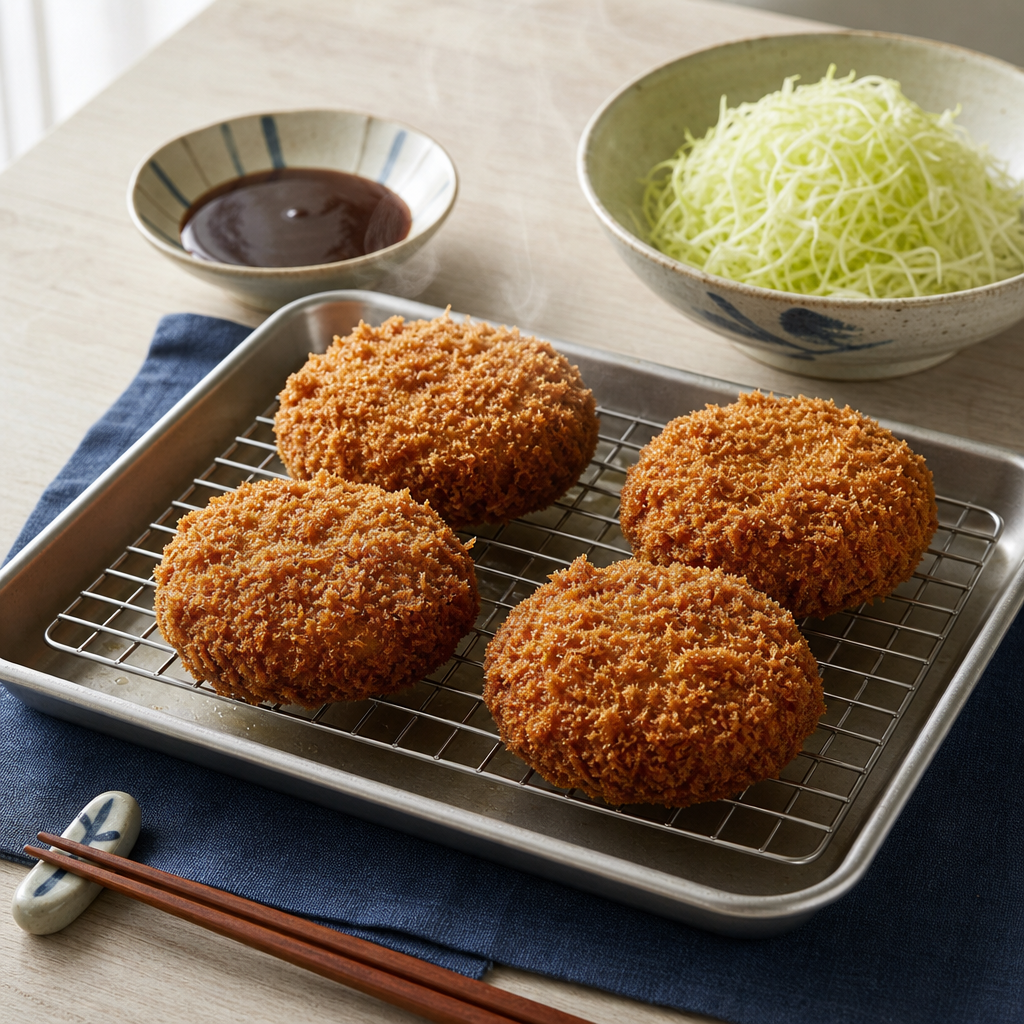
Transfer the cutlets to a wire rack and rest 5 minutes. Do not stack them and do not drain on a flat plate.
Serve with cabbage and sauce
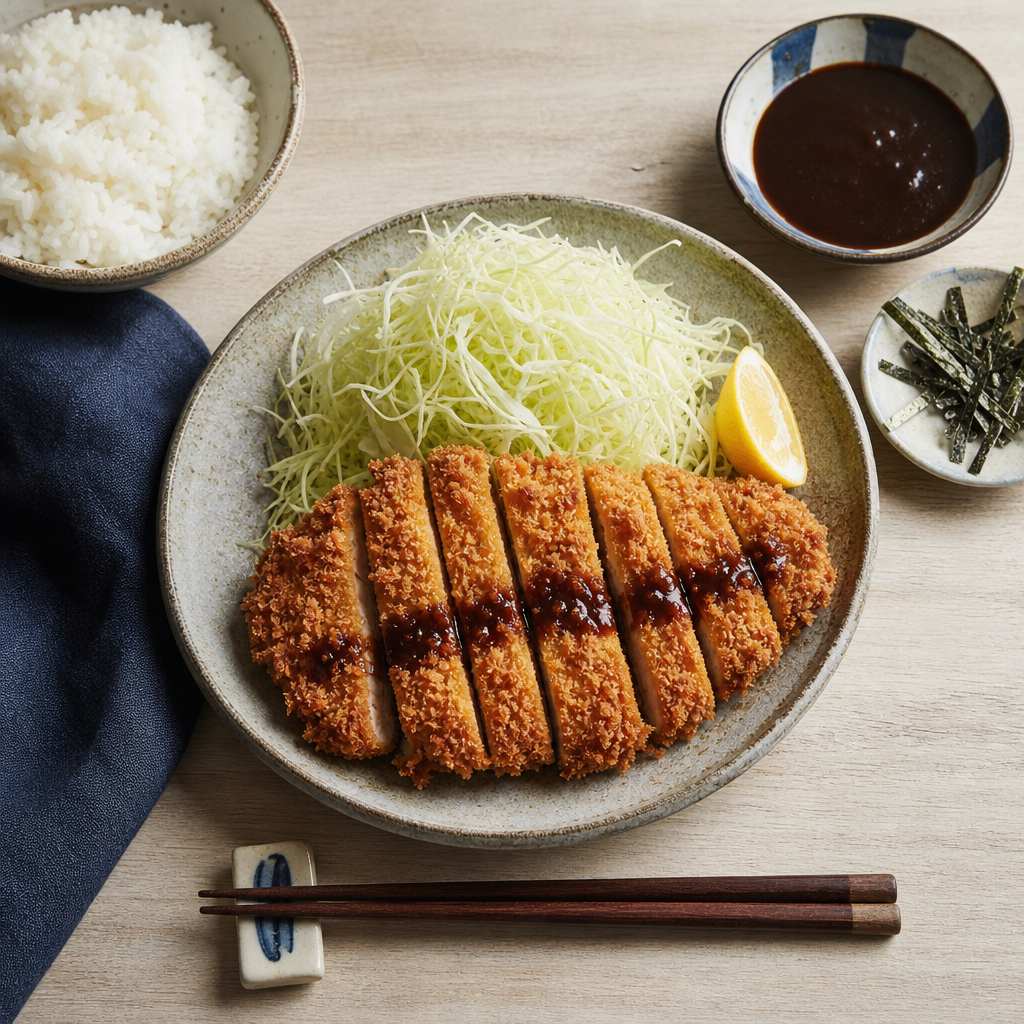
Plate with finely shredded cabbage. Serve tonkatsu sauce or chūnō sauce on the side, with a small dab of karashi if using. Cut one piece open only after resting; the interior should be cooked through, juicy, and cohesive, not pink or crumbly.
Common mistakes
- {'mistake': 'Making the patties too thick', 'why_it_fails': 'A 4 cm menchi katsu browns before the center reaches a safe temperature. Keep the cutlets around 2-2.5 cm thick.'}
- {'mistake': 'Using high tonkatsu frying temperatures', 'why_it_fails': '180°C works for thin whole-muscle cutlets, not thick ground meat. Menchi katsu needs a lower, steadier fry so heat reaches the center.'}
- {'mistake': 'Skipping the onion cooling step', 'why_it_fails': 'Hot onion warms and loosens the meat mixture, then the patty leaks fat and juice into the oil.'}
- {'mistake': 'Judging doneness by crust color', 'why_it_fails': 'Panko can look finished while the center remains undercooked. Use a probe thermometer and target at least 74°C in the center.'}
- {'mistake': 'Packing the meat like a sausage', 'why_it_fails': 'Heavy compression makes the interior rubbery. Mix until sticky, then shape firmly enough to remove air without crushing the texture.'}
- {'mistake': 'Draining on paper towels only', 'why_it_fails': 'Paper traps steam under the crust. Use a rack; paper can sit underneath the rack, not directly under the cutlet.'}
What does not belong
- {'item': 'cheese in the center', 'reason': 'Cheese-filled menchi exists as a variant. It does not belong in the baseline cutlet because it changes the frying risk and masks the meat-onion structure.'}
- {'item': 'teriyaki sauce', 'reason': 'Sweet teriyaki glaze does not belong on menchi katsu. Use Japanese cutlet sauce, chūnō sauce, Worcestershire-style sauce, or serve it plain.'}
- {'item': 'raw garlic as the main seasoning', 'reason': 'Garlic-heavy patties read as hamburger steak or meatball. Menchi katsu is built on meat, onion, pepper, and panko.'}
- {'item': 'fine dry breadcrumbs in place of panko', 'reason': 'Fine crumbs form a dense shell. Menchi katsu needs coarse panko for the craggy crust that drains cleanly.'}
- {'item': 'long shallow pan-frying with little oil', 'reason': 'Shallow oil cooks unevenly and encourages blowouts. Menchi katsu should fry in enough oil to surround the cutlet.'}