Chicken Katsu
The dish in context
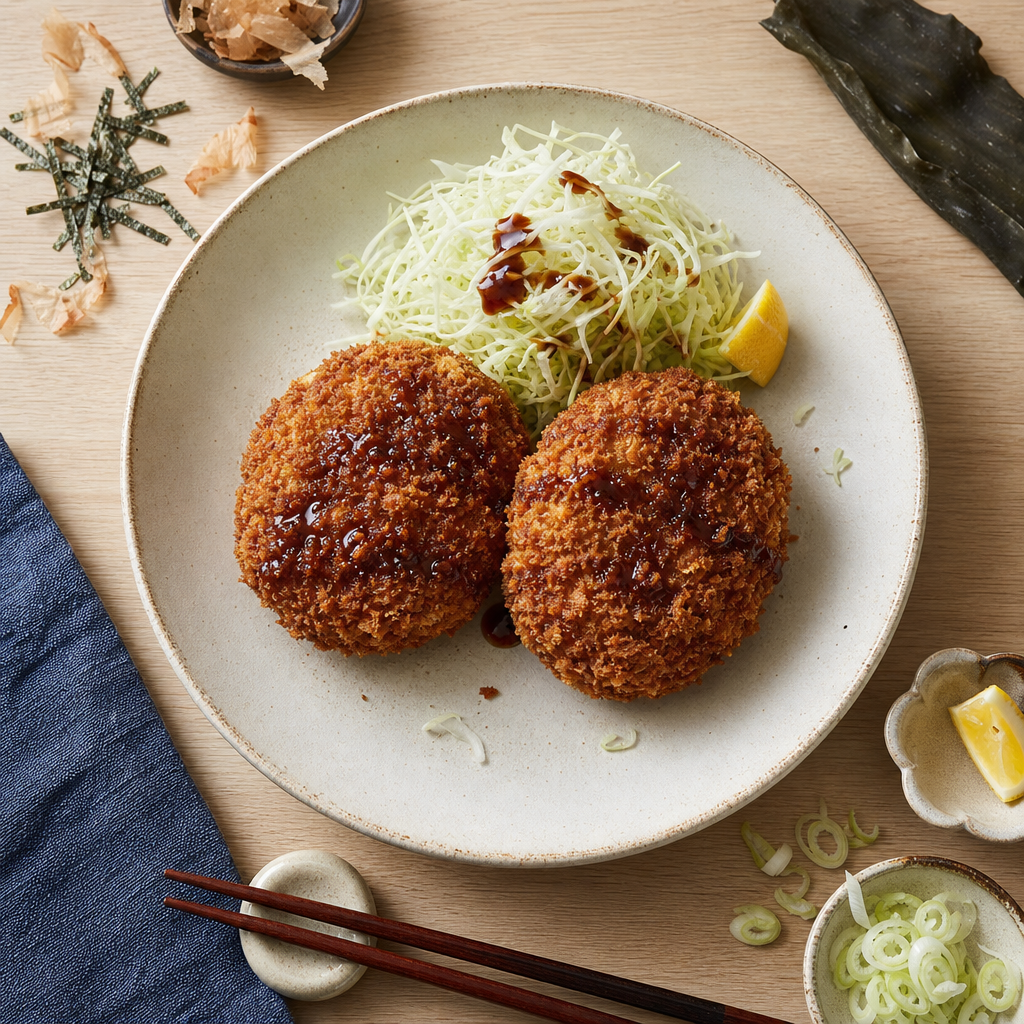
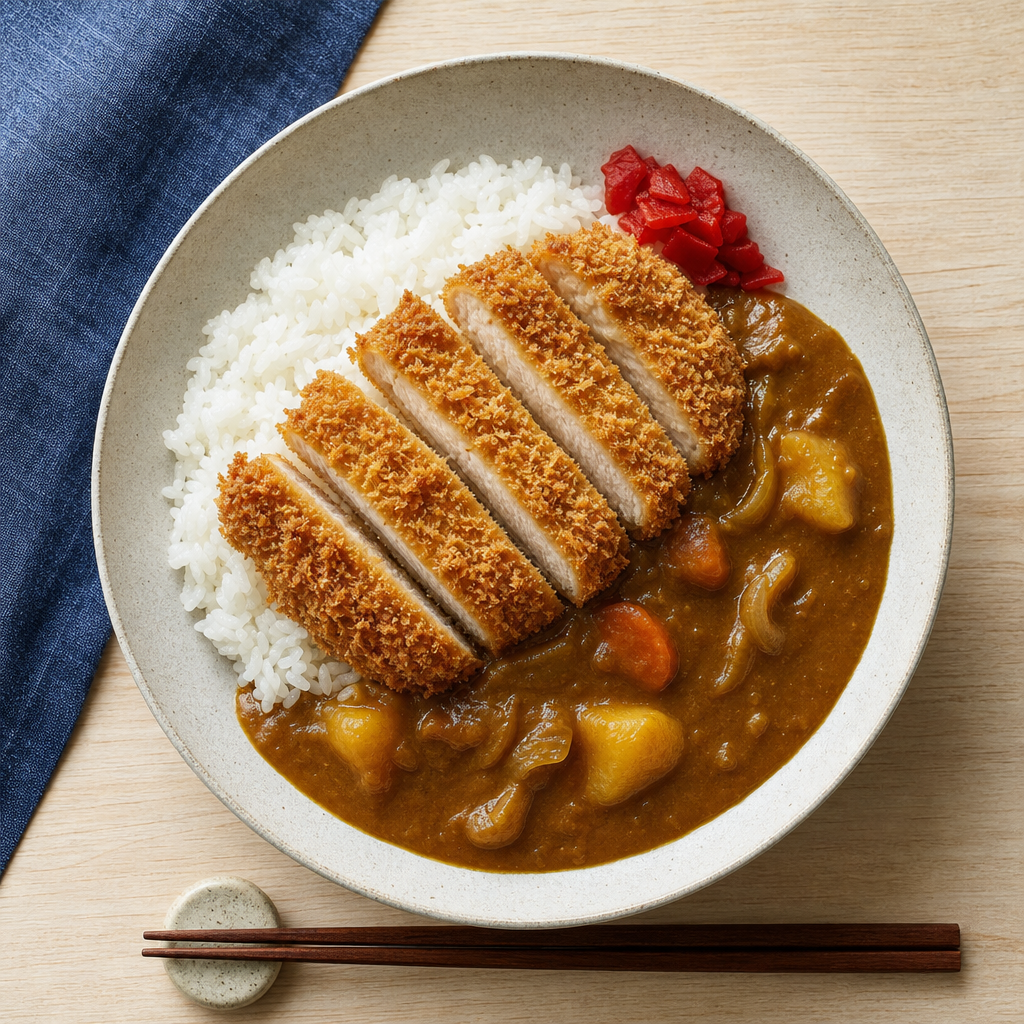
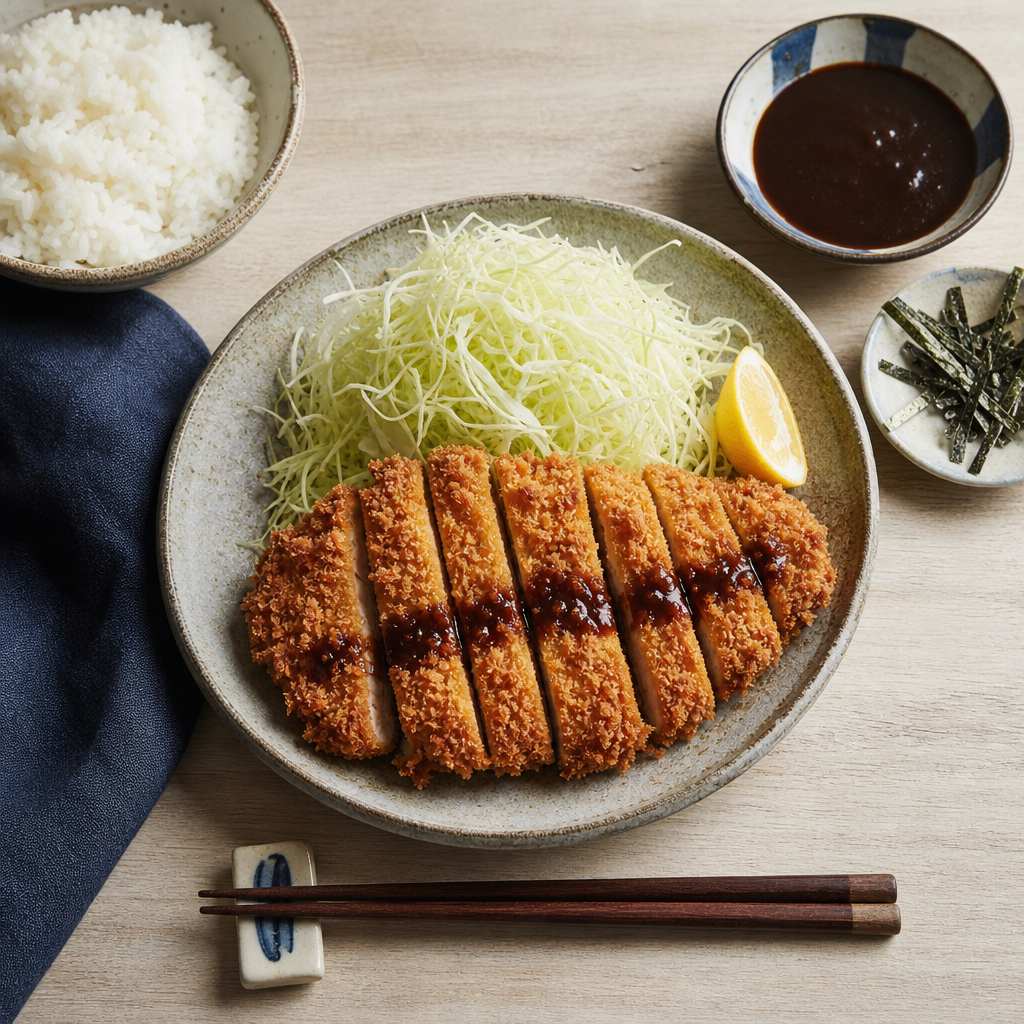
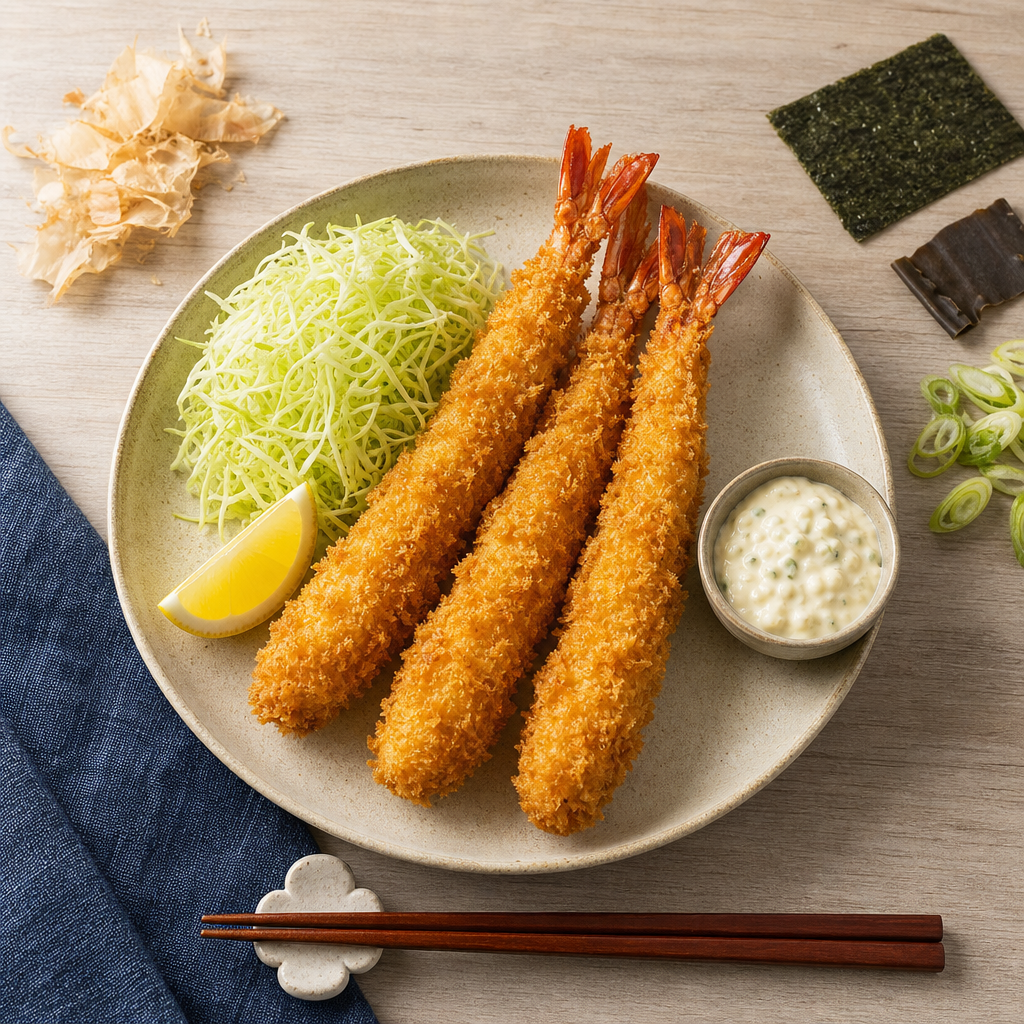
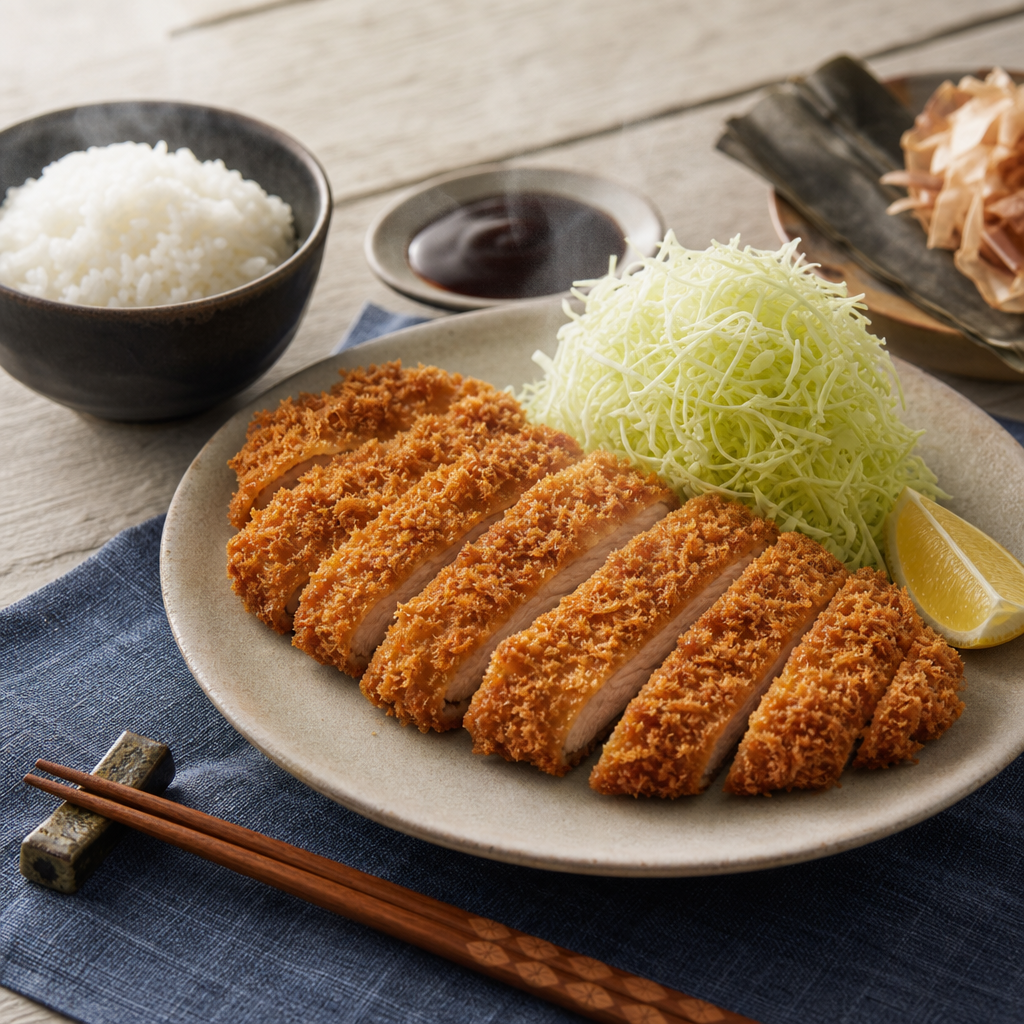
Katsu belongs to yōshoku, Japan’s Western-influenced cooking that adapted European cutlets into a Japanese meal grammar: rice, shredded cabbage, and a thick fruit-and-spice sauce. Tonkatsu, the pork version, is the older and more established restaurant form, but chicken katsu is now a standard home, cafeteria, bento, and teishoku item. Japanese usage accepts both breast and thigh; breast gives a cleaner cut and firmer slice, thigh gives more fat and a softer bite. The identity of the dish is not the chicken cut alone but the panko crust, the sliced presentation, the cabbage, and the tonkatsu-style sauce.
Method 8 steps · 45 min
Level the chicken
Trim loose fat and thick cartilage. Lay each thigh flat and cut shallow slashes through the thickest parts, then pound between sheets of plastic or parchment to an even 1.2-1.5 cm thickness.
Season and rest
Season the chicken on both sides with the salt and white pepper. Rest 10 minutes, then blot the surface dry with paper towel.
Set the breading line
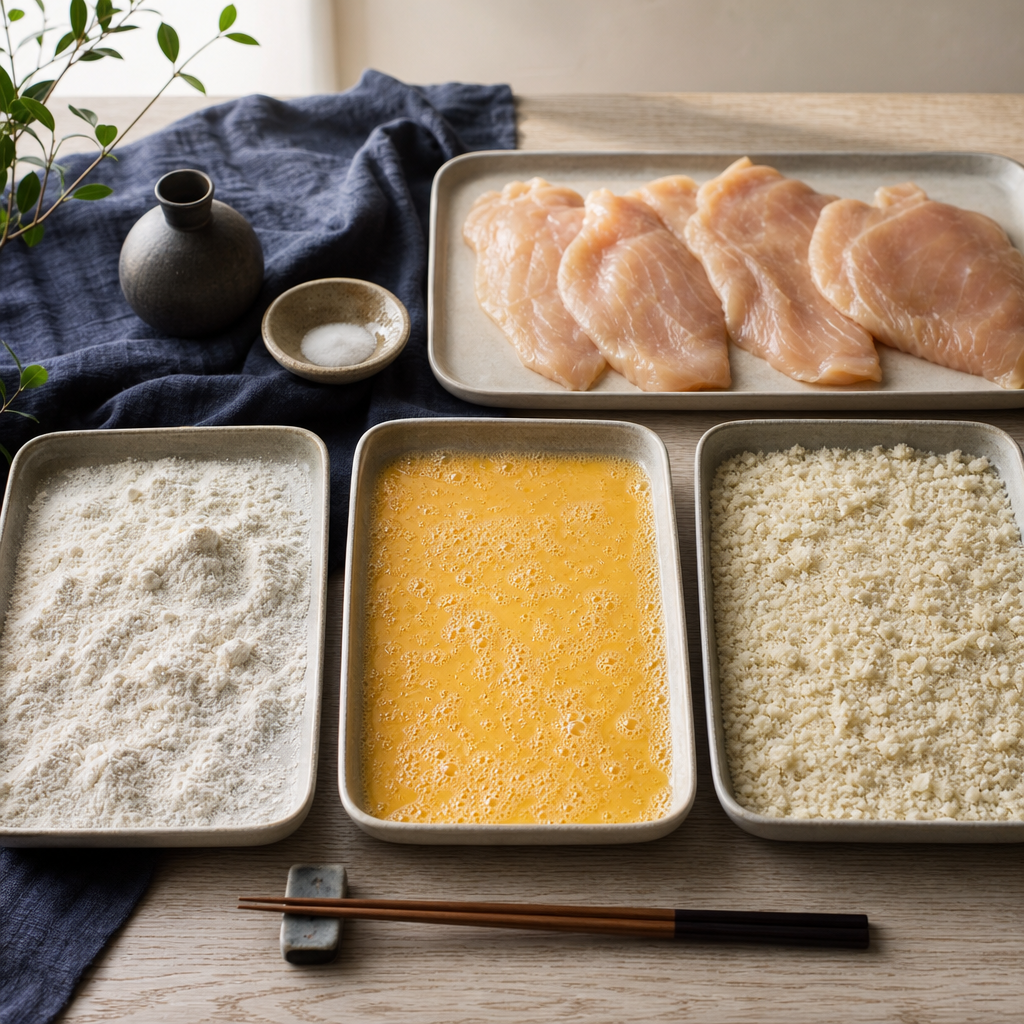
Put flour, beaten egg, and panko in three separate wide trays. Crush only the largest panko flakes lightly with your fingers; keep the crumb coarse.
Bread the cutlets
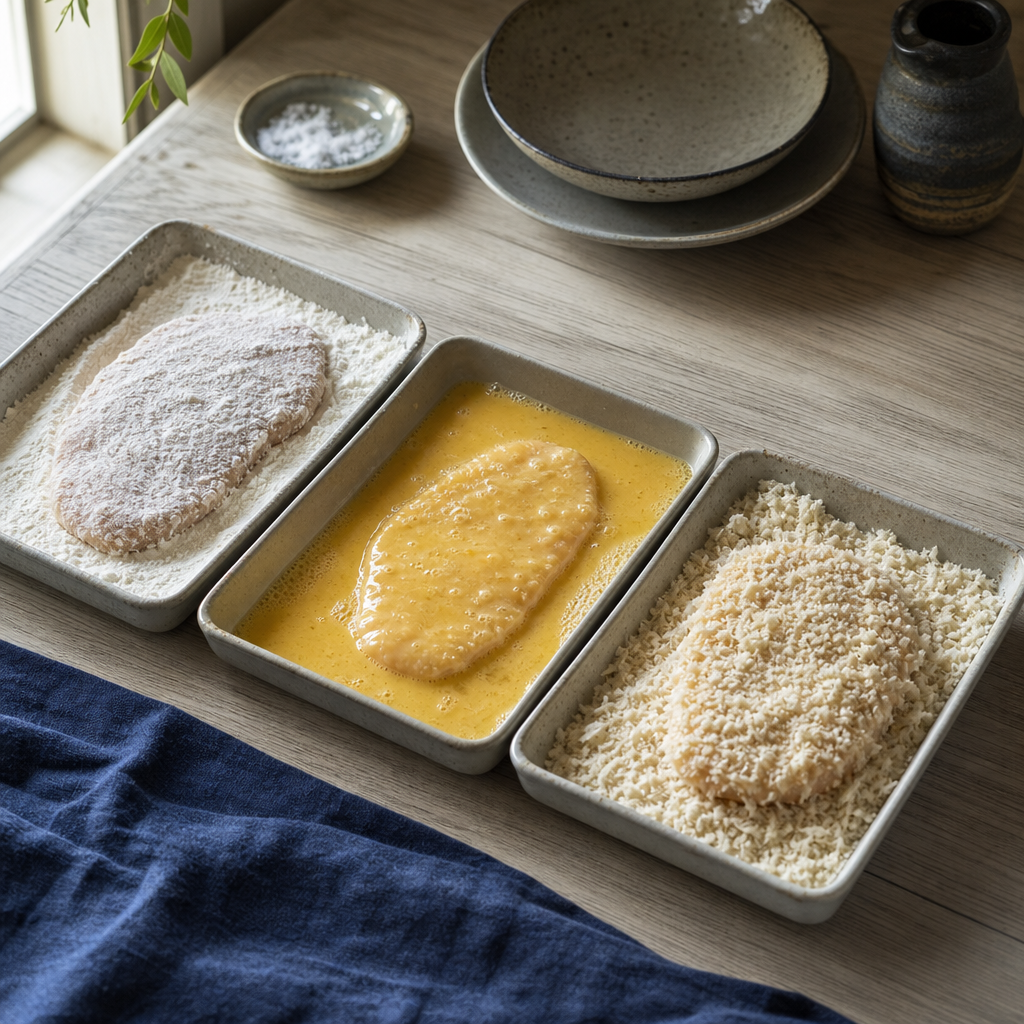
Coat each cutlet in flour and shake off every dry patch of excess. Dip in egg, let the surplus drip off, then press into panko on both sides until fully covered. Rest the breaded cutlets on a rack for 5 minutes.
Heat the oil
Heat 4-5 cm neutral oil in a heavy pot to 170-175°C. Hold that range before adding chicken.
Fry in batches
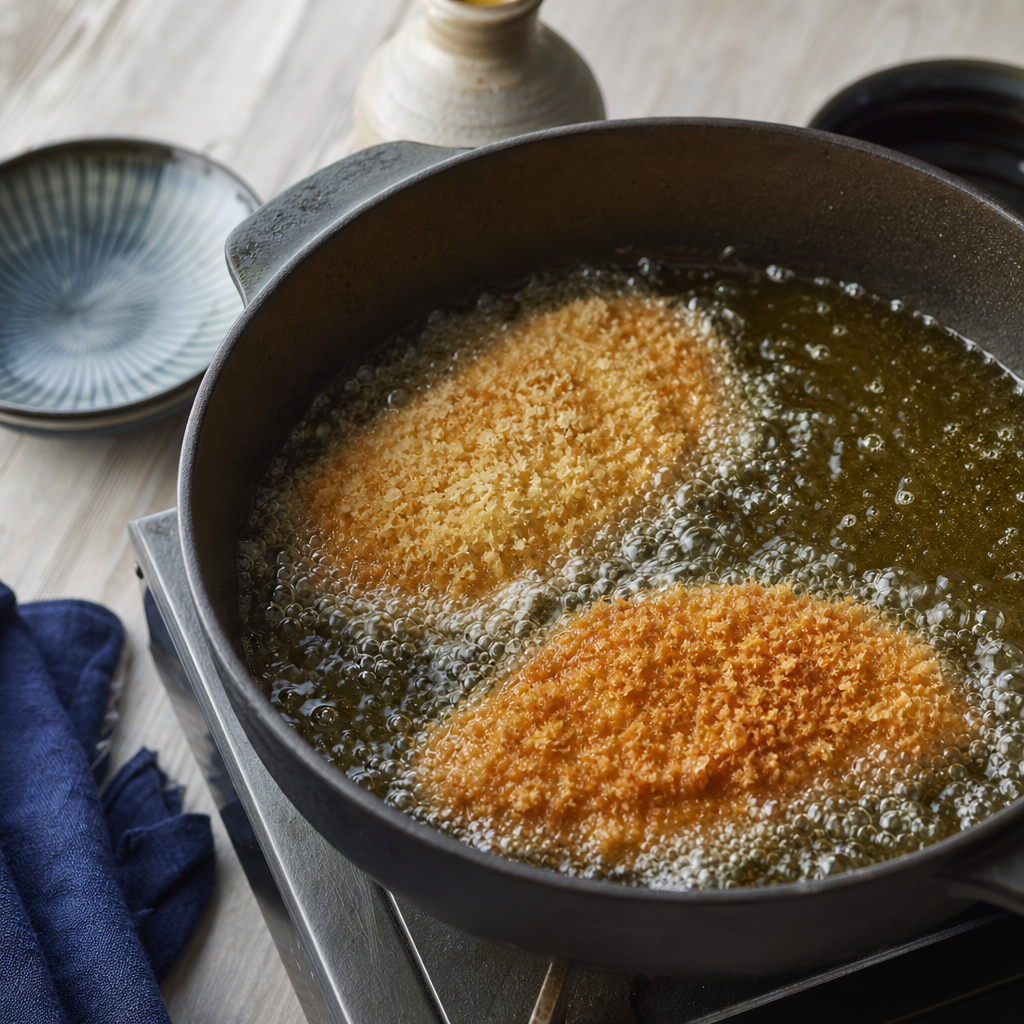
Lower 1-2 cutlets into the oil without crowding. Fry 3-4 minutes total for thighs, turning once or twice, until the crust is deep golden and the center reaches 74°C. For breast, pull at 68-70°C, rest at least 3 minutes on a rack, and confirm carryover reaches a safe final temperature.
Drain upright on a rack
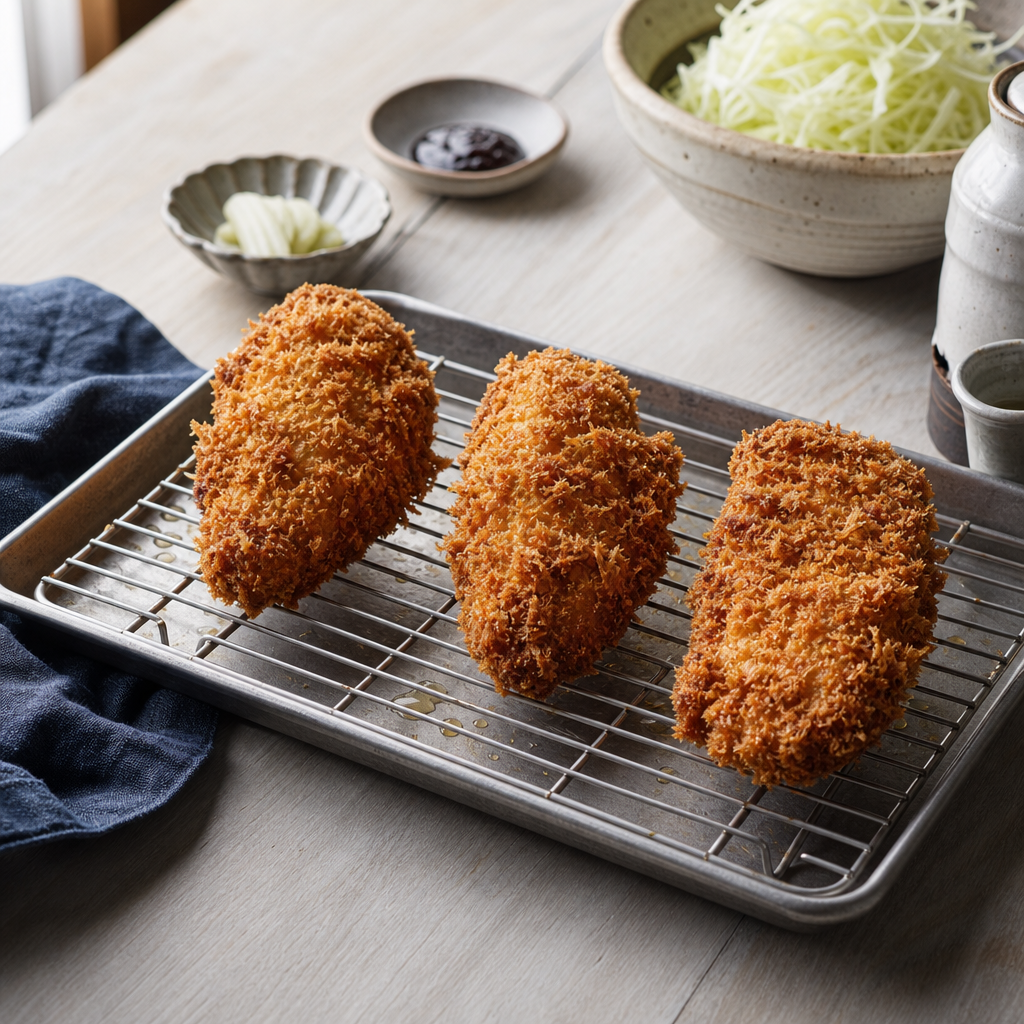
Transfer the cutlets to a wire rack and rest 3-5 minutes. Do not stack them and do not drain directly on paper towel.
Slice and plate
Slice each cutlet crosswise into 2 cm strips and keep the pieces aligned. Serve with shredded cabbage, tonkatsu sauce, Japanese short-grain rice if using, and lemon wedges if using.
Common mistakes
- {'mistake': 'Leaving the chicken thick in the center.', 'fix': 'Pound or butterfly to 1.2-1.5 cm. Thick cutlets force a choice between burnt panko and undercooked chicken.'}
- {'mistake': 'Using fine dry breadcrumbs.', 'fix': 'Use Japanese panko. The airy shard structure is what gives katsu its coarse, brittle crust.'}
- {'mistake': 'Crowding the pot.', 'fix': 'Fry in batches and let the oil return to 170-175°C before the next batch.'}
- {'mistake': 'Letting sauce sit on the crust too long.', 'fix': 'Drizzle at the table or serve sauce on the side. Panko softens fast under wet sauce.'}
- {'mistake': 'Draining on paper towel.', 'fix': 'Use a rack. Paper towel collects steam and turns the bottom side limp.'}
What does not belong
- {'item': 'Tempura batter', 'reason': 'Tempura batter does not belong in katsu. Katsu uses flour, egg, and panko as separate layers.'}
- {'item': 'Italian seasoned breadcrumbs', 'reason': 'Dried herbs, garlic powder, and fine crumbs push the dish toward schnitzel or breaded chicken cutlet, not Japanese katsu.'}
- {'item': 'Teriyaki glaze', 'reason': 'Sweet teriyaki glaze does not belong here. Chicken katsu takes tonkatsu sauce or curry in a katsu-curry format.'}
- {'item': 'Parmesan in the crust', 'reason': 'Cheese burns in the oil and changes the dish into a Western breaded cutlet.'}
- {'item': 'Long-grain rice as the default side', 'reason': 'Japanese teishoku plates use short-grain rice. Long-grain rice gives the wrong texture and eating rhythm.'}