Khao Mun Gai
The dish in context
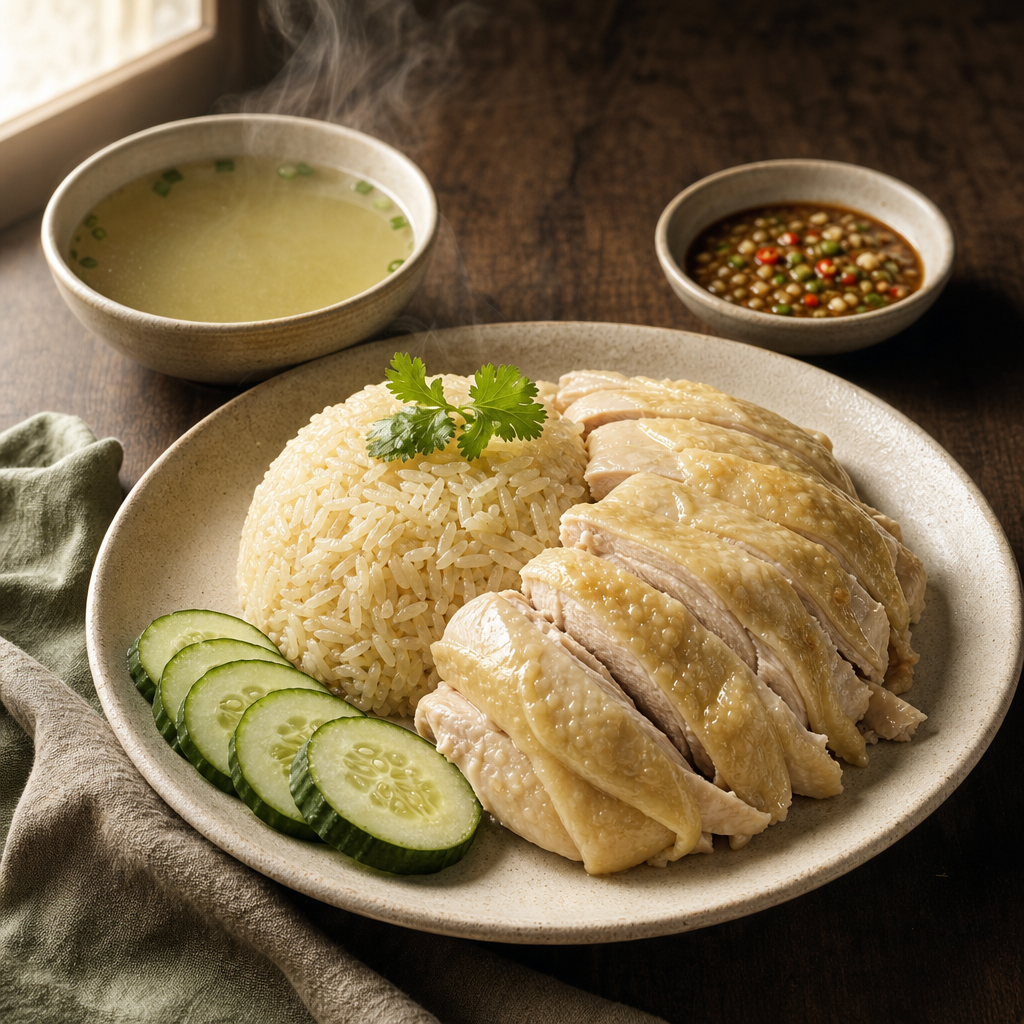
Khao mun gai is the Thai branch of Hainanese chicken rice, carried through Chinese migration and absorbed into Thai street-food culture. The Thai structure is distinct: rice cooked with chicken fat and broth, gently poached chicken, clear soup, cucumber, and a punchy sauce built on fermented soybeans, ginger, garlic, chilies, and vinegar. It is eaten all day in Thailand, including breakfast, lunch, and dinner, and is common enough that a neighborhood stall is judged by its rice before its chicken. Central Thai versions often include a light winter melon soup; cucumber in the soup is a practical household substitute, while raw cucumber slices on the plate are standard.
Method 10 steps · 105 min
Trim the chicken for fat
Trim loose fat and flaps of skin from the chicken cavity and neck area. Chop the trimmings and reserve them for the rice. Leave the main skin attached to the chicken.
Start a clear poaching broth
Put the chicken in a pot with water to cover by 2-3 cm, ginger slices, crushed garlic, cilantro roots, and salt. Bring to a bare simmer over medium heat, then lower the heat until only small bubbles break at the edge. Skim gray foam during the first 10 minutes.
Poach gently, then rest
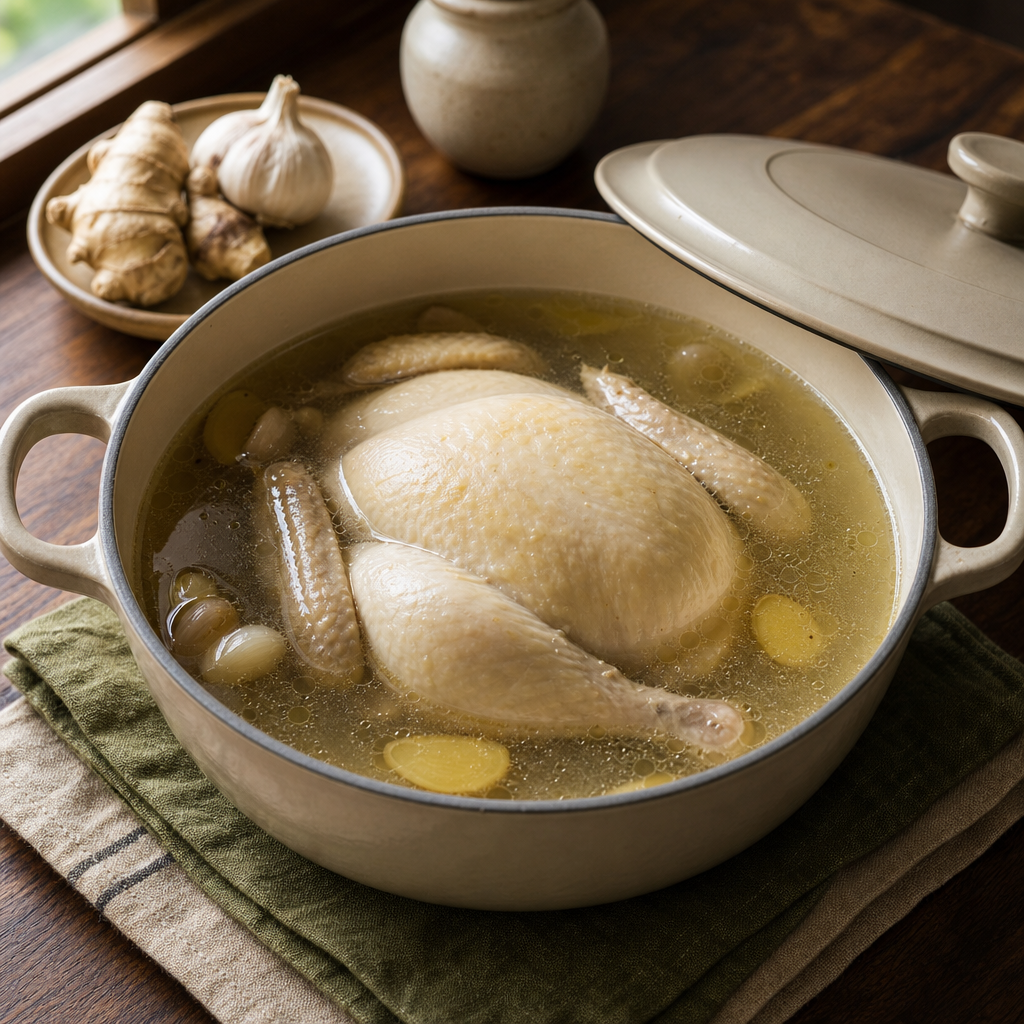
Simmer the chicken for 28-35 minutes for a 1.5 kg bird, turning once if the breast sits above the liquid. Turn off the heat, cover, and rest in the hot broth for 20 minutes. The thickest part of the thigh should register 74°C; the breast should not be stringy.
Set the skin
Lift the chicken from the broth and transfer it to a tray. For firmer skin, dip or brush the surface with cold water, then let it drain uncovered for 15 minutes. Strain the broth and keep it hot.
Render the chicken fat
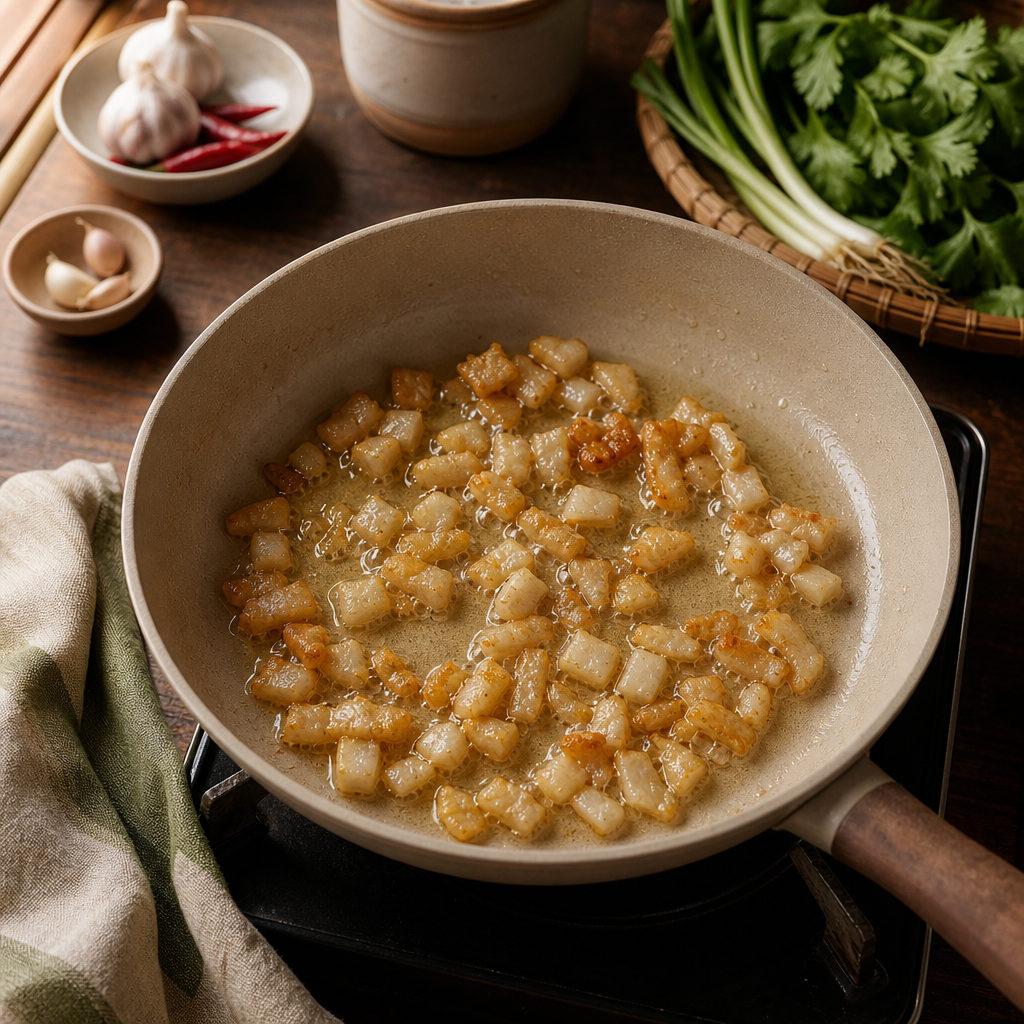
Put the chopped chicken fat and skin in a pan over medium-low heat. Cook until the fat has melted and the skin pieces are golden and shrunken, 8-12 minutes. Remove any hard cracklings if they threaten to burn.
Fry the rice aromatics
Add the chopped garlic and chopped ginger to the rendered fat. Fry 45-60 seconds, stopping when the garlic is pale gold and smells sharp-sweet, not brown. Add the drained jasmine rice and stir for 2 minutes until the grains look glossy.
Cook the chicken rice
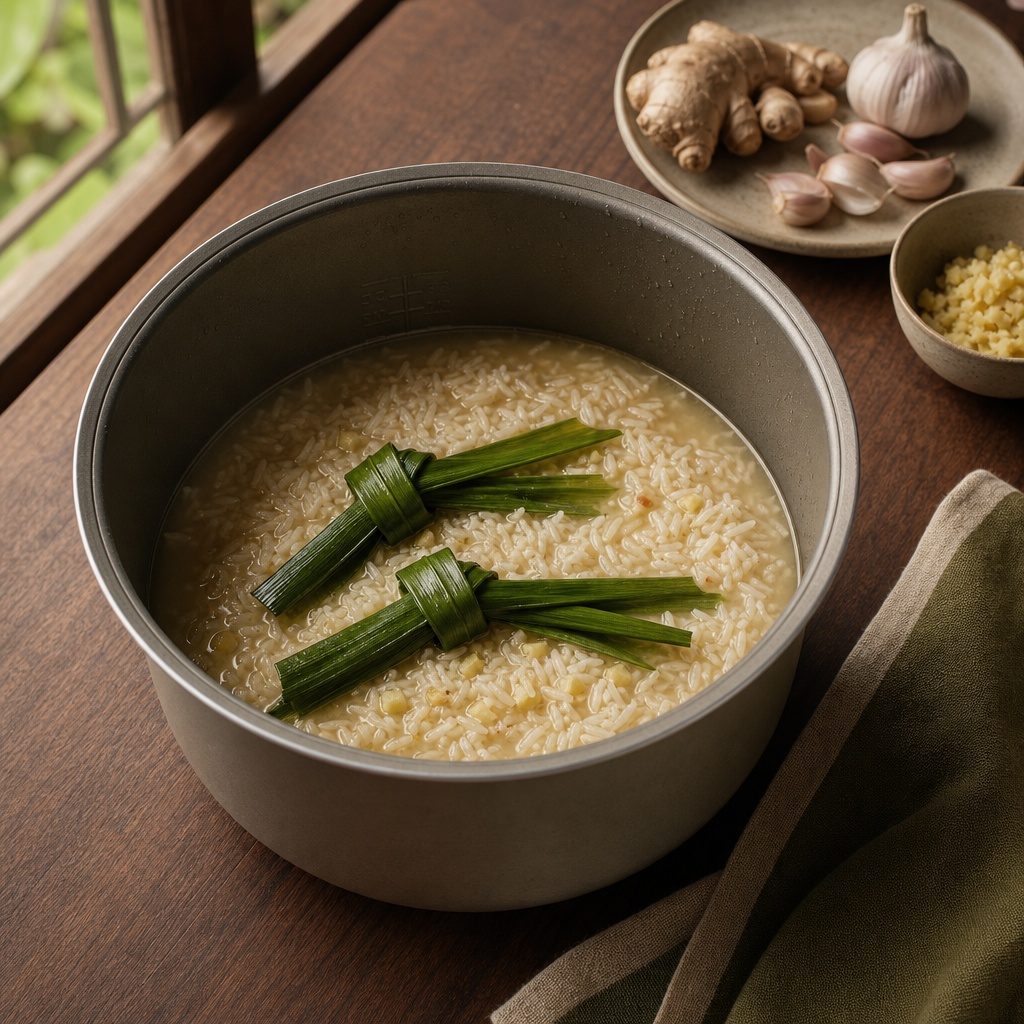
Transfer the rice mixture to a rice cooker or saucepan. Add 520 ml hot strained chicken broth and the knotted pandan leaves. Cook as for white rice, then rest covered 10 minutes before fluffing.
Make the dipping sauce
Stir together fermented soybean paste, minced ginger, minced garlic, chopped chilies, vinegar, dark sweet soy, sugar, light soy sauce, and warm broth. Mash lightly until spoonable but still textured. Adjust with vinegar for sharpness, soy for salt, or broth for looseness.
Finish the soup

Bring 800-1000 ml of the strained poaching broth to a simmer. Add winter melon and cook until translucent at the edges and tender in the center, 8-12 minutes. Correct salt, then finish with sliced scallion if using.
Slice and plate
Remove the chicken meat from the bones in large pieces, then slice across the grain into 1 cm pieces with skin attached. Pack rice into small bowls and invert onto plates, or mound it neatly. Serve chicken beside the rice with cucumber, cilantro, sauce, and a small bowl of hot broth.
Common mistakes
- {'mistake': 'Boiling the chicken hard', 'fix': 'Hold the pot at a bare simmer and finish with covered residual heat. Rolling bubbles tighten the meat and cloud the broth.'}
- {'mistake': 'Cooking the rice in plain water', 'fix': 'Use strained chicken poaching broth. Plain steamed rice turns the dish into sliced chicken over rice, not khao mun gai.'}
- {'mistake': 'Skipping the chicken fat', 'fix': 'Render the trimmed skin and fat, or use rendered chicken fat. Vegetable oil does not give the same aroma or gloss.'}
- {'mistake': 'Browning the garlic for the rice', 'fix': 'Stop at pale gold before the rice goes in. Dark garlic makes the rice bitter and visually dirty.'}
- {'mistake': 'Making the sauce sweet', 'fix': 'Use sugar as a rounding ingredient only. The sauce should lead with fermented soybean, ginger, garlic, vinegar, and chili.'}
- {'mistake': 'Serving the chicken straight from the pot without resting', 'fix': 'Rest and drain the chicken before slicing. Wet, steaming chicken sheds its skin and waters down the plate.'}
What does not belong
- {'item': 'sweet chili sauce as the main sauce', 'reason': 'Sweet chili sauce belongs with fried chicken versions such as khao man gai tod, not the poached chicken plate.'}
- {'item': 'coconut milk', 'reason': 'Coconut milk has no role in khao mun gai. It muddies both the rice and broth.'}
- {'item': 'turmeric-heavy yellow rice', 'reason': 'The rice may look faintly golden from chicken fat, but it is not biryani or turmeric rice.'}
- {'item': 'grilled or browned chicken', 'reason': 'The standard chicken is poached. Browning changes the dish into a different chicken-and-rice plate.'}
- {'item': 'short-grain sticky rice', 'reason': 'Sticky rice clumps and fights the fat-coated grain structure. Thai jasmine rice is the correct base.'}
- {'item': 'butter', 'reason': 'Butter gives dairy sweetness and a Western aroma. Chicken fat is the fat that belongs.'}