Katsu Curry
The dish in context
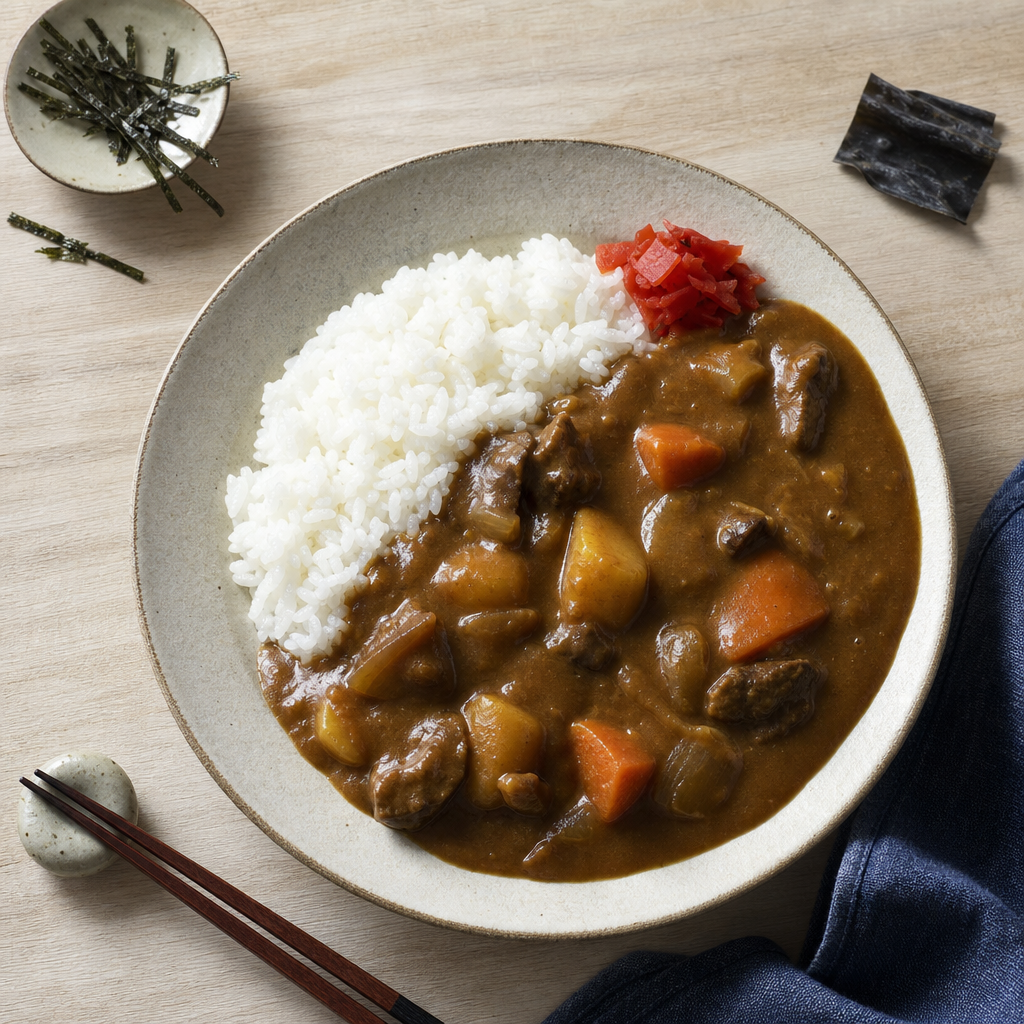
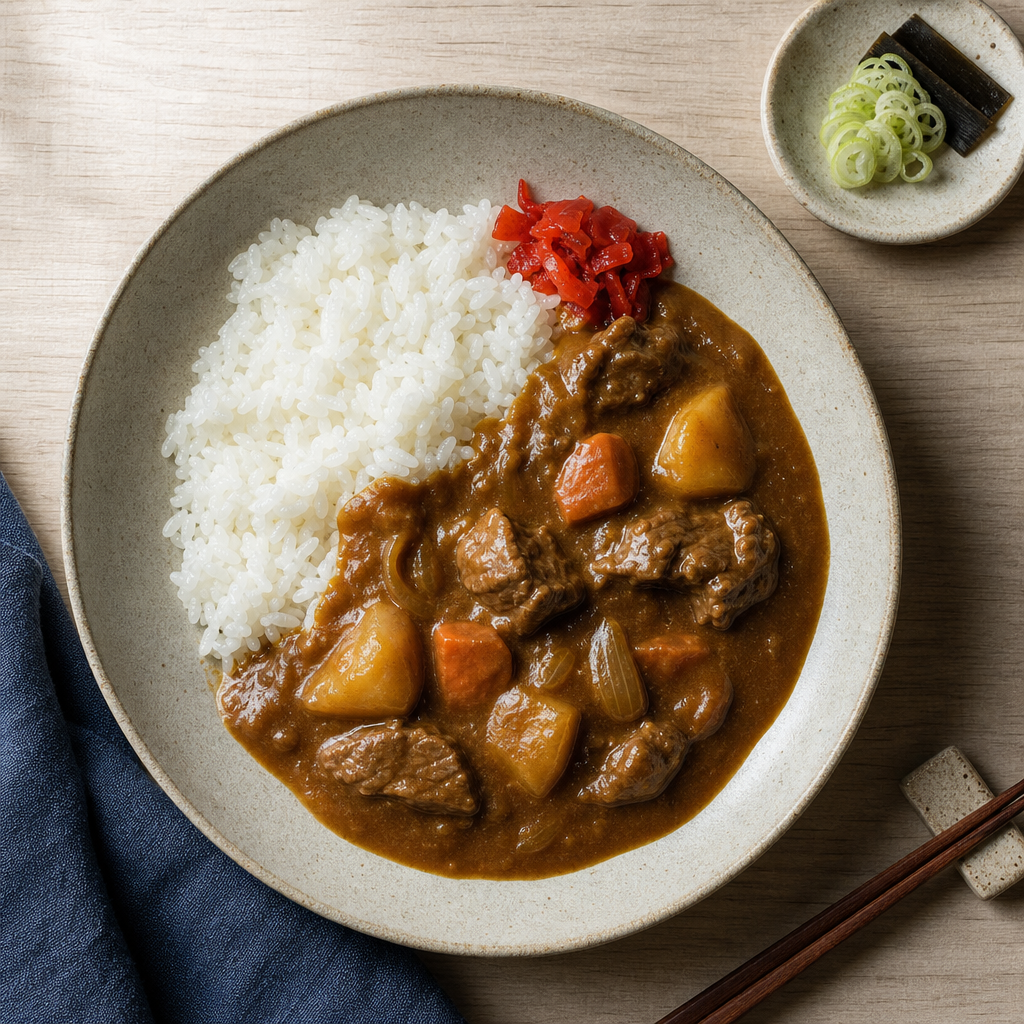
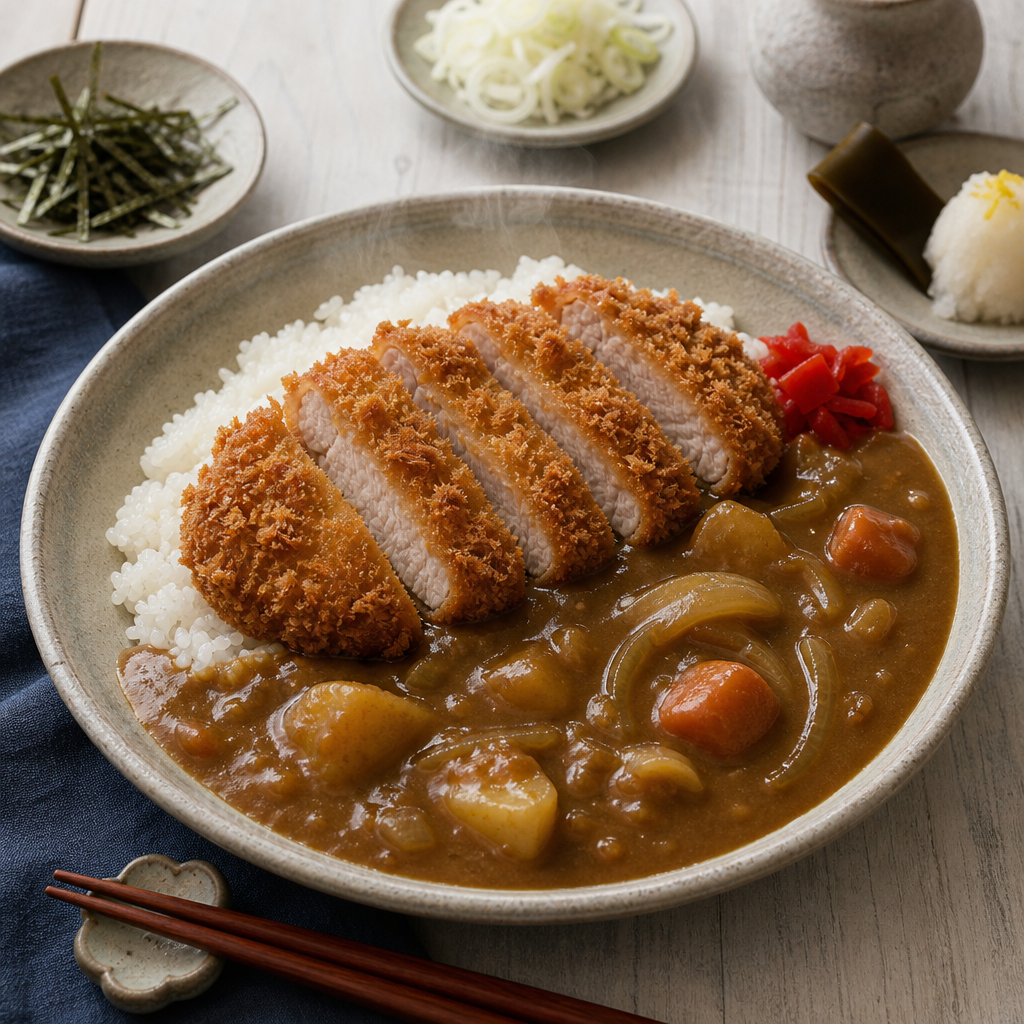
Katsu curry belongs to yōshoku (洋食), Japan's Western-influenced cooking, where curry came through British naval and merchant routes rather than directly as Indian home cooking. Japanese sources commonly point to Ginza Swiss in Tokyo and 1948 as the postwar restaurant origin of the named dish, combining curry rice with a pork cutlet. The form is now ordinary cafeteria, home, and chain-restaurant food: rice, thick roux-based curry, and tonkatsu on one plate. Chicken katsu curry is common outside Japan, but pork tonkatsu is the reference point for カツカレー.
Method 8 steps · 80 min
Wash and cook the rice
Wash the rice 3-5 times, until the water is mostly clear rather than chalky. Soak in its measured water for 30 minutes, cook in a rice cooker or covered pot, then rest 10 minutes with the lid closed before fluffing with a rice paddle.
Start the curry vegetables
Heat 1 tablespoon of the frying oil in a 3-4 L pot over medium heat. Cook the onions with a pinch of salt for 12-15 minutes, stirring often, until soft, glossy, and light golden at the edges; add carrot, potato, garlic, and ginger and cook 3 minutes more.
Make the browned curry roux
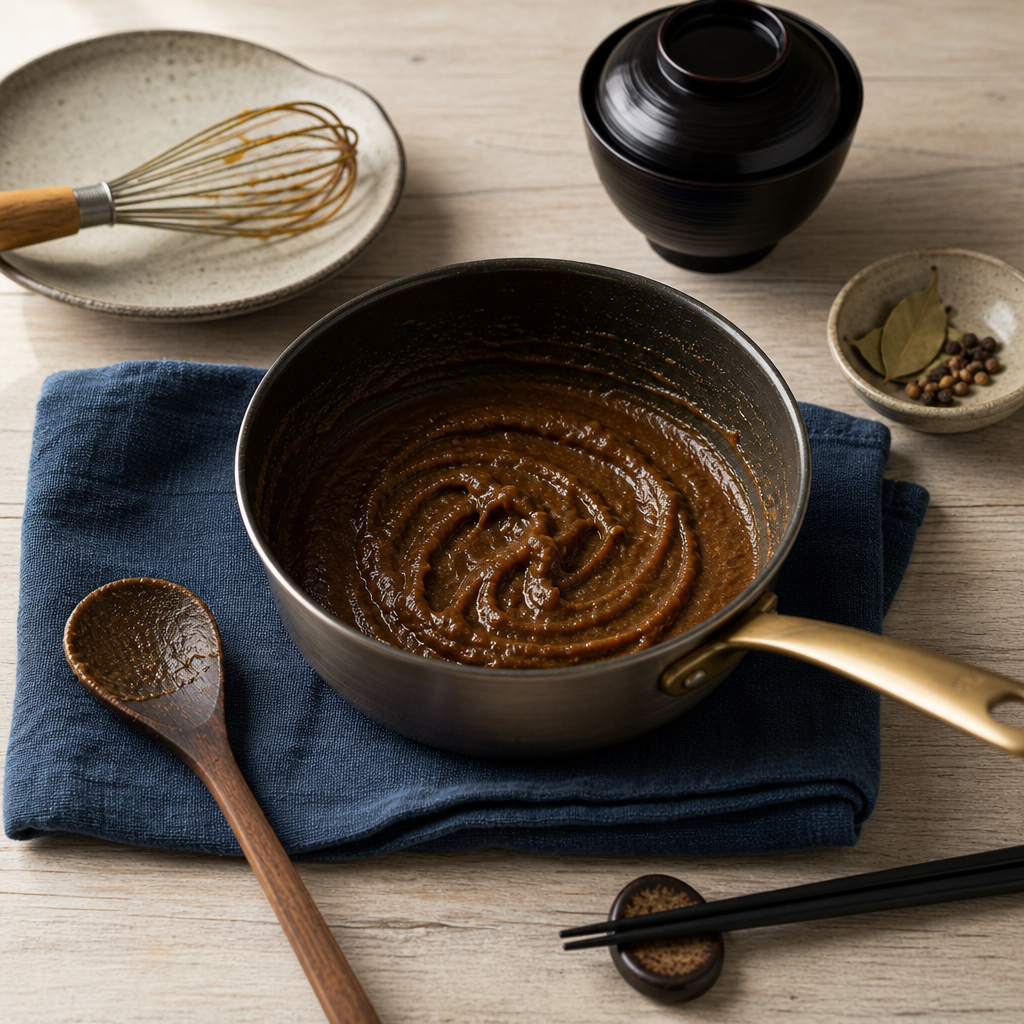
In a separate small pan, melt the butter over medium heat. Stir in the roux flour and cook 4-6 minutes, stirring constantly, until the paste turns tan and smells nutty; stir in the curry powder for 30 seconds, then take it off the heat.
Simmer the curry
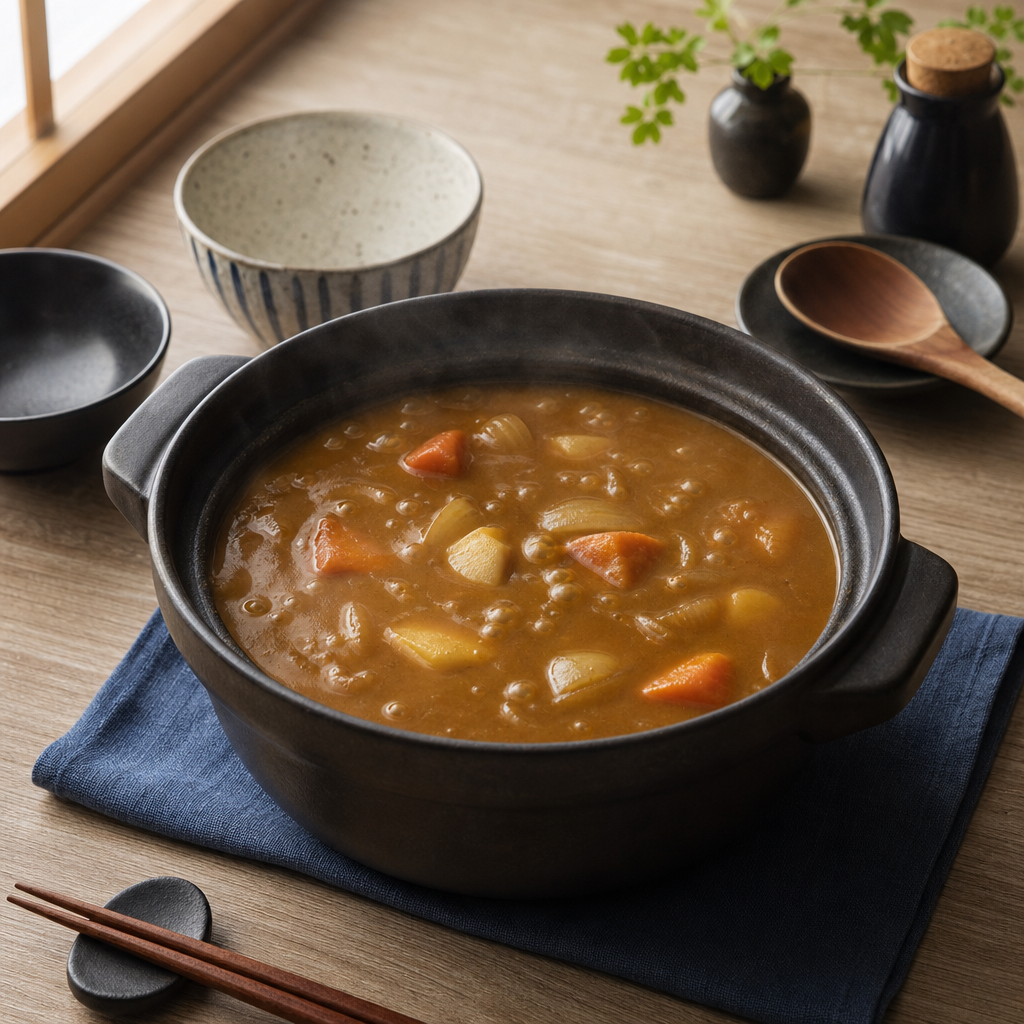
Add the stock to the vegetable pot, scraping the bottom clean. Bring to a simmer, whisk in the curry roux in small pieces, then add grated apple, tonkatsu sauce, soy sauce, and honey; simmer uncovered for 25-30 minutes, stirring every few minutes, until the potatoes are tender and the sauce coats a spoon heavily.
Prepare the pork
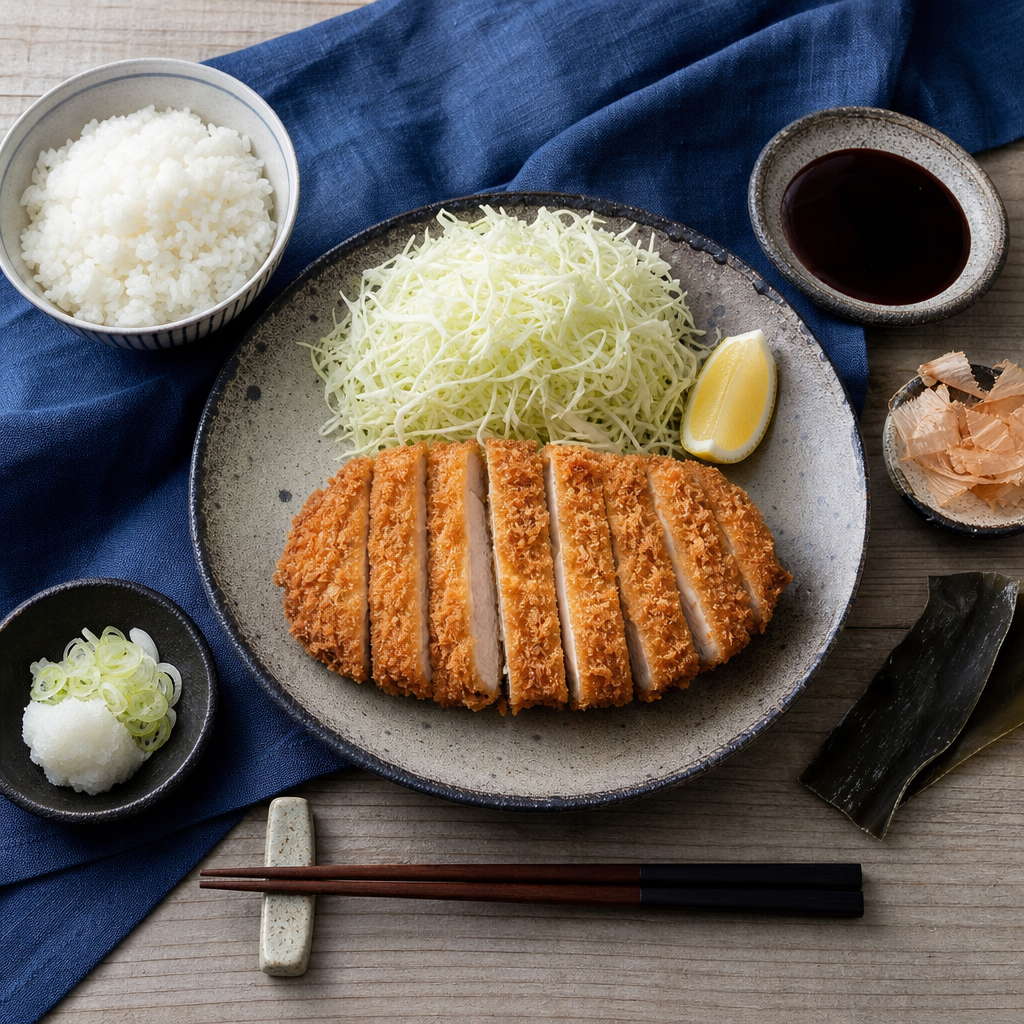
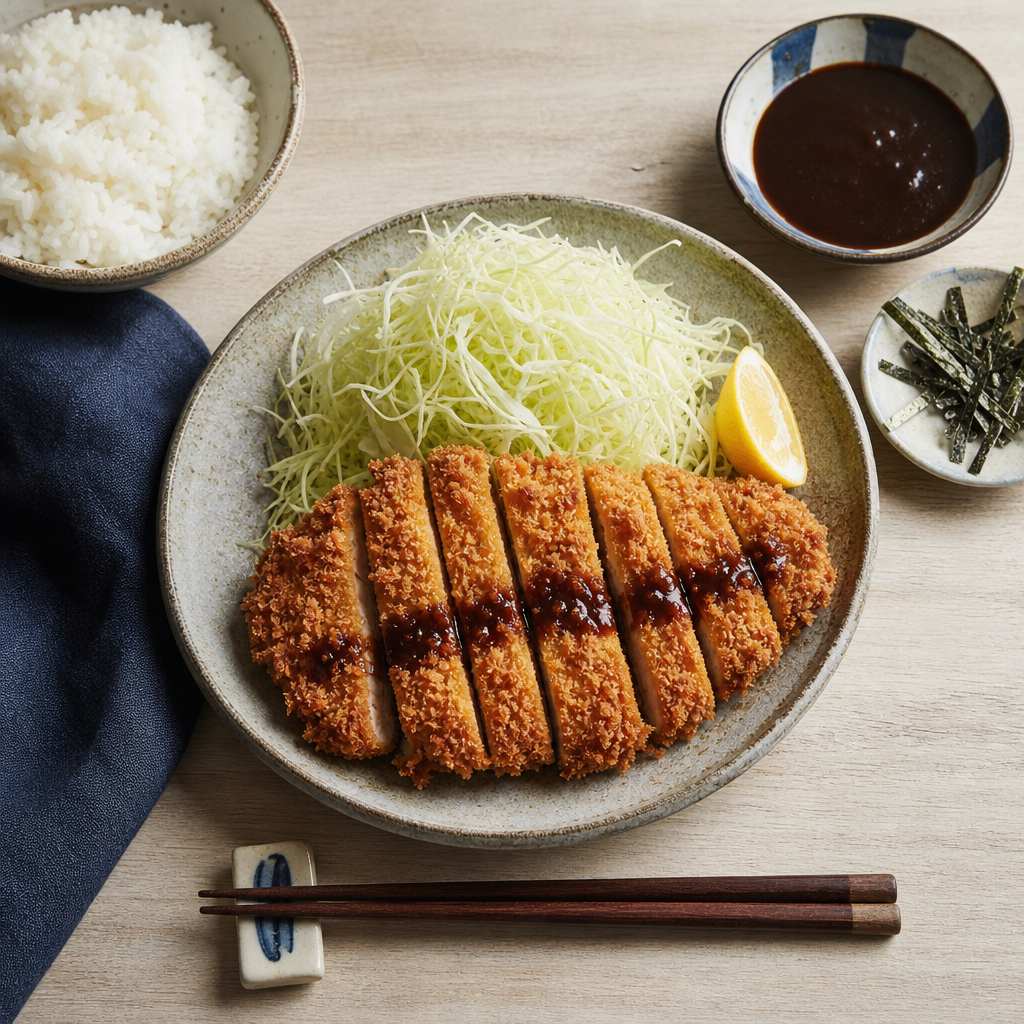
Score the fat edge of each pork chop in 2 cm intervals, then pound lightly to an even 1 cm thickness. Season both sides with salt and pepper; dredge in flour, dip in beaten egg, and press into panko so the surface is fully covered with shaggy crumbs.
Fry the katsu
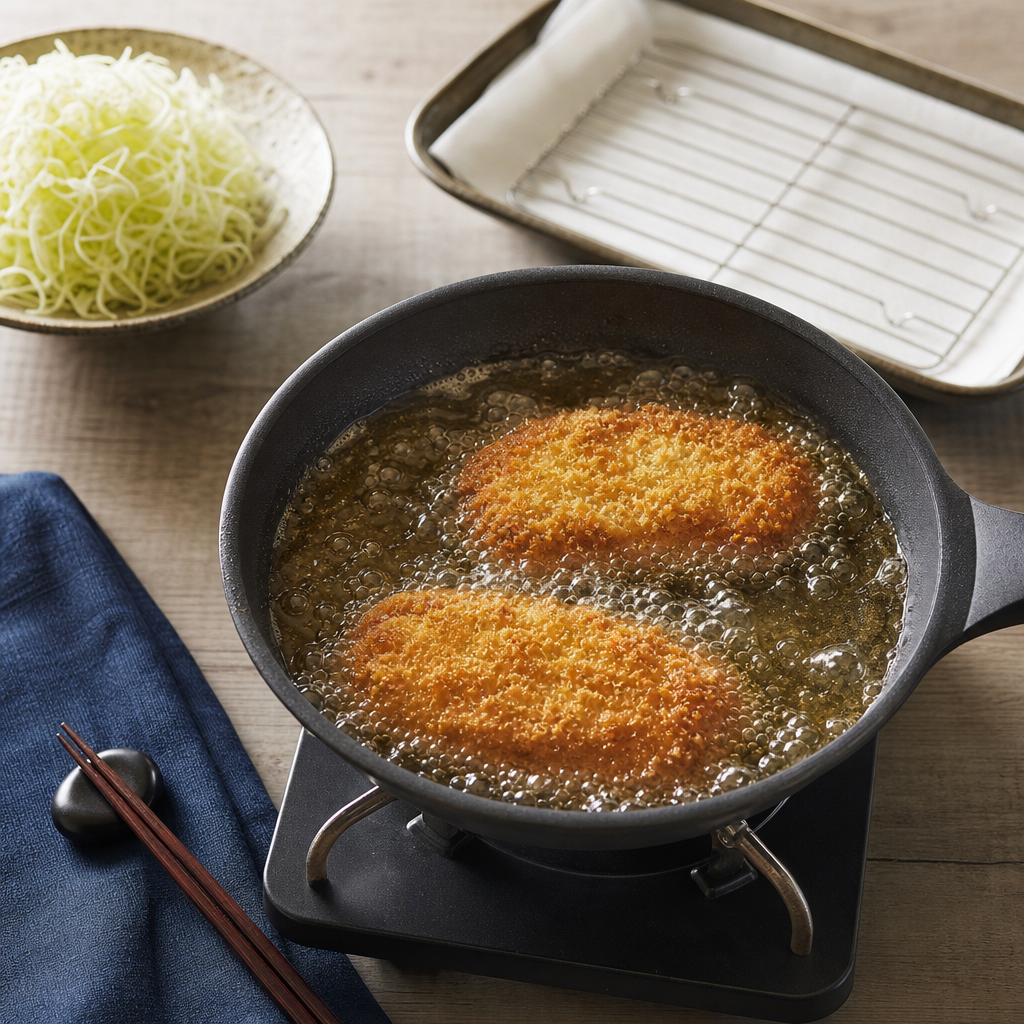
Heat 2.5-3 cm oil to 170-175°C. Fry the cutlets in batches for 3-4 minutes per side, until deep golden and the center reaches 63°C; drain on a rack, not paper towels.
Rest and slice
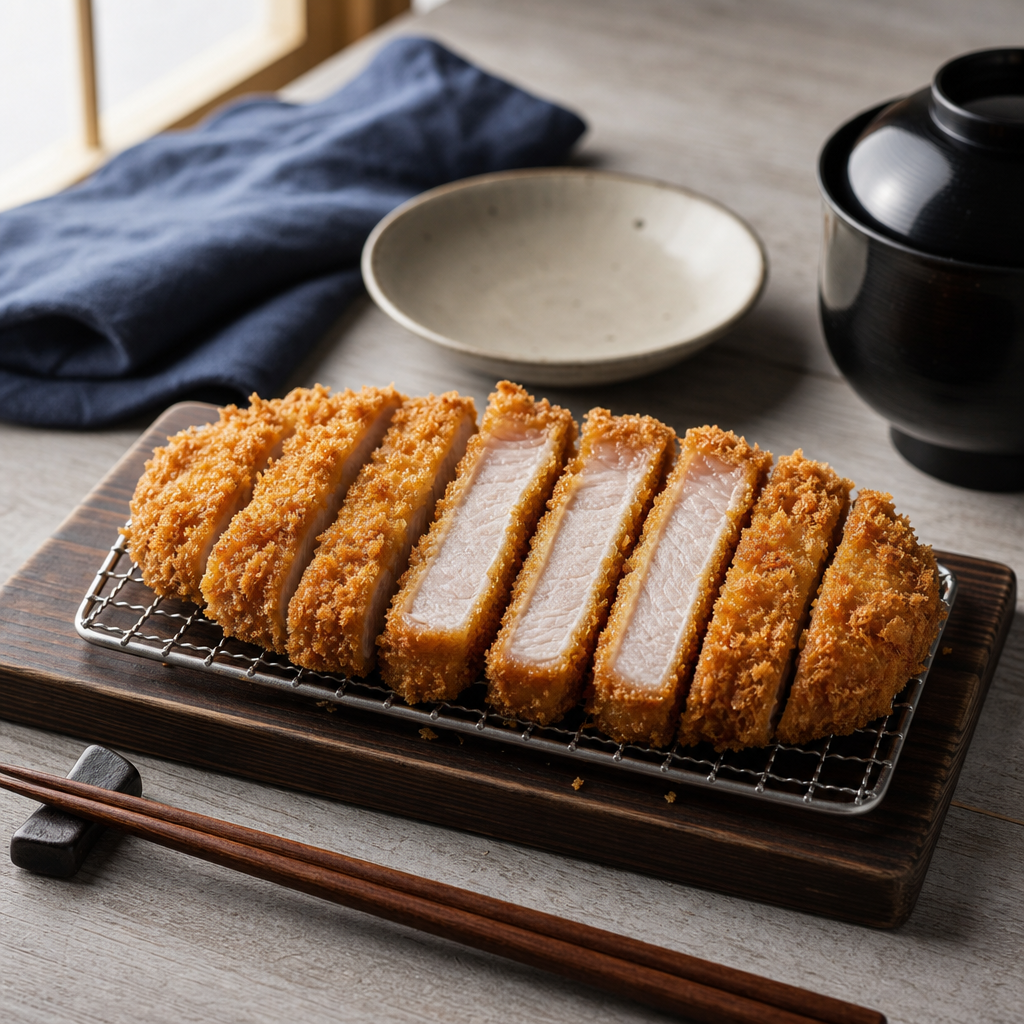
Rest the katsu for 3 minutes, then slice each cutlet crosswise into 1.5-2 cm strips, keeping the pieces aligned.
Adjust and plate
Taste the curry and correct with salt, soy sauce, or a small splash of water if it has tightened too much. Plate hot rice on one side, spoon curry beside and partly over it, place the sliced katsu on top, and add fukujinzuke and shredded cabbage if using.
Common mistakes
- {'mistake': 'Using long-grain rice', 'fix': 'Use Japanese short-grain rice, washed and rested. The curry needs sticky grains, not separate dry grains.'}
- {'mistake': 'Adding curry powder to hot fat too early', 'fix': 'Brown the flour first, then stir in curry powder for 30 seconds. Burnt turmeric and fenugreek turn the whole sauce dusty and harsh.'}
- {'mistake': 'Frying at low oil temperature', 'fix': 'Hold 170-175°C and fry in batches. Crowding the pan drops the temperature and loads the crust with oil.'}
- {'mistake': 'Pouring curry over the entire katsu', 'fix': 'Sauce beside or partly over the cutlet. Full coverage destroys the panko texture before the plate reaches the table.'}
- {'mistake': 'Using fine dry breadcrumbs', 'fix': 'Use panko. Fine crumbs make a compact shell; katsu needs an open, craggy crust.'}
What does not belong
- {'item': 'Cream', 'reason': 'Cream does not belong in Japanese curry rice. The body comes from roux, onion, and starch, not dairy enrichment.'}
- {'item': 'Coconut milk', 'reason': 'Coconut milk shifts the dish toward Southeast Asian curry. カツカレー is a Japanese roux curry.'}
- {'item': 'Basmati or jasmine rice', 'reason': 'Fragrant long-grain rice fights the sauce and changes the plate structure. Use Japanese short-grain rice.'}
- {'item': 'Garam masala as the main seasoning', 'reason': 'A small accent can work in modern versions, but garam masala alone does not produce the Japanese curry profile.'}
- {'item': 'Olive oil for frying', 'reason': 'The flavor is wrong and the smoke point is poor for katsu. Use neutral oil.'}