Japanese Beef Curry
The dish in context
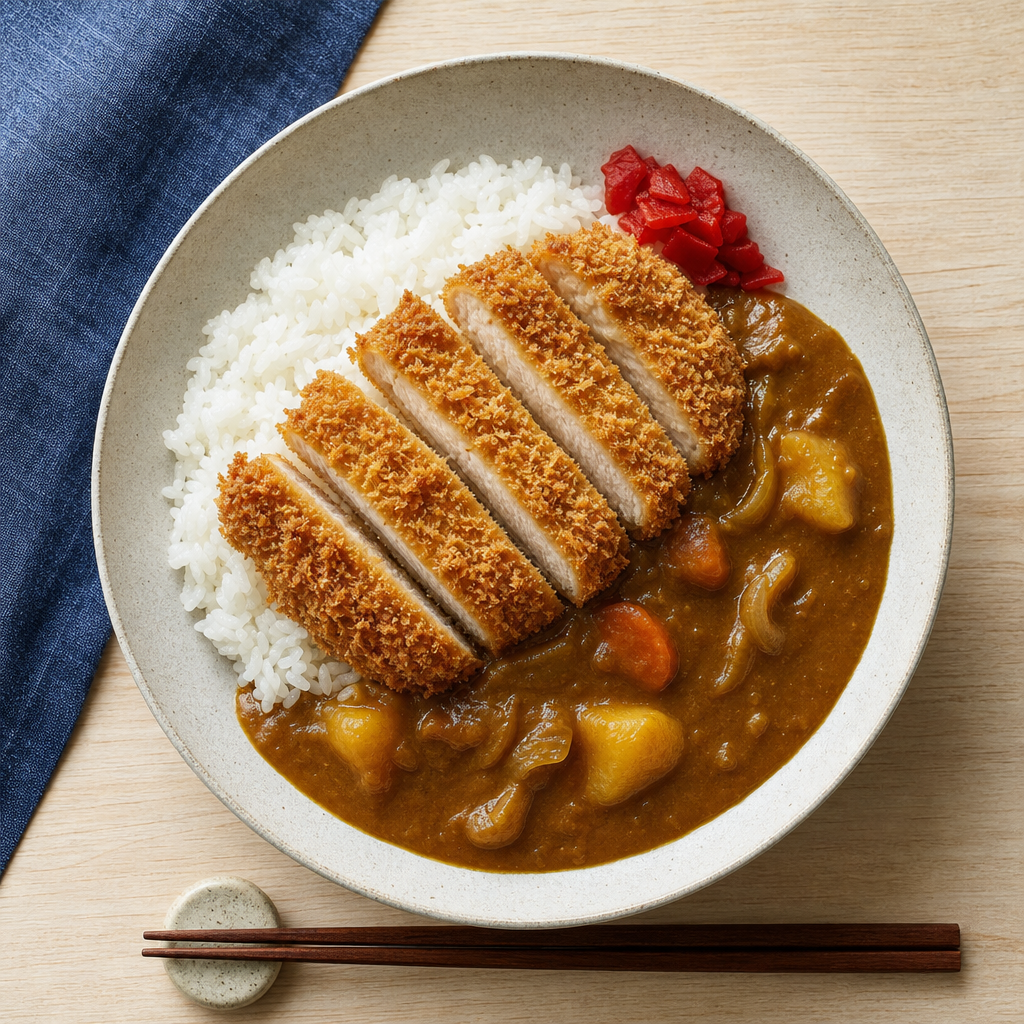
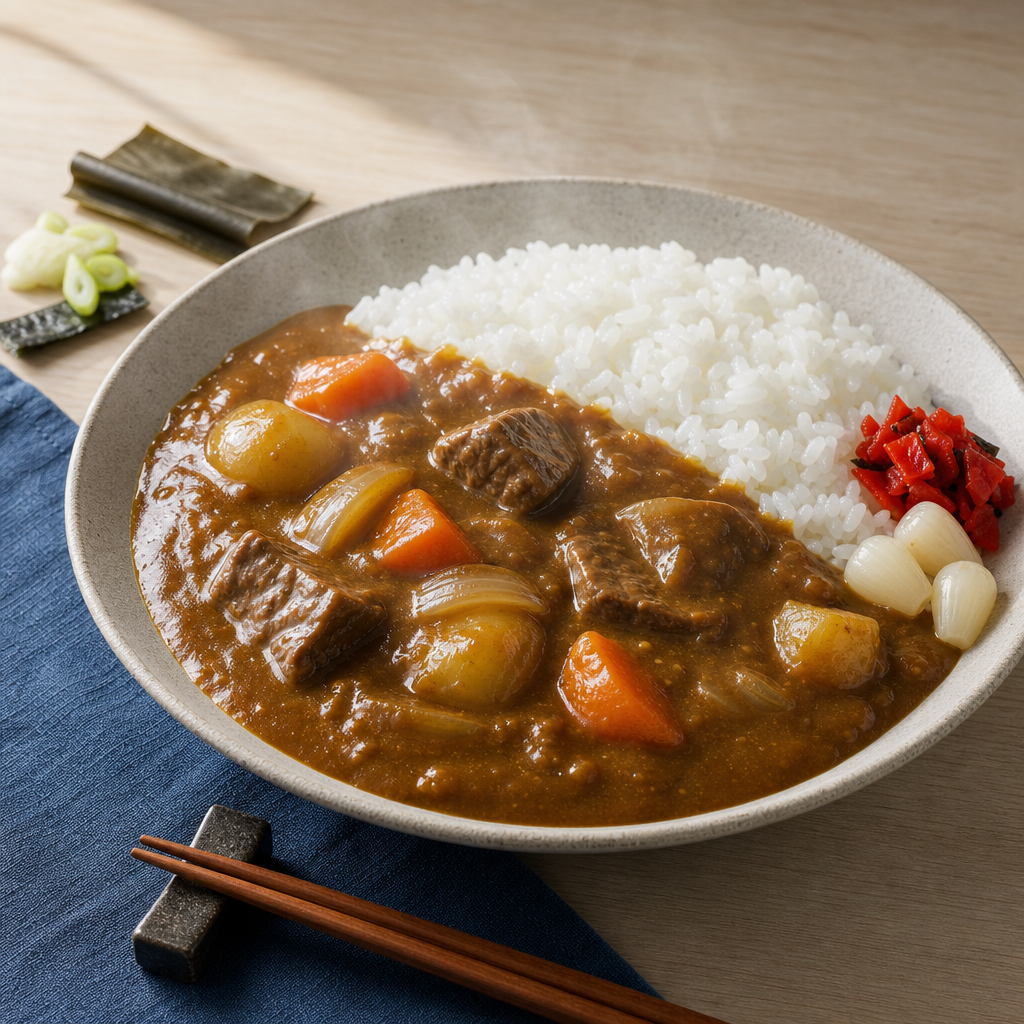
Japanese curry rice belongs to yōshoku (洋食), Japan's Western-influenced cooking that took shape from the Meiji period onward through British-style curry powder and institutional cooking. By the twentieth century, curry rice had become a school, military, cafeteria, and household standard, usually built from a wheat-and-fat roux rather than a freshly ground spice paste. Commercial curry roux blocks made the dish domestic: thick, mildly spiced, slightly sweet, and served with Japanese short-grain rice. Beef curry is one common branch, alongside pork curry in eastern Japan and regional or institutional versions such as naval and cafeteria curries.
Method 9 steps · 75 min
Wash and soak the rice
Wash the rice in 3 to 5 changes of cold water until the water runs nearly clear. Drain, add the measured water, and soak 30 minutes before cooking.
Cook and rest the rice
Cook the soaked rice in a rice cooker or covered pot. Rest it 10 minutes with the lid closed, then fluff gently with a shamoji or rice paddle.
Season and brown the beef
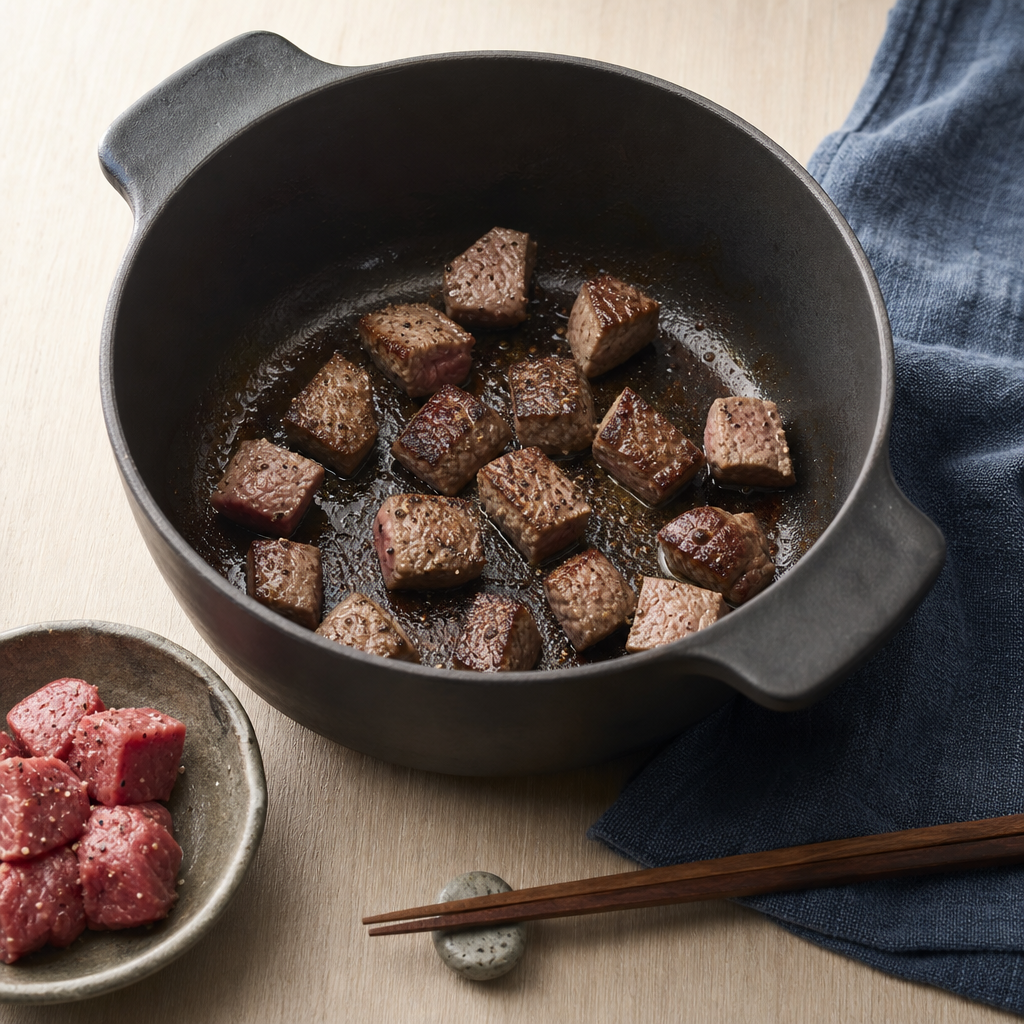
Season the beef with salt and pepper. Heat the oil in a heavy pot over medium-high heat and brown the beef in one layer, working in batches if needed, until the edges are dark brown, 2 to 3 minutes per side. Transfer to a bowl.
Cook the onions
Lower the heat to medium. Add the onions to the same pot and cook, scraping the browned bits, until the onions are soft, glossy, and lightly golden at the edges, 10 to 12 minutes.
Bloom the aromatics
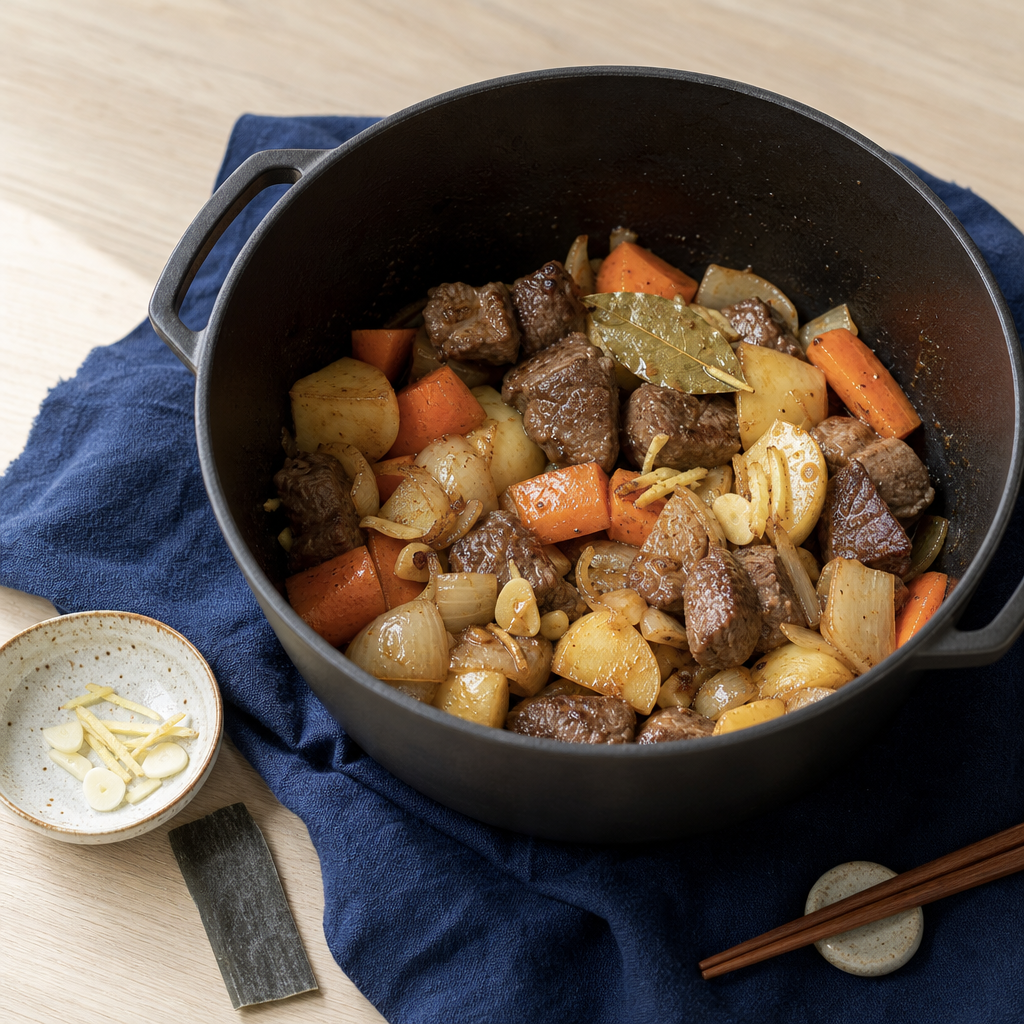
Add the garlic and ginger and stir for 30 seconds. Add the carrot, potato, bay leaf, and browned beef with any juices.
Simmer until the beef is tender
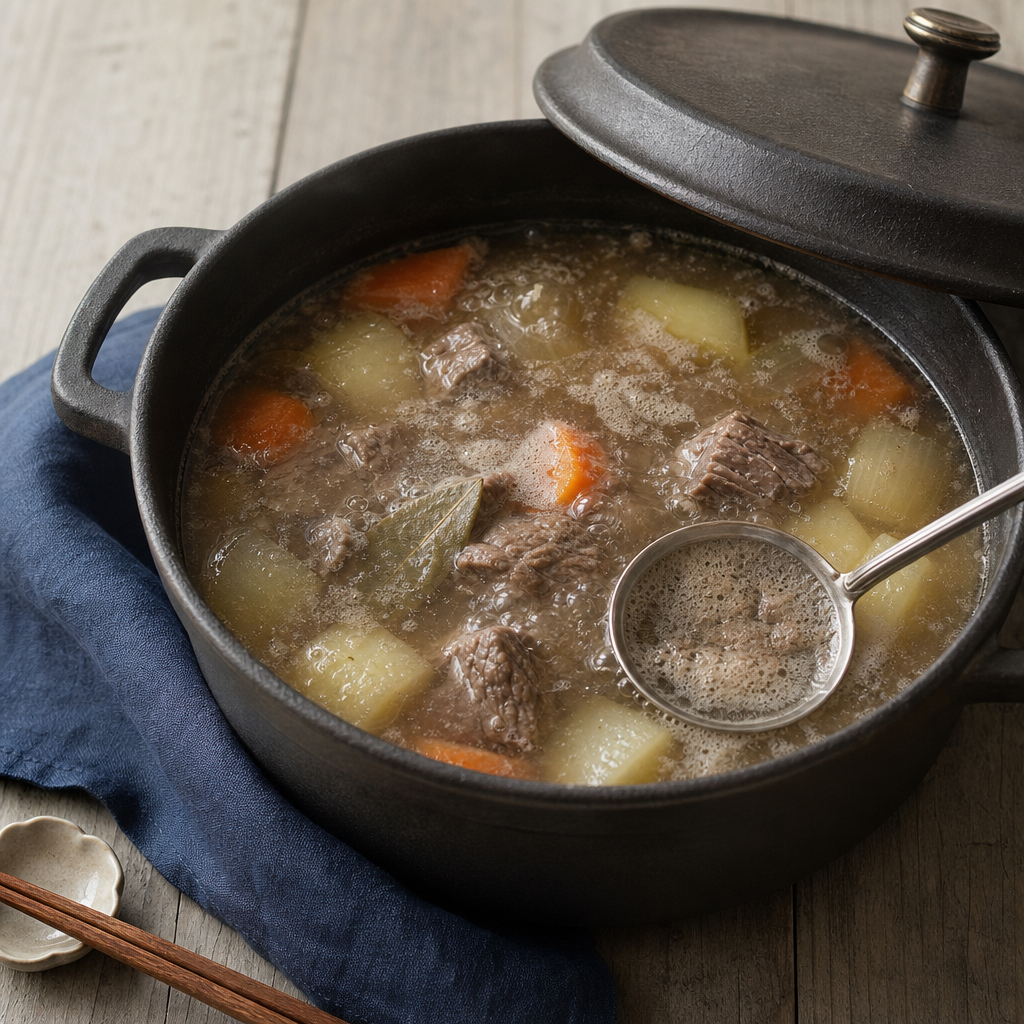
Add the water or unsalted stock and bring to a boil. Skim the gray foam, lower to a steady simmer, cover slightly ajar, and cook until the beef is tender and the potatoes can be pierced without falling apart, 35 to 45 minutes.
Dissolve the roux off heat
Turn off the heat. Remove the bay leaf, break the curry roux into pieces, and stir it into the hot liquid until fully dissolved with no dark flecks or lumps.
Finish the sauce
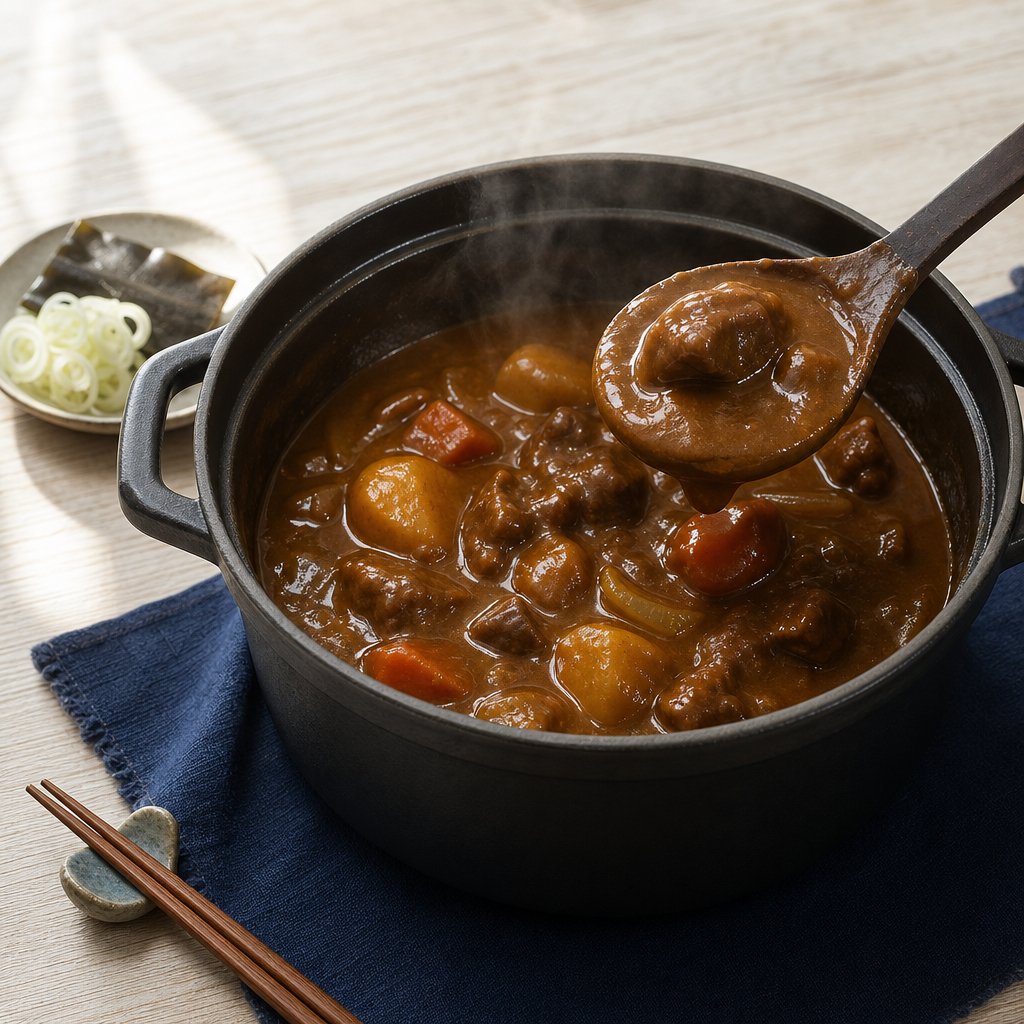
Return the pot to low heat and simmer uncovered, stirring often, until the curry turns glossy and coats a spoon, 8 to 10 minutes. Stir in the Worcestershire sauce and shoyu, then adjust thickness with a splash of water if the sauce stands like paste.
Plate with rice and pickles
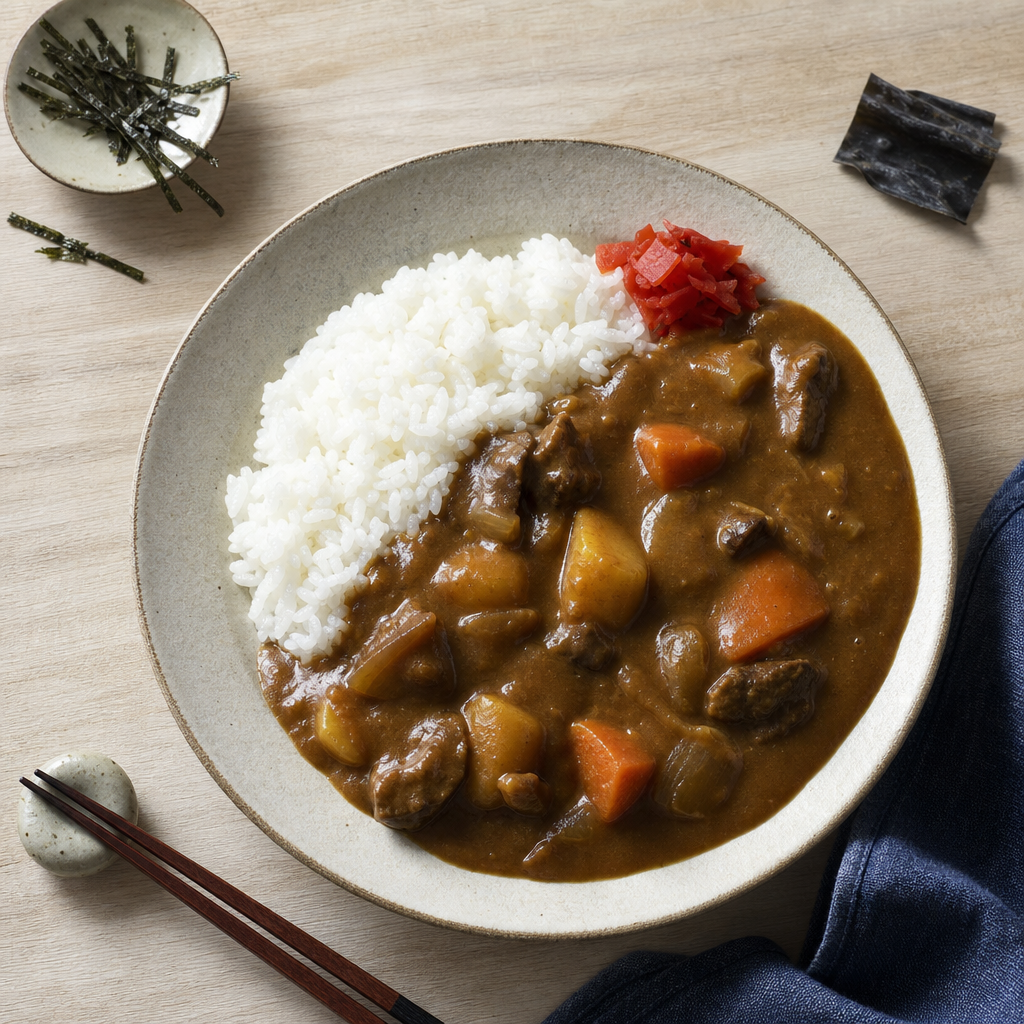
Spoon rice onto one side of each plate and ladle curry beside it so the sauce leans into the rice. Serve fukujinzuke or rakkyo at the edge, not mixed into the pot.
Common mistakes
- {'mistake': 'Adding roux while the pot is boiling.', 'fix': 'Turn the heat off, dissolve the blocks completely, then return to low heat. This prevents lumps and scorching.'}
- {'mistake': 'Using long-grain rice.', 'fix': 'Use Japanese short-grain rice. Long-grain rice separates too much and makes the curry eat like a different dish.'}
- {'mistake': 'Boiling the curry hard after the potatoes go in.', 'fix': 'Keep a gentle simmer. Potatoes should soften with intact edges, not dissolve into starch foam.'}
- {'mistake': 'Treating curry roux like a spice paste.', 'fix': 'Roux is thickener, fat, salt, and spice together. Do not fry it aggressively in oil or the flour burns before the sauce forms.'}
- {'mistake': 'Adding too much water after the roux.', 'fix': 'Thin in small splashes. Japanese curry should coat the spoon and cling to rice.'}
What does not belong
- {'item': 'cream', 'reason': 'Cream does not belong in standard Japanese curry rice. The body comes from roux, not dairy enrichment.'}
- {'item': 'coconut milk', 'reason': 'Coconut milk points the dish toward Southeast Asian curry. Japanese curry rice is roux-based and brown, not coconut-based.'}
- {'item': 'basmati or jasmine rice', 'reason': 'Long-grain aromatic rice does not belong here. Japanese curry is structured around washed, soaked short-grain rice.'}
- {'item': 'raw curry powder dumped in at the end', 'reason': 'Raw curry powder tastes dusty and sharp. If using extra curry powder, bloom a small amount with the aromatics before simmering.'}
- {'item': 'large amounts of sugar', 'reason': 'Japanese curry can have sweetness, but it should come from onion, carrot, and the roux balance. Extra sugar makes the sauce cafeteria-sweet in the wrong direction.'}