Sukiyaki
The dish in context
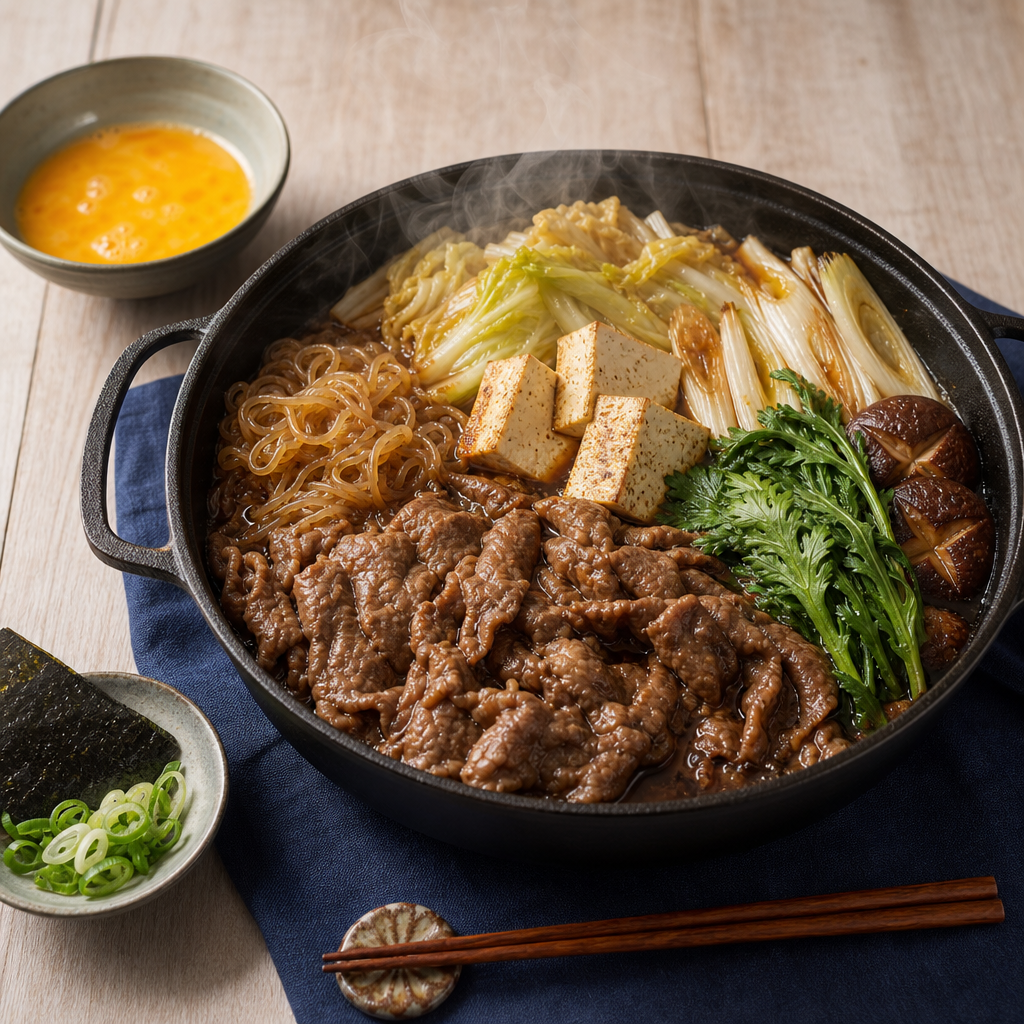
Sukiyaki sits in the Meiji-era shift toward public beef eating, when Tokyo beef hot pots known as gyūnabe became a marker of modern urban dining. The name and technique also carry Kansai influence: beef is often seared first, then seasoned with sugar, soy sauce, and sake or simmered in a prepared warishita. Kanto household versions commonly use warishita — a premixed sauce of soy sauce, sake, mirin, sugar, and sometimes dashi — so the seasoning is controlled before the ingredients enter the pot. Regional practice is not uniform; Kansai-style seasoning at the table and Kanto-style warishita are both established Japanese sukiyaki grammars.
Method 8 steps · 45 min
Parboil the shirataki
Drain and rinse the shirataki, then boil it in plain water for 2 minutes. Drain again and cut the strands into chopstick-manageable lengths.
Mix the warishita
Combine the soy sauce, sake, mirin, sugar, and dashi in a small saucepan. Bring it to a brief simmer, stir until the sugar dissolves, then turn off the heat.
Arrange the ingredients
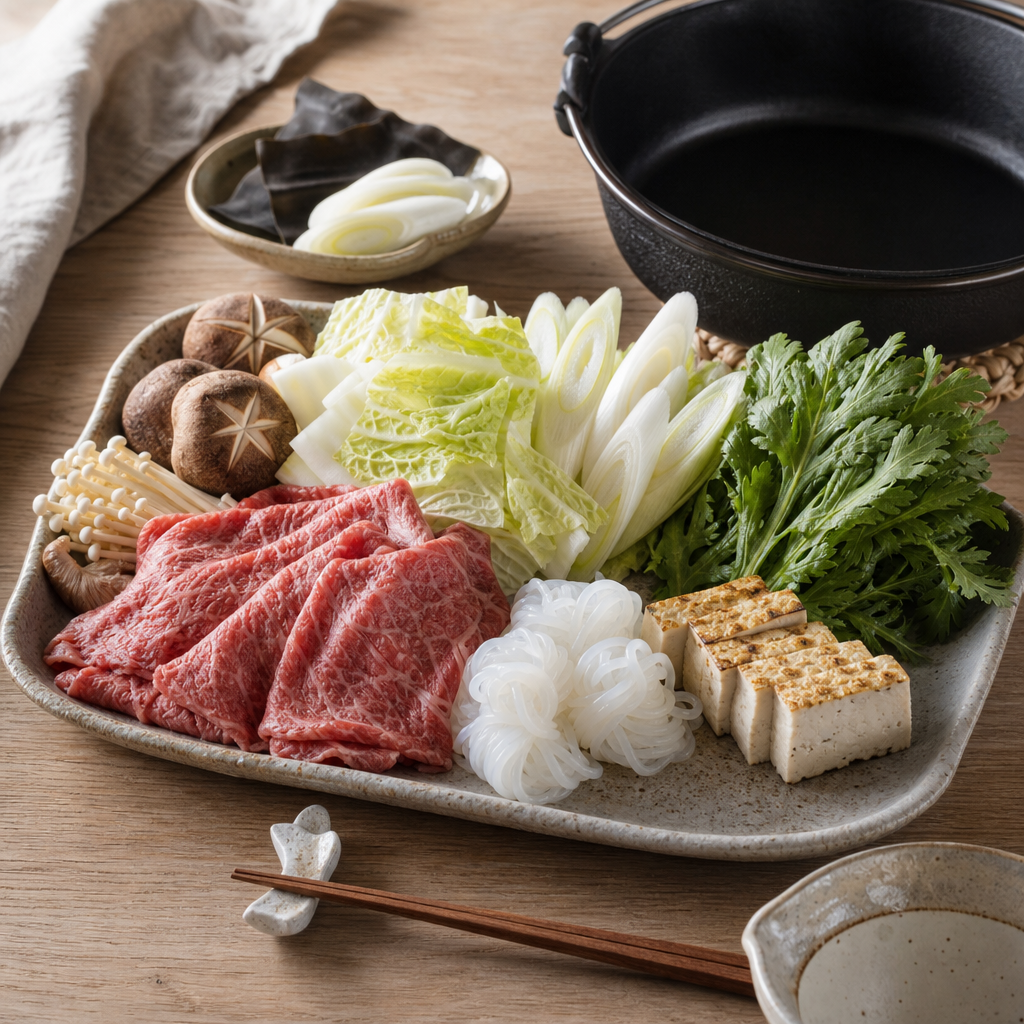
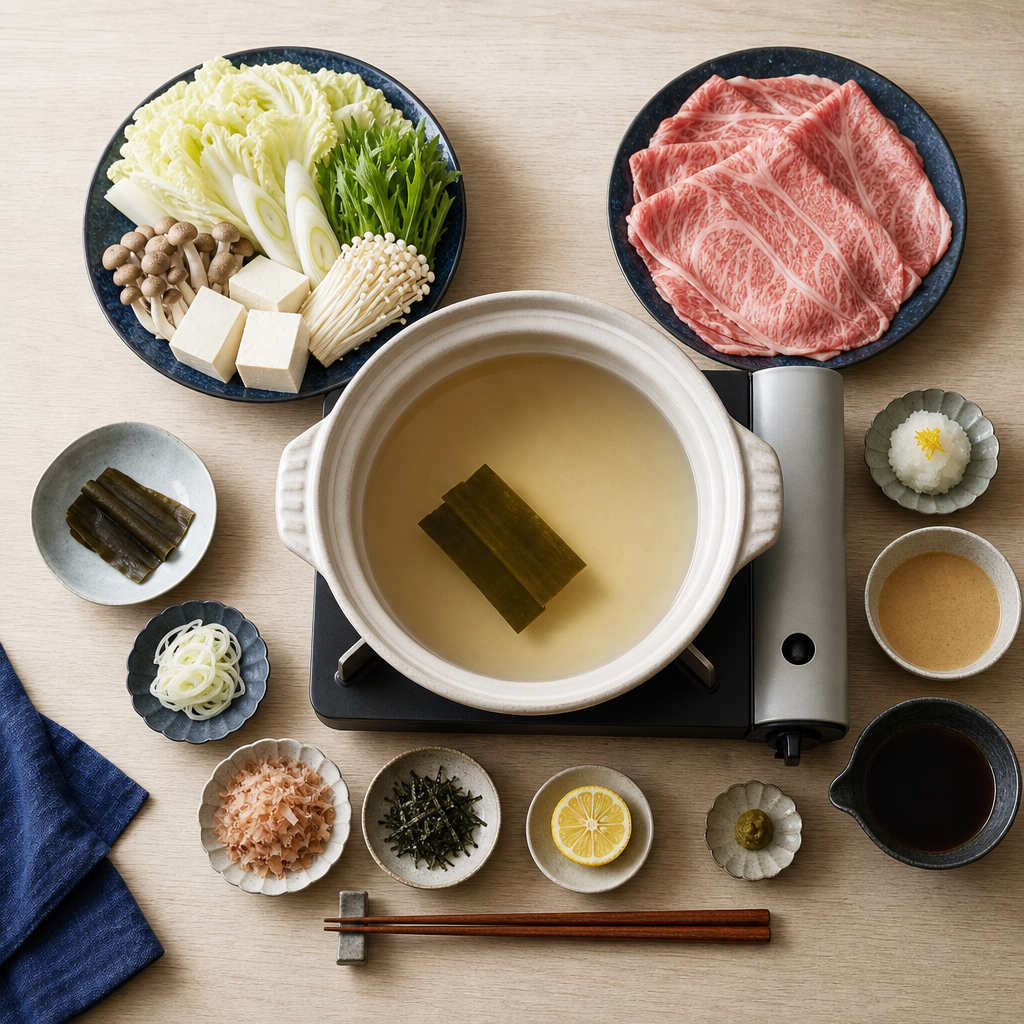
Set the beef, cabbage, long onion, shungiku, tofu, shirataki, and mushrooms on a tray in separate piles. Keep the shungiku separate for late addition.
Render the beef fat and sear the first beef
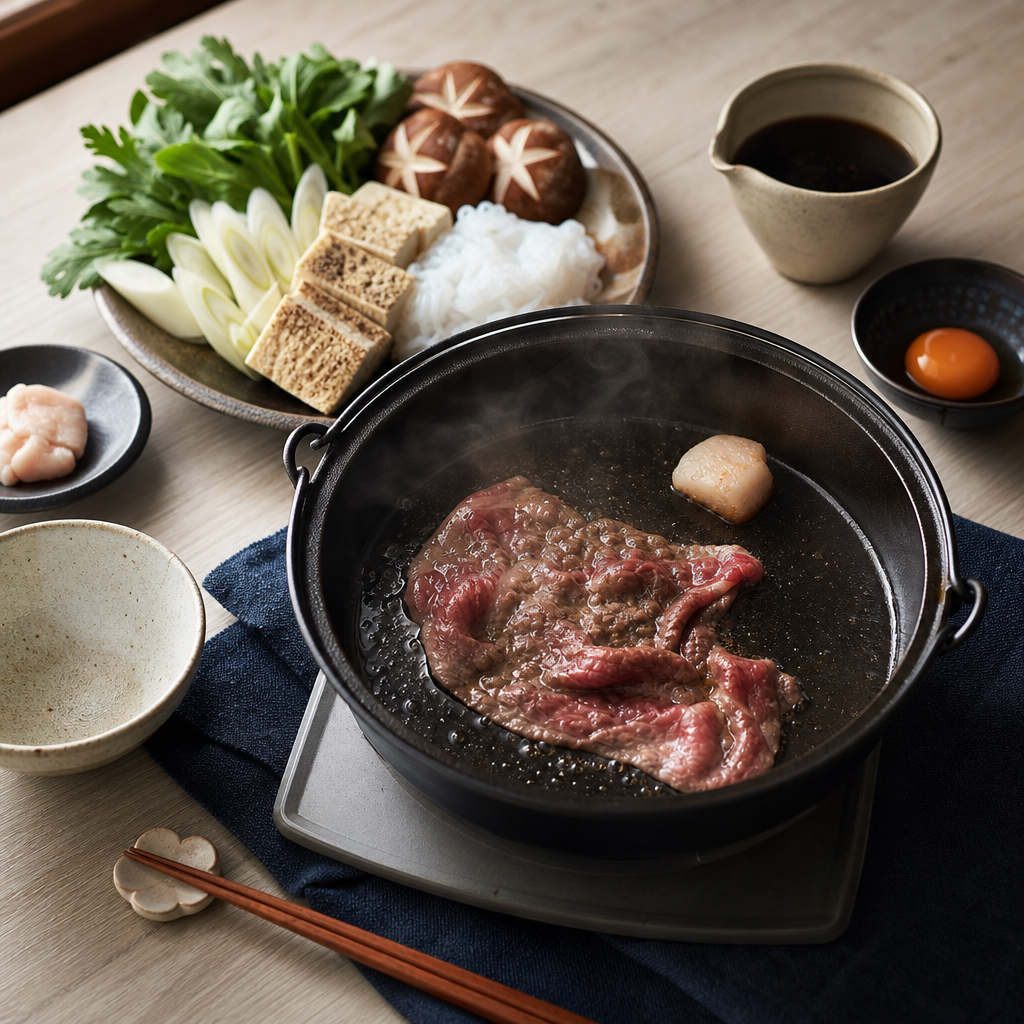
Heat the sukiyaki pot over medium-high heat and rub the beef fat across the surface until the pot is glossy. Add a few slices of beef and several pieces of long onion; sear until the beef loses its raw red color at the edges, about 20-30 seconds per side.
Start the shallow simmer
Pour in about half of the warishita. Add tofu, shirataki, cabbage stems, shiitake, and enoki in separate zones, keeping shirataki away from the beef side of the pot.
Cook in rounds
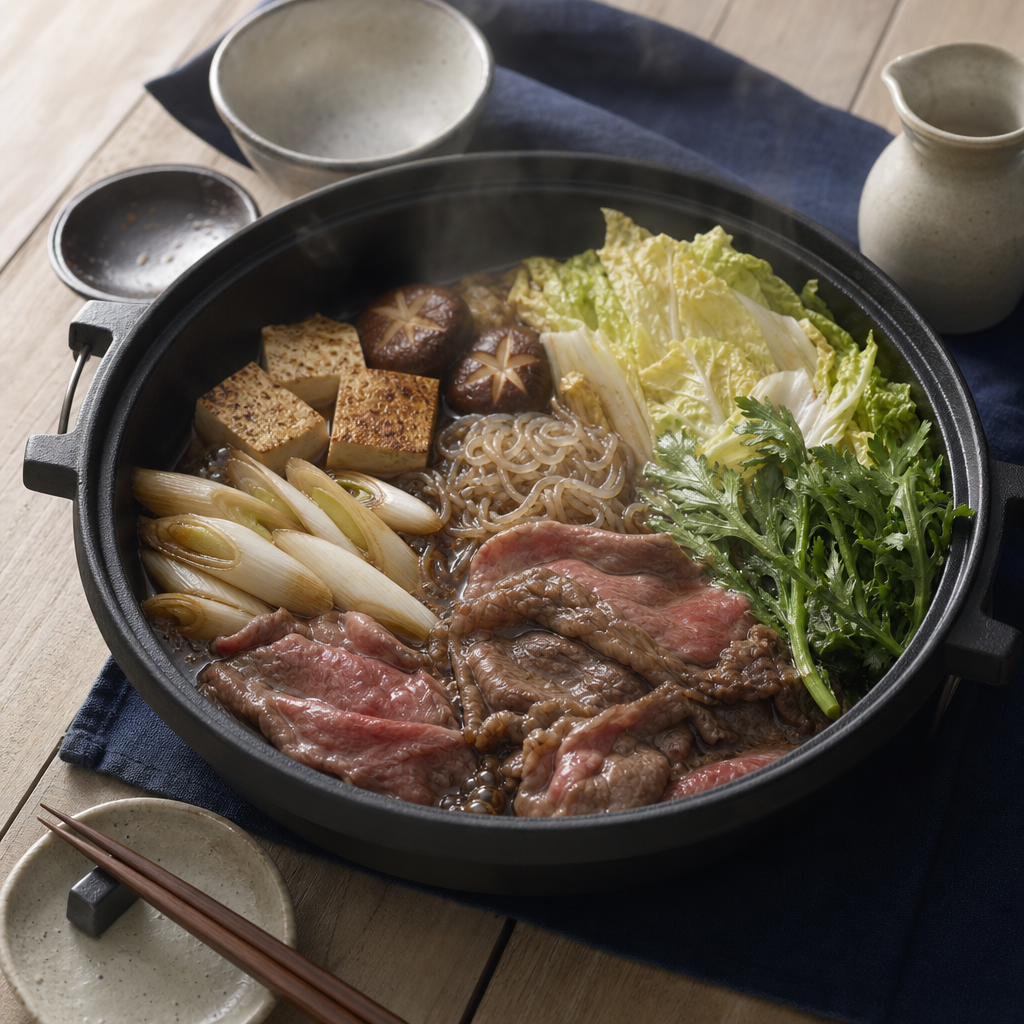
Simmer gently, adding more beef a few slices at a time and replenishing warishita as the liquid reduces. Add cabbage leaves and shungiku near the end of each round; pull the shungiku when wilted but still bright green.
Serve with beaten egg
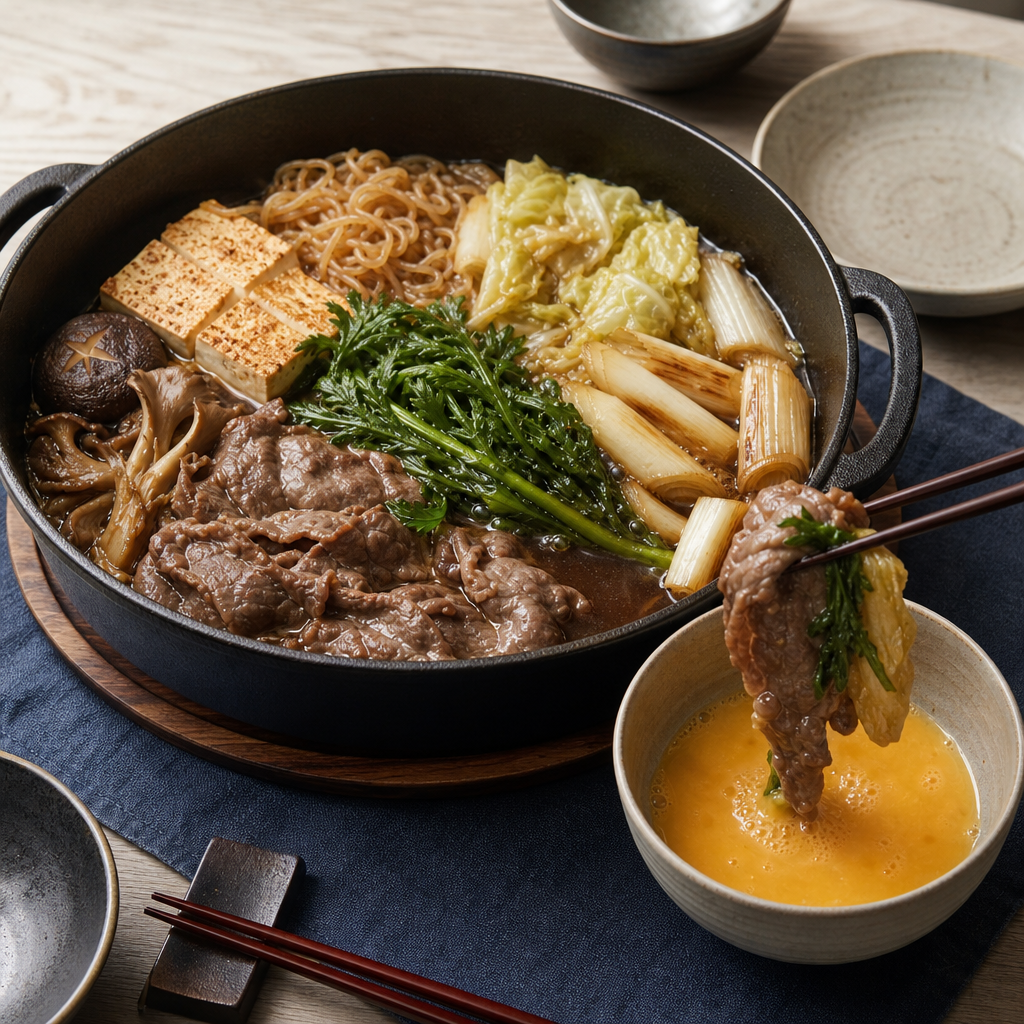
Give each diner one beaten pasteurized egg in a small bowl. Take hot beef and vegetables from the pot, dip them into the egg, and eat with short-grain rice.
Finish with udon
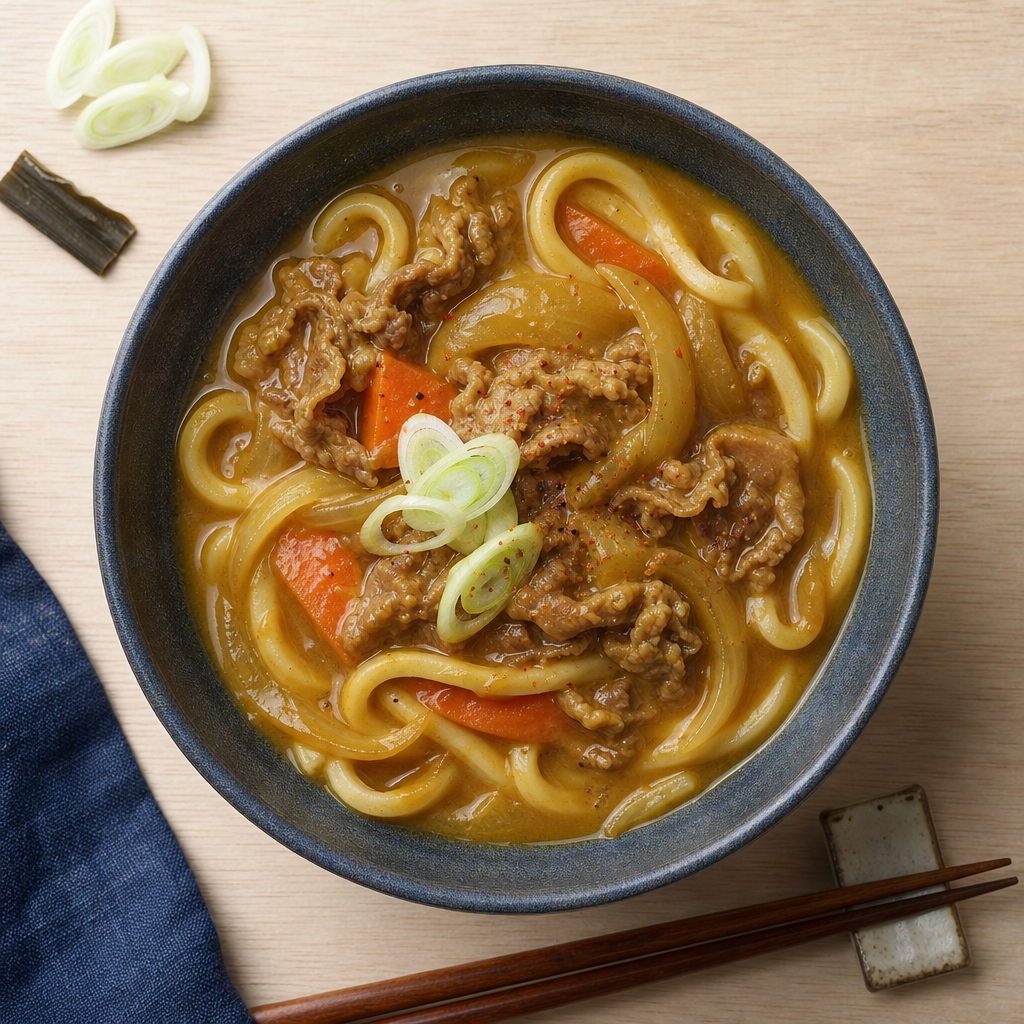
When most of the beef and vegetables are gone, add cooked udon to the reduced sauce. Toss and simmer until the noodles are hot and coated, 2-3 minutes.
Common mistakes
- {'mistake': 'Filling the pot like soup', 'fix': 'Use a shallow layer of warishita and replenish as needed. Sukiyaki is simmered and glazed, not served as a deep broth.'}
- {'mistake': 'Using thick-cut beef', 'fix': 'Use 1.5-2 mm hot-pot slices. Thick slices toughen before the sauce penetrates.'}
- {'mistake': 'Boiling all the beef from the start', 'fix': 'Cook beef in rounds. Thin beef should go from red to barely cooked, then leave the pot.'}
- {'mistake': 'Skipping the shirataki parboil', 'fix': 'Rinse and boil it separately for 2 minutes. Package odor does not improve inside warishita.'}
- {'mistake': 'Stirring the pot into a mixed stew', 'fix': 'Keep ingredients in zones and move them with chopsticks or tongs. The structure is part of the dish.'}
What does not belong
- {'item': 'Chicken stock', 'reason': 'Chicken stock does not belong in standard sukiyaki. Use dashi or water to loosen warishita.'}
- {'item': 'Commercial American teriyaki sauce', 'reason': 'It is too thick and usually too sweet. Sukiyaki needs soy, sake, mirin, and sugar balanced for simmering, not bottled glaze.'}
- {'item': 'Garlic and sesame oil', 'reason': "They push the pot toward yakiniku or stir-fry seasoning. Sukiyaki's aroma should come from beef fat, long onion, soy, sake, and mirin."}
- {'item': 'Cream or butter', 'reason': 'Dairy does not belong. The richness comes from marbled beef and the raw egg dip.'}
- {'item': 'Long-grain rice as the standard side', 'reason': 'Japanese short-grain rice is the standard accompaniment. Long-grain rice stays separate and does not take the sauce the same way.'}