Shabu Shabu
The dish in context
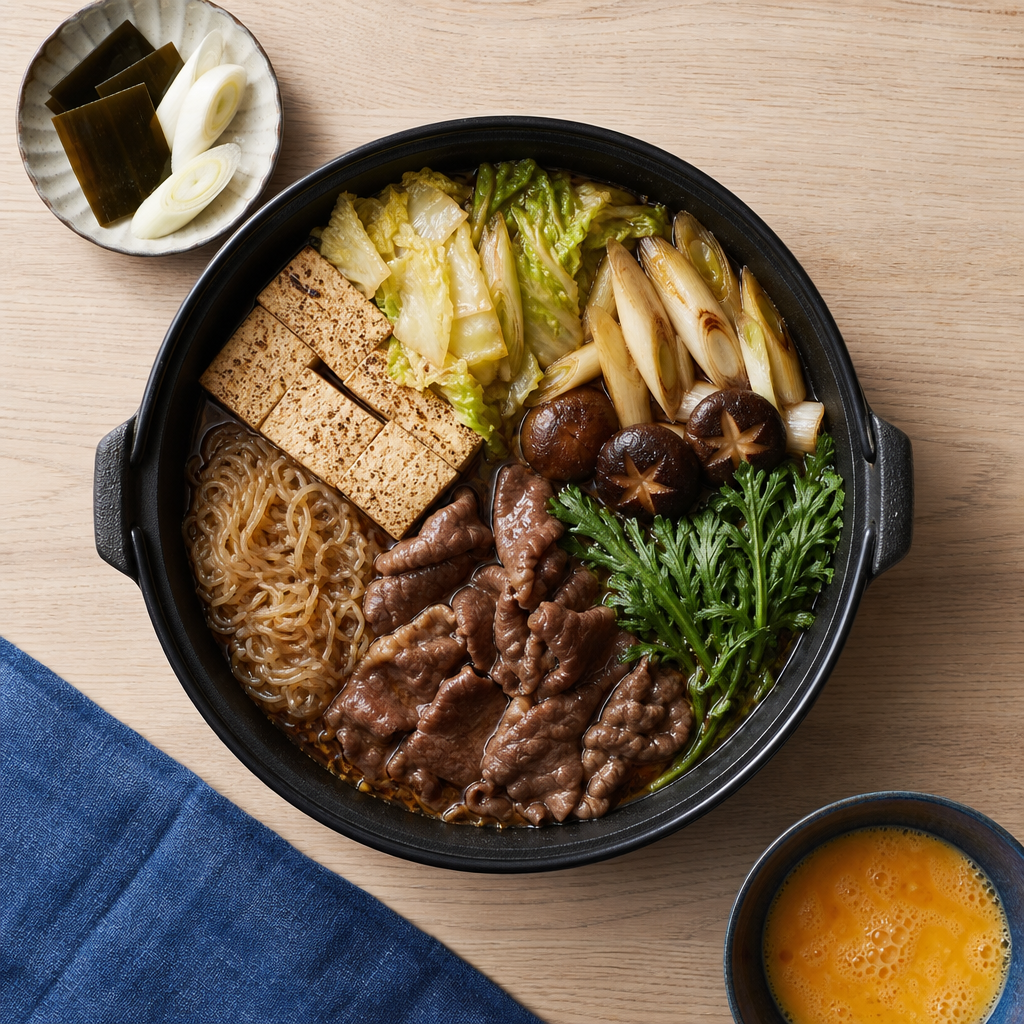
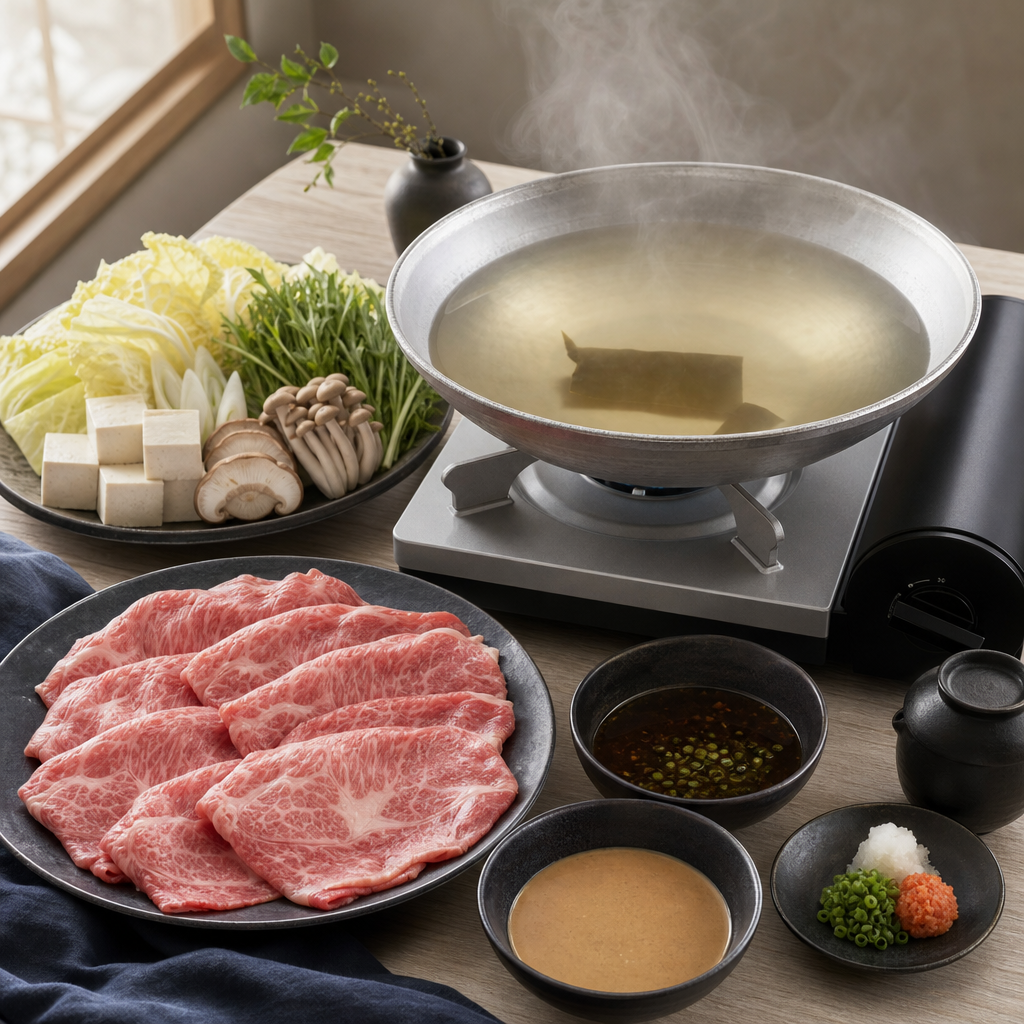
Shabu shabu is a modern Japanese nabemono (鍋物) associated with mid-20th-century restaurant service, with Osaka's Suehiro often credited for popularizing the name in the early 1950s. The name is onomatopoeic: the meat is swished through hot broth until it changes color. Its structure is leaner than sukiyaki: no sweet soy braise, no raw egg dip, and no heavy seasoning in the pot. The broth is usually kombu-based and deliberately restrained because the diner seasons each bite with ponzu (ポン酢) or goma dare (ごまだれ).
Method 9 steps · 45 min
Cold-soak the kombu
Place the water and kombu in the hot-pot vessel and soak for at least 30 minutes, or up to 4 hours if the schedule allows. Add the sake if using.
Prepare the platters
Arrange the sliced meat in loose folds on a chilled platter. Arrange cabbage, negi, mushrooms, tofu, greens, and carrot on a separate platter so items cook at different rates instead of entering the pot as one heap.
Set the dipping bowls
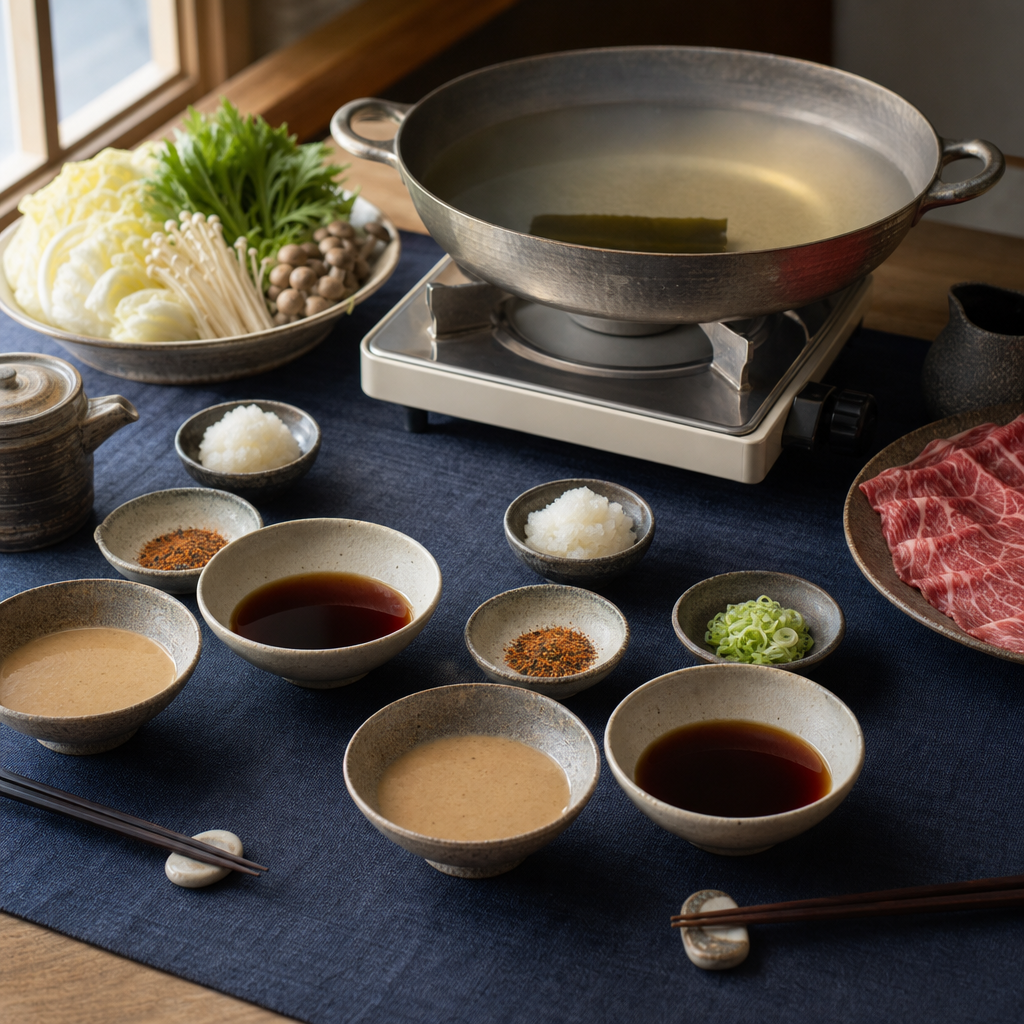
Give each diner a bowl of ponzu and a bowl of goma dare. Set daikon oroshi, scallions, and shichimi at the table.
Heat the broth without boiling the kombu
Bring the kombu water slowly toward a bare simmer over medium heat. Remove the kombu when small bubbles gather along its edges and before the water reaches a full boil.
Start the vegetables
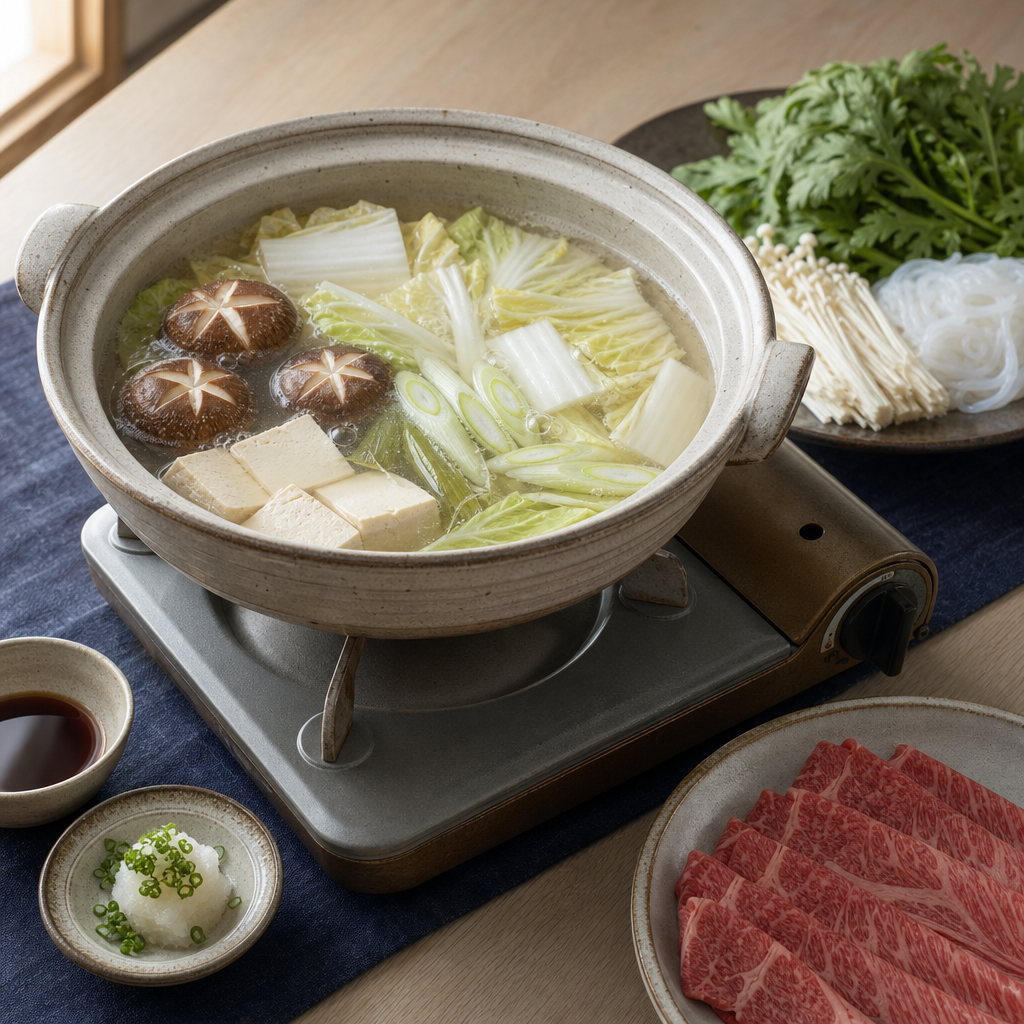
Move the pot to a tabletop burner and keep it at a steady simmer. Add napa cabbage ribs, negi, shiitake, and tofu first; add leafy greens and enoki later, after the firmer vegetables begin to soften.
Swish the meat piece by piece
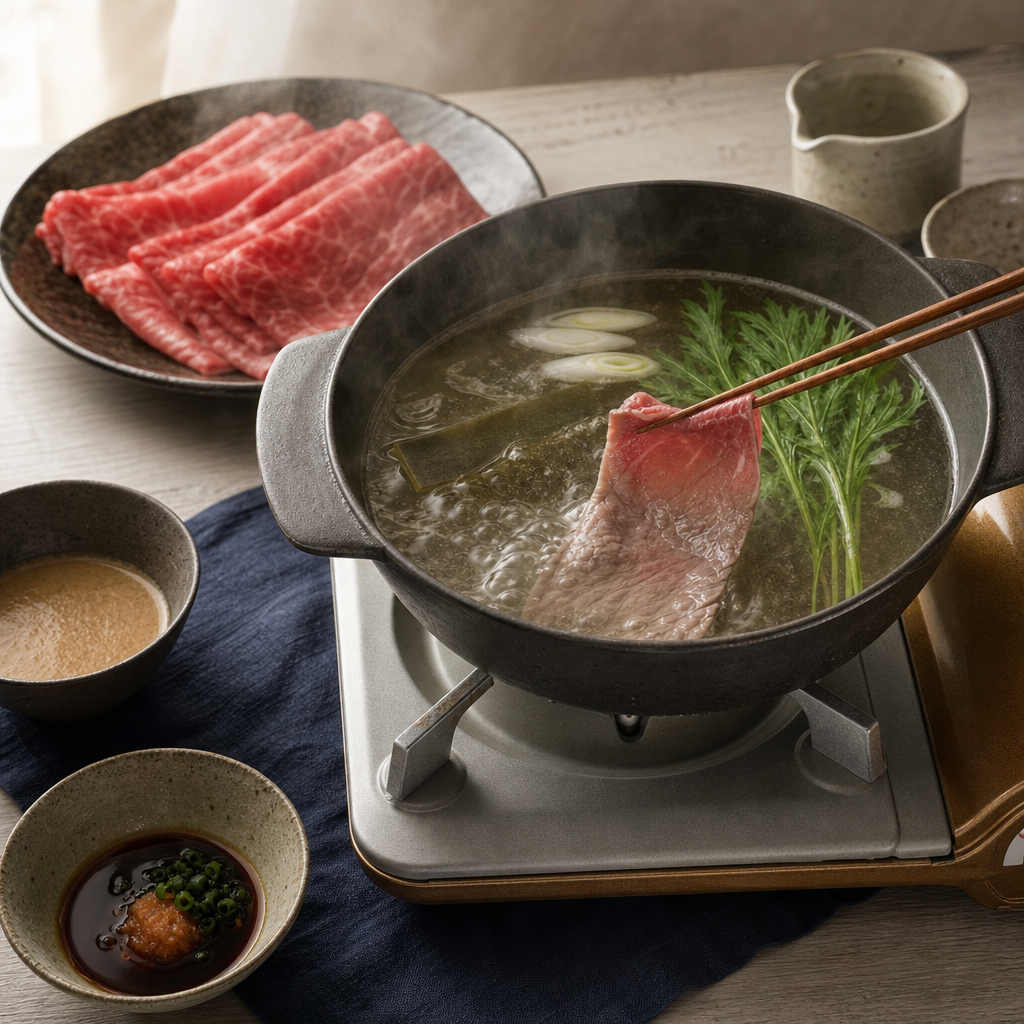
Pick up one slice of beef with chopsticks and swish it through the simmering broth until the red surface turns pink-brown, usually 5-10 seconds for 1-2 mm slices. Dip it immediately in ponzu or goma dare and eat it while still loose and supple.
Skim and manage the pot
Skim foam and loose fat from the surface as they collect. Add more vegetables in small rounds and top up with hot water if the liquid level falls below the ingredients.
Cook pork fully if using pork
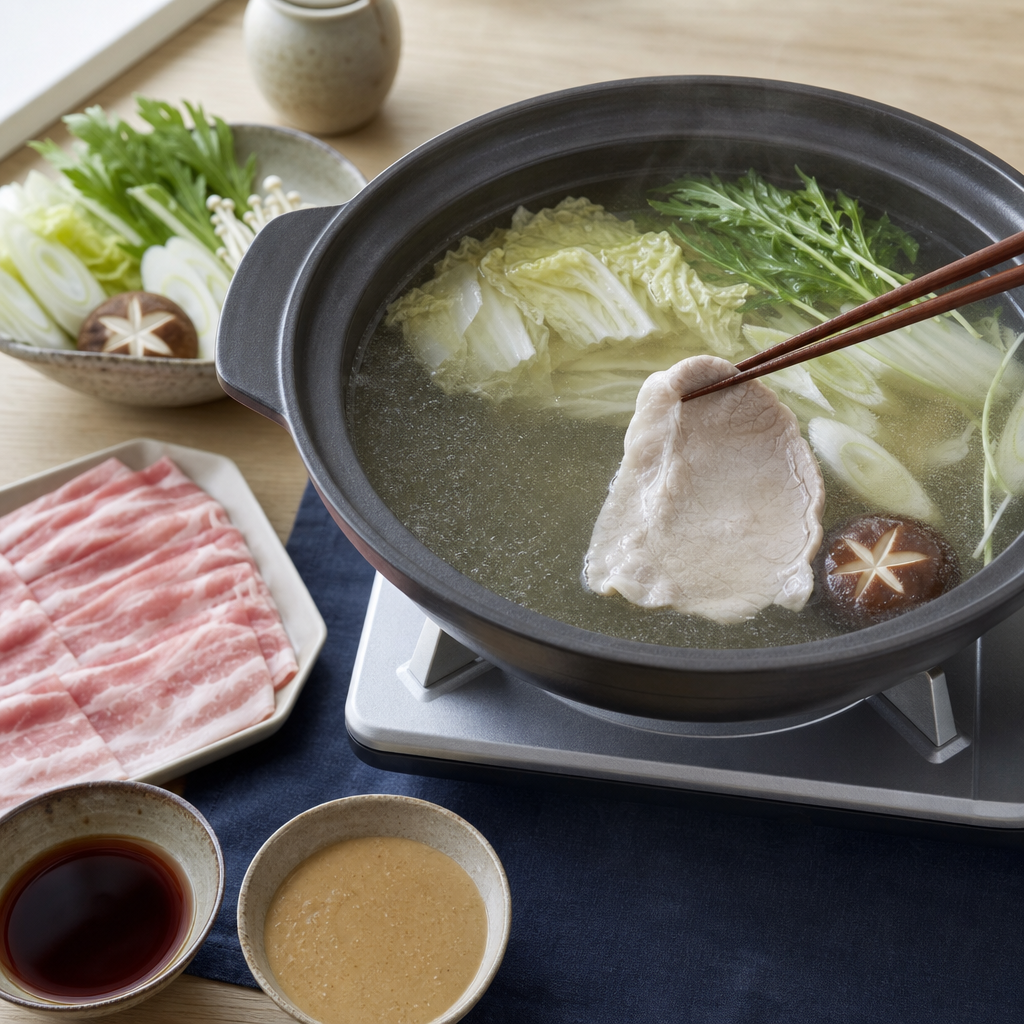
For pork shabu, swish each slice until no pink remains and the fat turns translucent, usually 15-25 seconds depending on thickness. Do not use the beef timing for pork.
Finish with noodles or rice
When the meat and vegetables are mostly gone, skim the broth, then add cooked udon and warm through for 1-2 minutes. Season individual bowls with a little ponzu or sesame sauce rather than salting the whole pot heavily.
Common mistakes
- {'mistake': 'Boiling the kombu.', 'fix': 'Remove kombu before a full boil. Edge bubbles are the cue; a bubbling sheet of kelp is already too far.'}
- {'mistake': 'Using meat that is too thick.', 'fix': 'Use 1-2 mm slices. If the slice cannot cook in a few swishes, it is not shabu shabu meat.'}
- {'mistake': 'Cooking all the meat at once.', 'fix': 'Cook piece by piece. A pile of meat lowers the broth temperature and gives gray, tangled slices.'}
- {'mistake': 'Seasoning the broth like soup.', 'fix': 'Keep the pot mild. Ponzu and goma dare are the seasoning system.'}
- {'mistake': 'Letting the pot boil hard all night.', 'fix': 'Hold a steady simmer. Violent boiling breaks tofu, clouds broth, and toughens meat.'}
- {'mistake': 'Using the same chopsticks for raw meat and eating.', 'fix': 'Use serving chopsticks or tongs for raw meat, then personal chopsticks for cooked food.'}
What does not belong
- {'item': 'Sukiyaki-style sweet soy broth', 'reason': 'That makes a different hot pot. Shabu shabu uses mild kombu broth and dipping sauces.'}
- {'item': 'Teriyaki sauce', 'reason': 'Commercial teriyaki is too thick and sweet. It buries the clean meat-and-kombu structure.'}
- {'item': 'Miso in the main broth', 'reason': 'Miso turns the pot into another kind of nabe. It does not belong in canonical shabu shabu broth.'}
- {'item': 'Garlic-heavy broth', 'reason': 'Garlic shifts the dish toward a different hot-pot profile. The base should read as kombu, meat, and vegetables.'}
- {'item': 'Cream, milk, or coconut milk', 'reason': 'Dairy does not belong. It muddies a broth designed to stay pale and light.'}
- {'item': 'Thick steak slices', 'reason': 'They cannot swish-cook. They boil on the outside before the center warms.'}