Hayashi Rice
The dish in context
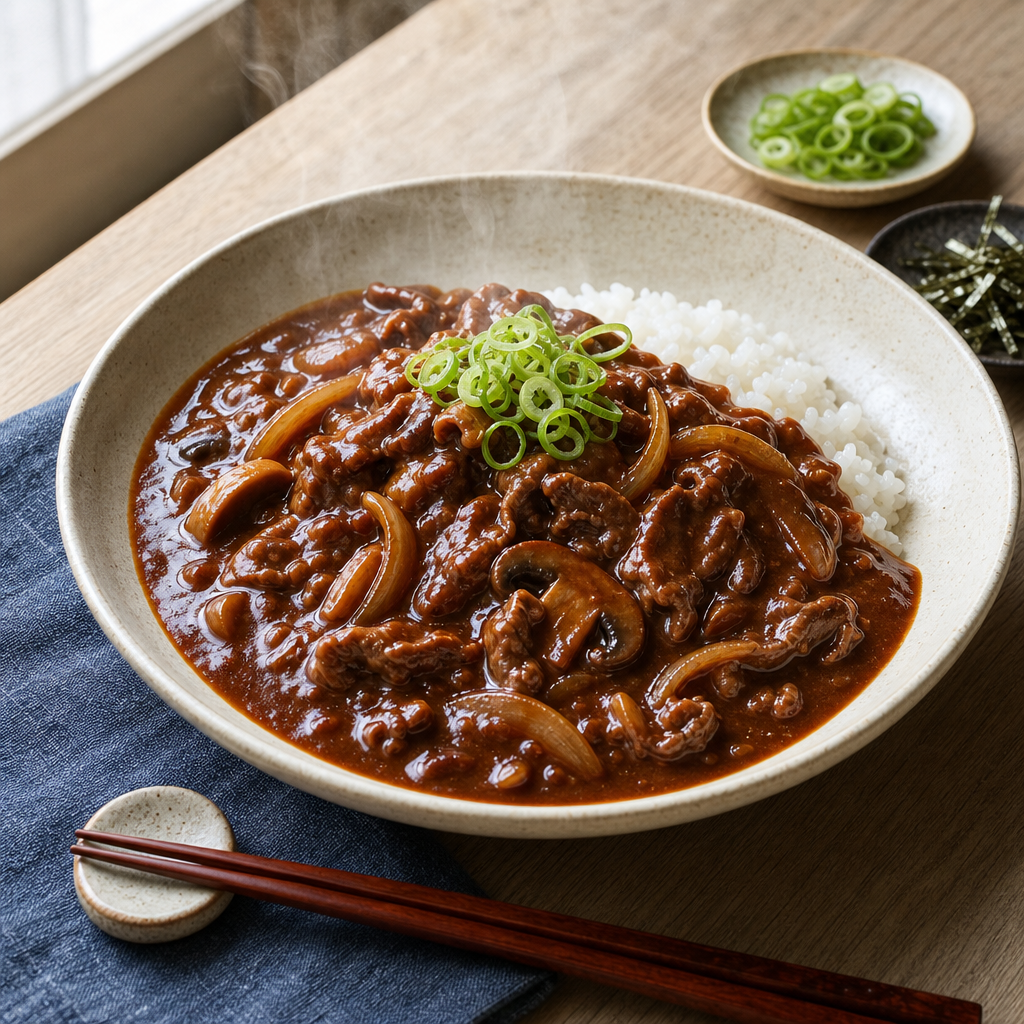
Hayashi rice (ハヤシライス) is a yōshoku dish: Western-style food adapted into Japanese home and institutional cooking. Its name is commonly linked either to “hashed beef with rice” becoming Hayashi rice, or to early Meiji-era restaurant and publishing figures named Hayashi; the origin story is not settled. What is settled is the form: thin beef and onion in a demi-glace-and-tomato sauce served with Japanese short-grain rice. Boxed hayashi roux became the household standard, while regional revivals such as Ikuno Hayashi Rice in Hyōgo preserve older tomato- or demi-glace-leaning versions.
Method 10 steps · 55 min
Cook the rice
Cook the washed and soaked short-grain rice with the measured water. Rest covered for 10 minutes after cooking, then fluff with a shamoji or rice paddle using cutting motions rather than stirring hard.
Season and sear the beef
Pat the beef dry and season lightly with a pinch of salt and pepper. Heat the oil in a wide pot over medium-high heat, sear the beef in a thin layer for 45-60 seconds per side, then remove it while some pink remains.
Cook the onions
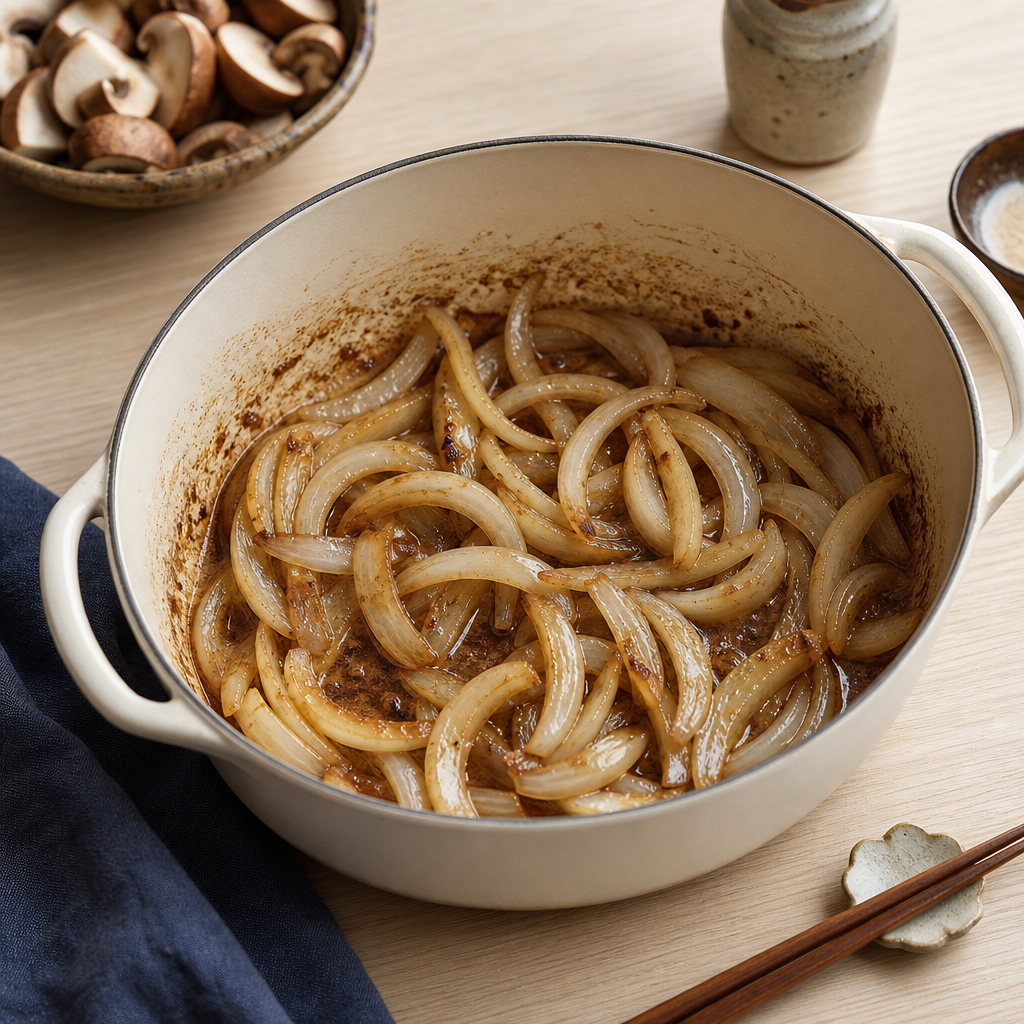
Lower the heat to medium and add the butter and onions to the same pot. Cook 10-12 minutes, scraping the browned beef fond, until the onion edges turn golden and the centers soften but still hold their shape.
Brown the mushrooms
Add the mushrooms and cook 4-5 minutes until their water evaporates and their edges darken. Keep the heat high enough that the pot sizzles instead of steams.
Toast the flour
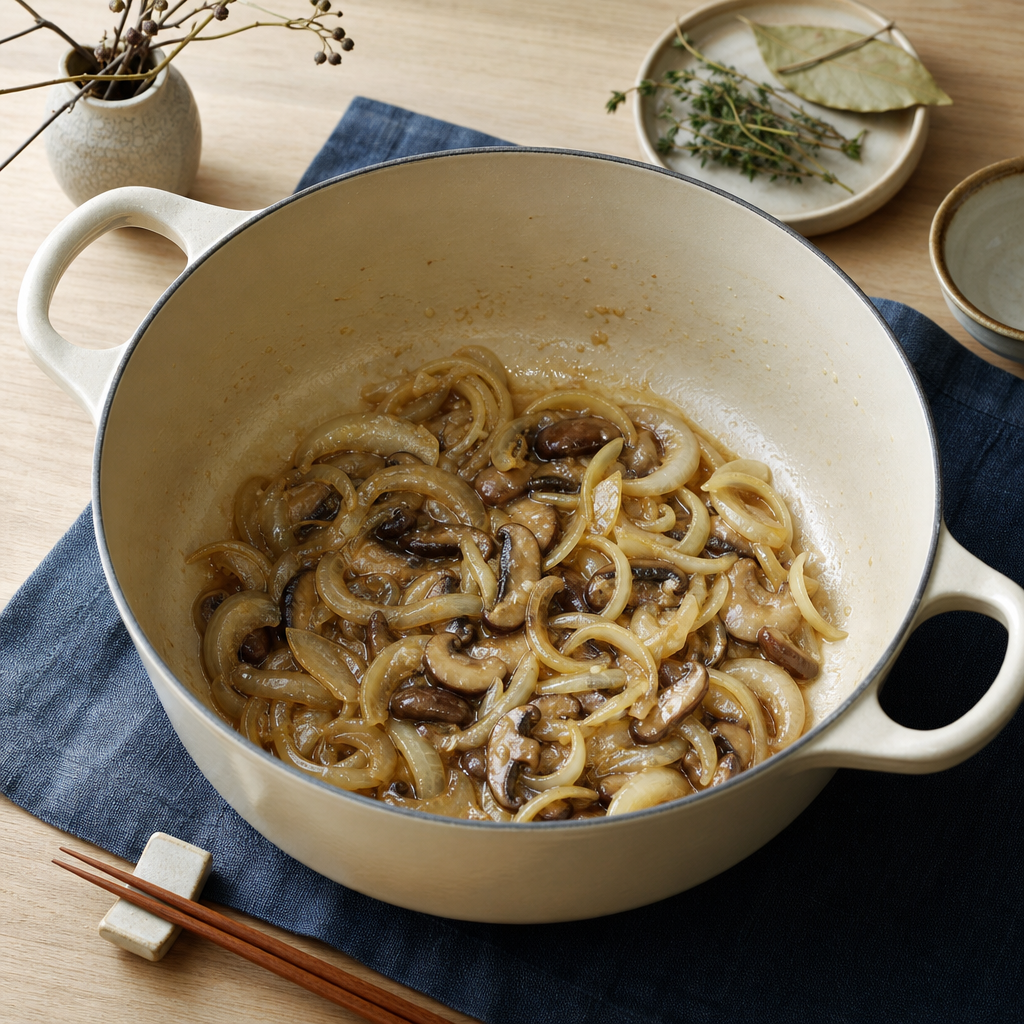
Sprinkle the flour over the onions and mushrooms. Cook 2 minutes, stirring constantly, until the flour disappears into the fat and smells faintly nutty.
Cook down the tomato
Add the tomato purée and ketchup. Cook 3-4 minutes, stirring and scraping, until the mixture darkens from bright red to brick-red and the sharp tomato smell softens.
Deglaze and build the sauce
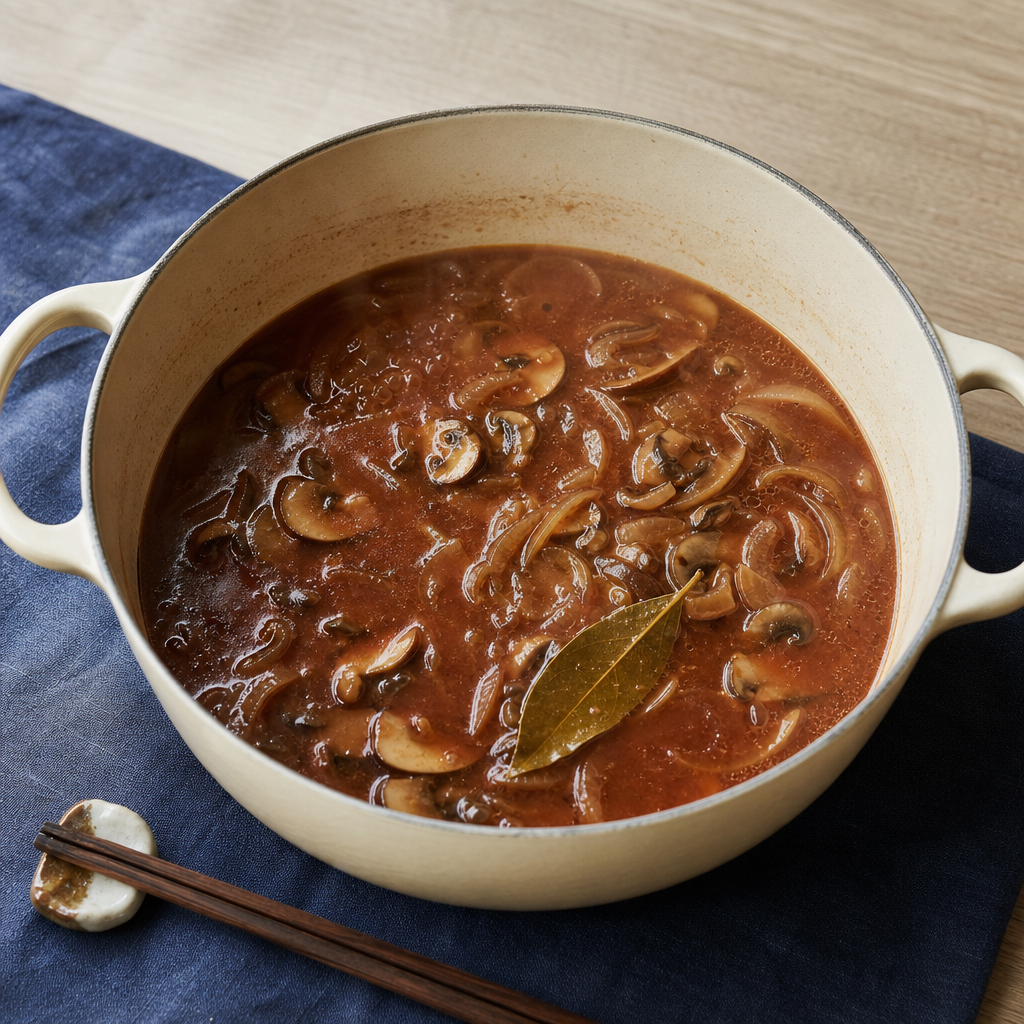
Pour in the red wine and simmer 2 minutes, scraping the pot. Add the beef stock, demi-glace, Worcestershire sauce, shoyu, and bay leaf, then whisk until the sauce is smooth.
Simmer until glossy
Simmer uncovered over low heat for 12-15 minutes, stirring often, until the sauce coats a spoon and falls in a slow sheet. Remove the bay leaf.
Return the beef
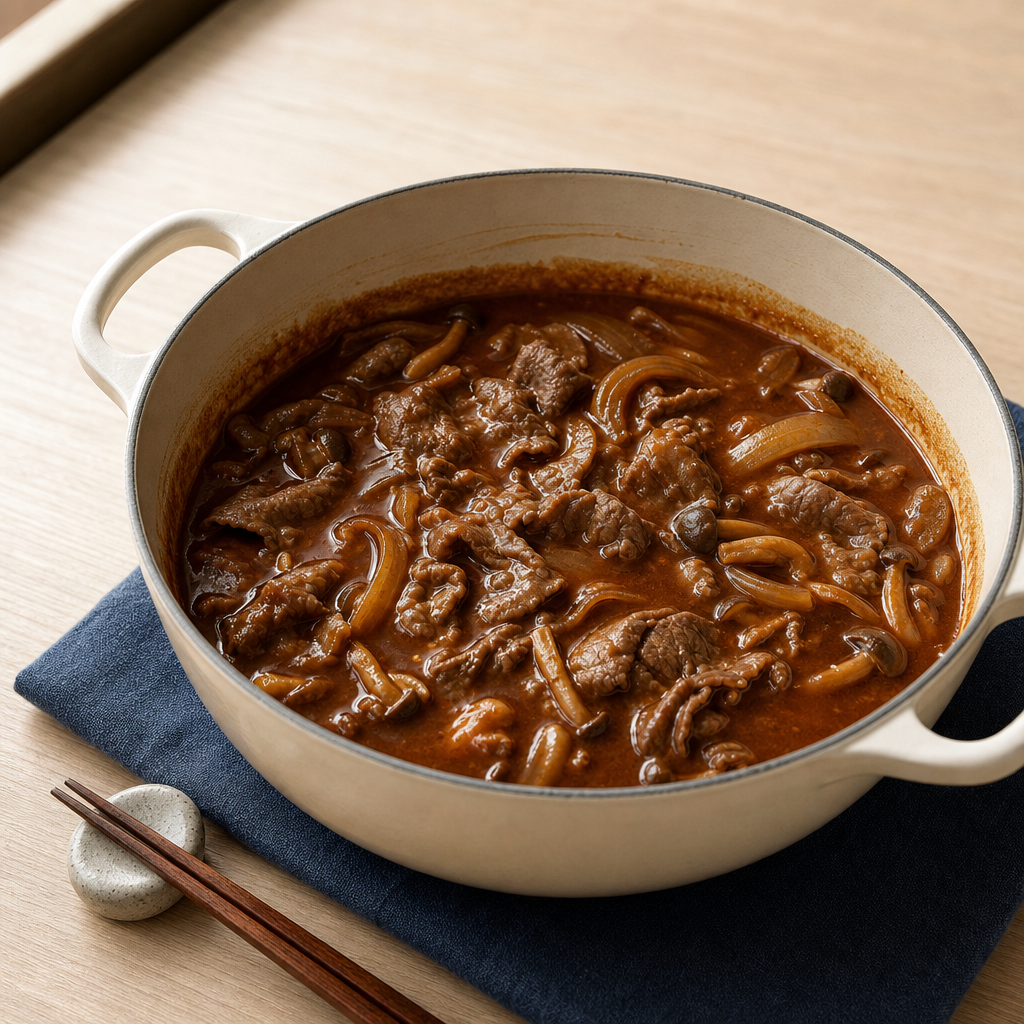
Return the seared beef and any juices to the pot. Simmer 2-3 minutes, only until the beef is cooked through and tender.
Adjust and serve
Taste the sauce and adjust with salt, pepper, or a small splash of Worcestershire if it tastes flat. Spoon the sauce beside or over hot short-grain rice and garnish with peas if using.
Common mistakes
- {'mistake': 'Using long-grain rice', 'fix': 'Use Japanese short-grain rice. Hayashi rice needs rice that clings lightly to the sauce.'}
- {'mistake': 'Treating the sauce like curry', 'fix': 'Do not add curry powder, potatoes, or carrots. Hayashi rice is a demi-glace tomato beef sauce.'}
- {'mistake': 'Boiling the beef for the full simmer', 'fix': 'Sear it, remove it, and return it at the end. Thin beef turns dry when simmered like stew meat.'}
- {'mistake': 'Leaving the tomato raw', 'fix': 'Cook tomato purée and ketchup until brick-red before adding stock. Raw tomato makes the sauce sharp and metallic.'}
- {'mistake': 'Adding boxed roux over high heat', 'fix': 'If using commercial hayashi roux, turn off the heat before dissolving it, then return to a gentle simmer. High heat makes roux clump and scorch.'}
What does not belong
- {'item': 'Curry powder', 'reason': 'Curry powder makes Japanese curry rice, not hayashi rice.'}
- {'item': 'Potatoes and carrots', 'reason': 'Those chunks belong to Japanese curry and some stews. Hayashi rice is built around thin beef, onion, and sauce.'}
- {'item': 'Cream', 'reason': 'Cream dulls the tomato-demi balance and turns the sauce into a generic brown cream stew.'}
- {'item': 'Basmati or jasmine rice', 'reason': 'Fragrant long-grain rice fights the yōshoku sauce and breaks the Japanese rice-dish structure.'}
- {'item': 'Chinese dark soy sauce', 'reason': 'It is too thick and sweet for this application. Use Japanese koikuchi shoyu.'}
Adaptations
Use mushrooms as the main body: double the mushrooms and add sliced king oyster mushrooms. Replace beef stock and demi-glace with a vegetable demi-glace or mushroom gravy, use oil instead of butter, and use vegan Worcestershire. This becomes vegan hayashi-style rice, not the beef household standard.
Use halal-certified beef, halal Worcestershire or chūnō-style sauce, and replace red wine with unsalted beef stock plus 1 tsp rice vinegar. Check demi-glace; many commercial versions contain wine or pork-derived gelatin.
Use gluten-free demi-glace or gravy base, tamari instead of shoyu, gluten-free Worcestershire, and sweet rice flour or cornstarch for thickening. Boxed hayashi roux usually contains wheat and does not qualify.
Use neutral oil instead of butter and check demi-glace labels for milk solids. The sauce will be less rounded but still coherent if the onions and tomato are cooked properly.
The base recipe contains no shellfish. Check Worcestershire and commercial demi-glace labels for hidden seafood extracts if serving someone with a severe allergy.