Japanese Curry Rice
The dish in context
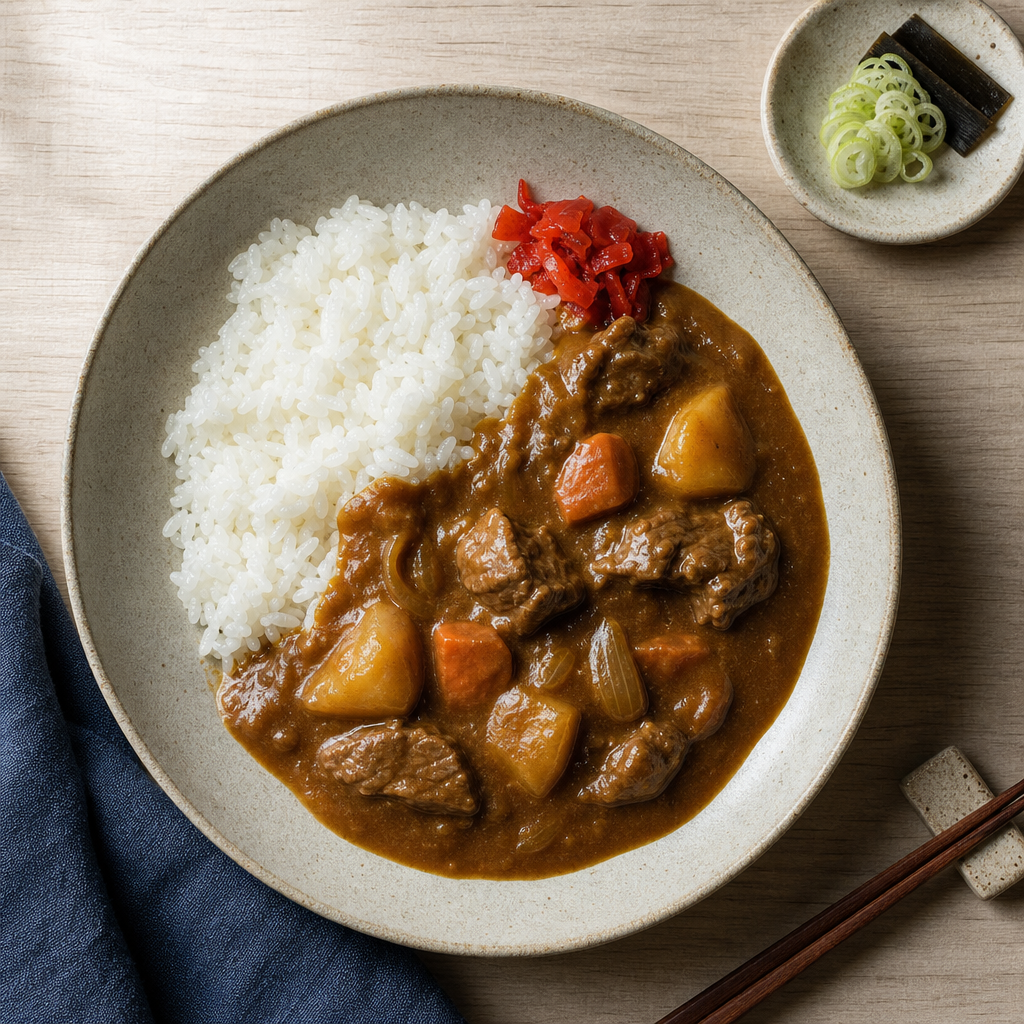
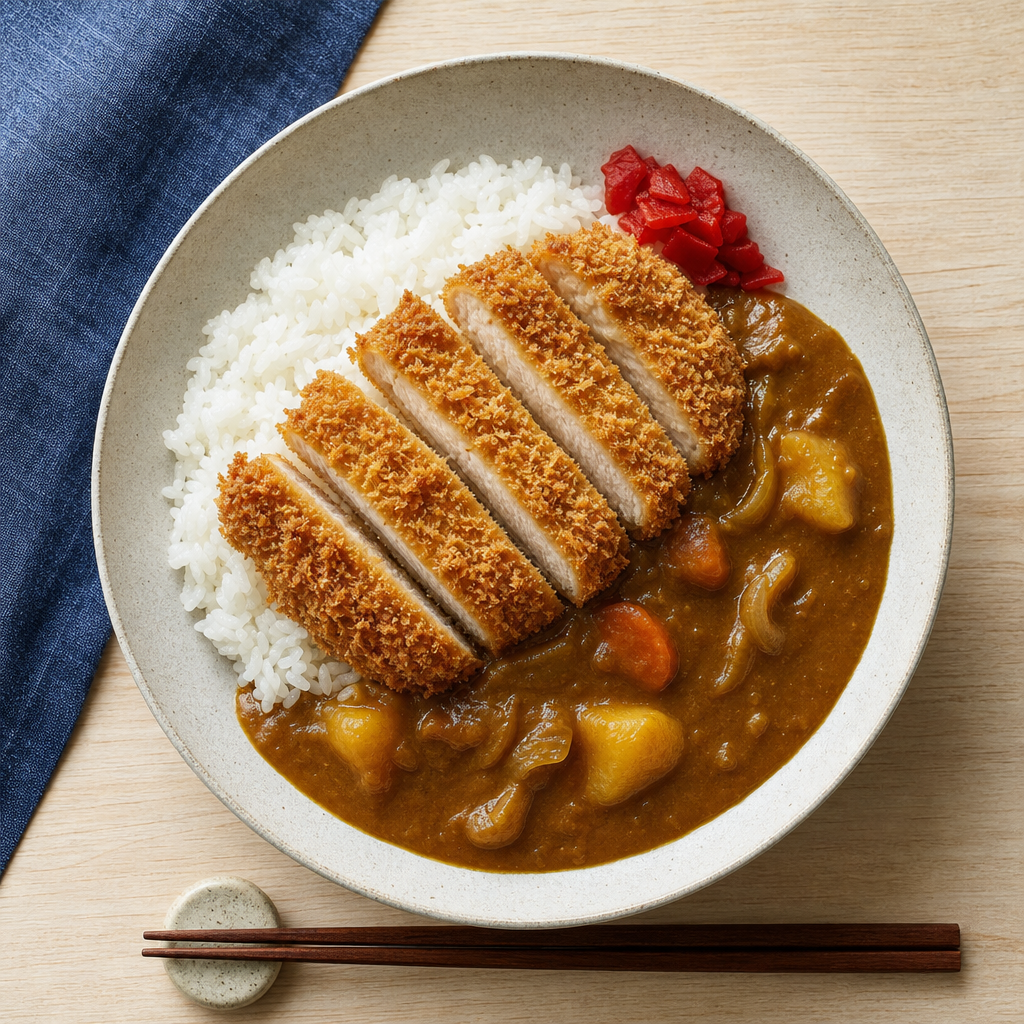
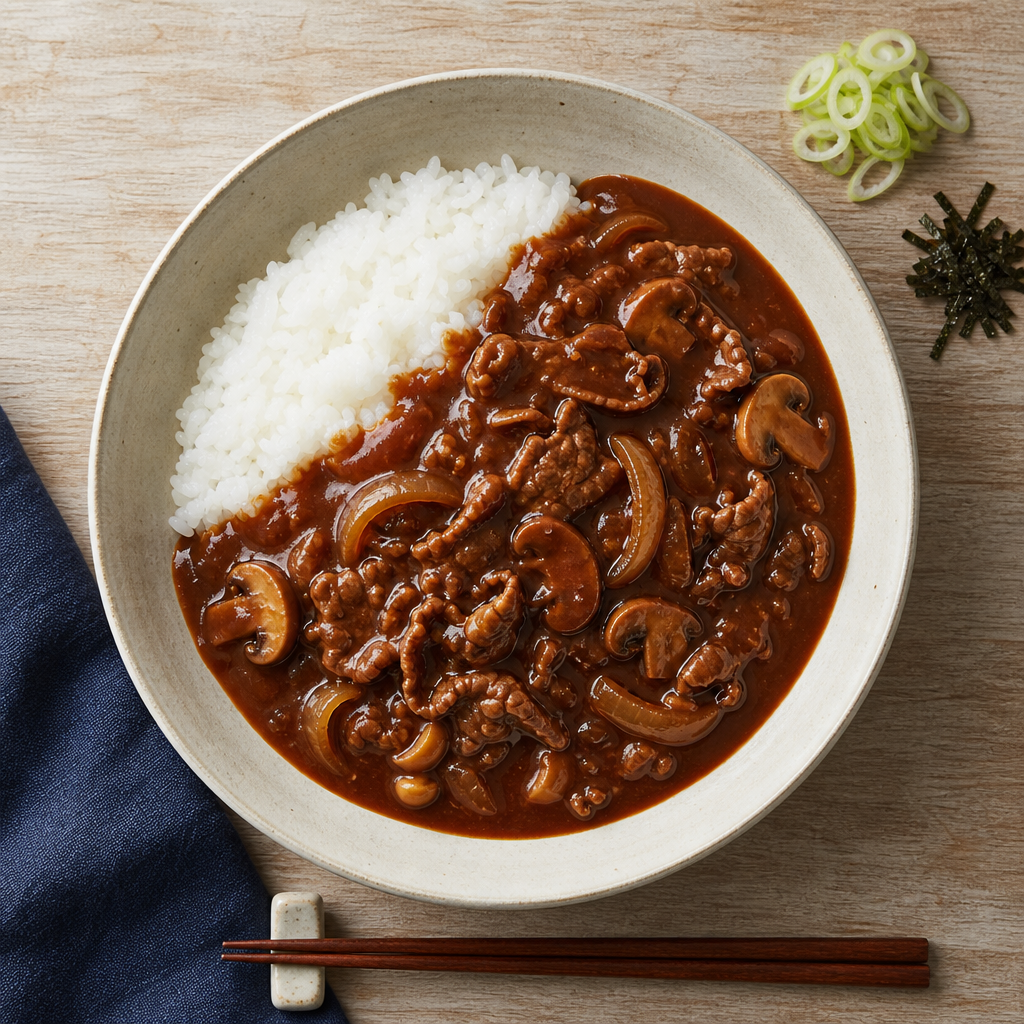
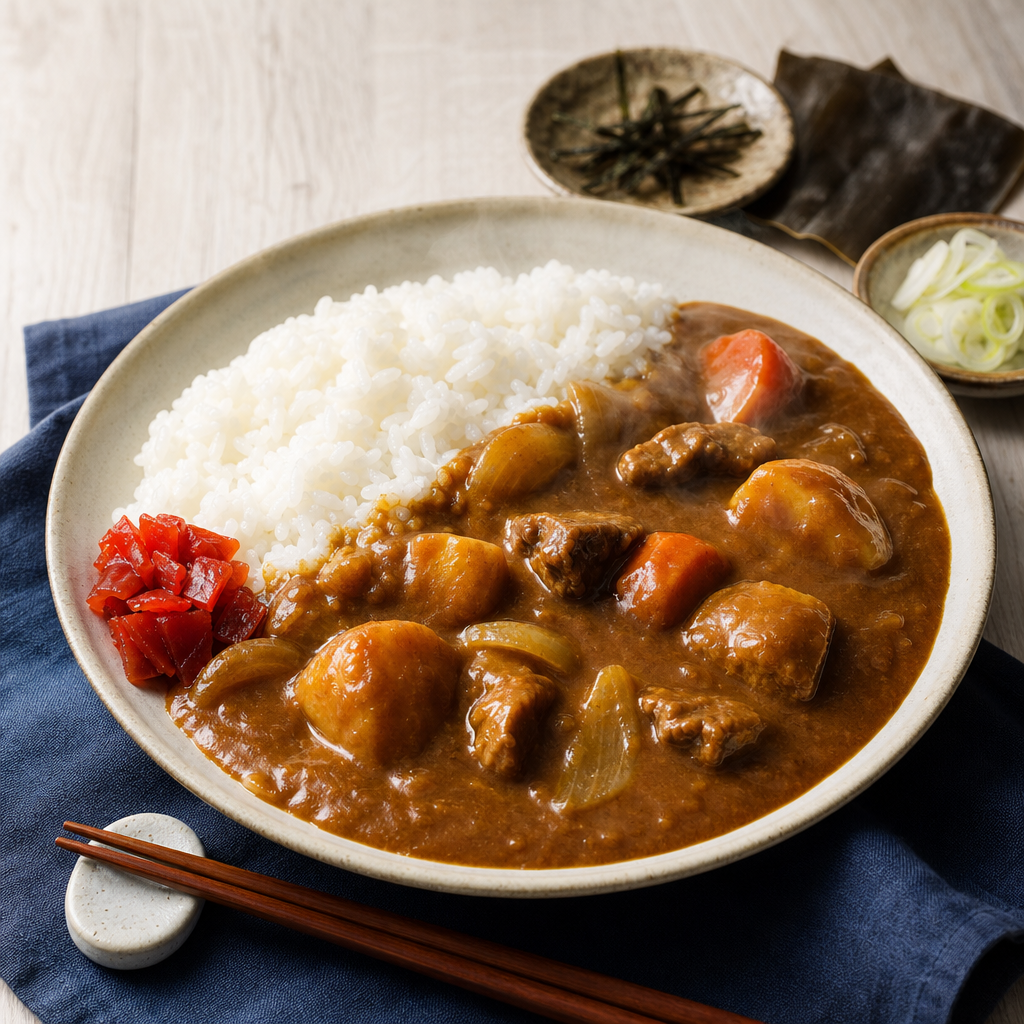
Japanese curry rice is yōshoku: Western-style food adapted into Japanese domestic cooking. Its route is usually traced from Indian spice cookery through British curry powder and flour-thickened stew, then into Japan in the Meiji period. Government and industry sources describe the modern household form as a roux-thickened curry sauce poured over cooked rice, with onion, carrot, potato, and meat as the standard grammar. Solid curry roux, commercialized in the 20th century, made the dish a school-lunch and home-kitchen staple. Regional versions exist, but the national reference point is still the brown, mildly spiced, roux-based curry served with short-grain rice.
Method 9 steps · 75 min
Wash and soak the rice
Wash the short-grain rice in several changes of cold water until the water runs nearly clear. Drain, add the measured cooking water, and soak for 30 minutes before cooking.
Cook and rest the rice
Cook the soaked rice in a rice cooker, or bring it to a boil in a covered pot, reduce to low for 12 minutes, then turn off the heat and rest covered for 10 minutes. Fluff gently with a shamoji or rice paddle.
Brown the meat
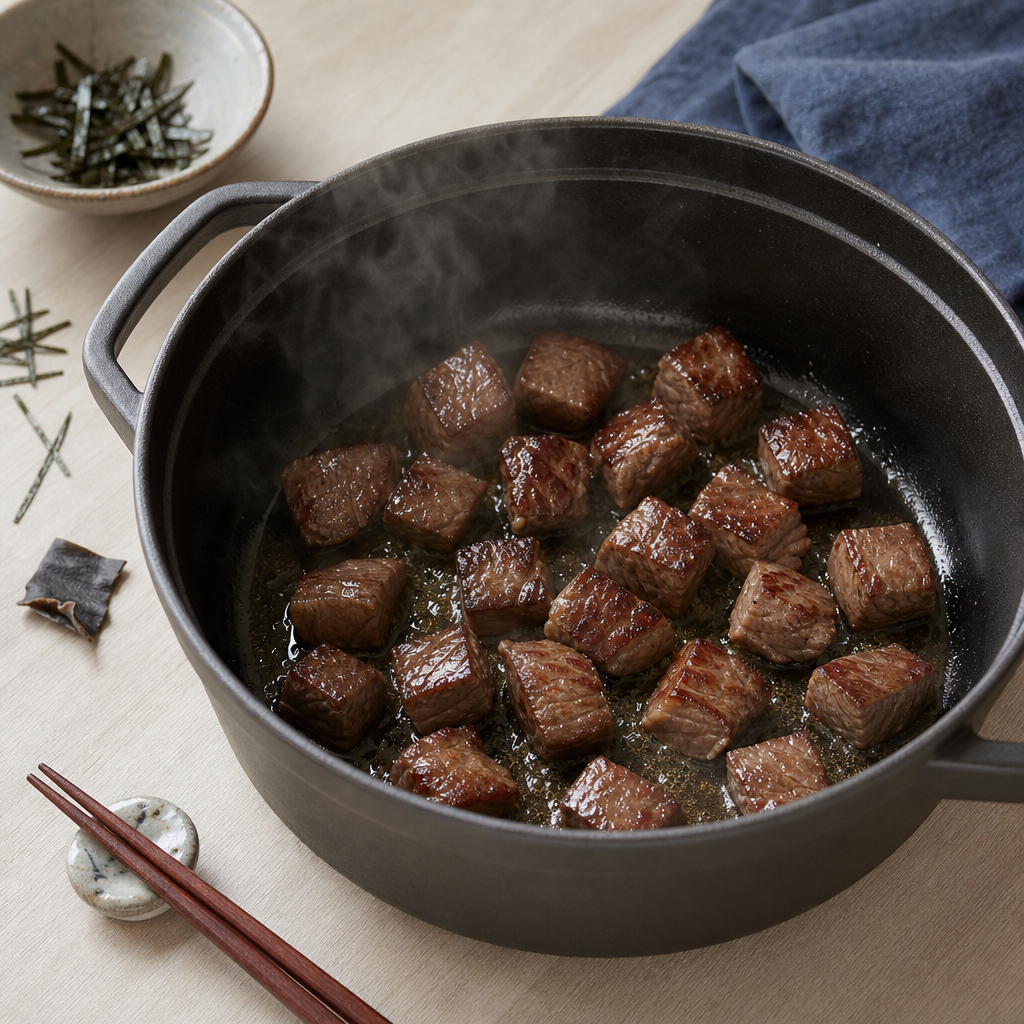
Heat the oil in a heavy pot over medium-high heat. Season the beef with salt and pepper, then brown it in one layer until the surfaces take color; work in batches if the pot is crowded. Transfer the meat to a plate.
Cook the onions down
Add the sliced onions to the same pot and cook over medium heat, scraping the browned bits from the bottom. Cook until the onions are soft, glossy, and light brown at the edges, 12-15 minutes.
Coat the vegetables
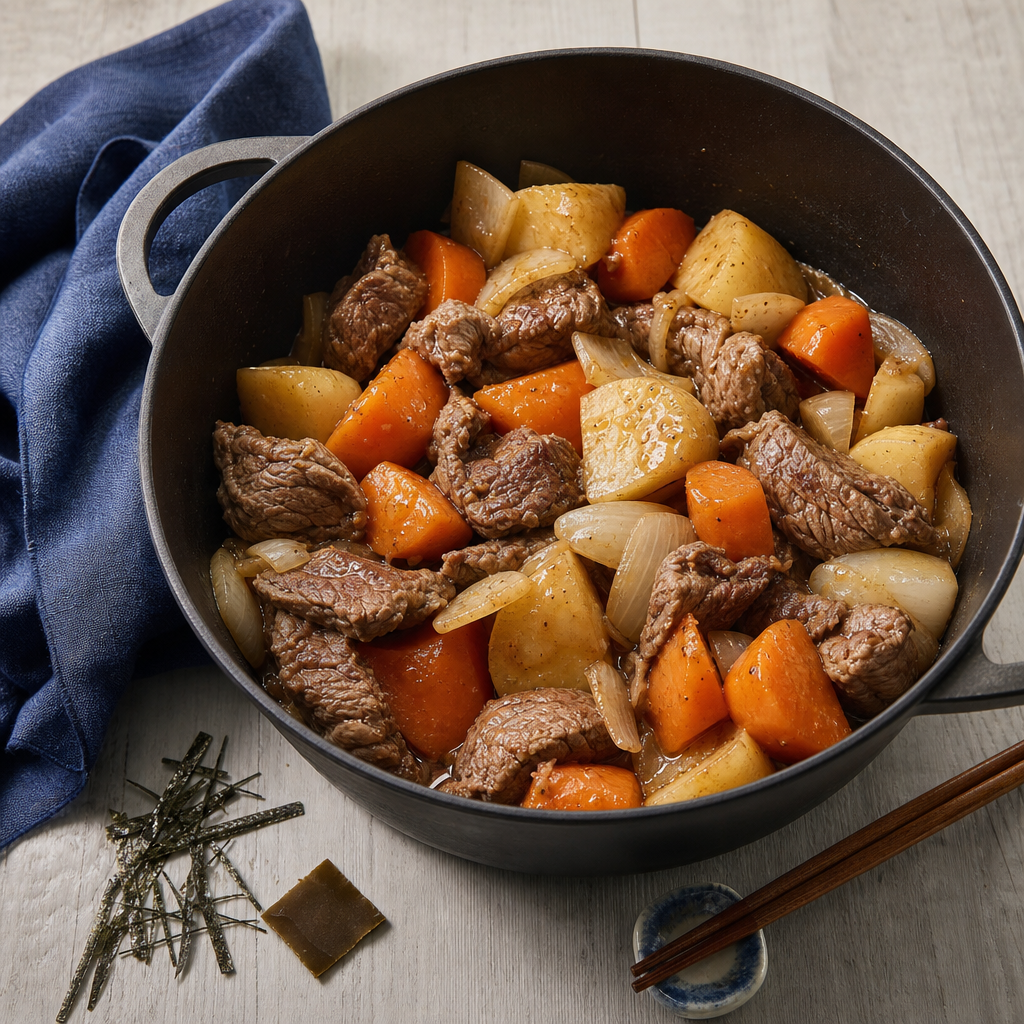
Add the carrot and potato and stir for 3 minutes, letting the cut surfaces shine with oil. Return the beef and any juices to the pot.
Simmer until tender
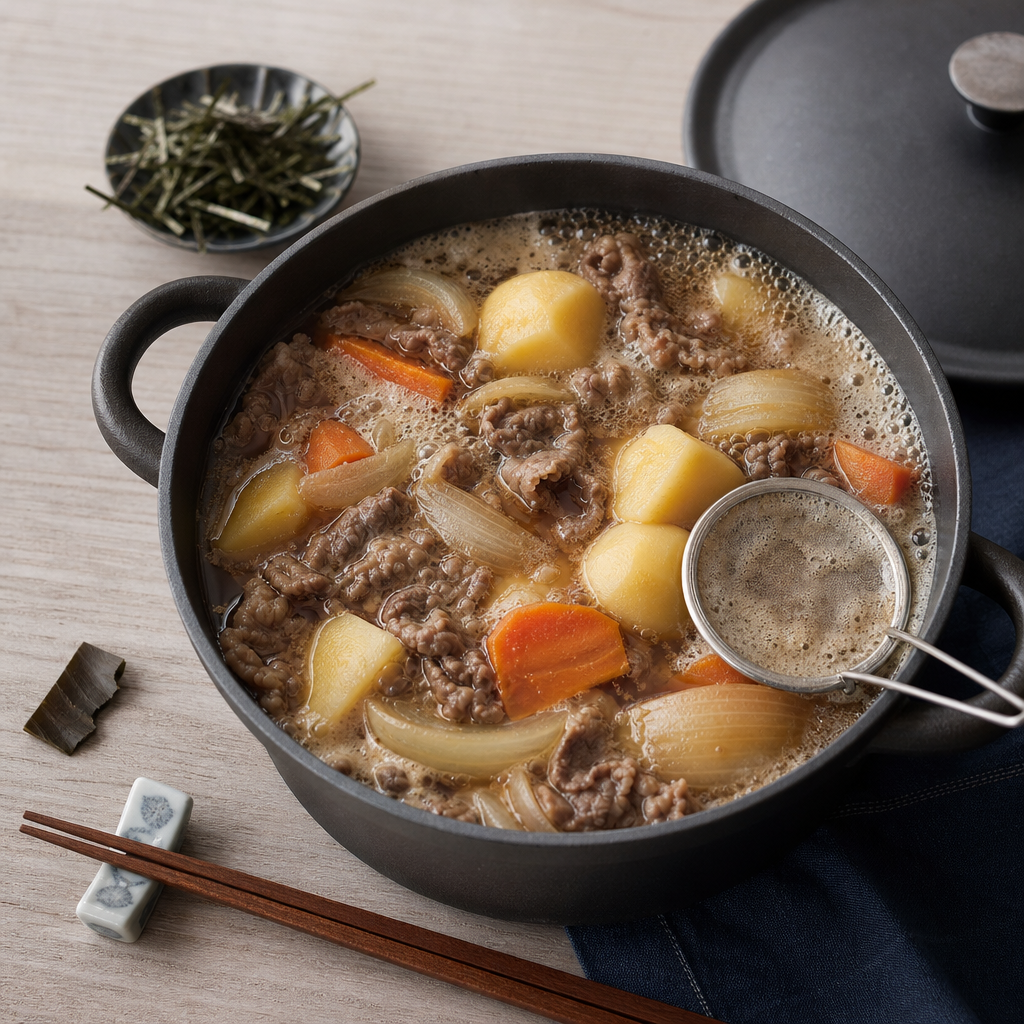
Add the water or stock and bring to a boil. Skim the gray foam, reduce to a steady simmer, cover slightly ajar, and cook until the beef and vegetables are tender, 25-35 minutes.
Dissolve the roux off heat
Turn off the heat. Add the chopped curry roux and stir until fully dissolved, pressing any pieces against the side of the pot.
Finish the sauce
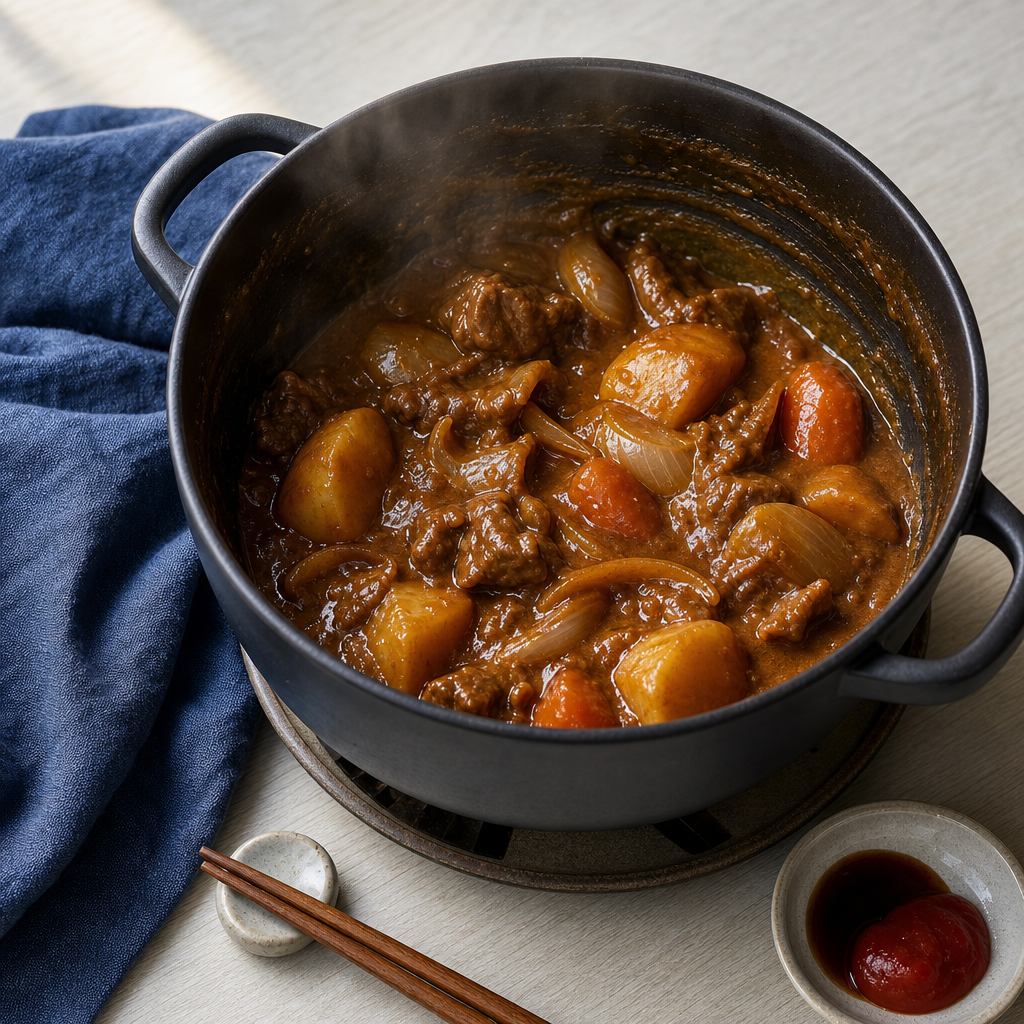
Return the pot to low heat and simmer uncovered for 8-10 minutes, stirring from the bottom. Add Worcestershire sauce and ketchup if using, then simmer until the curry coats a spoon in a smooth layer.
Plate with rice
Spoon rice onto one side of each shallow plate and ladle curry beside and partly over it. Add fukujinzuke at the edge, not mixed through the sauce.
Common mistakes
- {'mistake': 'Using long-grain rice', 'fix': 'Use Japanese short-grain or a japonica medium-grain fallback. Basmati and jasmine rice do not hold the sauce the way カレーライス expects.'}
- {'mistake': 'Adding roux while the pot is boiling', 'fix': 'Turn the heat off, dissolve the roux completely, then return to low heat. This prevents lumps and bottom scorching.'}
- {'mistake': 'Leaving the onions pale', 'fix': 'Cook them until glossy and lightly browned at the edges. The curry needs that sweetness because the spice level is restrained.'}
- {'mistake': 'Boiling hard after adding potatoes', 'fix': 'Simmer steadily. A hard boil breaks the potatoes and turns the sauce chalky.'}
- {'mistake': 'Treating curry roux as only a thickener', 'fix': 'Roux blocks contain salt, fat, flour, spices, and umami seasoning. Adjust salt after the roux, not before.'}
What does not belong
- {'item': 'coconut milk', 'reason': 'Coconut milk does not belong in standard Japanese curry rice. It moves the dish toward Southeast Asian curry and fights the wheat-roux structure.'}
- {'item': 'cream', 'reason': 'Cream does not belong. Japanese curry is rounded by roux, onion, and starch, not dairy enrichment.'}
- {'item': 'basmati or jasmine rice', 'reason': 'Long-grain aromatic rice does not belong here. The reference plate needs short-grain rice with cling.'}
- {'item': 'large amounts of garam masala at the end', 'reason': 'A pinch can sharpen a homemade roux, but dumping garam masala into boxed roux makes the curry dusty and unbalanced.'}
- {'item': 'raw grated apple in excess', 'reason': 'A little apple is a known household variation. Too much makes the sauce sweet and pulpy; it should not taste like fruit sauce.'}
- {'item': 'soy sauce poured over the finished rice', 'reason': 'Soy sauce on plain rice does not belong on this plate. The curry already seasons the rice.'}