Omurice
The dish in context
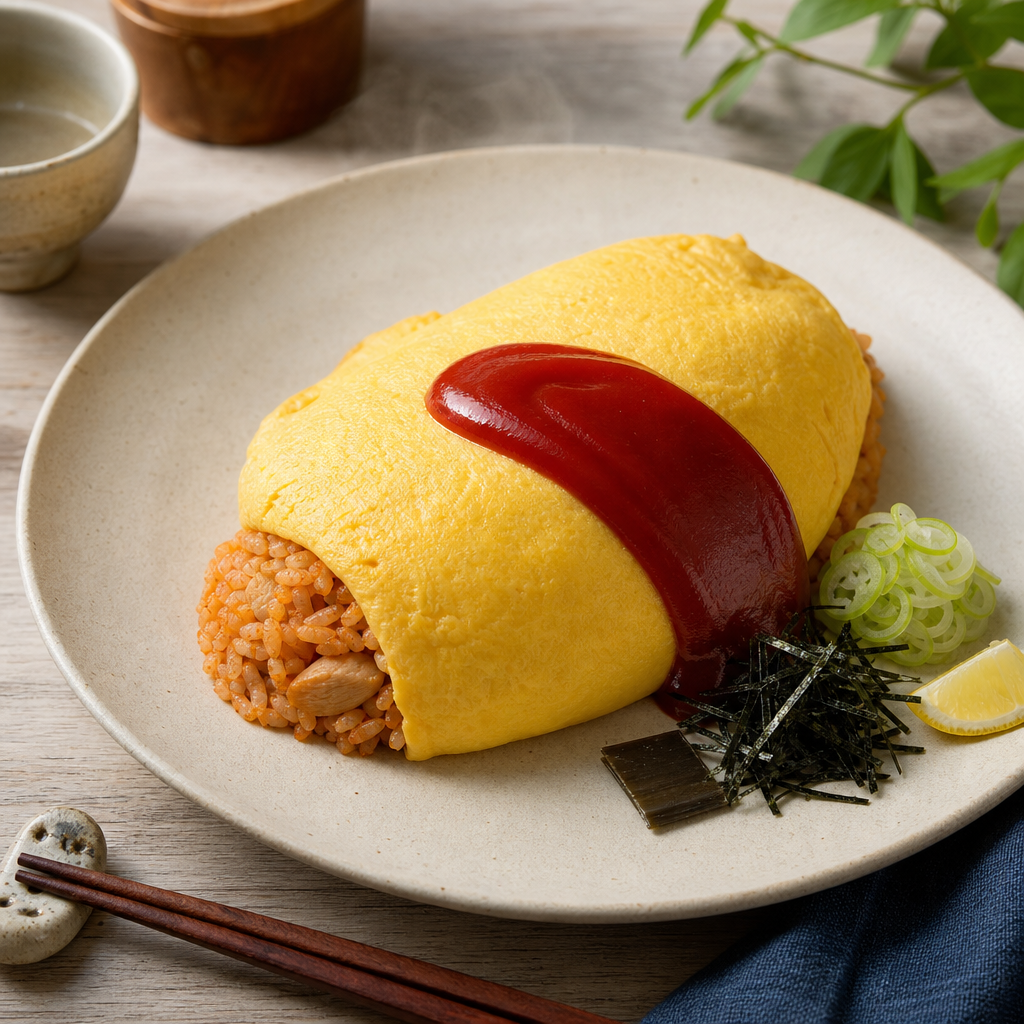
Omurice is yōshoku (洋食), Japan’s domestic style of Western-influenced cooking, not a French omelet with rice on the side. The name combines omelet and rice, rendered in Japanese as オムライス. Several origin stories are attached to early 20th-century Tokyo and Osaka restaurants, especially Rengatei in Ginza and Hokkyokusei in Osaka; the point that matters in the kitchen is the form that became household-standard: ketchup-seasoned chicken rice wrapped or covered with egg. Modern versions split into thin wrapped omelet, soft omelet laid on top, and dramatic cut-open “tornado” or “fluffy” styles. This recipe uses the classic wrapped form because it teaches the structure before the restaurant tricks.
Method 10 steps · 30 min
Break up the rice
Loosen the cooked short-grain rice with a wet rice paddle or fingers until no hard clumps remain. Do not mash it; the grains should separate but still look glossy.
Cook the chicken and onion
Heat 1 tbsp oil and the rice butter in a skillet over medium heat. Add onion and cook until translucent at the edges, 2-3 minutes, then add chicken, salt, and white pepper and cook until the chicken surface turns opaque.
Cook down the ketchup
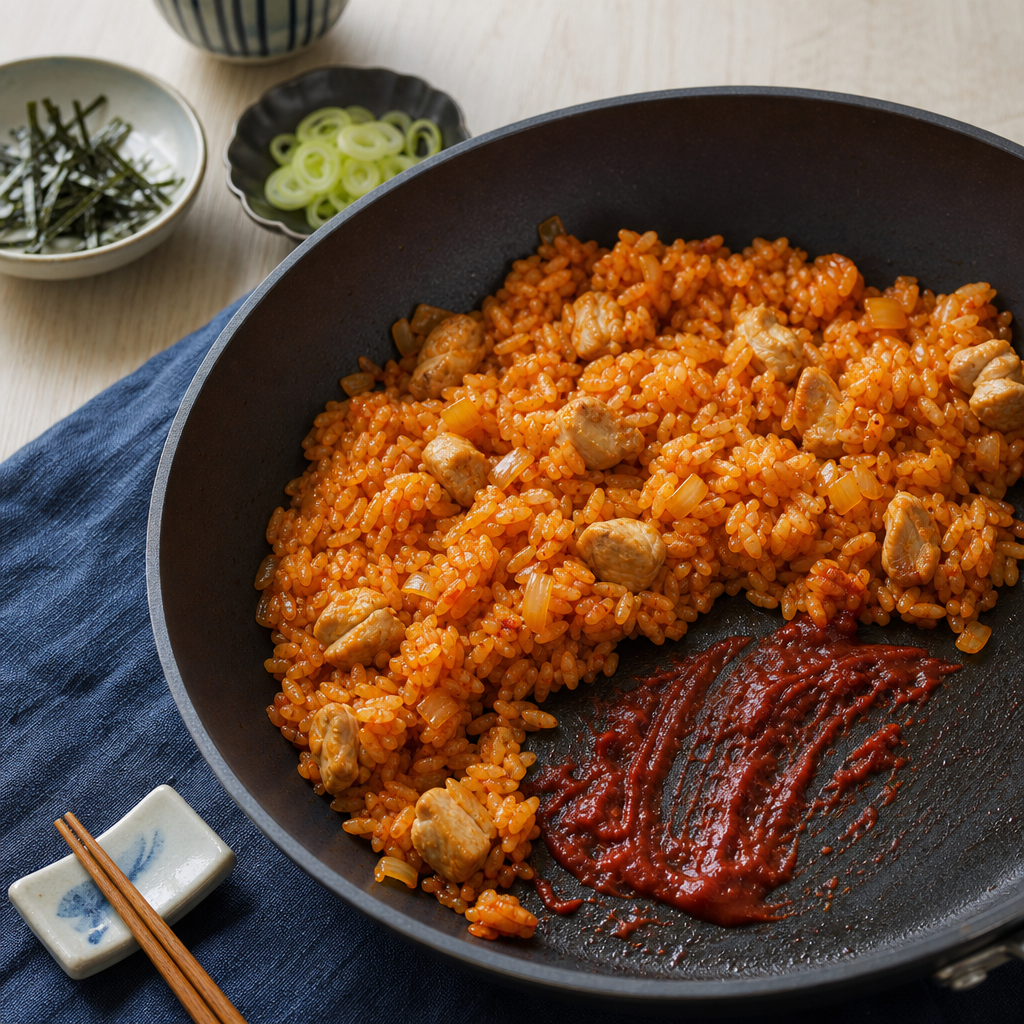
Add ketchup for the rice and cook it directly against the pan for 60-90 seconds, stirring until it darkens from bright red to brick red. Add sake and soy sauce and scrape the pan clean.
Fry the chicken rice
Add the rice, mushrooms, and peas. Fold and press with a spatula until every grain is stained orange-red and the rice steams dry rather than glossy-wet, 3-4 minutes.
Shape the rice mounds
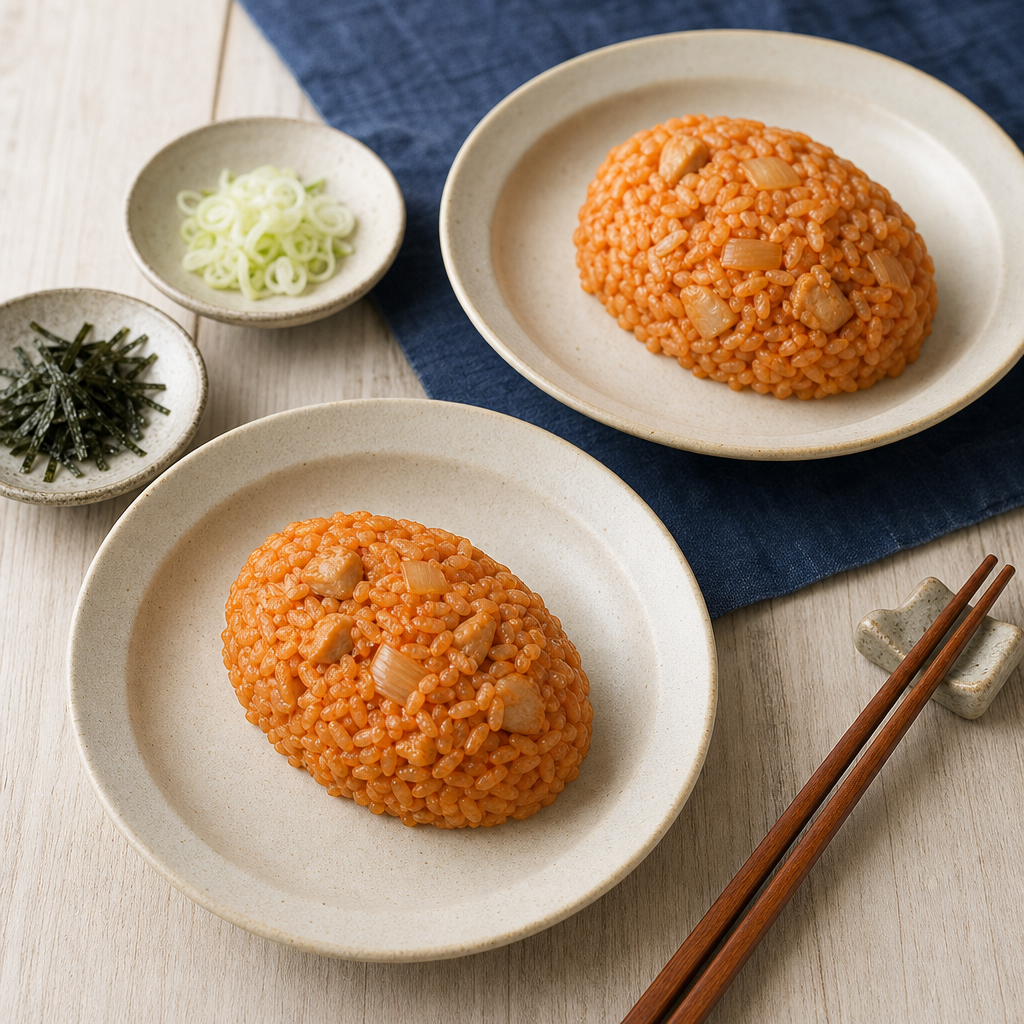
Divide the rice between two plates or small bowls and shape each portion into a compact oval about 14 cm long. Keep the surface slightly domed.
Beat one omelet at a time
For each serving, beat 2 eggs with 1 tbsp milk and a pinch of salt until no clear strands of white remain. Do not whip foam into the eggs.
Set the egg sheet
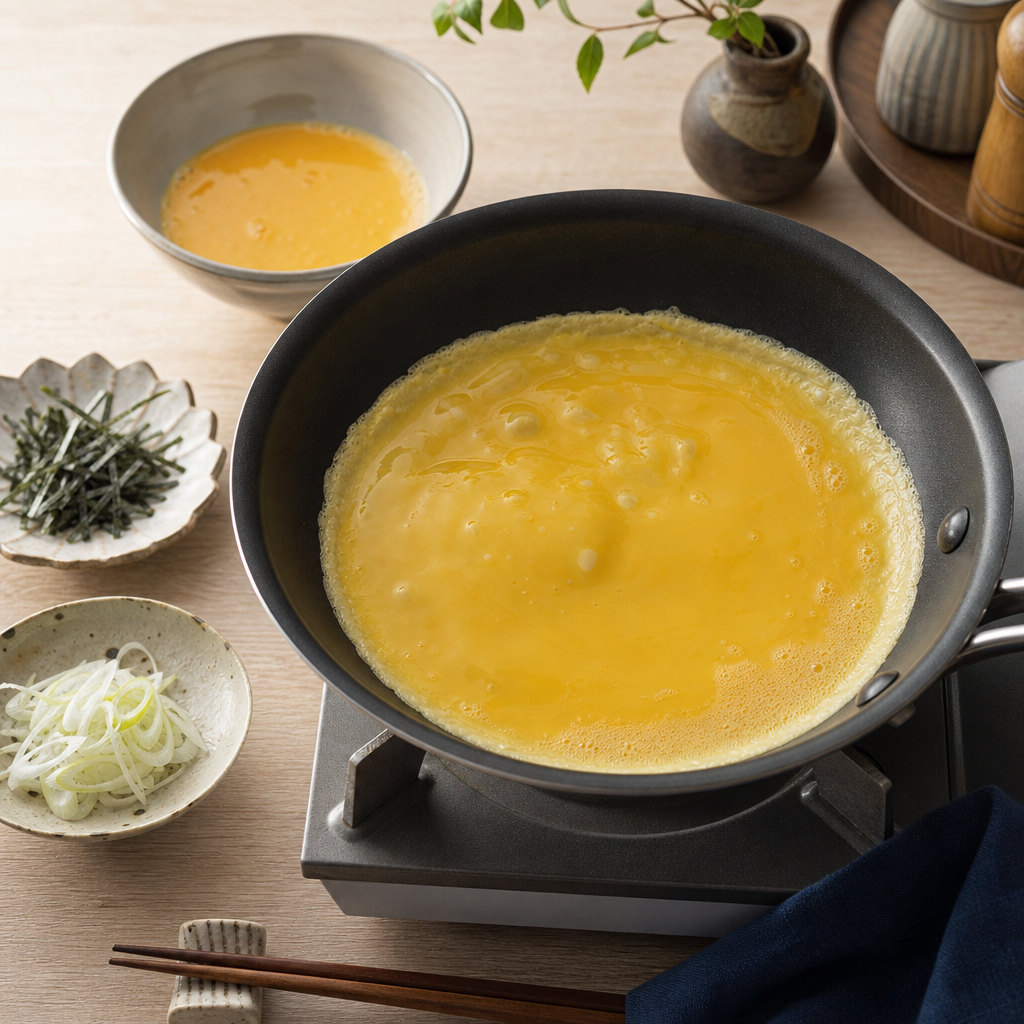
Heat a 20 cm nonstick skillet over medium-low heat and add 10 g butter. When the butter foams but has not browned, pour in the beaten egg and stir in small circles with chopsticks or a spatula for 10-15 seconds, then tilt the pan to cover the surface in an even layer.
Wrap the rice
When the egg is mostly set on the bottom and still slightly wet on top, place one rice mound across the center. Fold the near and far edges of egg over the rice, then slide the omurice seam-side down onto a plate.
Tighten the oval
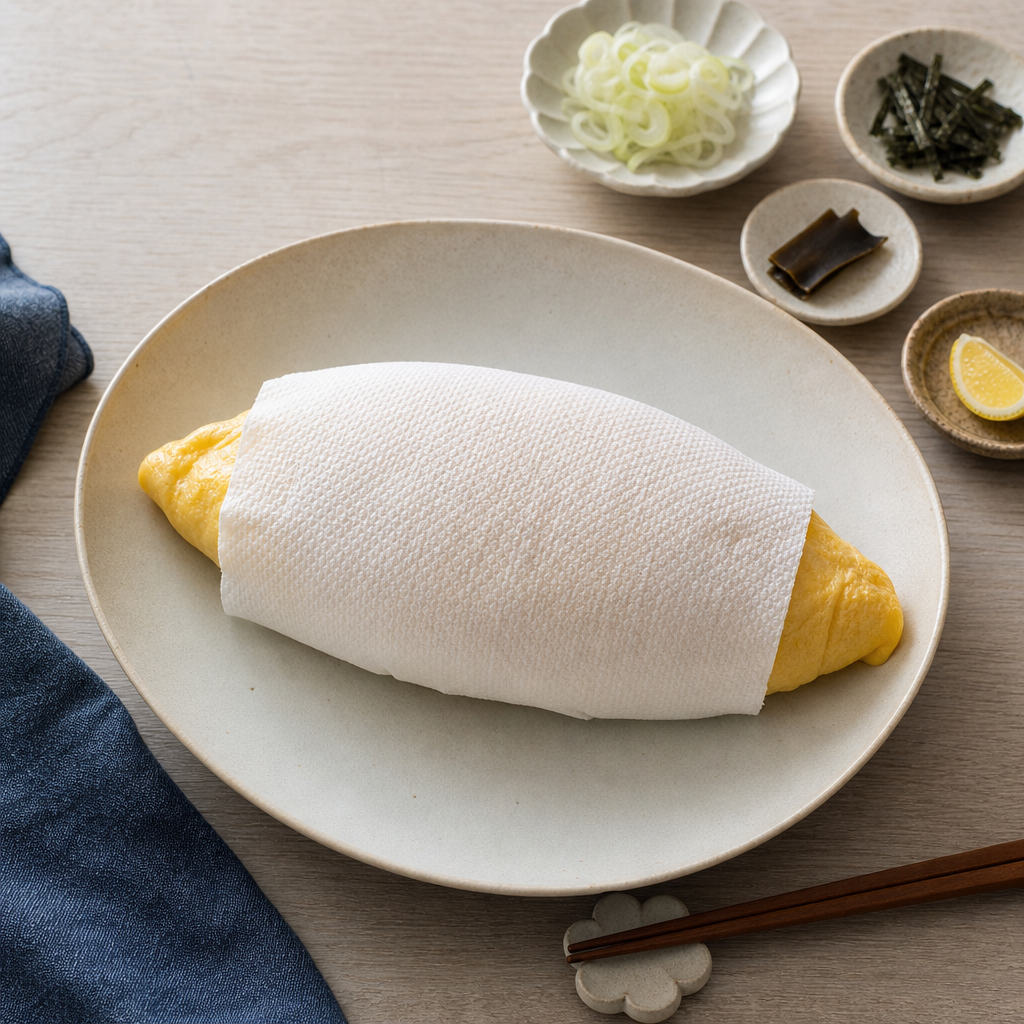
Cover the plated omurice with a clean paper towel and gently cup it with both hands to refine the oval. Remove the towel before steam makes the surface damp.
Finish with ketchup
Spoon or pipe ketchup across the top in a line or zigzag. Scatter parsley if using and serve while the egg surface is still satin-yellow.
Common mistakes
- {'mistake': 'Using long-grain rice', 'fix': 'Use Japanese short-grain rice. Long-grain rice will not hold the oval shape and reads like generic fried rice under egg.'}
- {'mistake': 'Adding ketchup after the rice', 'fix': 'Fry the ketchup before adding rice. Raw ketchup clings in sour-sweet streaks and leaves the filling wet.'}
- {'mistake': 'Browning the omelet', 'fix': 'Cook over medium-low heat and pull the egg while the top is still slightly moist. A browned omelet tastes like diner eggs, not omurice.'}
- {'mistake': 'Overfilling the egg sheet', 'fix': 'Keep each portion around 180 g cooked rice plus fillings. More rice makes the wrap split at the seam.'}
- {'mistake': 'Forcing the fold with a spatula', 'fix': 'Tilt and slide the pan so gravity helps. The spatula should guide the egg, not scrape it off the pan.'}
What does not belong
- {'item': 'Long-grain rice or basmati', 'reason': 'It does not belong in omurice. Japanese short-grain rice gives the compact, tender mound the omelet is built around.'}
- {'item': 'Cream sauce inside the rice', 'reason': 'Cream turns the filling loose and heavy. White sauce is a separate modern topping style, not the classic ketchup chicken rice.'}
- {'item': 'Raw tomato paste as a ketchup replacement', 'reason': 'Tomato paste lacks the sweet-acid balance of ketchup and makes the rice taste flat unless rebuilt with sugar, vinegar, and salt.'}
- {'item': 'Garlic-heavy seasoning', 'reason': 'Garlic does not belong in the household-standard version. It drags the dish toward fried rice and covers the butter-egg profile.'}
- {'item': 'American bottled teriyaki sauce', 'reason': 'Teriyaki sauce does not belong here. Its thick sweetness fights the ketchup rice and makes the dish taste like a different Japanese-American plate.'}