Katsudon
The dish in context
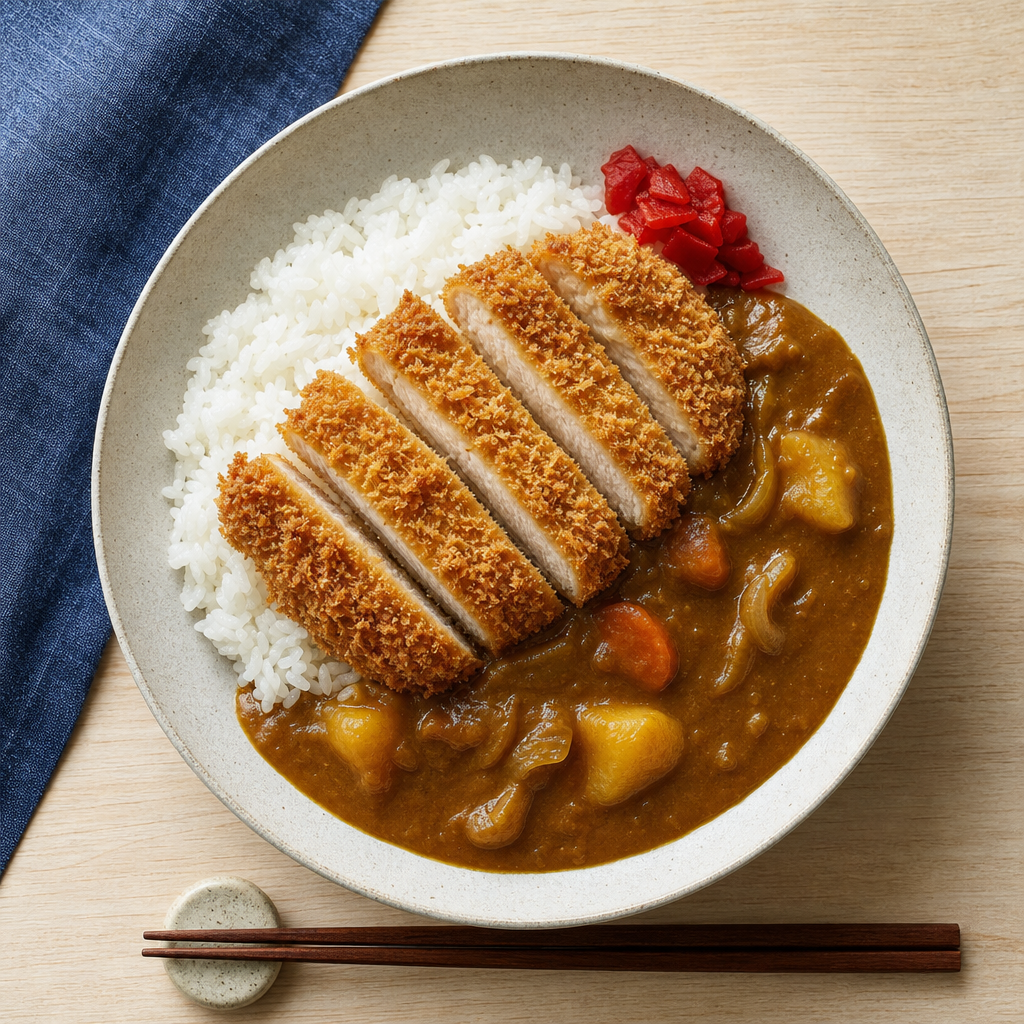
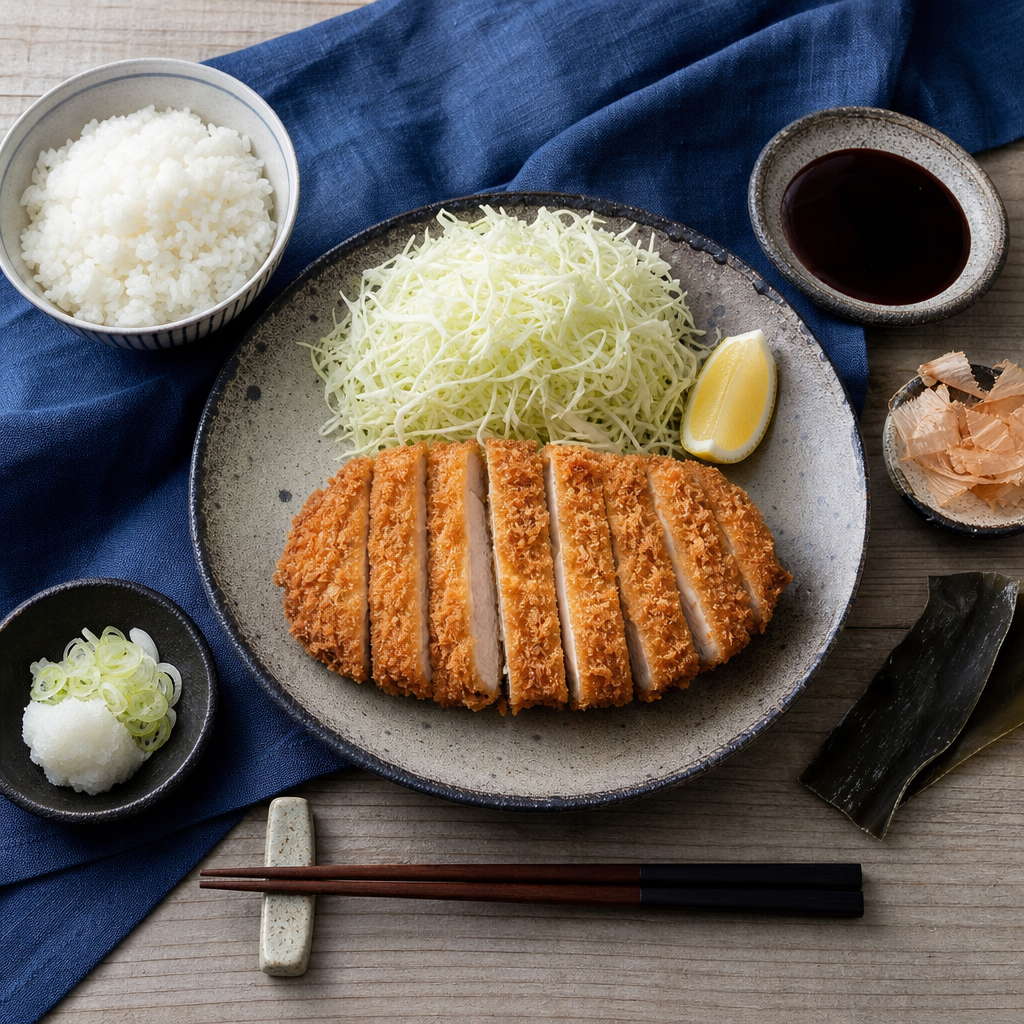
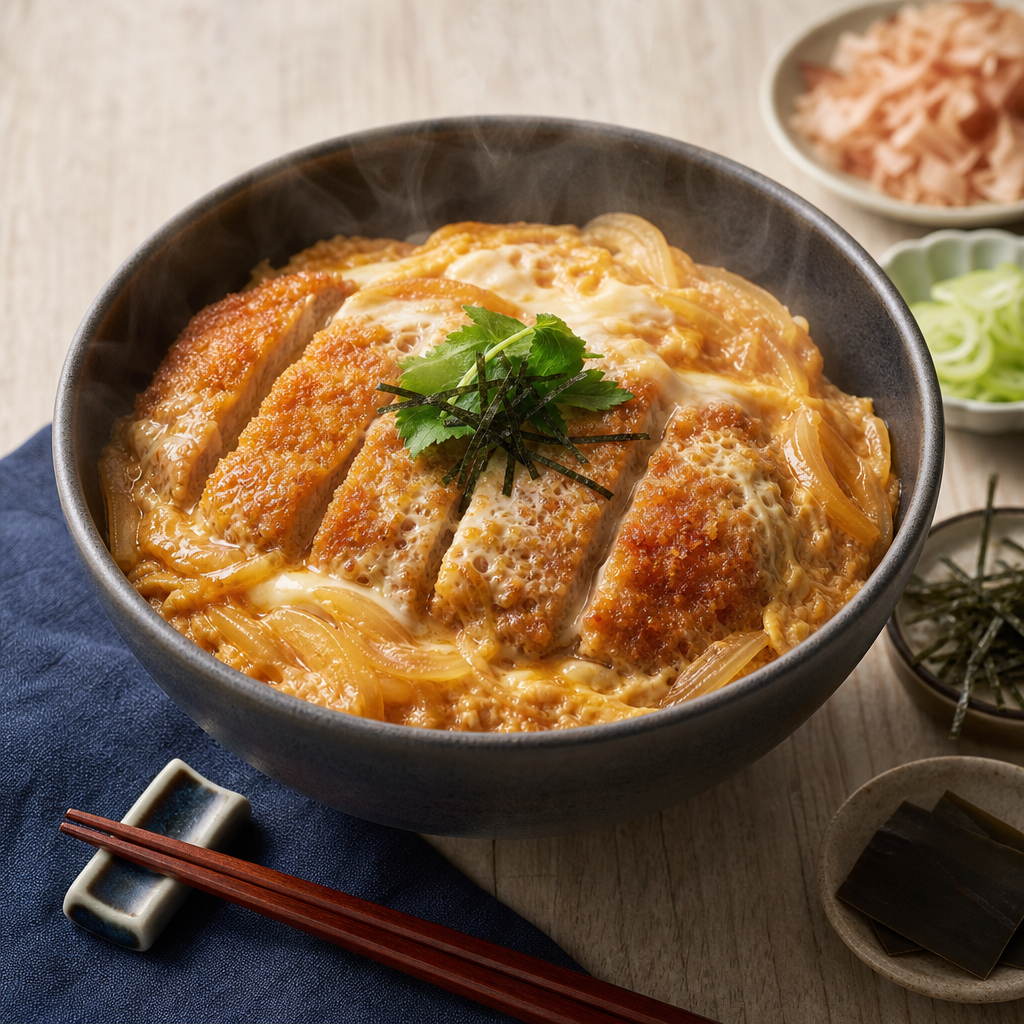
Katsudon sits in the Japanese donburi family: hot rice covered by a sauced topping, not rice served separately from the main dish. The standard form in most of Japan is tonkatsu simmered briefly with onion in dashi, soy sauce, mirin, and sugar, then bound with beaten egg and slid over rice. Regional sauce-katsudon versions, especially in Fukui and Gunma, are different dishes: the cutlet is dipped in Worcestershire-style sauce and usually not egg-bound. The police-interrogation katsudon image is a media trope popularized through postwar film and television; it explains the dish's cultural visibility, not its cooking method.
Method 9 steps · 55 min
Wash and cook the rice
Wash the rice in 3-5 changes of cold water until the water runs nearly clear. Soak 30 minutes, drain, then cook with 200 ml water in a rice cooker or covered pot. Rest 10 minutes after cooking, then fluff gently with a shamoji or spatula.
Prepare the pork
Score the fat cap and connective seams of each pork chop at 2 cm intervals. Pound to an even 1.5 cm thickness, then season both sides with salt and white pepper.
Bread the cutlets
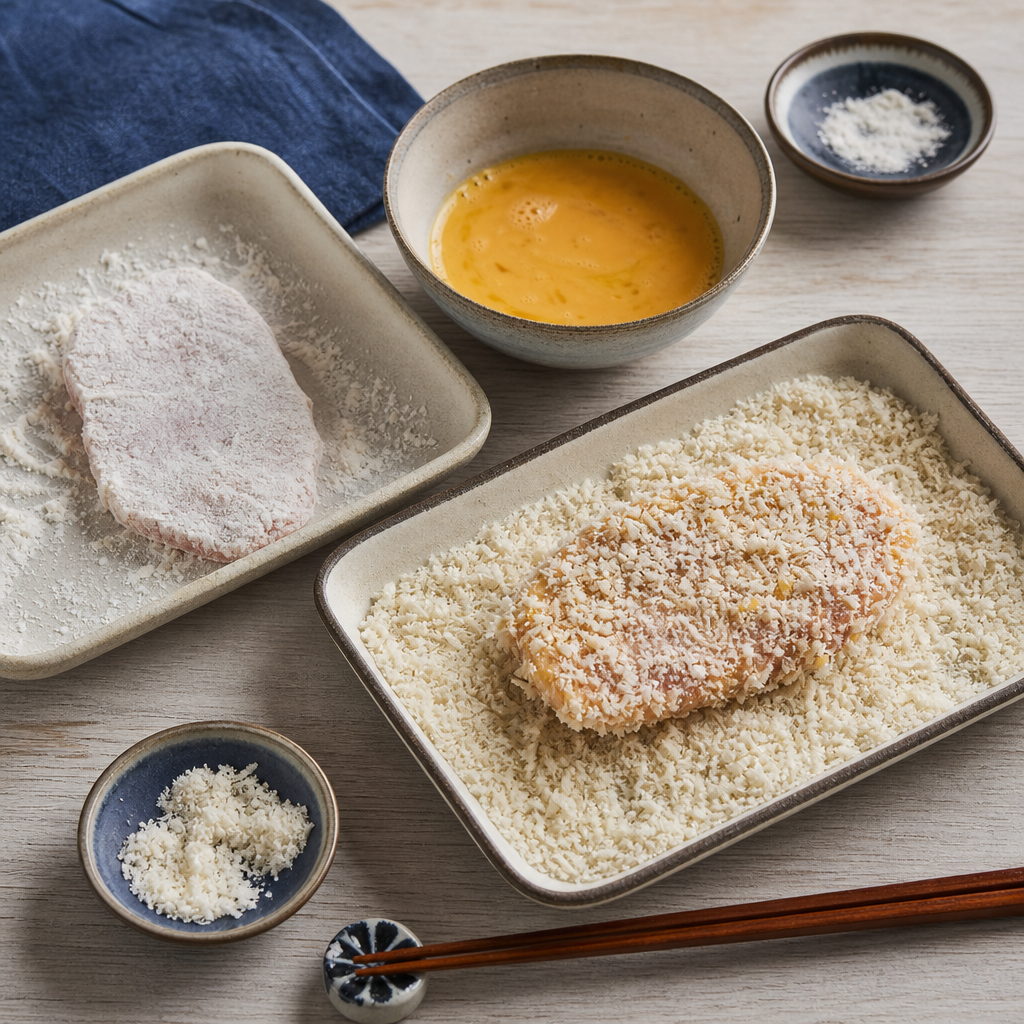
Coat the pork lightly in flour and shake off all excess. Dip in beaten egg, then press into fresh panko without compacting the crumbs. Rest on a rack for 5 minutes while the oil heats.
Fry the tonkatsu
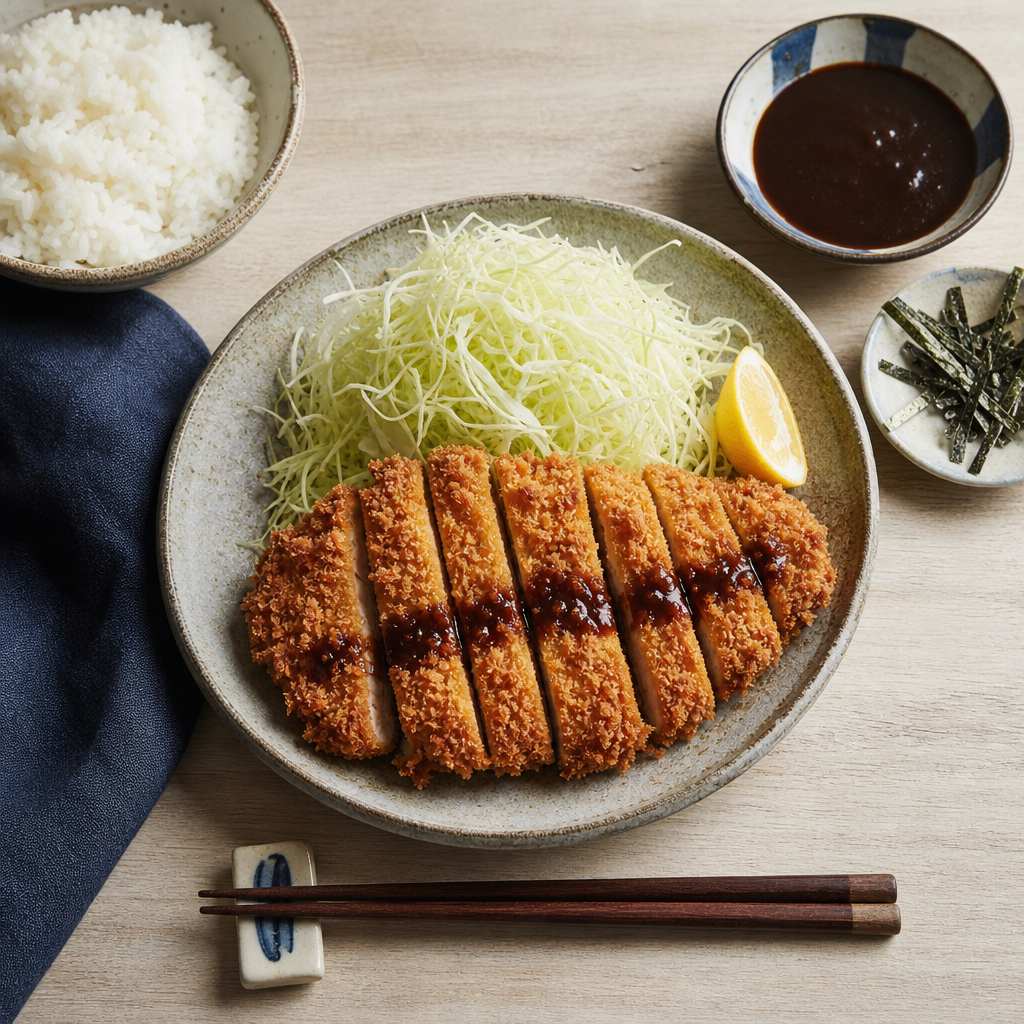
Heat oil to 170-175°C. Fry the cutlets until deep golden and the pork reaches 63-65°C at the center, about 3-4 minutes per side depending on thickness. Drain on a rack for 3 minutes, then slice each cutlet crosswise into 2 cm strips, keeping the shape intact.
Mix the donburi broth
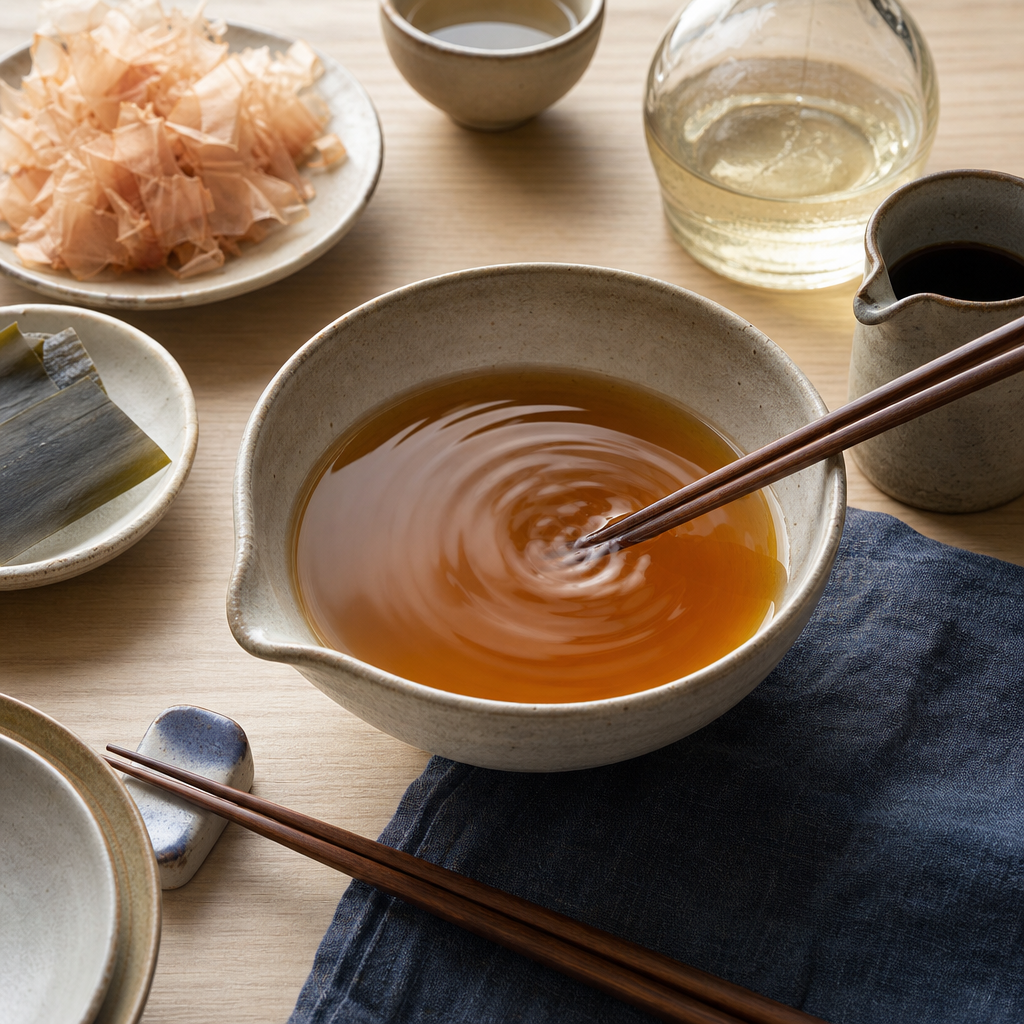
Combine dashi, shoyu, mirin, sake, and sugar. Stir until the sugar dissolves. Taste the broth before it touches the cutlet: it should read slightly too strong because the rice will dilute it.
Simmer the onion
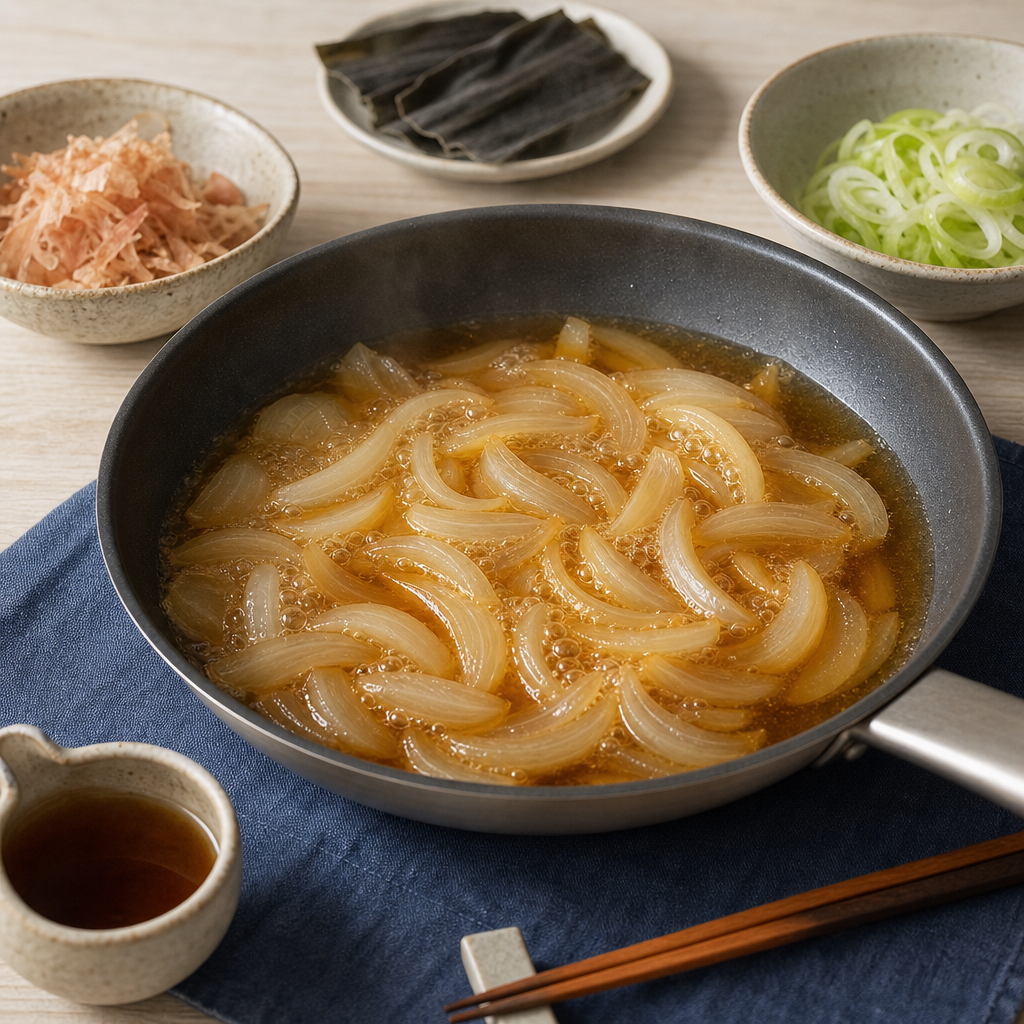
Put the sliced onion and broth in a 22-24 cm skillet. Simmer over medium heat until the onion turns translucent but still holds shape, 3-4 minutes.
Set the cutlet in the broth
Lay the sliced cutlets over the onion, preserving each cutlet's original shape. Spoon a little broth over the top and simmer 30-45 seconds; do not flip.
Add the egg in two passes
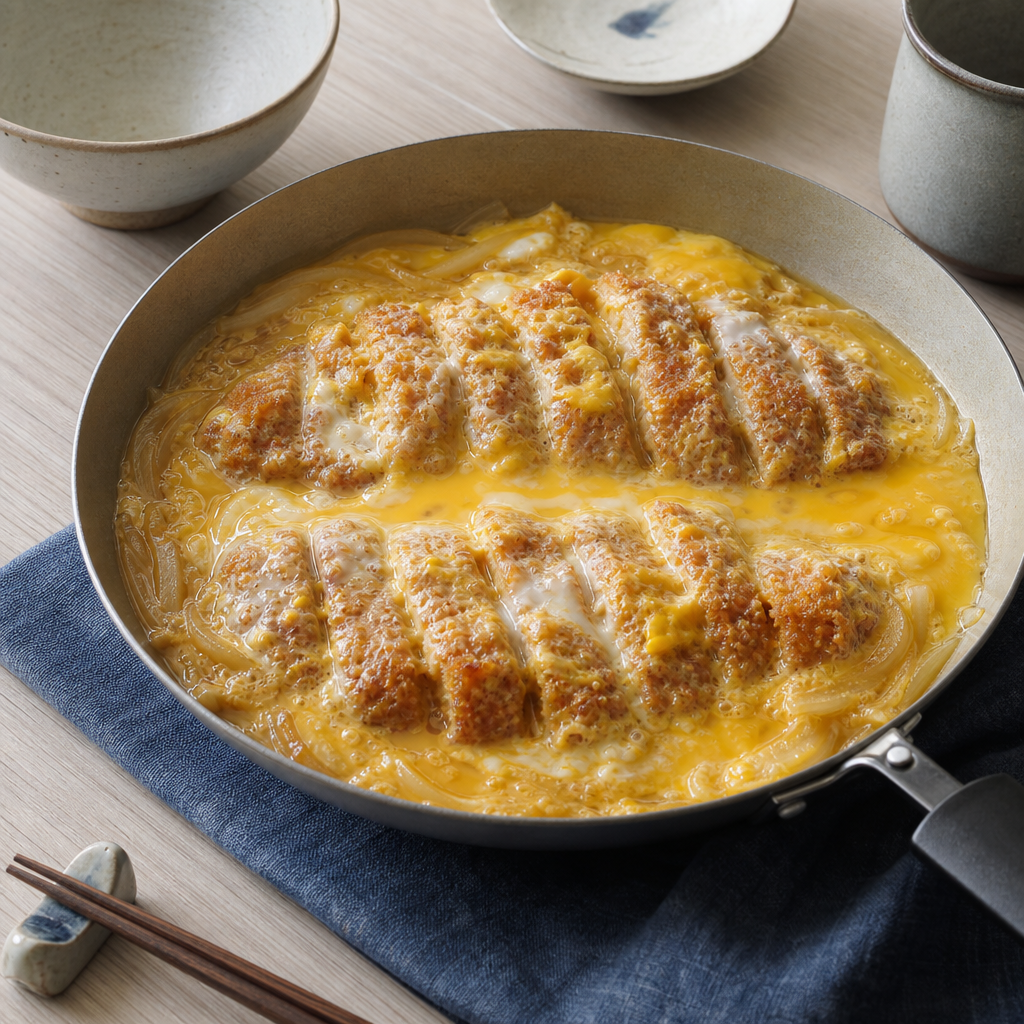
Pour two-thirds of the lightly beaten eggs around and over the cutlets, cover, and cook 45-60 seconds. Add the remaining egg, cover again, and cook 15-30 seconds more, until the egg is glossy and barely set.
Slide over hot rice
Divide hot rice between two donburi bowls. Slide one cutlet portion with onion, egg, and broth over each bowl, letting the sauce run into the rice. Finish with mitsuba or shredded nori if using.
Common mistakes
- {'mistake': 'Using long-grain rice', 'correction': 'Use Japanese short-grain rice. The sauced egg topping needs cling; separate grains make the bowl feel watery.'}
- {'mistake': 'Fully setting the egg', 'correction': 'Stop while the surface is glossy and softly trembling. Carryover heat firms it in the bowl.'}
- {'mistake': 'Simmering the cutlet too long', 'correction': 'Give the cutlet under a minute in broth before egging. Katsudon is moist, not boiled breaded pork.'}
- {'mistake': 'Using fine breadcrumbs', 'correction': 'Use panko, preferably fresh. Fine crumbs make a dense crust that turns pasty under the broth.'}
- {'mistake': 'Making one large family-size pan', 'correction': 'Cook in one- or two-serving batches. Large pans overcook the edges before the center egg sets.'}
What does not belong
- {'item': 'Bottled American teriyaki sauce', 'reason': 'It is too thick and sweet. Katsudon broth is dashi-based and loose enough to season rice.'}
- {'item': 'Cream or milk', 'reason': 'Dairy does not belong in standard katsudon. Softness comes from barely set egg, not enrichment.'}
- {'item': 'Garlic-heavy sauce', 'reason': 'Garlic pushes the dish toward a different fried-pork rice bowl. Katsudon is built on dashi, onion, soy, mirin, and egg.'}
- {'item': 'Long-grain, jasmine, or basmati rice', 'reason': 'The texture is wrong for donburi. Use Japanese short-grain rice.'}
- {'item': 'Raw shredded cabbage under the topping', 'reason': 'Cabbage belongs beside tonkatsu as a plate meal. Under katsudon topping it waters down the rice and interrupts the sauce.'}
- {'item': 'Cilantro garnish', 'reason': 'Mitsuba or scallion fits the Japanese profile. Cilantro reads as a different cuisine.'}