Tonkatsu
The dish in context
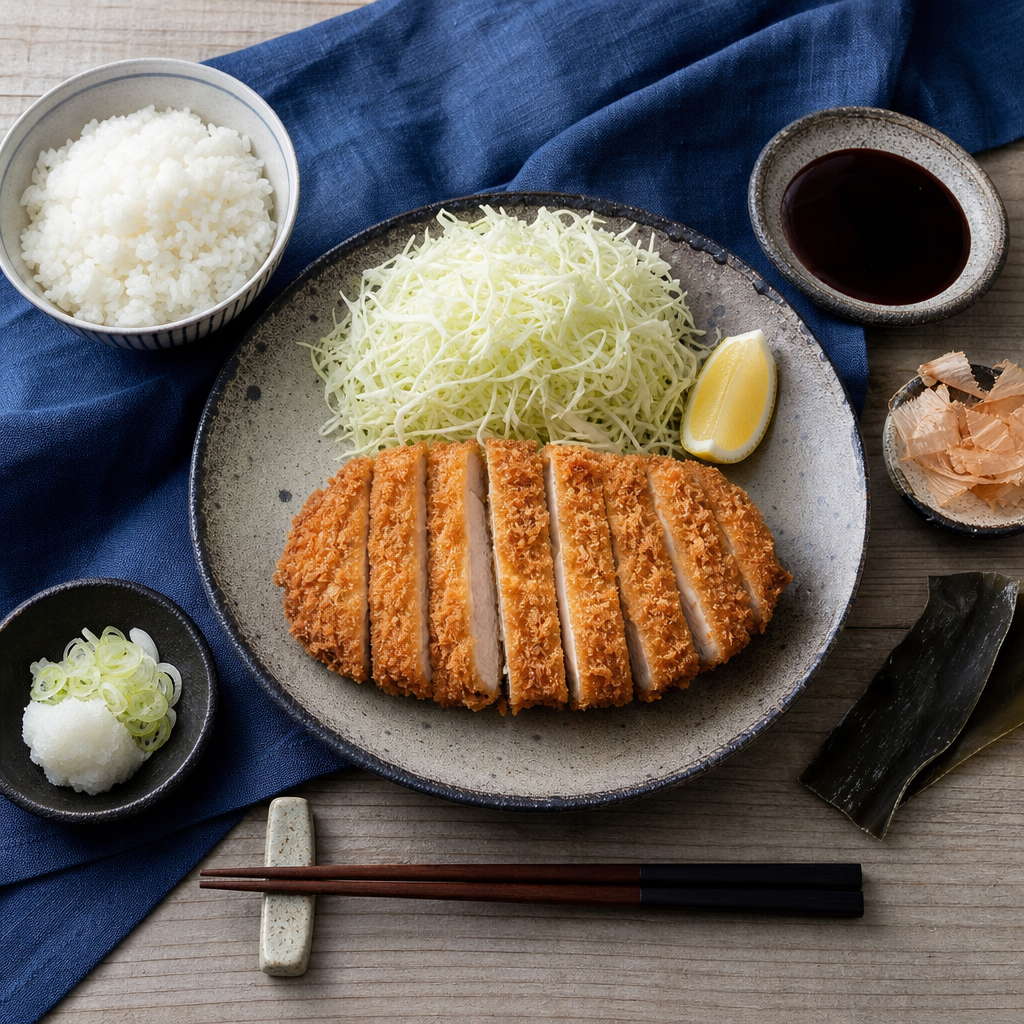
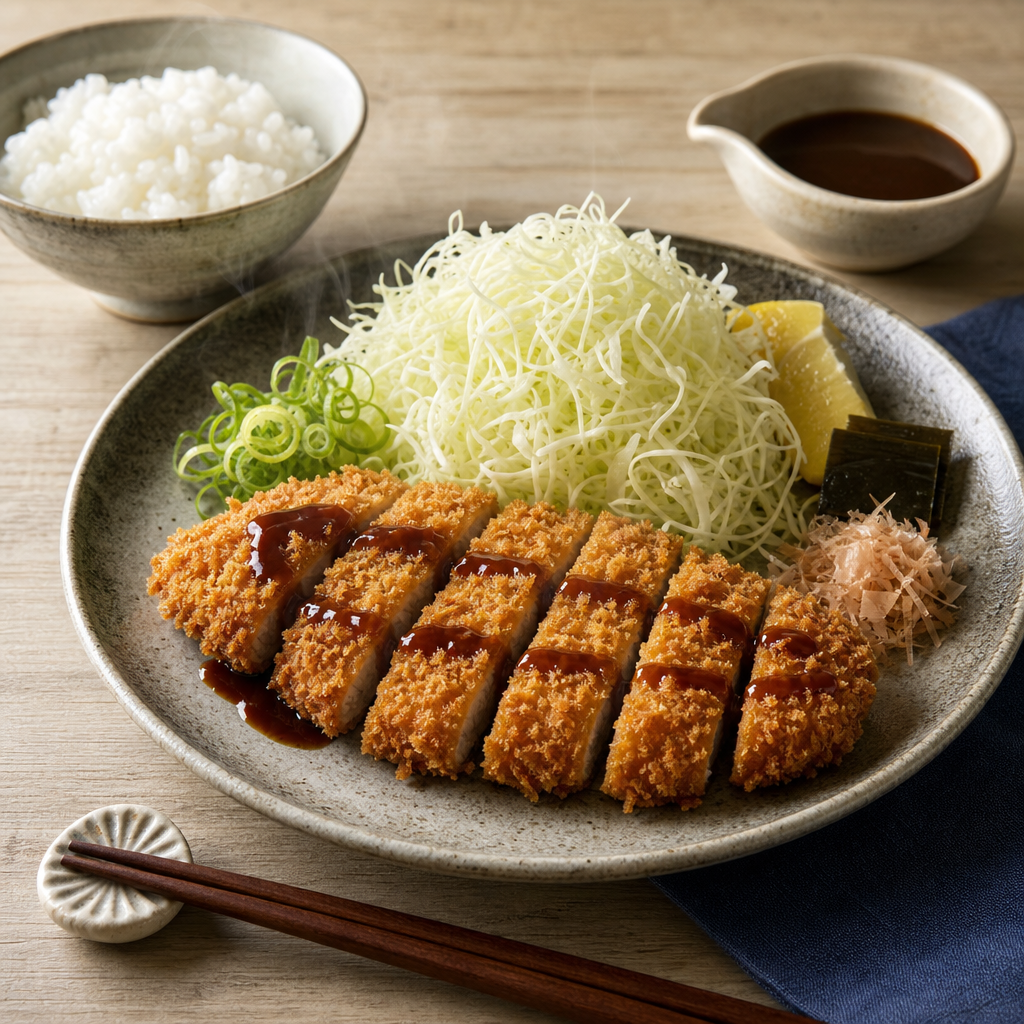
Tonkatsu sits in the yōshoku 洋食 category: Western-derived food adapted into Japanese restaurant and home cooking. Its roots are usually traced to Meiji-era cutlets, with Tokyo restaurants refining the pork version into the form now recognized as tonkatsu: a thick pork cutlet, panko crust, shredded cabbage, rice, and a Worcestershire-style sauce. The name compresses ton 豚, pork, and katsu カツ, from katsuretsu カツレツ, cutlet. Modern tonkatsu restaurants specialize further by cut, breed, oil, cabbage shaving, and sauce, but the grammar stays narrow.
Method 11 steps · 45 min
Shave and chill the cabbage
Slice the cabbage into hair-thin threads with a sharp knife, mandoline, or cabbage slicer. Soak in cold water for 5 minutes, drain hard, and refrigerate uncovered or loosely covered until service.
Score the pork
Cut shallow slits through the fat cap and the connective tissue line between fat and lean meat, spacing the cuts about 2 cm apart. Pound each cutlet lightly to even thickness, then press it back into its original shape.
Season
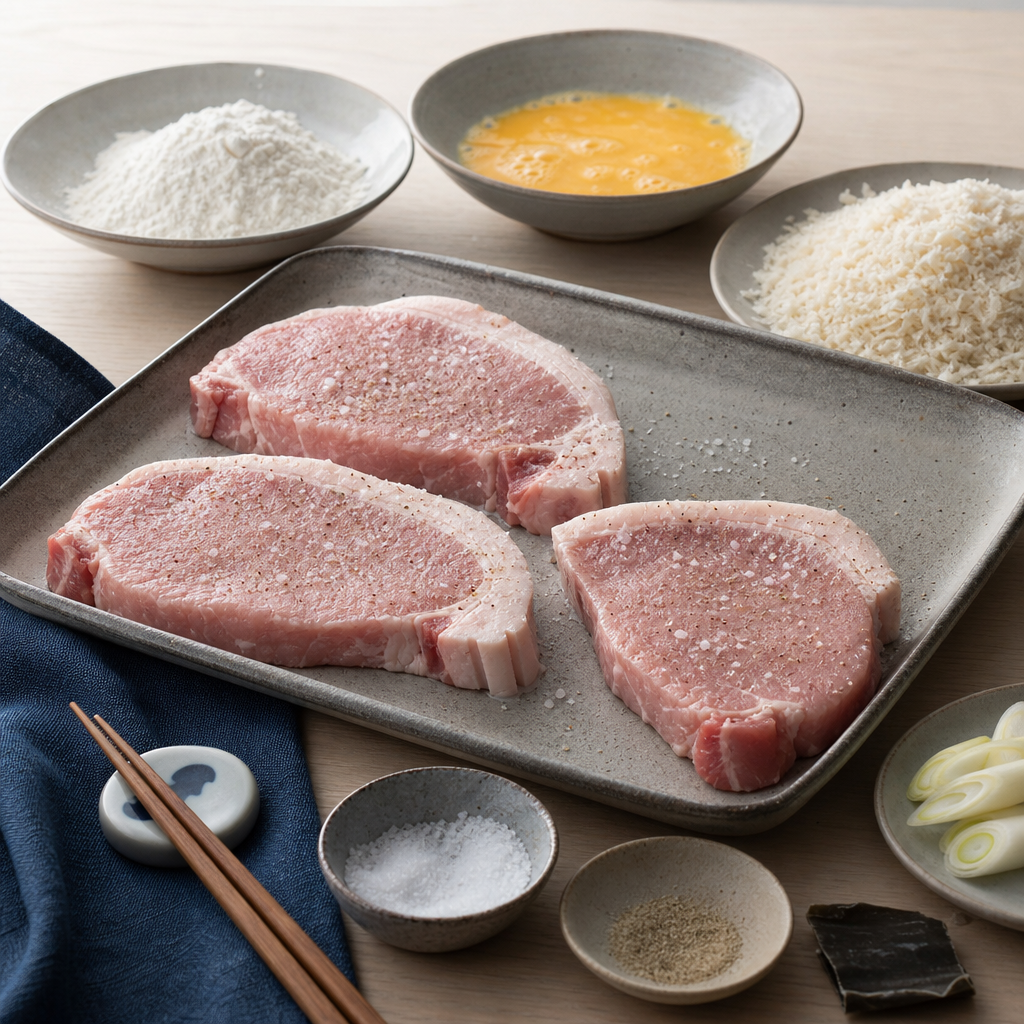
Season both sides of the pork with the salt and white pepper. Let it stand at room temperature for 10 minutes while setting up the breading station.
Bread with flour, egg, and panko
Dredge each cutlet in flour and tap off every loose patch. Dip in beaten egg, let the excess drip, then press firmly into panko on both sides and around the edges.
Set the crust
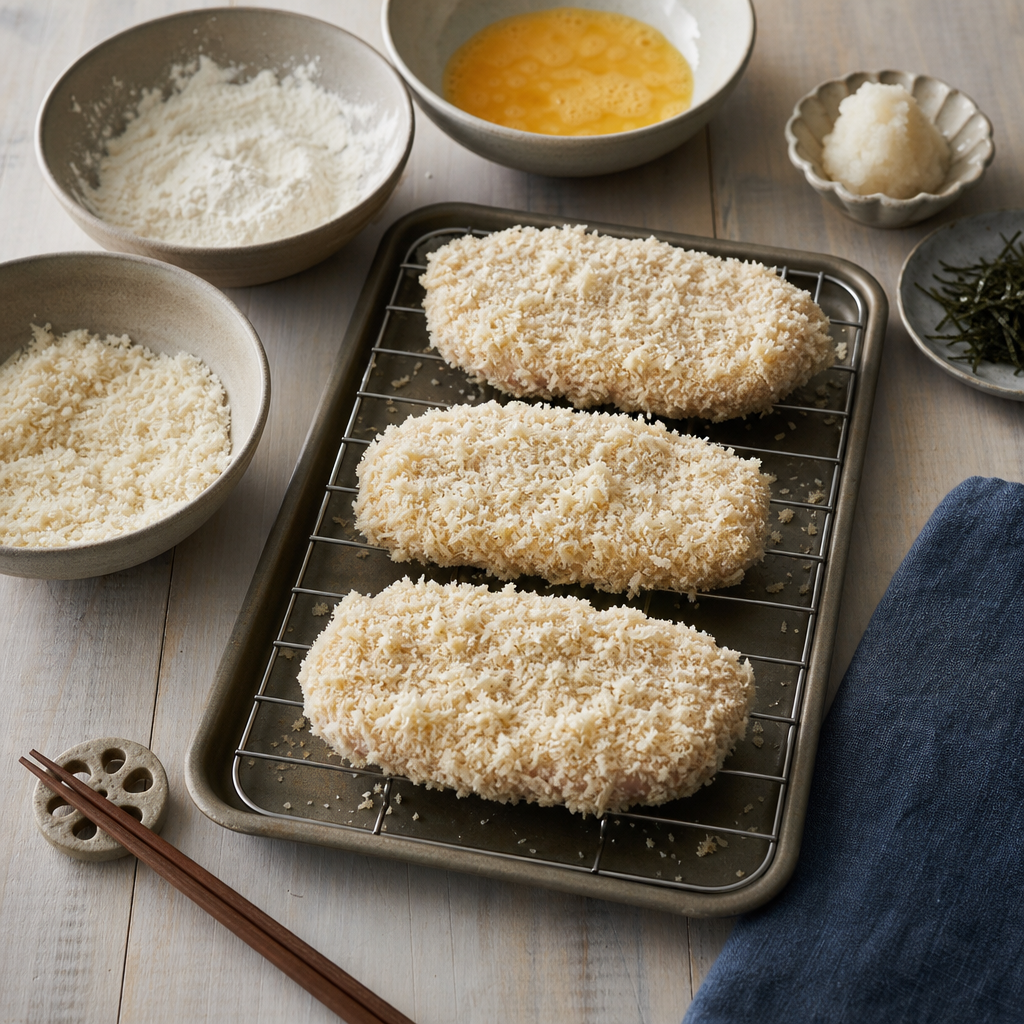
Rest the breaded cutlets on a wire rack for 10 minutes. Do not stack them.
Heat the oil
Heat 4-5 cm oil in a heavy pot to 170°C. Hold a rack over a tray near the stove.
Fry the first side
Lower 1 or 2 cutlets into the oil, depending on pot width; they must not touch. Fry for 2 minutes without moving them except for a gentle nudge if they stick.
Fry the second side
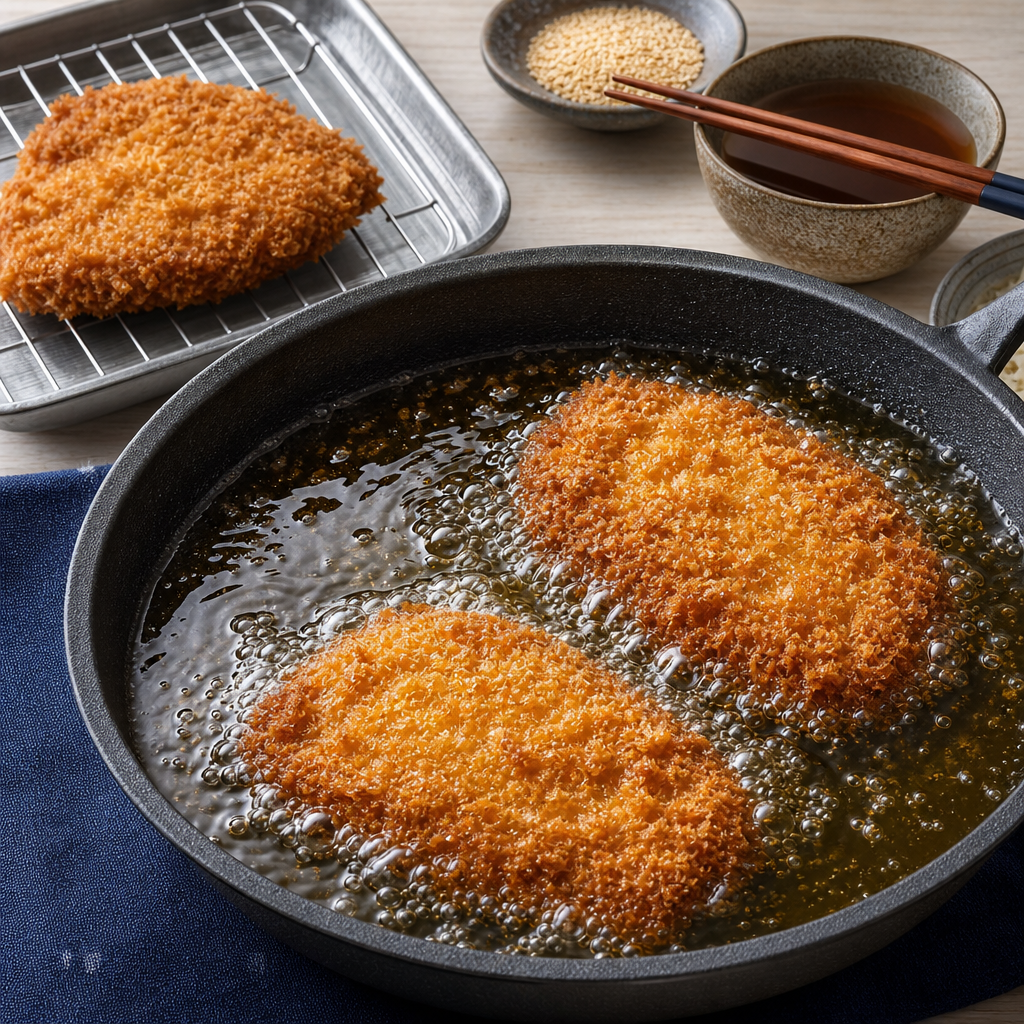
Turn the cutlets and fry for 2-3 minutes more, keeping the oil between 165°C and 175°C. Pull when the crust is deep golden and the pork center registers 62-65°C.
Rest
Transfer the cutlets to the rack and rest for 4 minutes. Keep them elevated; paper towels trap steam under the crust.
Refresh the crust
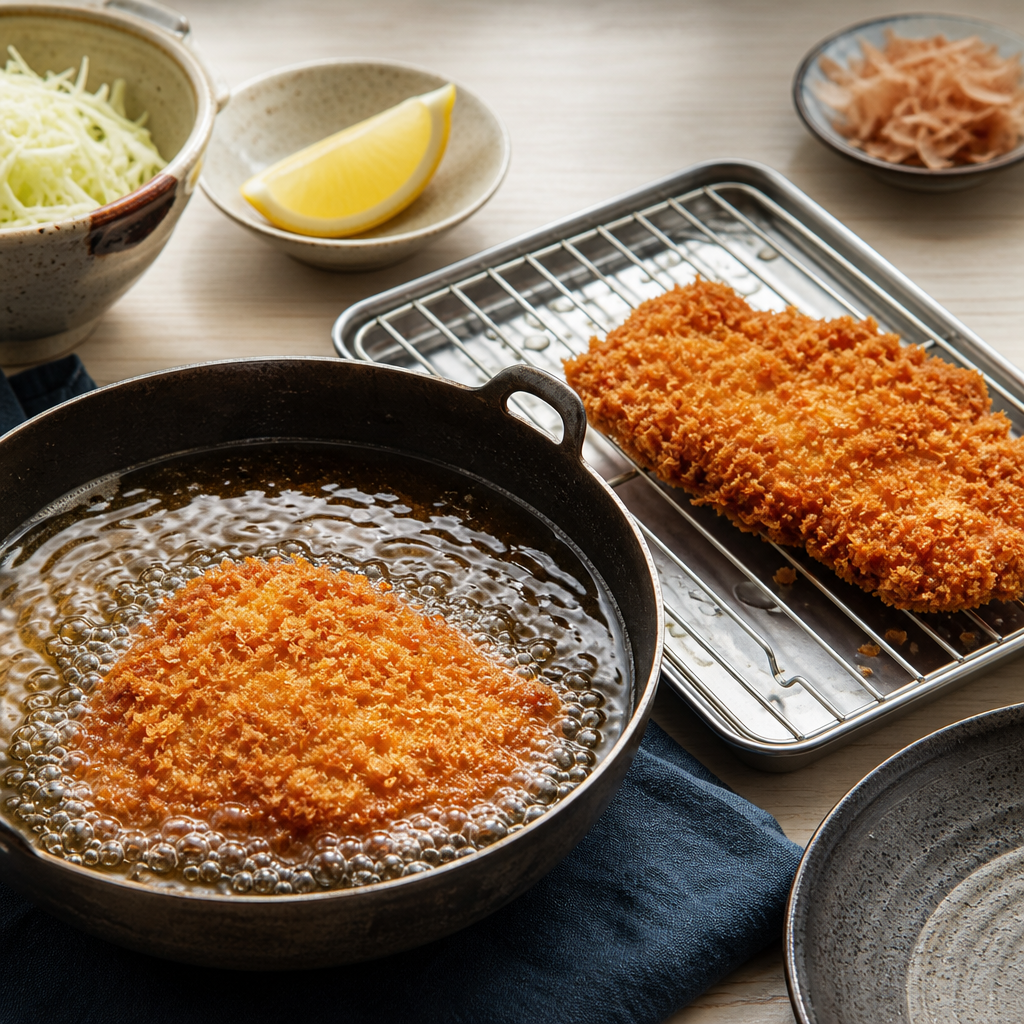
Return each cutlet to 180°C oil for 30-45 seconds, turning once, if the crust has softened during resting. Drain again on the rack.
Slice and plate
Slice each cutlet crosswise into 1.5-2 cm strips with a firm downward stroke. Keep the slices aligned in the original cutlet shape and serve with shredded cabbage, tonkatsu sauce, rice, and karashi.
Common mistakes
- {'mistake': 'Using fine dry breadcrumbs', 'fix': 'Use coarse Japanese panko. Fine crumbs fry into a compact shell, not the ragged, airy crust that defines tonkatsu.'}
- {'mistake': 'Skipping the fat-cap scoring', 'fix': 'Score through the fat and connective tissue before breading. Curled pork cooks unevenly and pulls the crust apart.'}
- {'mistake': 'Frying too cool', 'fix': 'Keep the oil near 170°C for the main fry. Oil below 160°C gives a heavy crust that tastes of the fryer.'}
- {'mistake': 'Crowding the pot', 'fix': 'Fry in batches. The cutlets need space and stable heat; touching pieces steam each other at the edges.'}
- {'mistake': 'Resting on paper towels', 'fix': 'Use a wire rack. Paper towels catch oil but also trap steam, which softens the underside.'}
- {'mistake': 'Slicing immediately after frying', 'fix': 'Rest 4 minutes first. Hot pork cut too early leaks juice into the crust.'}
What does not belong
- {'item': 'teriyaki sauce', 'reason': 'Teriyaki sauce does not belong on tonkatsu. The dish uses tonkatsu sauce, a thicker fruit-and-Worcestershire-style sauce with sharper acidity.'}
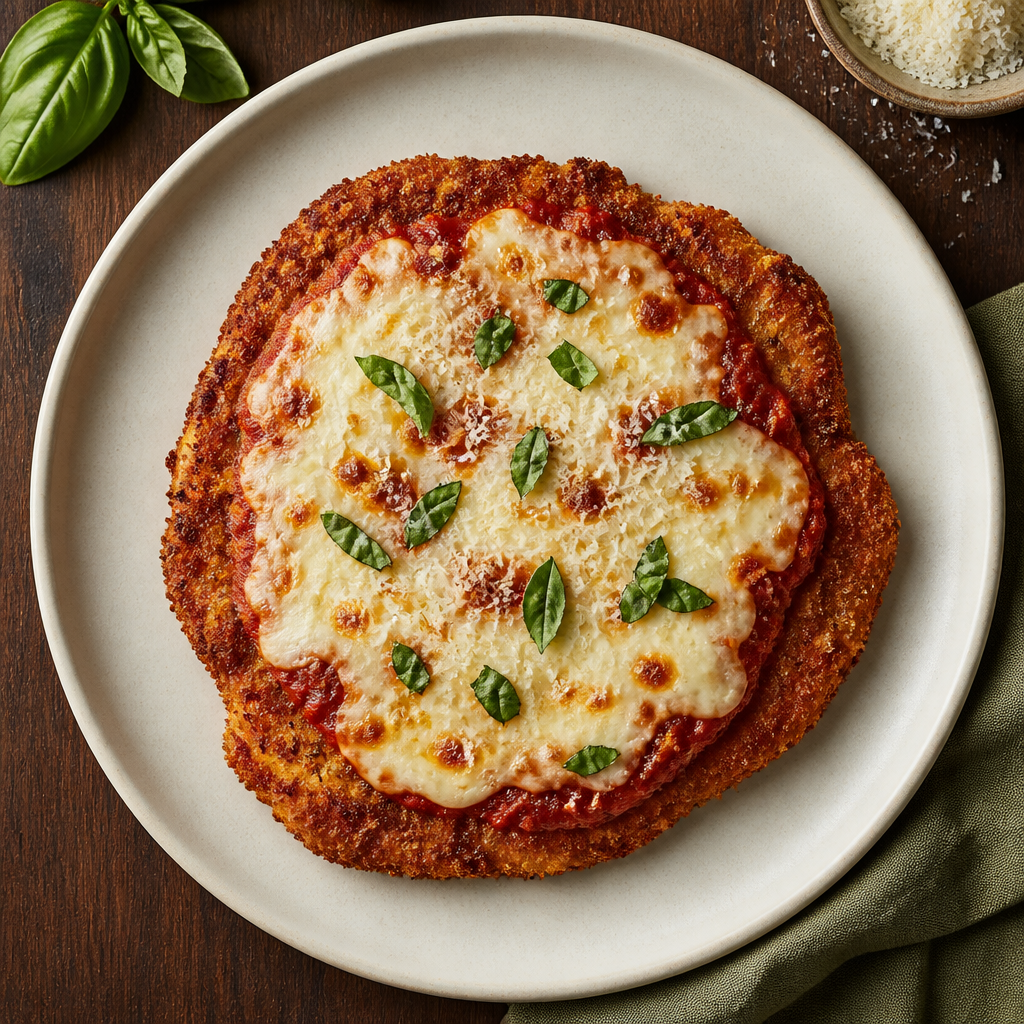
- {'item': 'parmesan or Italian-seasoned breadcrumbs', 'reason': 'Cheese and herb breadcrumbs move the dish toward Milanese cutlet. Tonkatsu needs plain panko.'}
- {'item': 'garlic powder in the crust', 'reason': 'Garlic powder does not belong in a standard tonkatsu crust. It dominates the clean pork-panko-sauce structure.'}
- {'item': 'long-grain rice', 'reason': 'Long-grain rice does not belong in a Japanese tonkatsu set. If rice is served, use Japanese short-grain rice.'}
- {'item': 'sweet American barbecue sauce', 'reason': 'Barbecue sauce does not belong here. Smoke and molasses flatten the sharper Worcestershire-style profile required for tonkatsu.'}