Chicken Parmigiana
The dish in context
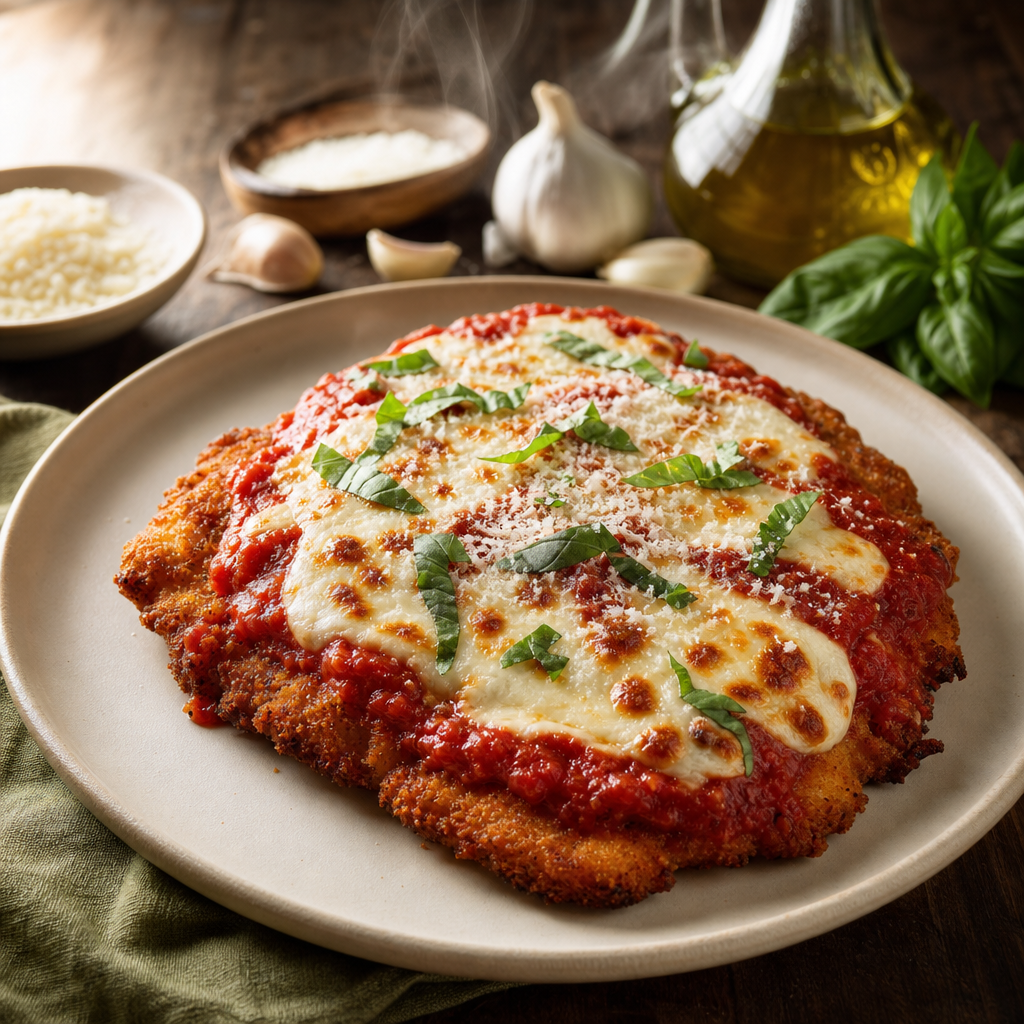
Chicken Parmigiana is Italian-American, not a traditional dish from Italy in this chicken-cutlet form. It grew from the meeting point of southern Italian parmigiana di melanzane, breaded cutlet traditions, and the North American abundance of chicken in immigrant communities. By the mid-20th century it was fixed in red-sauce restaurants as breaded chicken, tomato sauce, mozzarella, and grated hard cheese. Australia developed its own pub version, often called a parma or parmi, but this recipe follows the Italian-American restaurant grammar.
Method 8 steps · 75 min
Cut and pound the chicken
Slice each chicken breast horizontally into two broad cutlets. Pound between sheets of parchment or plastic wrap to 8-10 mm thick, then season both sides with 8 g of the salt and the black pepper.
Cook the tomato sauce
Heat the olive oil in a saucepan over medium heat. Add the garlic and cook until pale gold at the edges, 60-90 seconds, then stir in the tomato paste and red pepper flakes for 1 minute. Add the crushed tomatoes, oregano, remaining salt, and sugar if needed; simmer until thick enough to leave a brief trail when stirred, 25-30 minutes.
Set the breading station
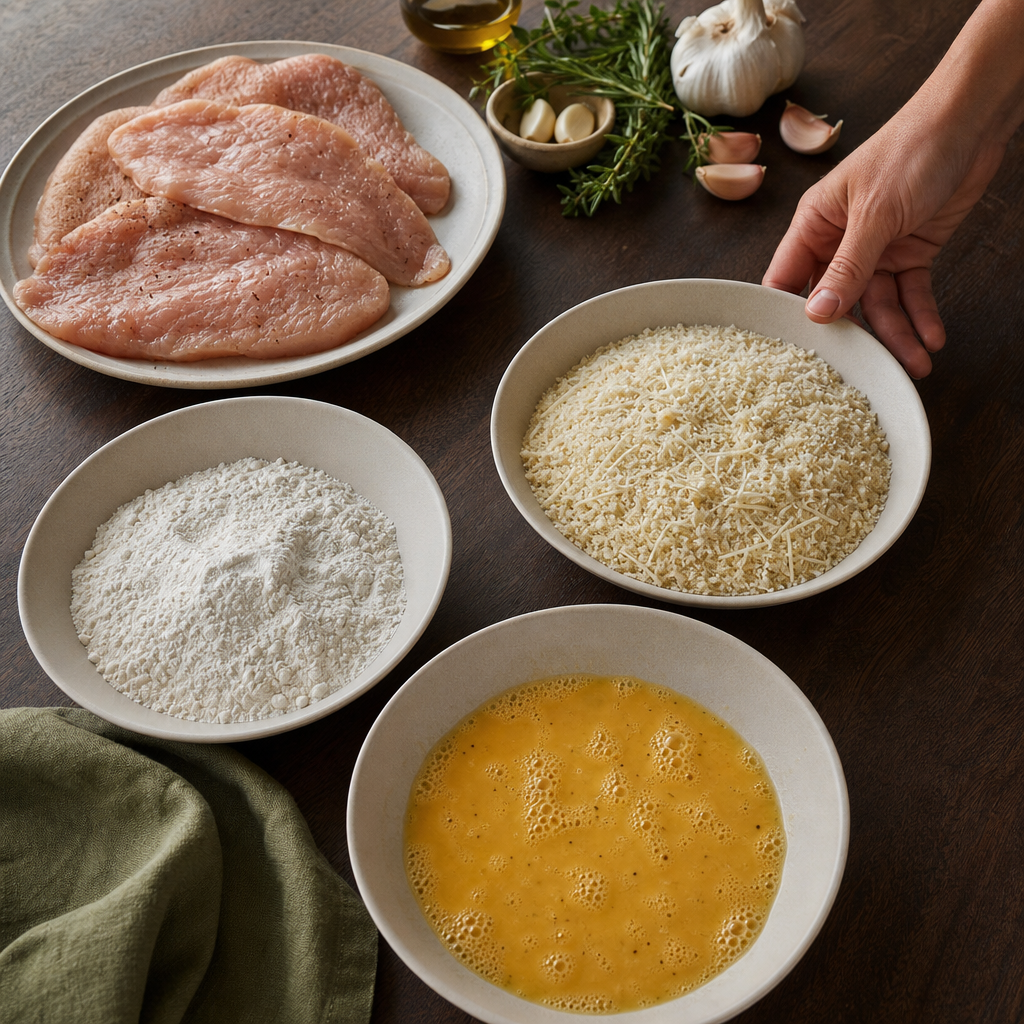
Place flour in one shallow dish, beaten eggs in a second, and panko mixed with the breading Parmigiano-Reggiano in a third. Keep one hand for wet and one hand for dry, or the crumbs will clump before the last cutlet.
Bread the cutlets
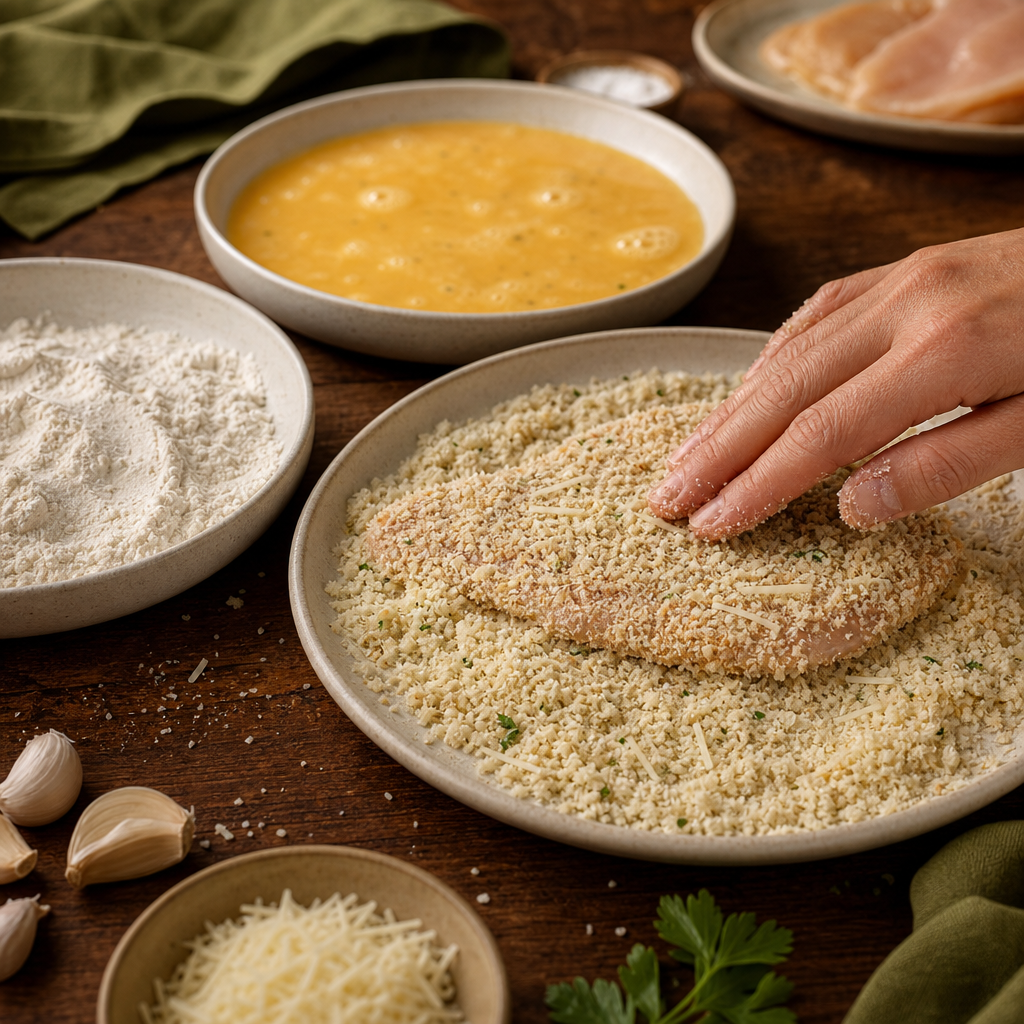
Dredge each cutlet in flour and shake off the excess. Dip in egg, let the surplus drip back, then press firmly into the panko-Parrnigiano mixture until the surface is evenly coated. Rest the breaded cutlets on a rack for 10 minutes.
Shallow-fry
Heat 6-8 mm neutral oil in a large skillet to 175°C. Fry the cutlets in batches until deep golden and crisp, 2-3 minutes per side, adjusting the heat to keep the oil between 165°C and 180°C. Transfer to a rack and season lightly while hot.
Sauce and cheese with restraint
Heat the broiler or oven to 230°C. Place the fried cutlets on a rack set over a sheet pan, spoon 2-3 tablespoons thick sauce over the center of each cutlet, and leave the edges uncovered. Add mozzarella and the finishing Parmigiano-Reggiano over the sauced area.
Melt and blister
Broil or bake until the mozzarella melts and blisters in spots, 3-6 minutes depending on the oven. Pull the tray as soon as the cheese slumps and browns; do not wait for the crust to darken further.
Finish and serve
Rest for 2 minutes, then scatter torn basil over the top. Serve with extra sauce on the plate or with pasta on the side, not poured over the exposed crisp edges.
Common mistakes
- {'mistake': 'Pounding the chicken paper-thin.', 'fix': 'Stop at 8-10 mm. Thinner cutlets cook fast but dry out under the broiler.'}
- {'mistake': 'Using watery tomato sauce.', 'fix': 'Simmer until the sauce mounds slightly on a spoon. Loose sauce soaks straight into the breading.'}
- {'mistake': 'Covering the entire cutlet with sauce.', 'fix': 'Sauce the center and leave a crisp border. Chicken Parmigiana is not a casserole.'}
- {'mistake': 'Using fresh mozzarella straight from the brine.', 'fix': 'Use low-moisture mozzarella, or drain and blot fresh mozzarella thoroughly before slicing.'}
- {'mistake': 'Baking raw breaded chicken under sauce.', 'fix': 'Fry first. The crust needs direct oil contact to set before sauce and cheese arrive.'}
What does not belong
- {'item': 'Cream in the tomato sauce', 'reason': 'Cream blunts the tomato and turns the dish into a different red-sauce casserole. It does not belong.'}
- {'item': 'A full blanket of sauce over the whole cutlet', 'reason': 'That destroys the crust. Extra sauce belongs beside the chicken or with pasta.'}
- {'item': 'Pre-shredded shelf-stable Parmesan as the main cheese', 'reason': 'Anti-caking starches dull the melt and leave a dusty finish. Use real Parmigiano-Reggiano or Grana Padano.'}
- {'item': 'Raw garlic powder as a replacement for the sauce garlic', 'reason': 'It reads harsh and flat in a short sauce. Cooked fresh garlic gives the correct red-sauce base.'}
- {'item': 'Balsamic glaze', 'reason': 'Sweet, sticky acidity fights the tomato and cheese. It does not belong on Chicken Parmigiana.'}