Pollo alla Cacciatora
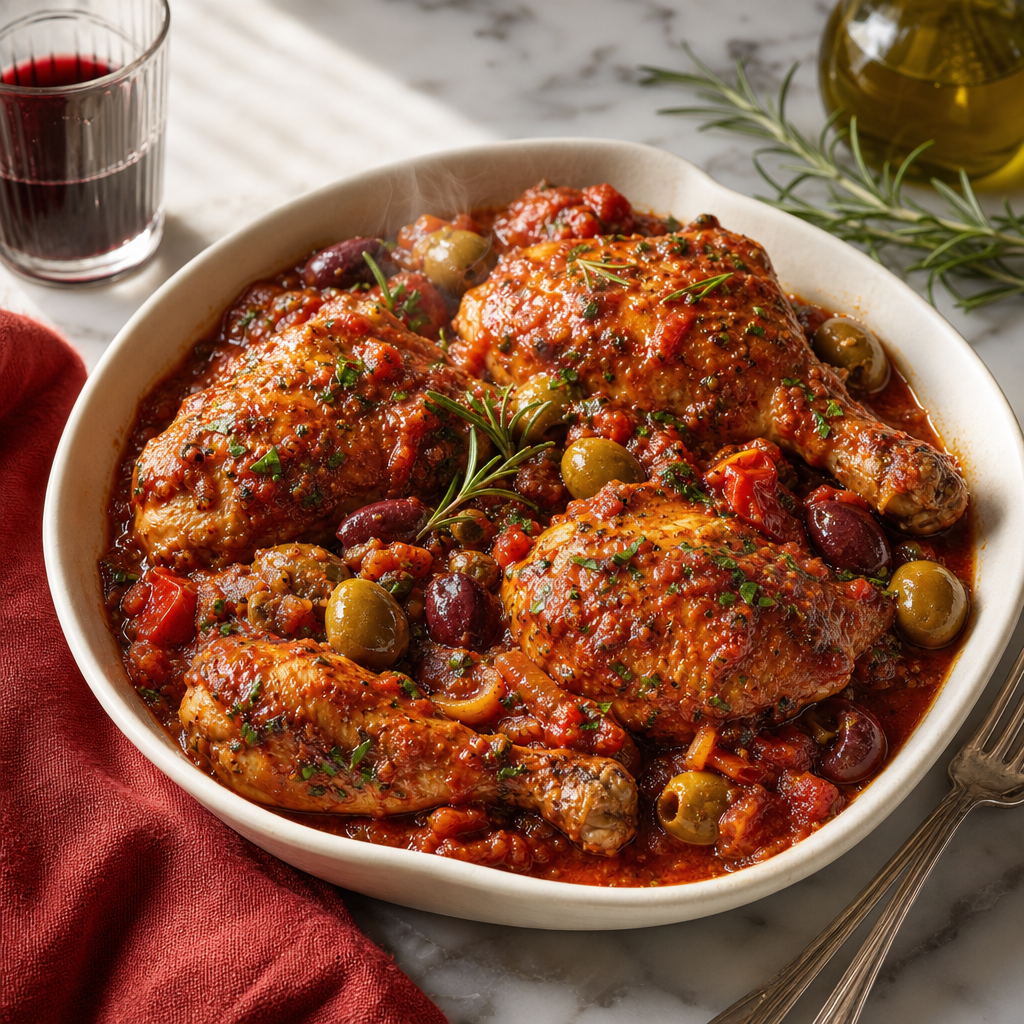
The dish in context
Pollo alla cacciatora means chicken cooked "hunter-style," a broad Italian braising grammar rather than one locked national formula. Central Italian and Tuscan versions commonly use browned chicken, garlic or onion, rosemary, wine, and tomato; northern versions often lean toward white wine, butter, mushrooms, or less tomato, while southern versions may include peppers. The point is not a heavy tomato sauce with chicken dropped into it. The chicken must brown first, then finish slowly in a small amount of wine-tomato liquid until the sauce tastes like poultry, herbs, and reduced pan juices.
Method 8 steps · 95 min
Salt the chicken
Season the chicken all over with the salt and black pepper. Leave it uncovered at room temperature for 25 minutes, or refrigerate up to overnight and bring it back toward room temperature before cooking.
Brown the chicken in batches
Heat the olive oil in a wide heavy pan over medium-high heat. Add the chicken skin-side down without crowding and brown until the skin is deep golden with darker patches, 6-8 minutes per side; transfer to a plate.
Sweat the aromatics
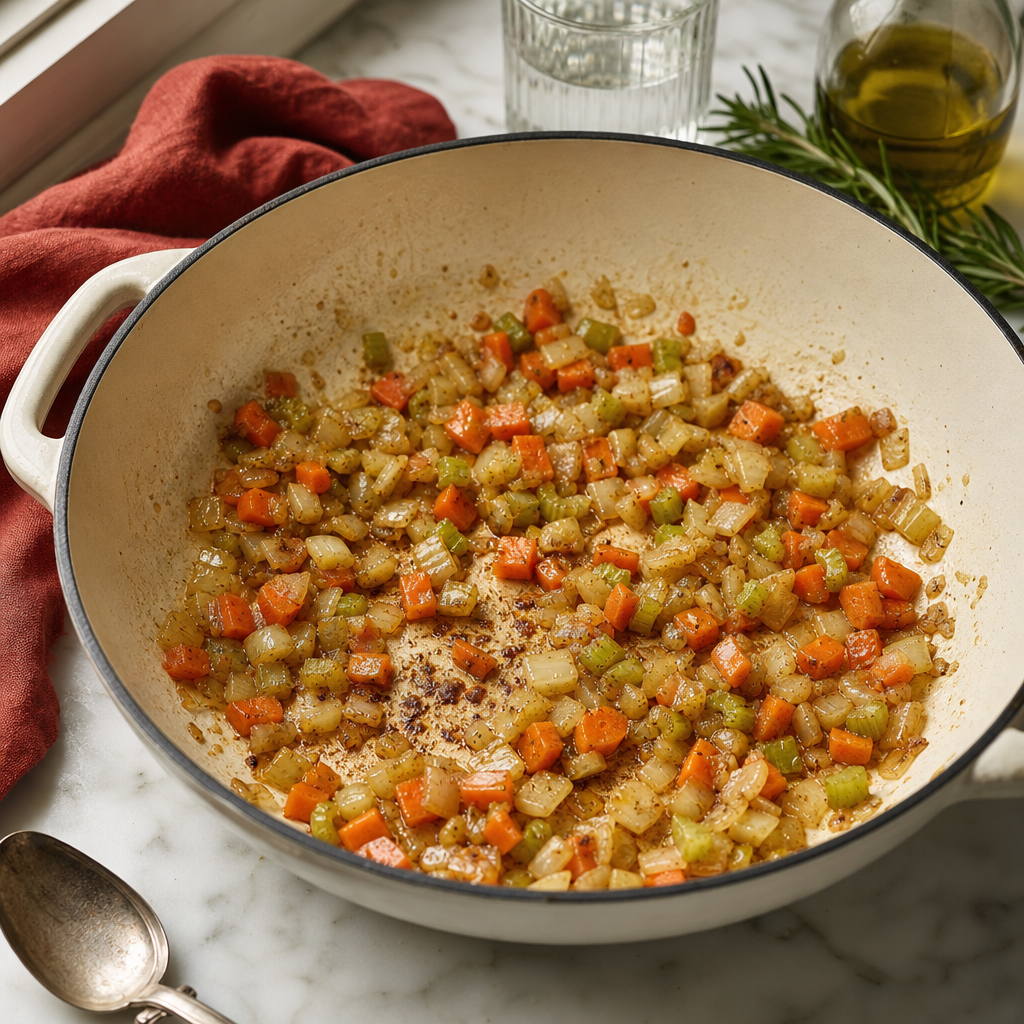
Lower the heat to medium. Add onion, carrot, and celery and cook in the chicken fat until glossy and softened, 8-10 minutes, scraping the bottom as they release moisture. Add garlic, rosemary, sage, and bay leaf and cook for 60 seconds.
Reduce the wine
Pour in the wine and scrape the pan until the browned bits dissolve. Boil until the wine is reduced by about half and the raw alcohol smell is gone, 4-6 minutes.
Build the braise
Add the crushed tomatoes and stock or water, then return the chicken with any juices on the plate. The liquid should come halfway up the pieces, not cover them. Bring to a low simmer.
Simmer until tender
Cover with the lid slightly ajar and simmer gently for 35 minutes. Turn the chicken once halfway through; the bubbles should break lazily at the edges, not roll hard.
Reduce the sauce
Uncover, add the olives if using, and simmer 10-15 minutes until the sauce thickens enough to coat a spoon. If breast pieces are already firm and cooked through, lift them out while the sauce reduces, then return them at the end.
Rest and finish
Turn off the heat and rest the chicken in the sauce for 10 minutes. Skim excess surface fat if needed, discard bay and herb stems, then finish with parsley.
Common mistakes
- {'mistake': 'Using boneless skinless chicken breast as the default.', 'fix': 'Use bone-in thighs and drumsticks. Breast-only cacciatora dries out before the sauce has time to reduce.'}
- {'mistake': 'Skipping the hard browning stage.', 'fix': 'Brown in batches until the skin is deep golden. Pale chicken gives the sauce no roasted backbone.'}
- {'mistake': 'Adding too much tomato.', 'fix': 'Keep the tomato to a braising sauce, not a pasta sauce volume. The chicken should sit partly exposed.'}
- {'mistake': 'Boiling the braise.', 'fix': 'Hold a quiet simmer with the lid ajar. Rolling bubbles toughen the meat and muddy the sauce.'}
- {'mistake': 'Treating every regional addition as mandatory.', 'fix': 'Peppers, mushrooms, olives, white wine, and red wine all appear in legitimate branches. Pick a lane; do not load the pot with all of them.'}
What does not belong
- {'item': 'Cream', 'reason': 'Cream does not belong in pollo alla cacciatora. The sauce body comes from reduced tomato, wine, chicken gelatin, and olive oil.'}
- {'item': 'Cheese', 'reason': 'Grated cheese does not belong on the finished dish. It flattens the wine-tomato sauce and reads like baked pasta logic.'}
- {'item': 'Sugar', 'reason': 'Sugar does not belong. If the sauce tastes sharp, reduce it longer or use better tomatoes; sweetness from carrot and onion is enough.'}
- {'item': 'Jarred marinara sauce', 'reason': 'Jarred marinara turns the dish into chicken in pasta sauce. Cacciatora needs pan fond, wine reduction, and chicken juices built in the same pot.'}
- {'item': 'Dried Italian seasoning blend', 'reason': 'A generic dried blend does not belong. Rosemary and sage should be identifiable, not a dusty background of oregano-heavy herbs.'}